
Blog
Practical guides, tutorials, and tips on JSON formatting, Base64 encoding, regex, password security, and everyday developer tools.
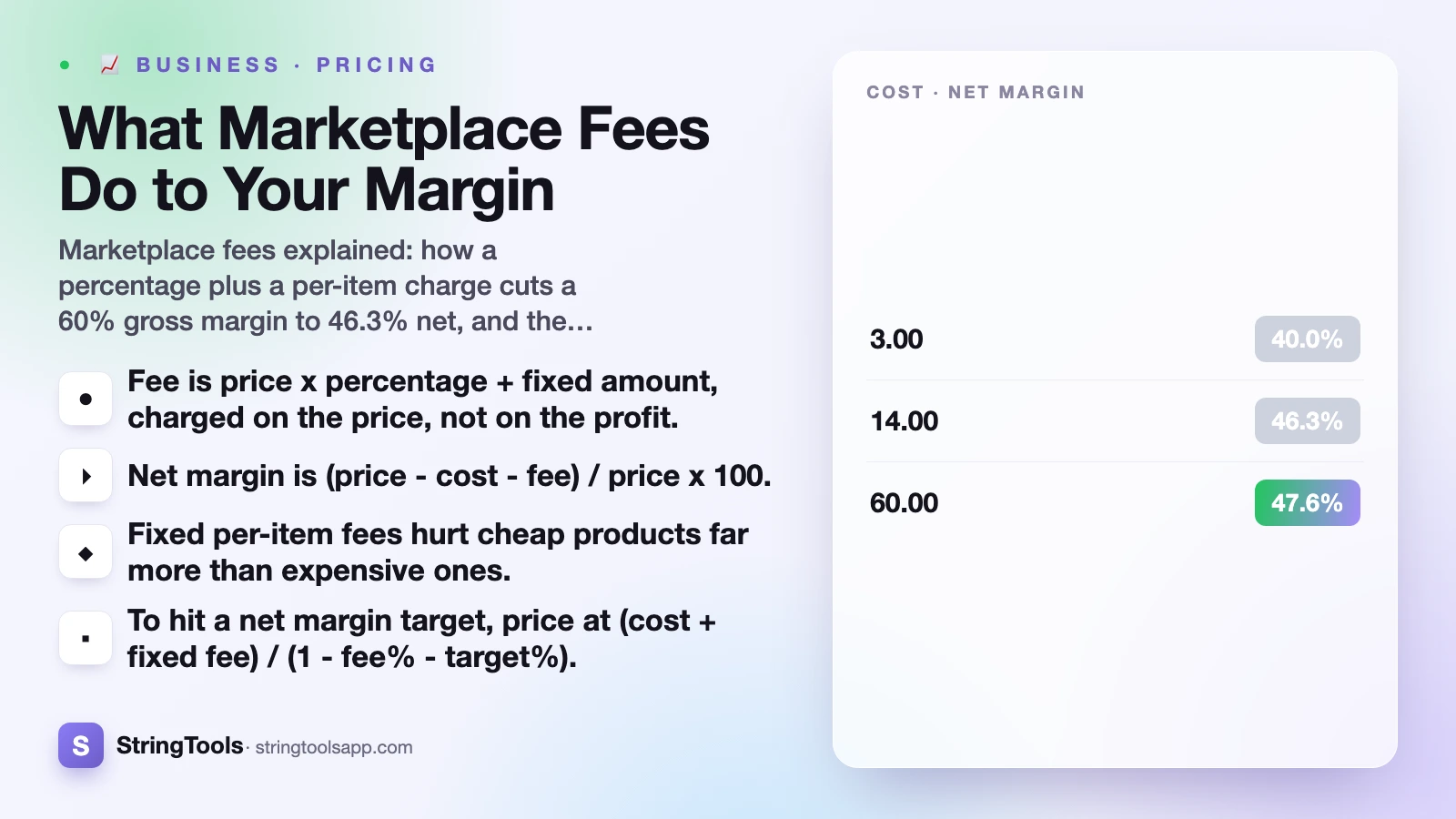
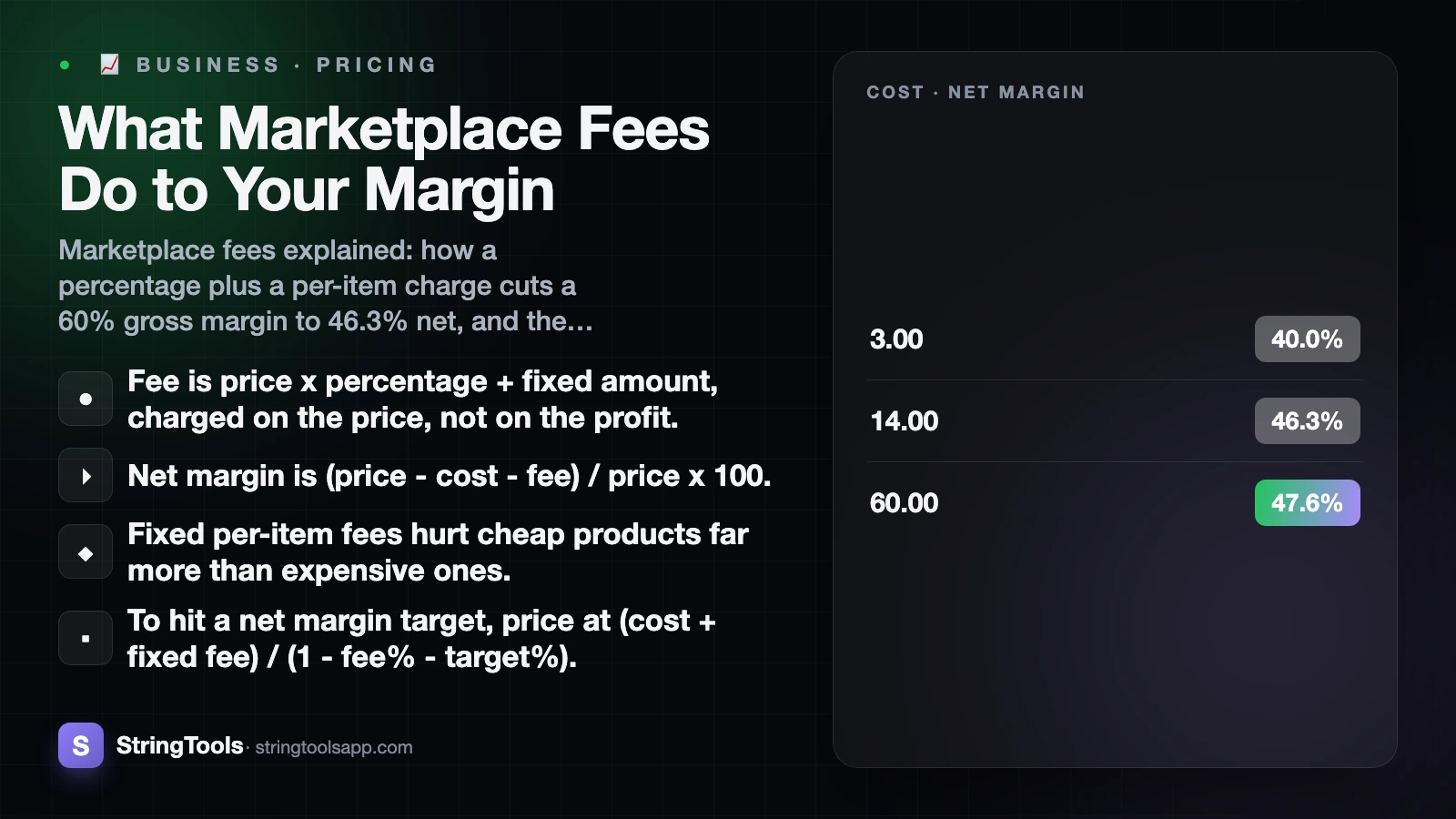
What Marketplace Fees Do to Your Margin
Marketplace fees explained: how a percentage plus a per-item charge cuts a 60% gross margin to 46.3% net, and the formula for pricing to absorb them.
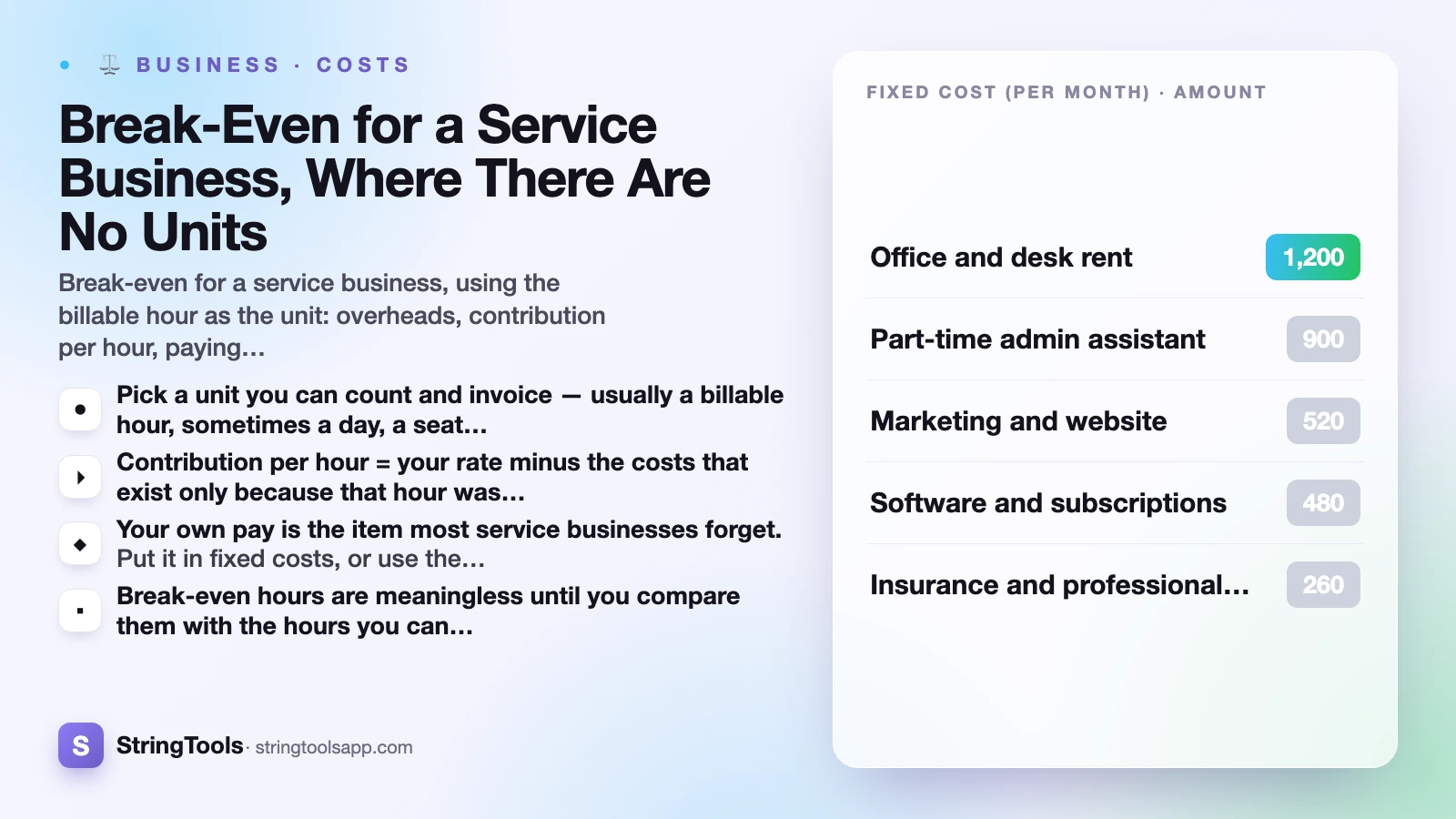
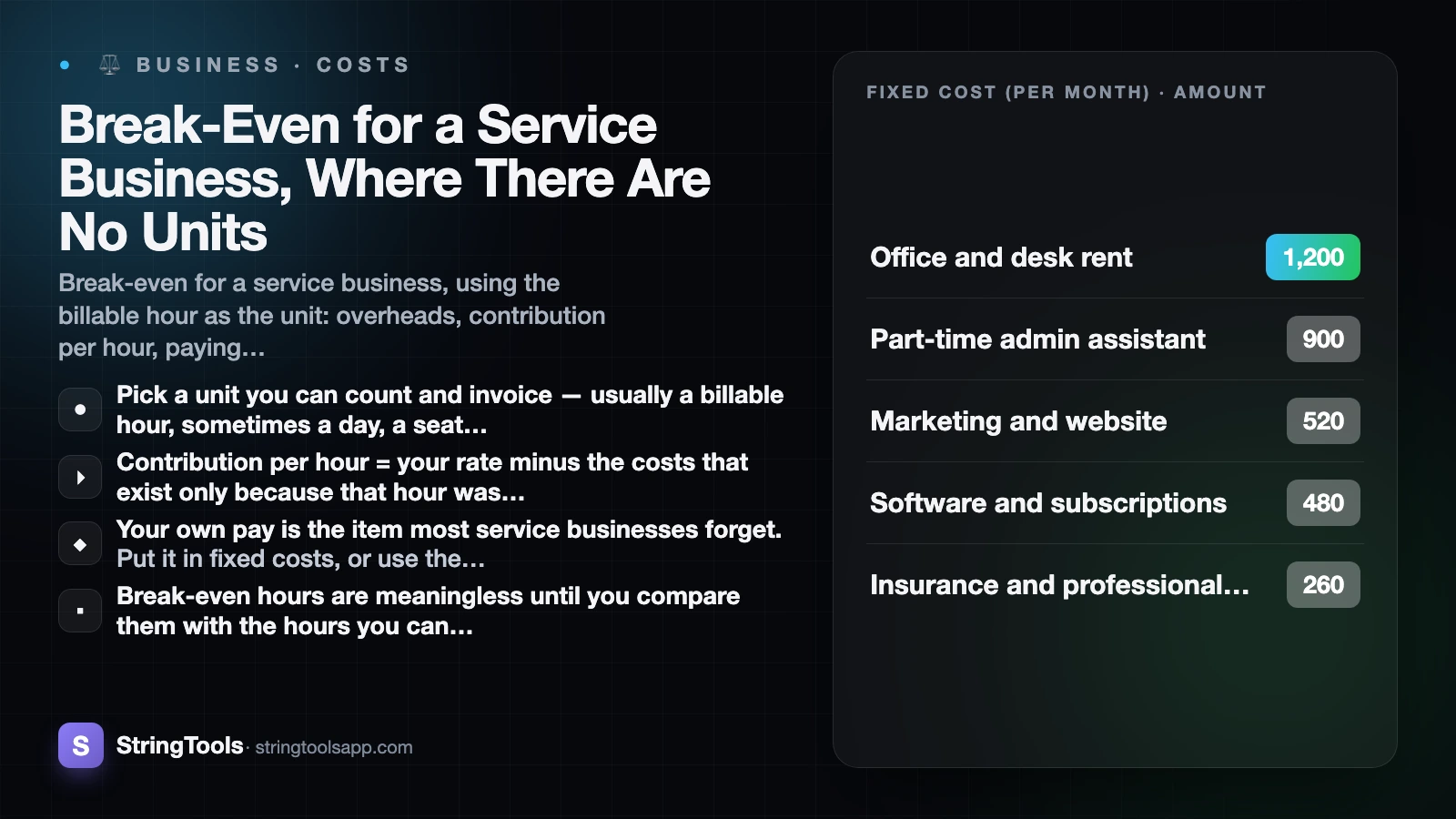
Break-Even for a Service Business, Where There Are No Units
Break-even for a service business, using the billable hour as the unit: overheads, contribution per hour, paying yourself, utilisation and project overruns.
How to Raise Your Rates Without Losing Clients
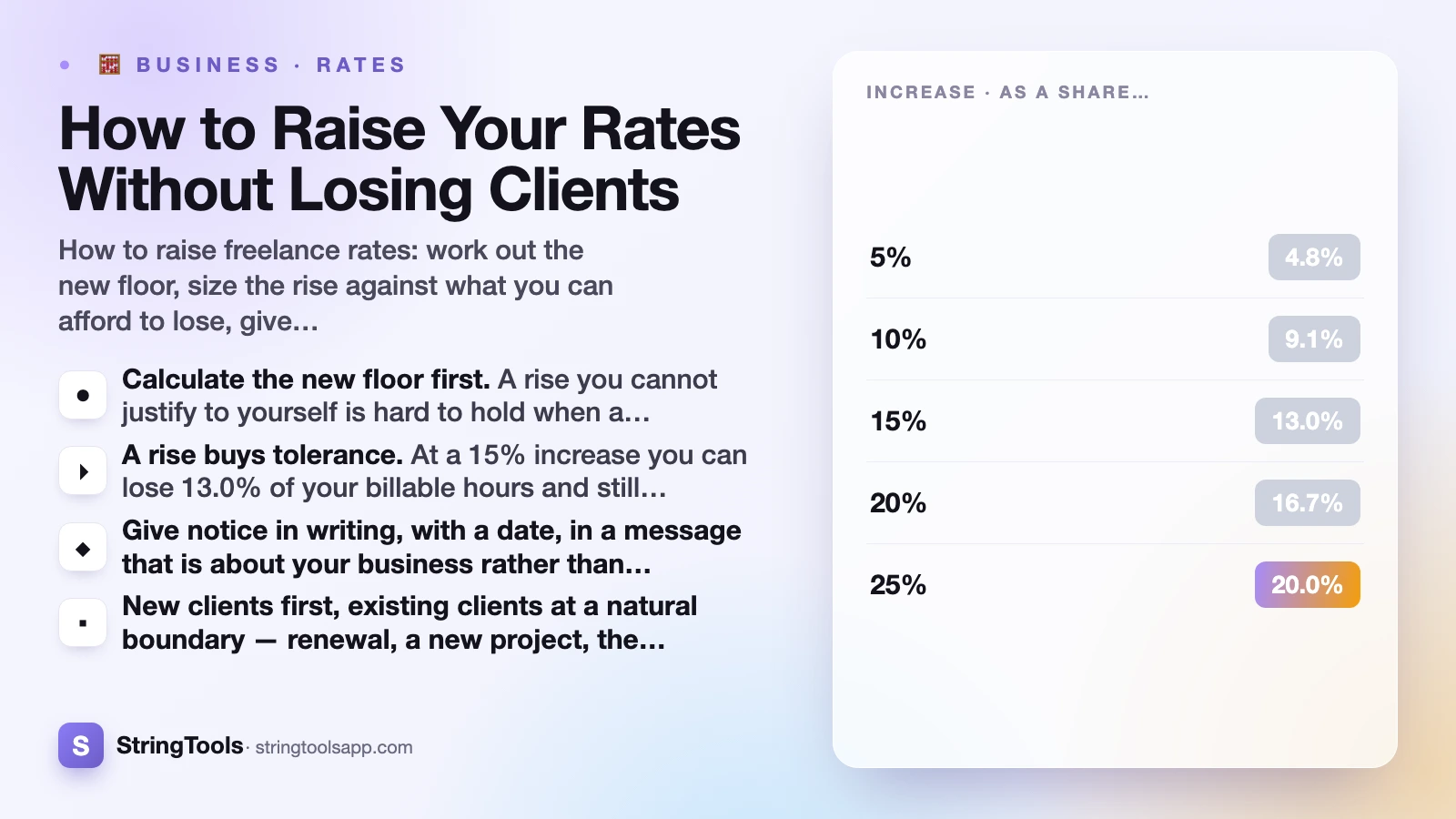
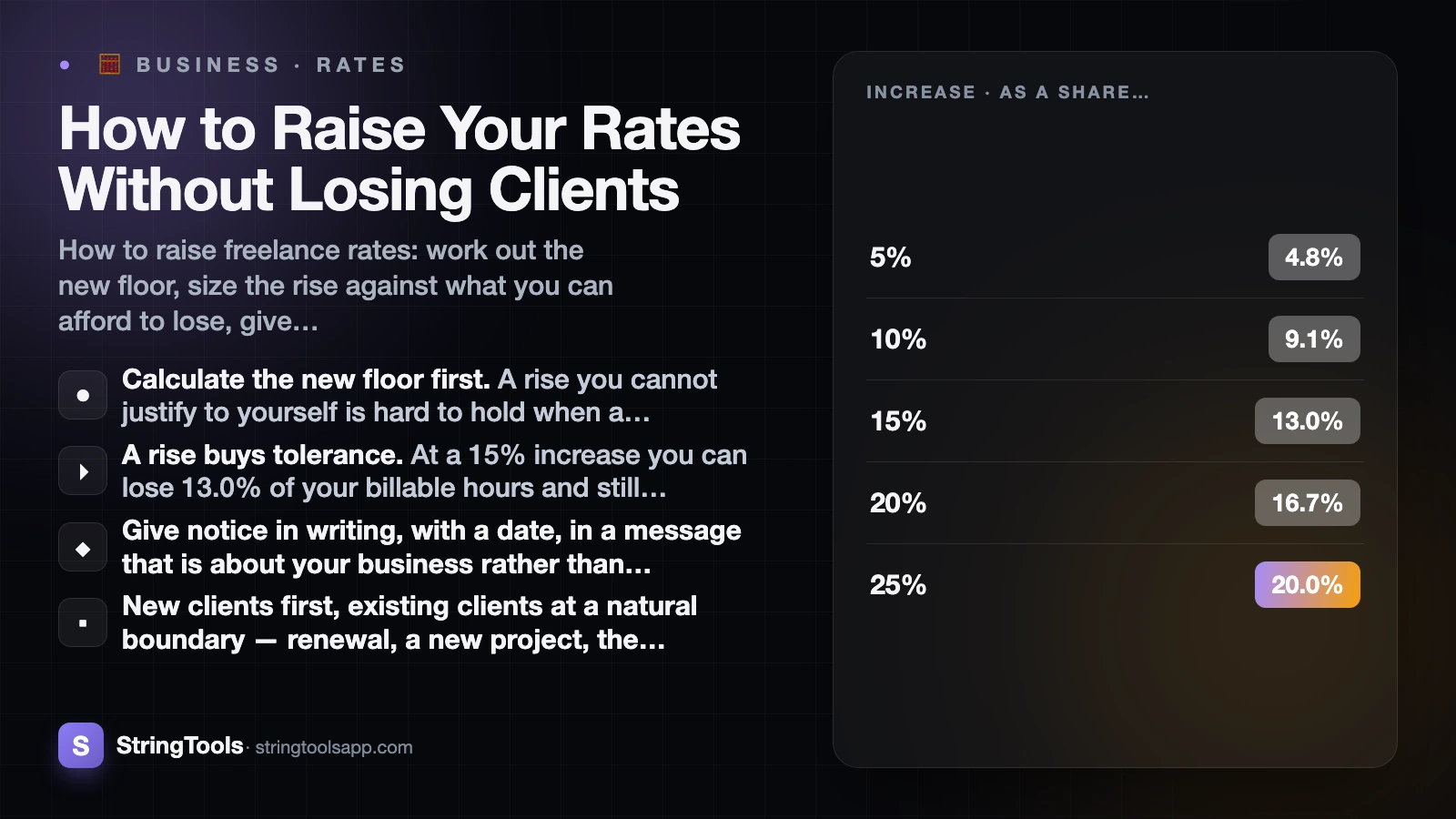
How to raise freelance rates: work out the new floor, size the rise against what you can afford to lose, give notice, and handle a client who says no.
How Much Emergency Fund Do I Need? Built From Your Real Bills
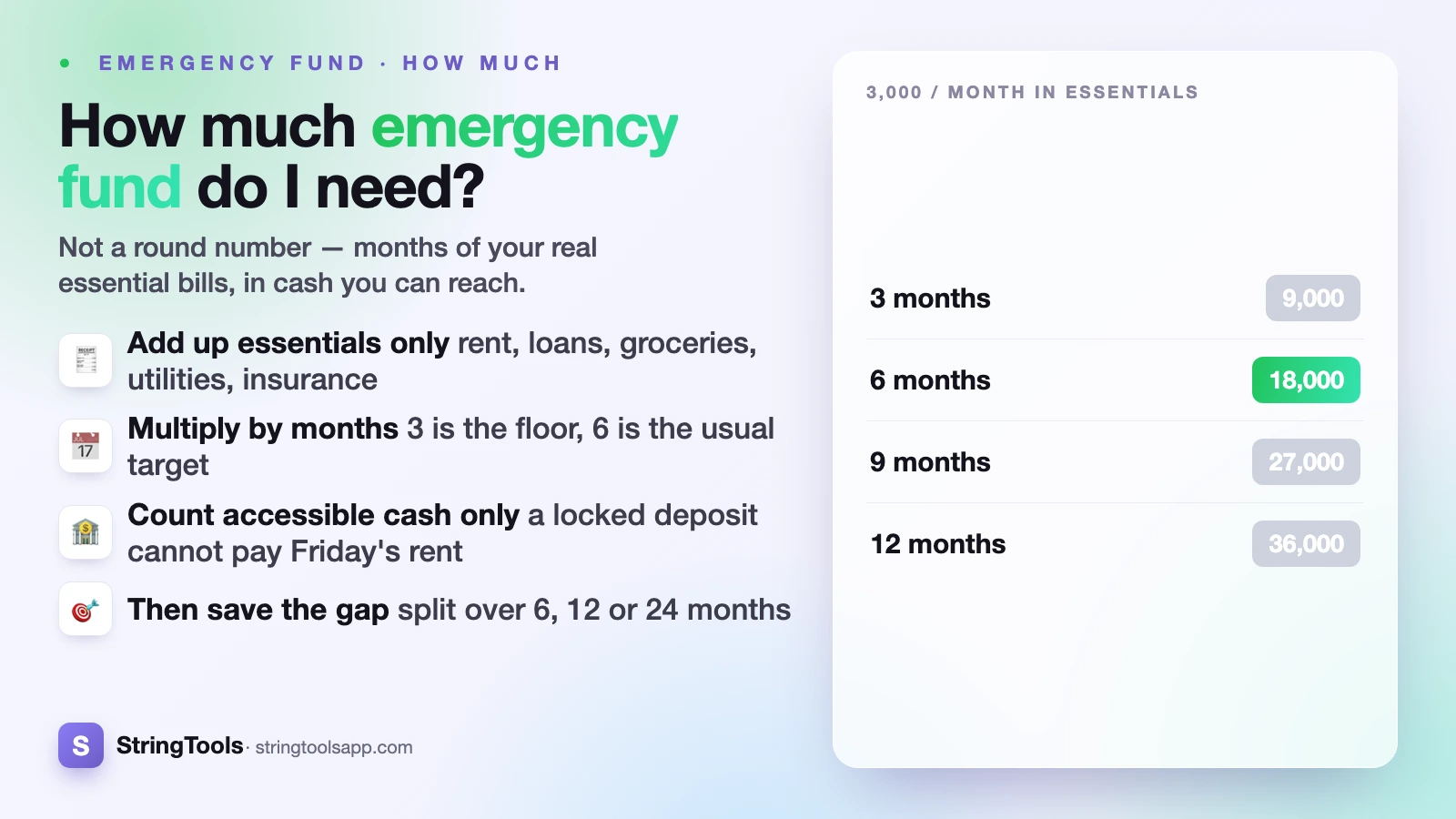
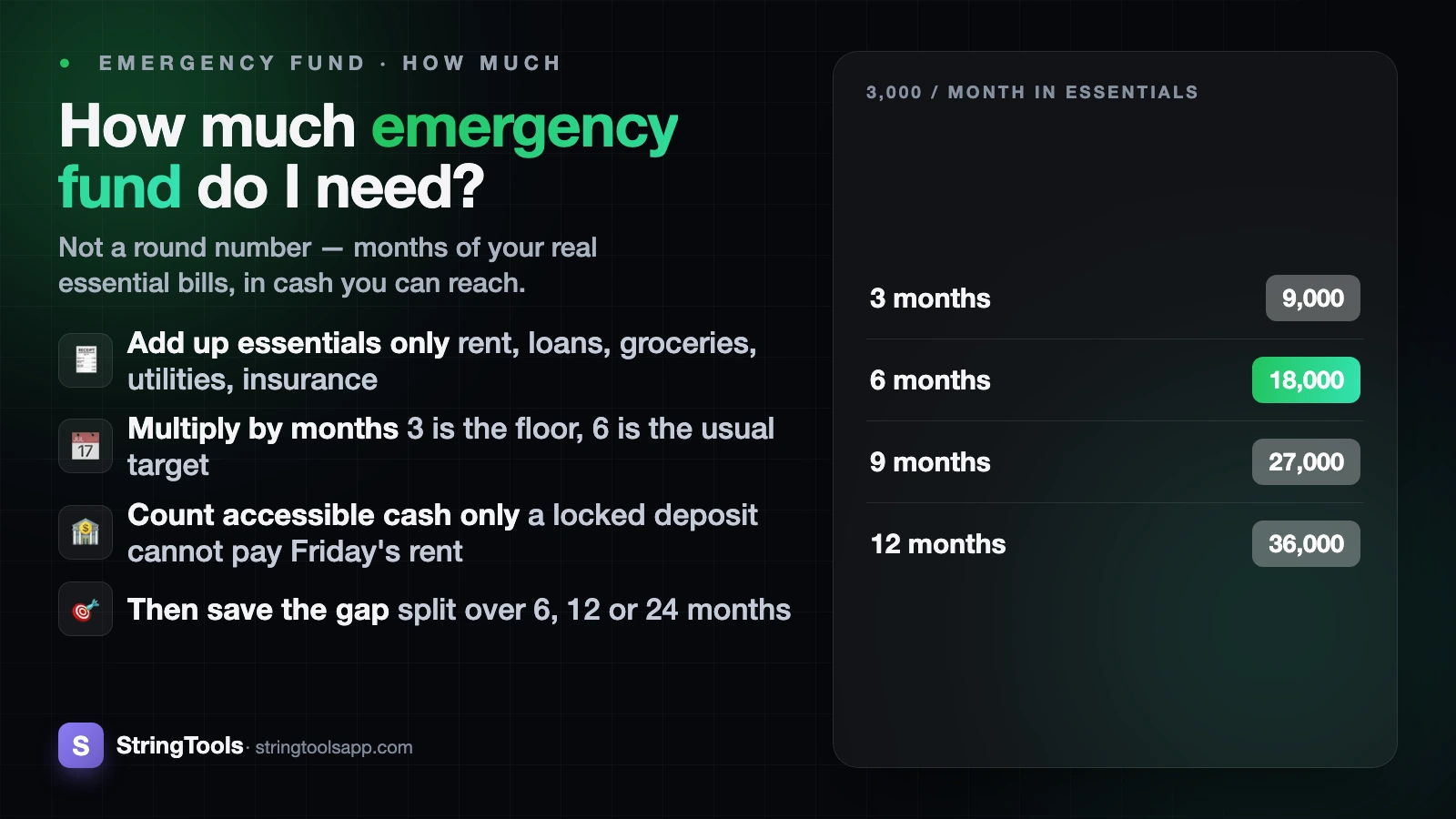
How much emergency fund do I need? Three to six months of essential expenses, not a round lump sum. A worked example, a 3/6/9/12-month table and a plan.
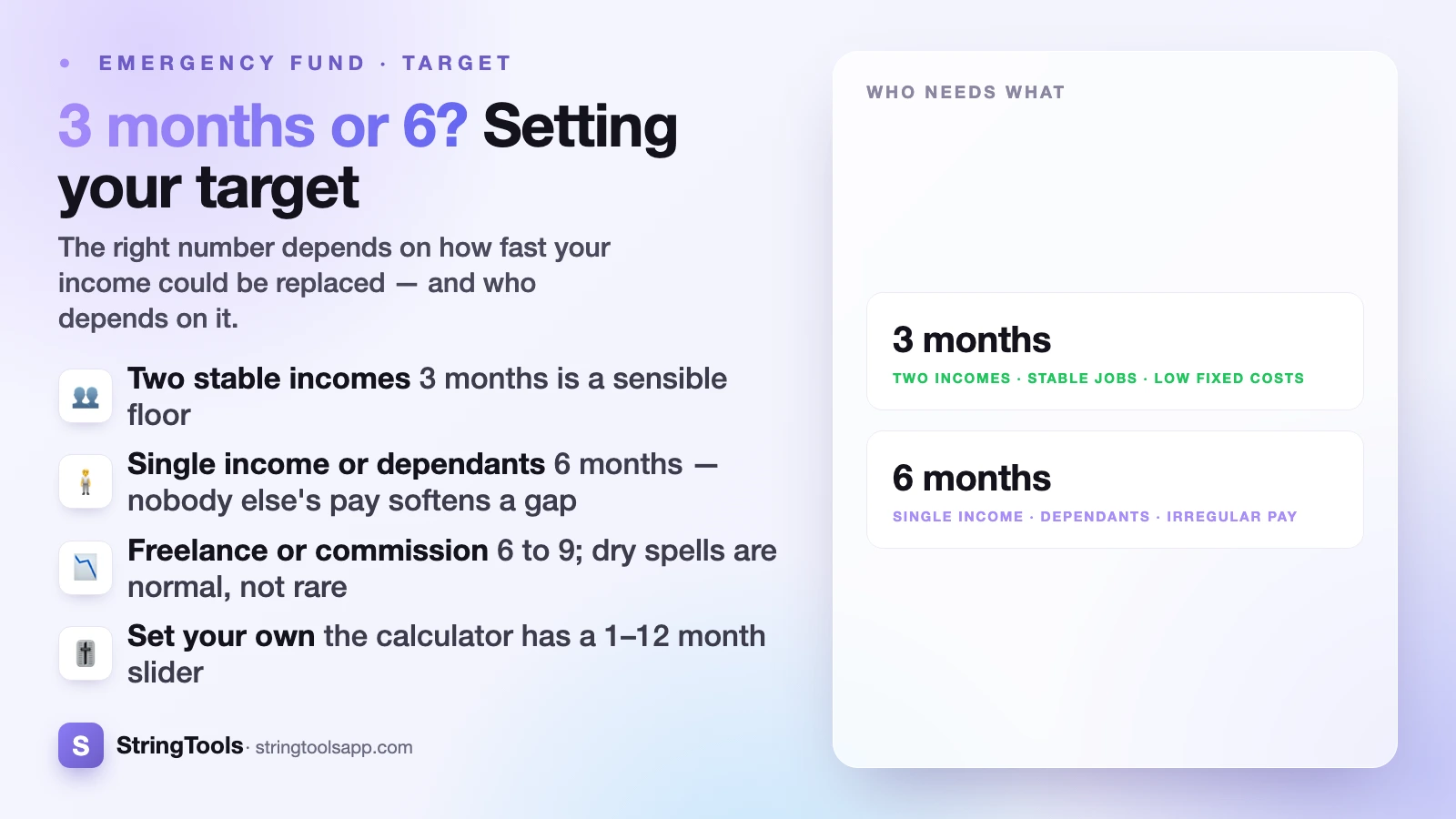
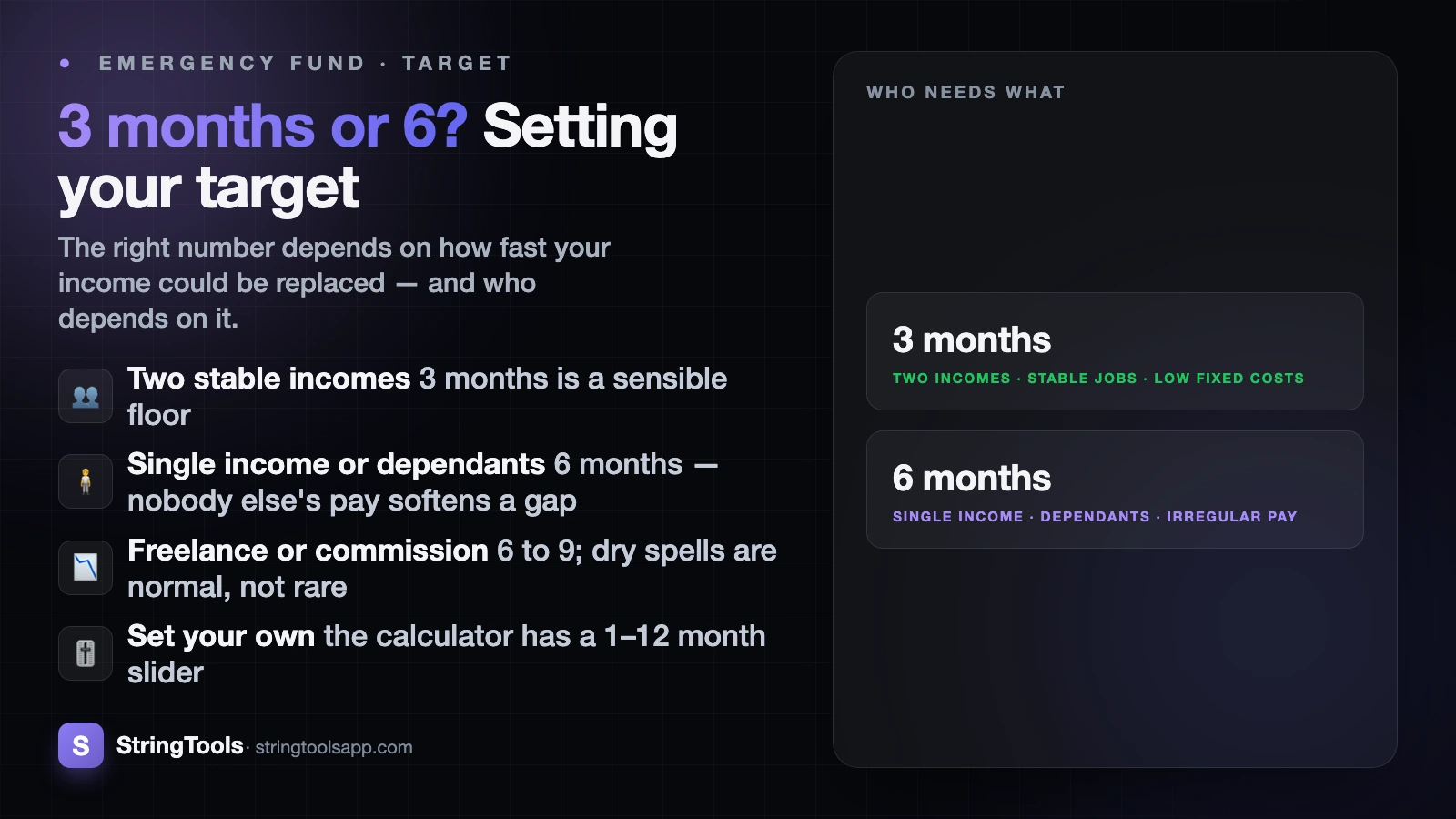
3 Months or 6 Months? How to Set Your Emergency Fund Target
3 month vs 6 month emergency fund: a five-factor framework, a situation-to-months table matching the 1 to 12 month slider, and a worked example.
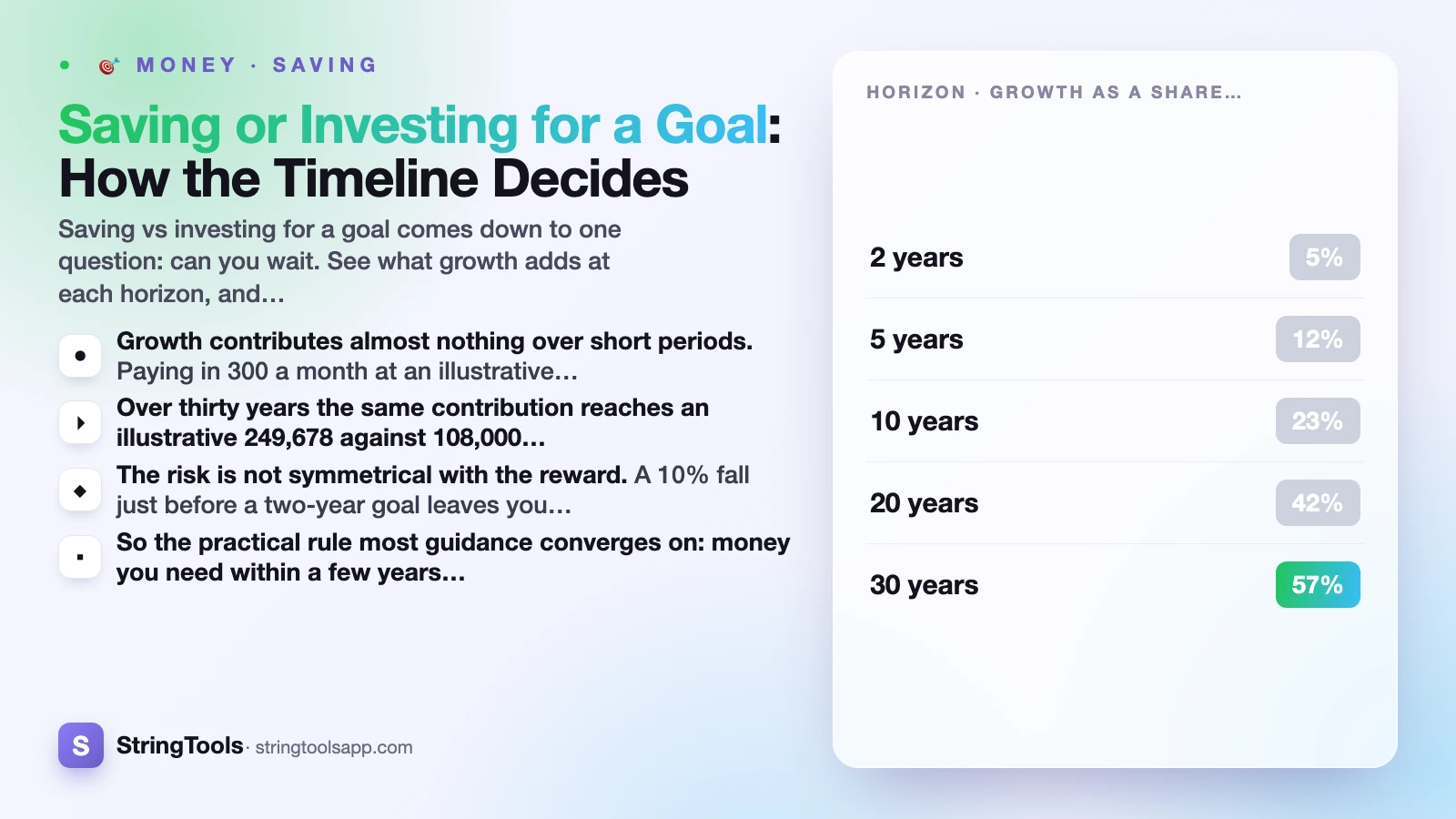
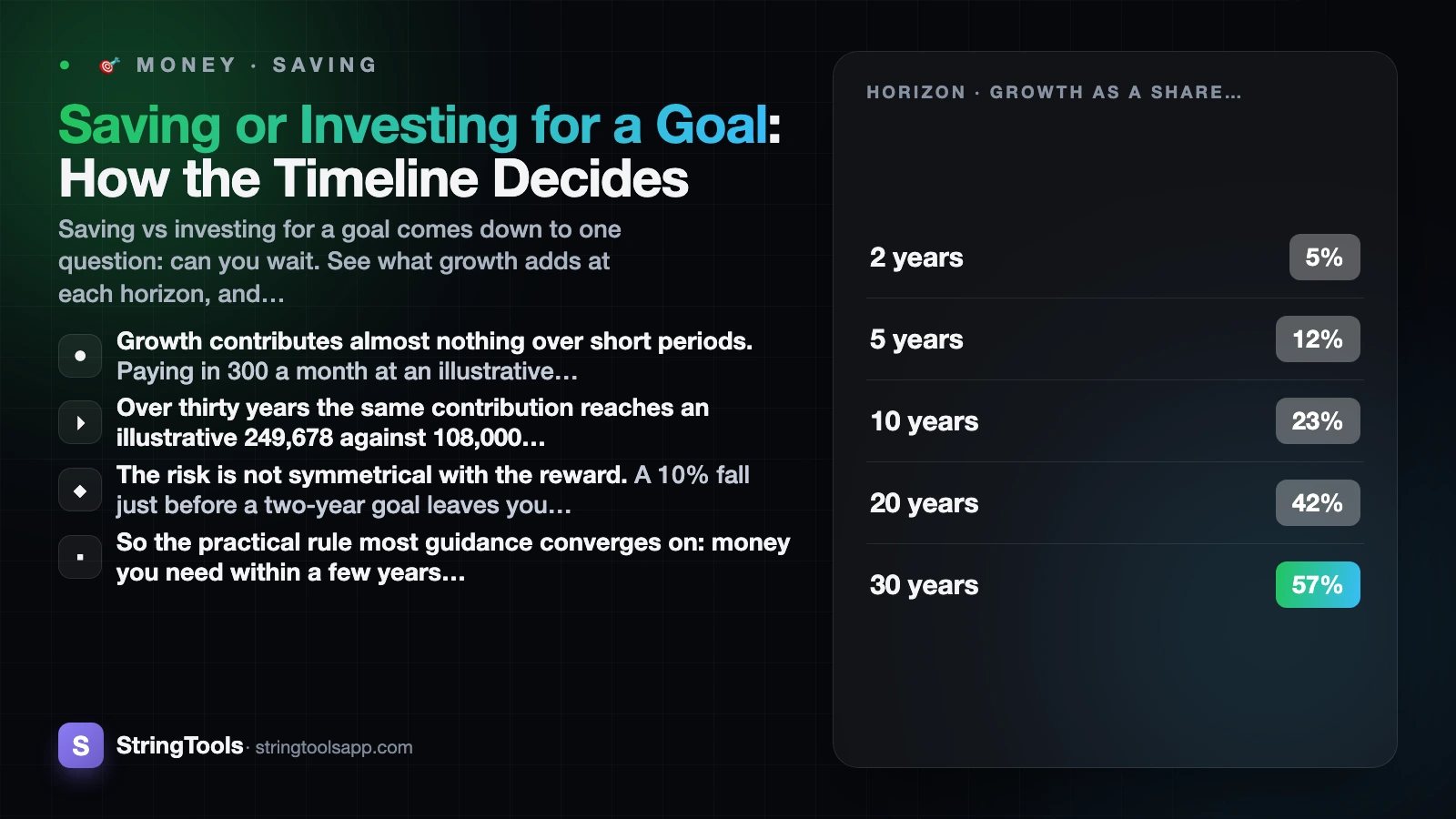
Saving or Investing for a Goal: How the Timeline Decides
Saving vs investing for a goal comes down to one question: can you wait. See what growth adds at each horizon, and what a fall costs you near the date.
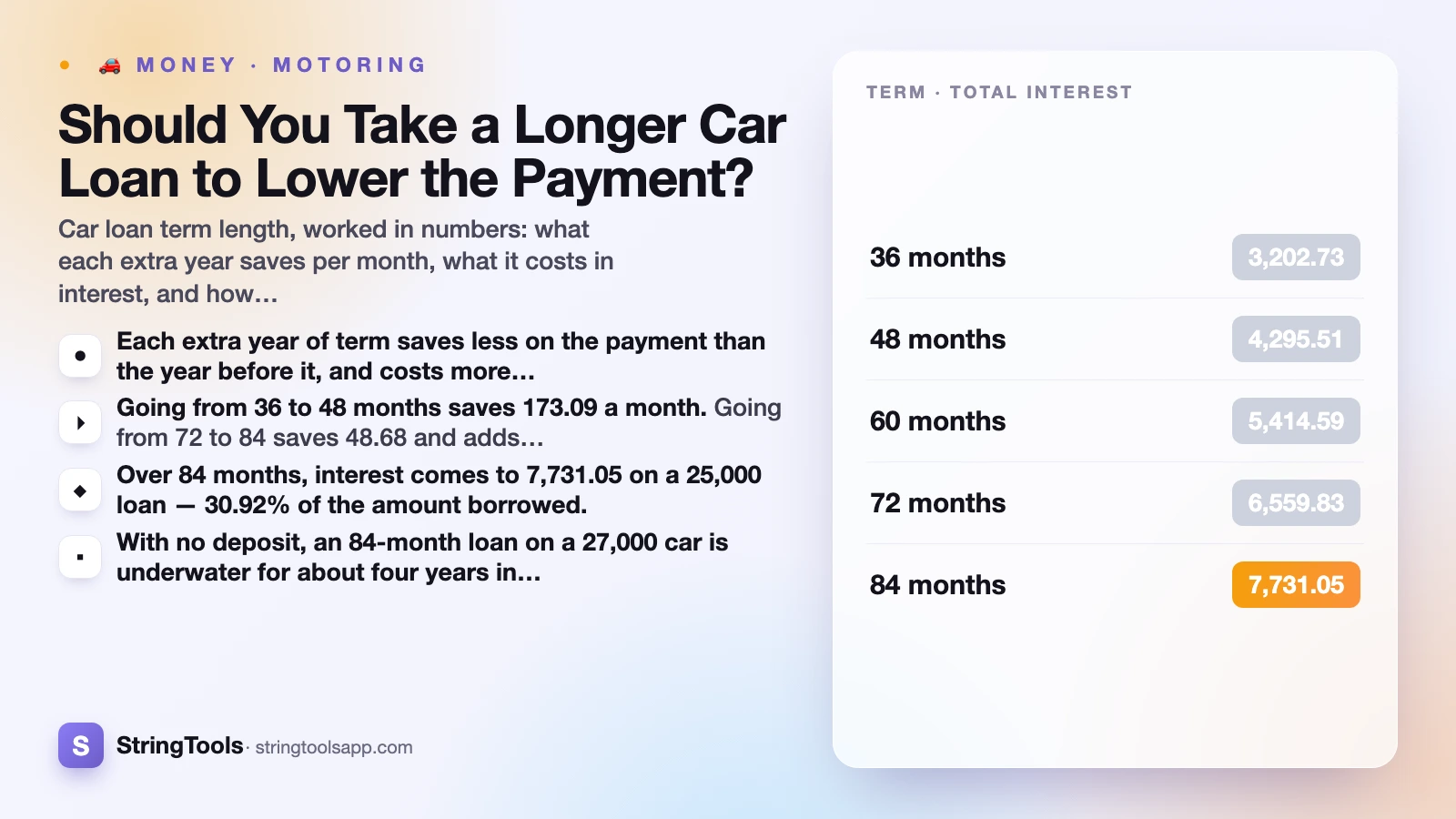
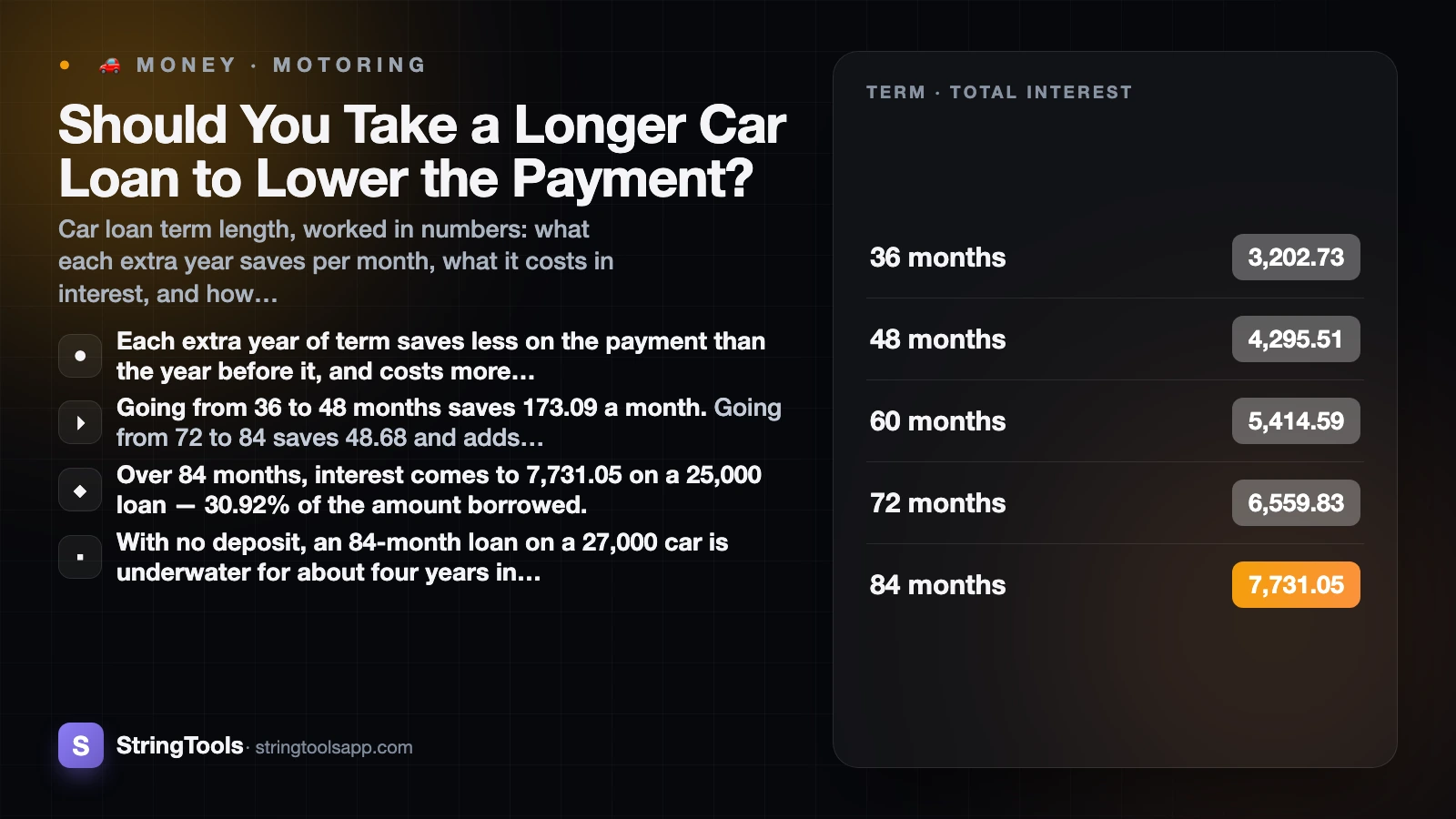
Should You Take a Longer Car Loan to Lower the Payment?
Car loan term length, worked in numbers: what each extra year saves per month, what it costs in interest, and how long a 7-year loan leaves you underwater.
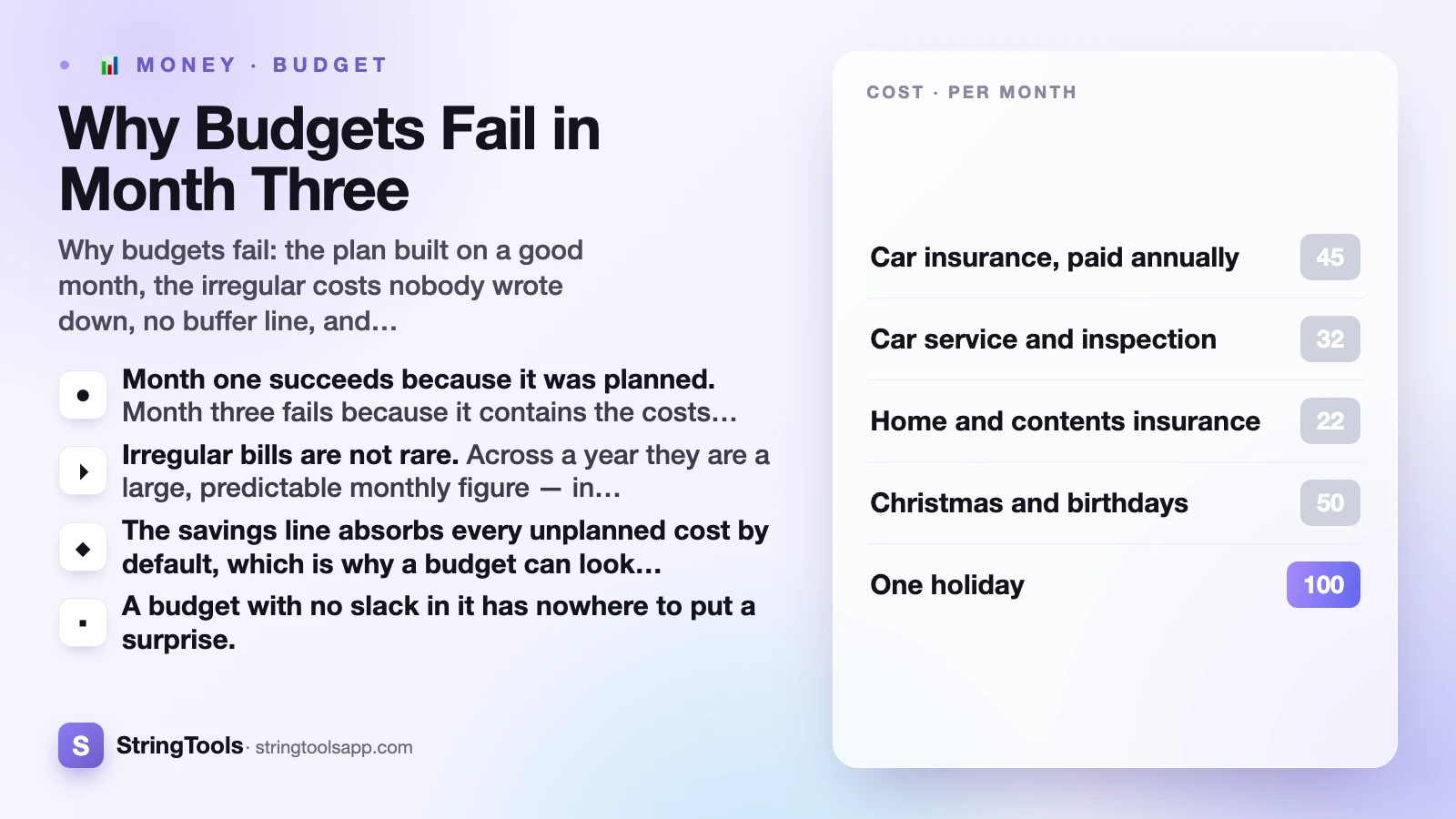
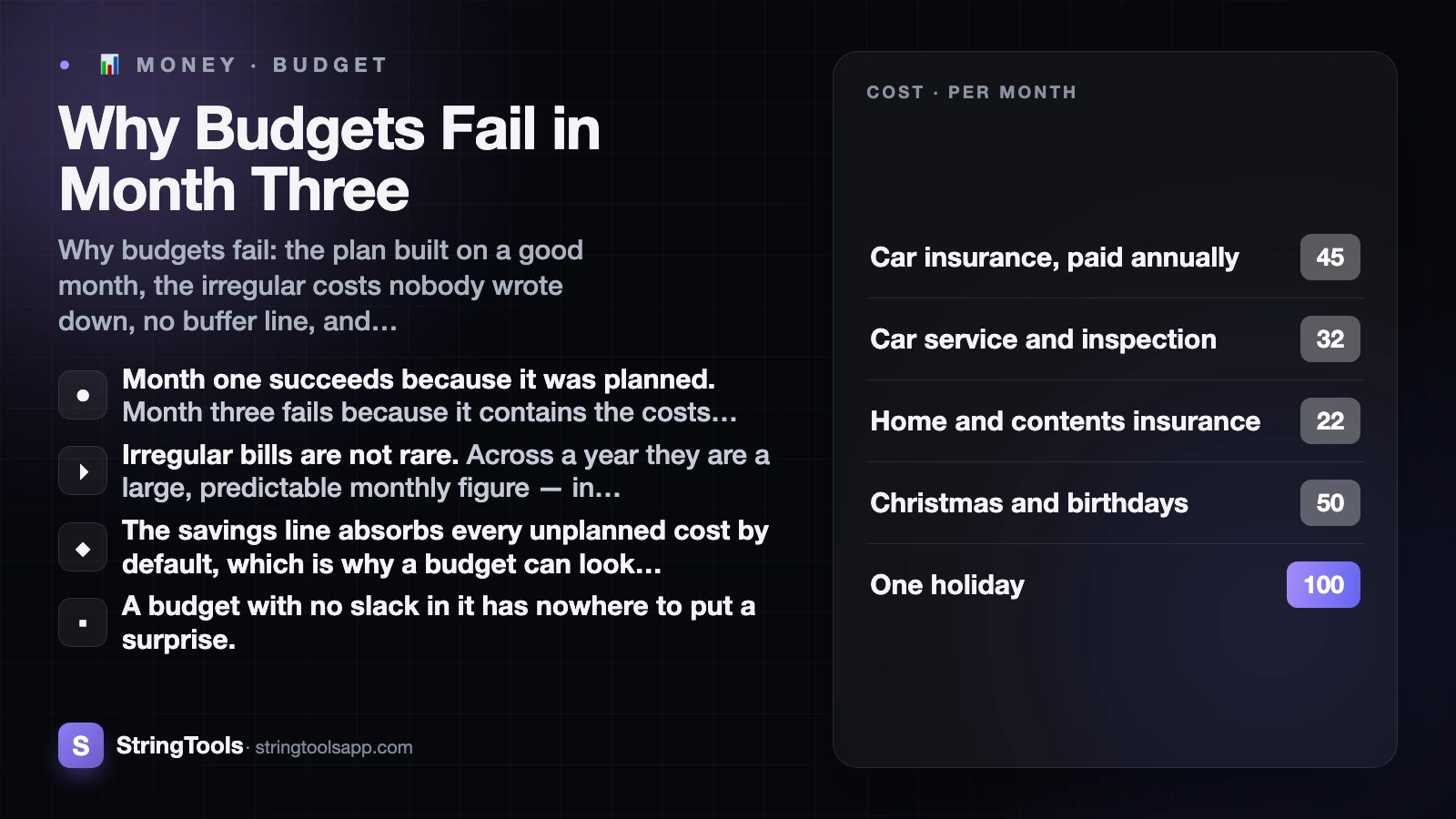
Why Budgets Fail in Month Three
Why budgets fail: the plan built on a good month, the irregular costs nobody wrote down, no buffer line, and all-or-nothing thinking — with the numbers.
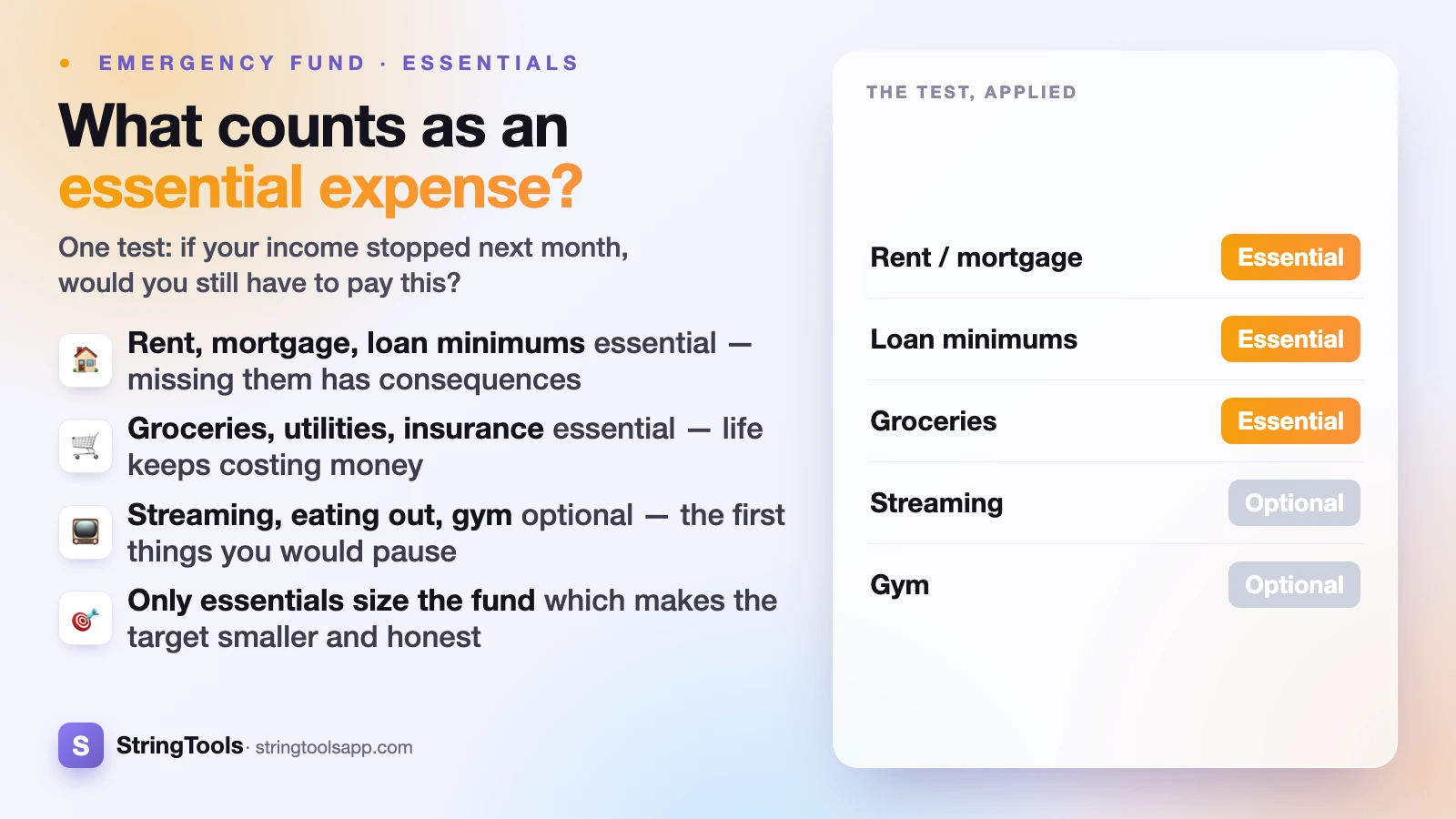
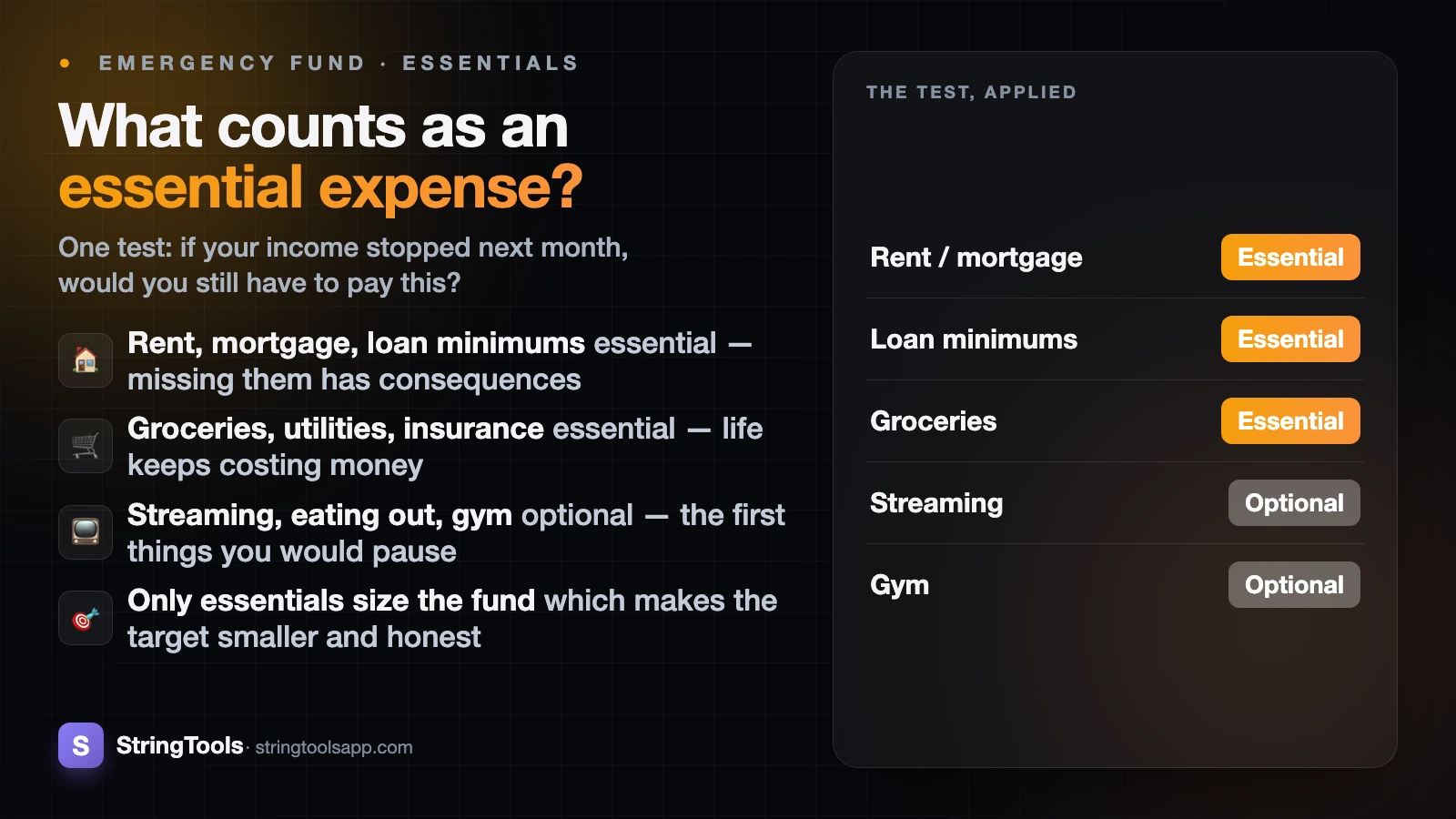
What Counts as an Essential Expense? The Emergency Fund List
Essential vs non-essential expenses explained: the stopped-income test, 20 common costs classified, the grey areas, and a worked example that sizes your fund.
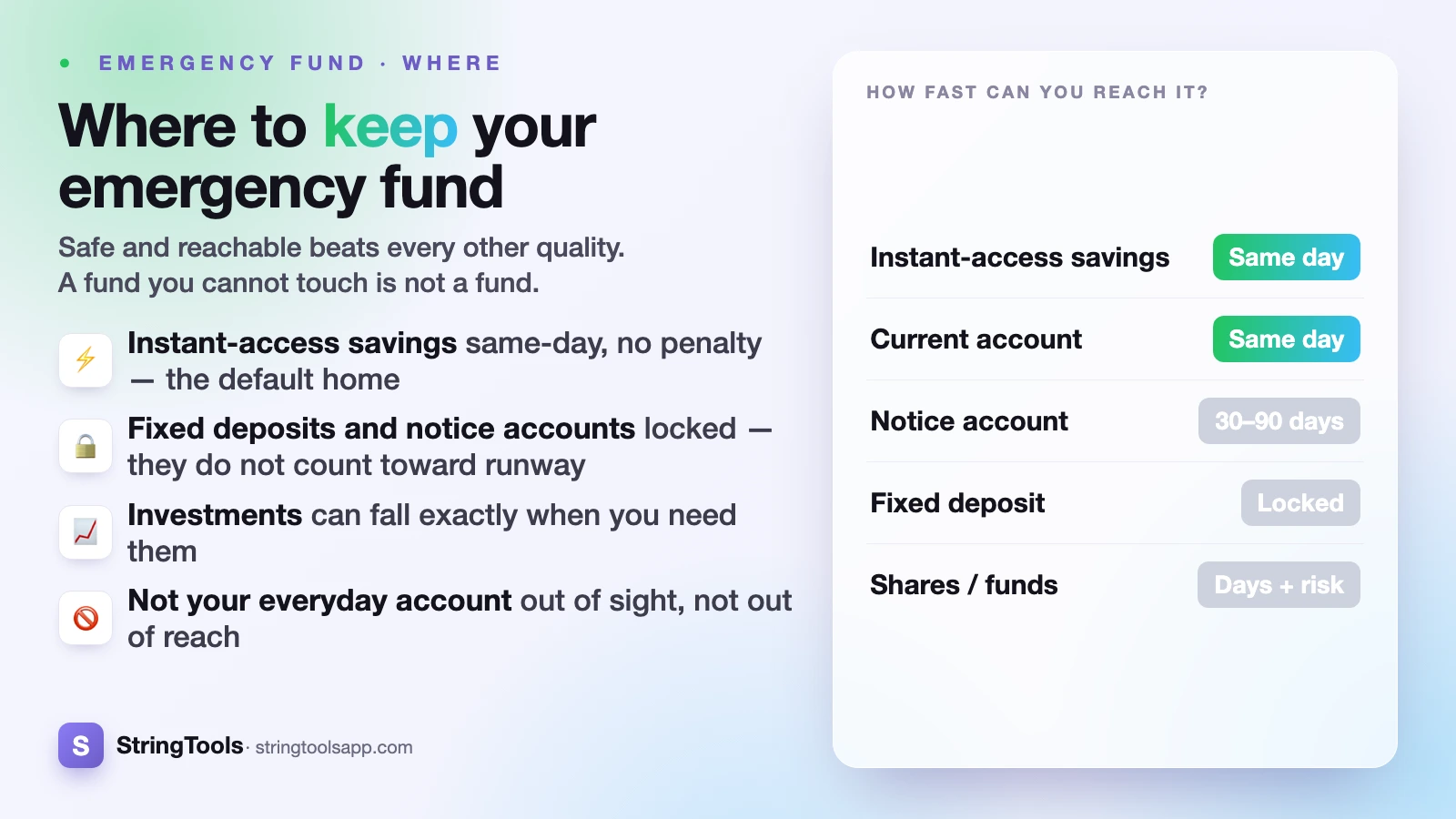
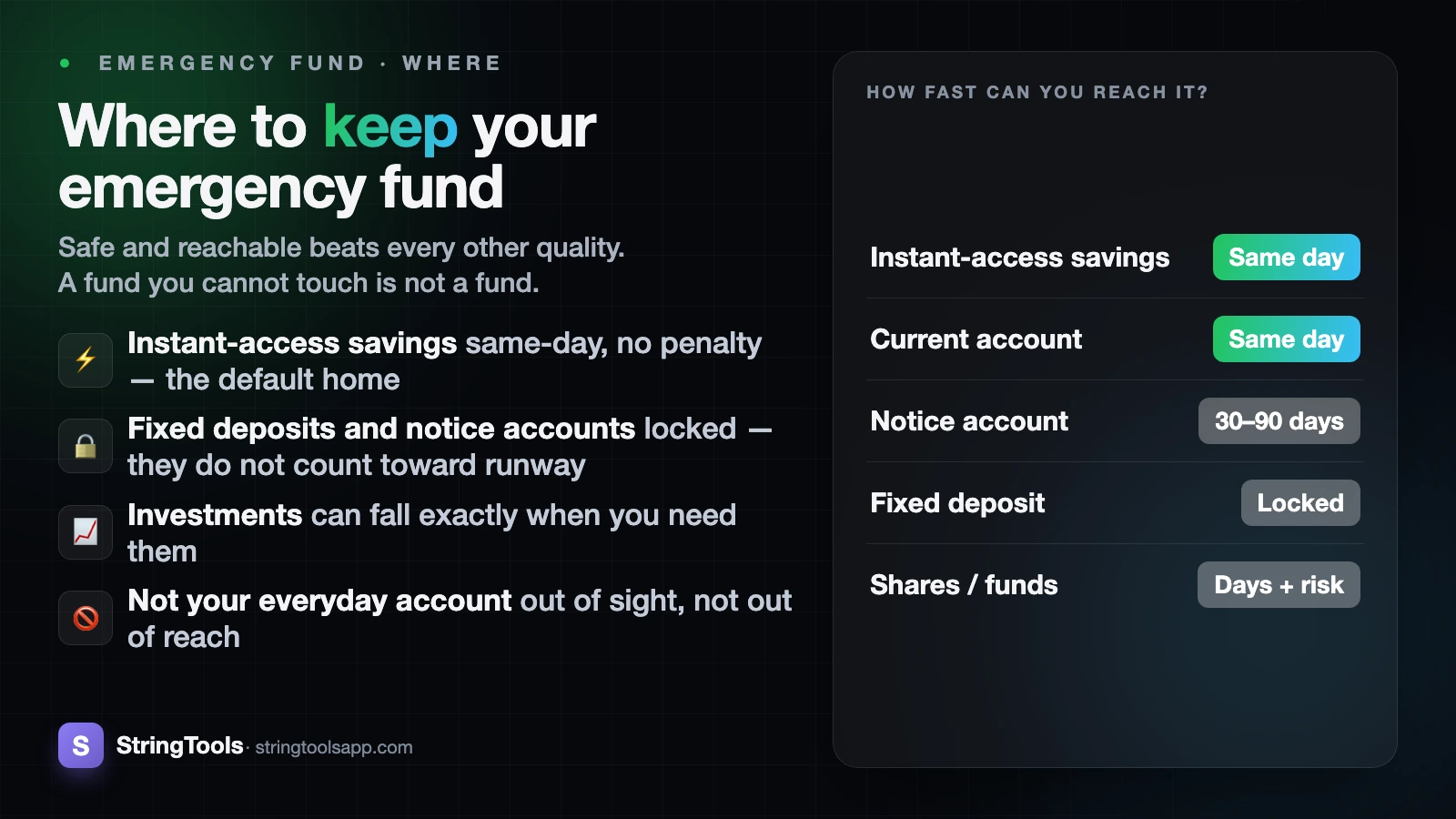
Where to Keep Your Emergency Fund: Instant Access vs Locked
Where to keep your emergency fund: instant-access savings, notice accounts, fixed deposits, money-market funds and cash compared on access and protection.
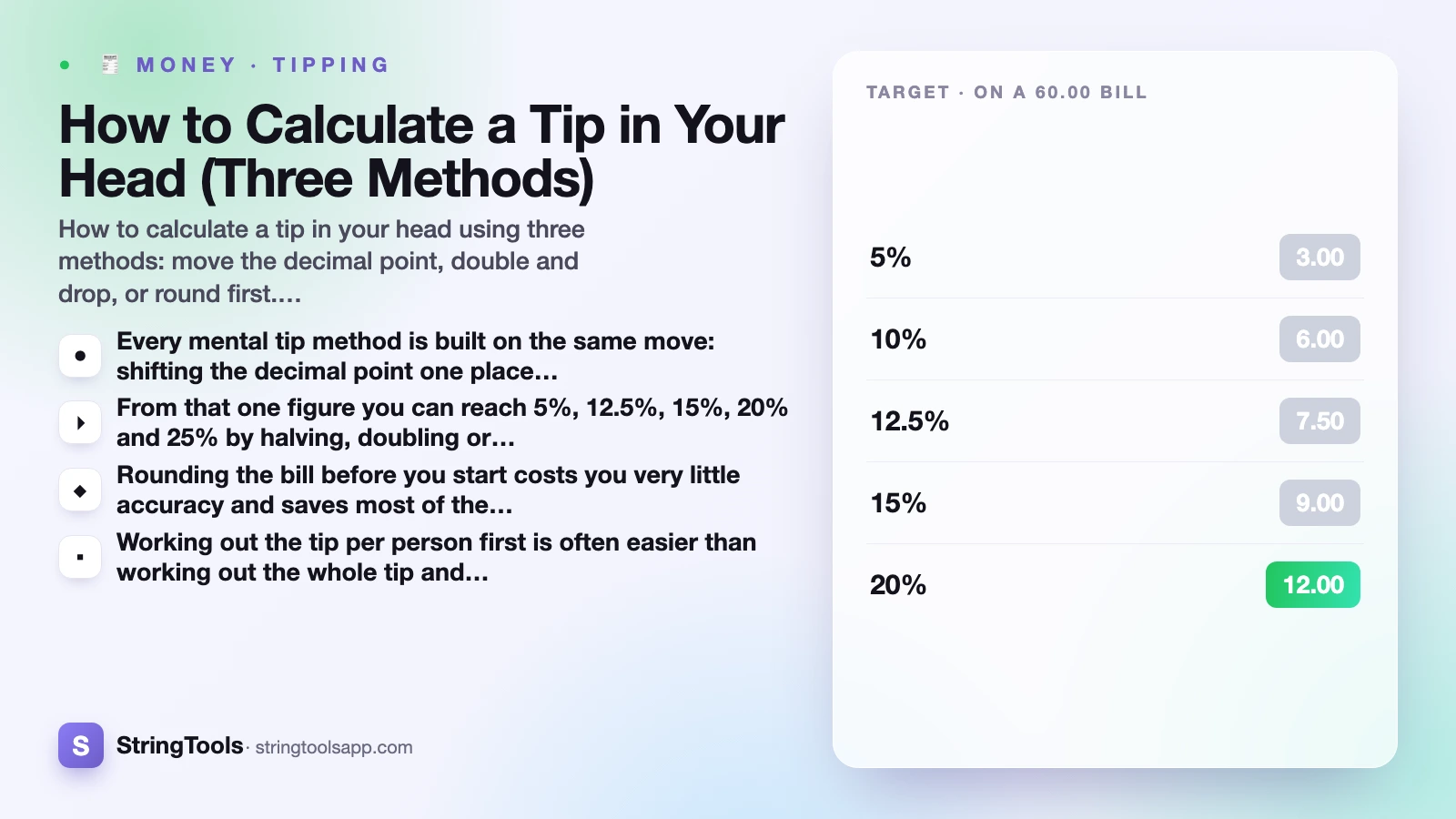
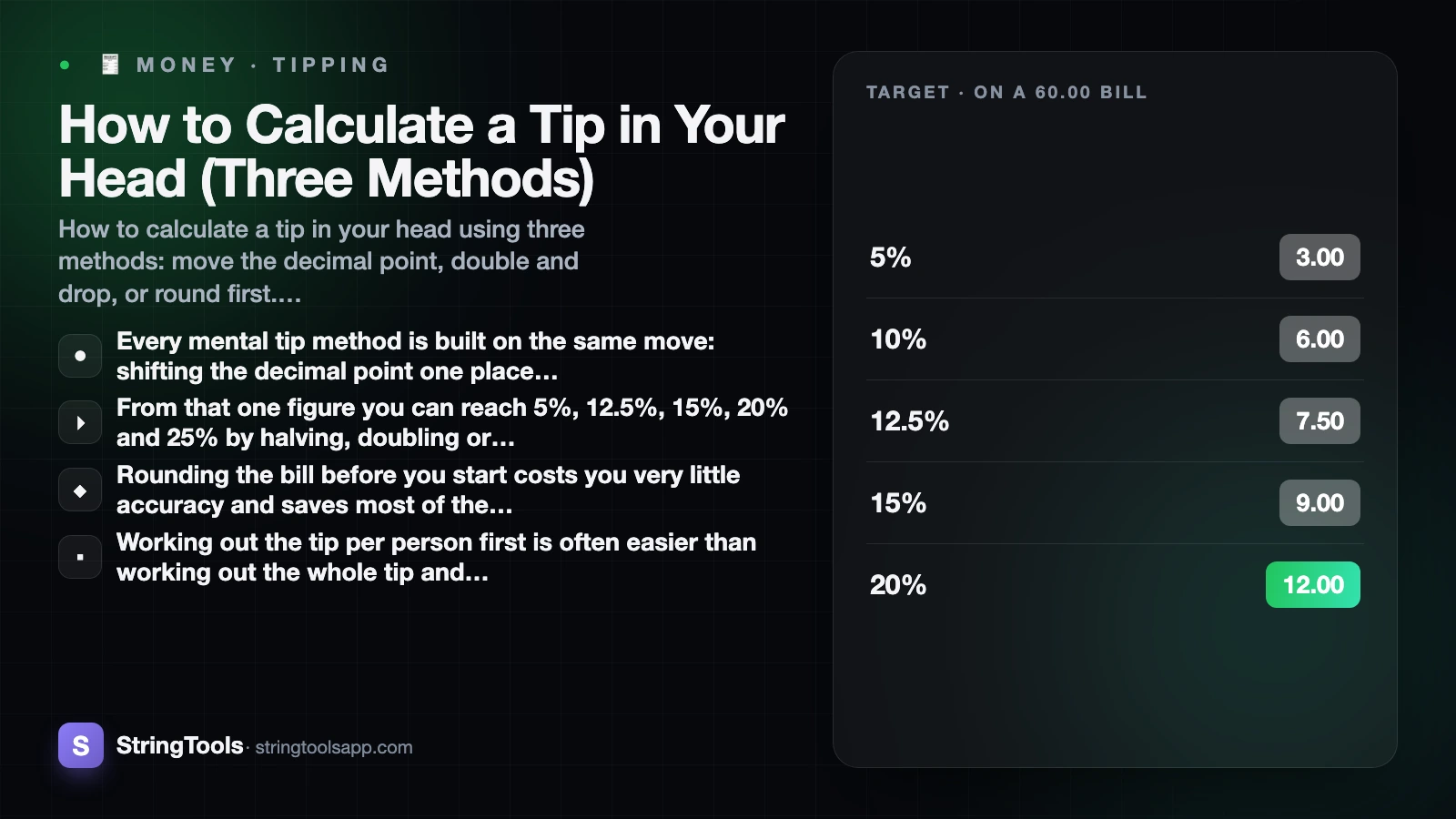
How to Calculate a Tip in Your Head (Three Methods)
How to calculate a tip in your head using three methods: move the decimal point, double and drop, or round first. With a reference table and worked examples.
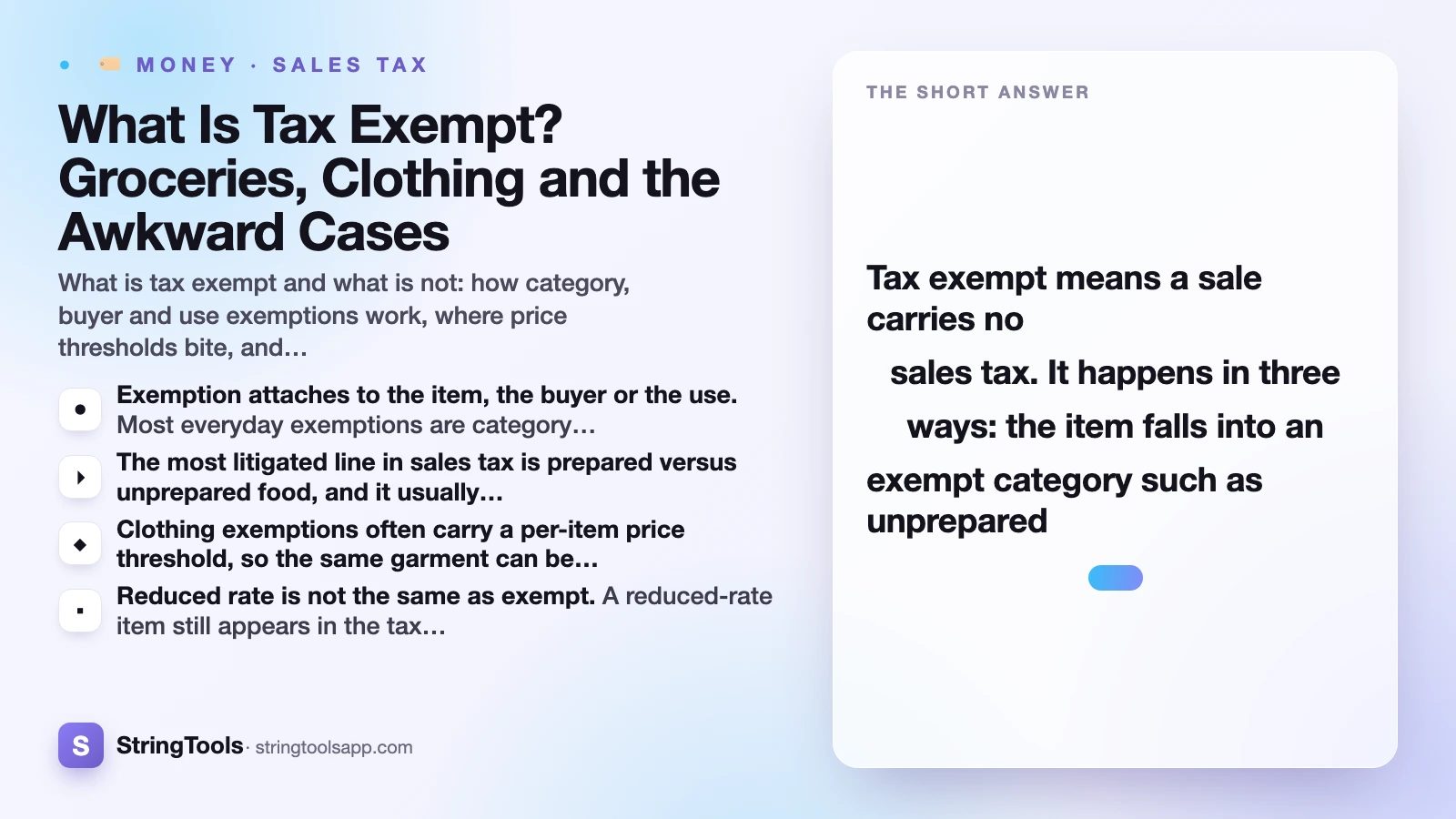
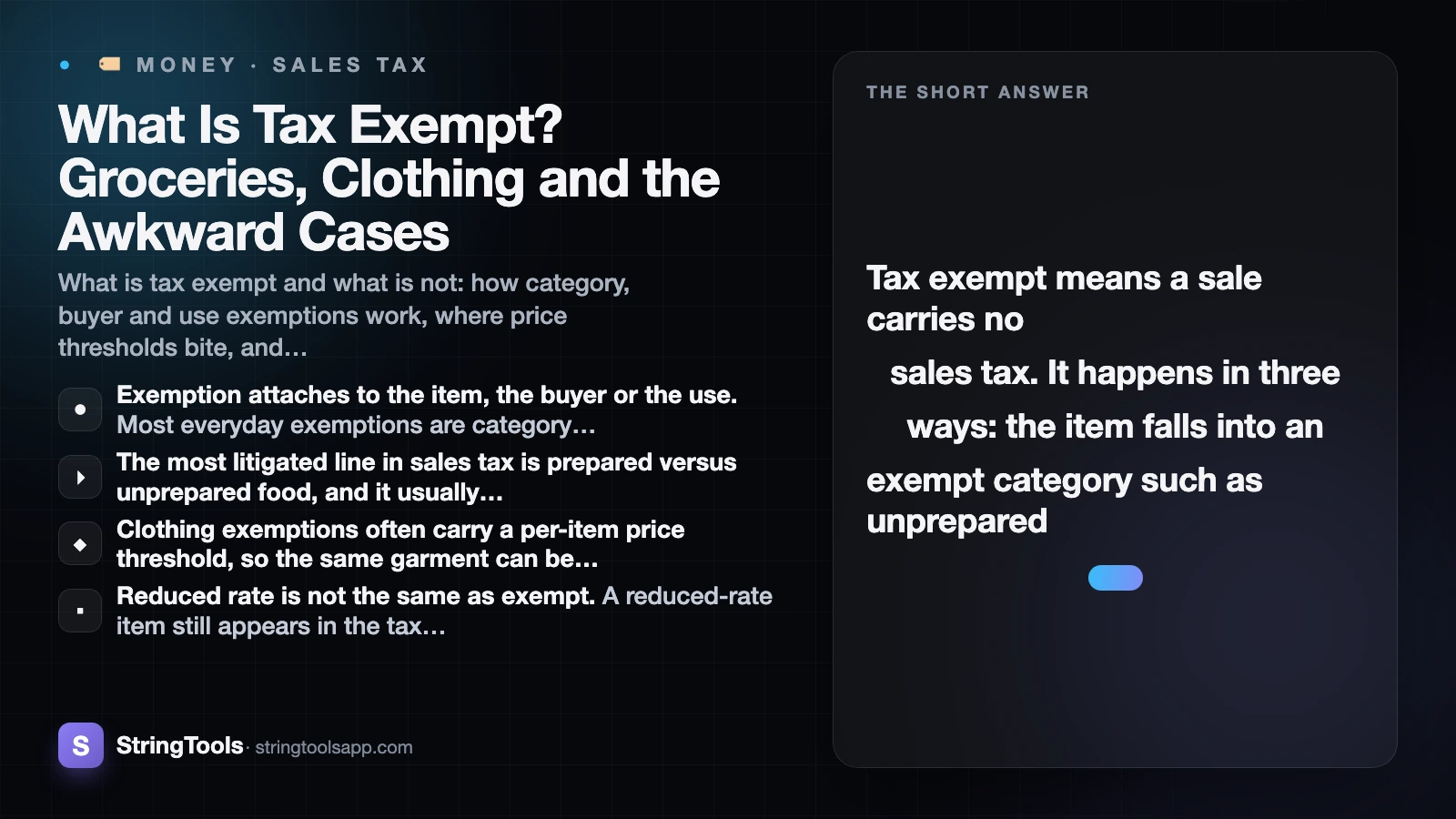
What Is Tax Exempt? Groceries, Clothing and the Awkward Cases
What is tax exempt and what is not: how category, buyer and use exemptions work, where price thresholds bite, and the awkward grocery cases.
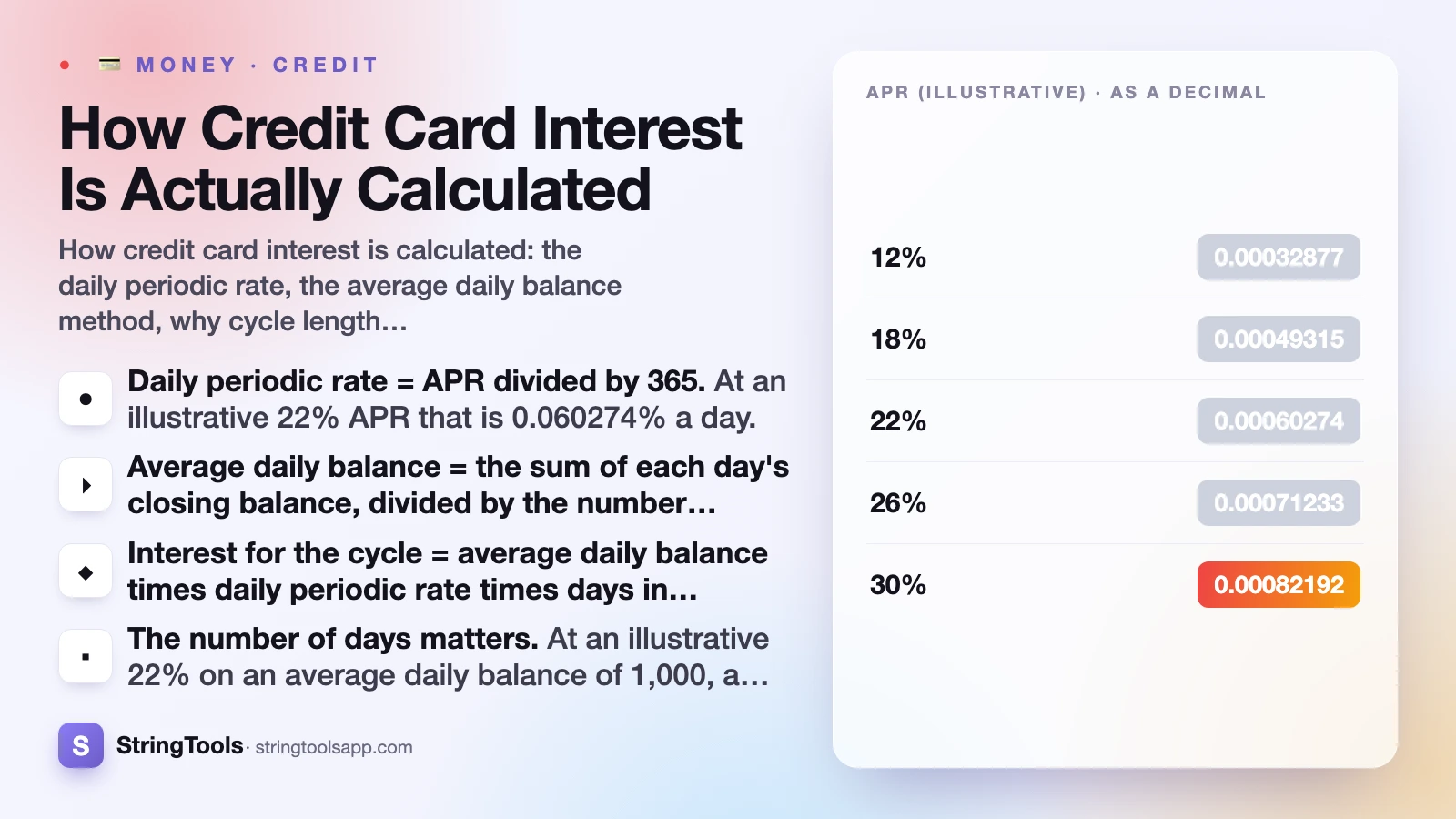
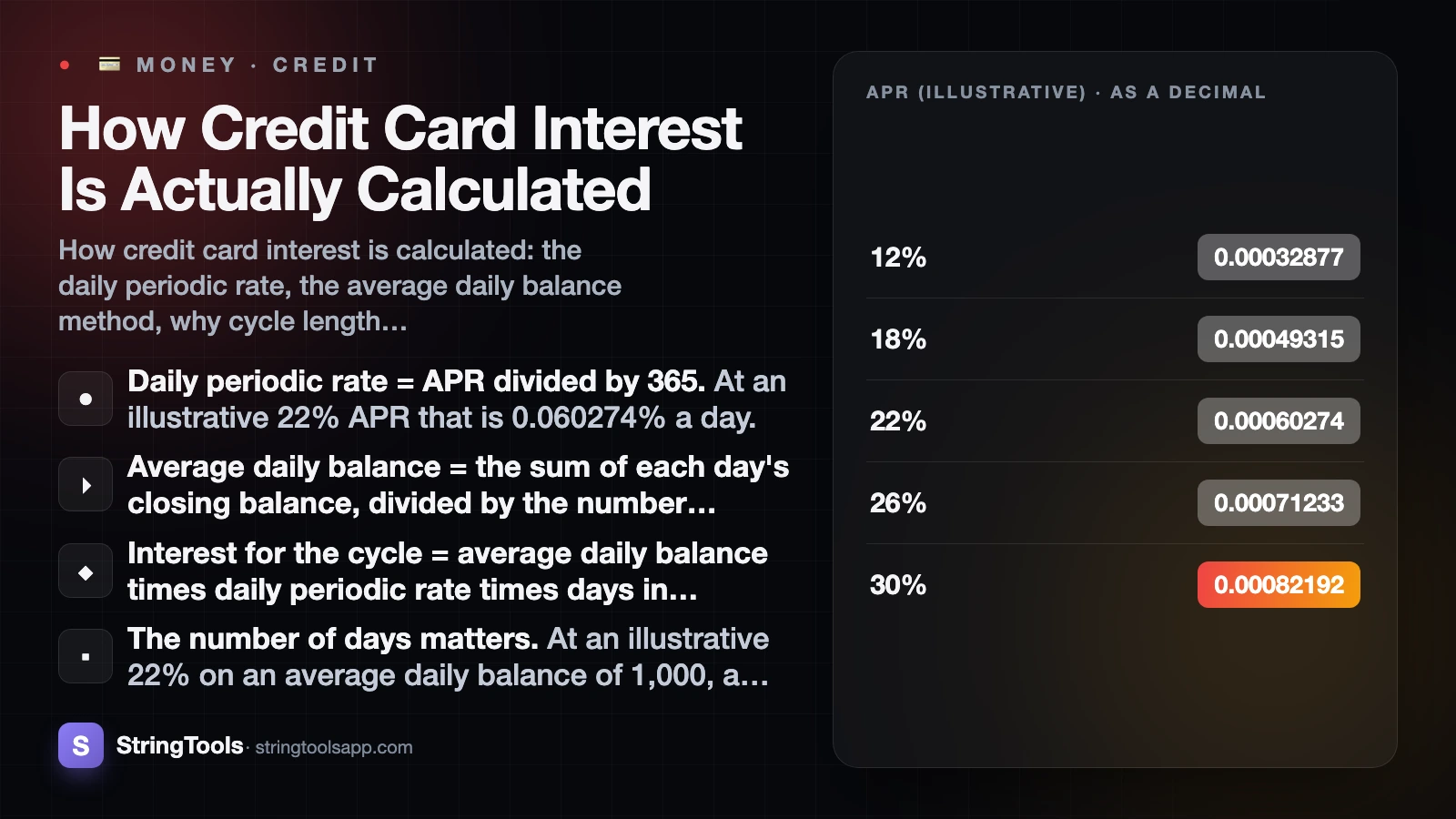
How Credit Card Interest Is Actually Calculated
How credit card interest is calculated: the daily periodic rate, the average daily balance method, why cycle length changes the bill, and grace periods.
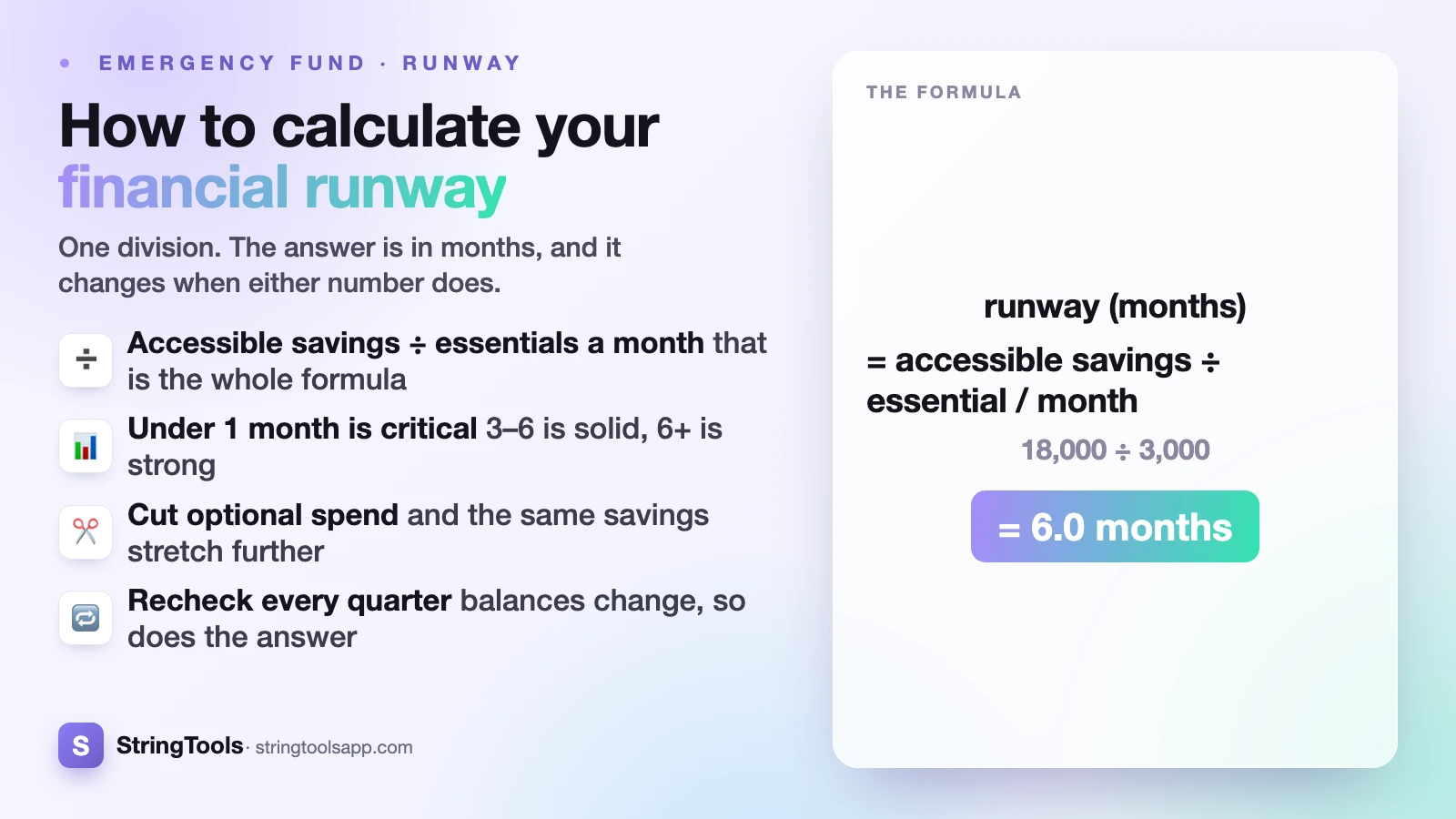
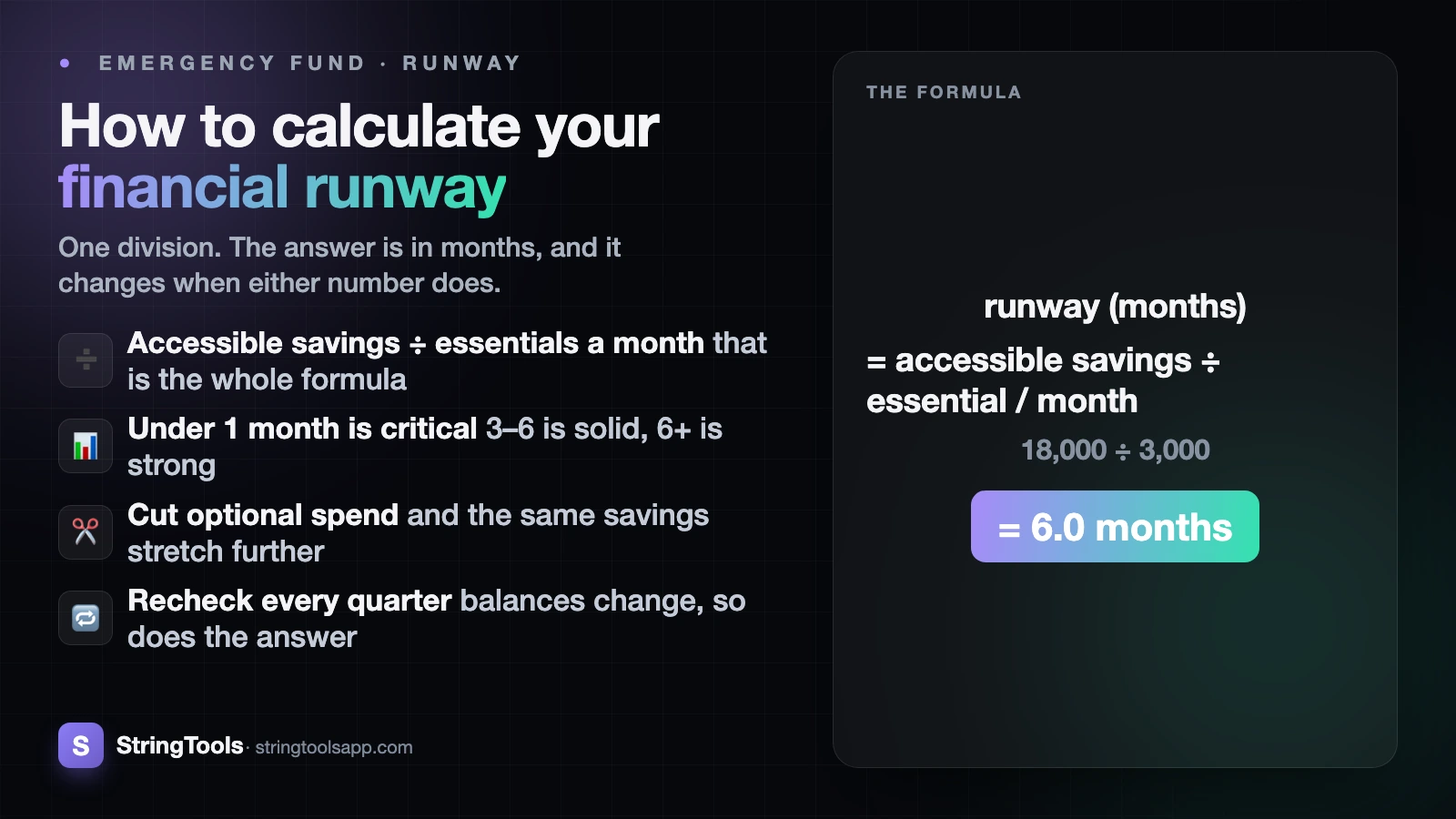
How to Calculate Your Financial Runway in Months
Financial runway is how many months of essential expenses your savings cover. The formula, a worked example with 18,000, and the two levers that move it.
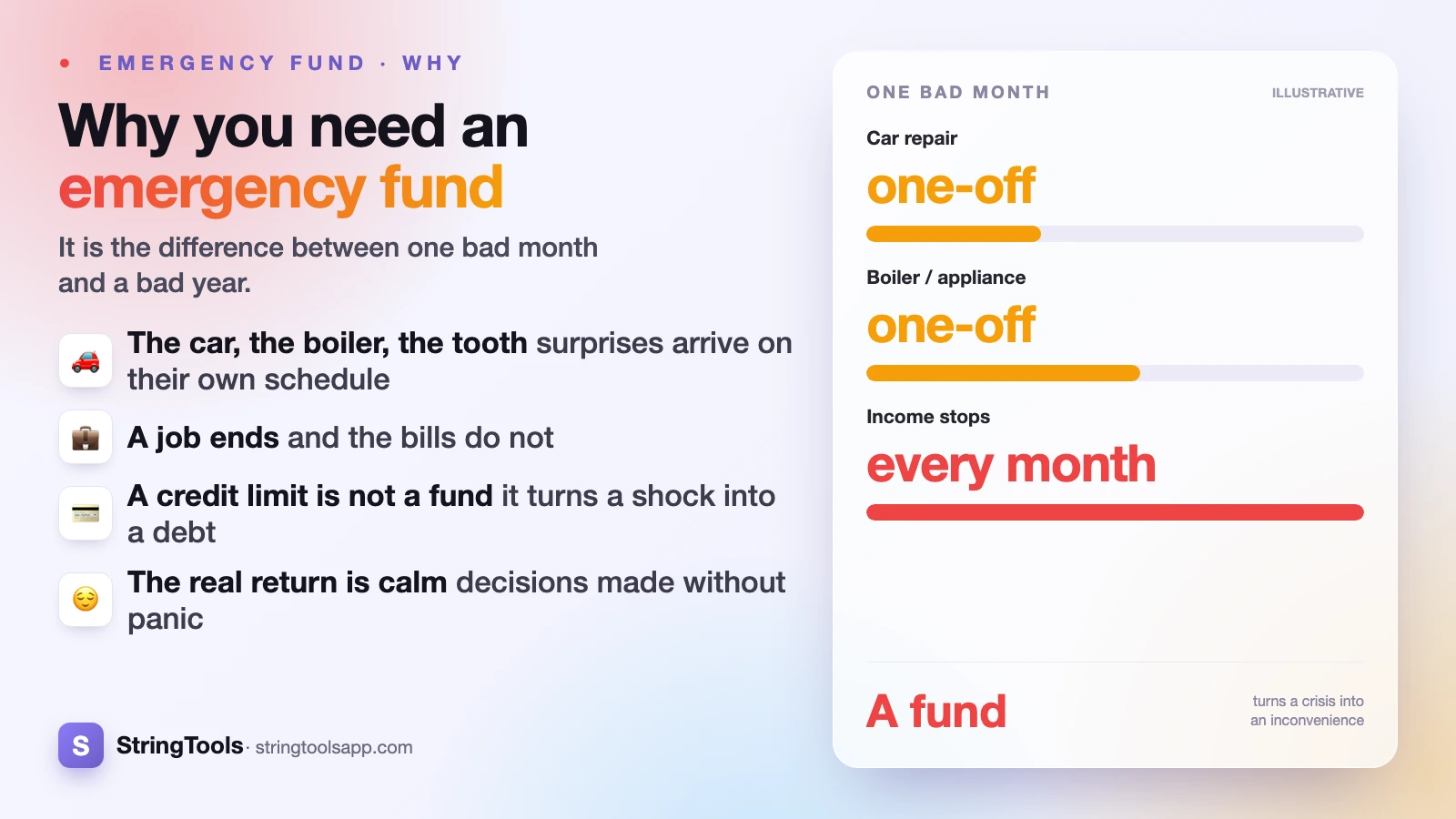
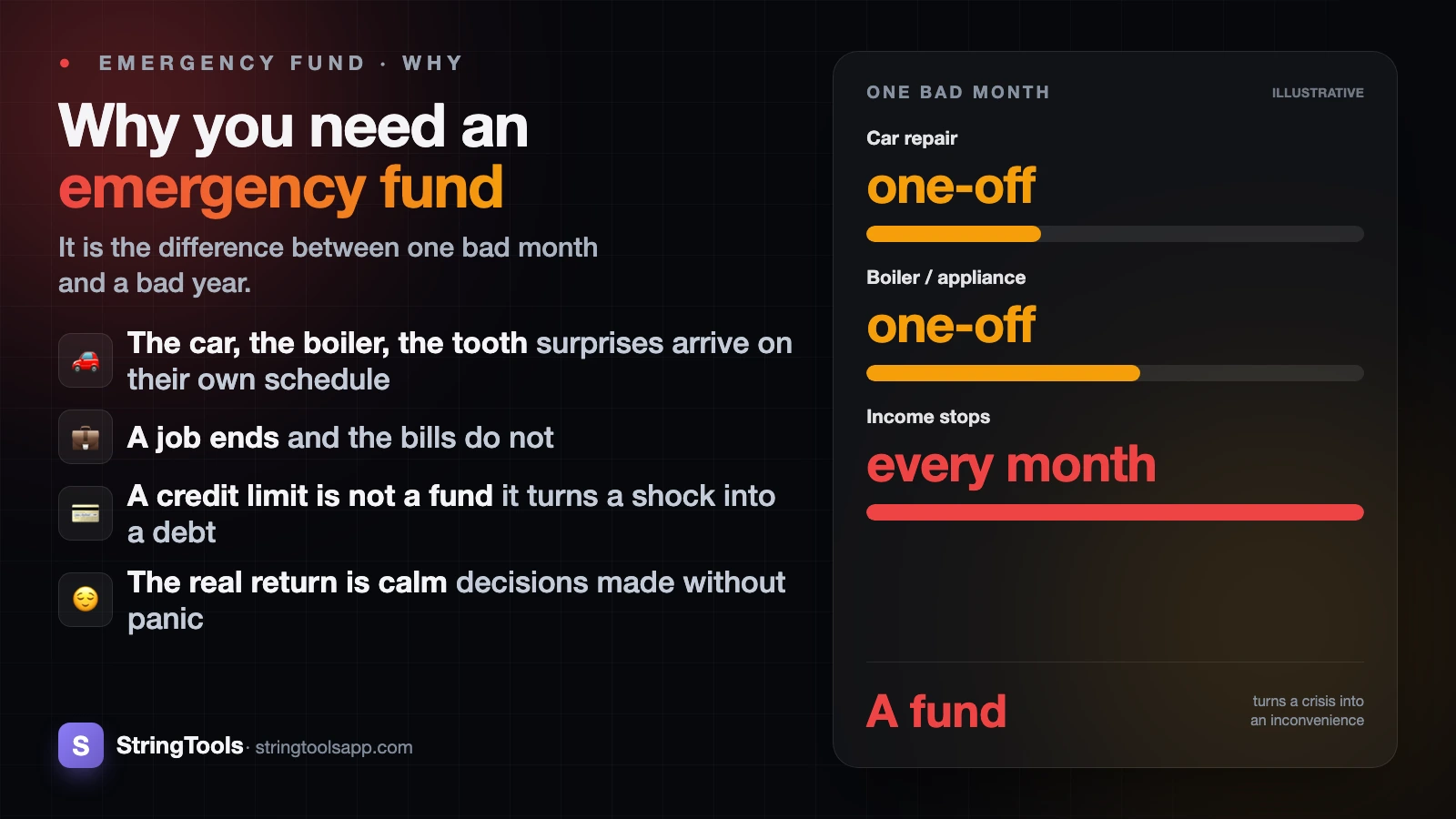
Why You Need an Emergency Fund, Even With a Good Job
Why is an emergency fund important? It stops a bad month becoming a bad year. How job loss, medical and car bills hit without cash, and why a card is no fund.
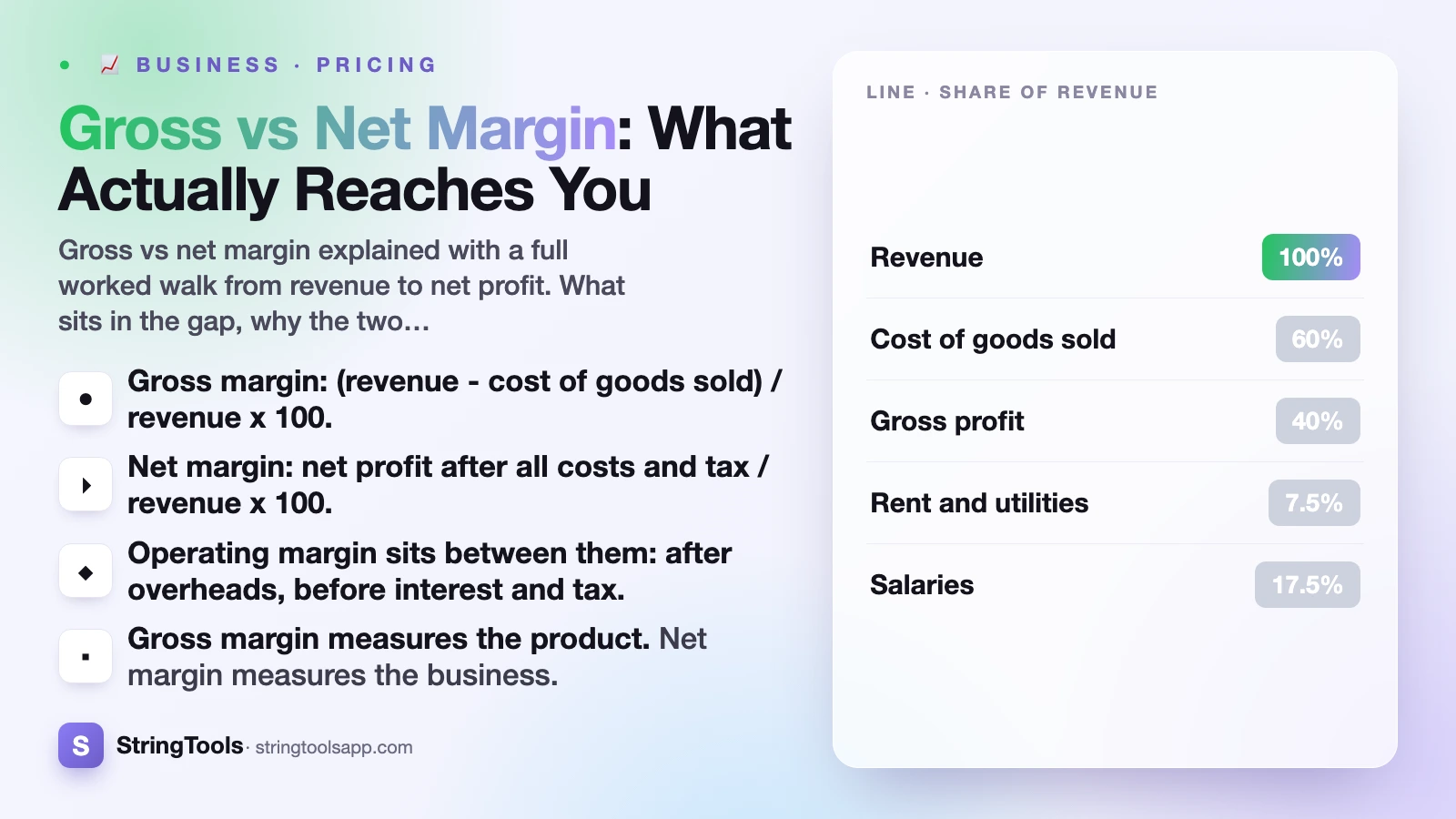
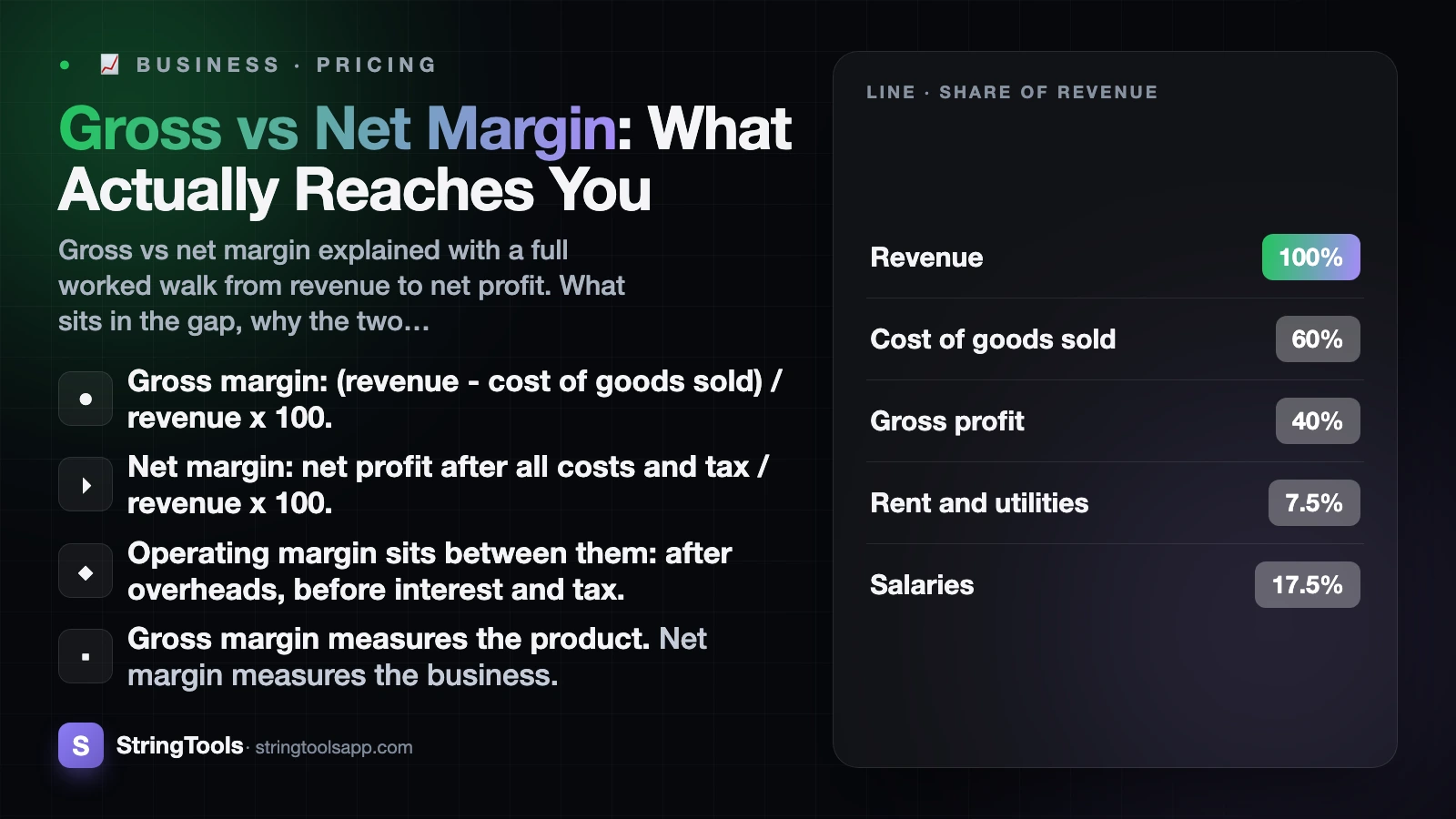
Gross vs Net Margin: What Actually Reaches You
Gross vs net margin explained with a full worked walk from revenue to net profit. What sits in the gap, why the two move differently, and which to use when.

Margin of Safety: How Far Above Break-Even Are You?
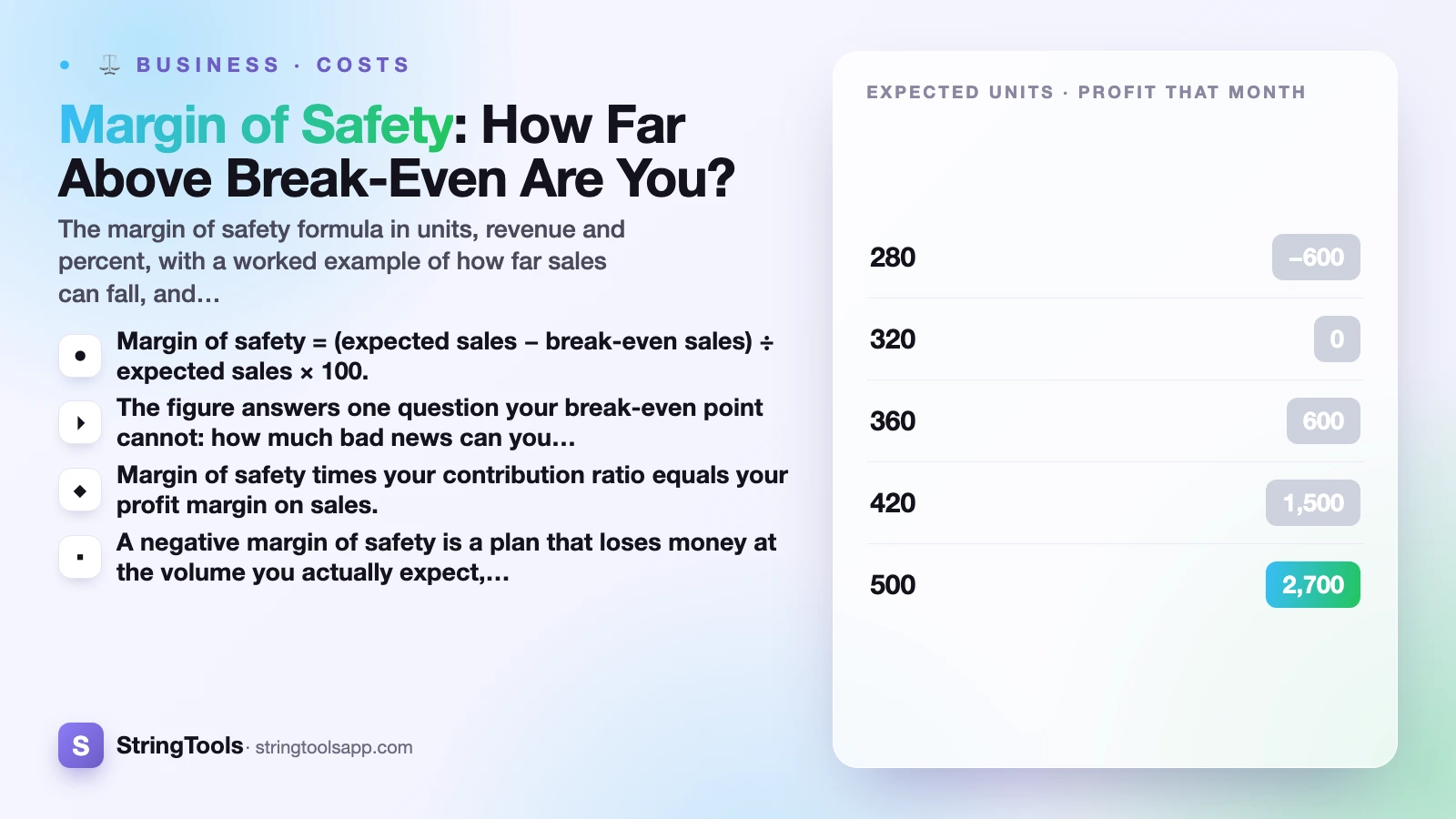
The margin of safety formula in units, revenue and percent, with a worked example of how far sales can fall, and why an annual figure hides a bad quarter.
Hourly, Day Rate or Fixed Price: Which to Quote
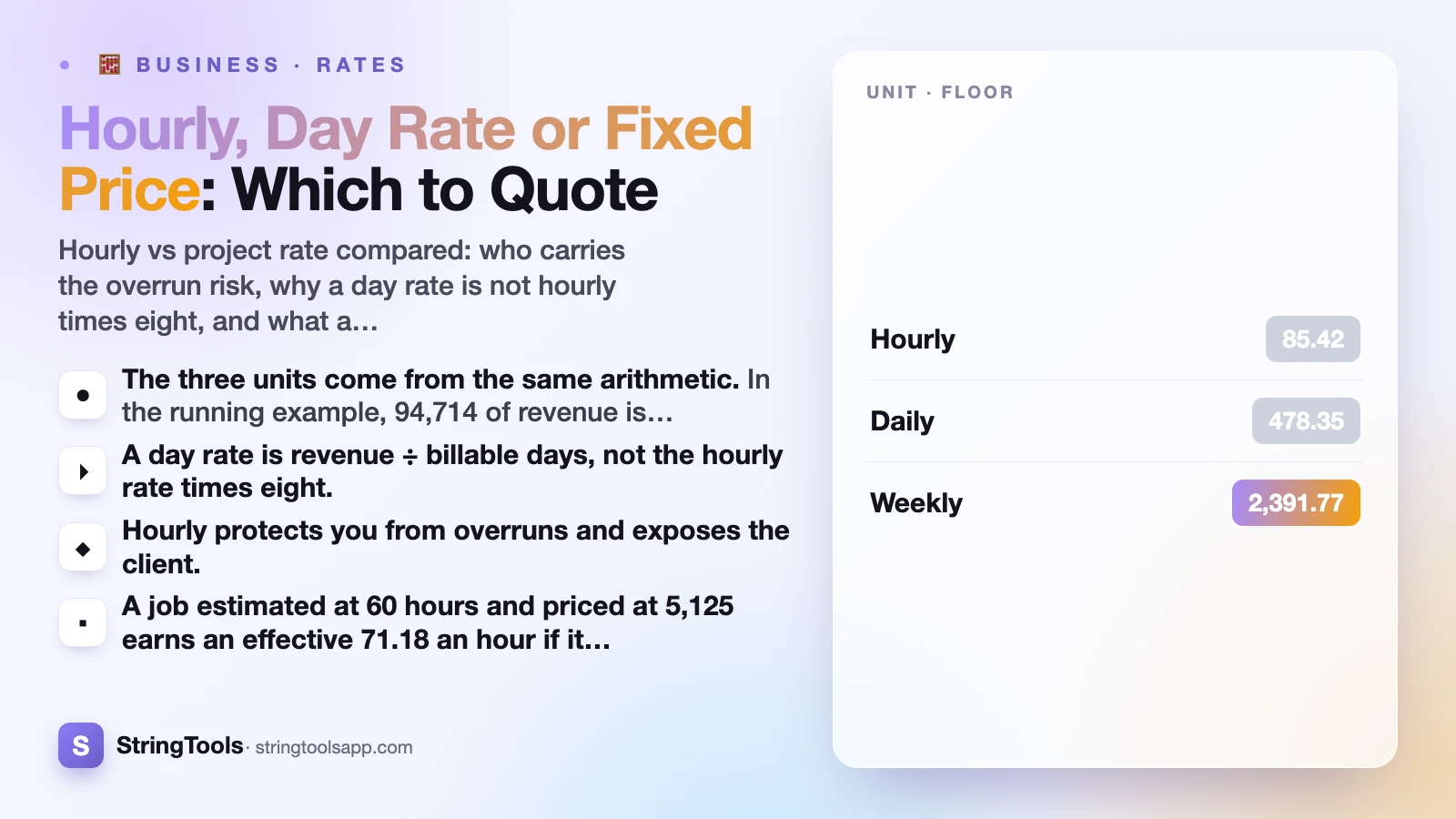
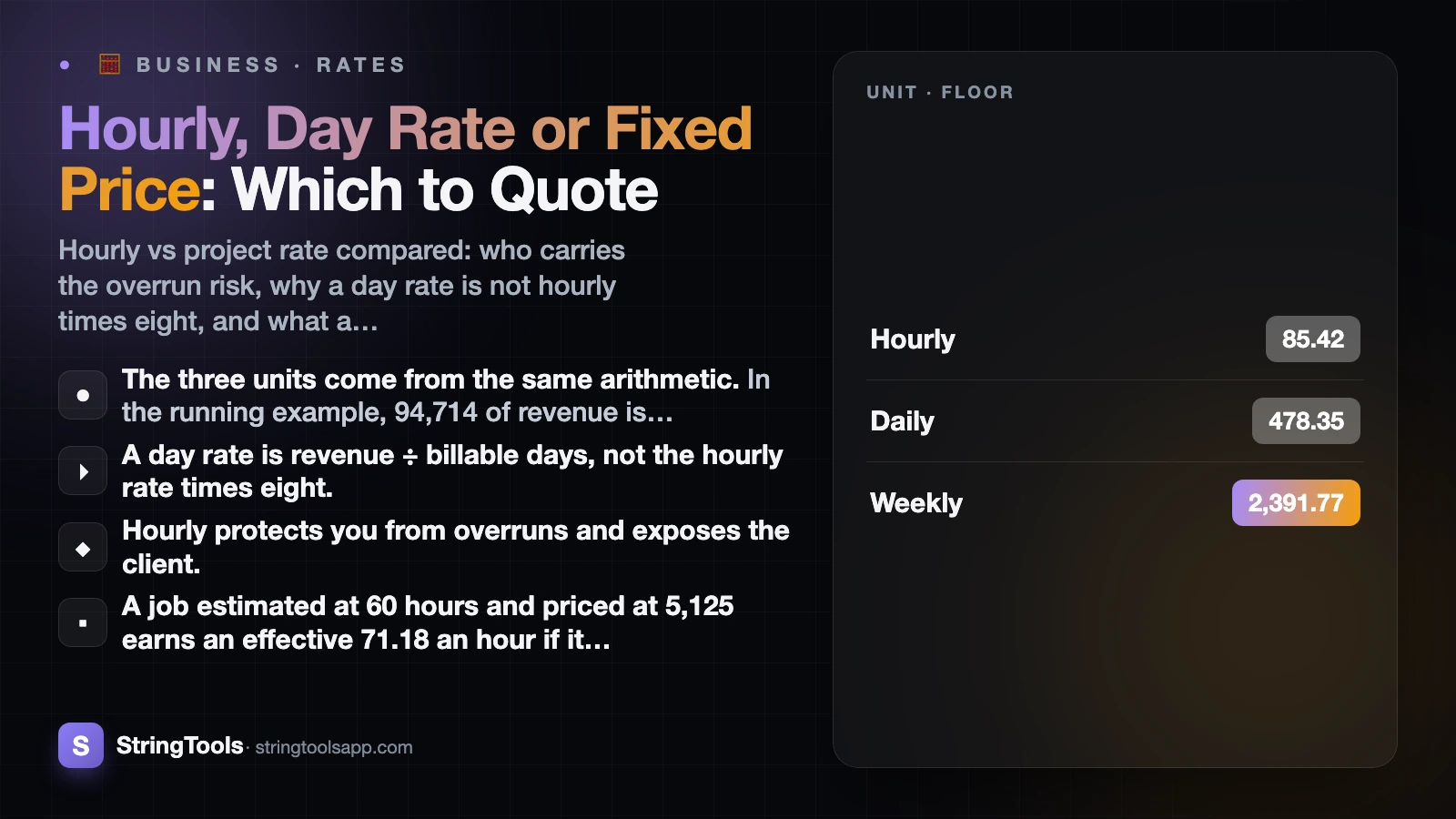
Hourly vs project rate compared: who carries the overrun risk, why a day rate is not hourly times eight, and what a fifty per cent overrun really costs you.
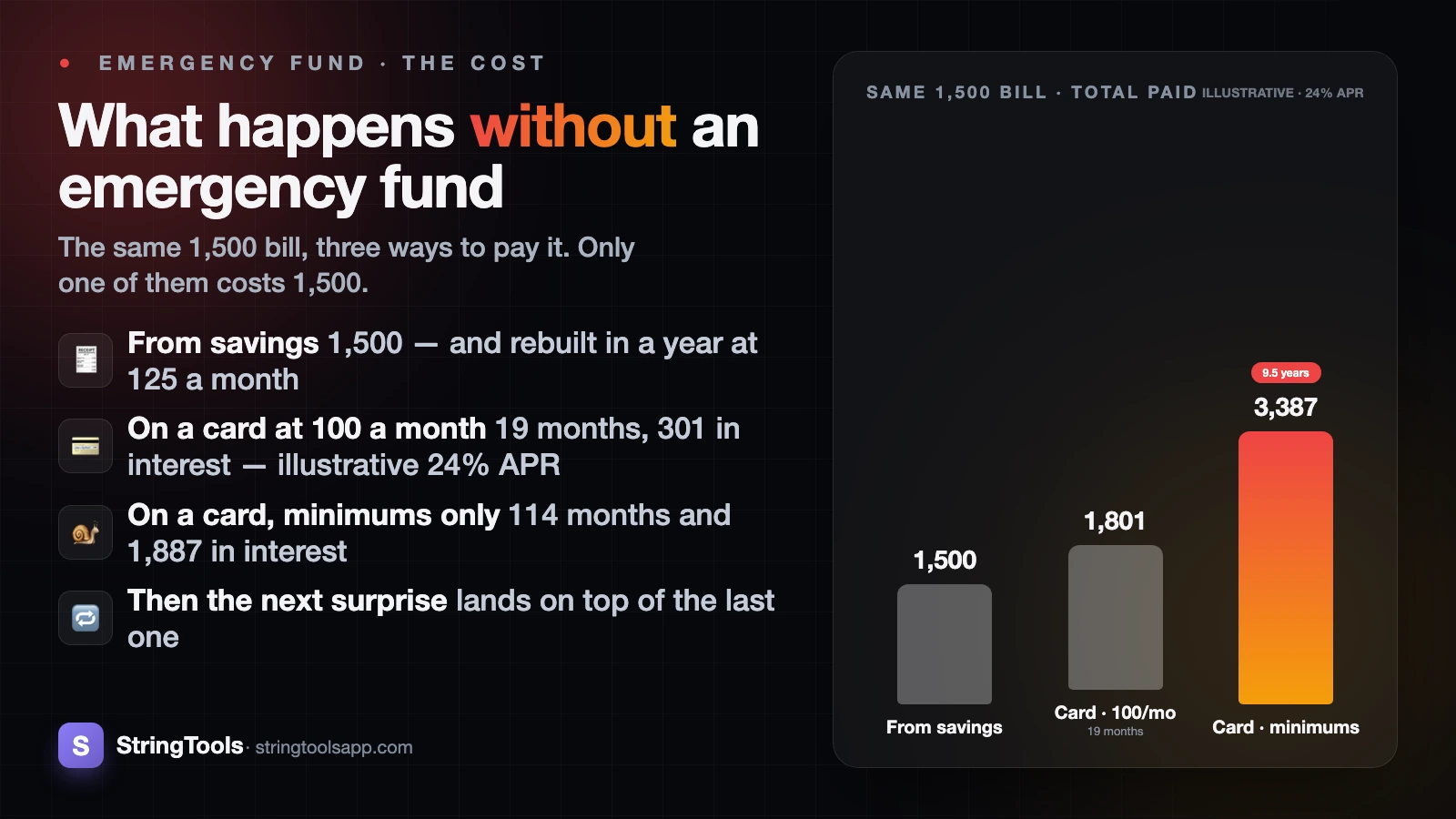
What Happens Without an Emergency Fund: One Bad Month's Cost
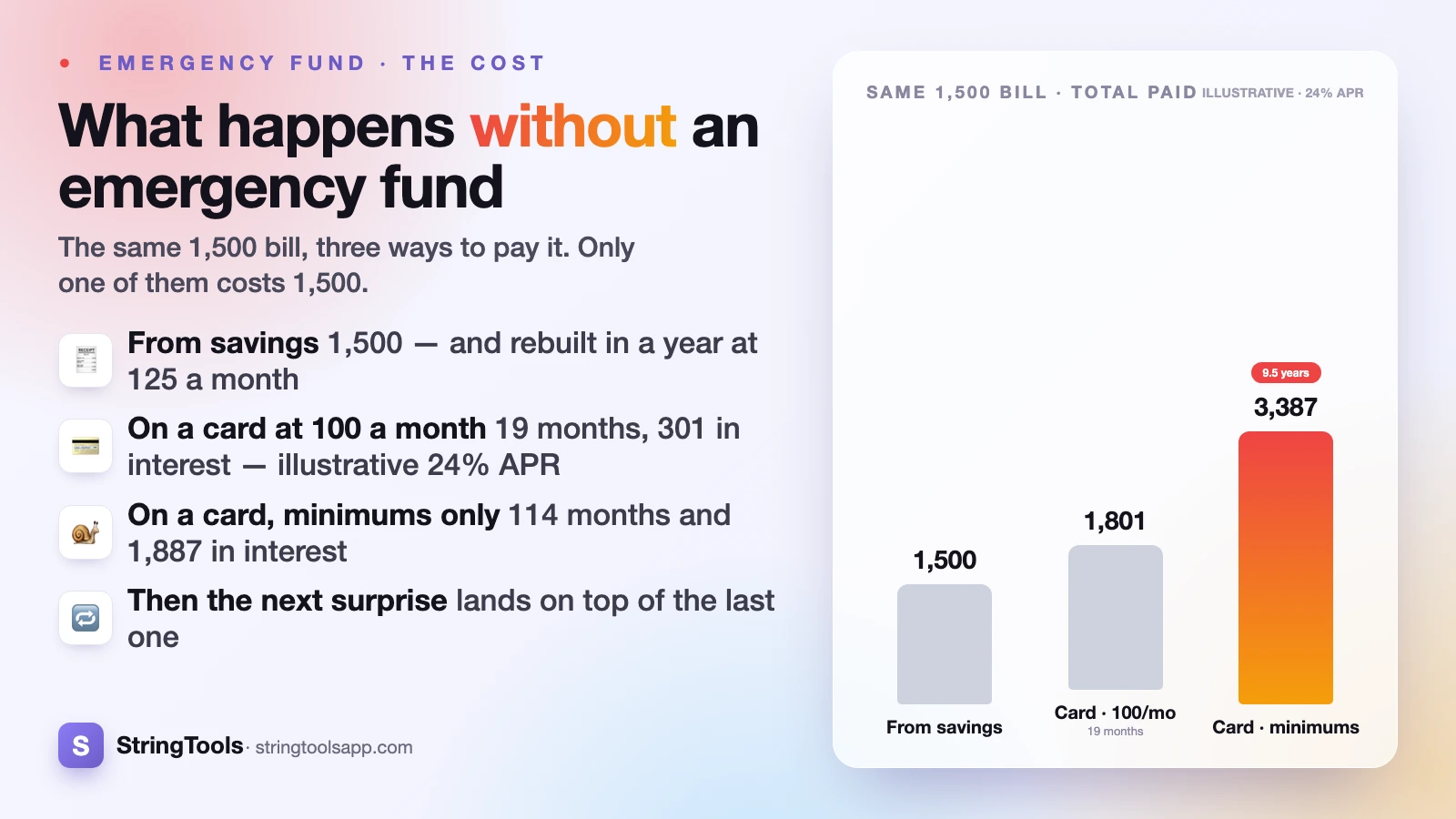
No emergency savings? See the real cost of one bad month: a 1,500 bill at 24% APR paid at card minimums vs from savings, and how to stop the cascade.
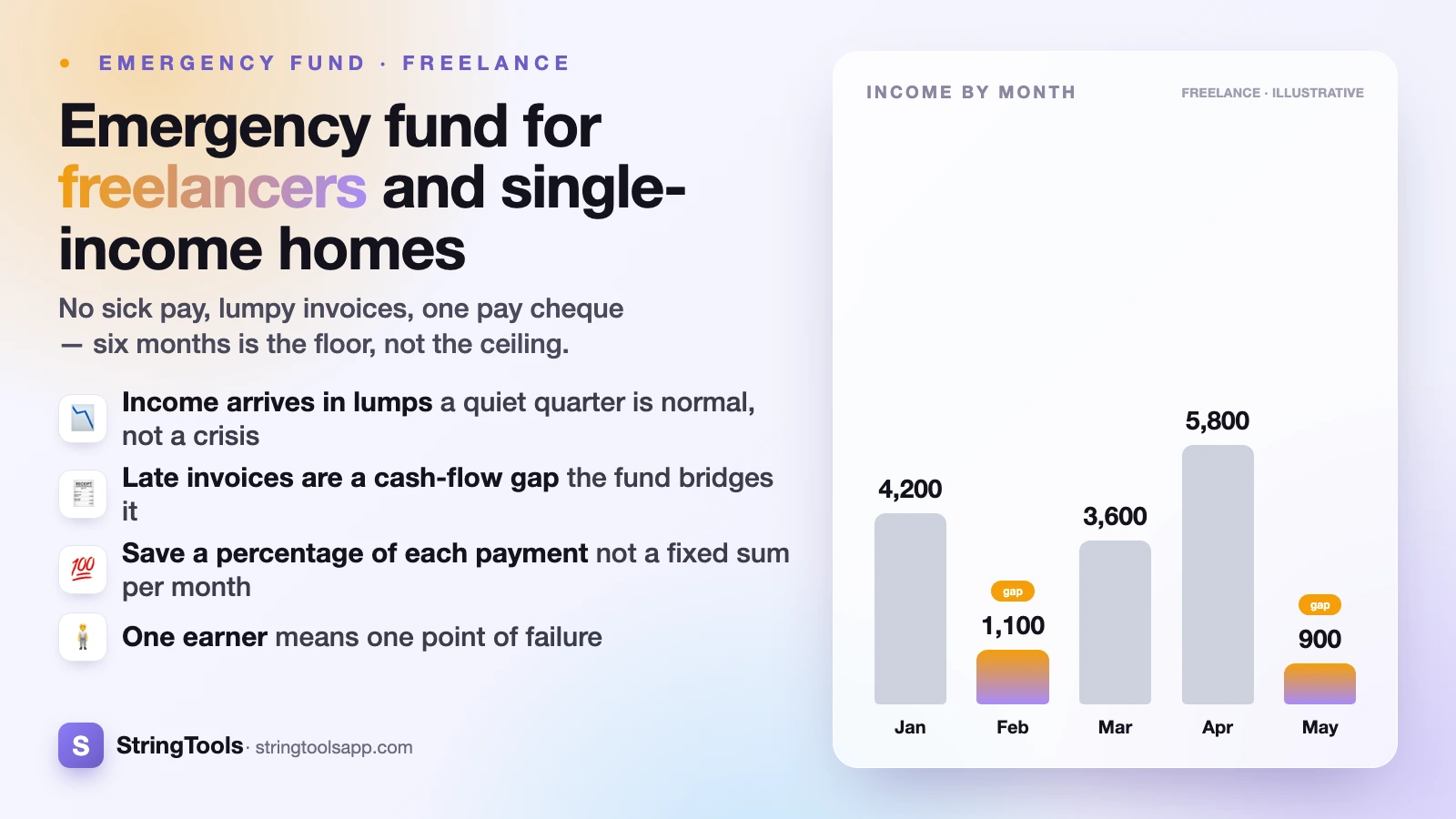
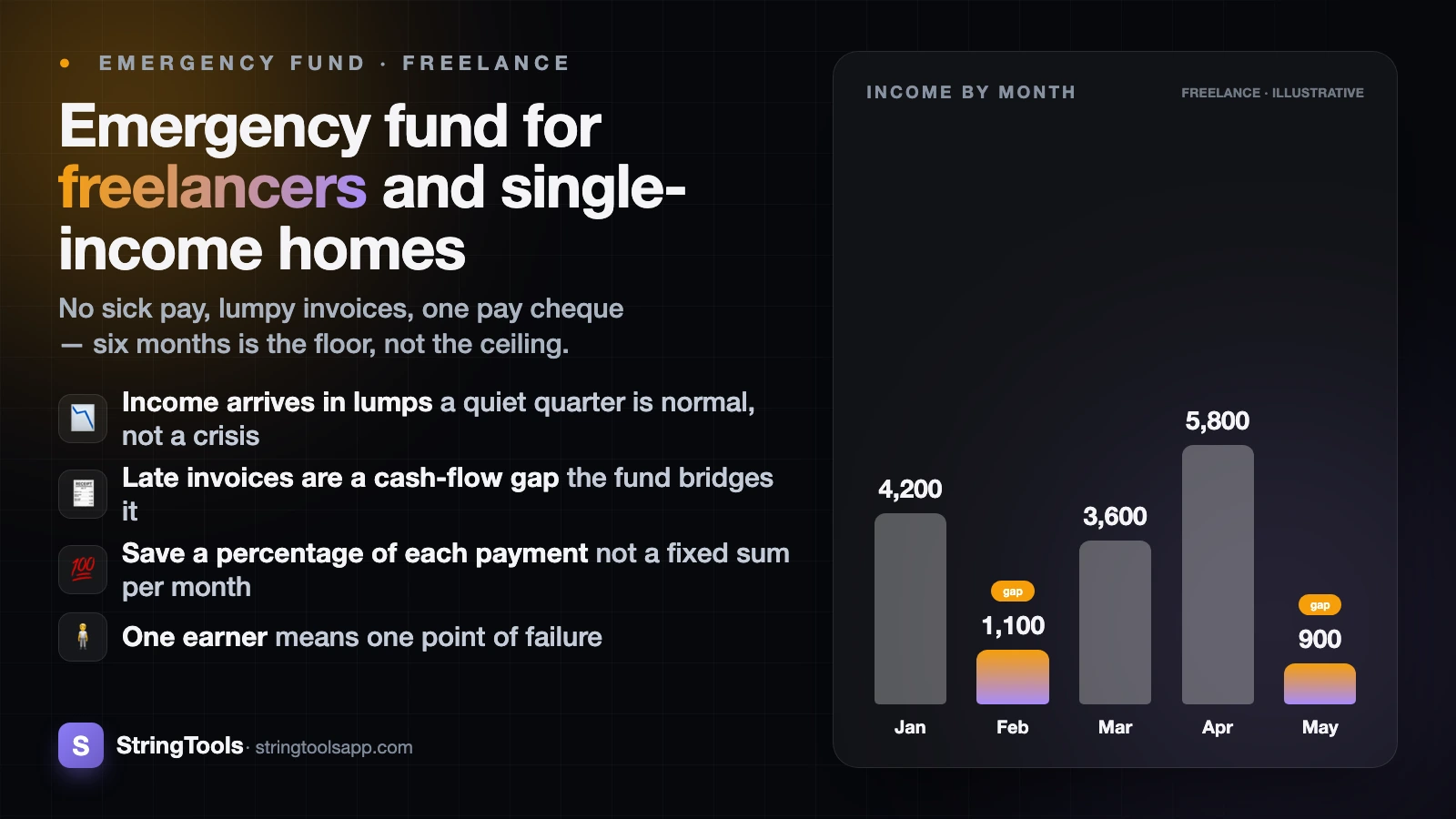
Emergency Fund for Freelancers and Single-Income Households
Emergency fund for freelancers and single-income households: why six months of essentials is the floor, and how to save a percentage of every payment.
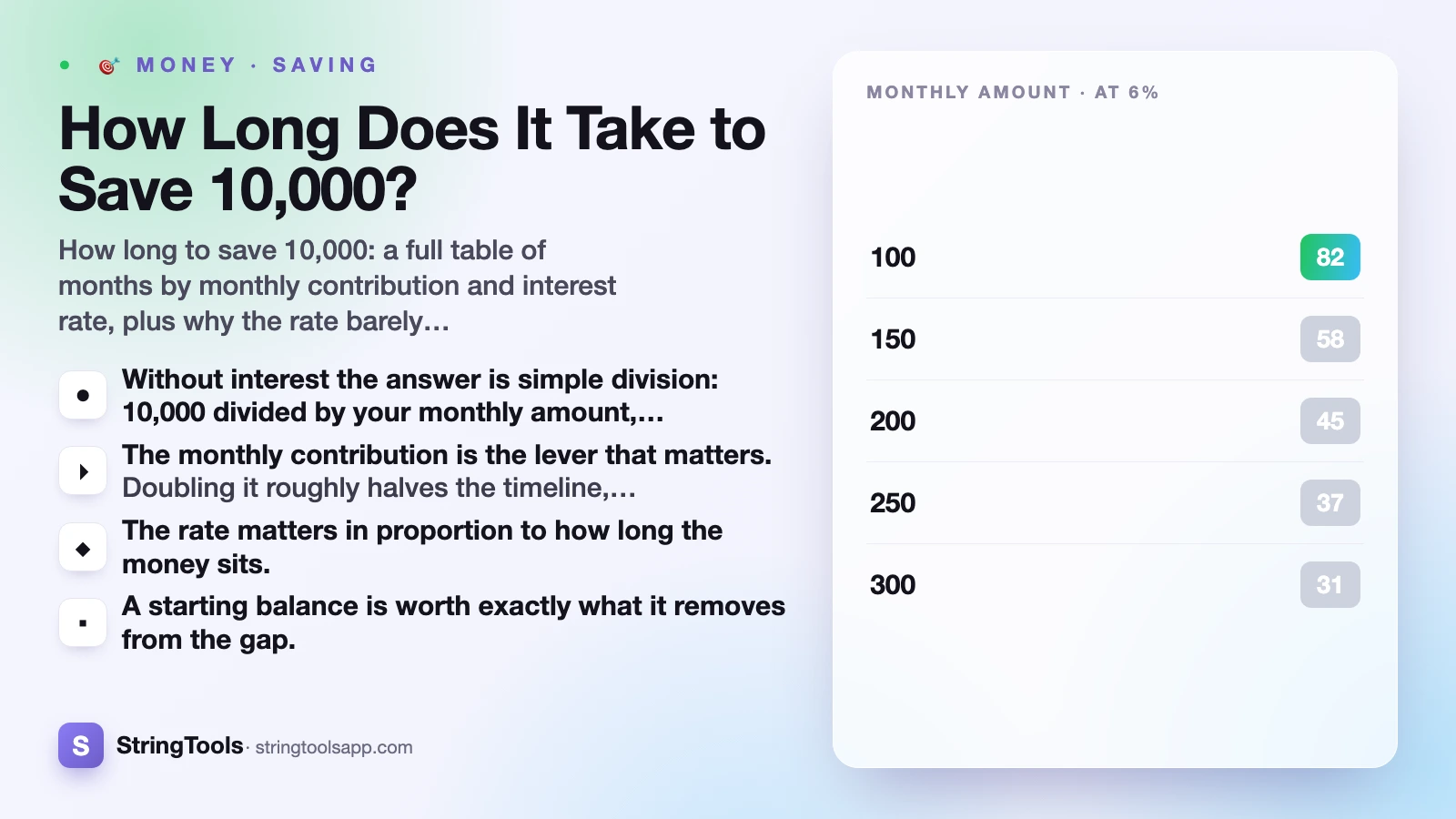
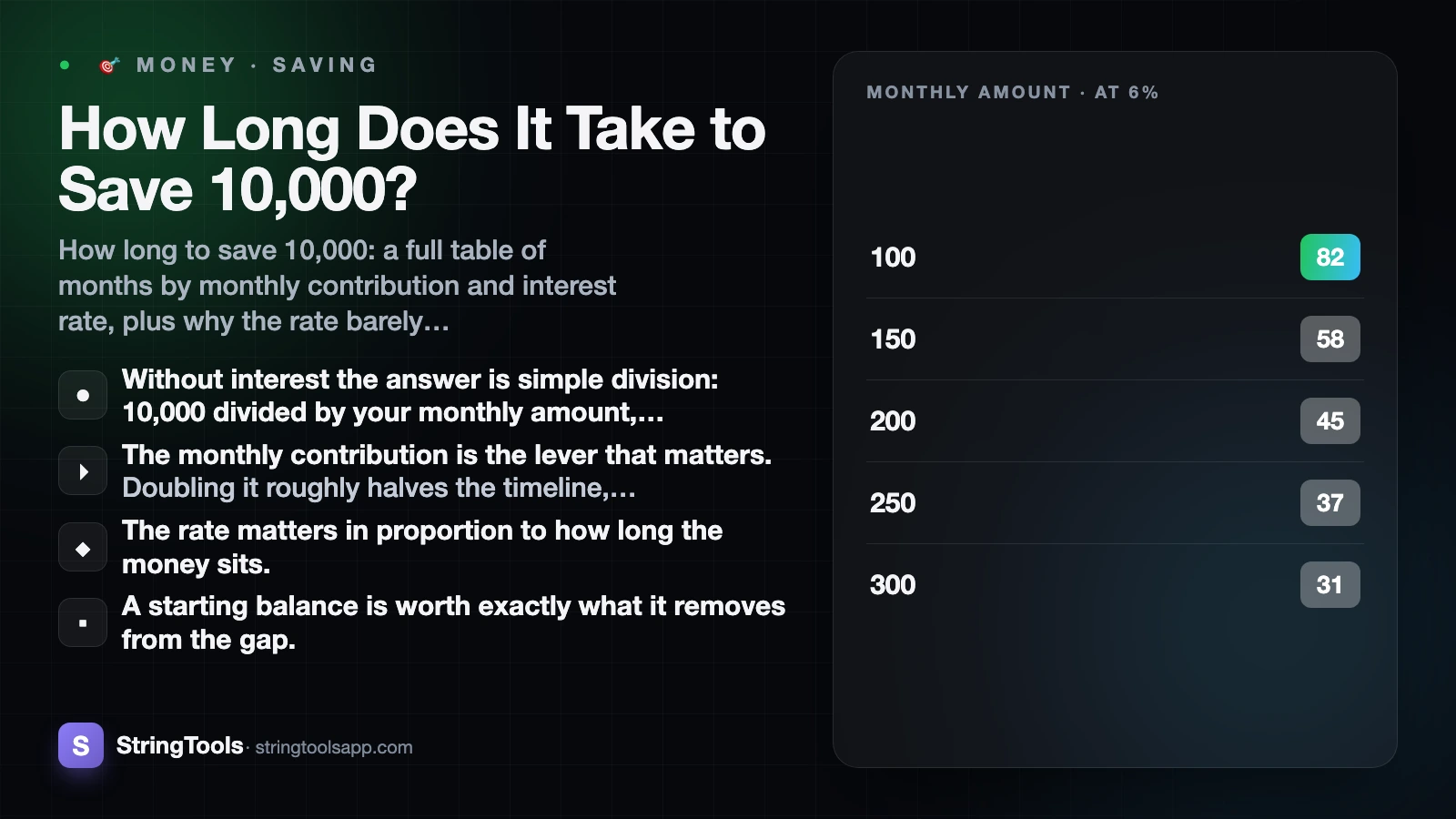
How Long Does It Take to Save 10,000?
How long to save 10,000: a full table of months by monthly contribution and interest rate, plus why the rate barely matters unless the timeline is long.
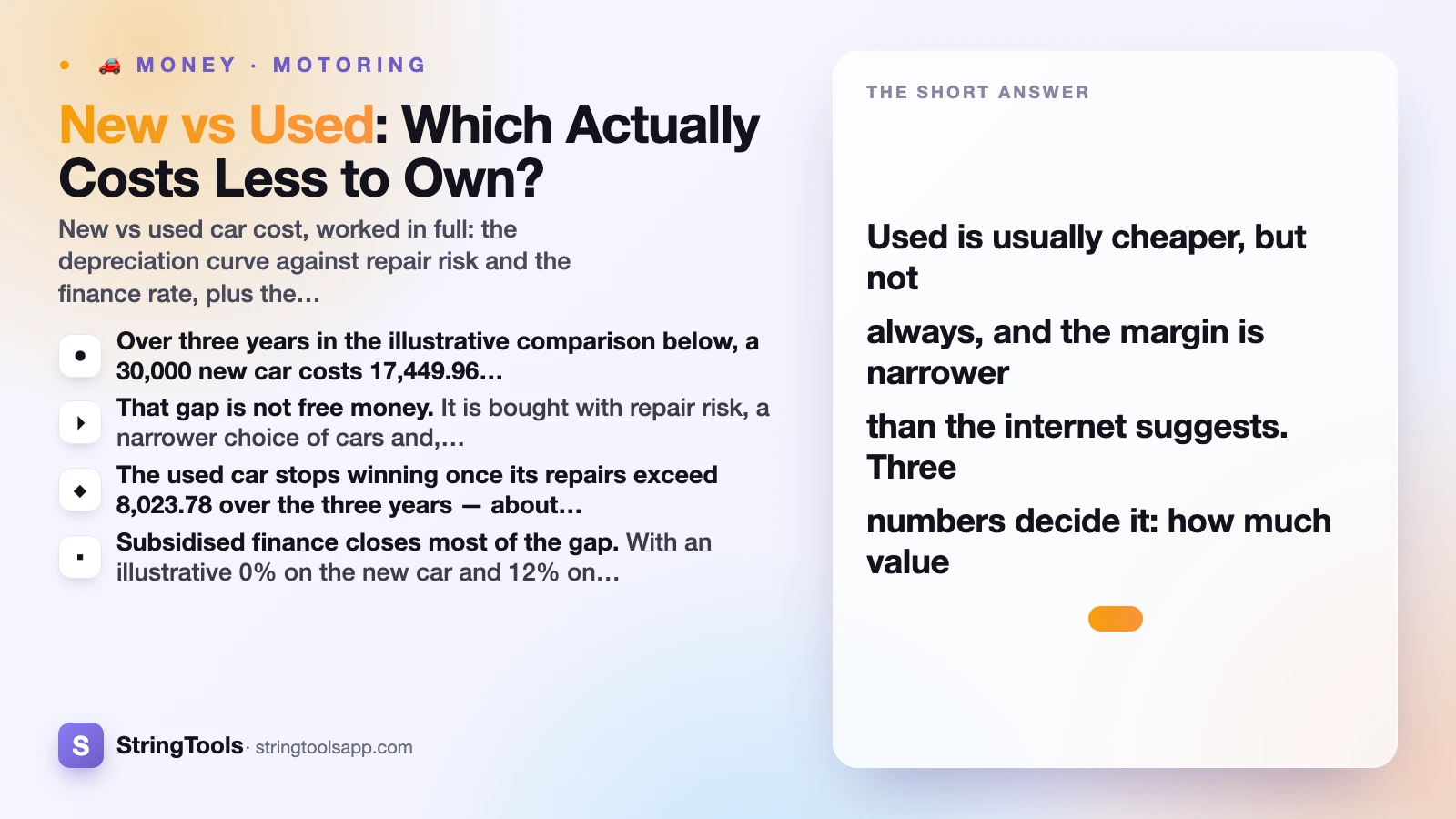
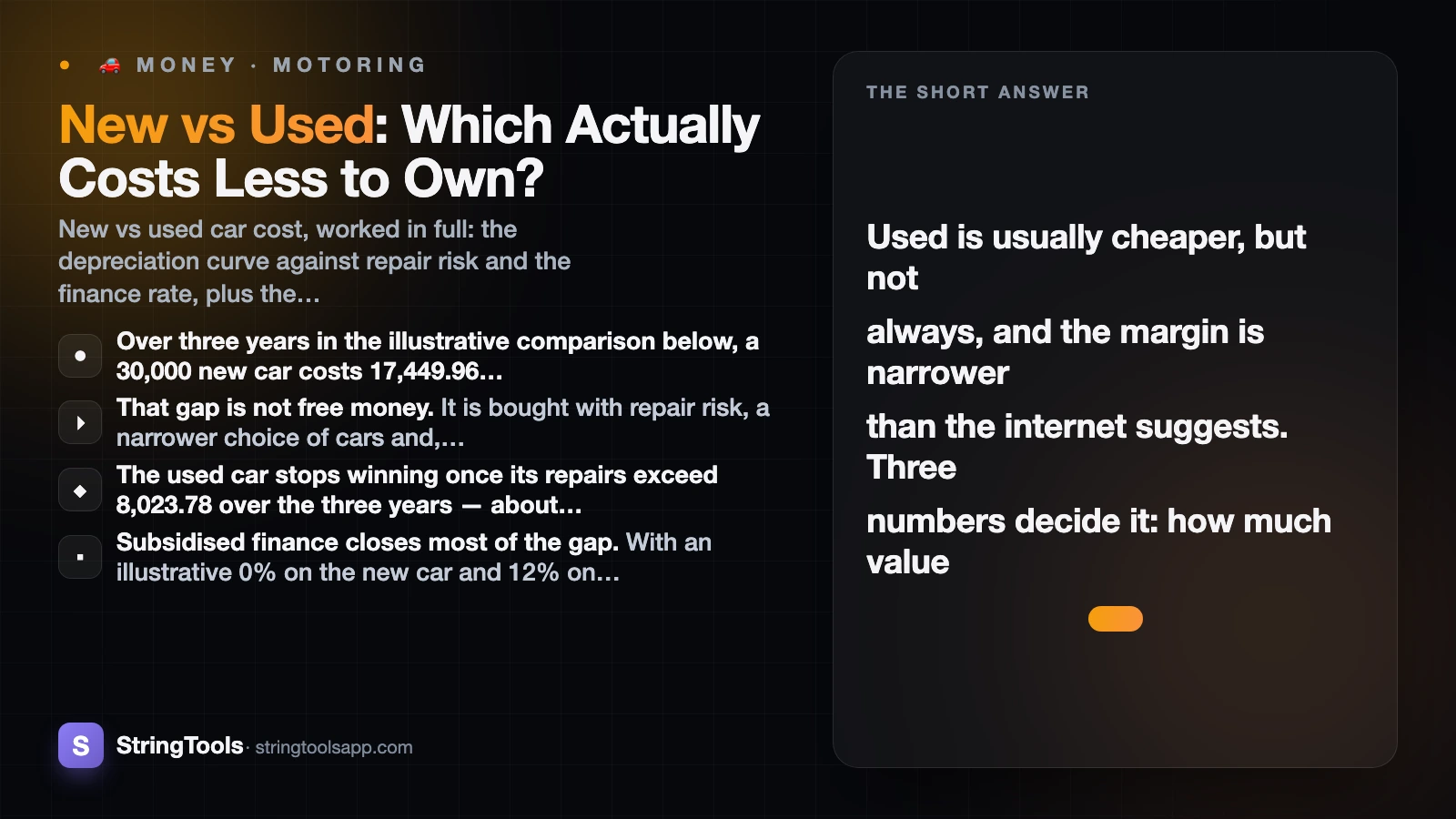
New vs Used: Which Actually Costs Less to Own?
New vs used car cost, worked in full: the depreciation curve against repair risk and the finance rate, plus the exact point where a new car stops losing.
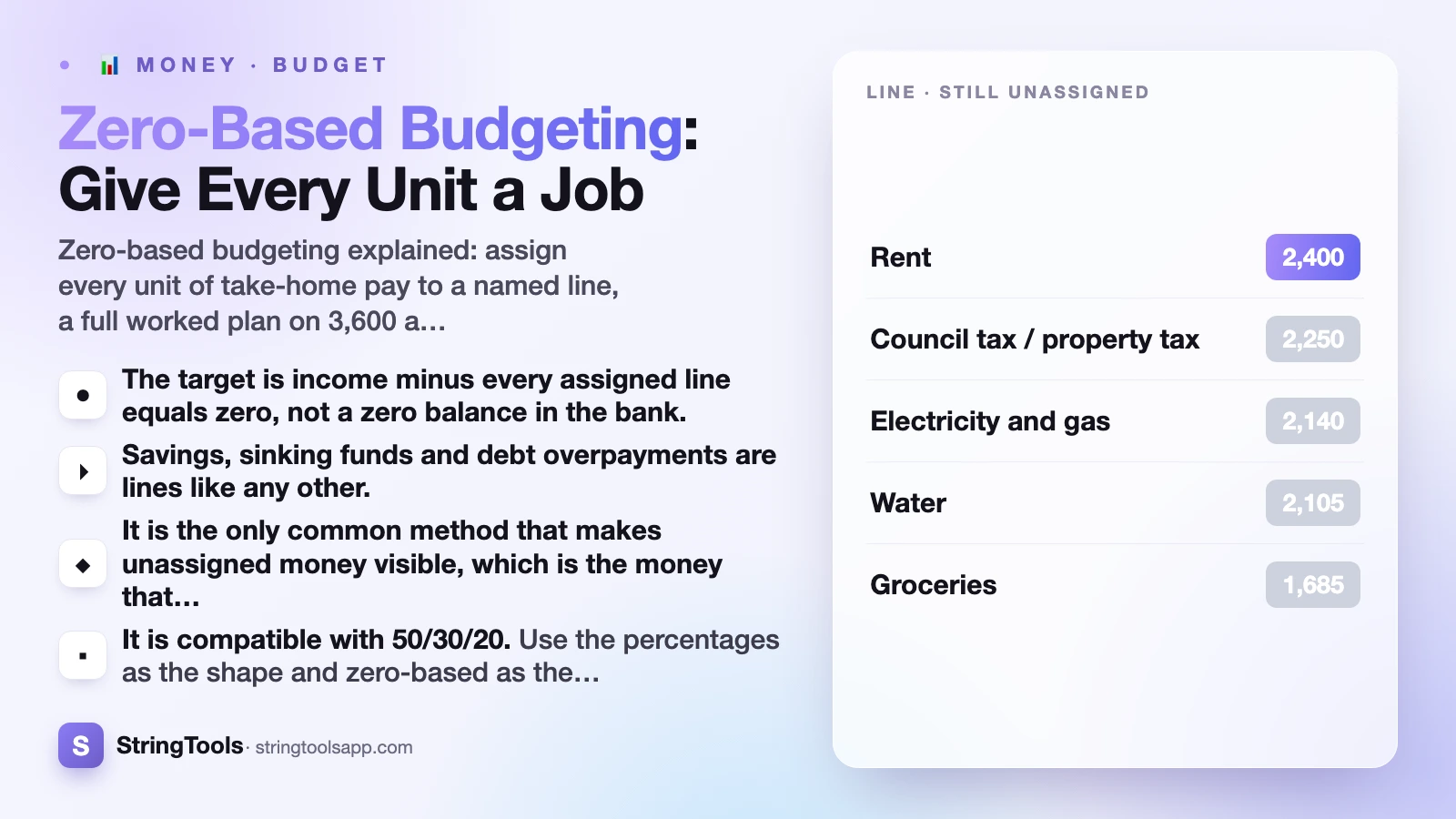
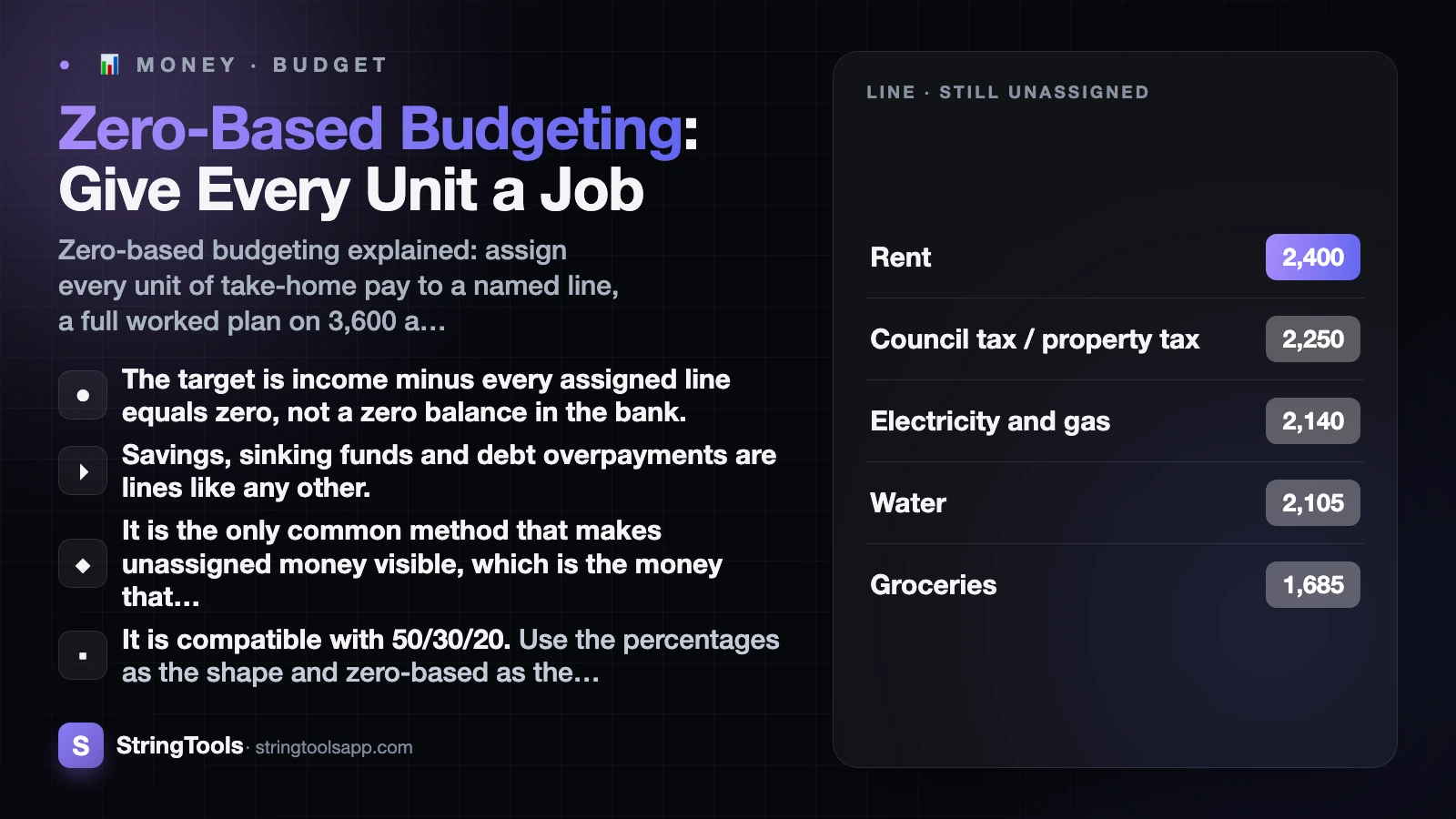
Zero-Based Budgeting: Give Every Unit a Job
Zero-based budgeting explained: assign every unit of take-home pay to a named line, a full worked plan on 3,600 a month, and how it compares with 50/30/20.
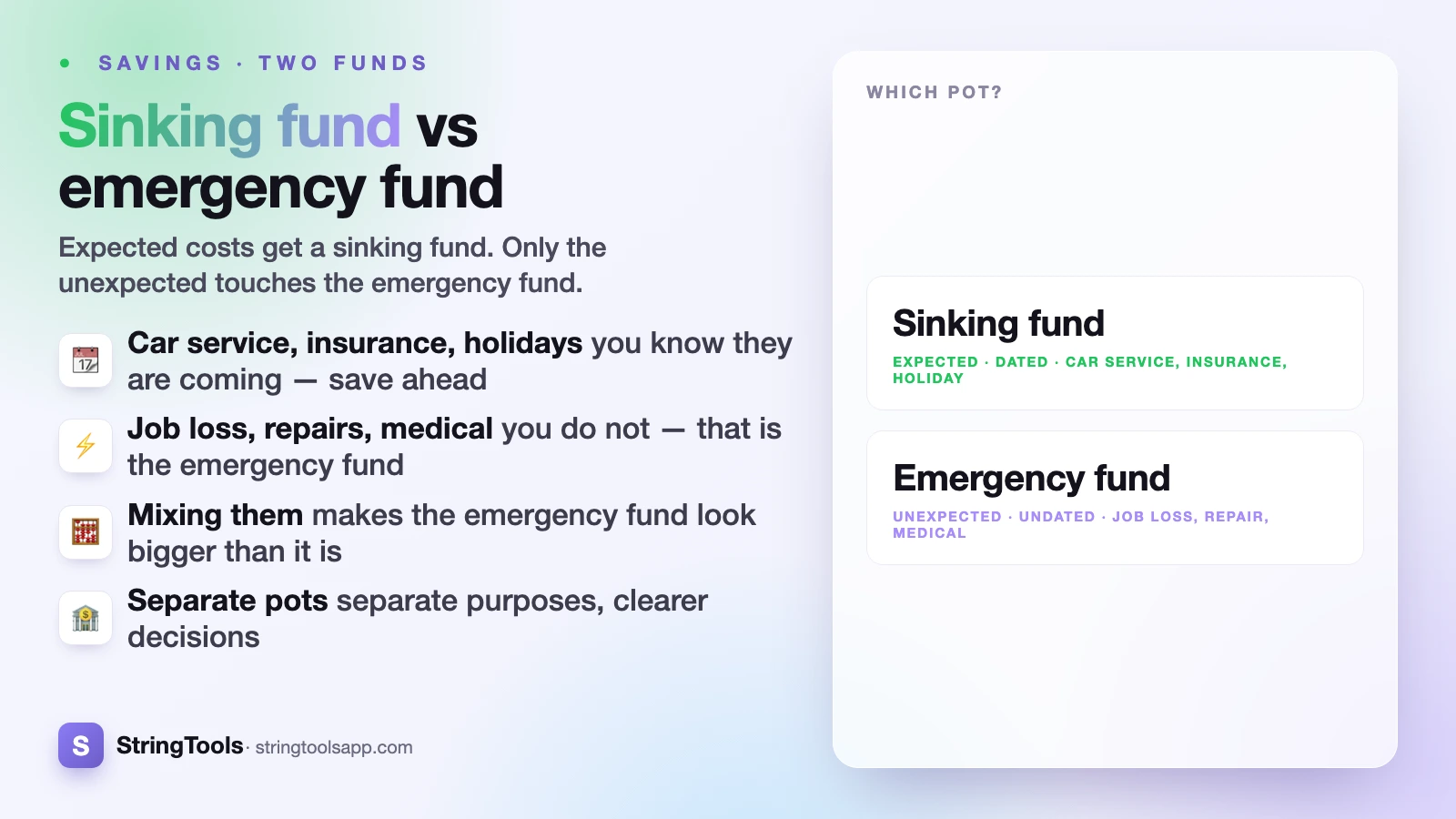
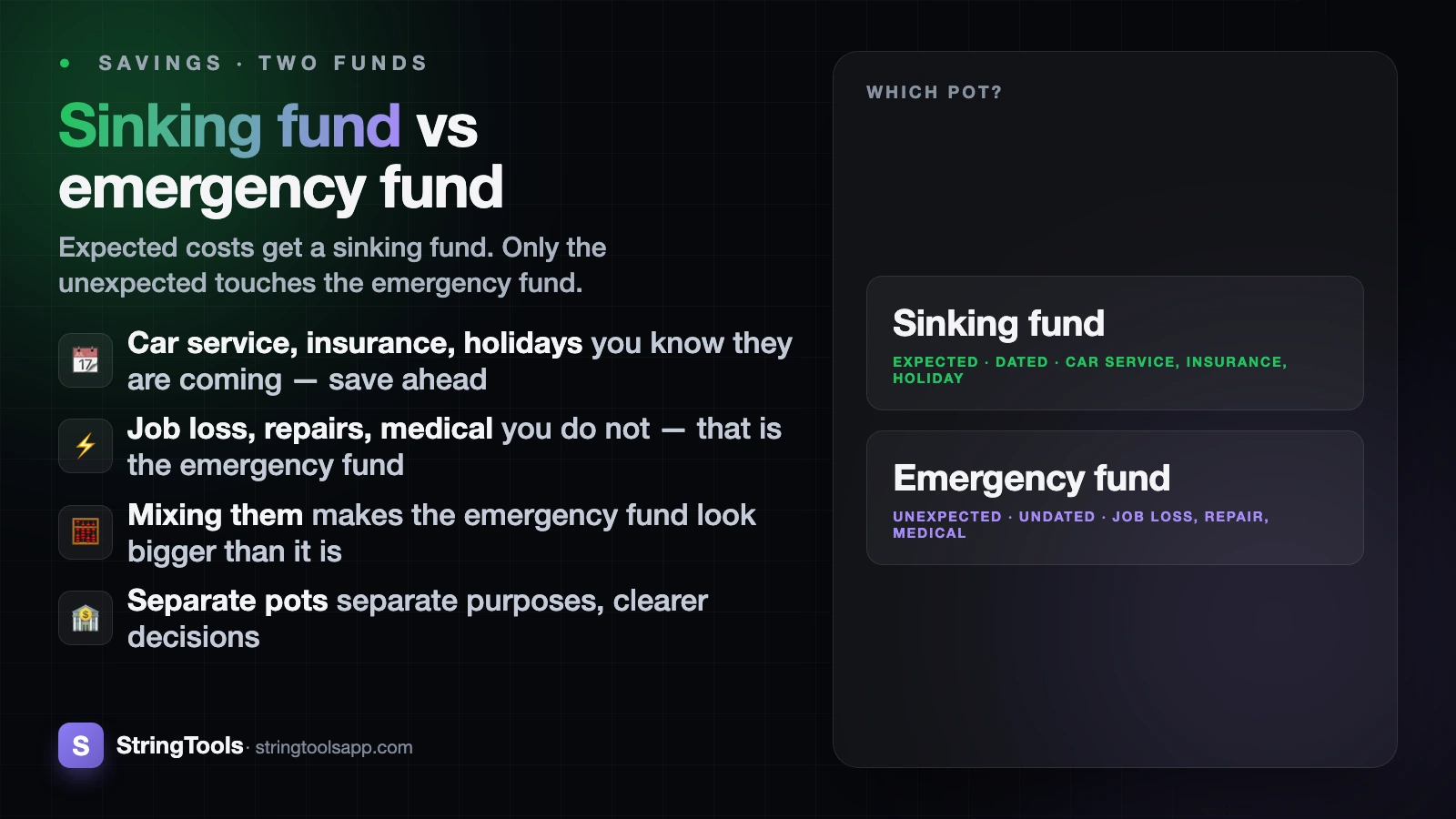
Sinking Fund vs Emergency Fund: Which Do You Actually Need?
Sinking fund vs emergency fund: how predictable costs like insurance and holidays inflate your savings figure, and how to split them so your runway is real.
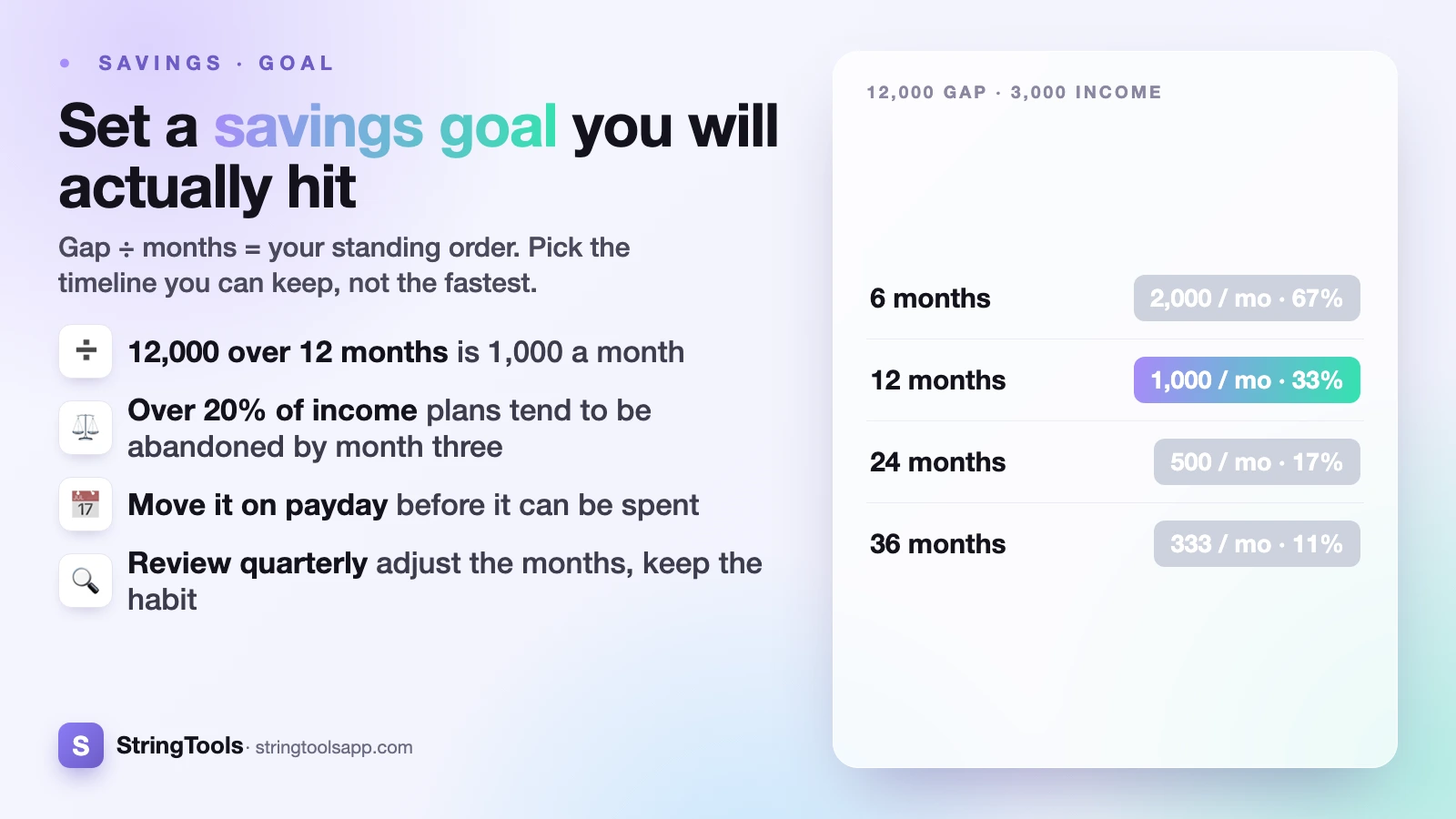
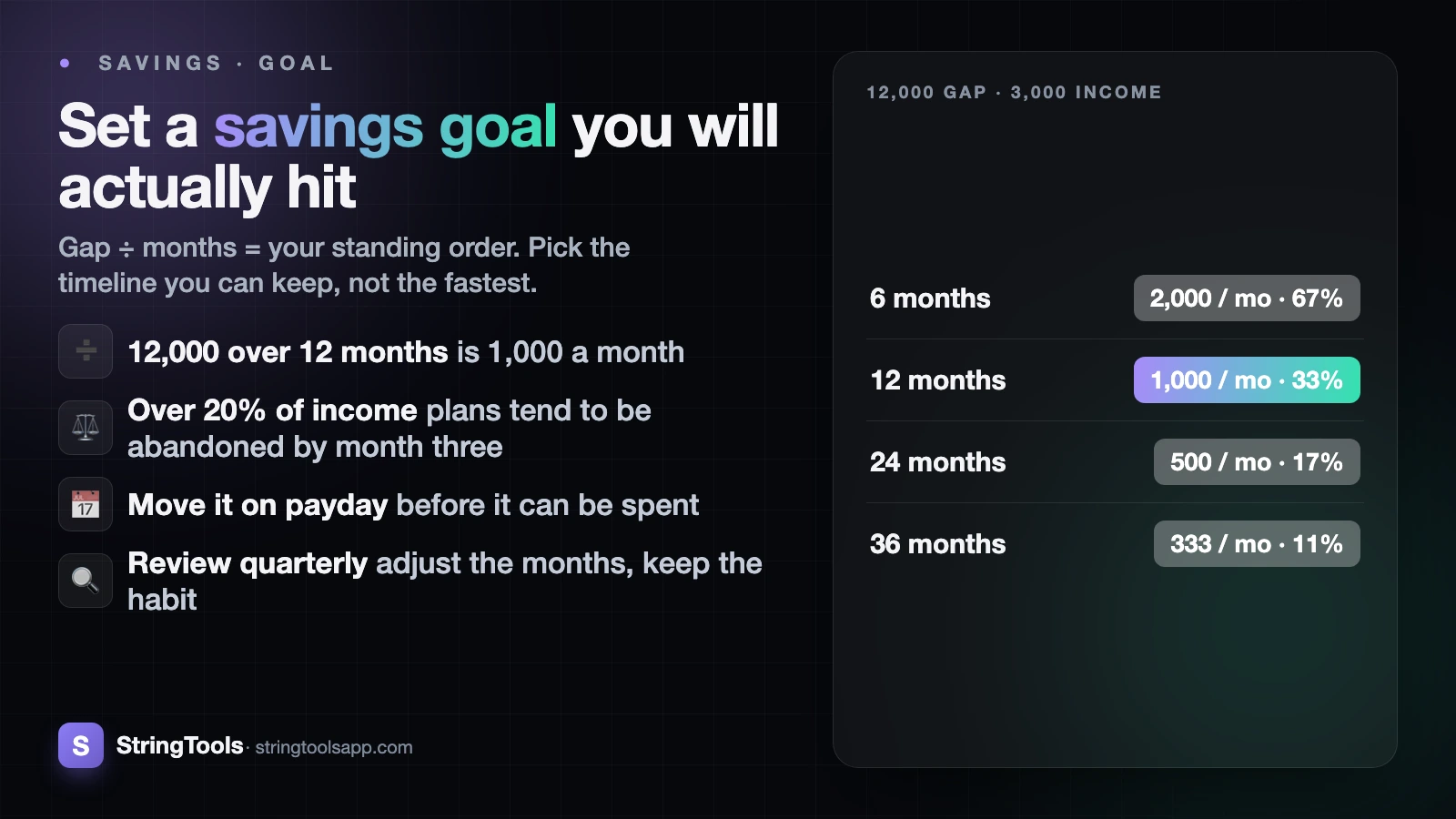
How to Set a Savings Goal You Will Actually Hit
Savings goal calculator method: divide your gap by months, keep it under about 20% of income, automate on payday and review quarterly. Worked 12,000 example.


Tipping Customs Around the World: What Travellers Get Wrong
Tipping customs by country fall into four broad types. How to tell which one you are in, what travellers get wrong, and why a percentage rarely travels well.
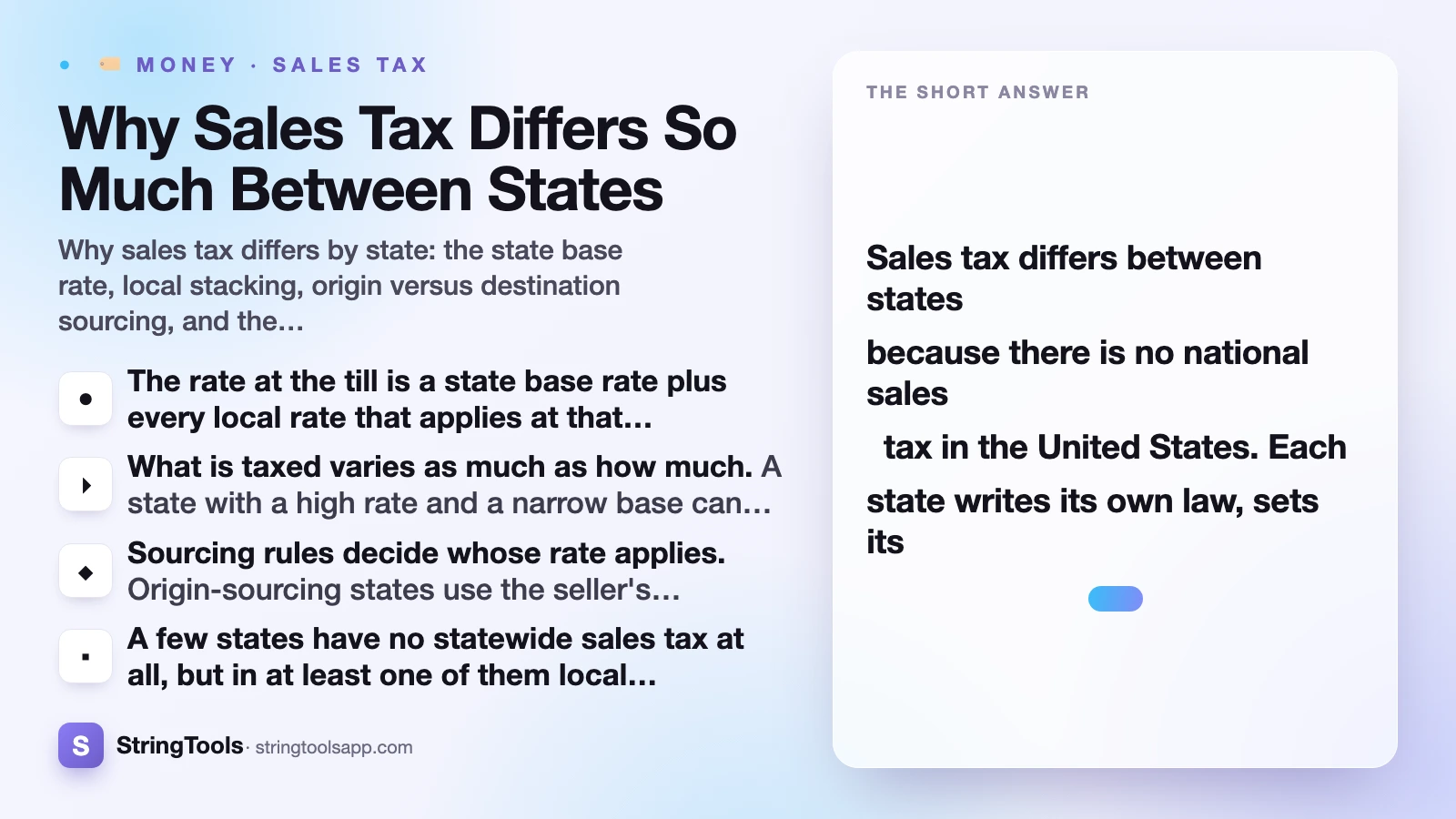
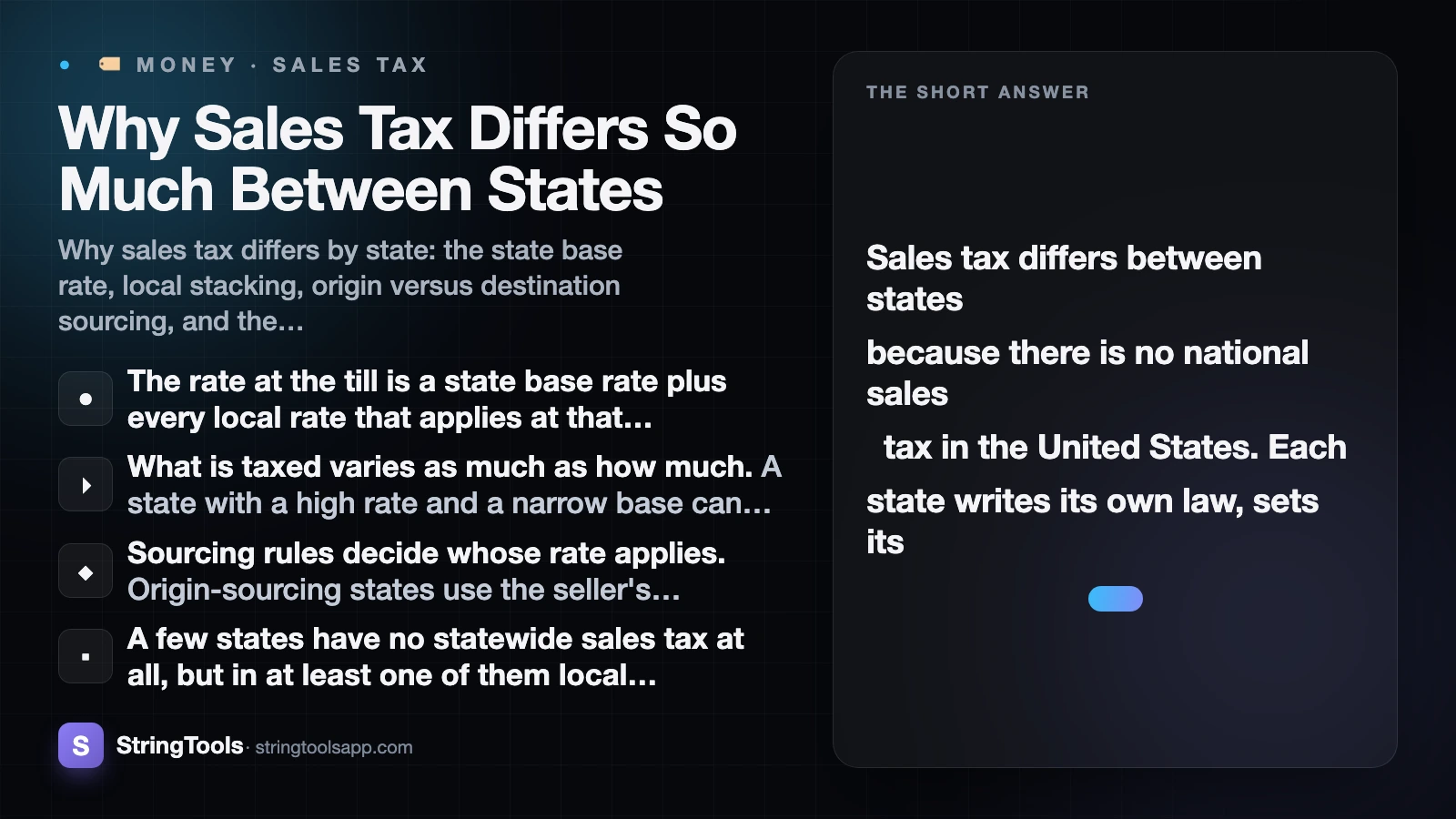
Why Sales Tax Differs So Much Between States
Why sales tax differs by state: the state base rate, local stacking, origin versus destination sourcing, and the category exemptions behind the gap.
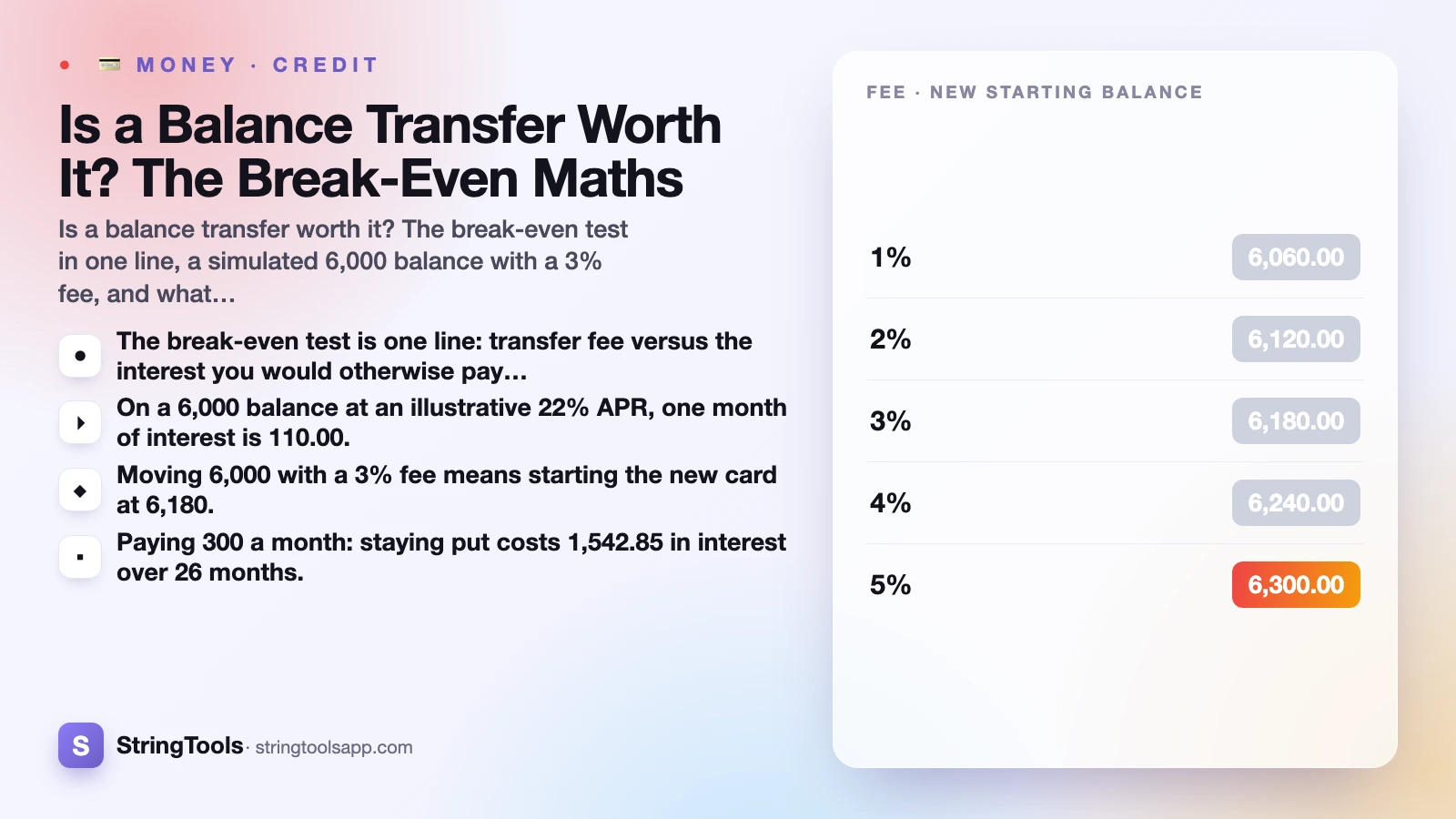
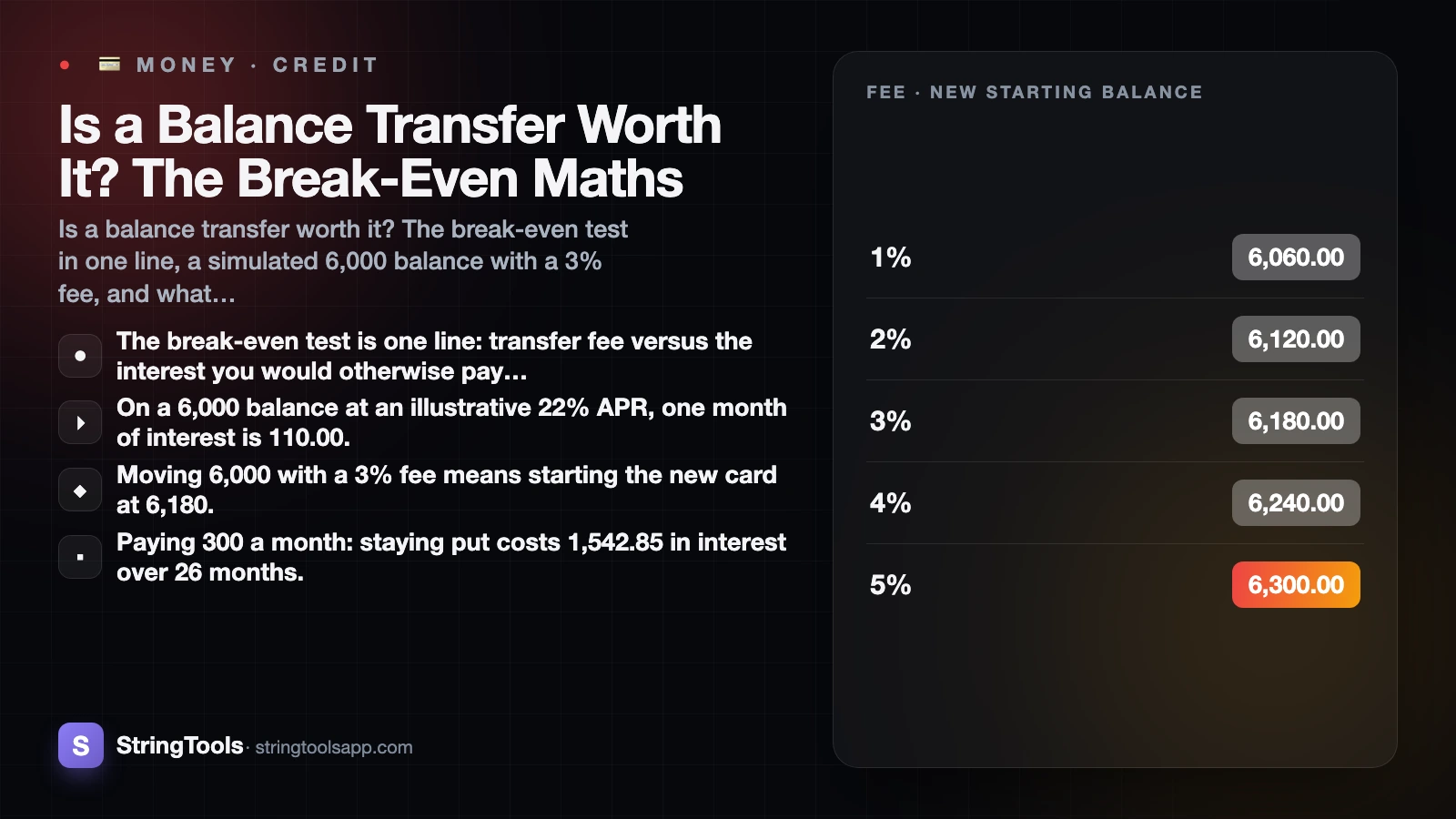
Is a Balance Transfer Worth It? The Break-Even Maths
Is a balance transfer worth it? The break-even test in one line, a simulated 6,000 balance with a 3% fee, and what happens if the promo window runs out first.


What Is a Good Profit Margin? The Honest Answer
What is a good profit margin? It depends on your model. Here is what drives the differences, and the fixed-cost test that replaces a borrowed benchmark.
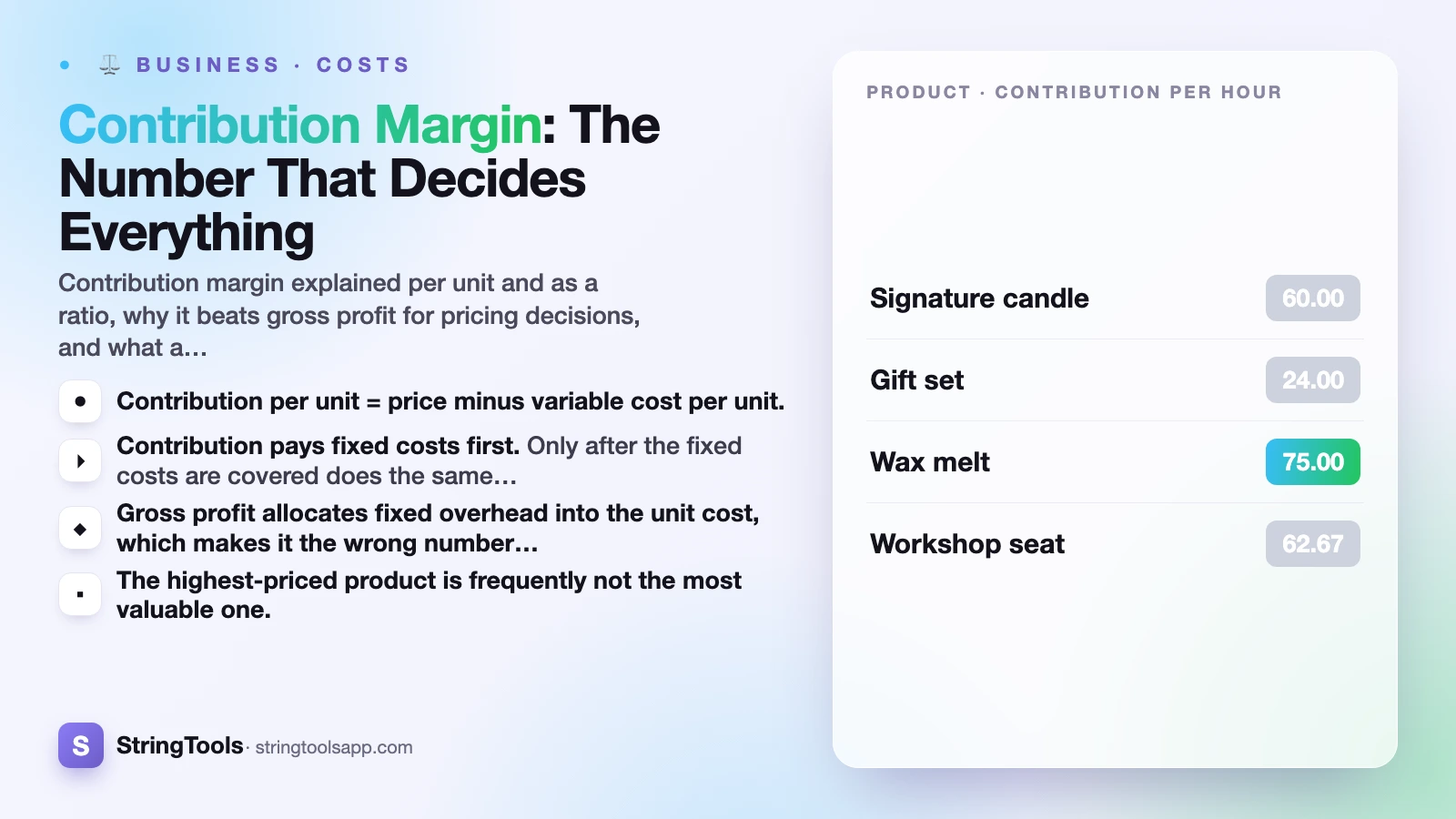
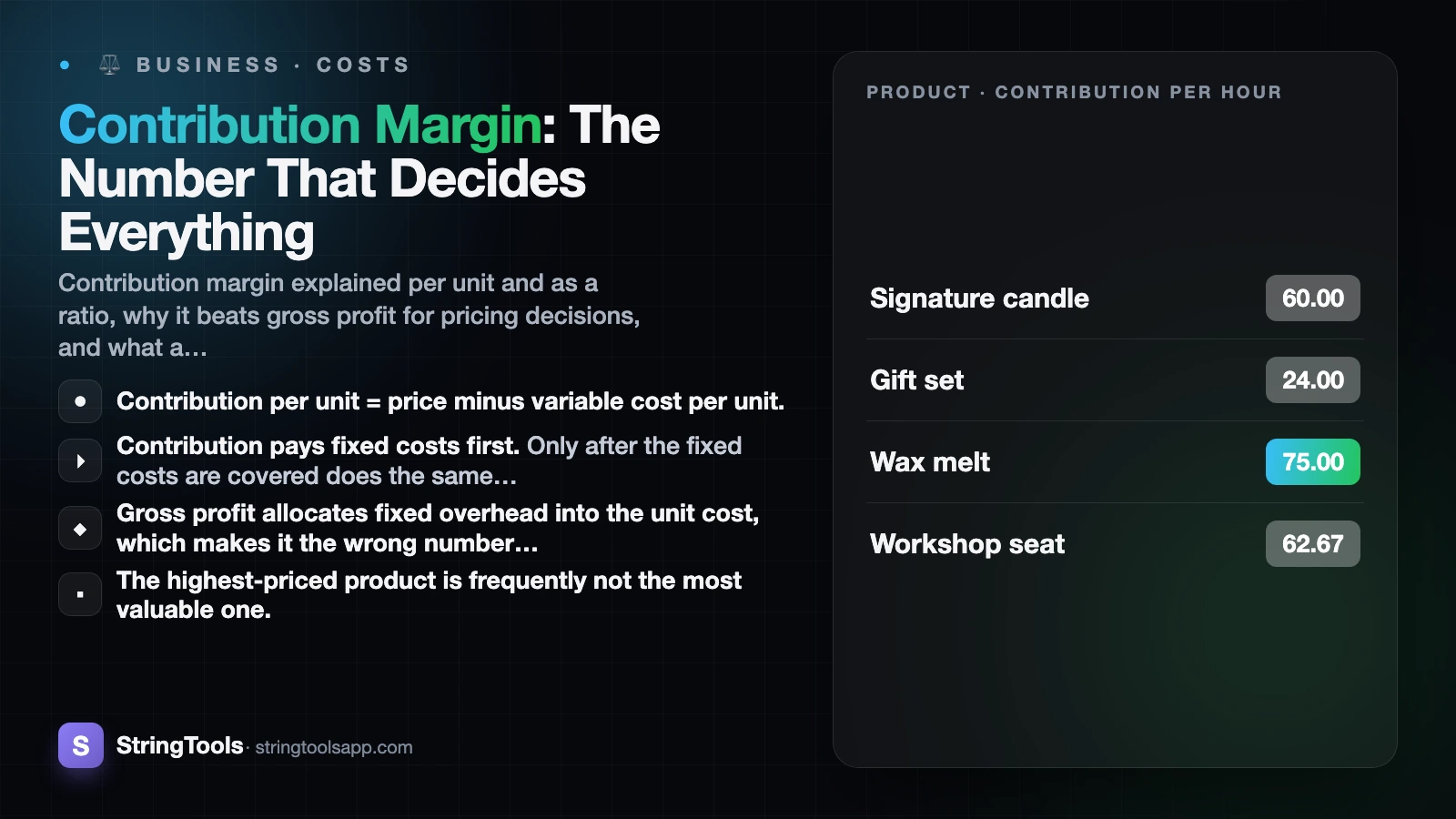
Contribution Margin: The Number That Decides Everything
Contribution margin explained per unit and as a ratio, why it beats gross profit for pricing decisions, and what a discount really costs you in extra volume.
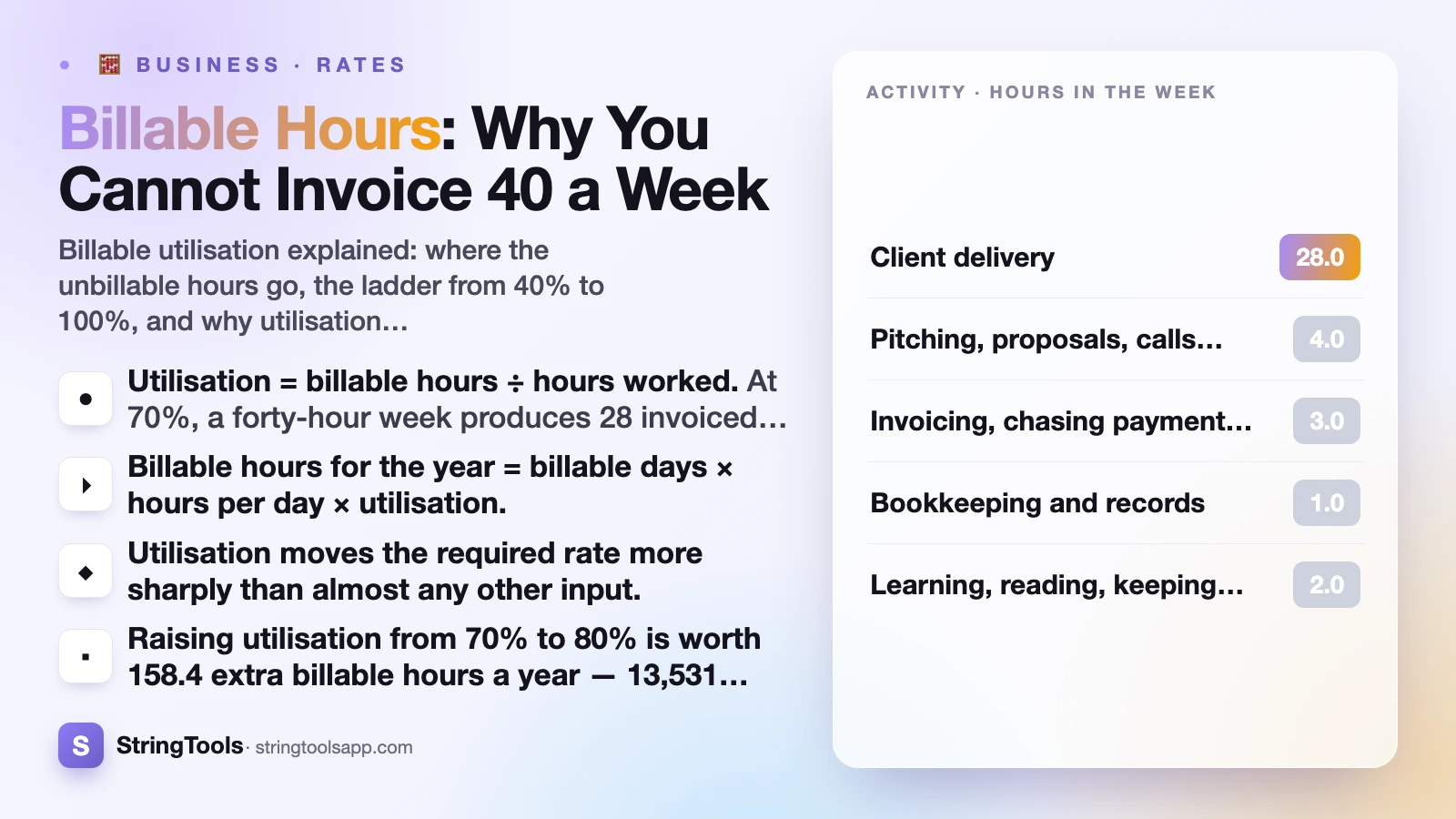
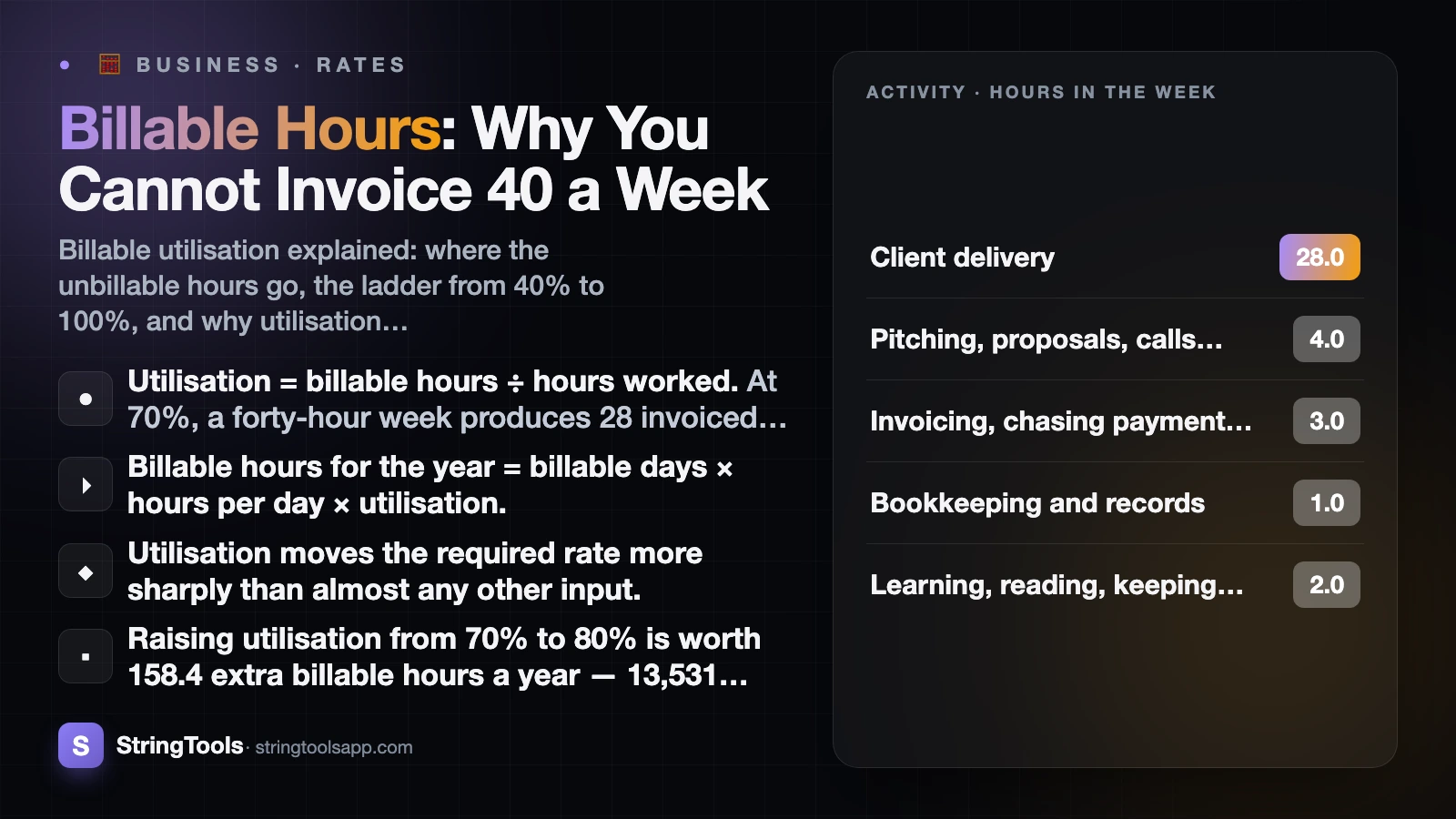
Billable Hours: Why You Cannot Invoice 40 a Week
Billable utilisation explained: where the unbillable hours go, the ladder from 40% to 100%, and why utilisation moves your freelance rate most of all.
How to Decode a JWT (Without a Library)
How to decode a JWT by hand: split on the dots, base64url-decode the header and payload, and restore the stripped padding that breaks naive decoders.
HS256 vs RS256: Choosing a JWT Signing Algorithm
HS256 vs RS256 explained: symmetric and asymmetric JWT signing, the algorithm confusion attack, alg:none, safe kid handling and key rotation without outages.
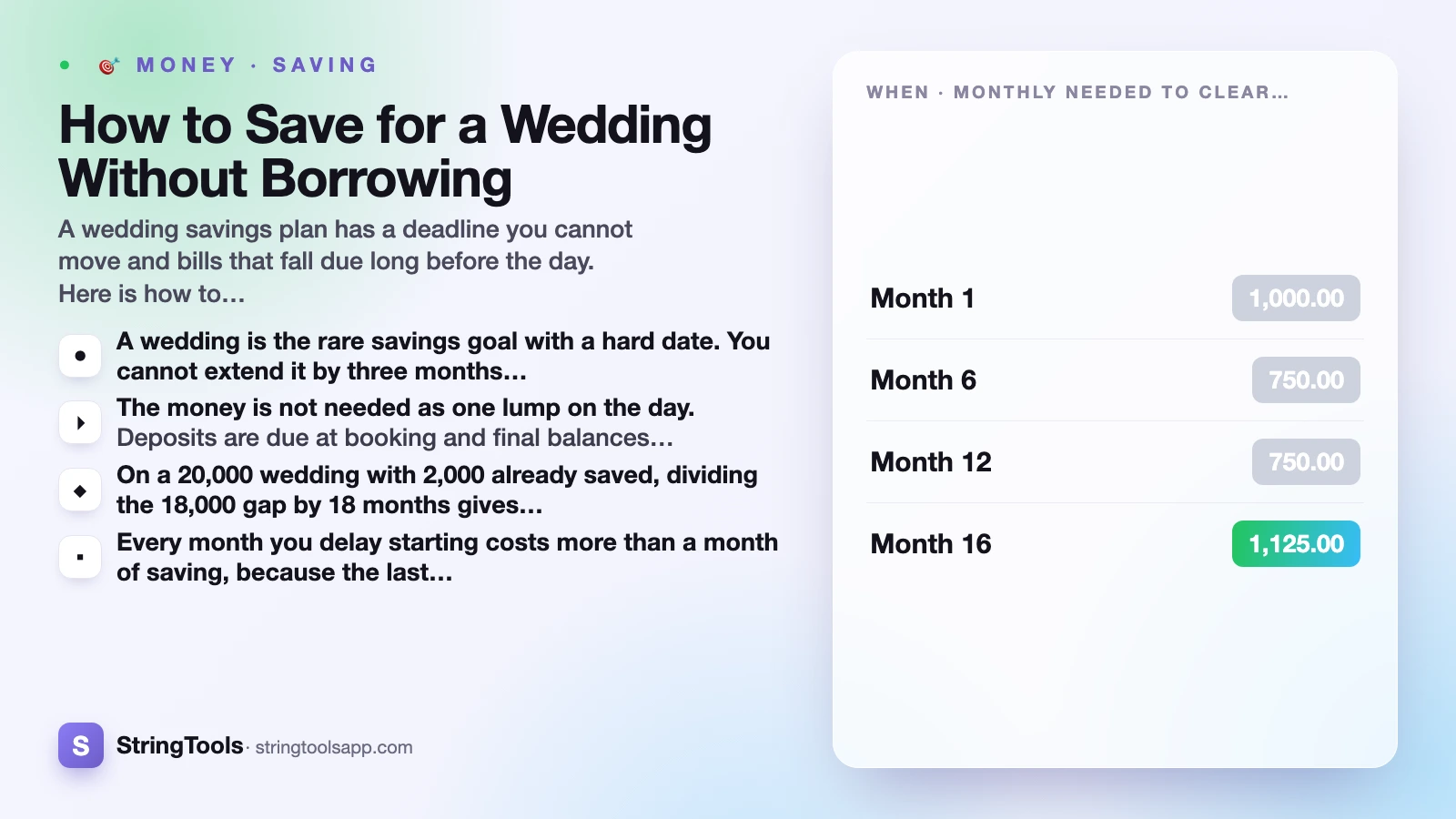
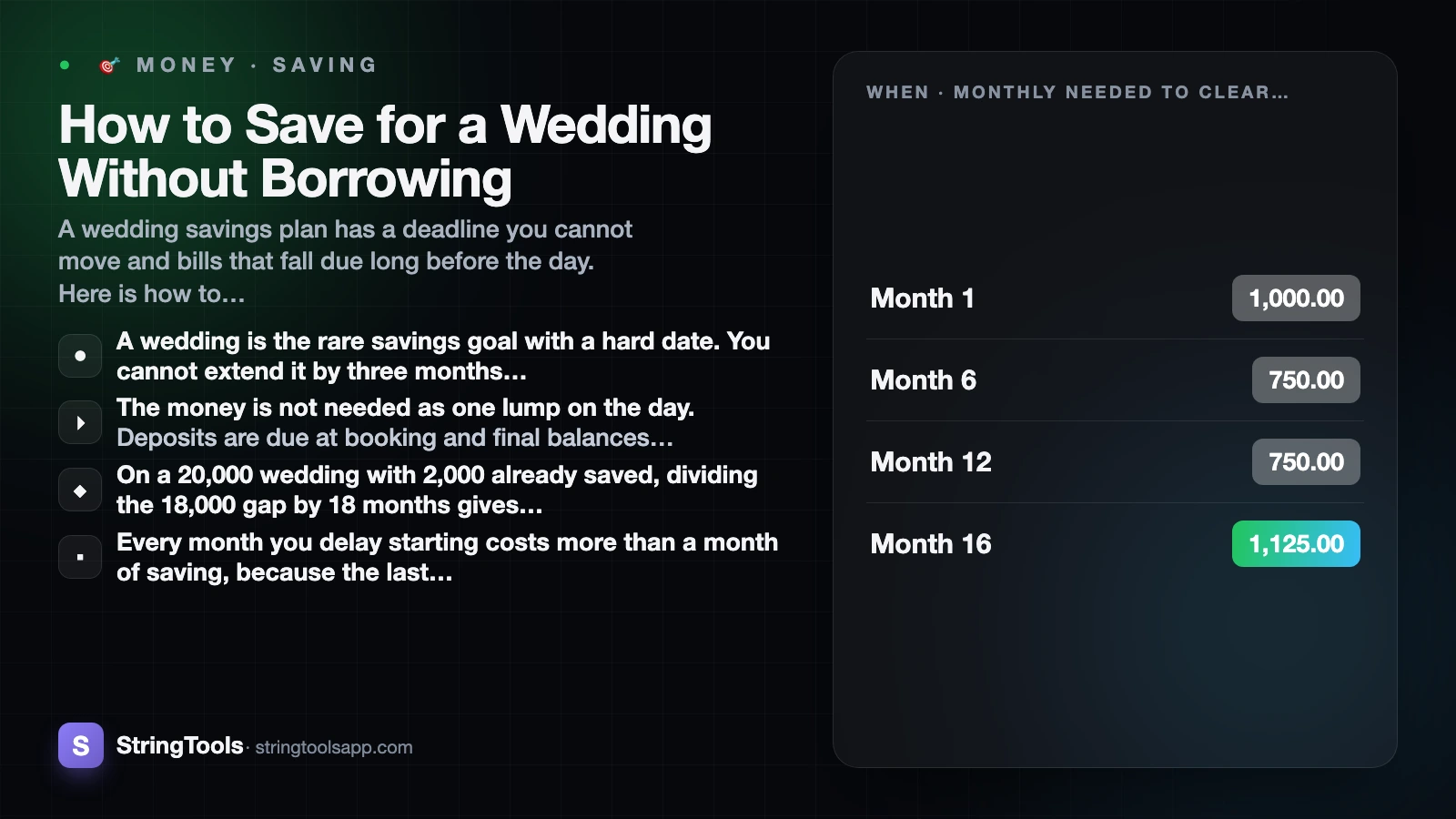
How to Save for a Wedding Without Borrowing
A wedding savings plan has a deadline you cannot move and bills that fall due long before the day. Here is how to size it, stage it and fund it from cash.
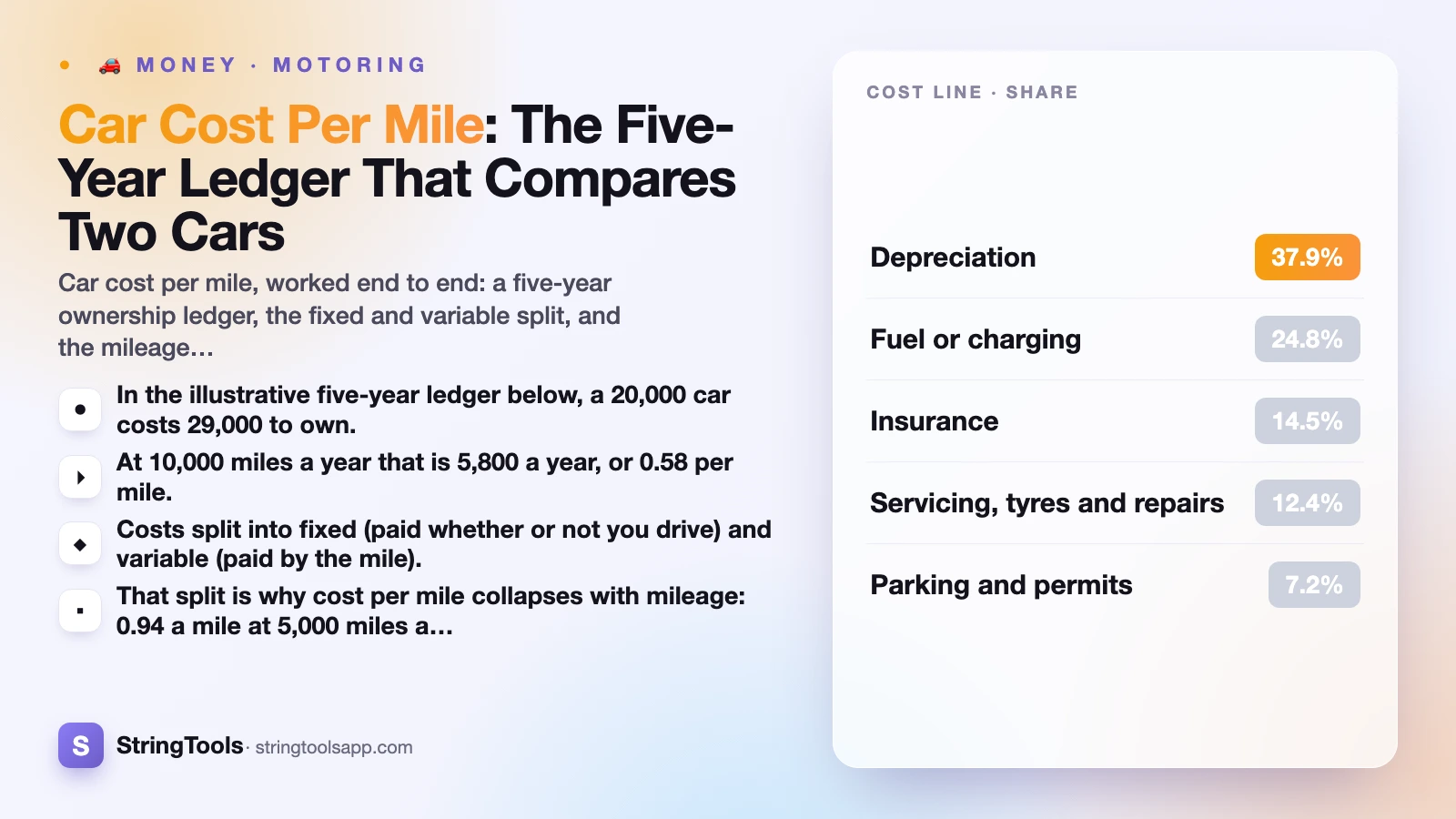
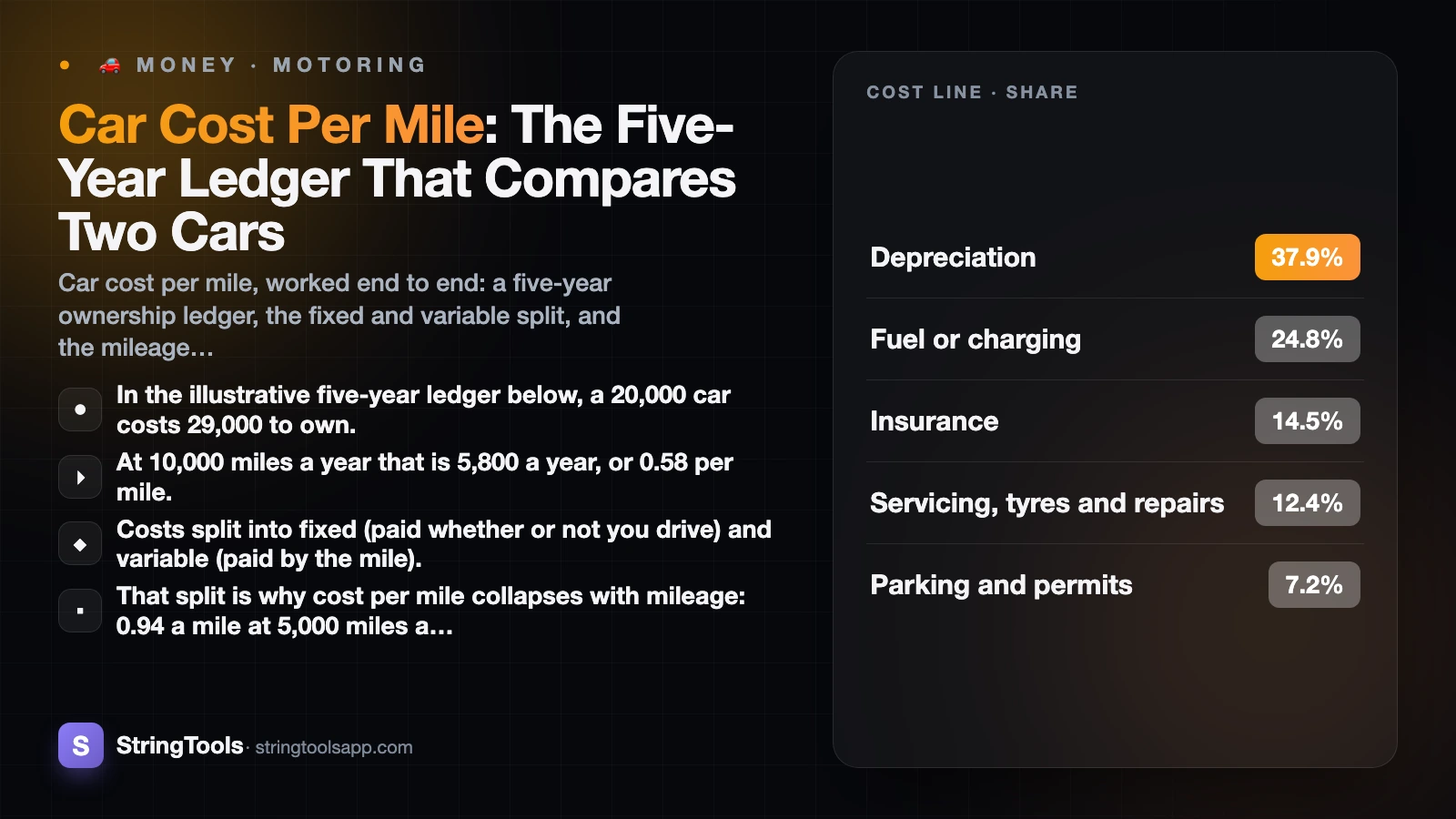
Car Cost Per Mile: The Five-Year Ledger That Compares Two Cars
Car cost per mile, worked end to end: a five-year ownership ledger, the fixed and variable split, and the mileage at which a cheaper car stops being cheaper.
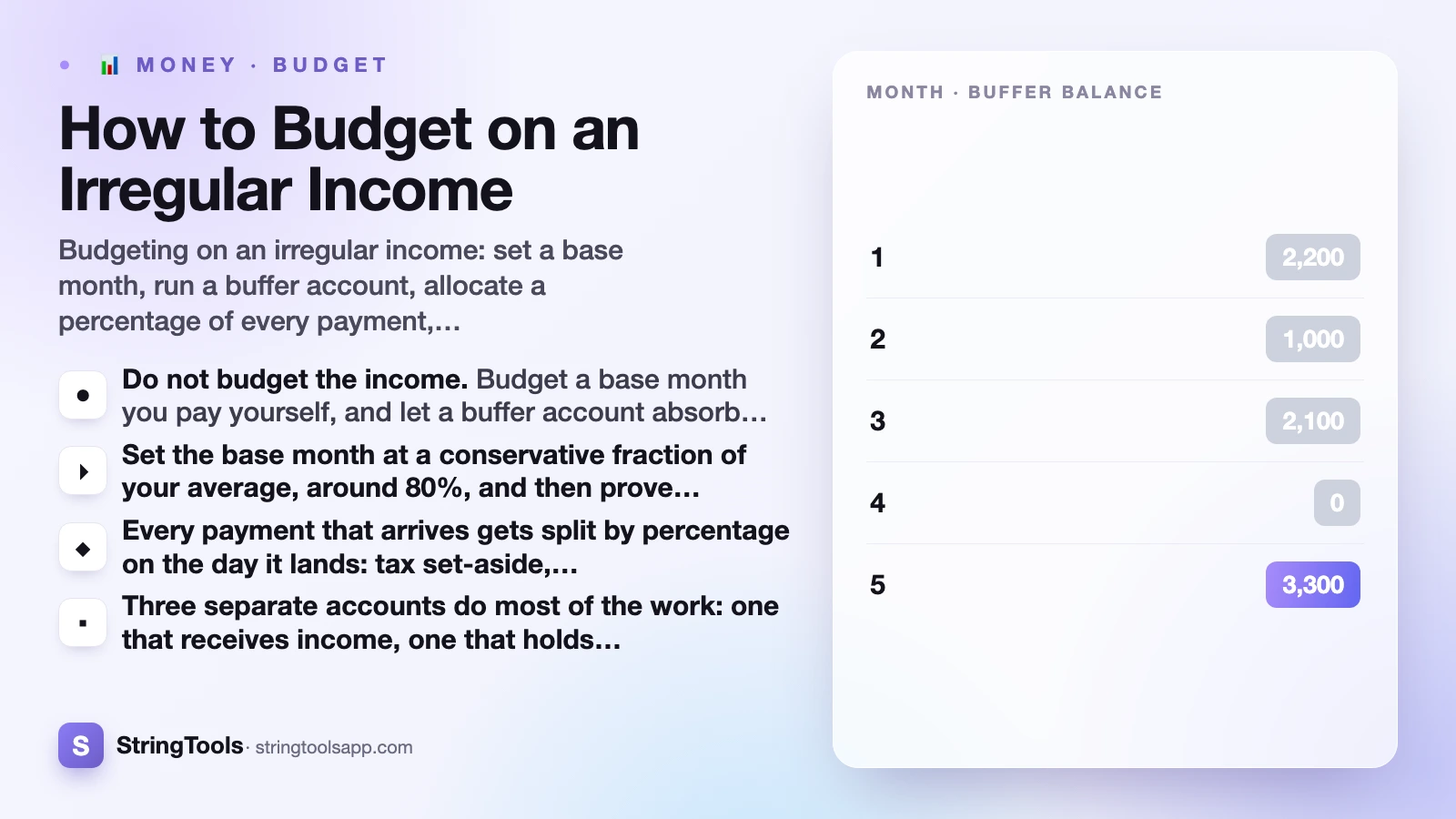
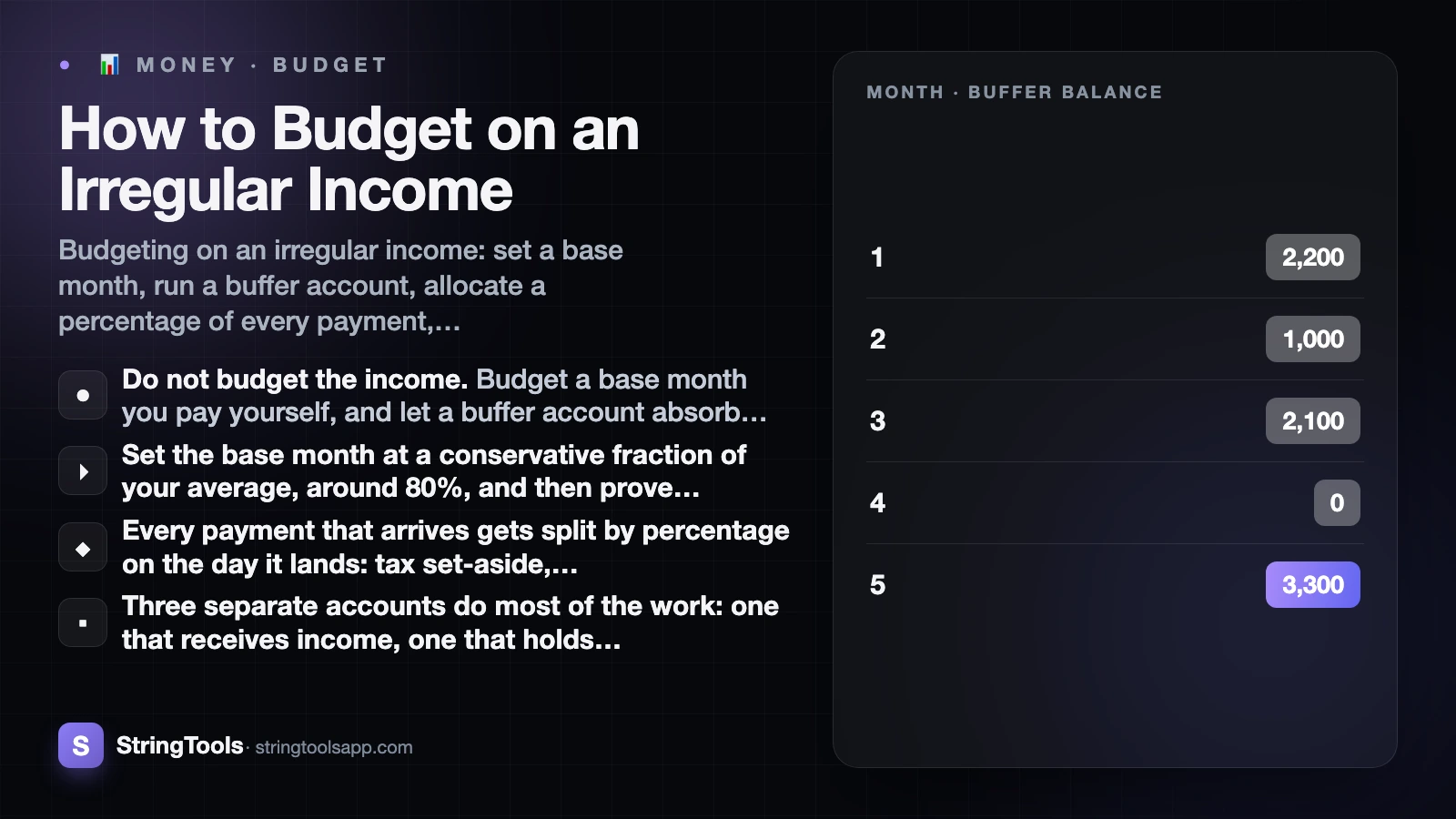
How to Budget on an Irregular Income
Budgeting on an irregular income: set a base month, run a buffer account, allocate a percentage of every payment, and make the budget percentages work again.
You Cannot Revoke a JWT (and What to Do About It)
You cannot revoke a JWT once it is issued - here is why, and the real fixes: short access-token lifetimes, jti denylists, tokensValidAfter and key rotation.
JWT vs Session Cookies: Which Should You Actually Use?
JWT vs session cookies, compared honestly: where the session state lives, what stateless scaling really buys you, revocation, XSS, CSRF and cookie flags.
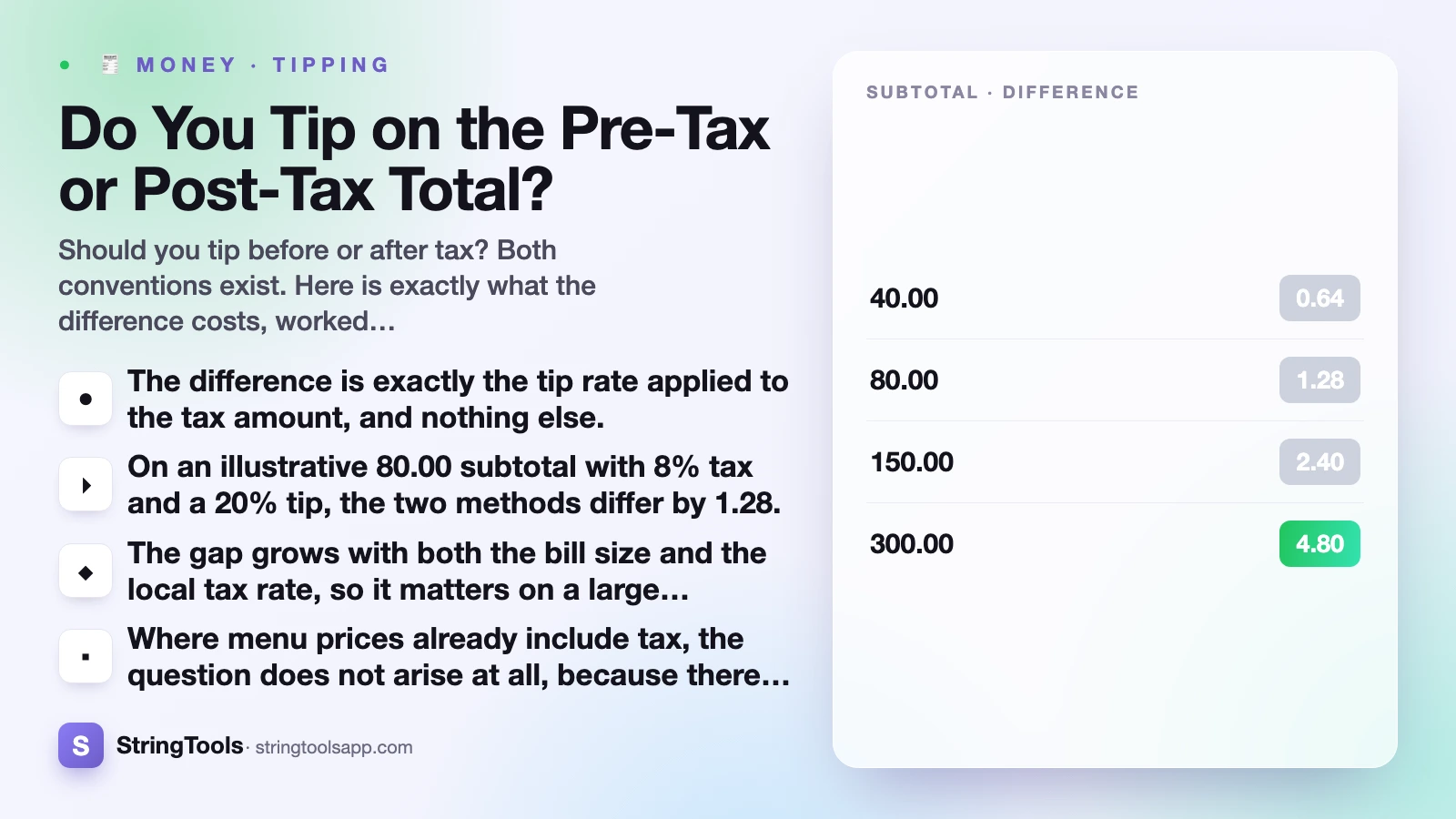
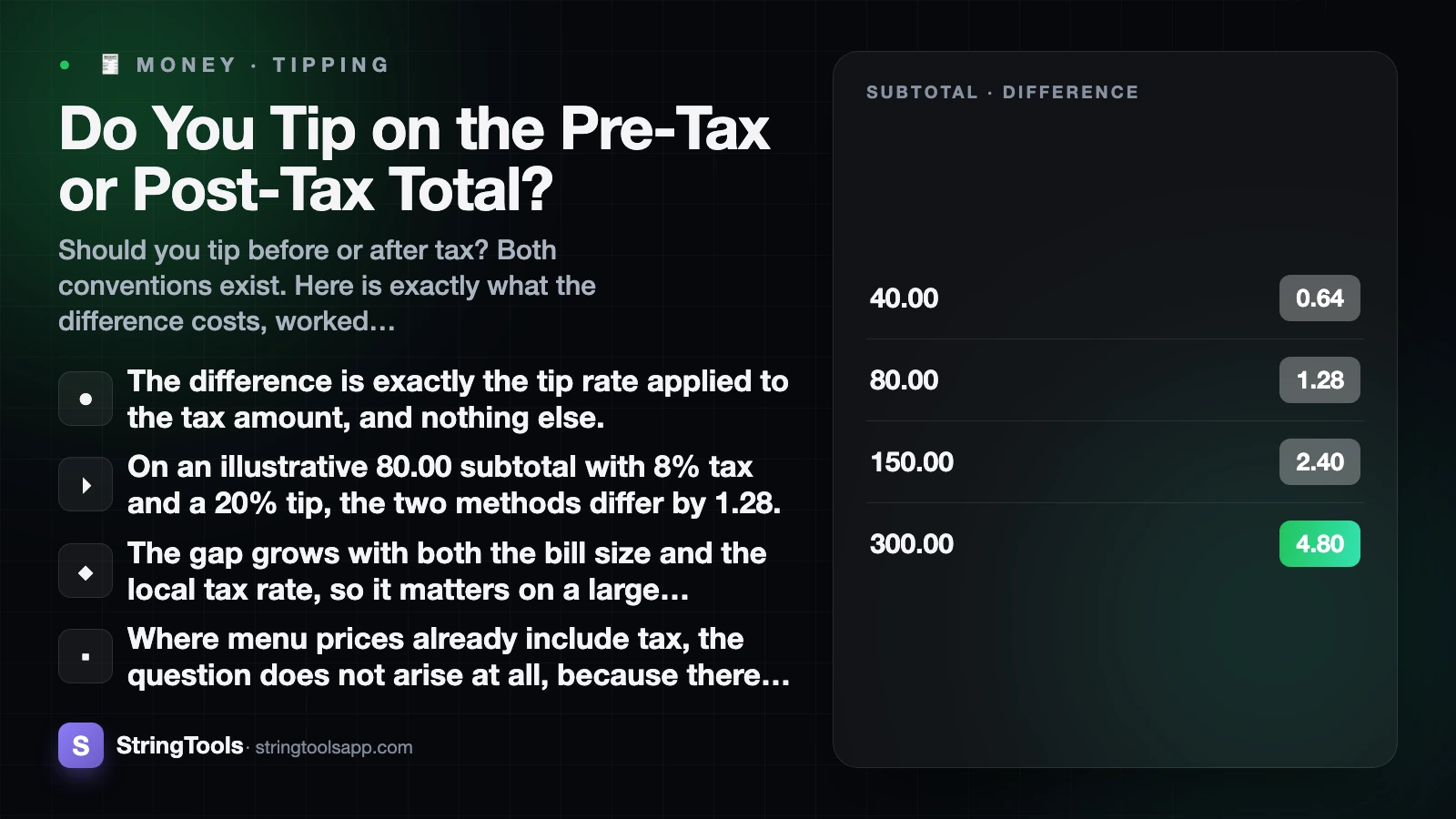
Do You Tip on the Pre-Tax or Post-Tax Total?
Should you tip before or after tax? Both conventions exist. Here is exactly what the difference costs, worked through, and why it is smaller than it feels.
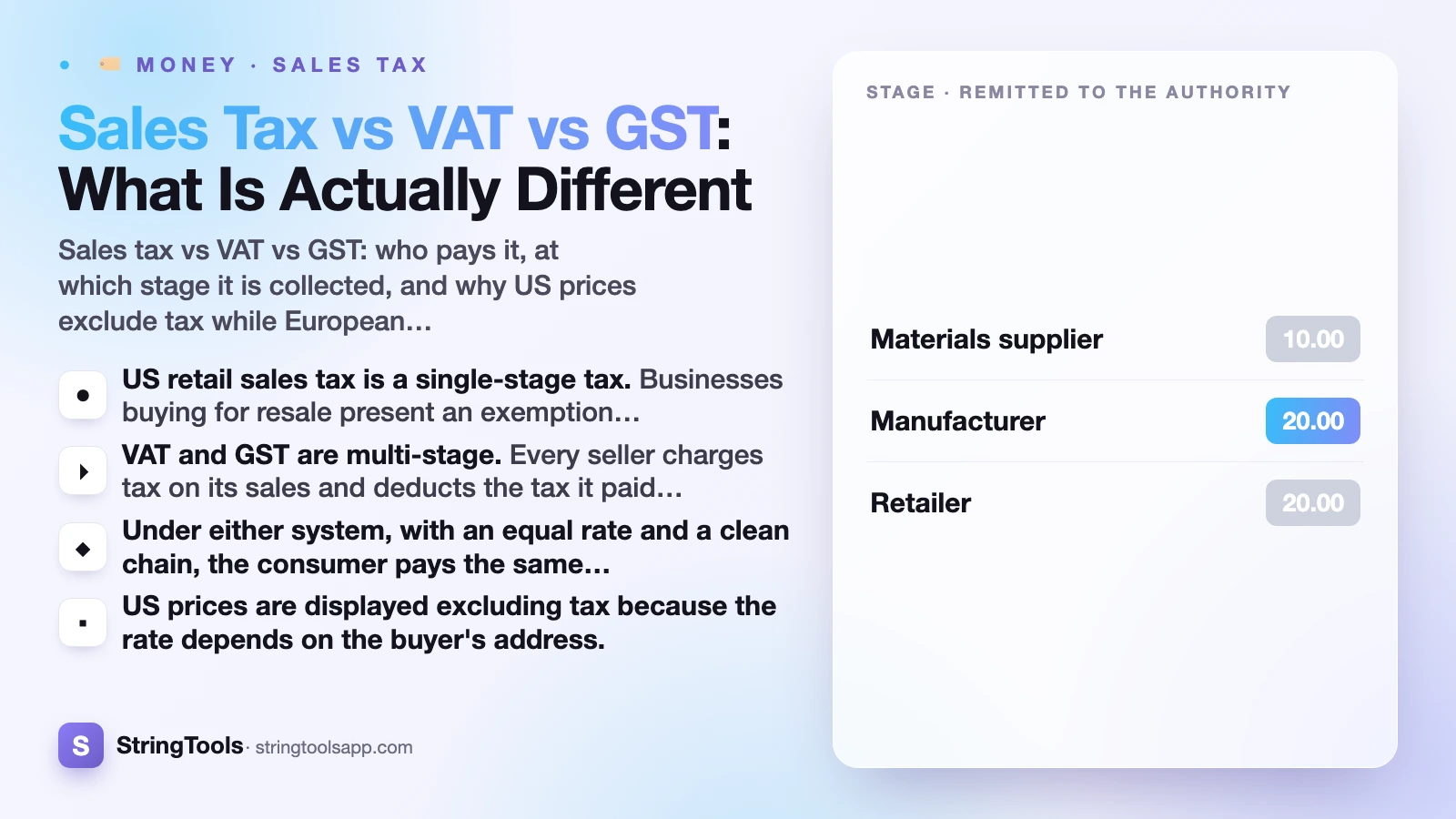
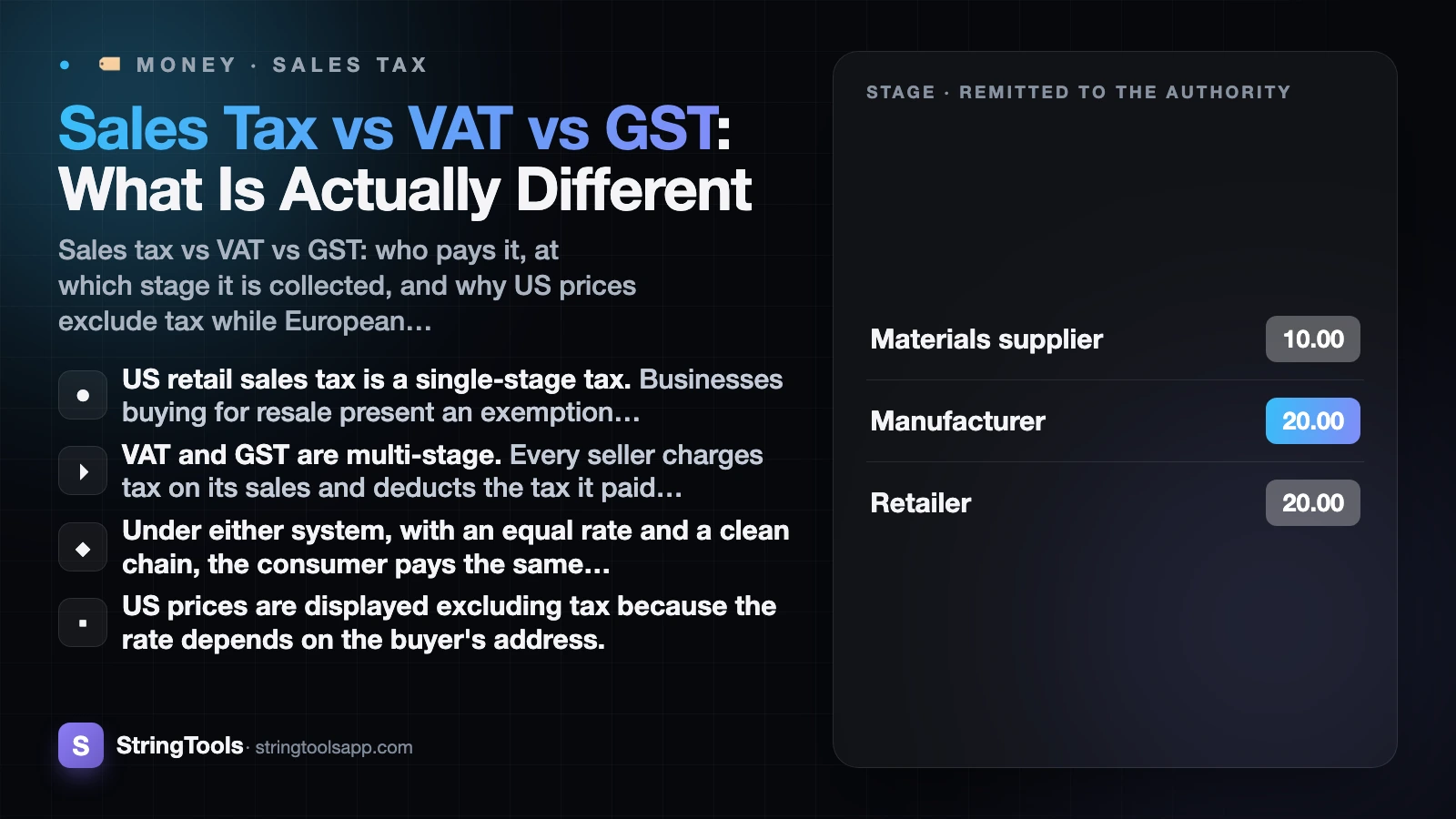
Sales Tax vs VAT vs GST: What Is Actually Different
Sales tax vs VAT vs GST: who pays it, at which stage it is collected, and why US prices exclude tax while European and Australian prices include it.
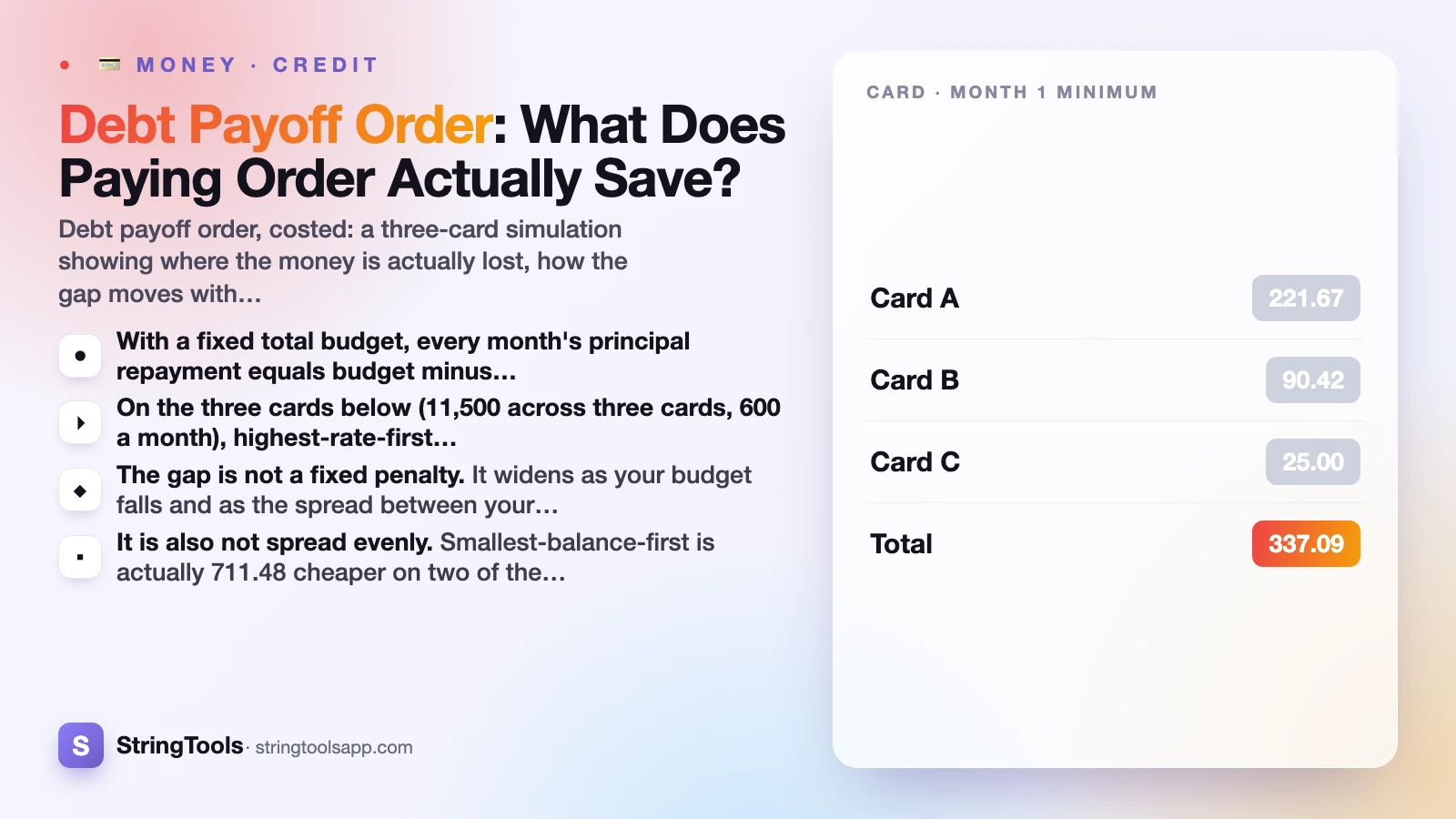
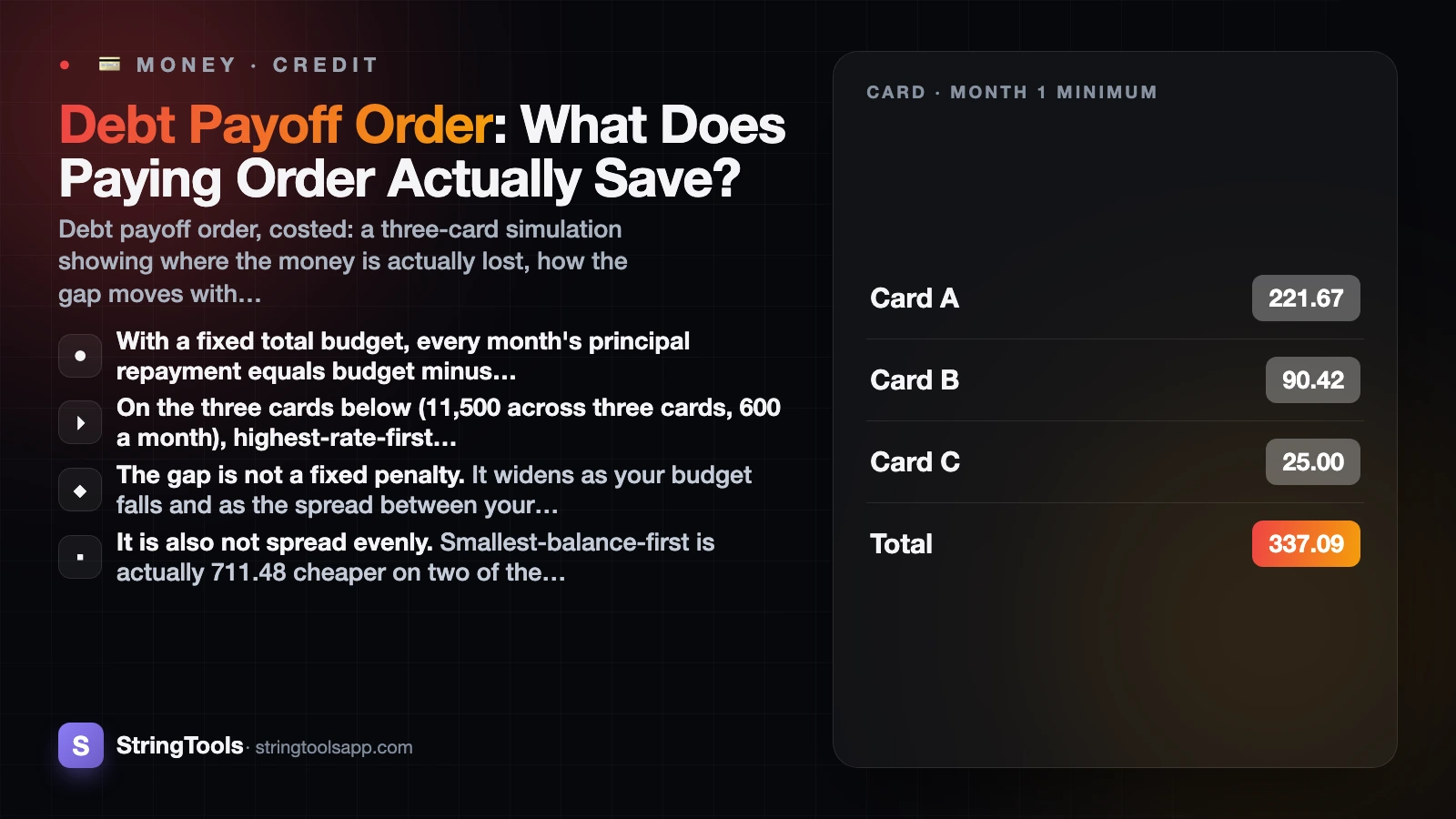
Debt Payoff Order: What Does Paying Order Actually Save?
Debt payoff order, costed: a three-card simulation showing where the money is actually lost, how the gap moves with your budget, and when it is exactly zero.
JWT Expiry Explained: exp, iat, nbf and Clock Skew
JWT expiry explained: exp, iat and nbf are seconds since the epoch, not milliseconds. How clock-skew leeway works and how to pick a token lifetime.


How to Price a Product: Cost, Margin and What the Market Bears
How to price a product in two steps: build a true unit cost for the floor, then find what the market will bear. Worked margin tables and the volume trade-off.
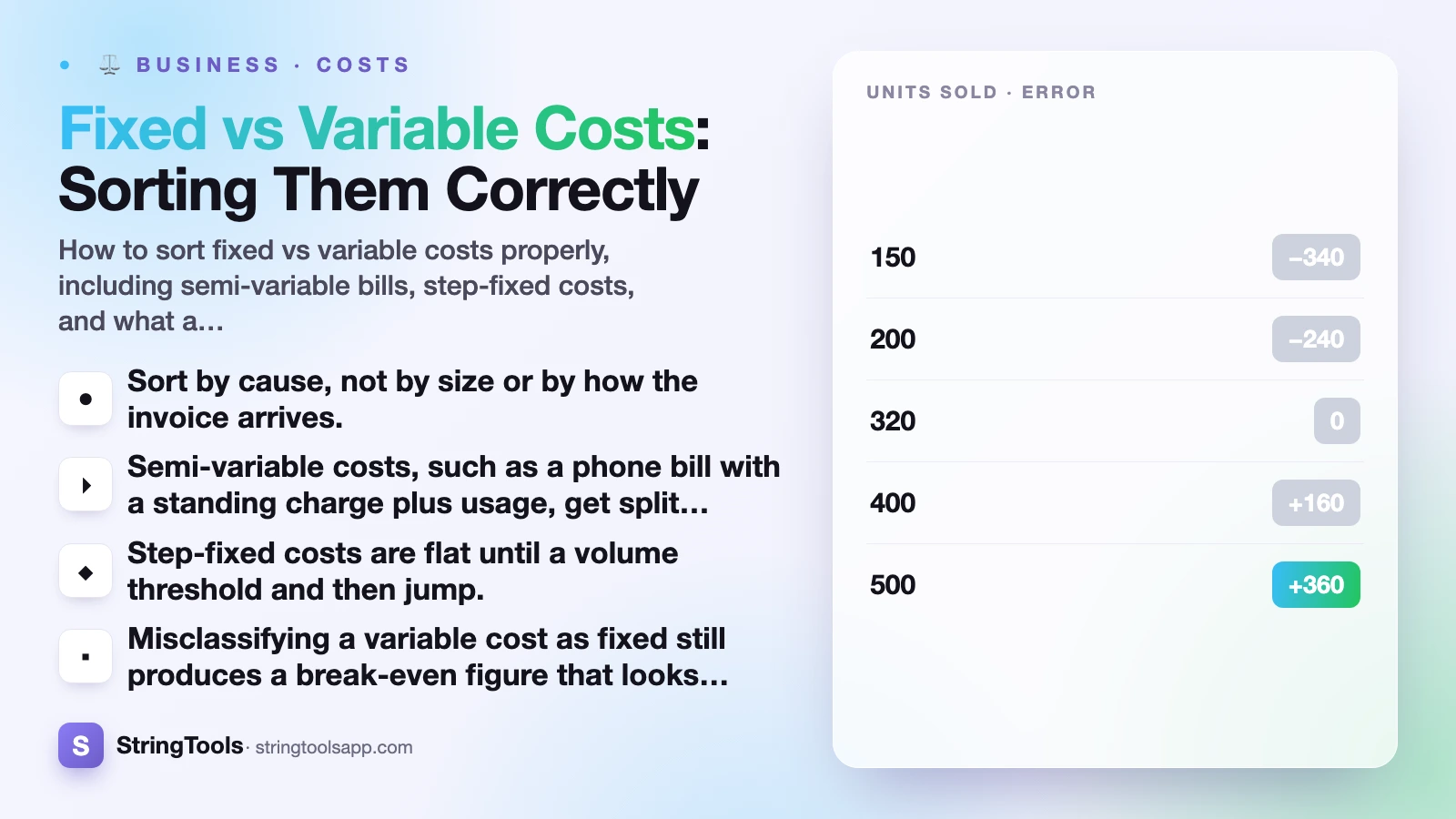
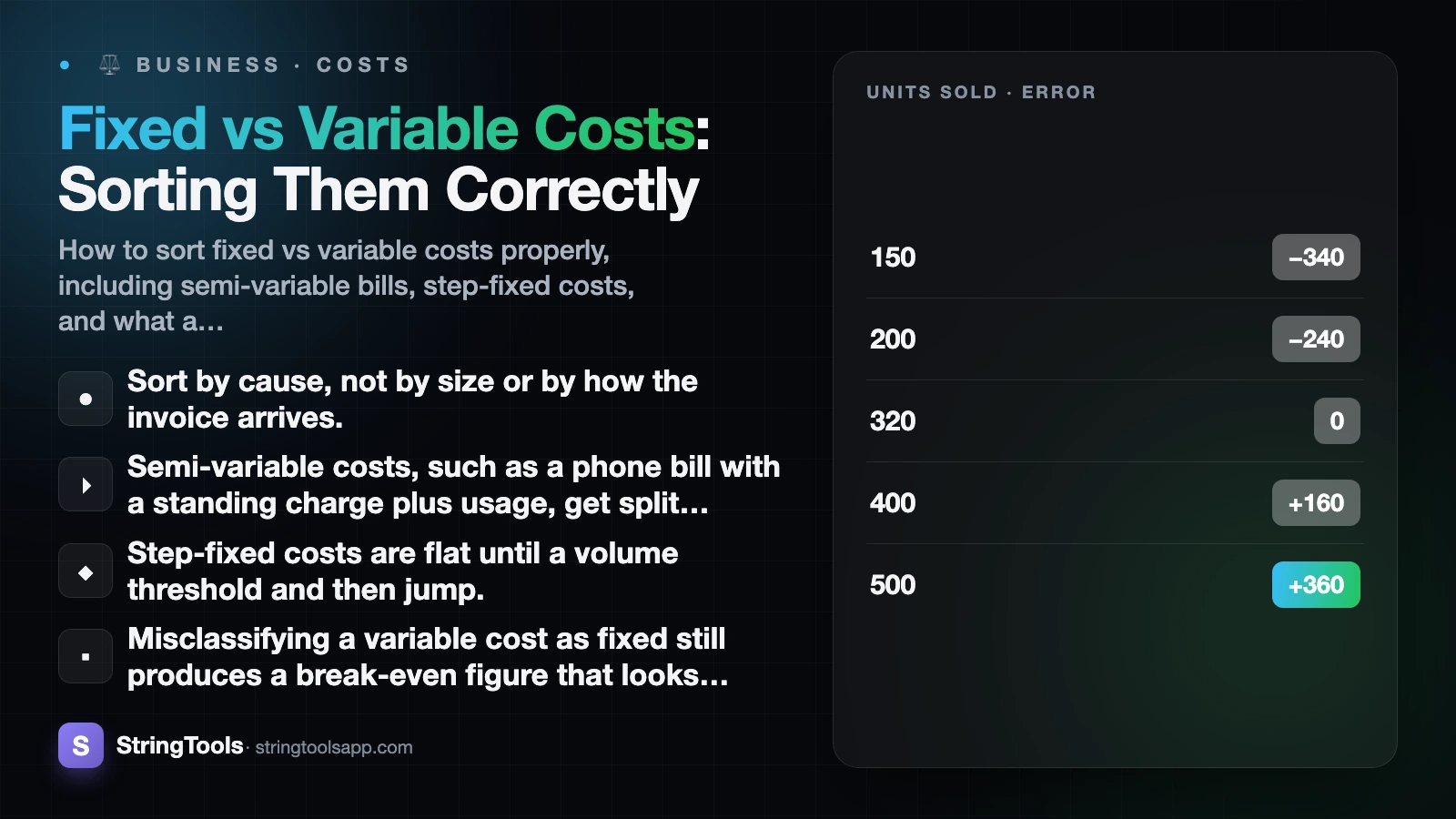
Fixed vs Variable Costs: Sorting Them Correctly
How to sort fixed vs variable costs properly, including semi-variable bills, step-fixed costs, and what a misclassified cost does to your break-even point.
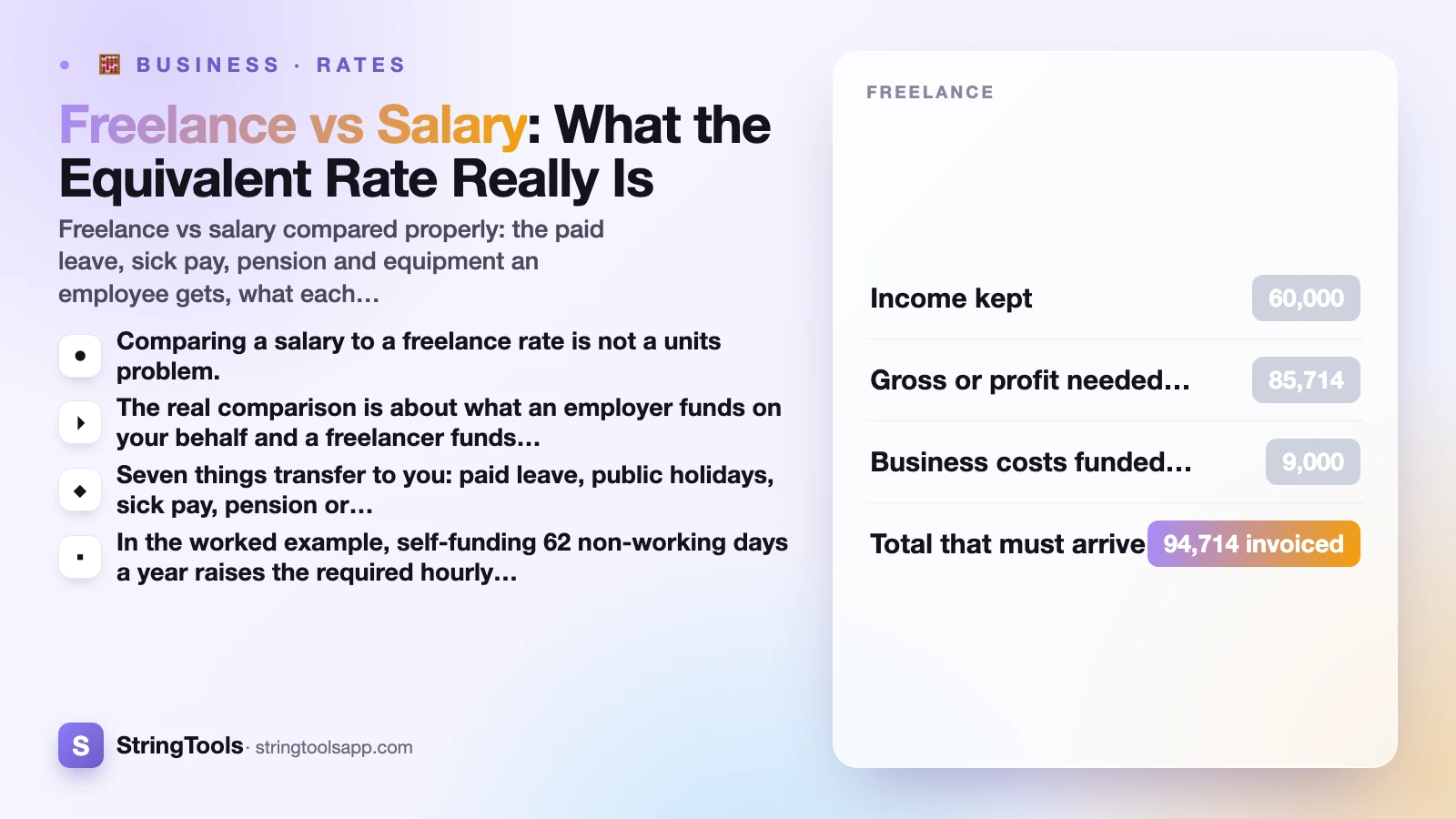
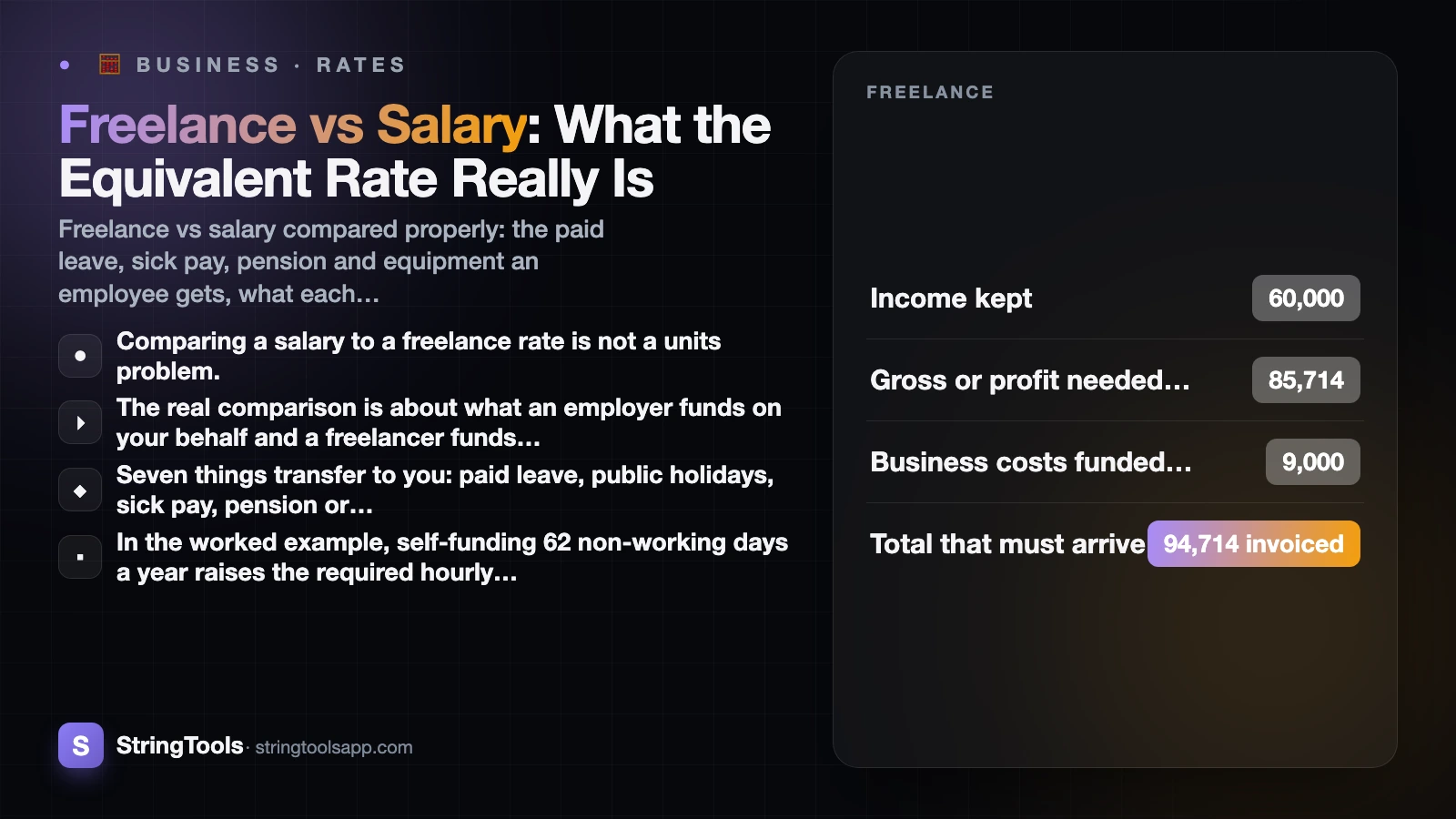
Freelance vs Salary: What the Equivalent Rate Really Is
Freelance vs salary compared properly: the paid leave, sick pay, pension and equipment an employee gets, what each costs you, and the rate that matches them.
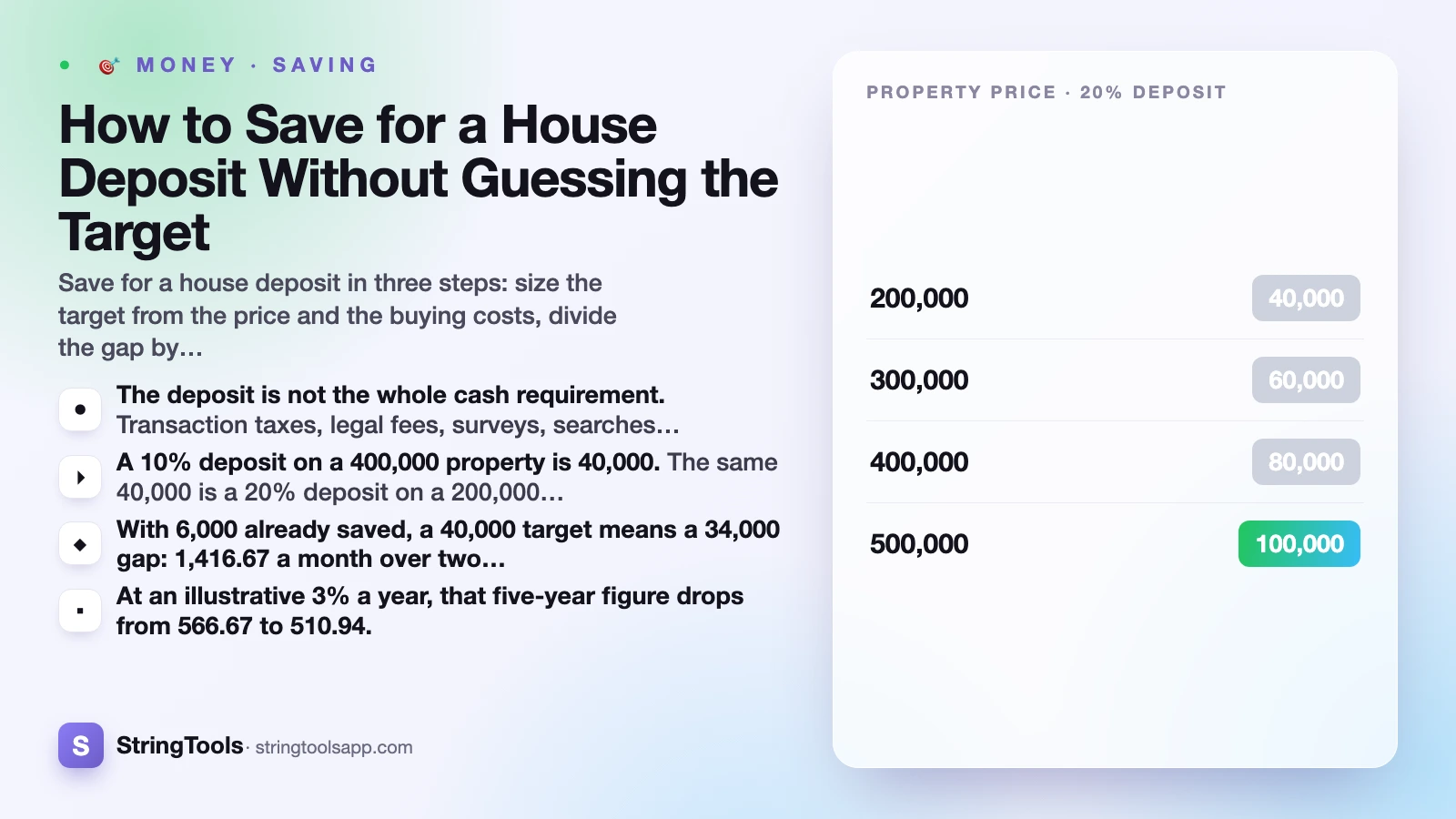
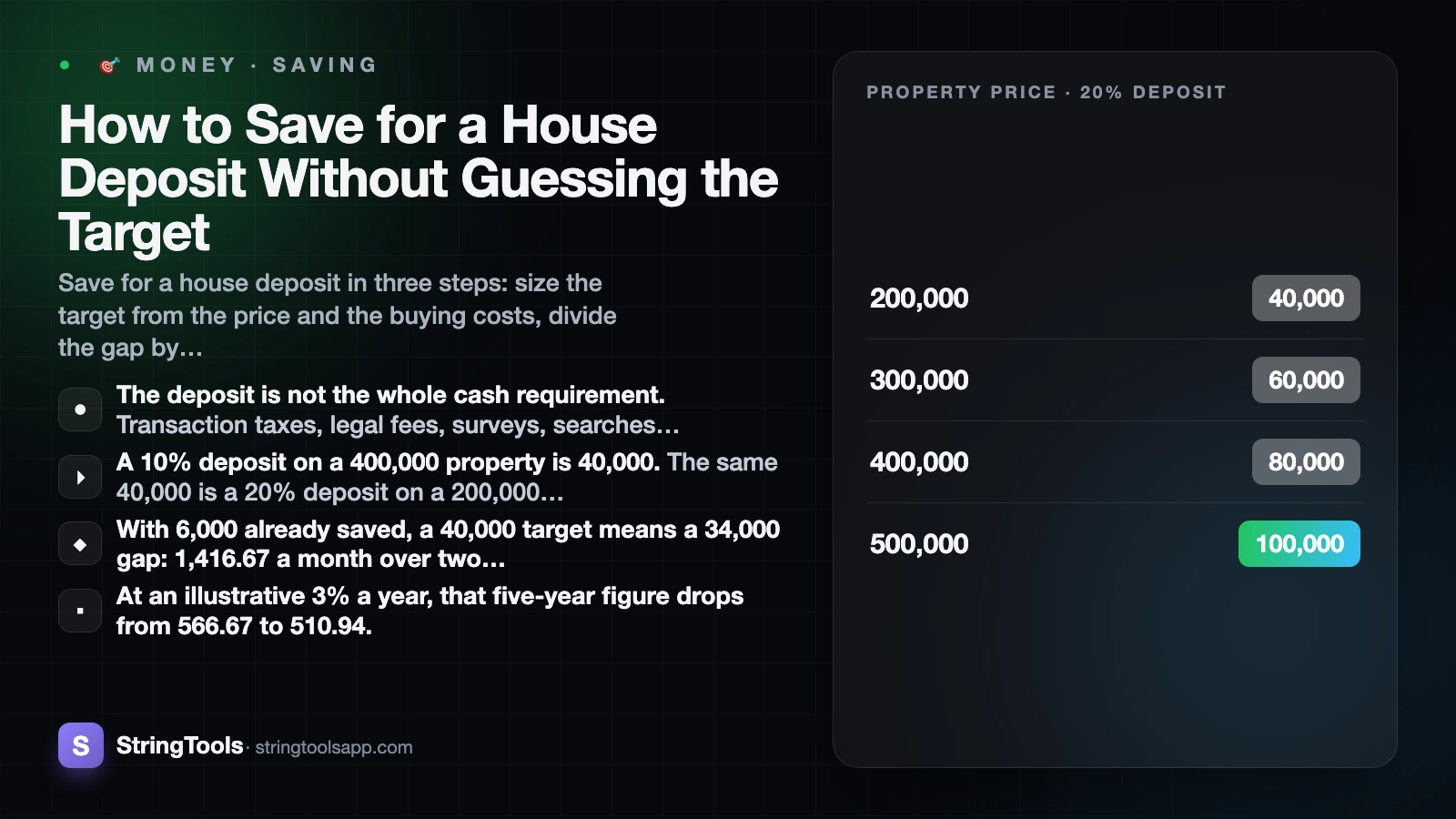
How to Save for a House Deposit Without Guessing the Target
Save for a house deposit in three steps: size the target from the price and the buying costs, divide the gap by months, then choose where to hold it safely.
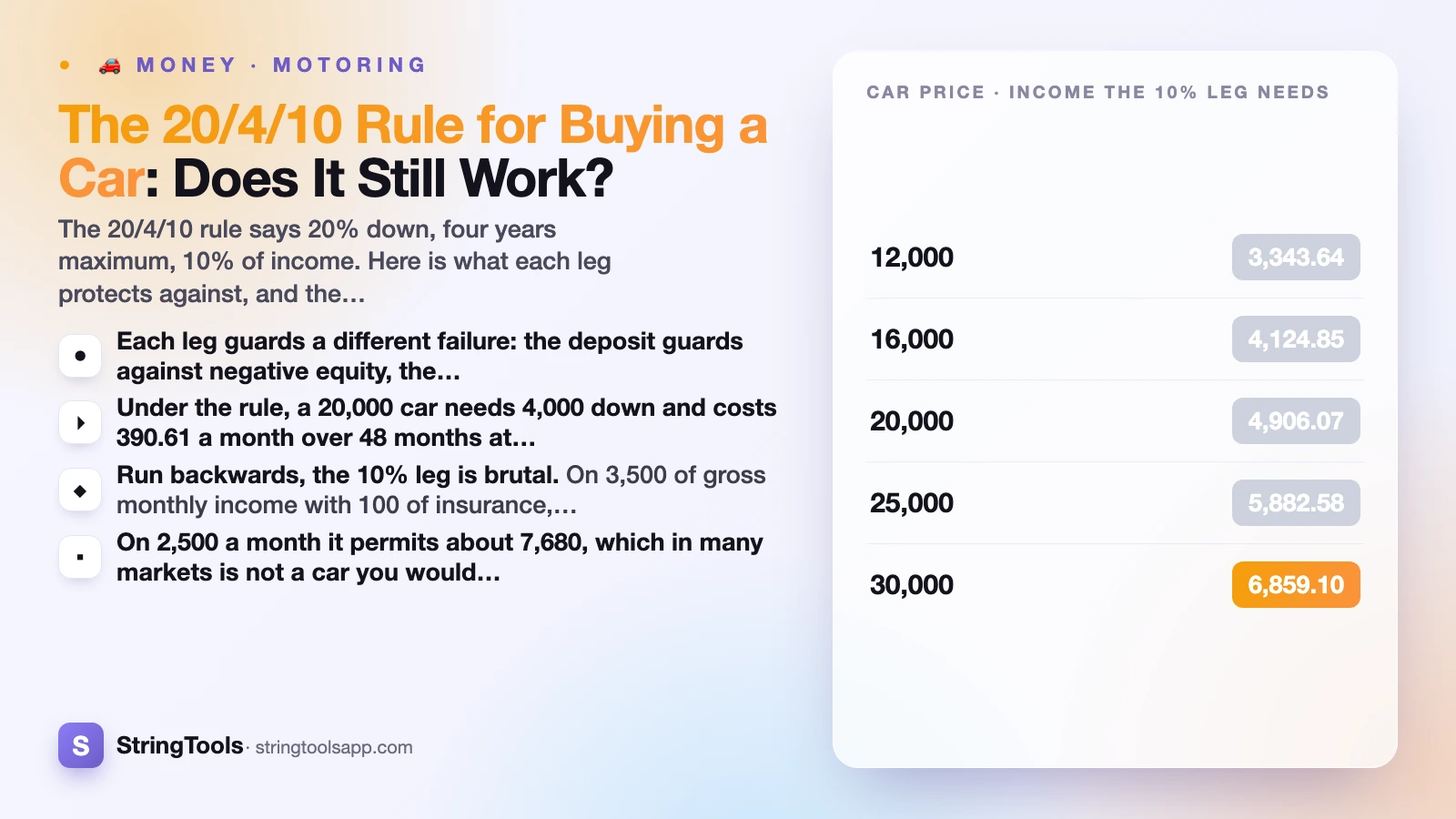
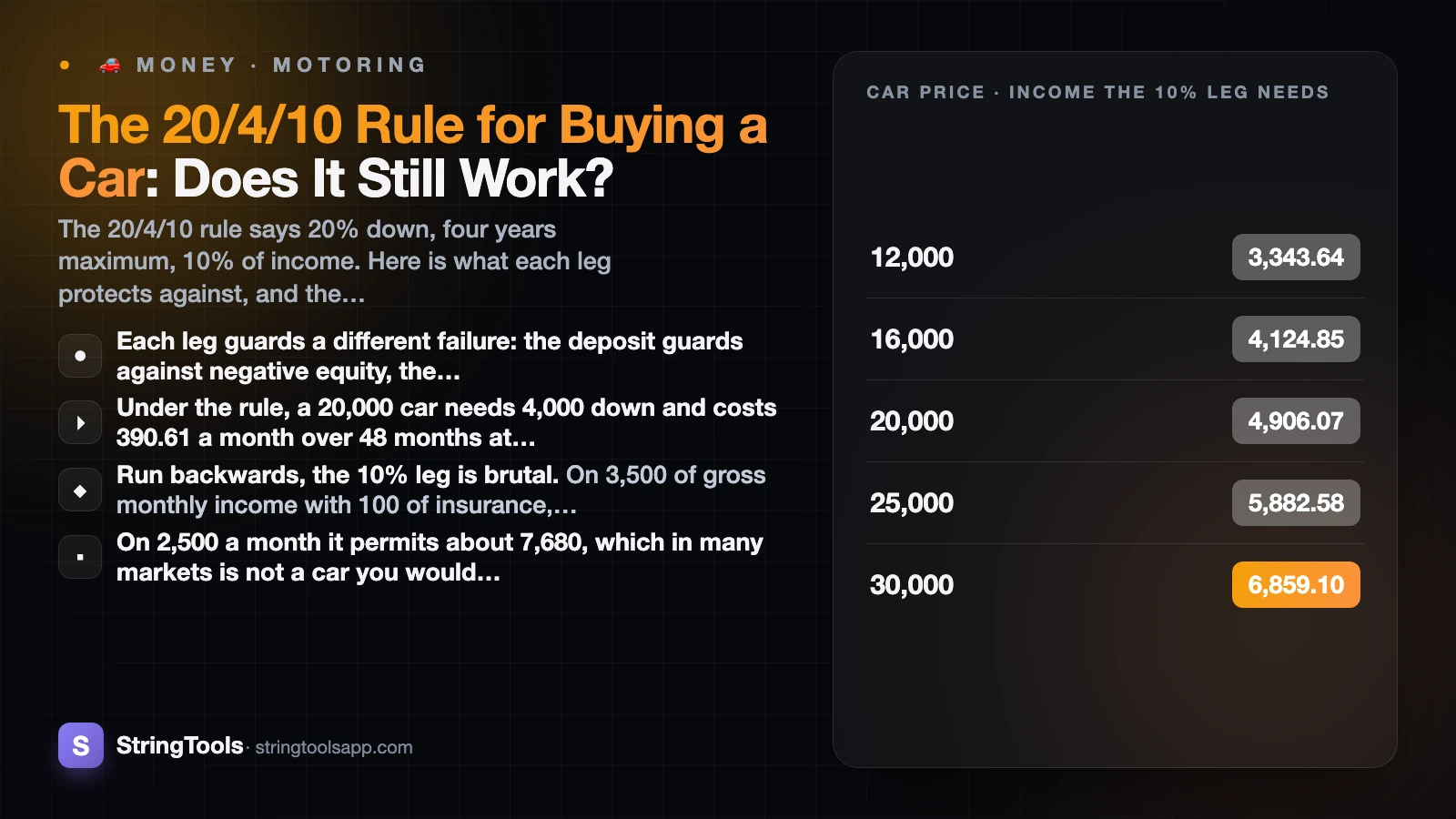
The 20/4/10 Rule for Buying a Car: Does It Still Work?
The 20/4/10 rule says 20% down, four years maximum, 10% of income. Here is what each leg protects against, and the incomes where the rule quietly breaks.
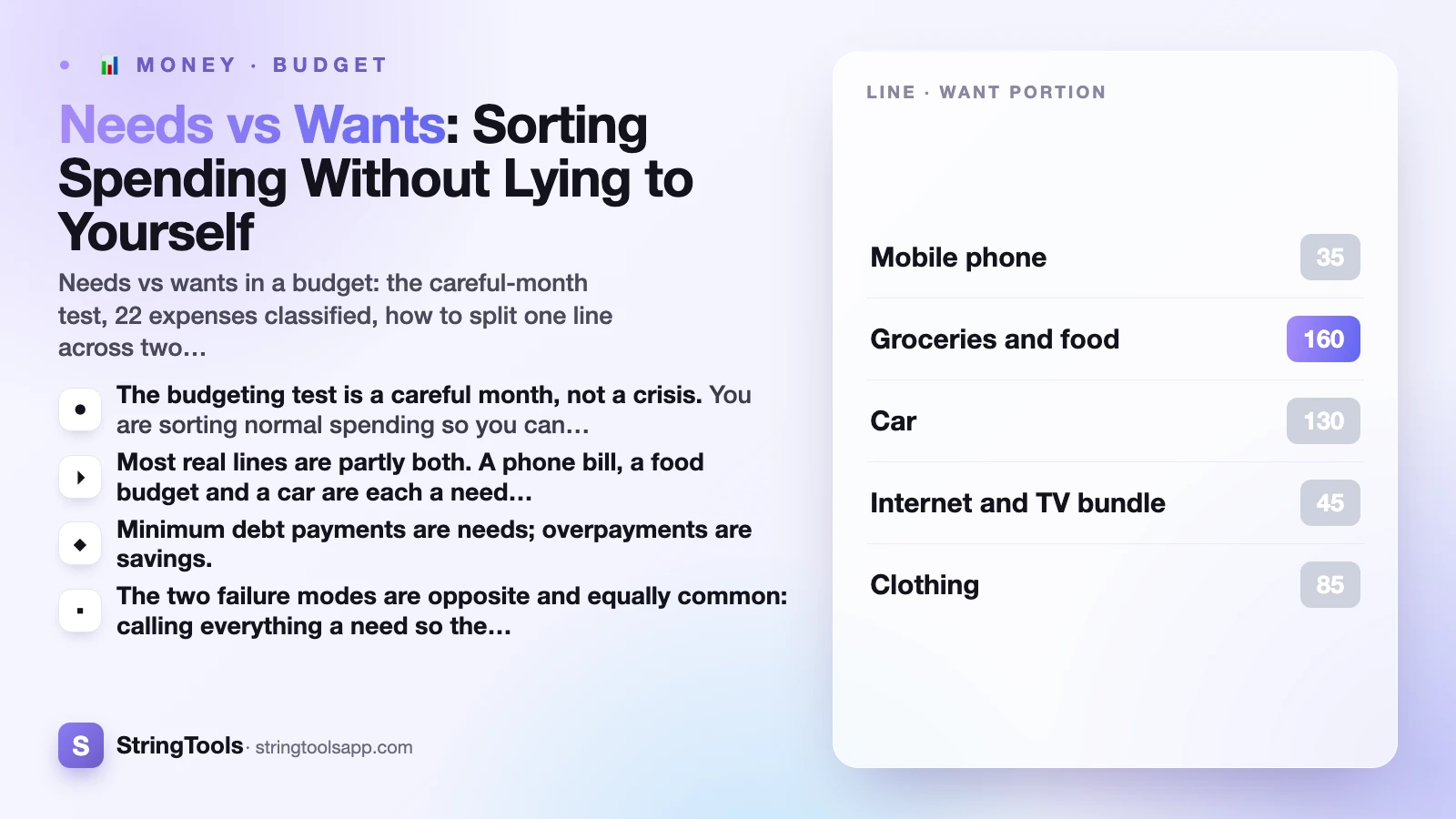
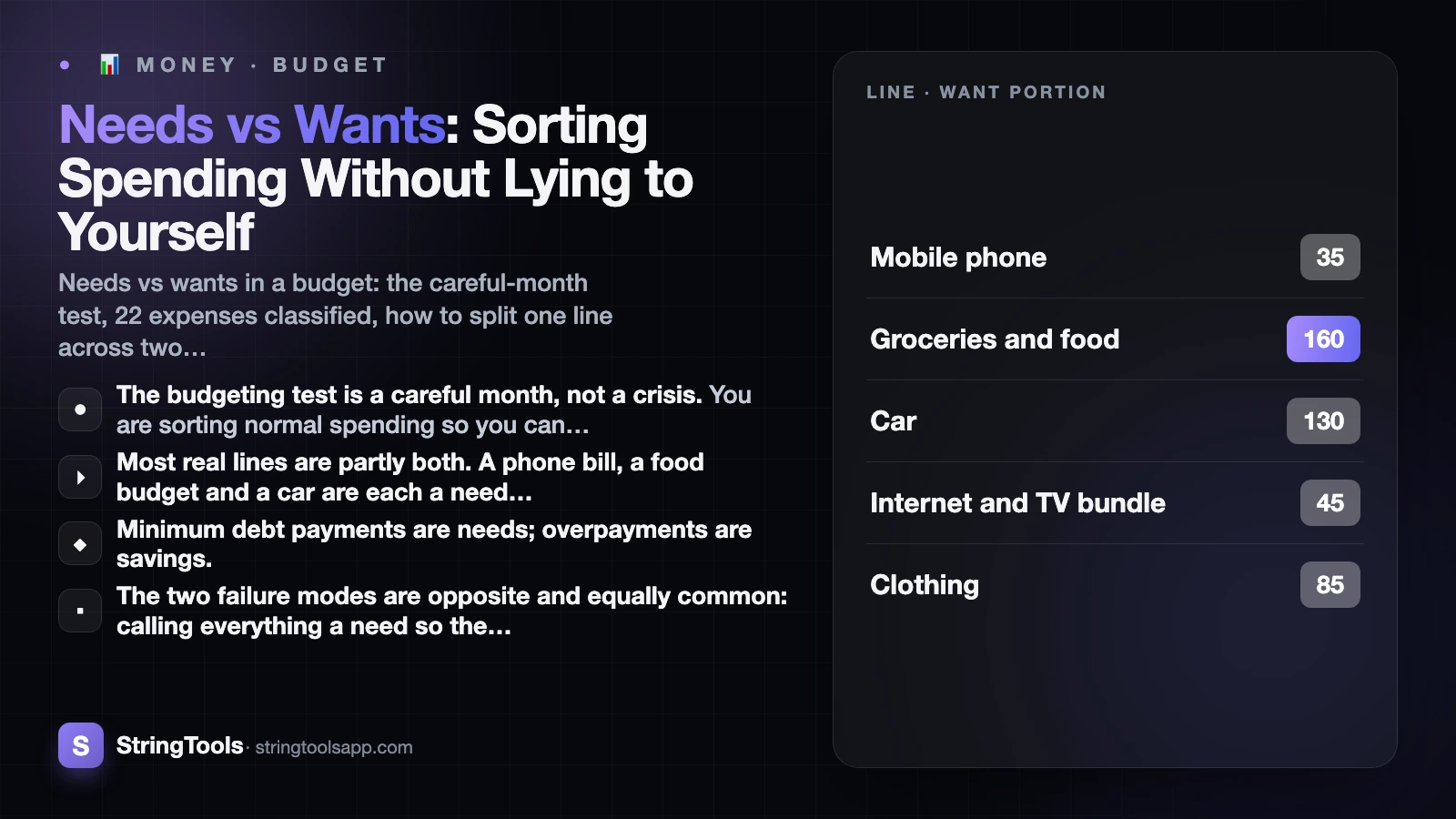
Needs vs Wants: Sorting Spending Without Lying to Yourself
Needs vs wants in a budget: the careful-month test, 22 expenses classified, how to split one line across two buckets, and the four traps that skew a budget.
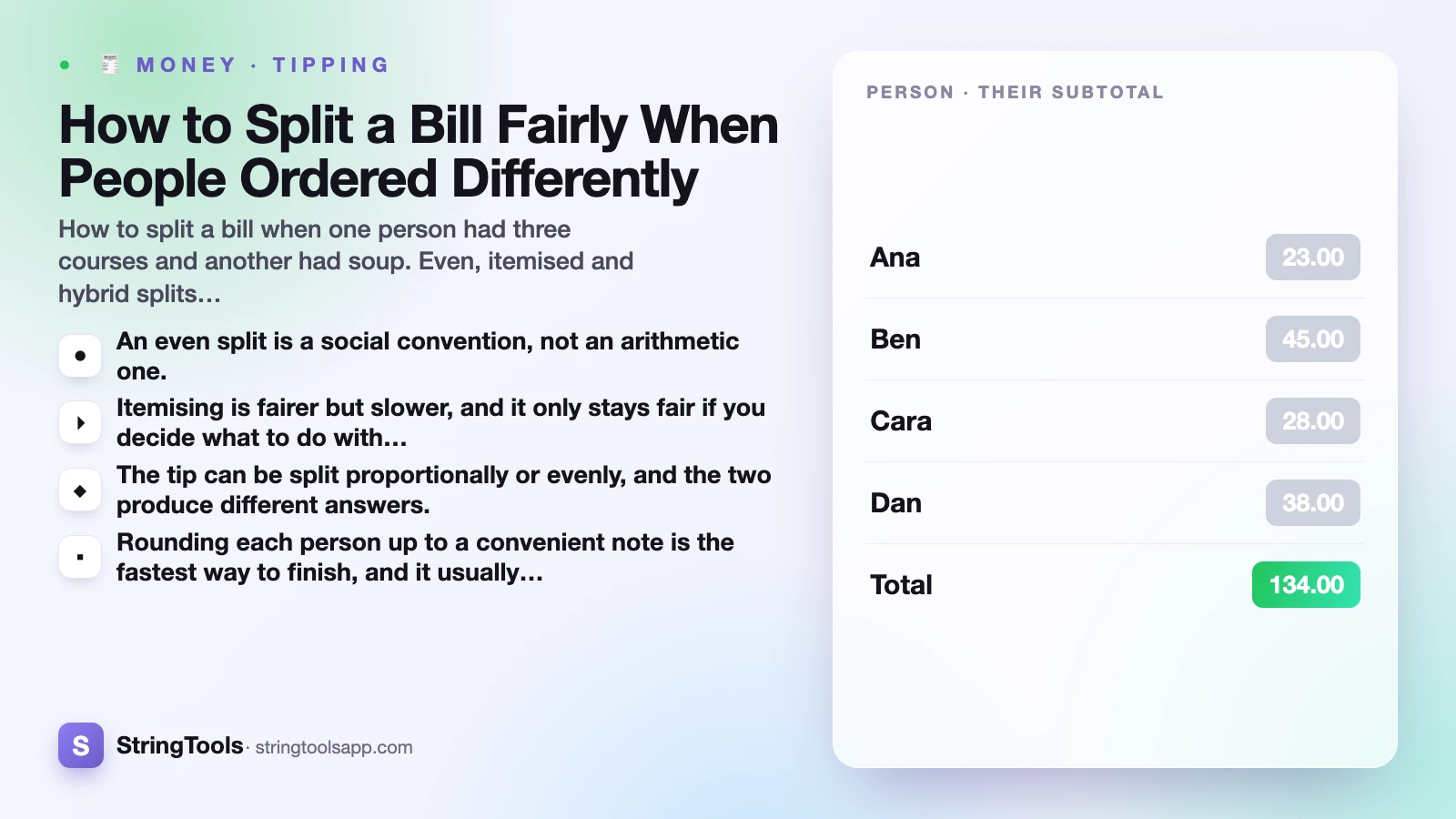
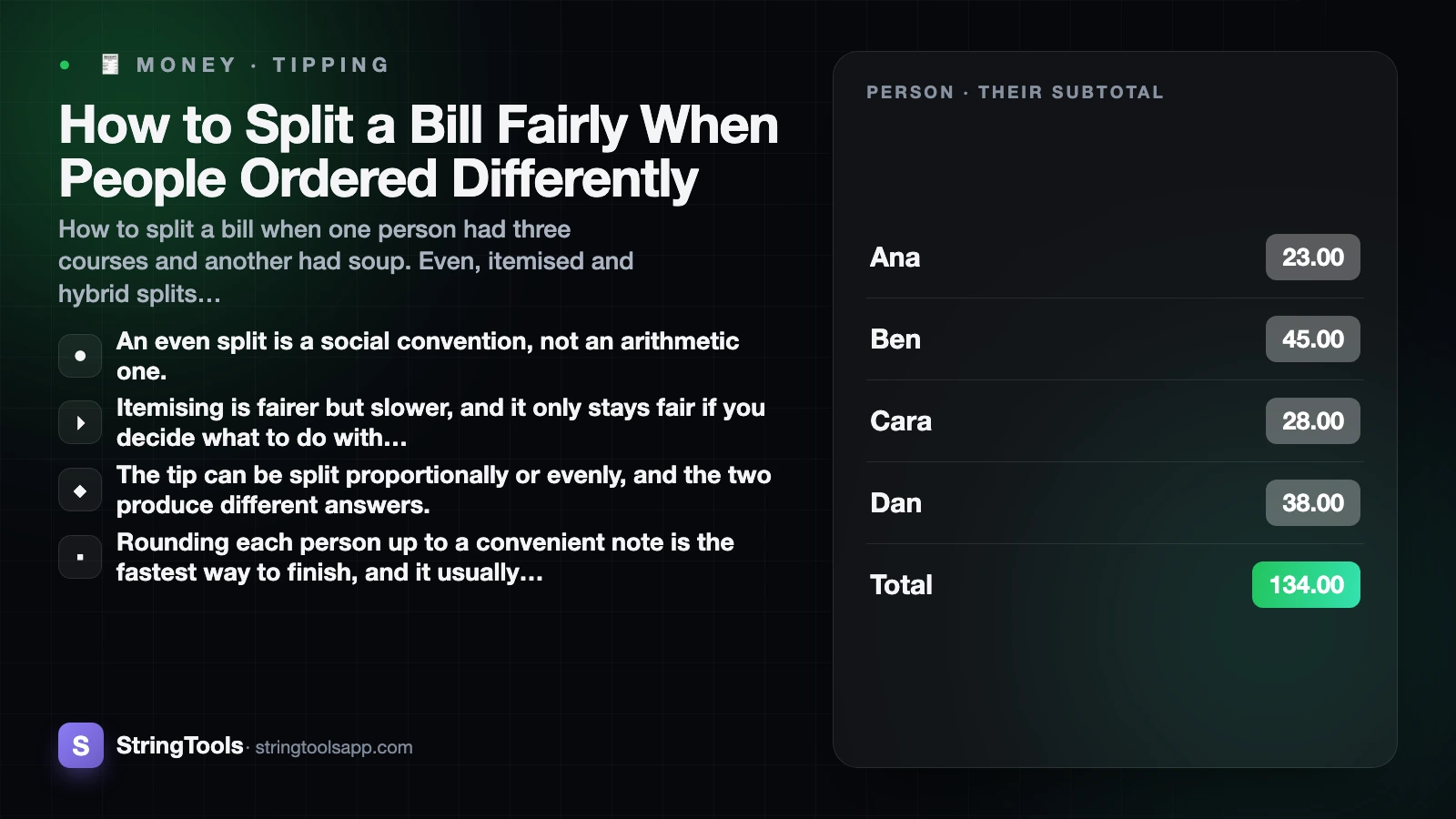
How to Split a Bill Fairly When People Ordered Differently
How to split a bill when one person had three courses and another had soup. Even, itemised and hybrid splits compared, with a full worked example.
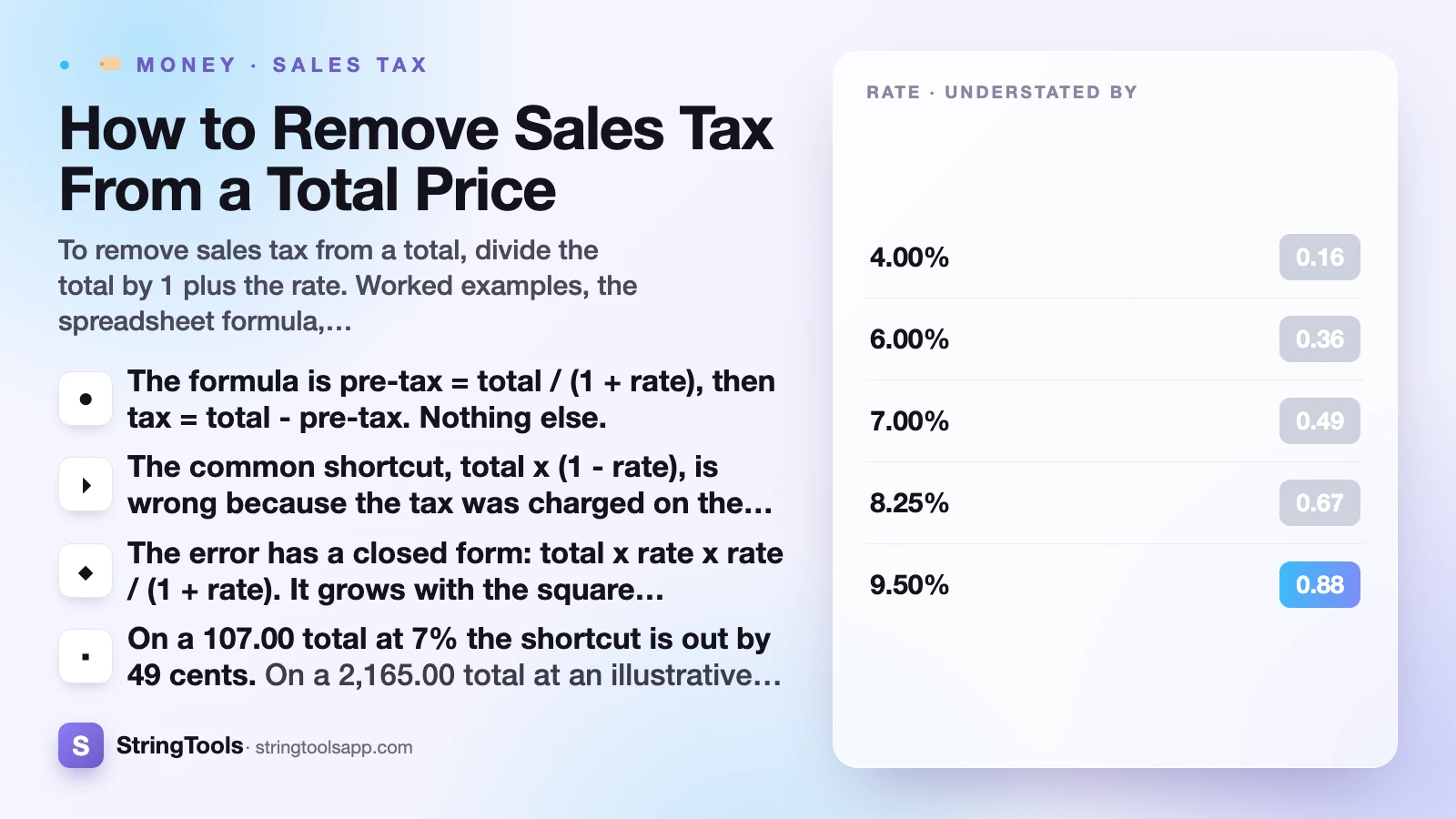
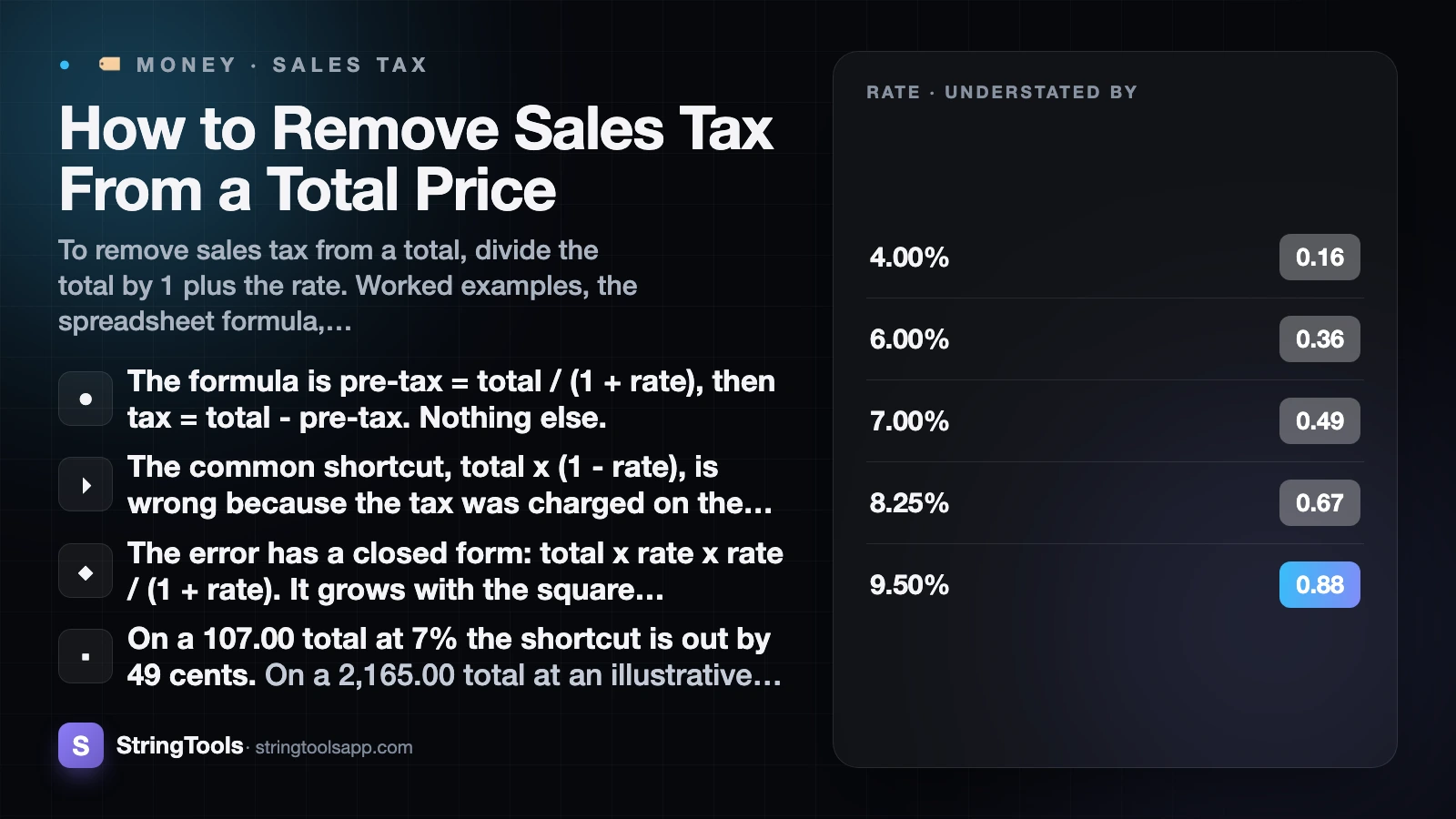
How to Remove Sales Tax From a Total Price
To remove sales tax from a total, divide the total by 1 plus the rate. Worked examples, the spreadsheet formula, and what the wrong method costs you.
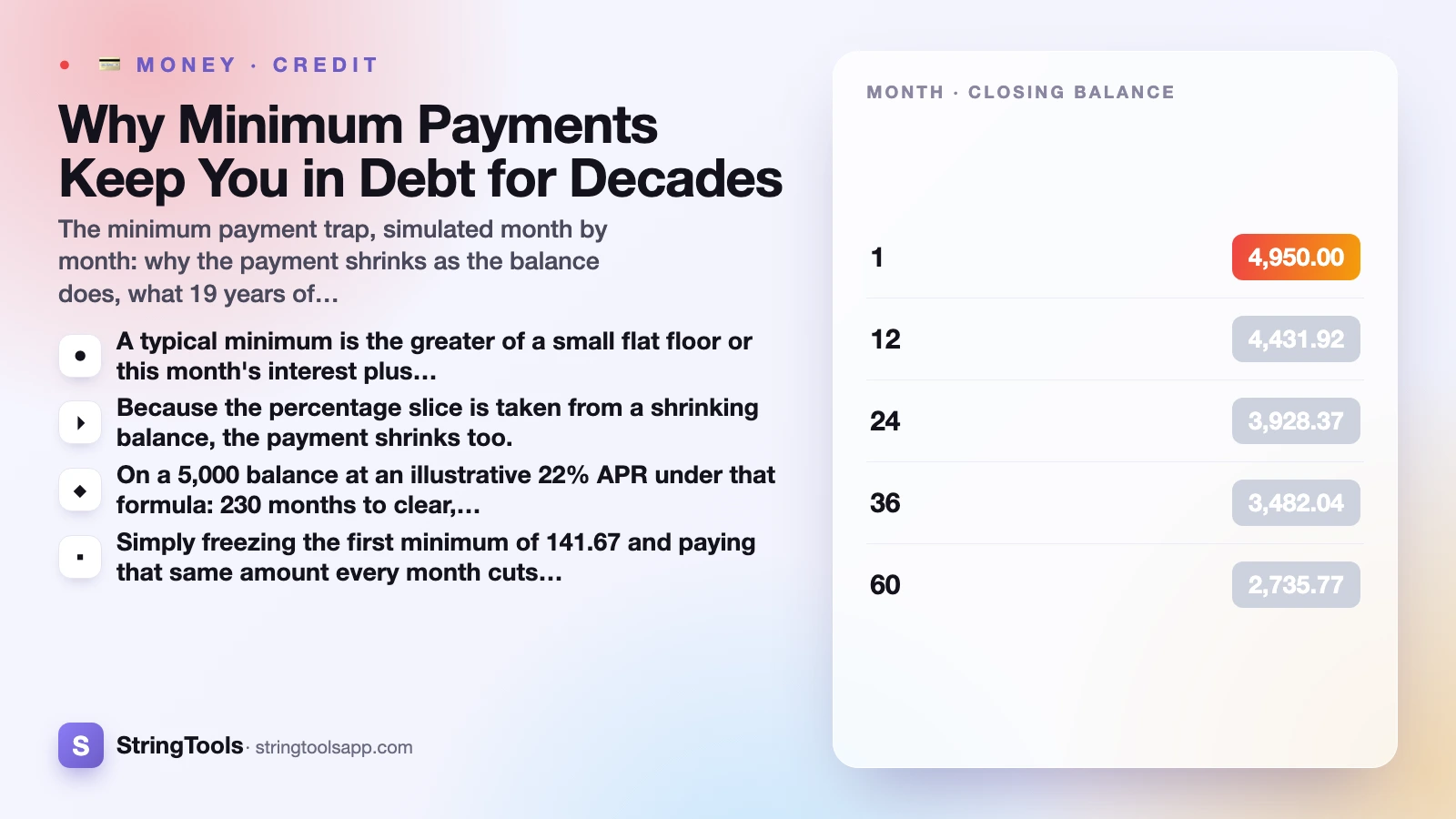
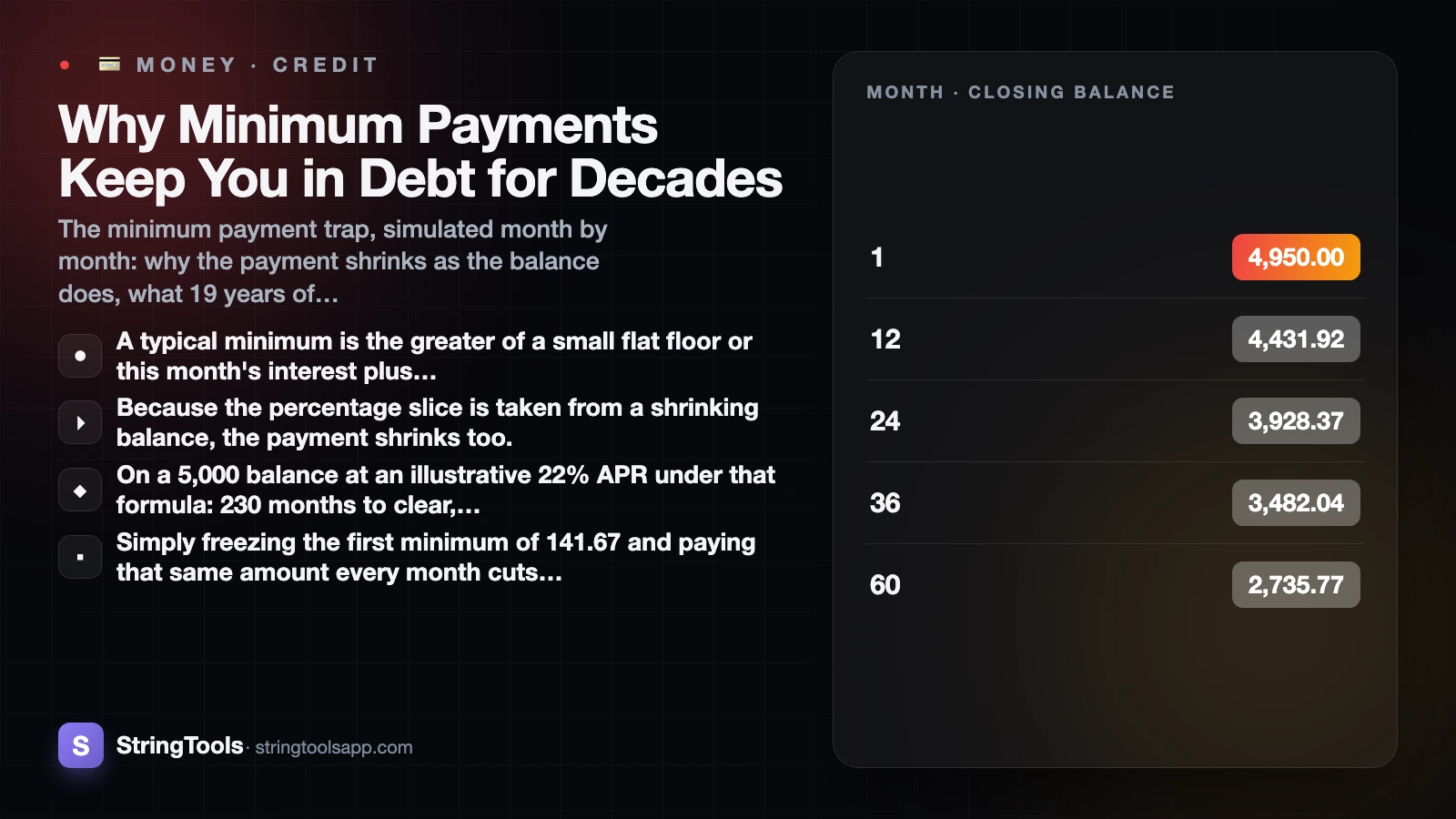
Why Minimum Payments Keep You in Debt for Decades
The minimum payment trap, simulated month by month: why the payment shrinks as the balance does, what 19 years of minimums costs, and the one-line fix.
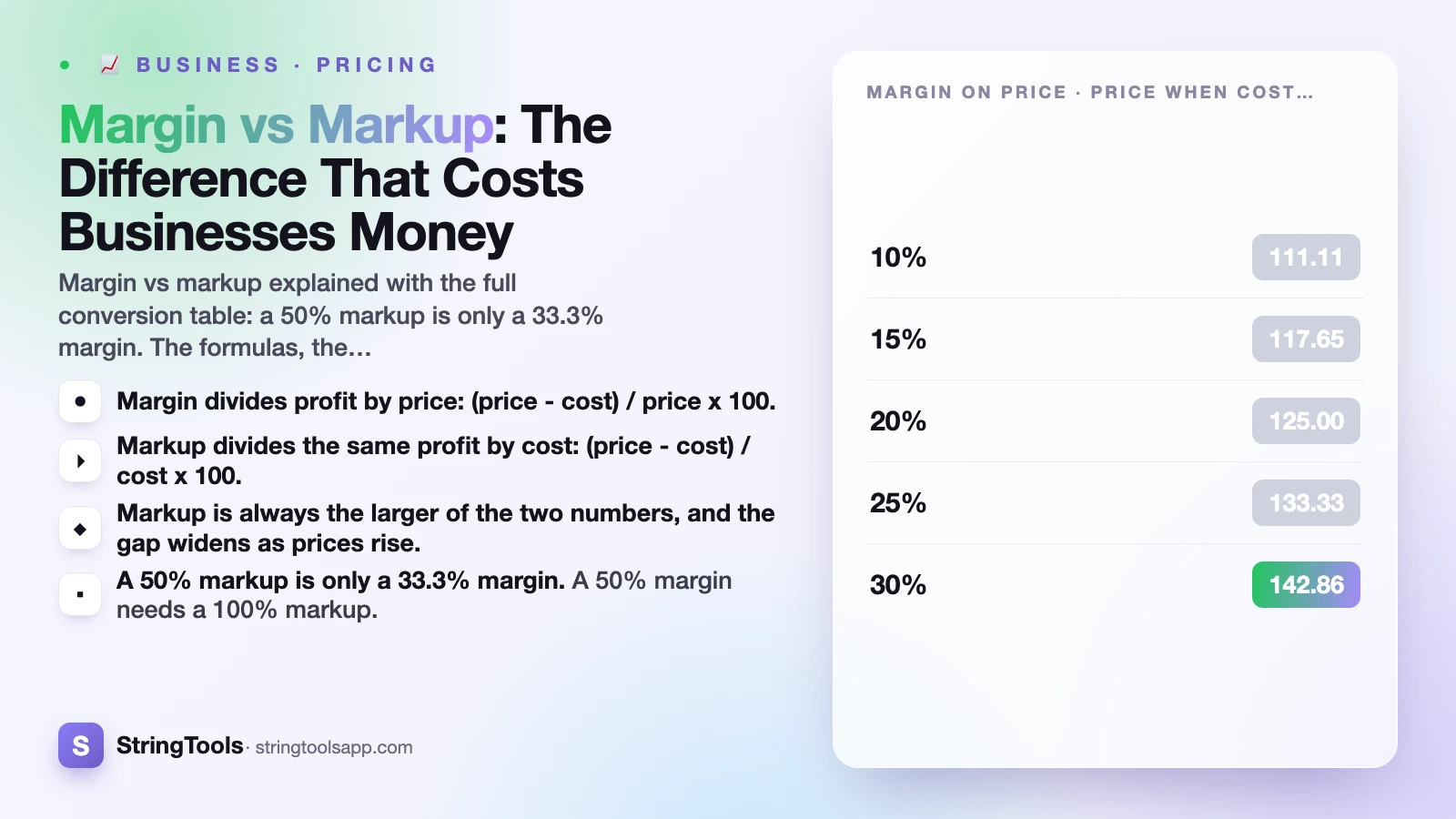
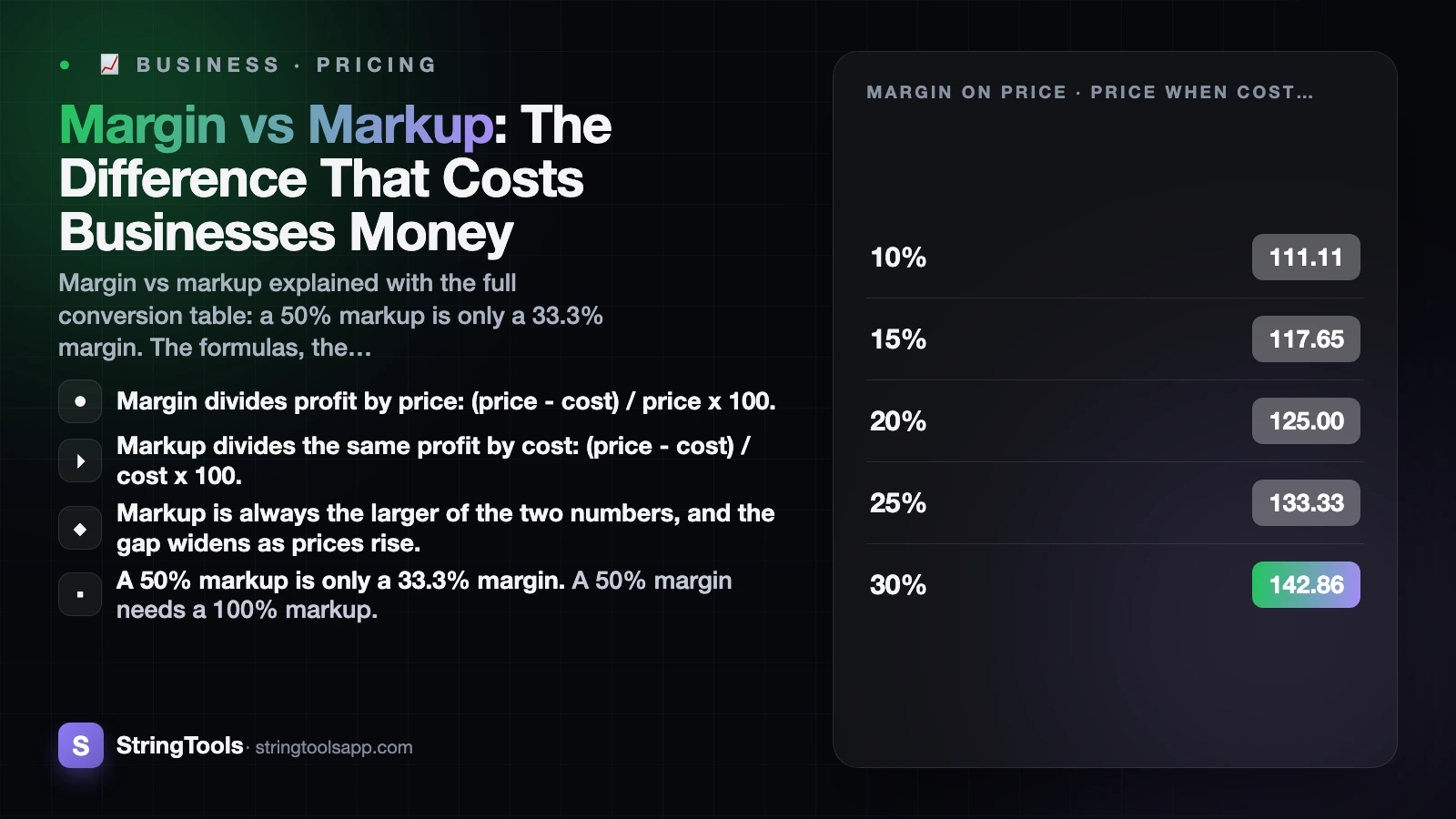
Margin vs Markup: The Difference That Costs Businesses Money
Margin vs markup explained with the full conversion table: a 50% markup is only a 33.3% margin. The formulas, the cost of confusing them, and how to fix it.
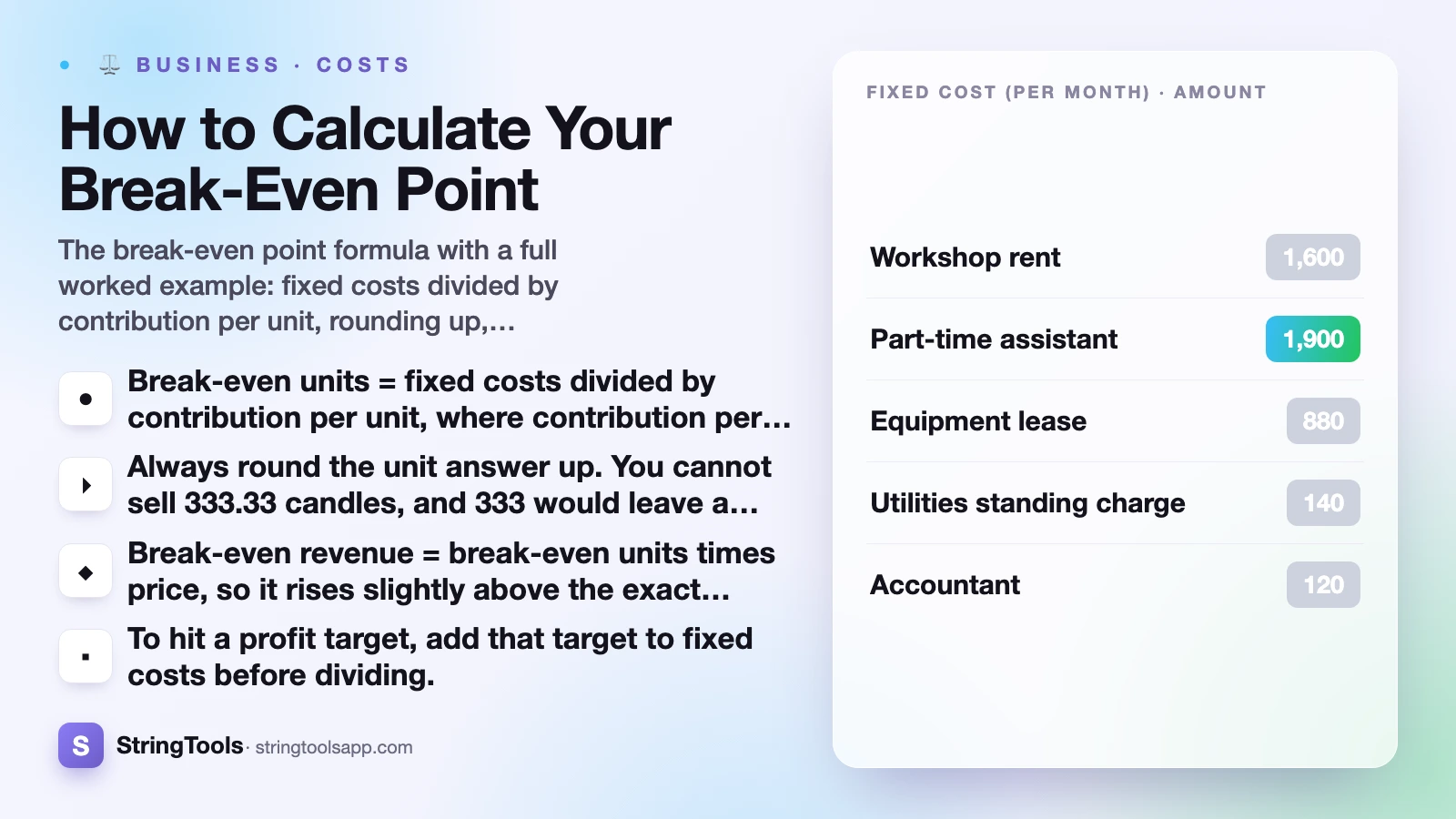
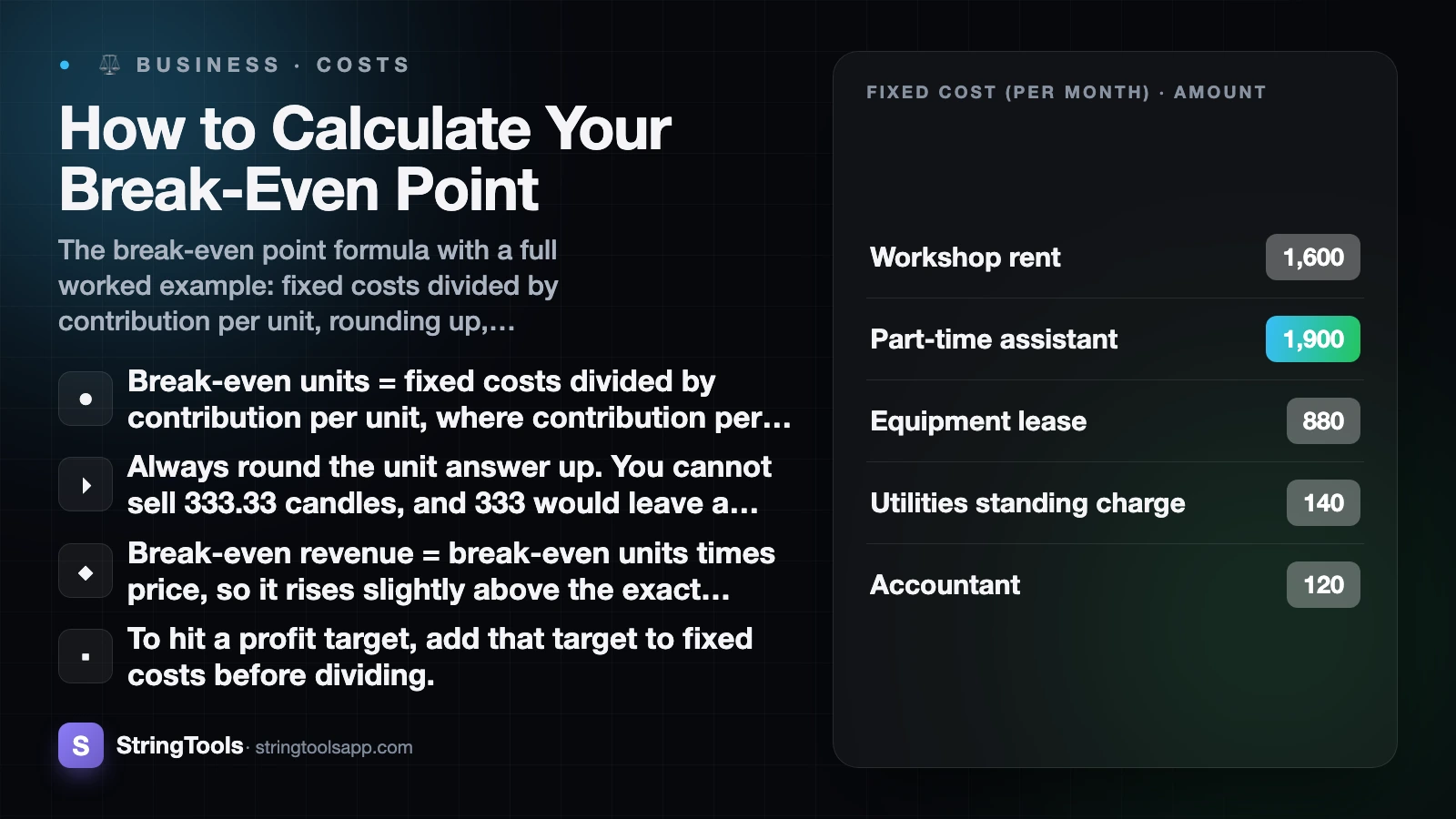
How to Calculate Your Break-Even Point
The break-even point formula with a full worked example: fixed costs divided by contribution per unit, rounding up, target profit and what moves the number.
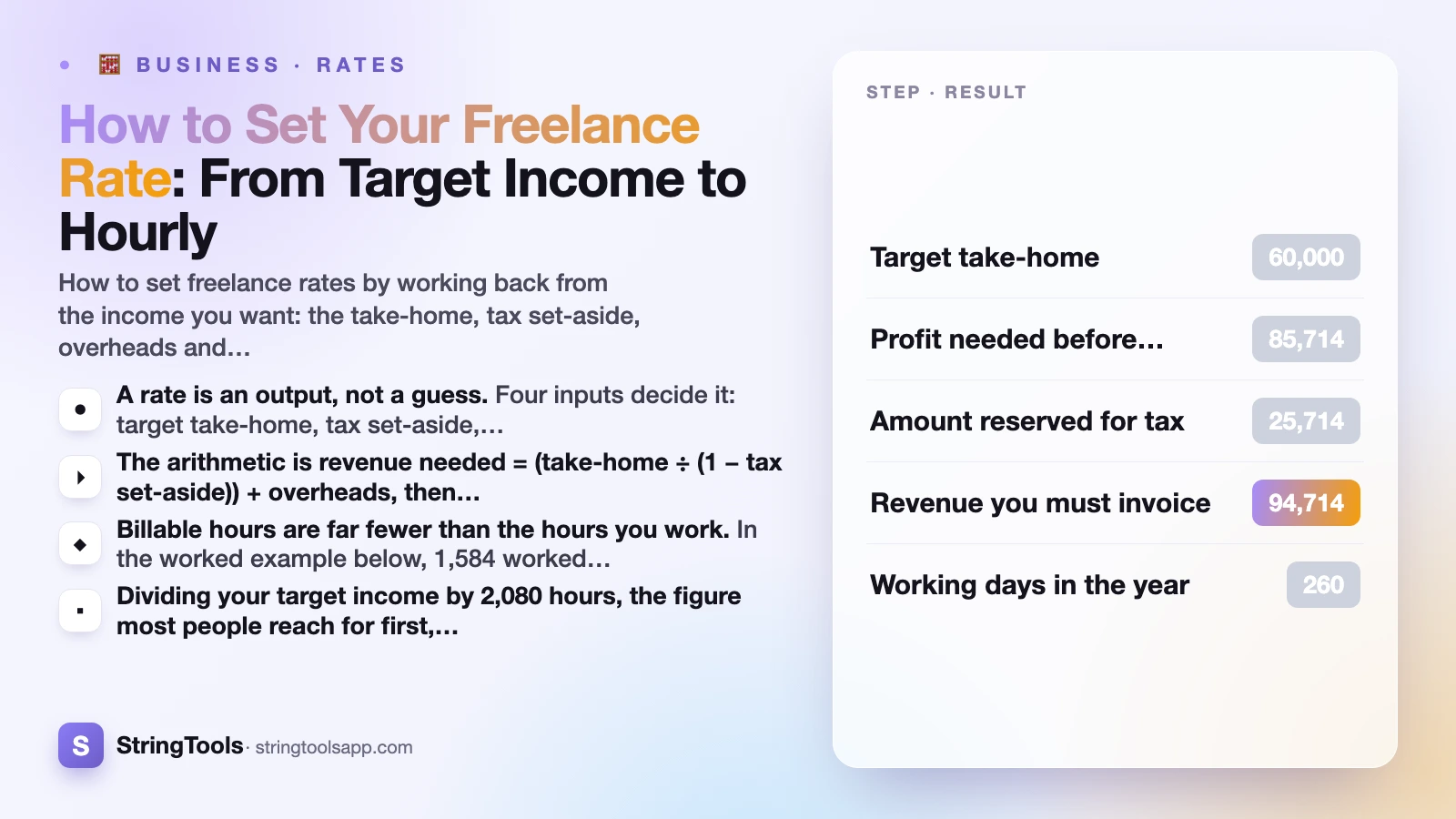
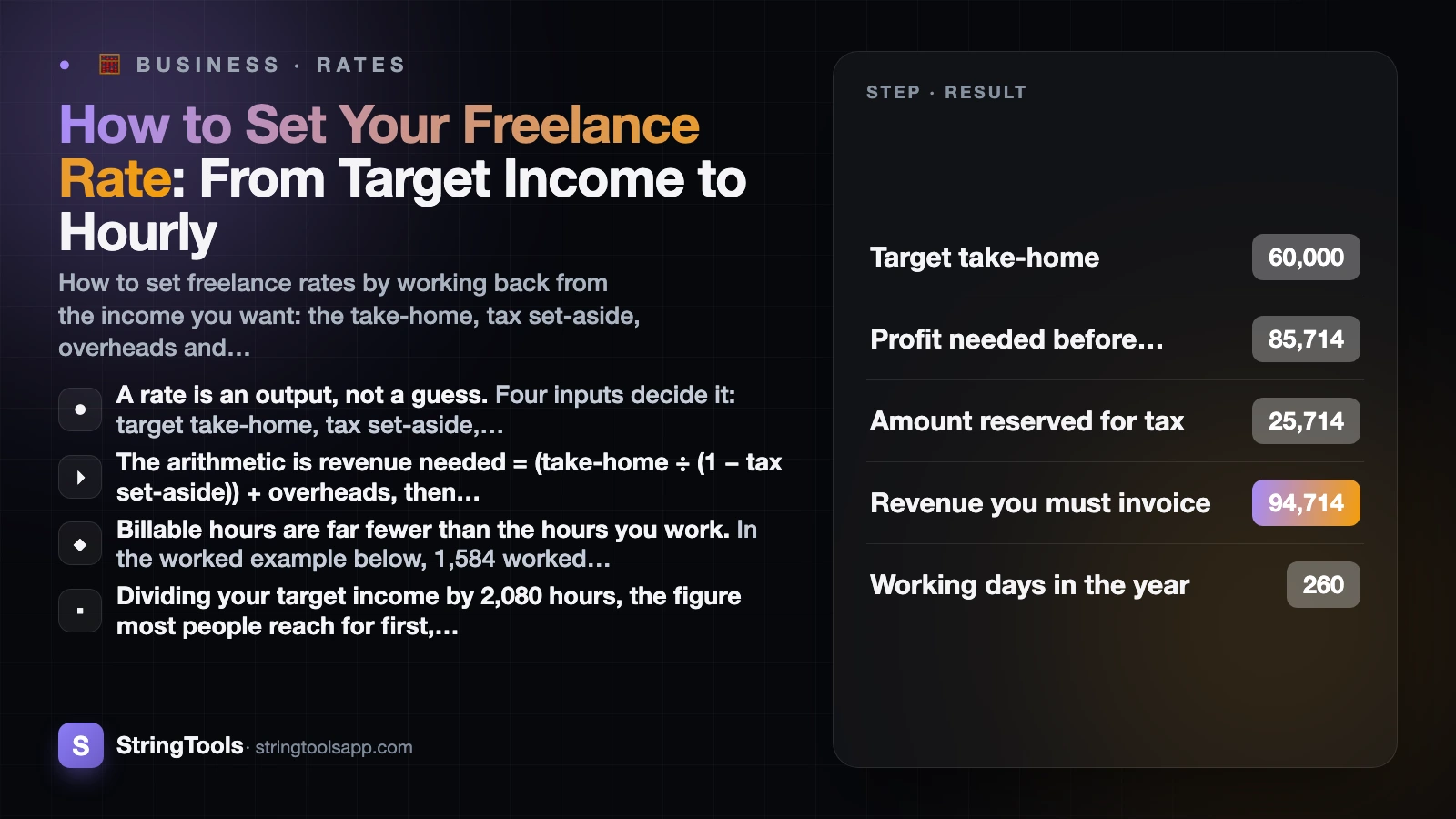
How to Set Your Freelance Rate: From Target Income to Hourly
How to set freelance rates by working back from the income you want: the take-home, tax set-aside, overheads and billable-hours funnel, worked end to end.
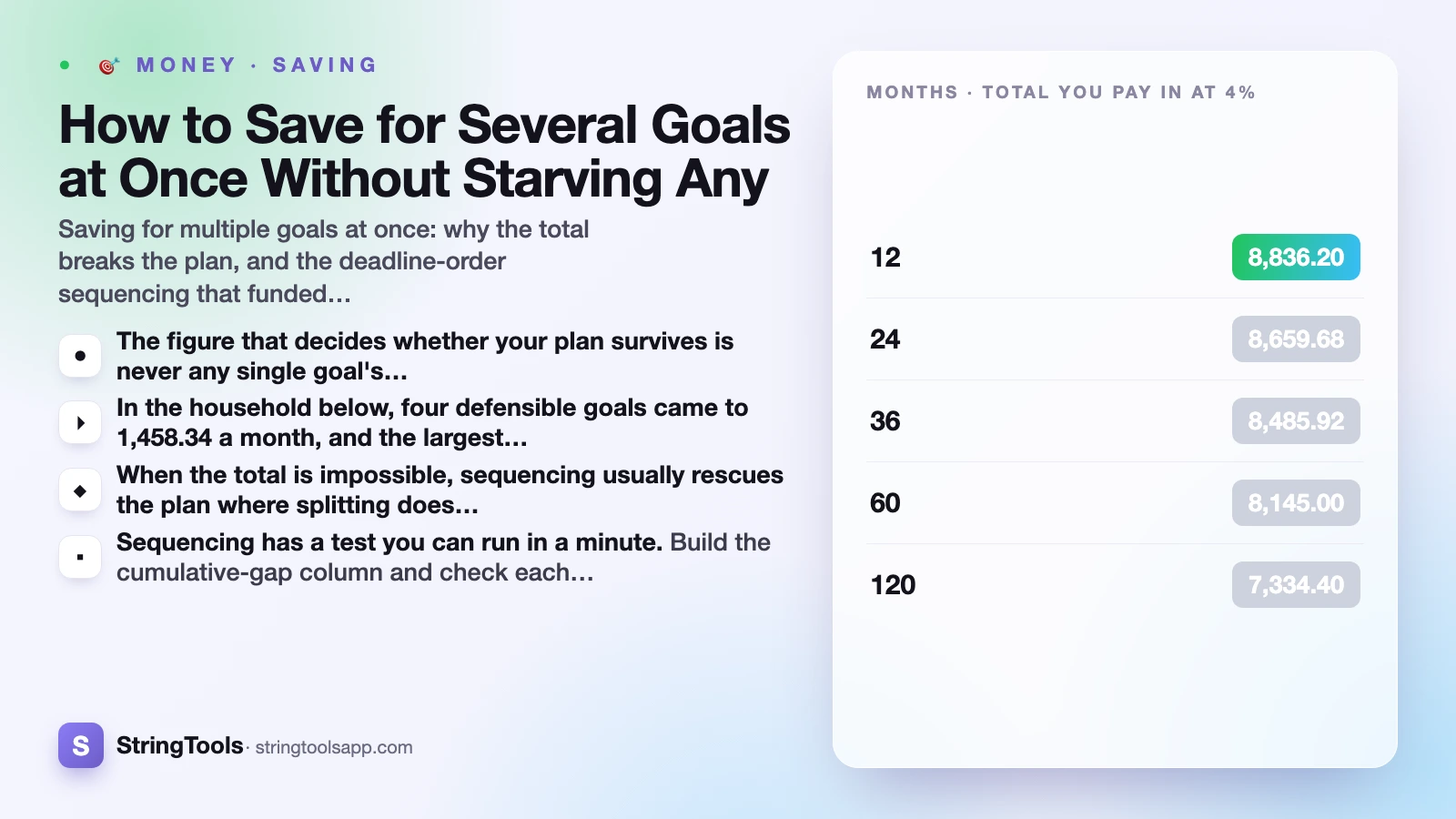
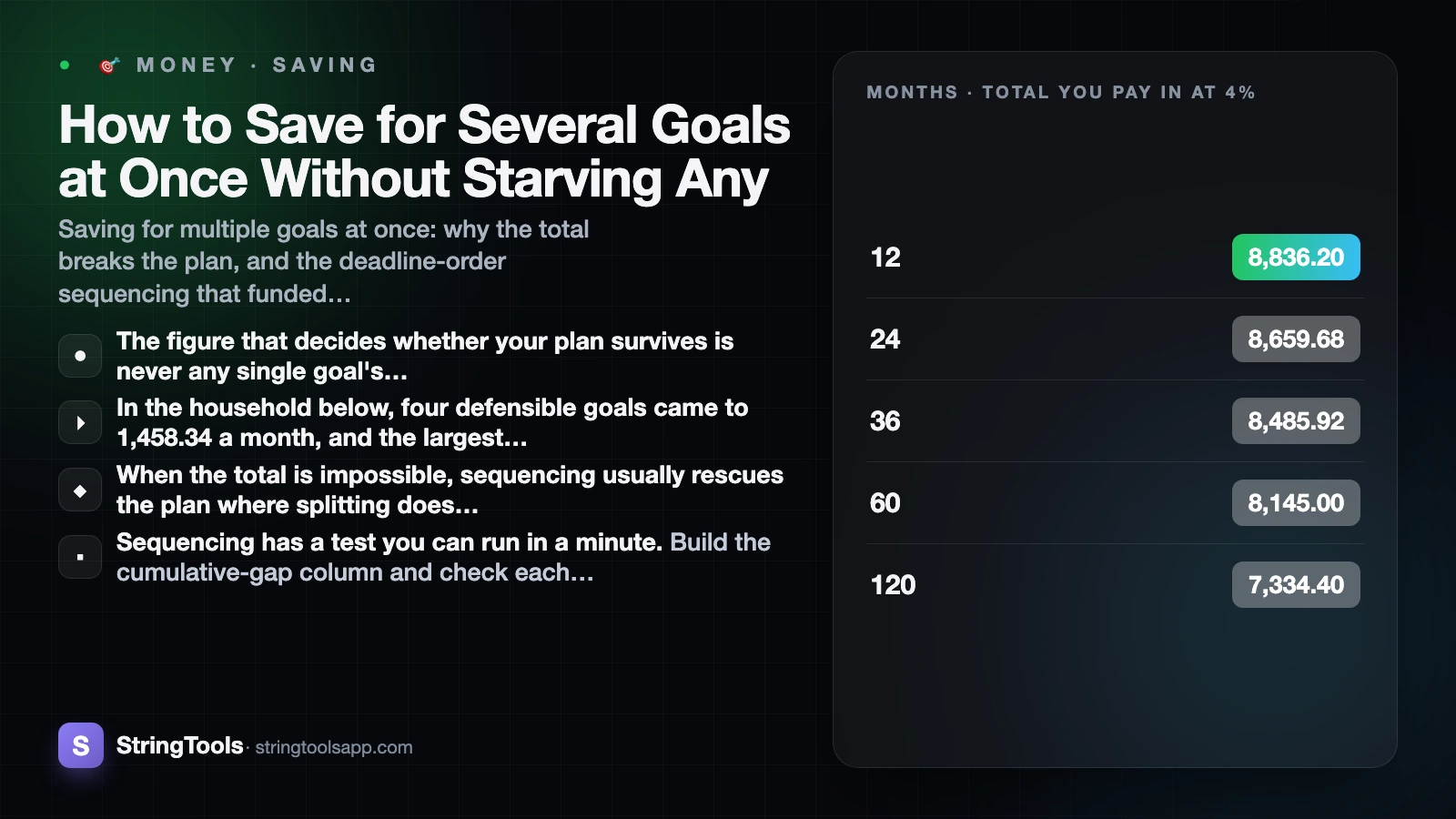
How to Save for Several Goals at Once Without Starving Any
Saving for multiple goals at once: why the total breaks the plan, and the deadline-order sequencing that funded four goals on 900 a month instead of 1,458.


How Much Car Can I Afford?
How much car can I afford? Start from an all-in monthly number, subtract running costs, then turn what is left into a maximum price with a worked table.
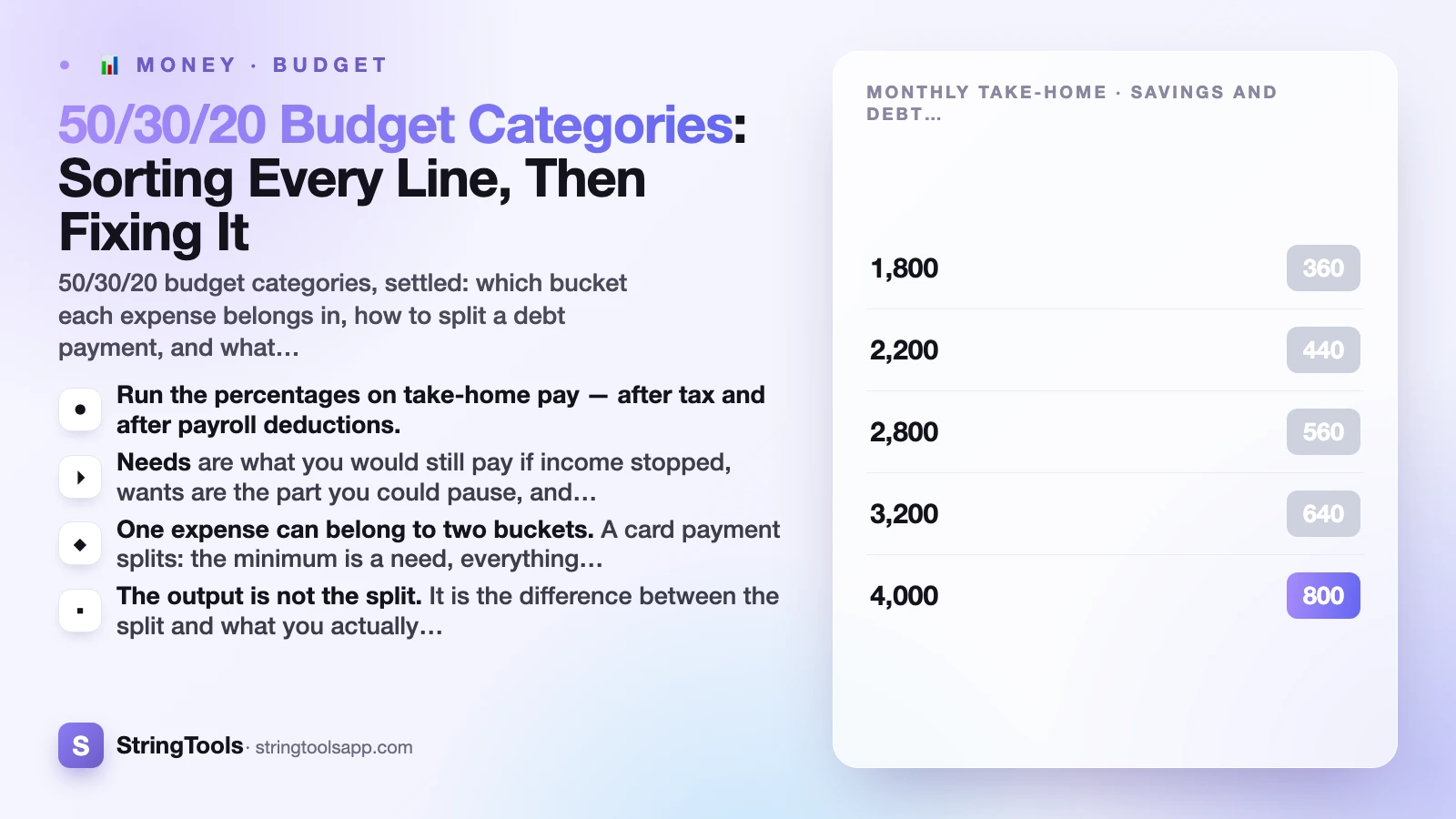
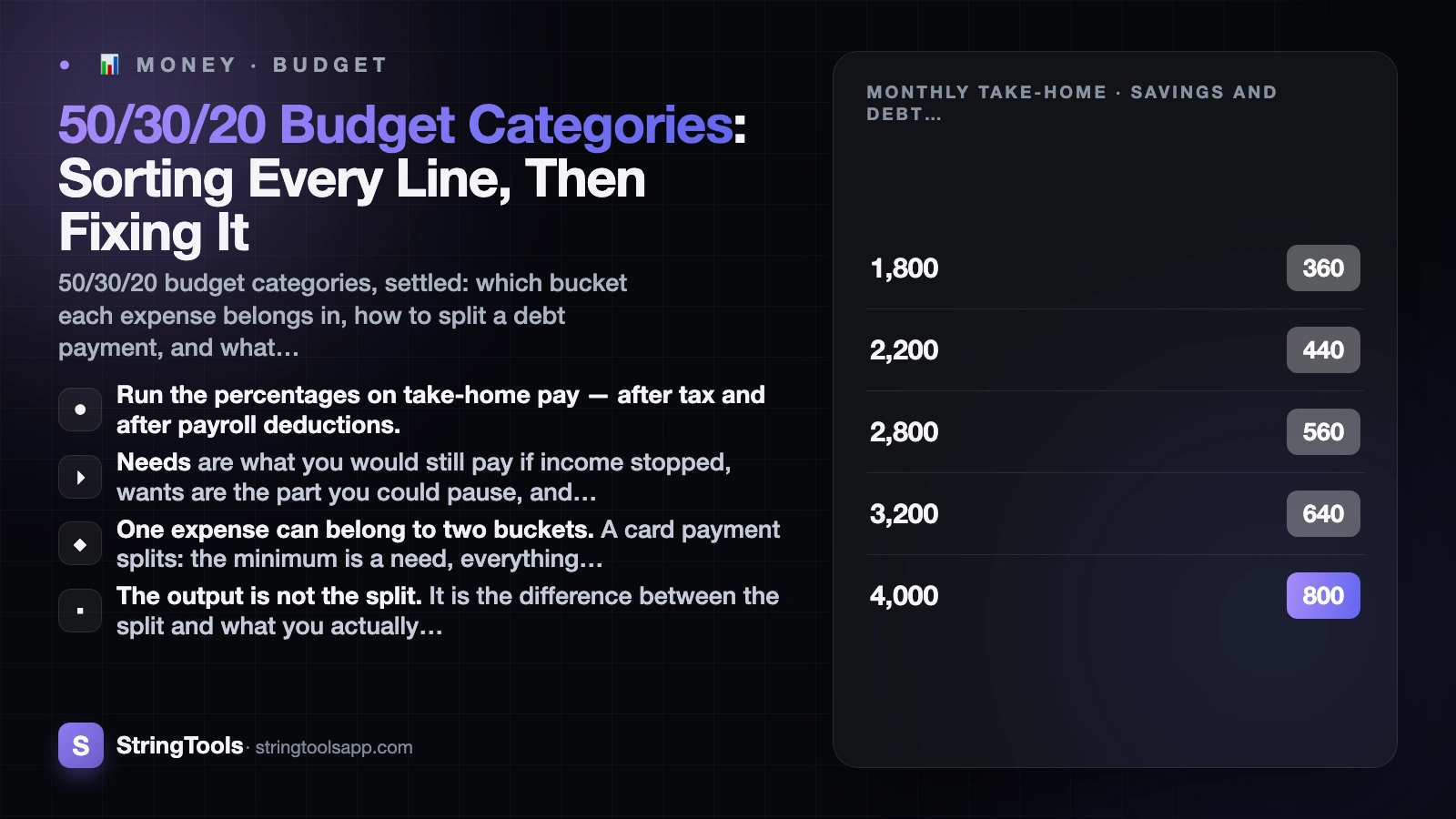
50/30/20 Budget Categories: Sorting Every Line, Then Fixing It
50/30/20 budget categories, settled: which bucket each expense belongs in, how to split a debt payment, and what plan against actual tells you to change.
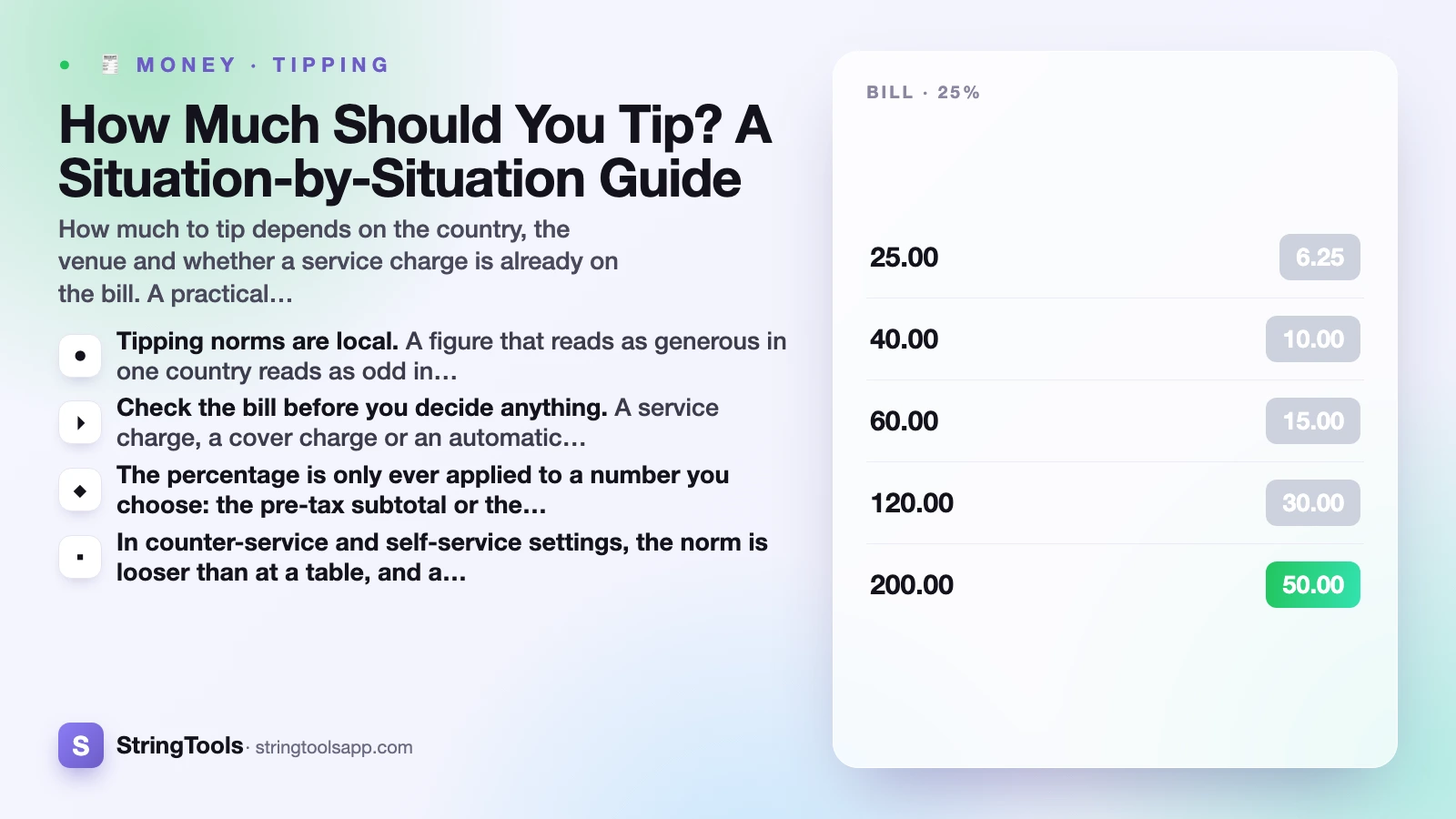
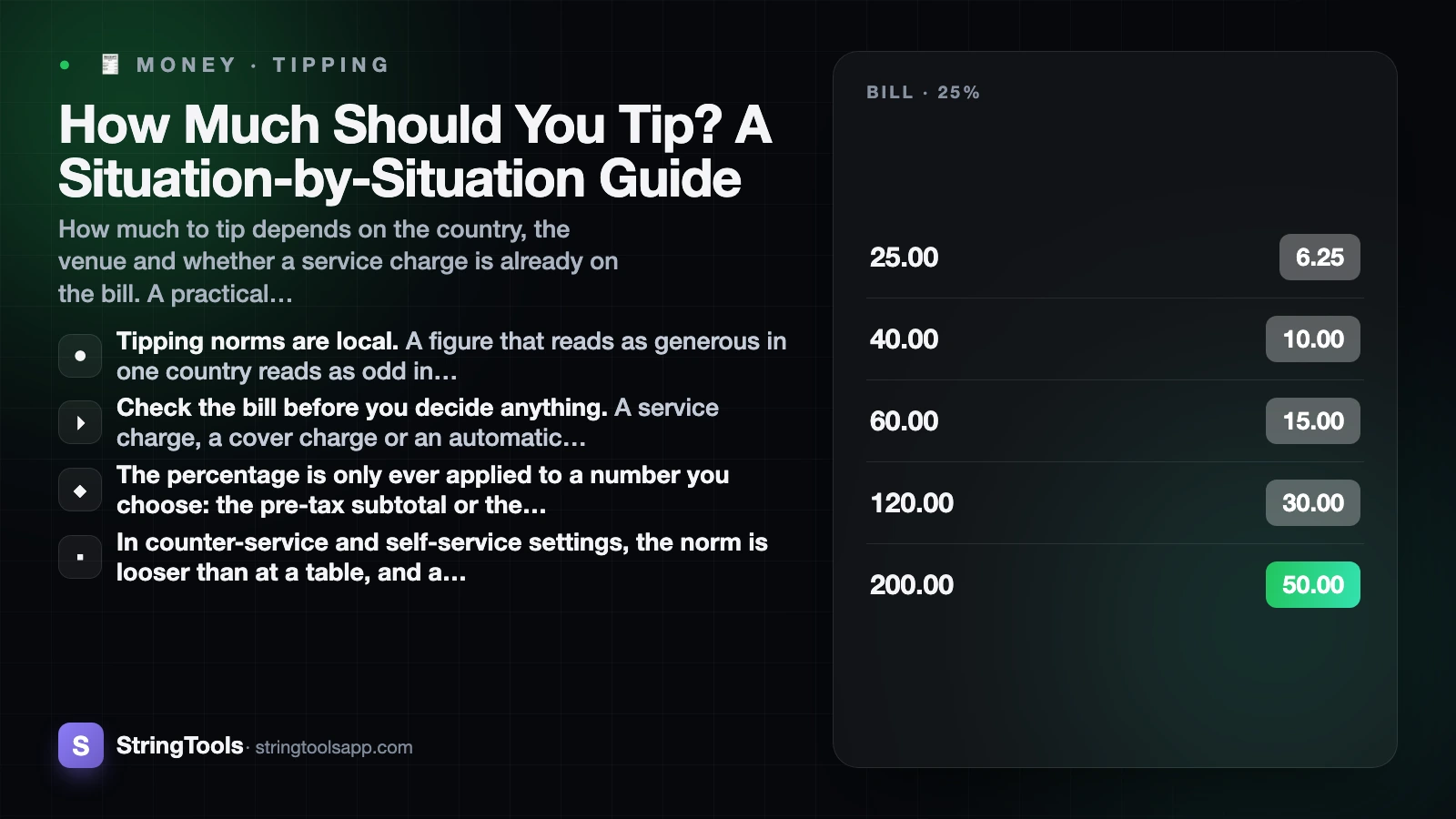
How Much Should You Tip? A Situation-by-Situation Guide
How much to tip depends on the country, the venue and whether a service charge is already on the bill. A practical guide to reading each situation.
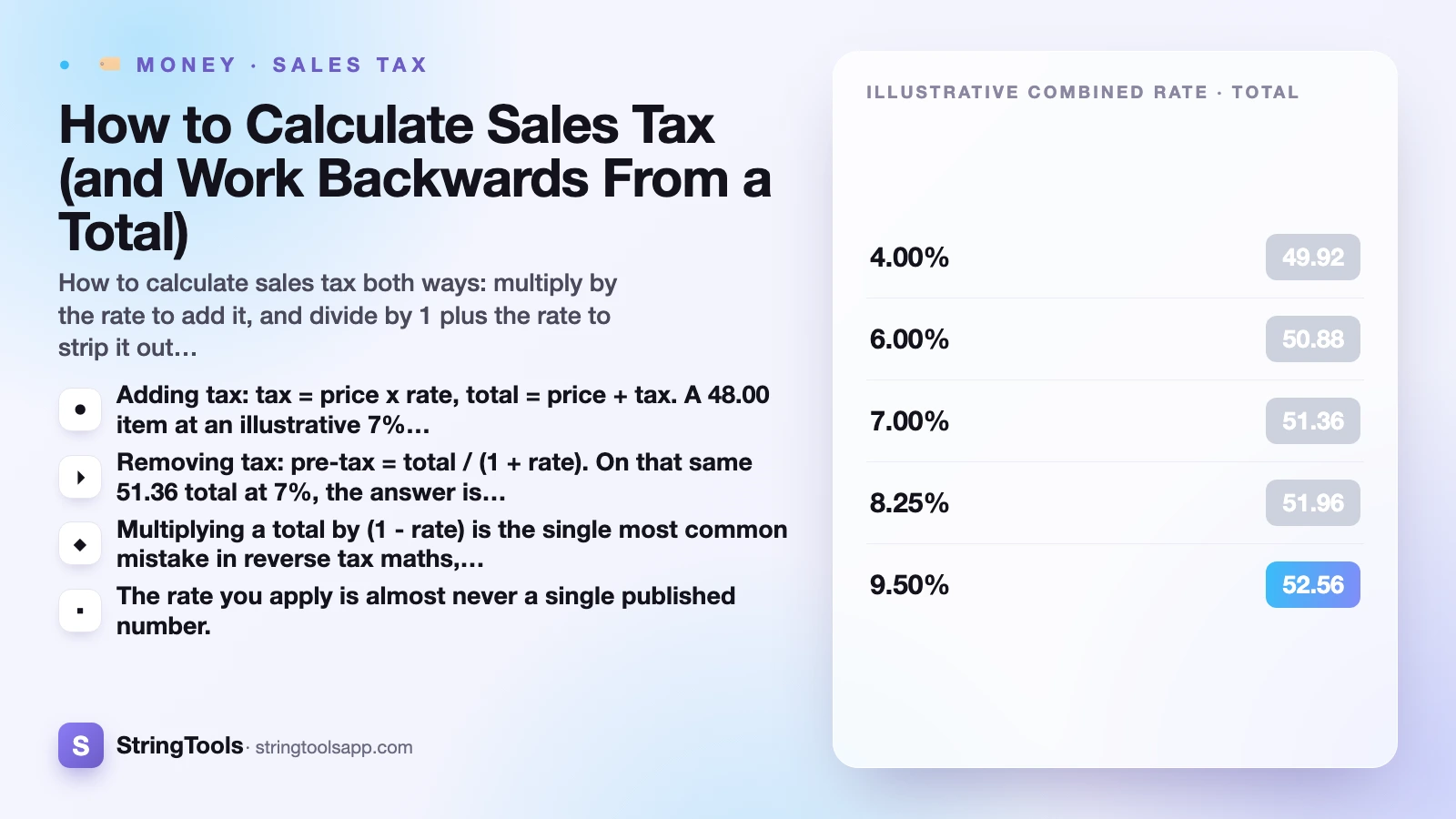
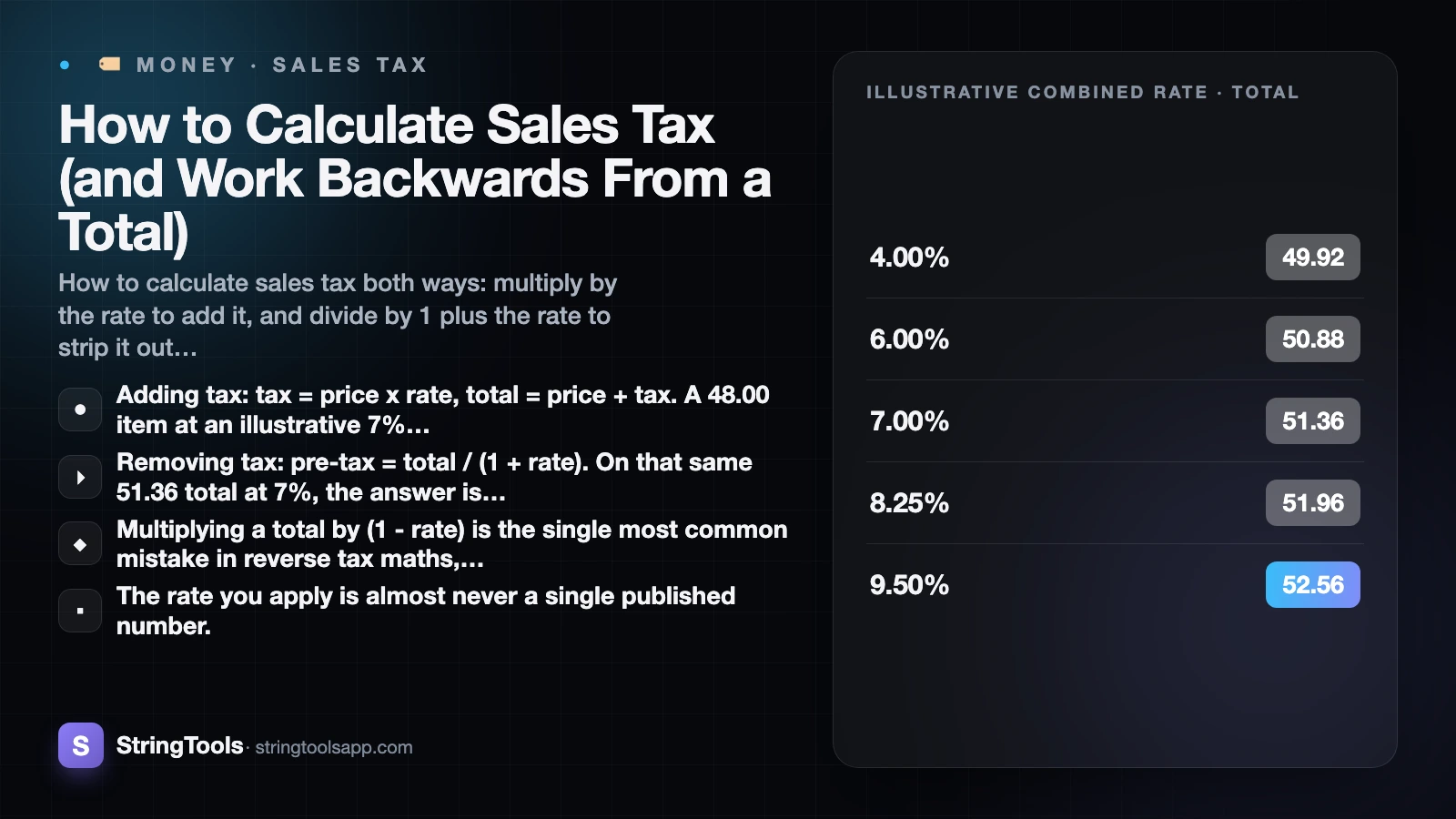
How to Calculate Sales Tax (and Work Backwards From a Total)
How to calculate sales tax both ways: multiply by the rate to add it, and divide by 1 plus the rate to strip it out of a tax-inclusive total.
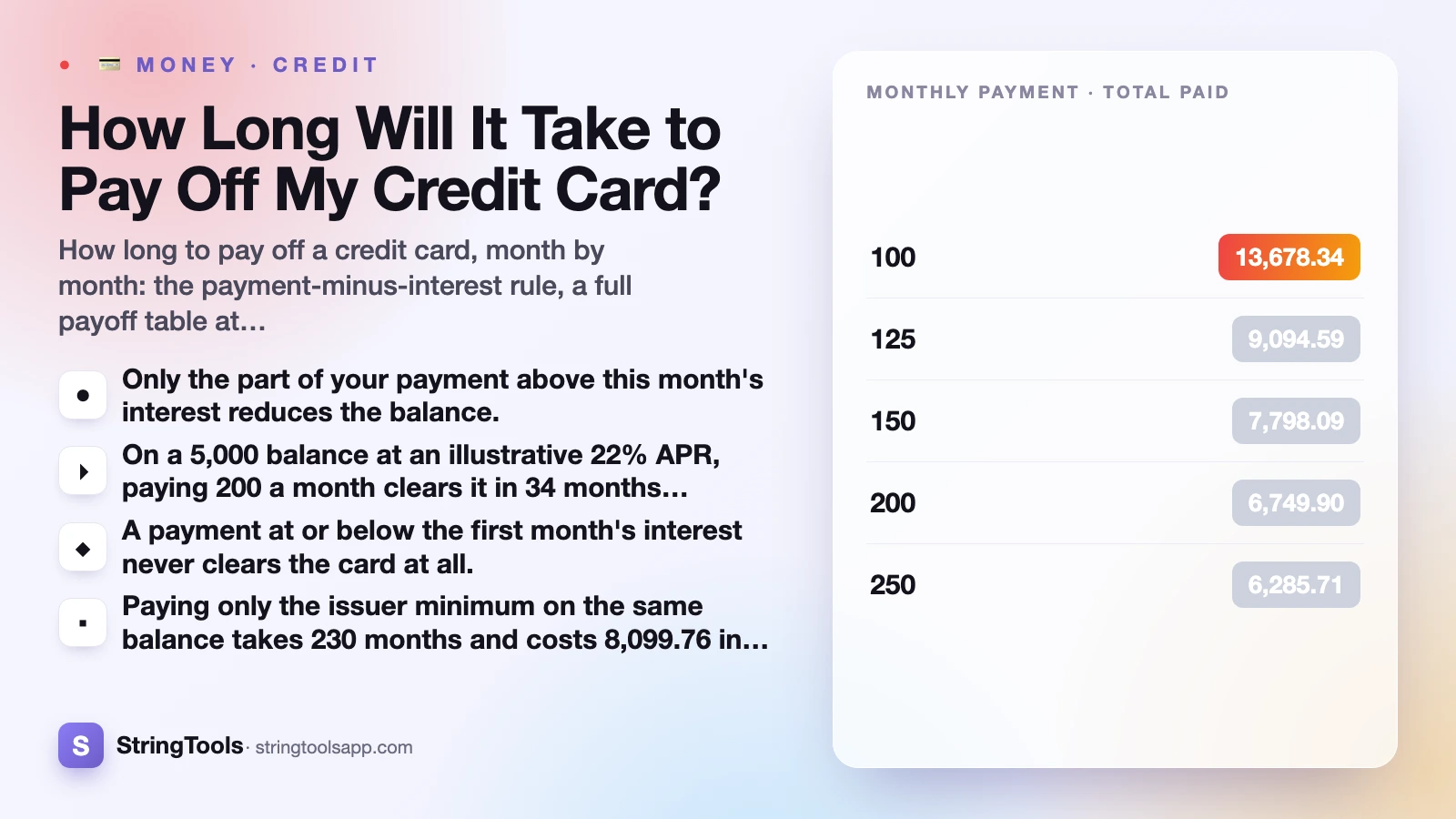
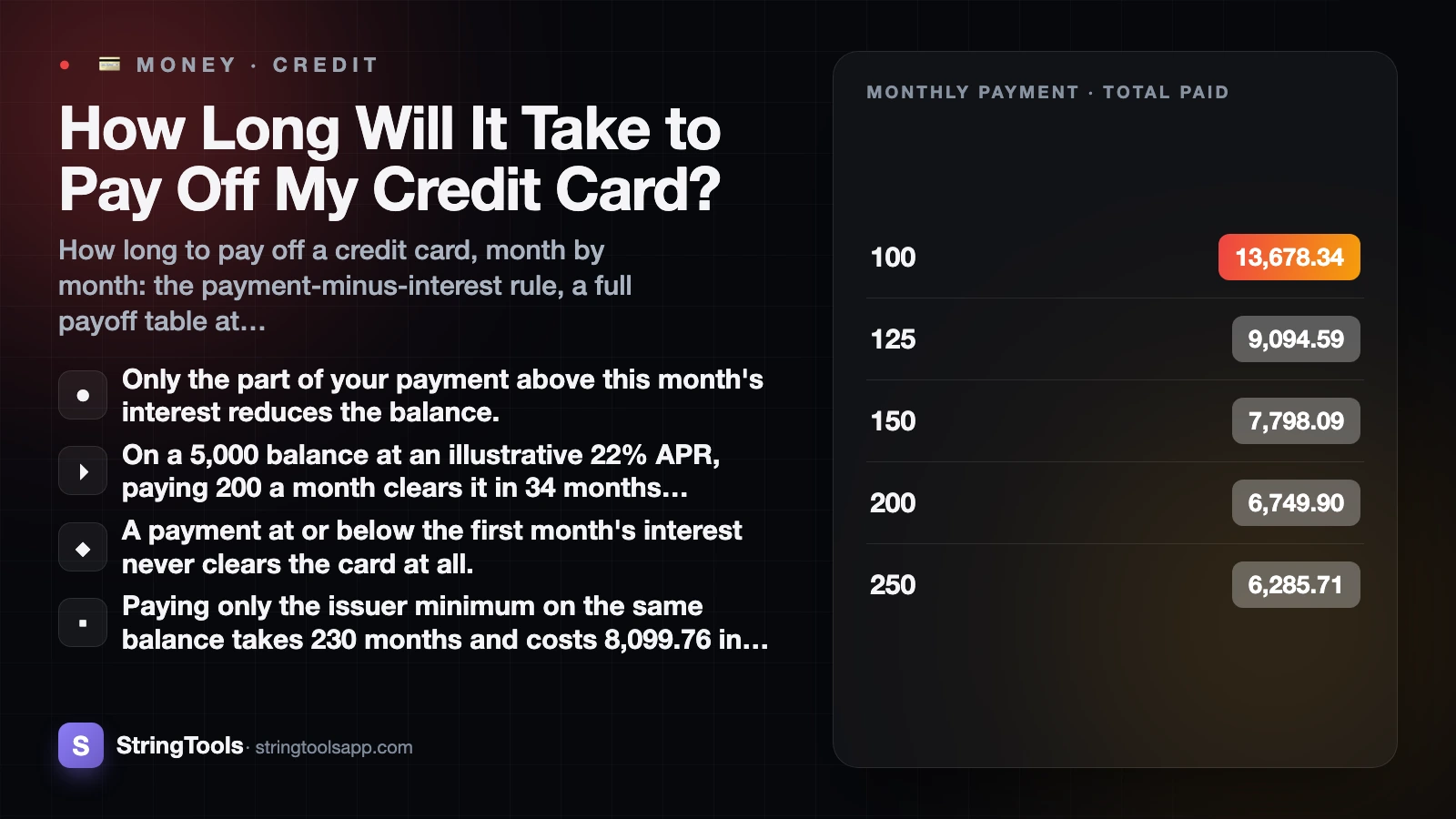
How Long Will It Take to Pay Off My Credit Card?
How long to pay off a credit card, month by month: the payment-minus-interest rule, a full payoff table at illustrative rates, and how to hit a target date.
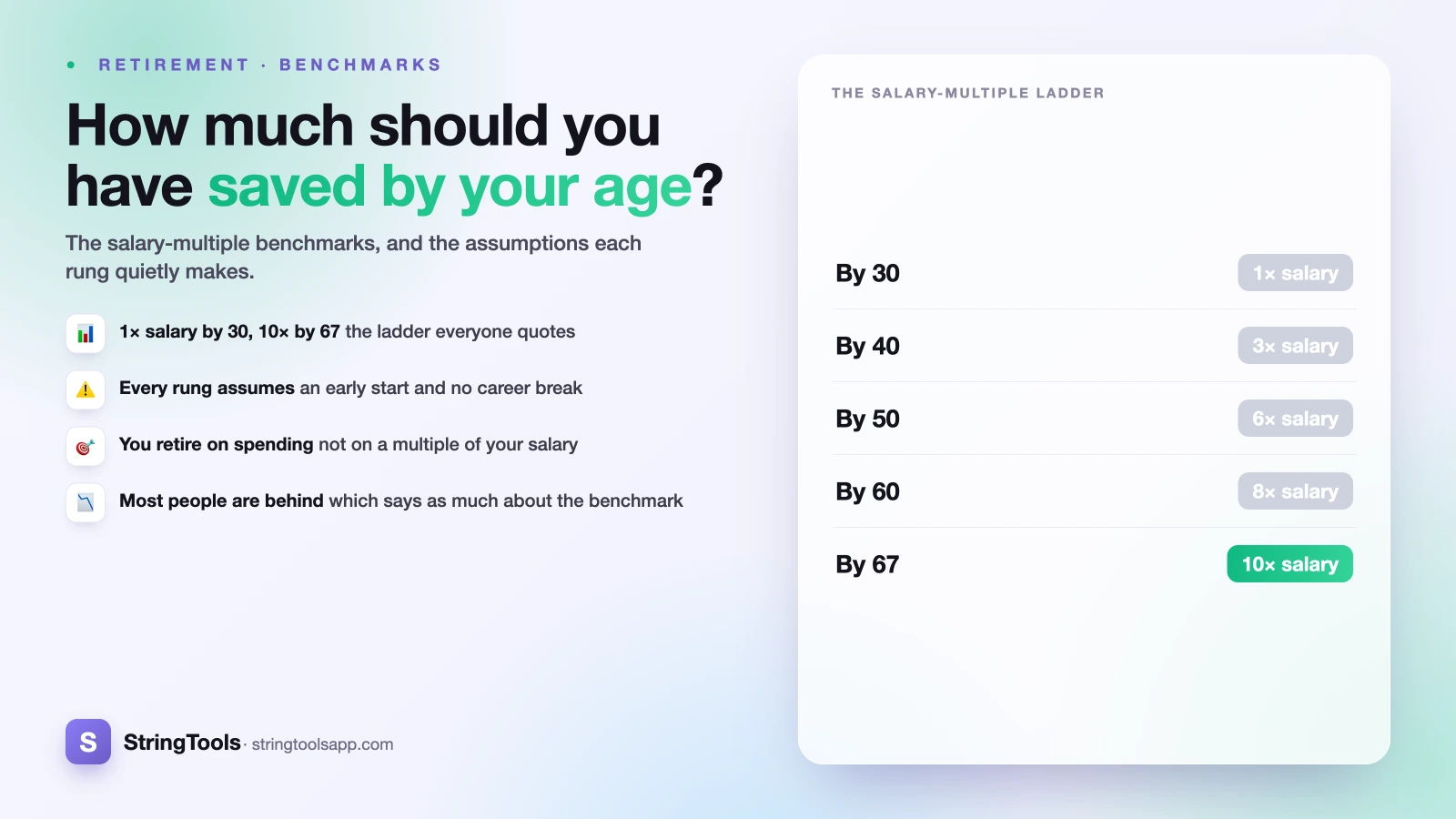
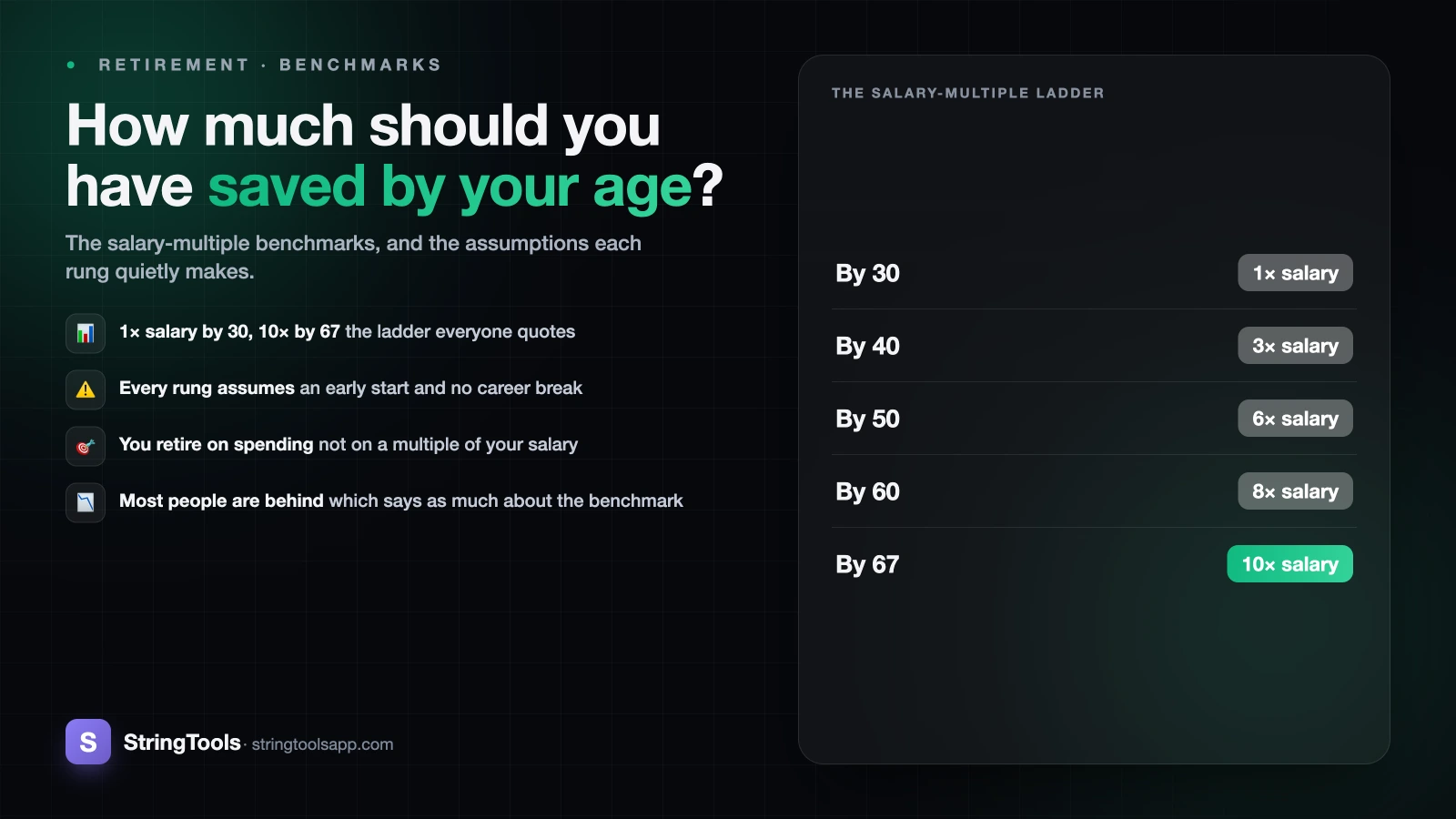
How Much Should I Have Saved for Retirement by My Age?
How much you should have saved for retirement by age 30, 40, 50 and 60 — the salary-multiple benchmarks, what they assume, and what really sets your number.
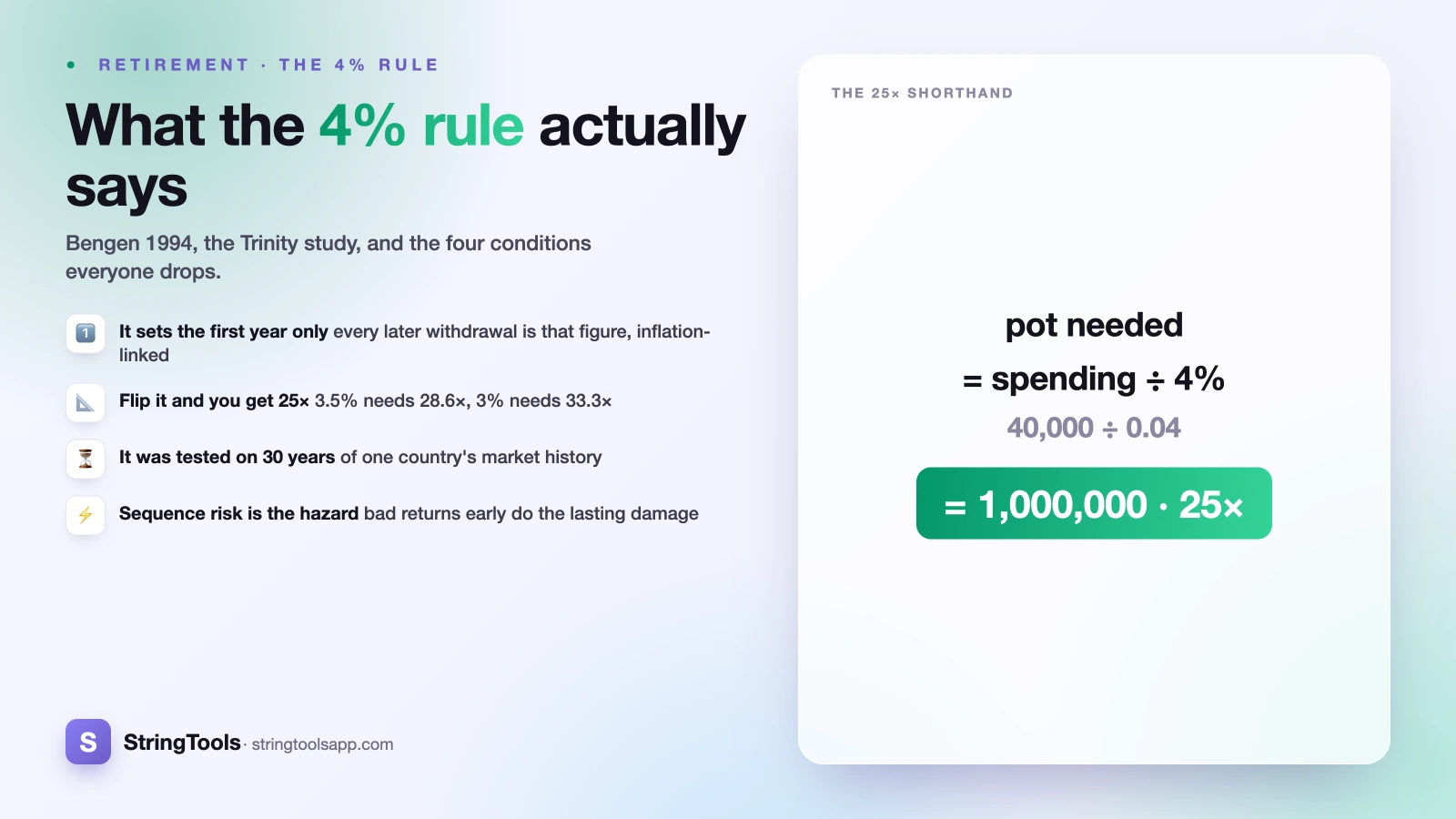
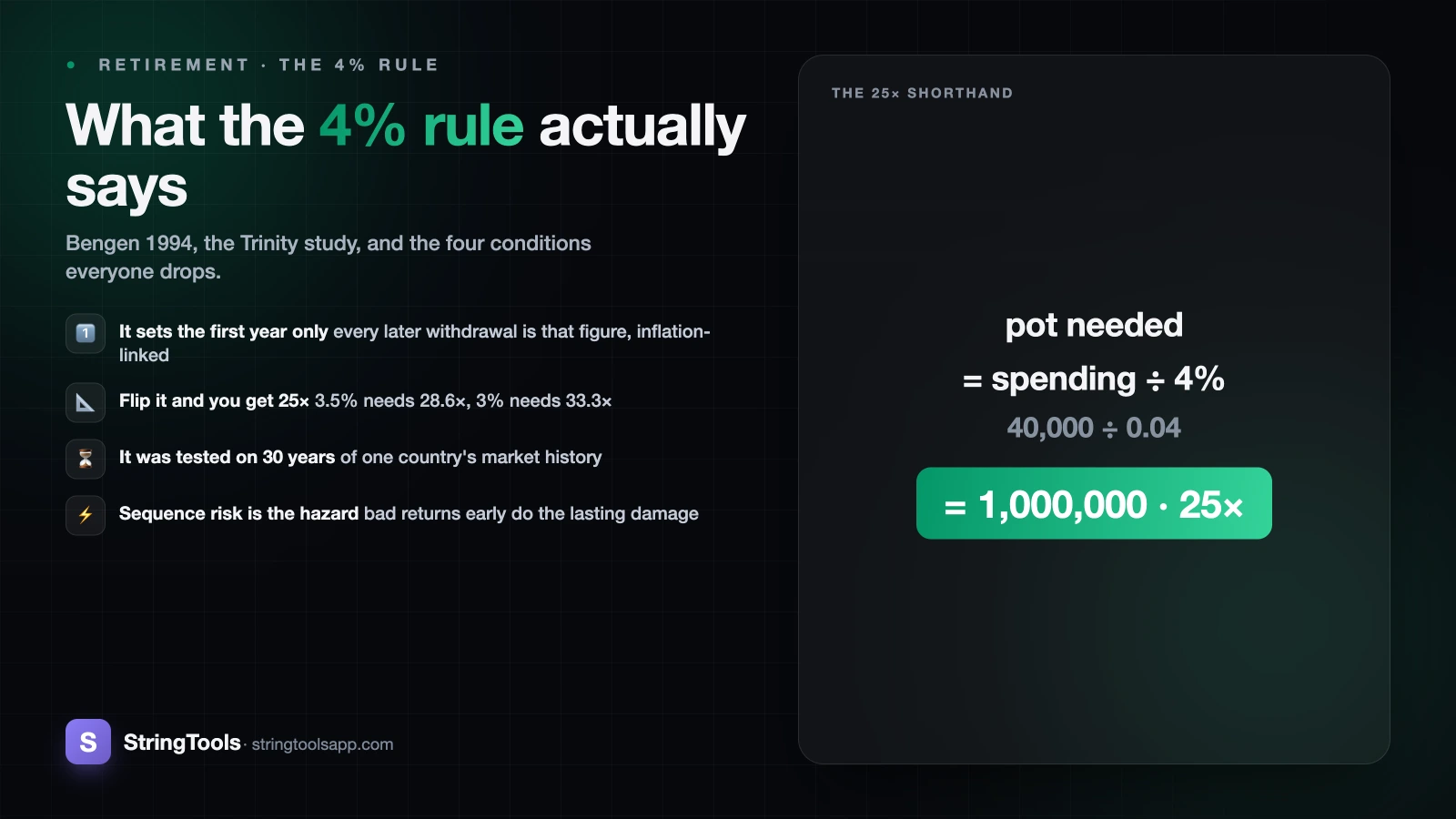
What Is the 4% Rule, and Does It Still Work?
The 4% rule explained: where the number came from, what the Trinity study actually claimed, the 25x shorthand, and the criticisms worth taking seriously.
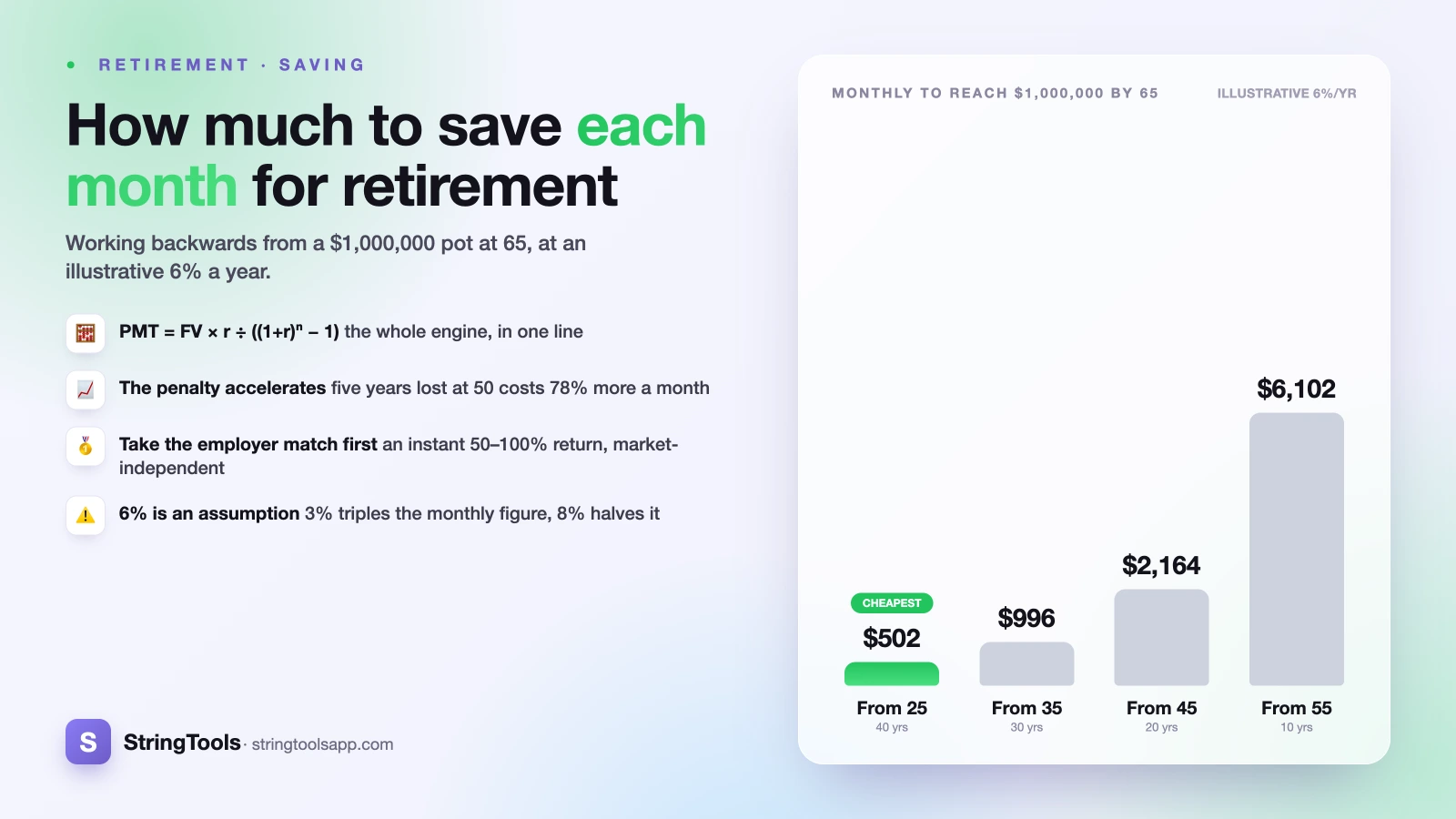
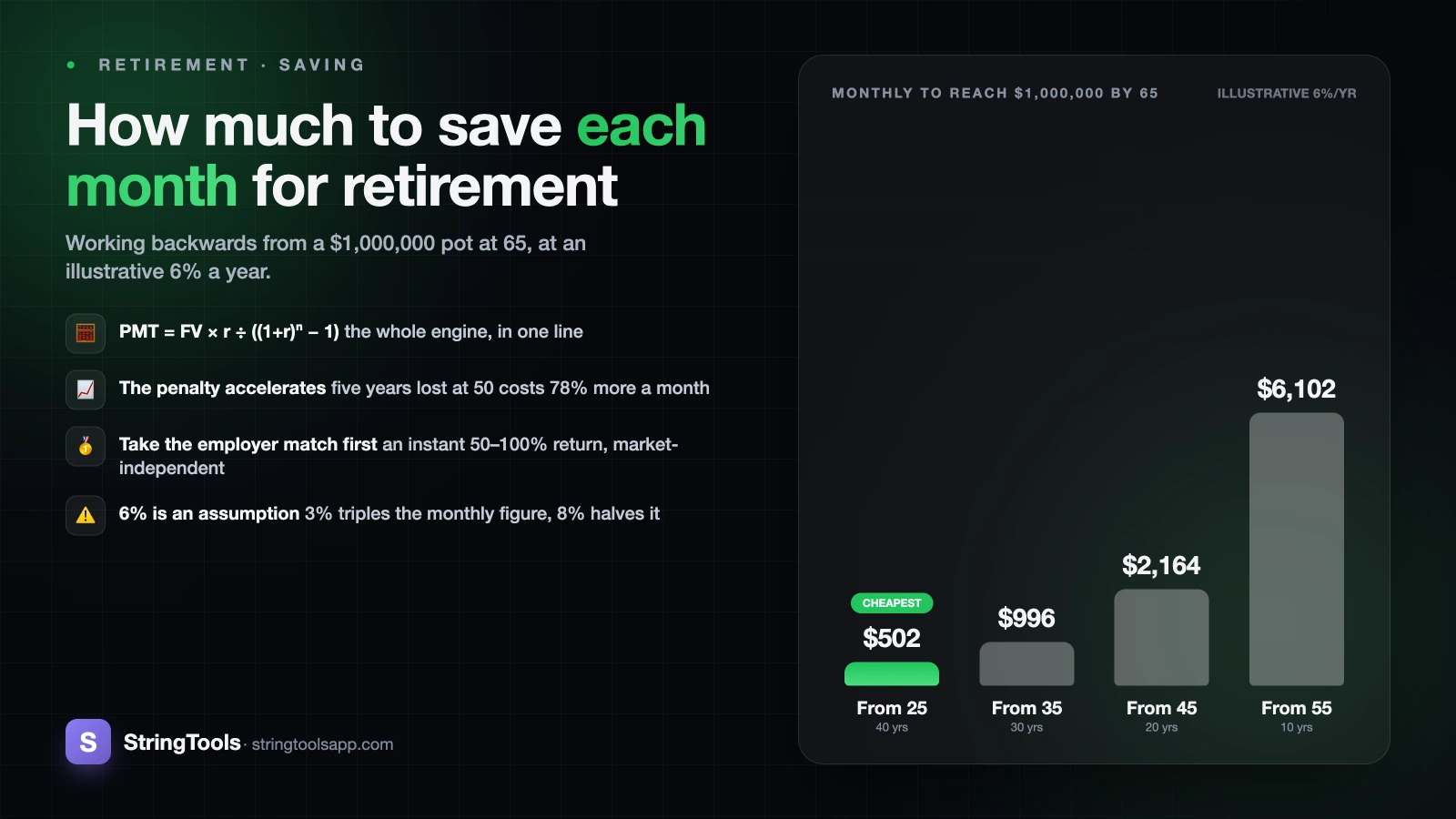
How Much Should I Save Each Month for Retirement?
How much to save each month for retirement: work backwards from your target pot with the annuity formula, plus the monthly amount needed at each start age.
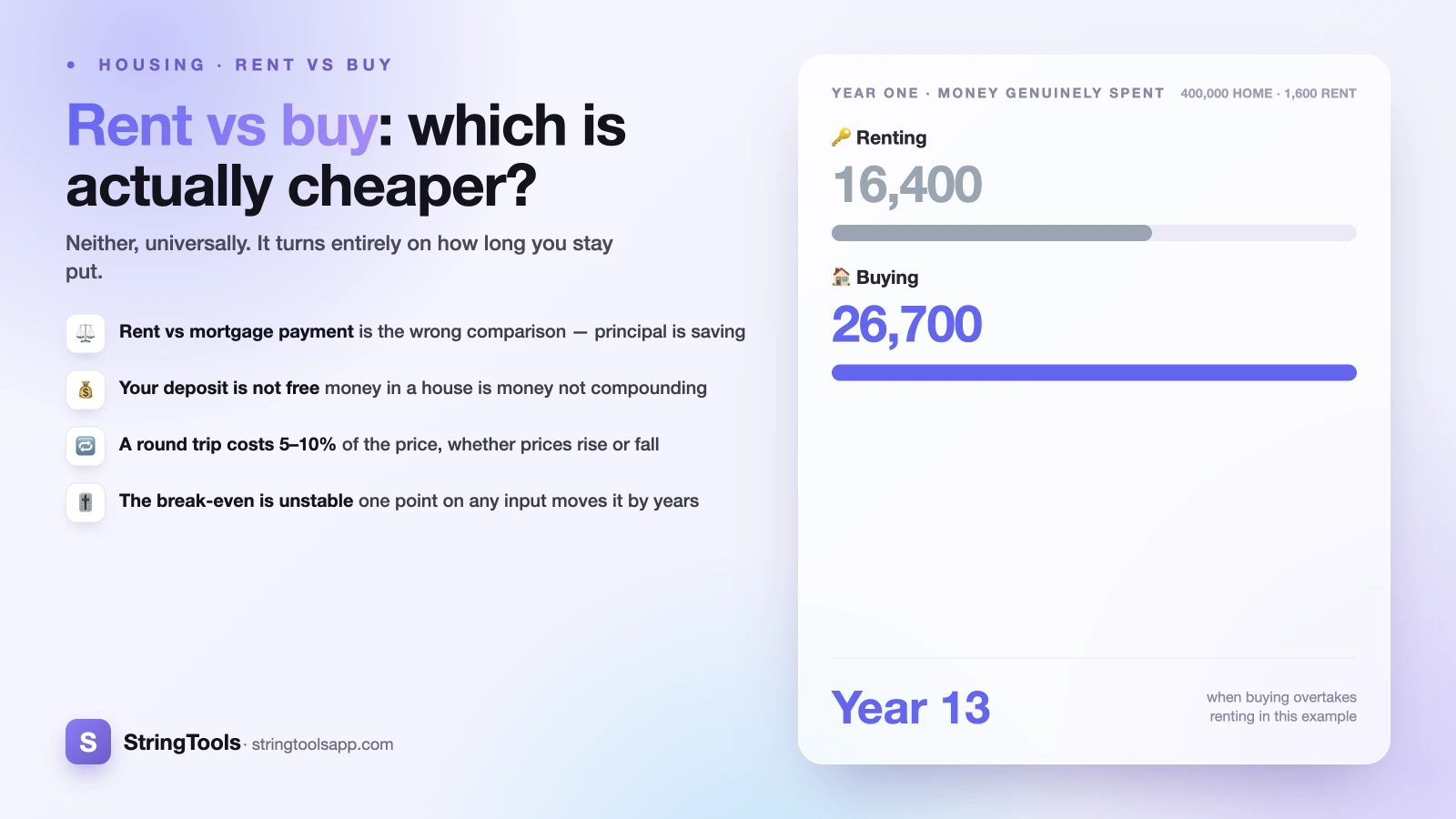
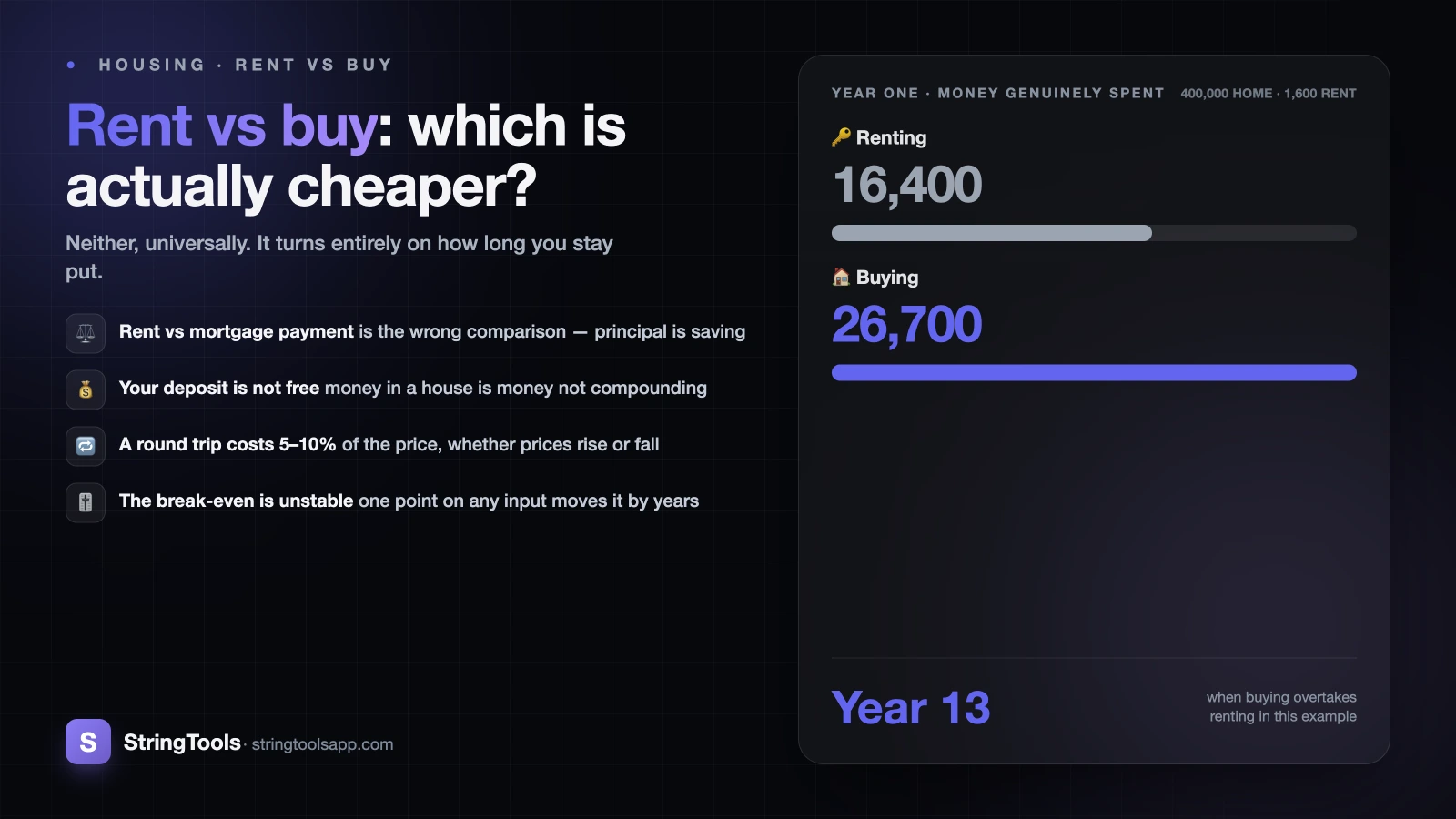
Rent vs Buy: Which Is Actually Cheaper?
Rent vs buy: which is actually cheaper? An even-handed look at the true costs on each side, the opportunity cost of your deposit and your break-even year.
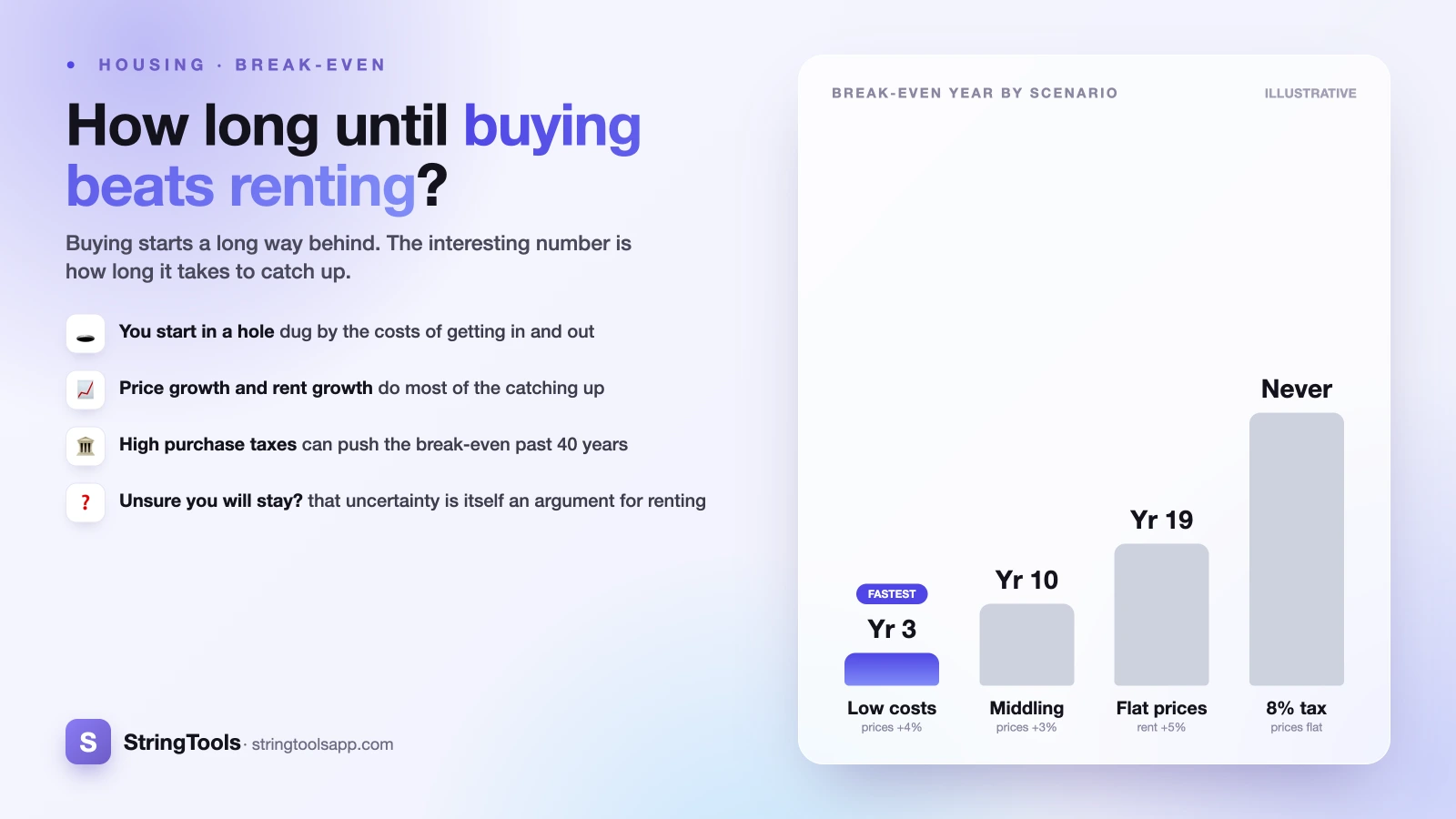
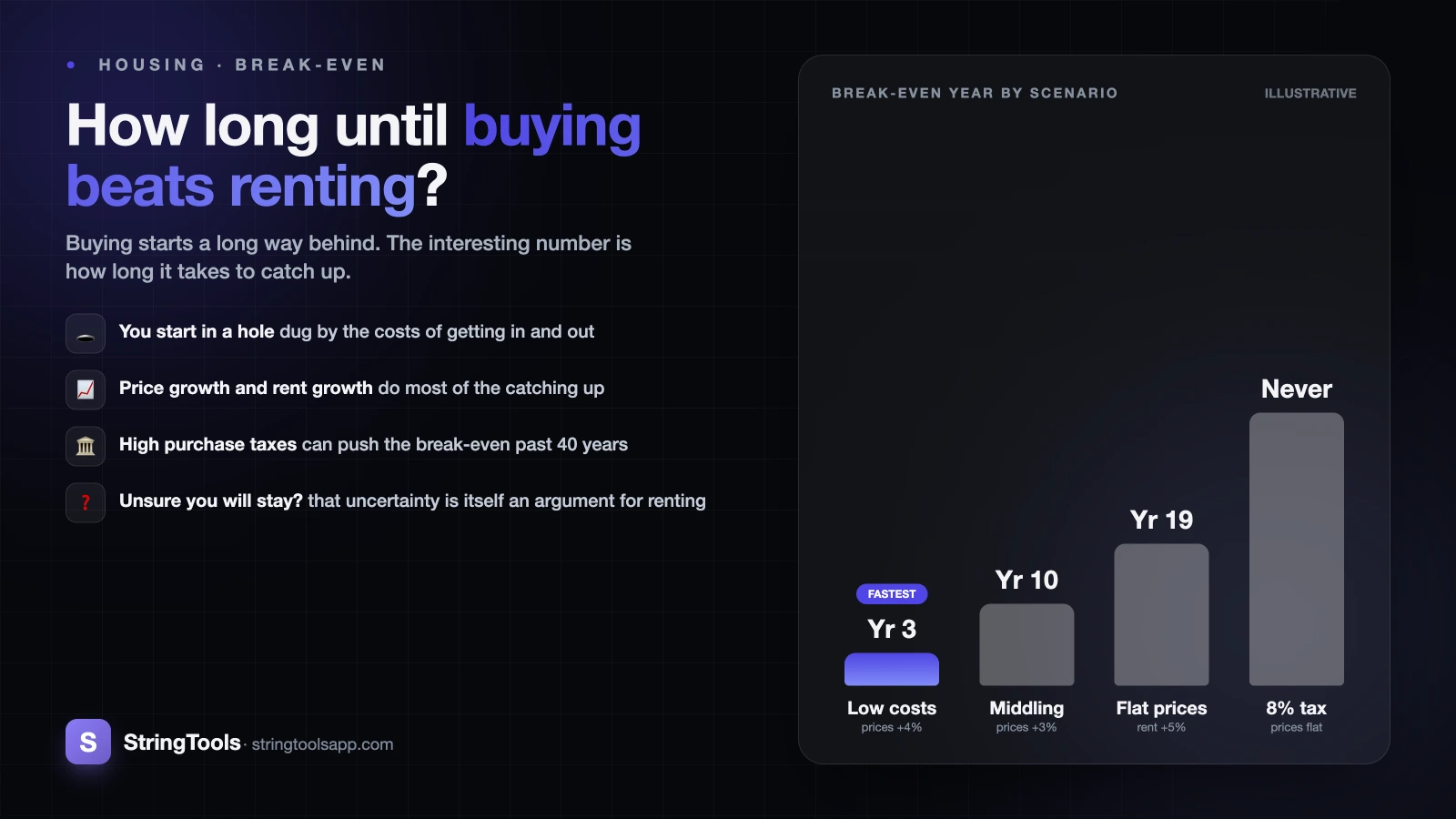
How Long Until Buying Beats Renting?
How long until buying beats renting? The break-even horizon explained, with illustrative scenarios showing why it runs from a few years to never.
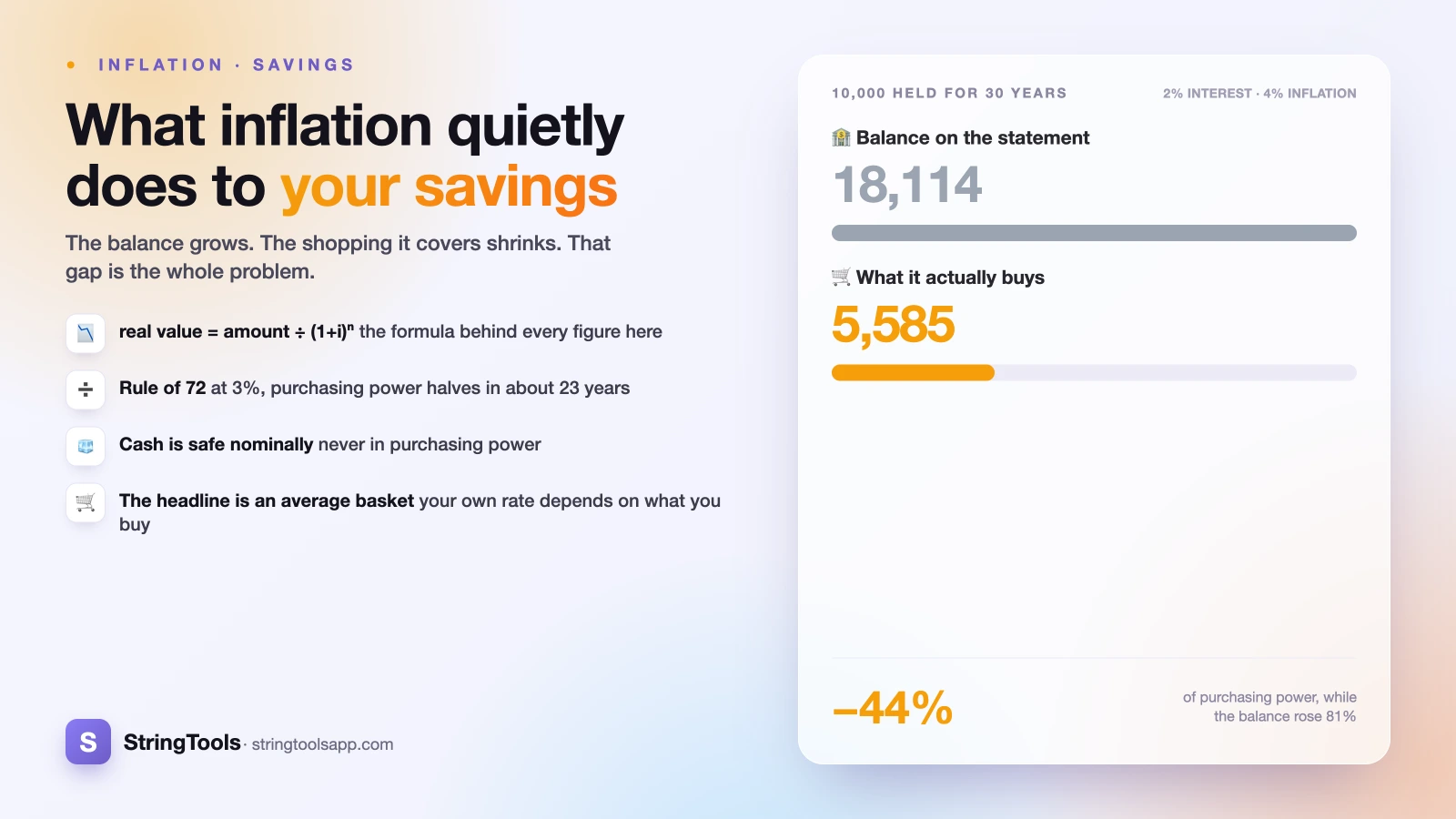

What Inflation Actually Does to Your Savings
What inflation does to your savings: how purchasing power falls even as the balance rises, the rule of 72 for halving, and real-value tables for 5-30 years.
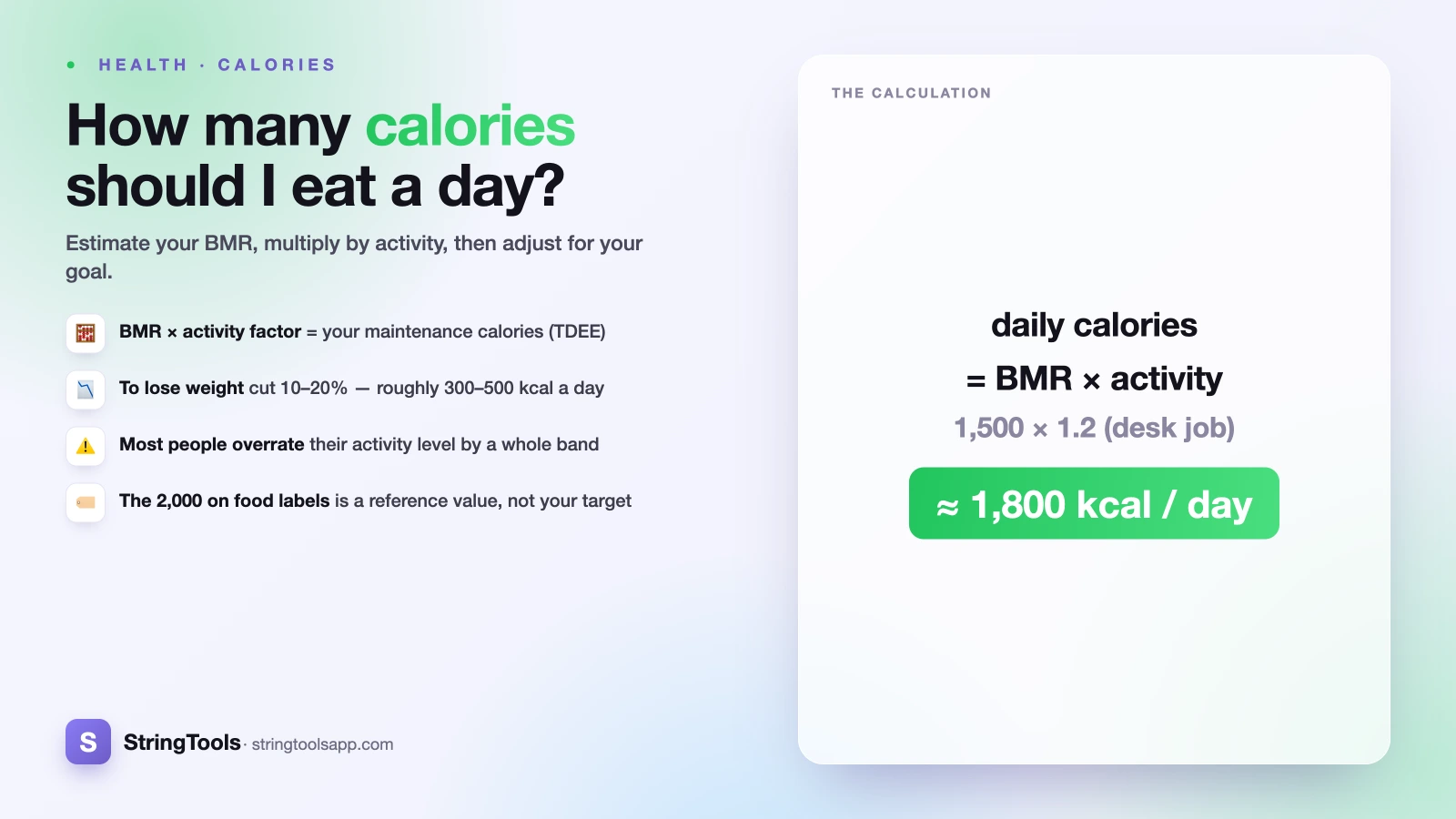
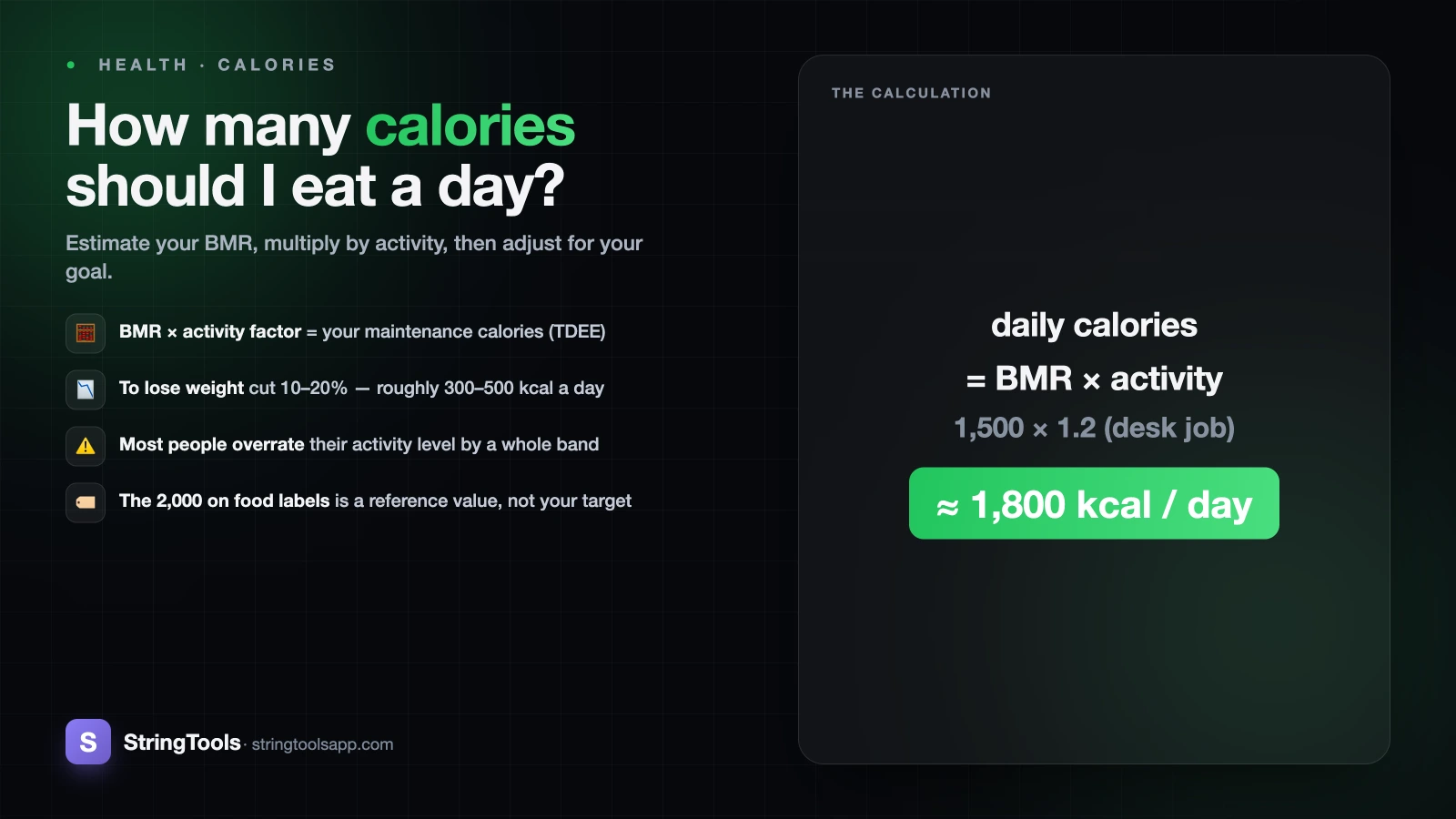
How Many Calories Should I Eat a Day?
How many calories should you eat a day? Work out your BMR with Mifflin-St Jeor, apply an activity factor, adjust for your goal, with worked examples.
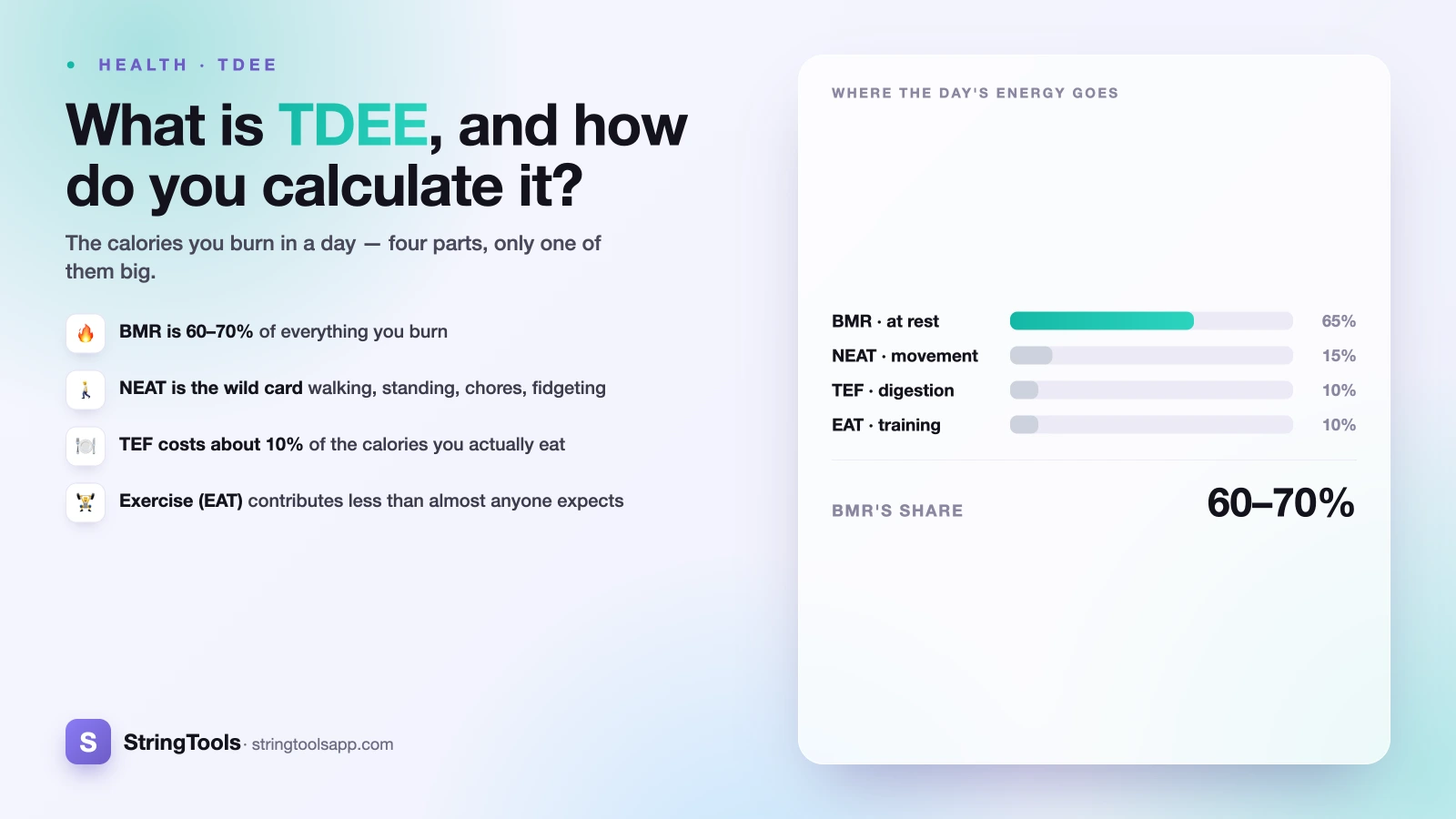
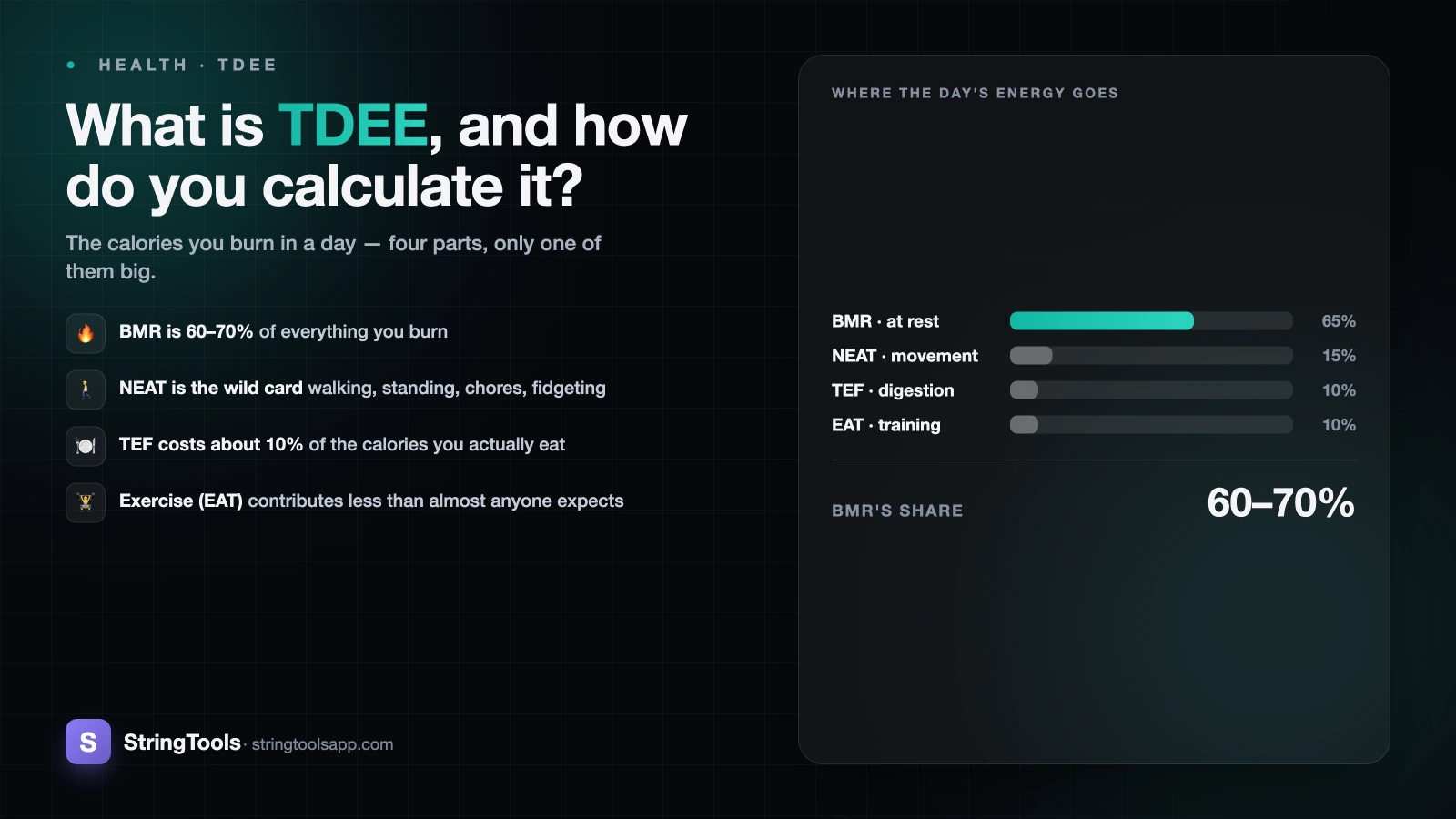
What Is TDEE and How Do You Calculate It?
TDEE is the calories you burn in a day. Learn its four components, how to calculate it from BMR and an activity multiplier, and why that multiplier misleads.
Metric vs Imperial: Why Two Systems Still Exist
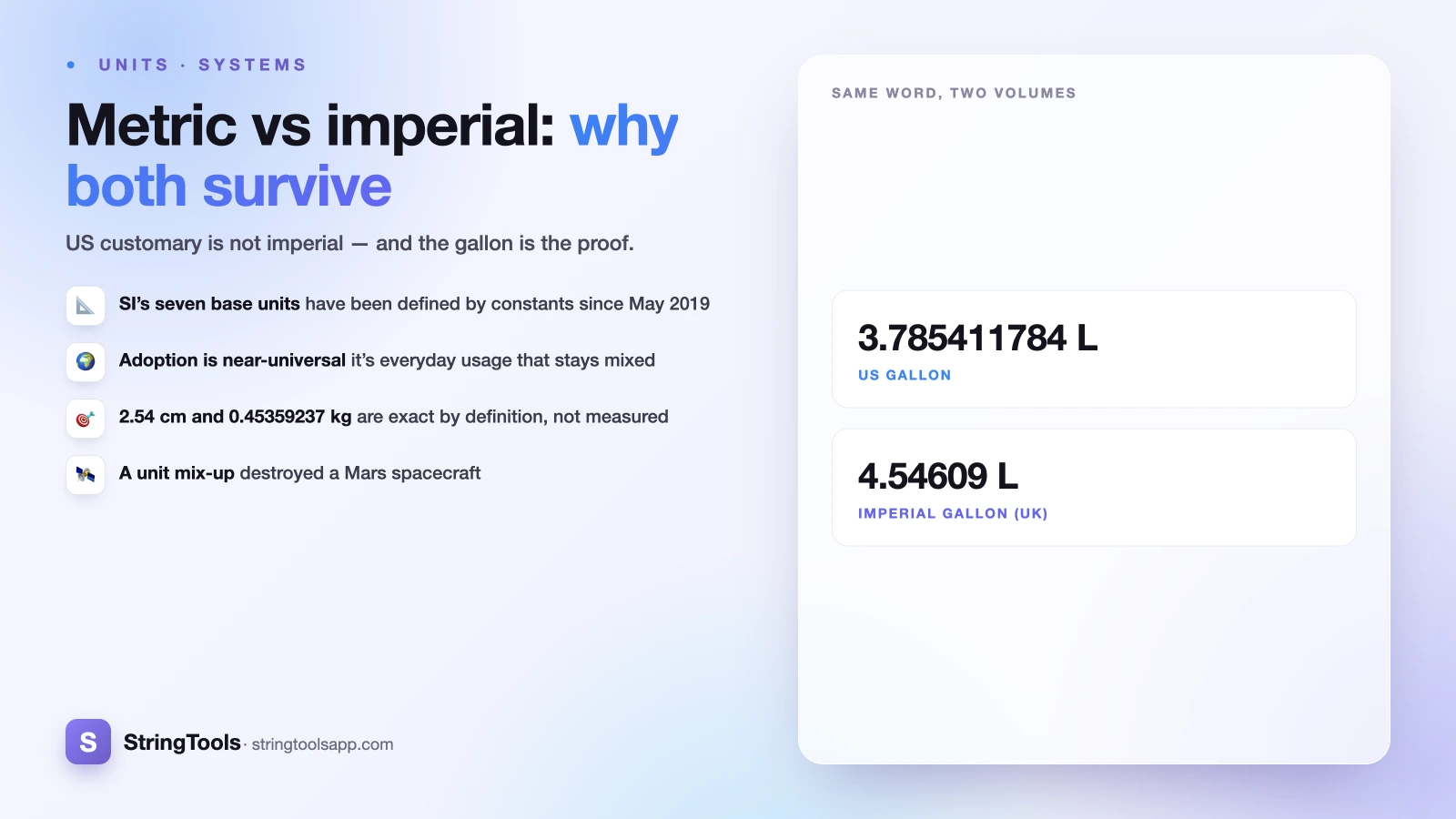
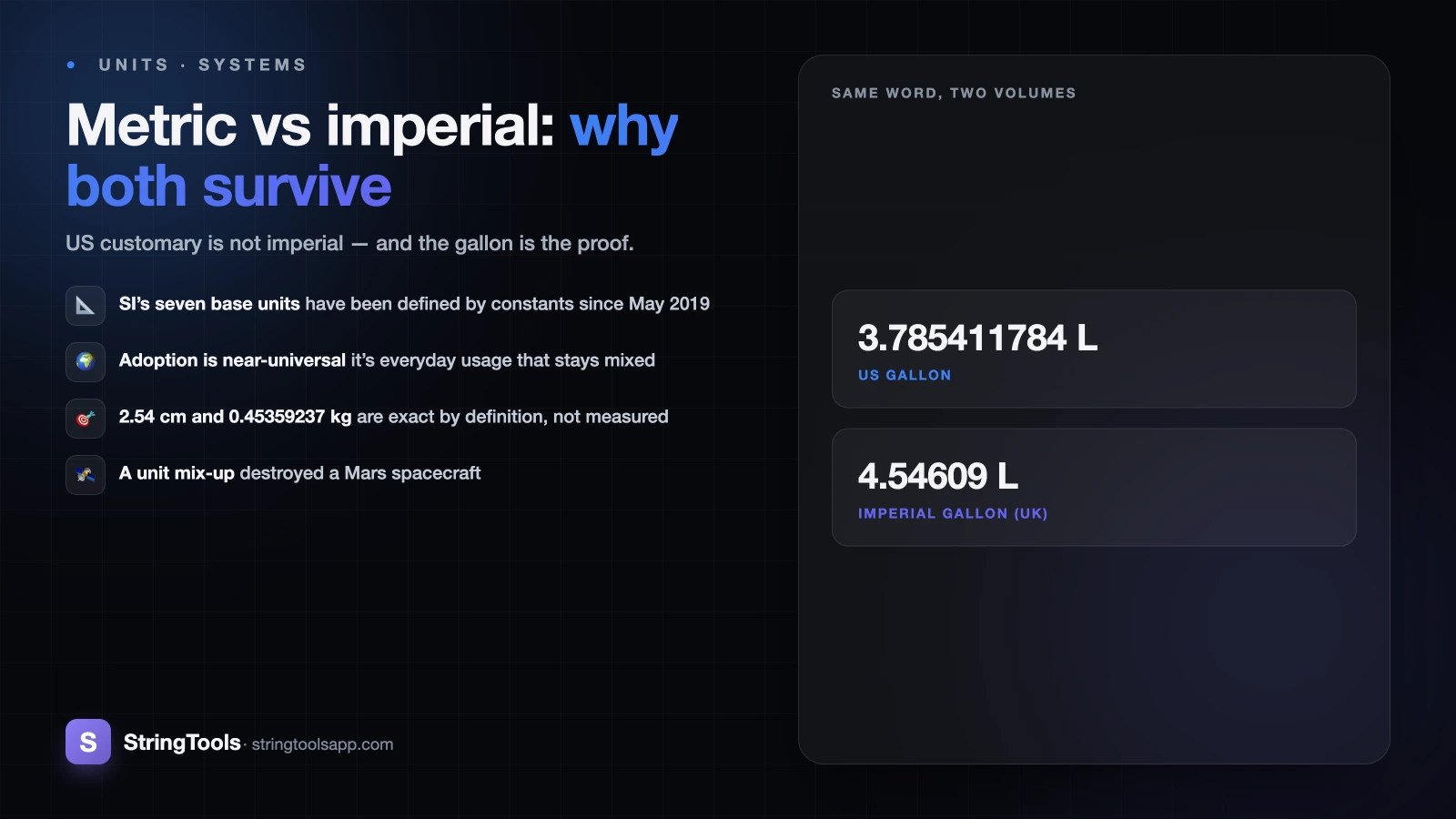
Metric vs imperial explained: what SI really is, which countries use which, how US and imperial gallons differ, and the unit errors that lost a spacecraft.
How to Write an Invoice (Freelancer's Guide)
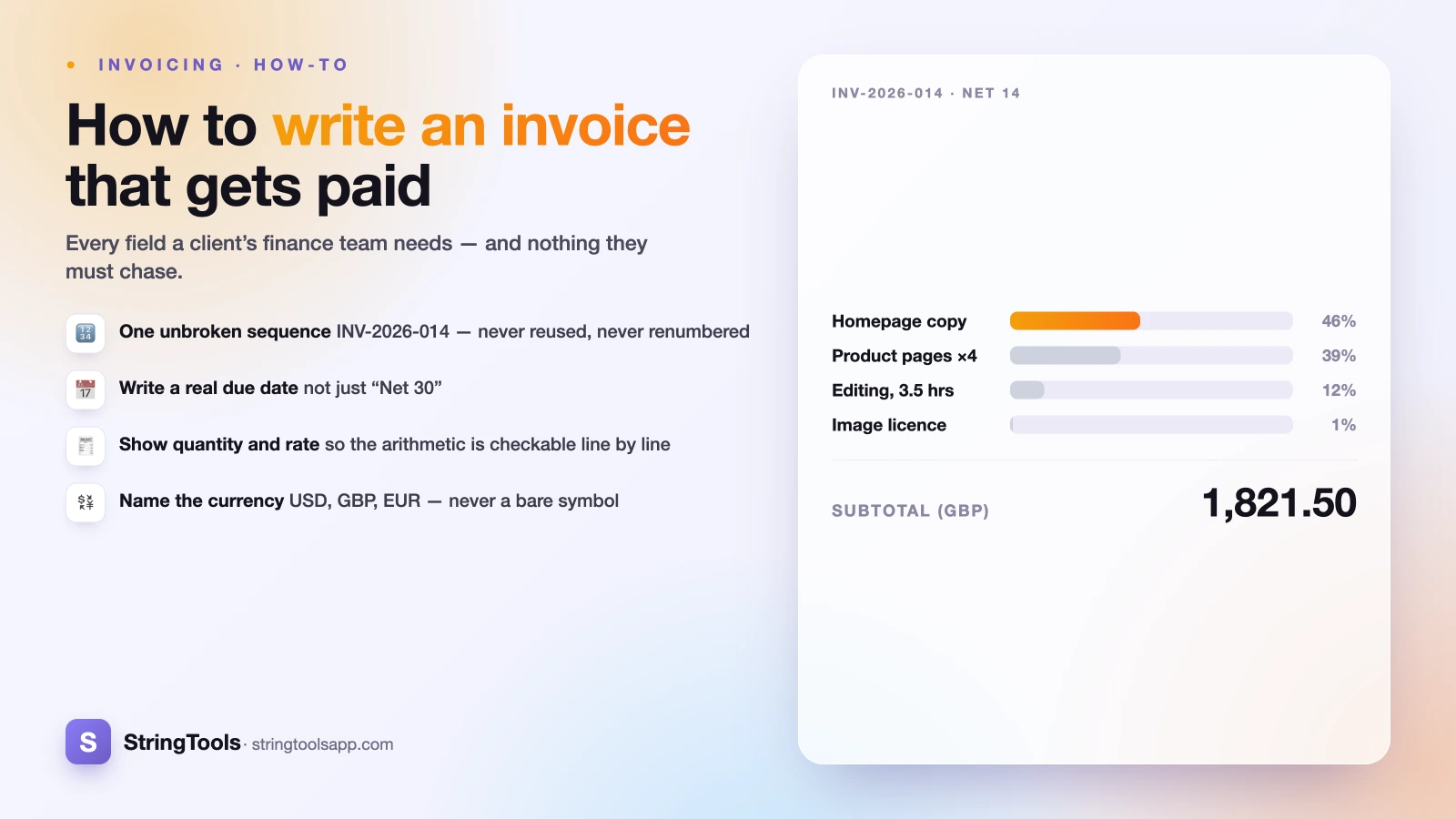
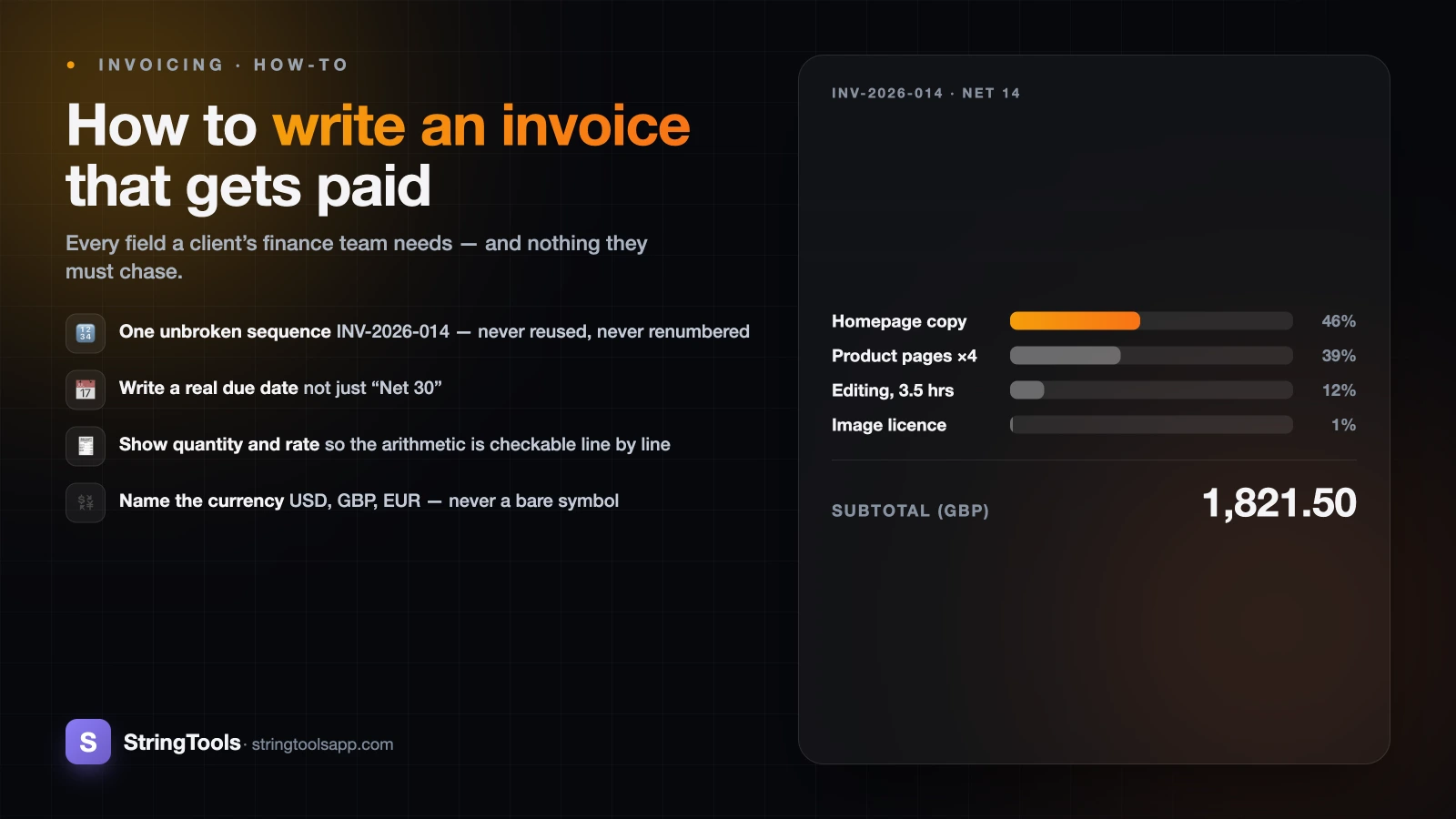
How to write an invoice as a freelancer: every element it needs, invoice numbering, dates, line items, tax, payment terms and a full worked example.
When Can I Afford to Retire? Working Out Your Date
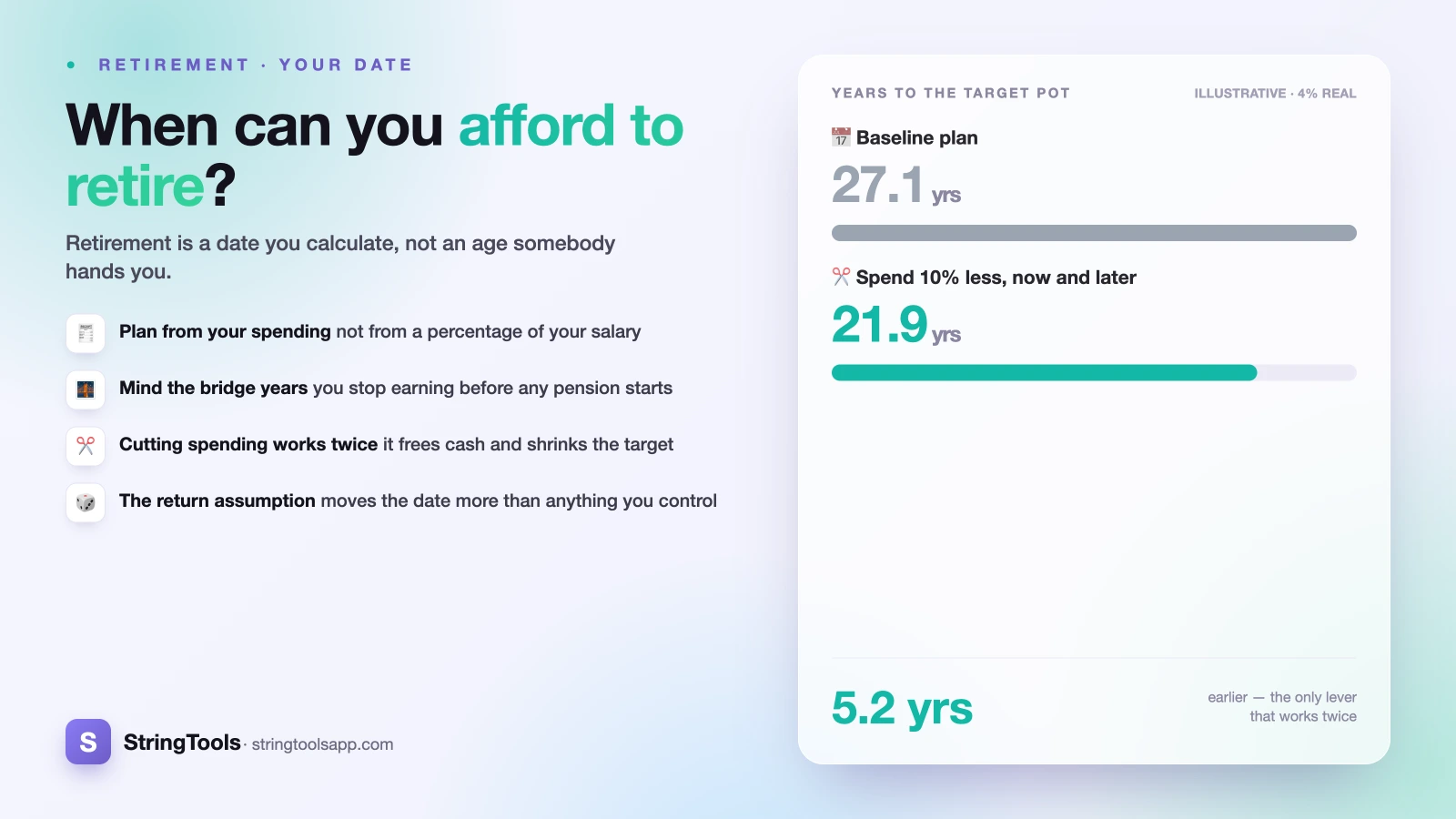
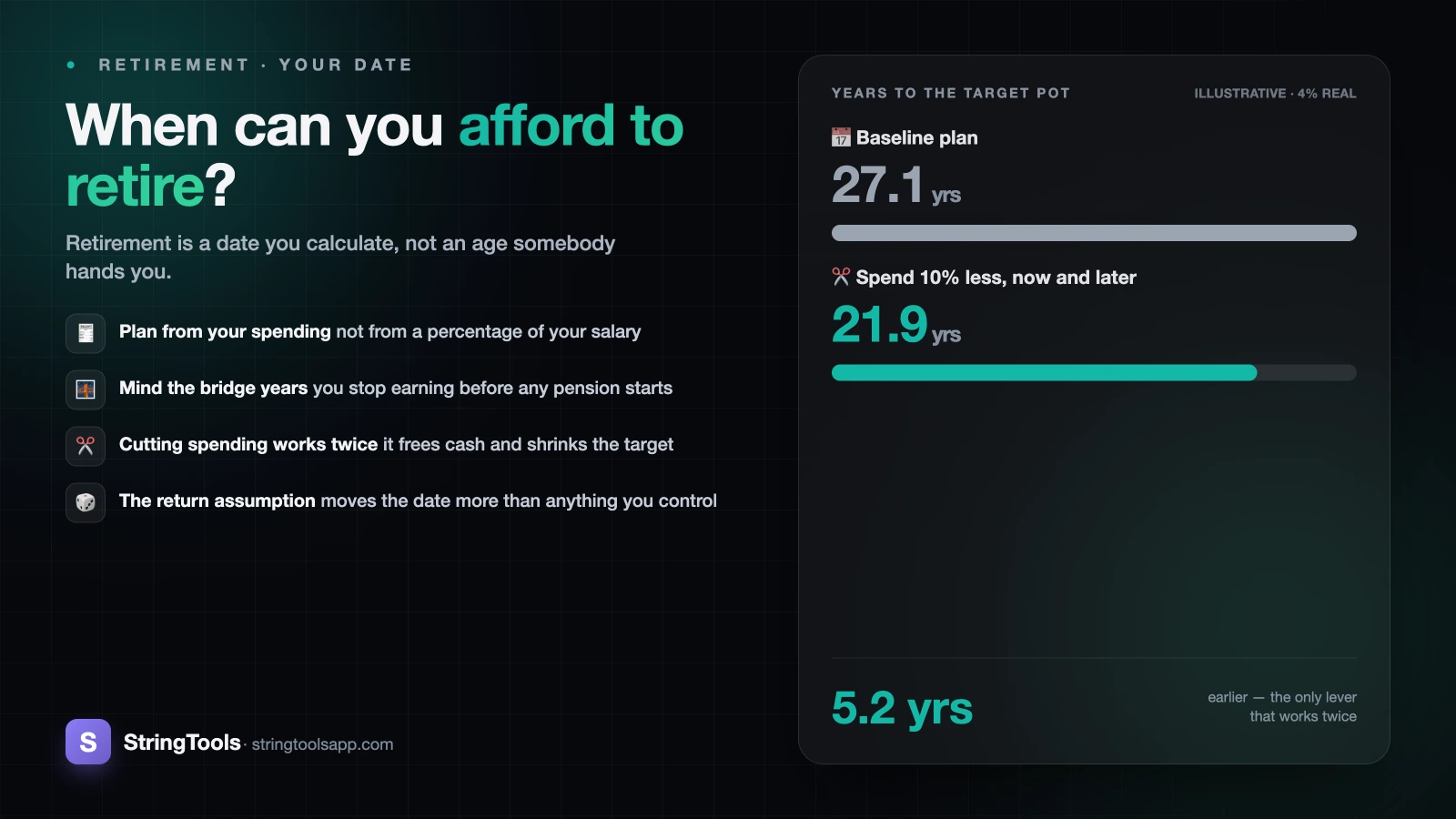
When can I afford to retire? How to work out your retirement date from target spending, the pension gap, healthcare cover, and the levers that move it.
Retirement Saving Mistakes That Cost the Most
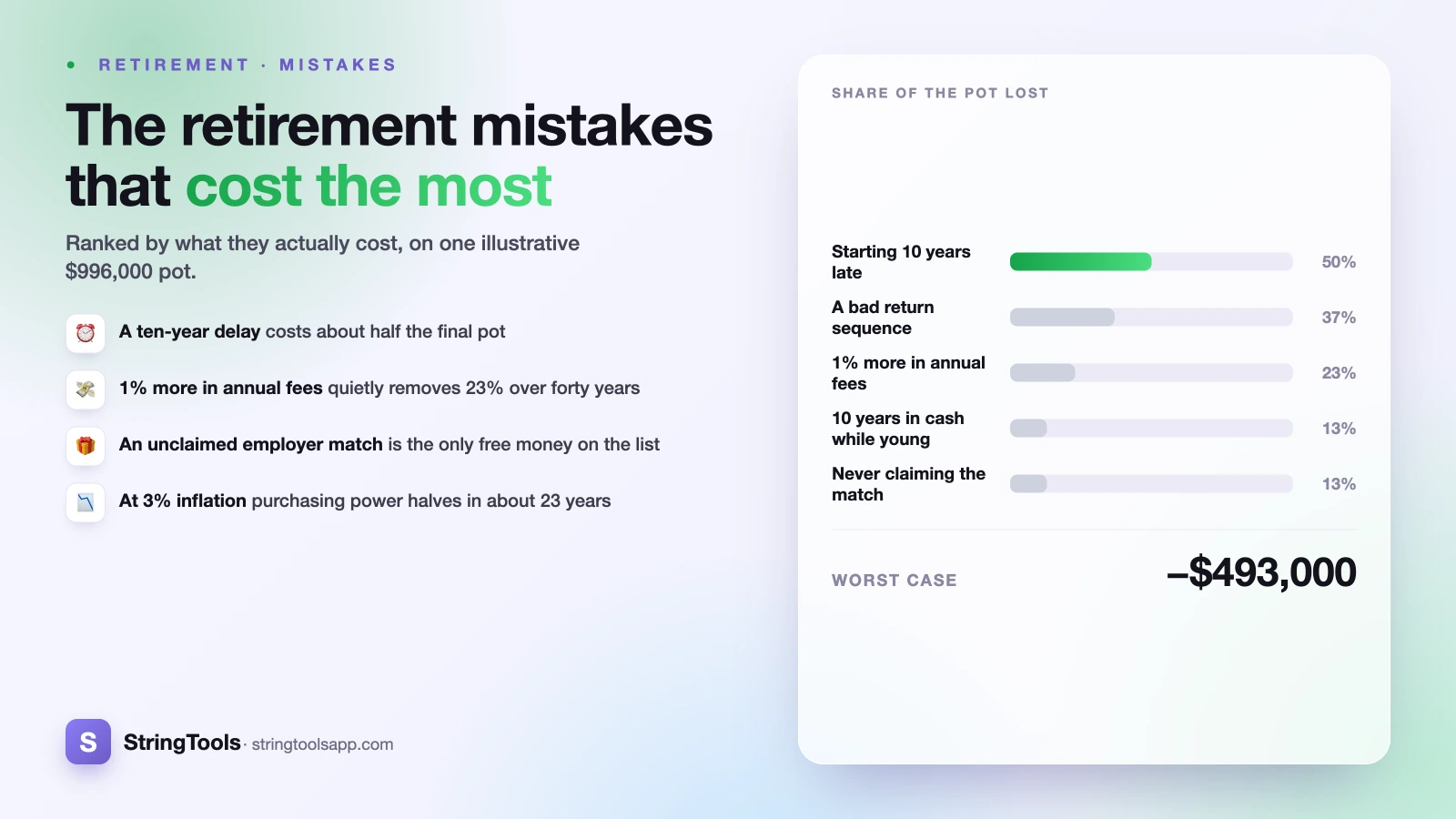
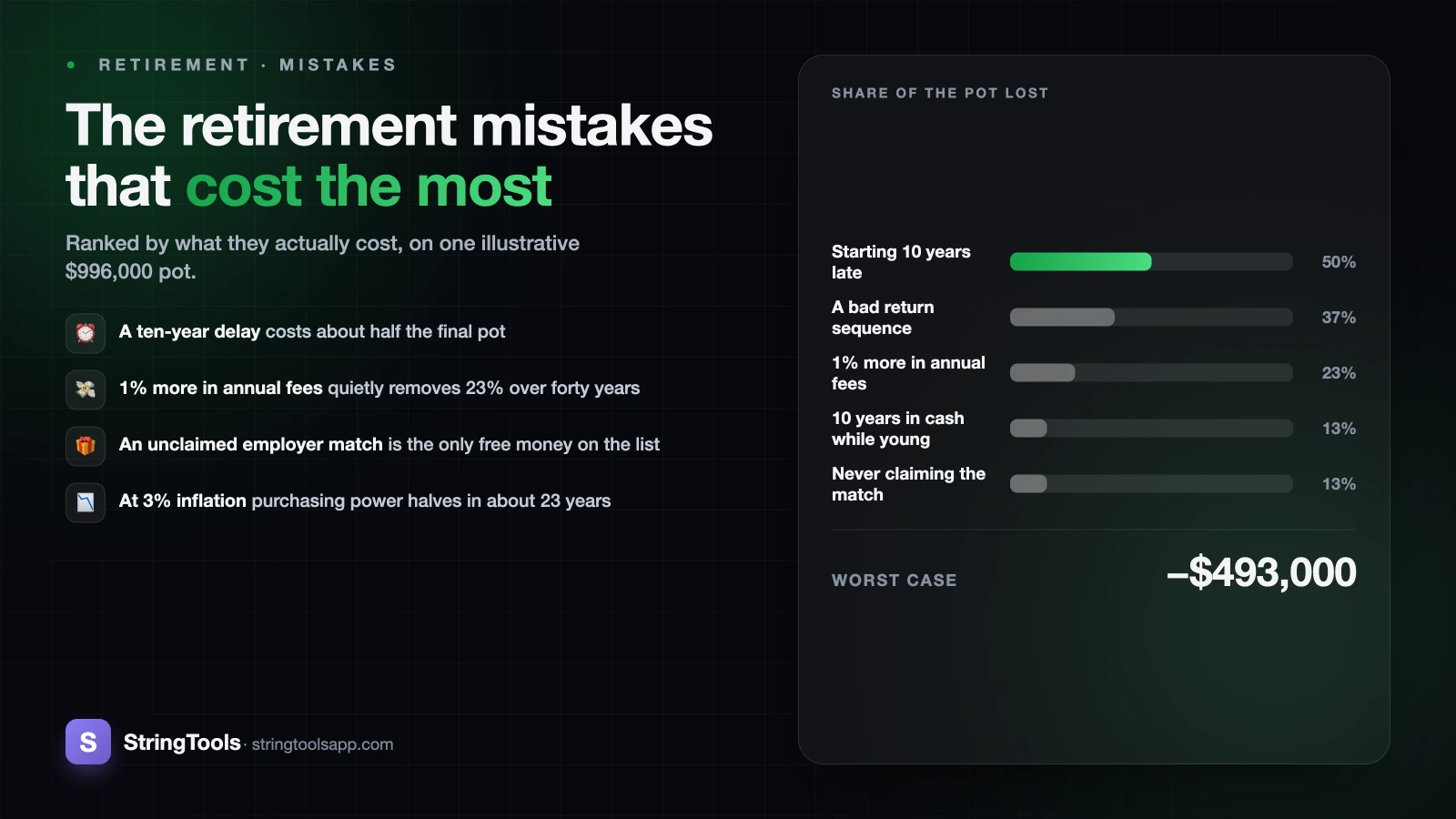
Retirement saving mistakes ranked by what they actually cost: starting late, a missed employer match, cashing out, 1% fees, wrong risk and inflation.
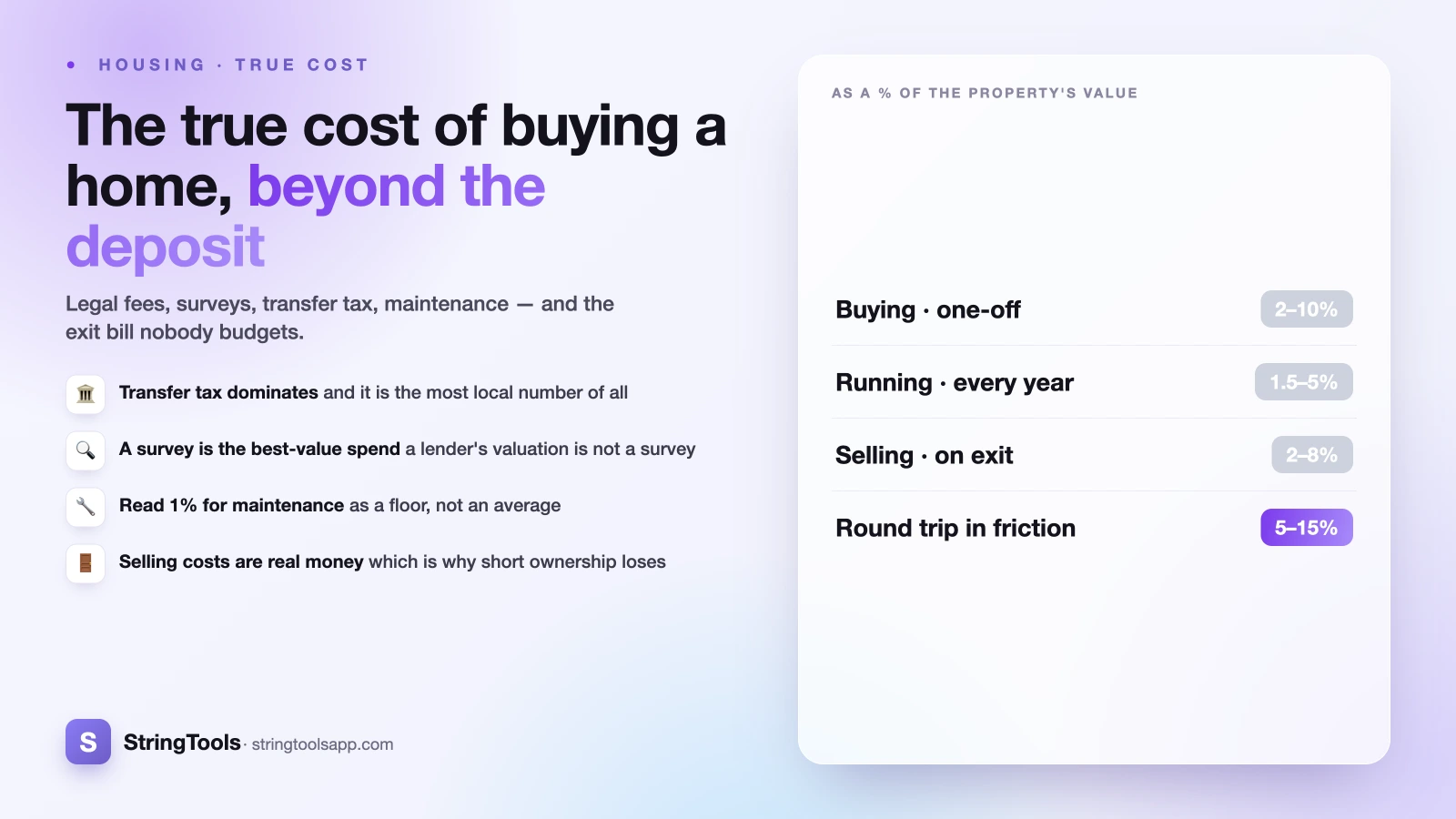

The True Cost of Buying a Home Beyond the Deposit
The true cost of buying a home beyond the deposit: legal fees, surveys, transfer taxes, maintenance, insurance and the selling costs nobody budgets for.


The Hidden Ongoing Costs of Owning a Home
The hidden costs of owning a home are the recurring ones: maintenance, insurance, taxes and service charges. Here is how to budget for them properly.
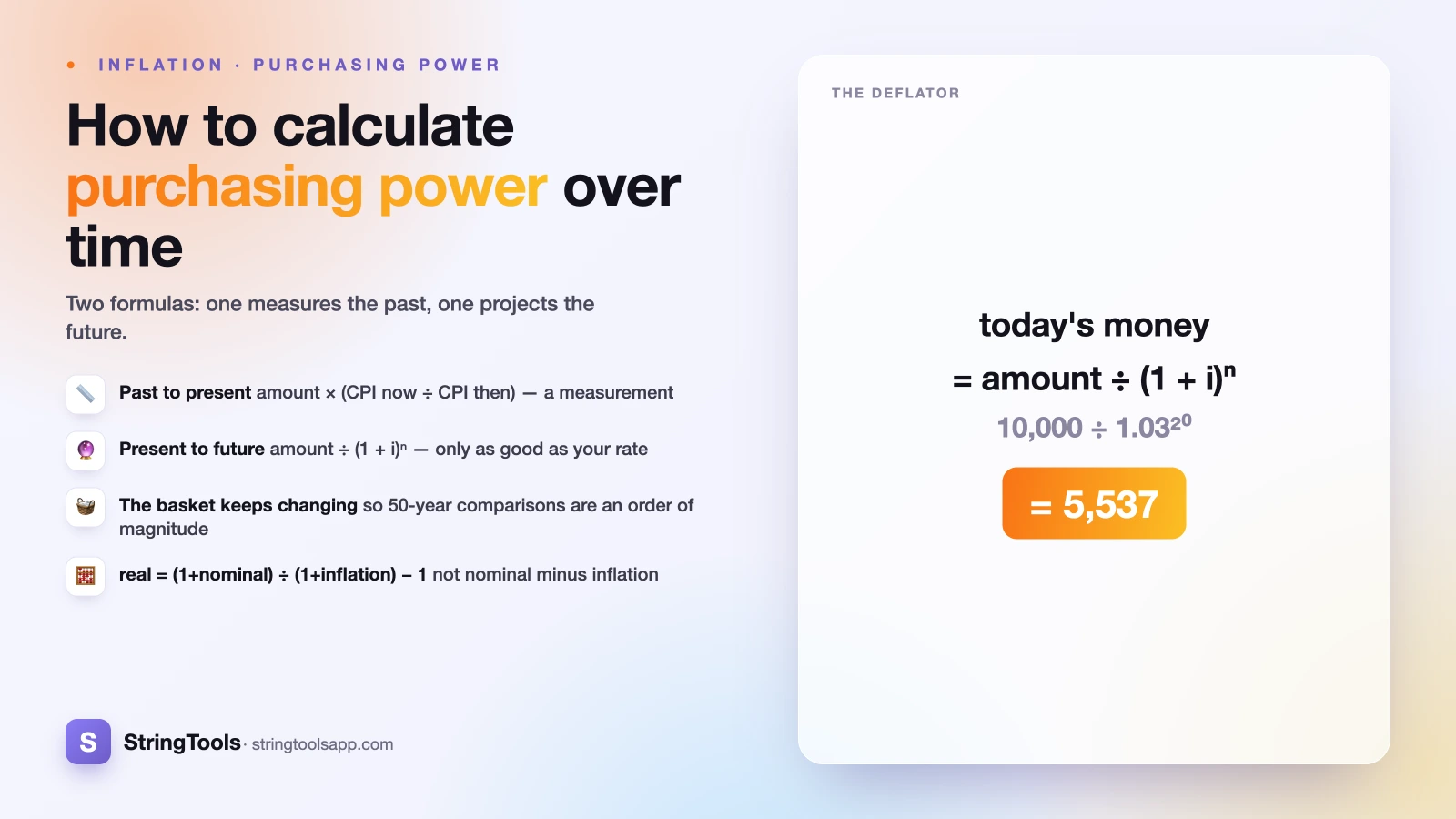
How to Calculate Purchasing Power Over Time
How to calculate purchasing power over time: the two formulas, worked examples in both directions, and why a changing CPI basket limits long comparisons.
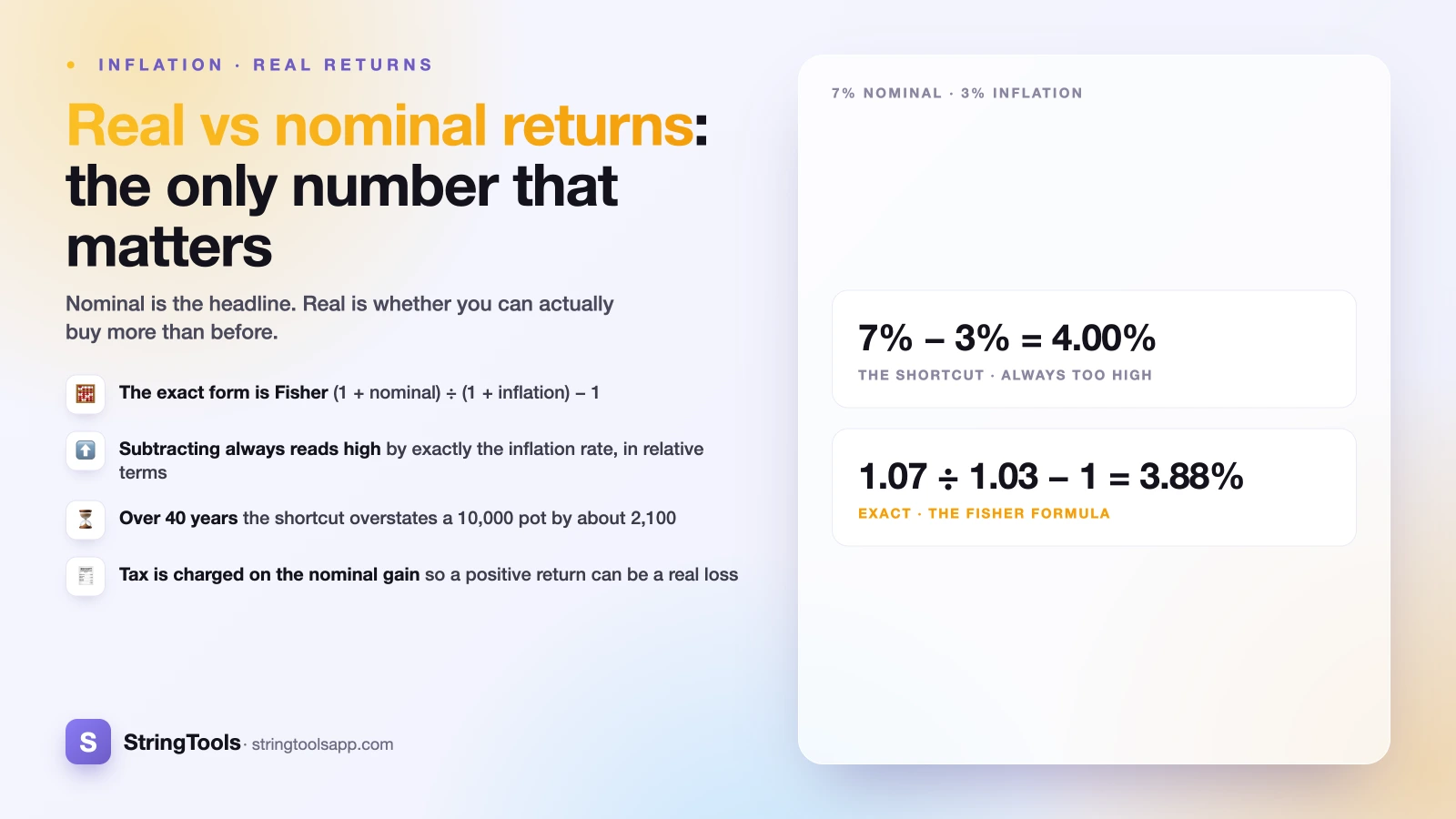
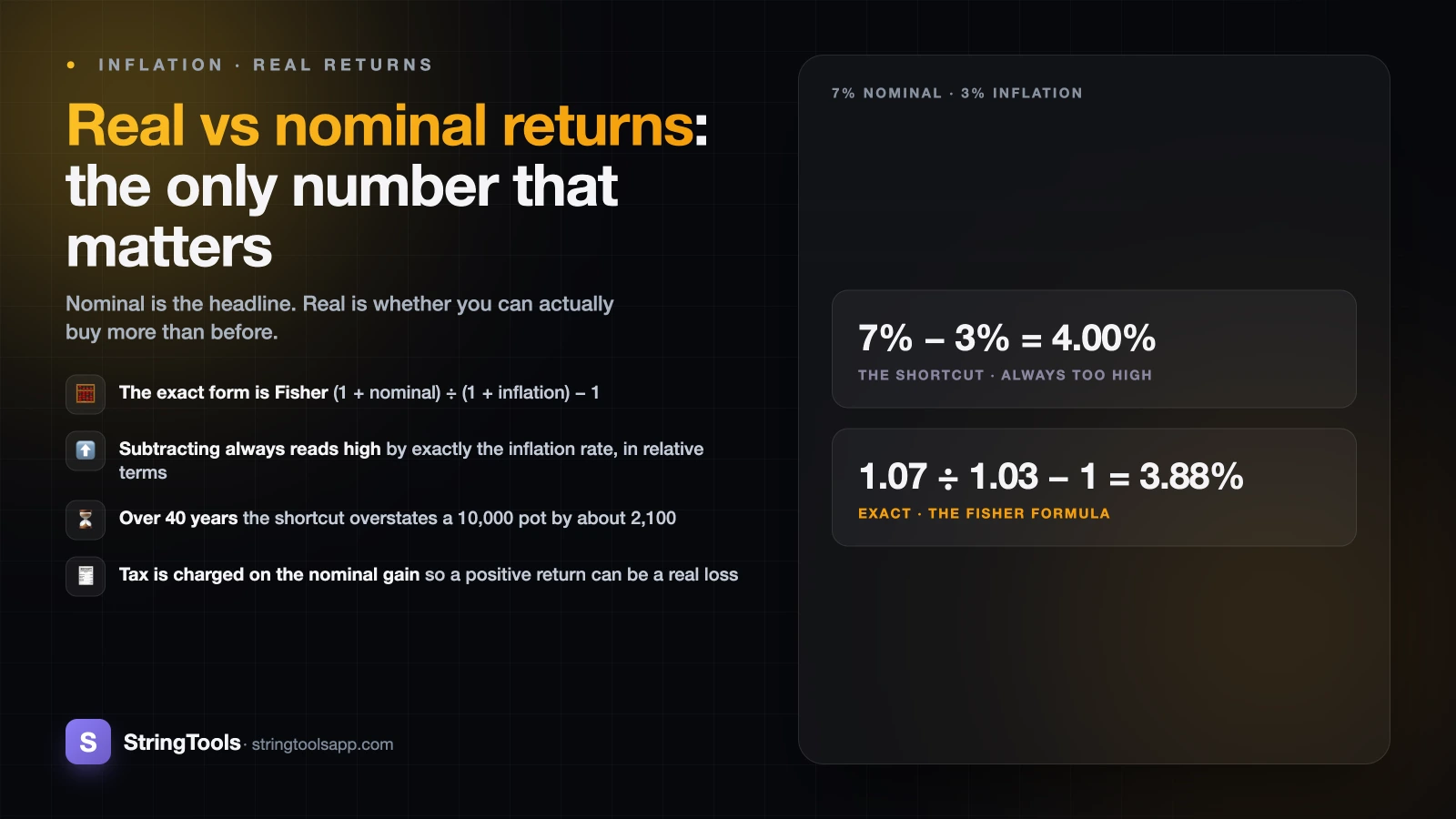
Real vs Nominal Returns: The Only Number That Matters
Real vs nominal returns explained: the exact Fisher formula, why subtracting inflation quietly overstates your return, and how the gap compounds over decades.
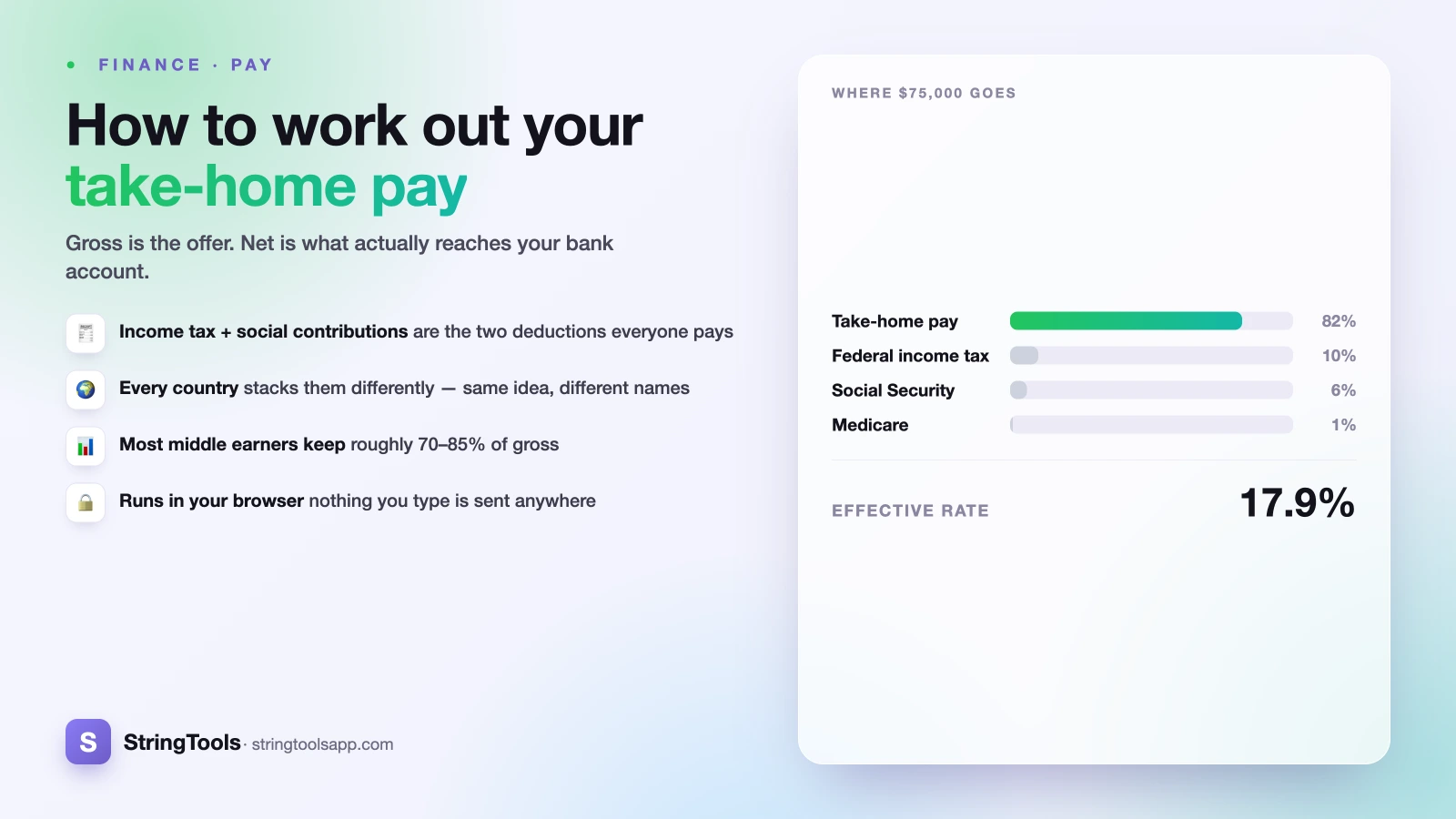
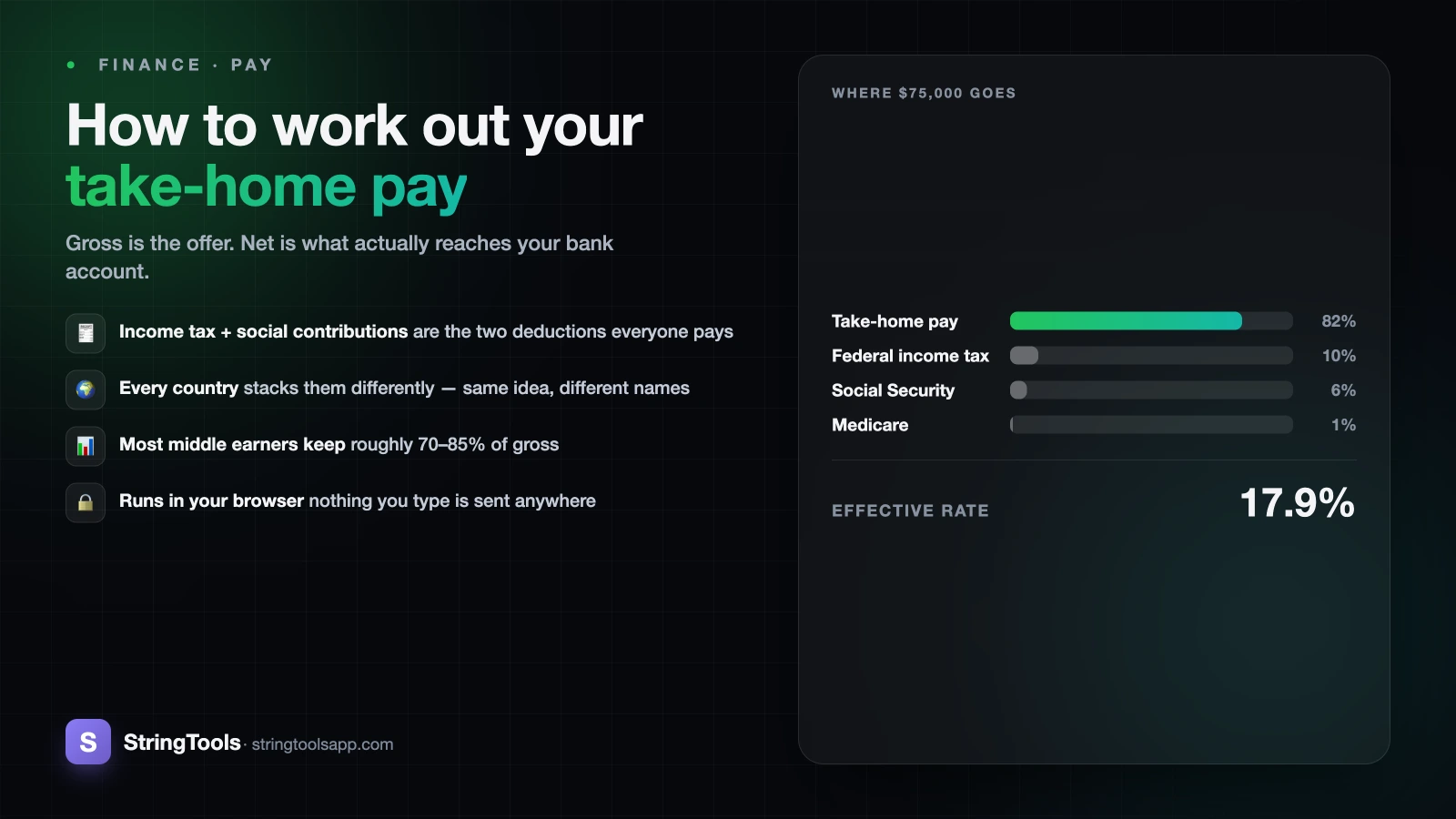
How to Calculate Your Take-Home Pay (Gross to Net Explained)
Learn how to calculate take-home pay from gross salary. Worked US, UK, Australia and India examples with 2026 tax rates, deduction stacks and effective rates.
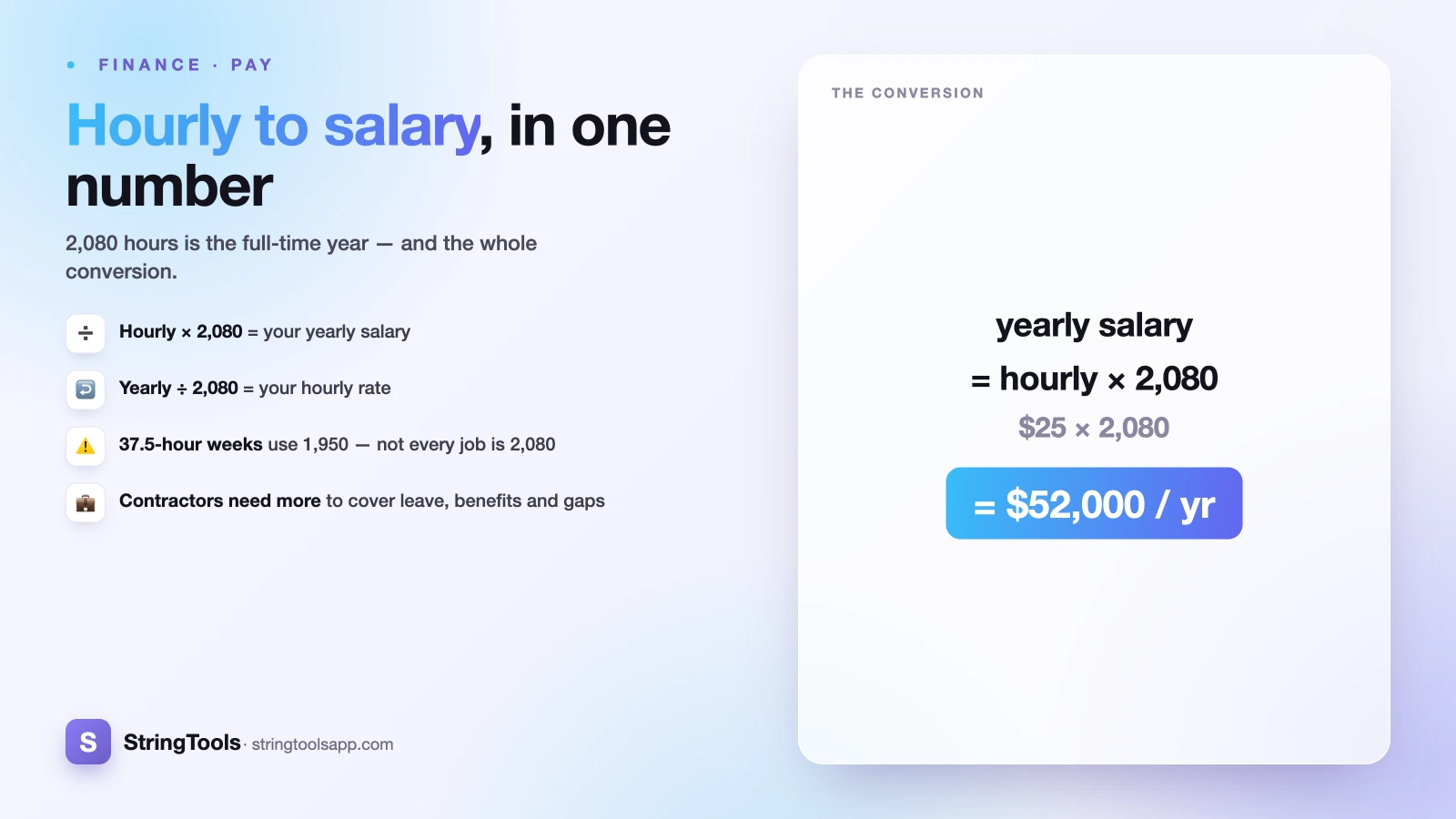
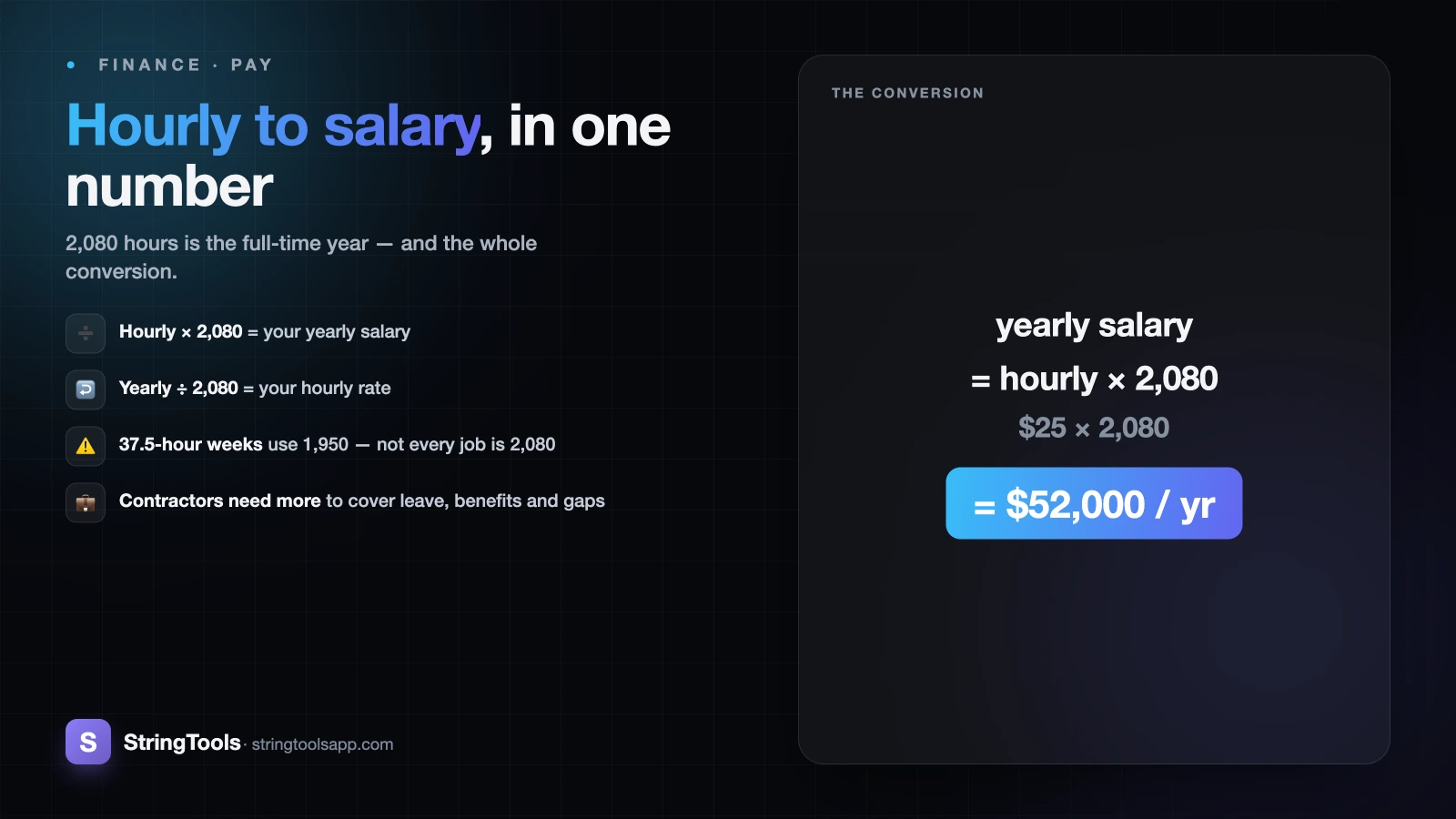
Hourly to Salary: How to Convert Your Pay (With a Full Conversion Chart)
Convert any hourly wage to a yearly salary and back with the 2,080-hour rule, a full conversion chart, and the paid-leave trap that makes them unequal.
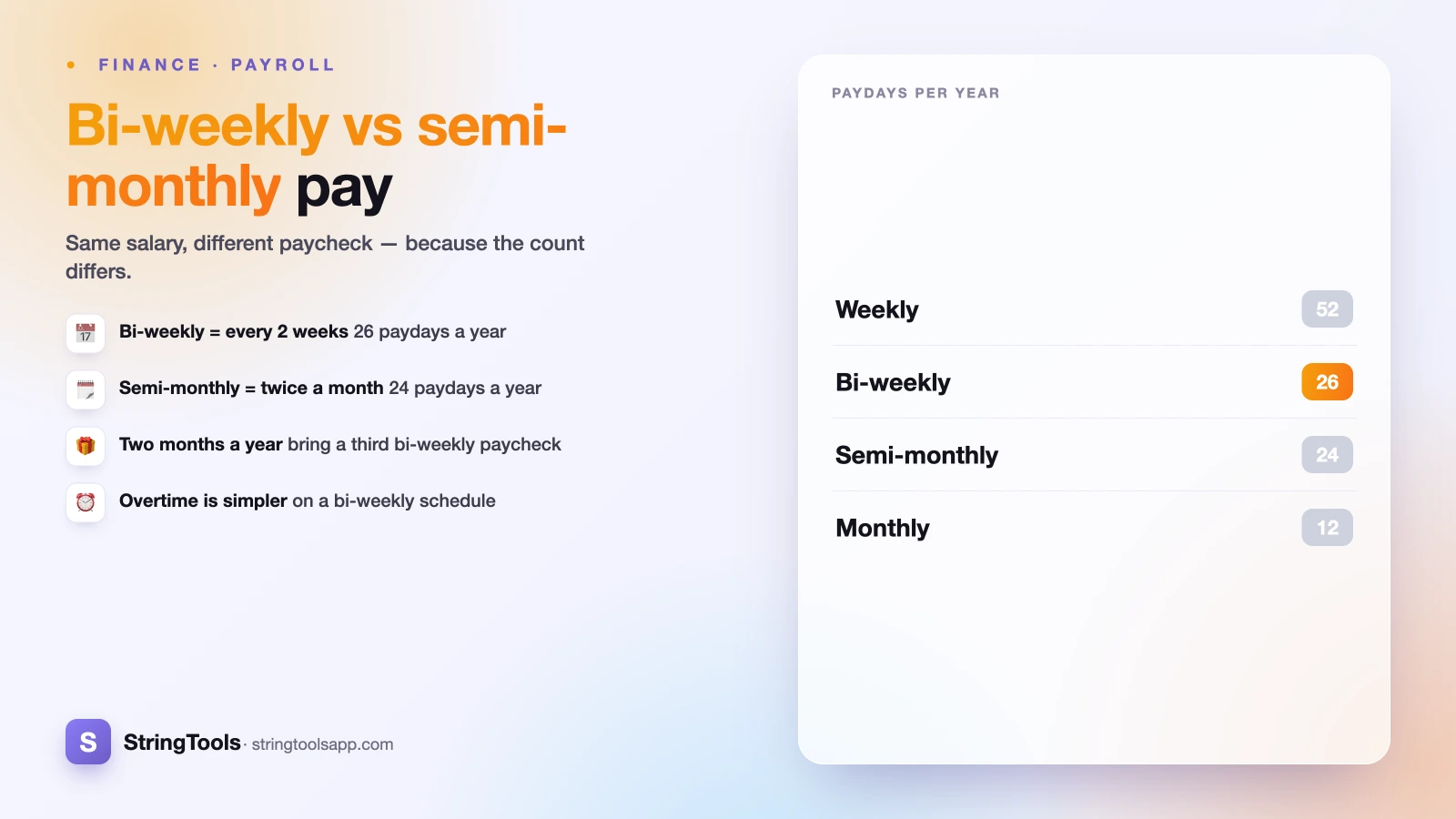
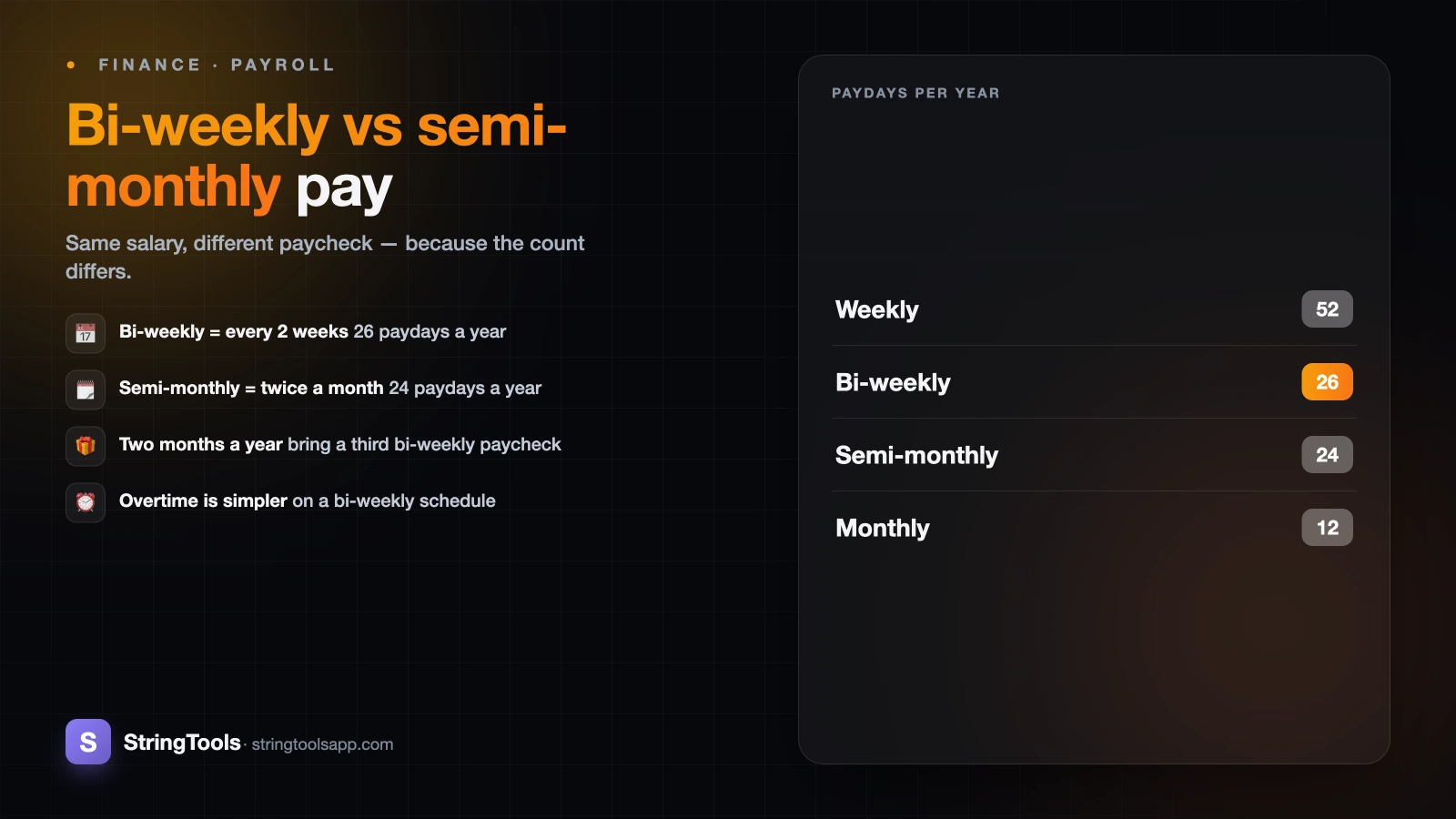
Bi-Weekly vs Semi-Monthly Pay: What's the Difference (and Which Is Better)?
Bi-weekly pay means 26 paychecks a year; semi-monthly means 24. See how each one changes your check size, your monthly budget, and your three-paycheck months.
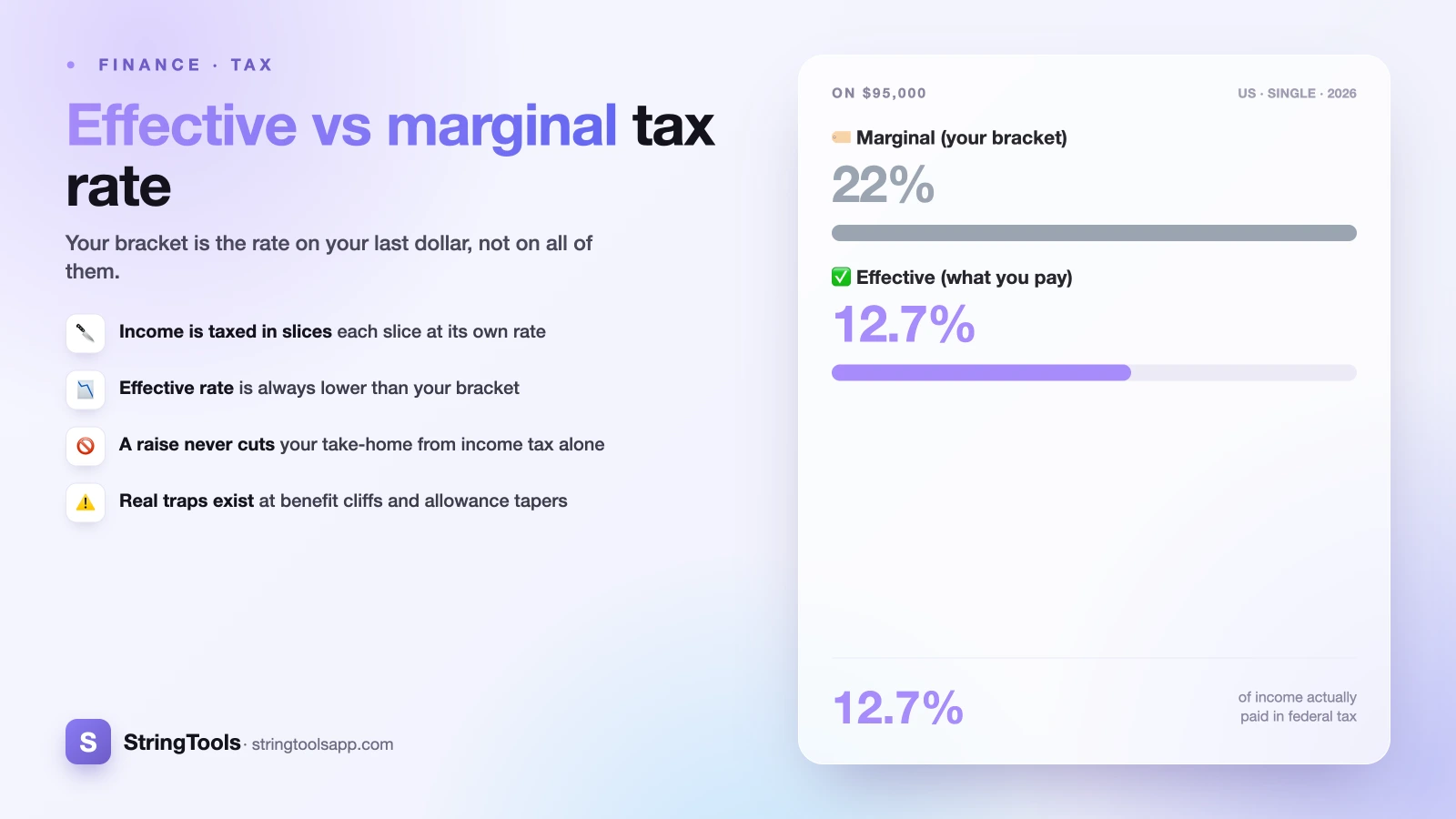
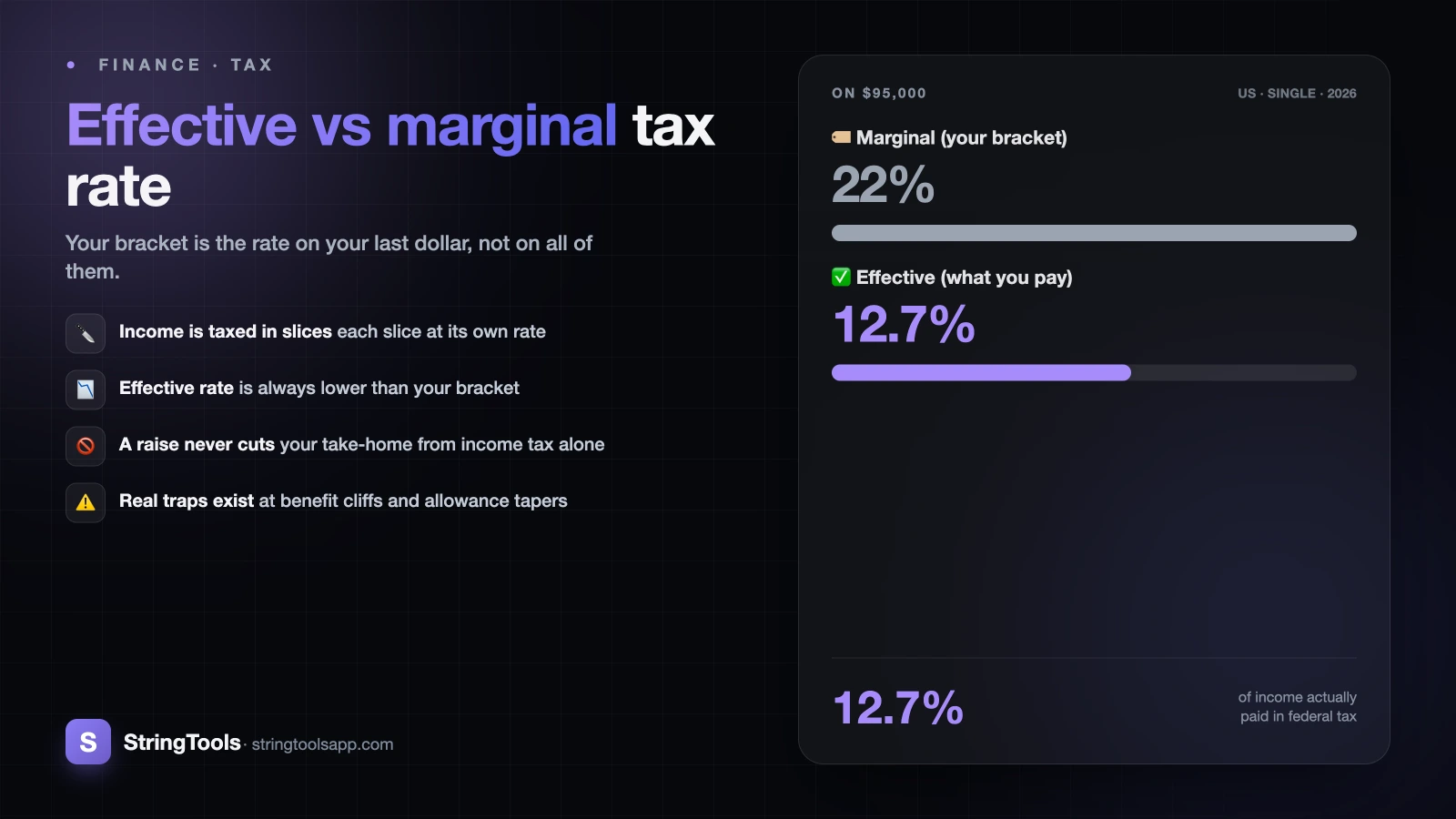
Effective vs Marginal Tax Rate: Why Your Bracket Isn't What You Pay
Your tax bracket is the rate on your last dollar, not on all of it. How progressive brackets really work, and the rare cliffs where a raise can cost you.

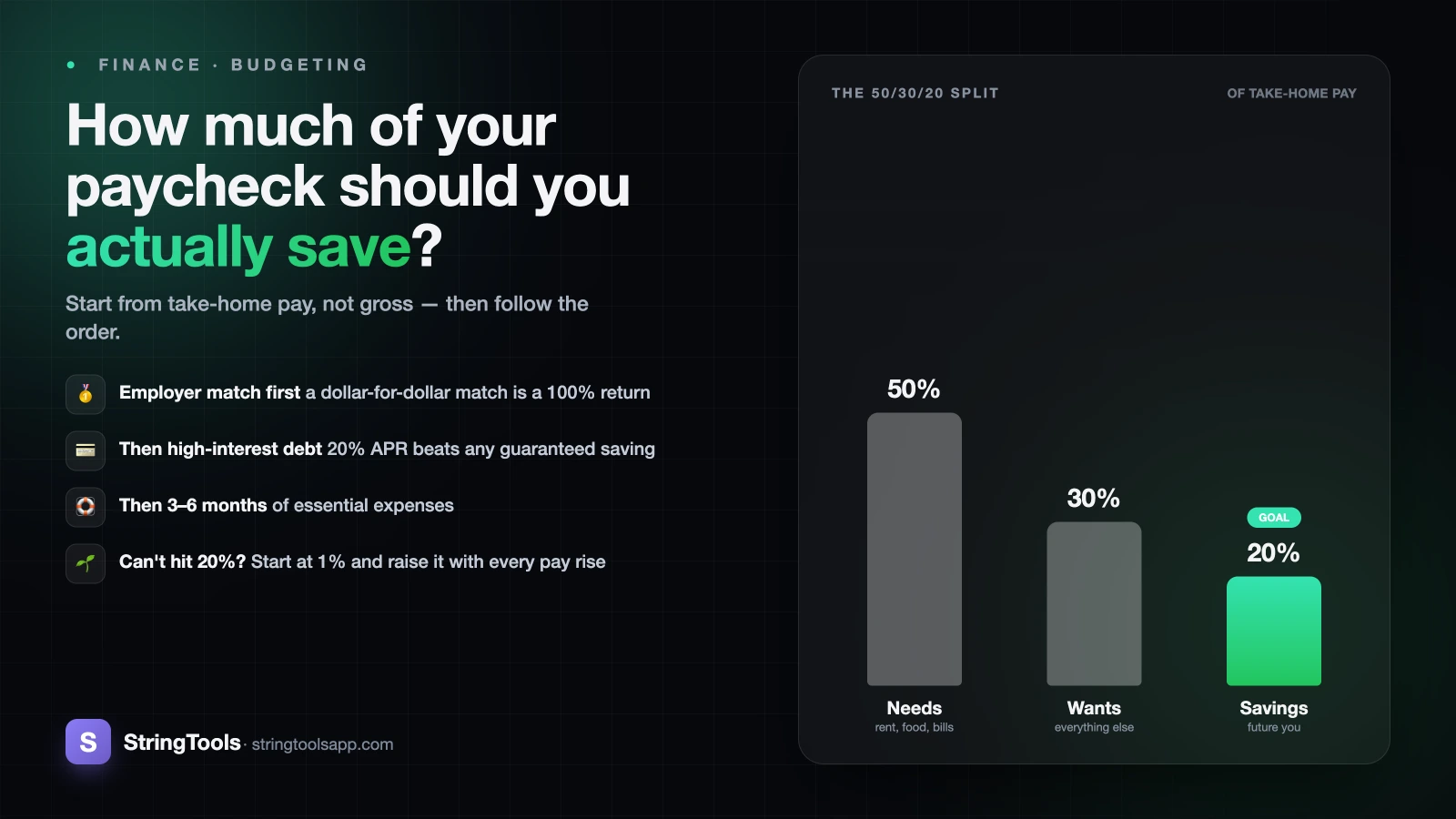
How Much of Your Paycheck Should You Actually Save?
How much of your paycheck should you save? Apply 50/30/20 to real take-home pay, see exactly where it breaks, and use the priority order that beats it.
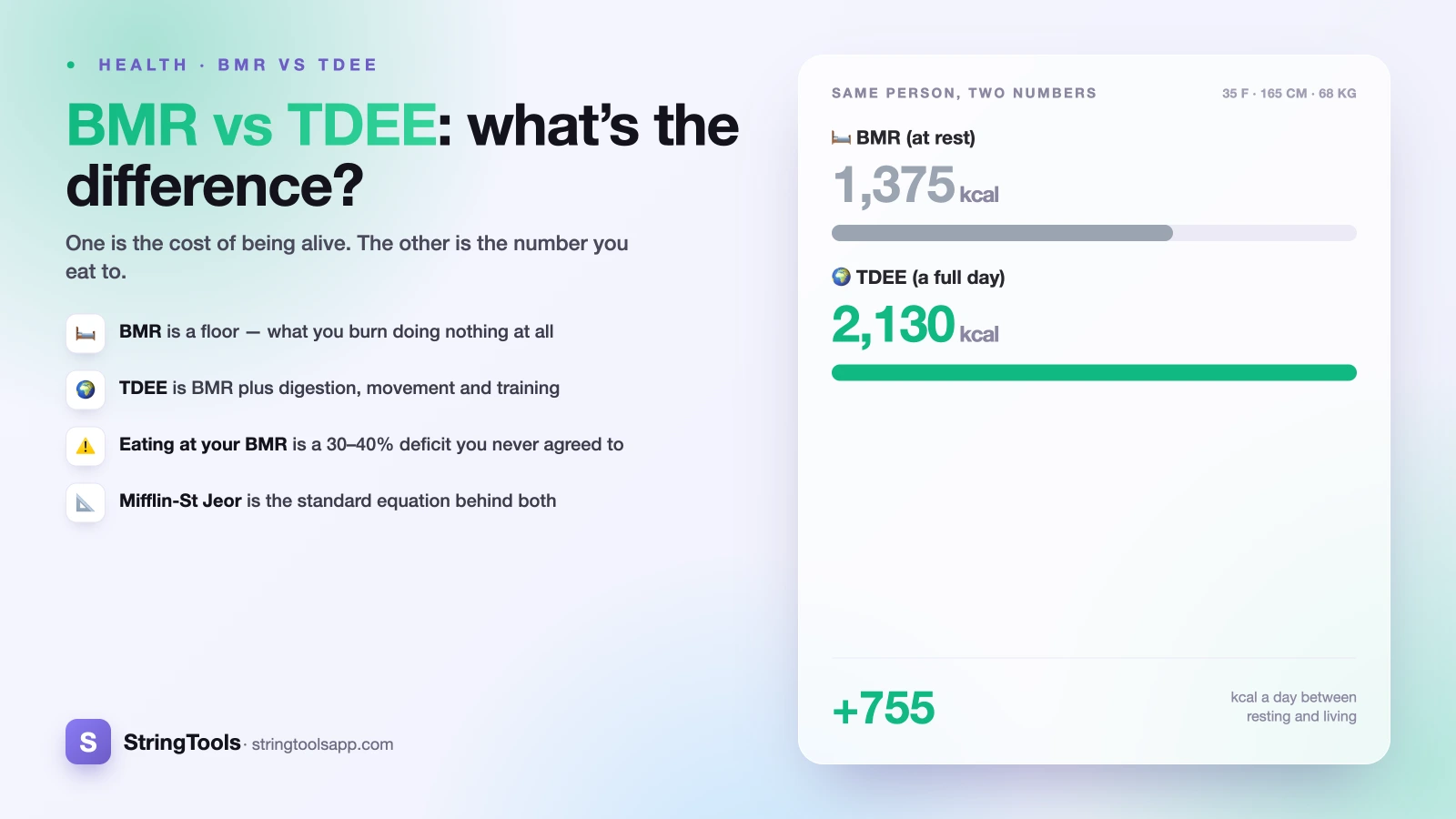
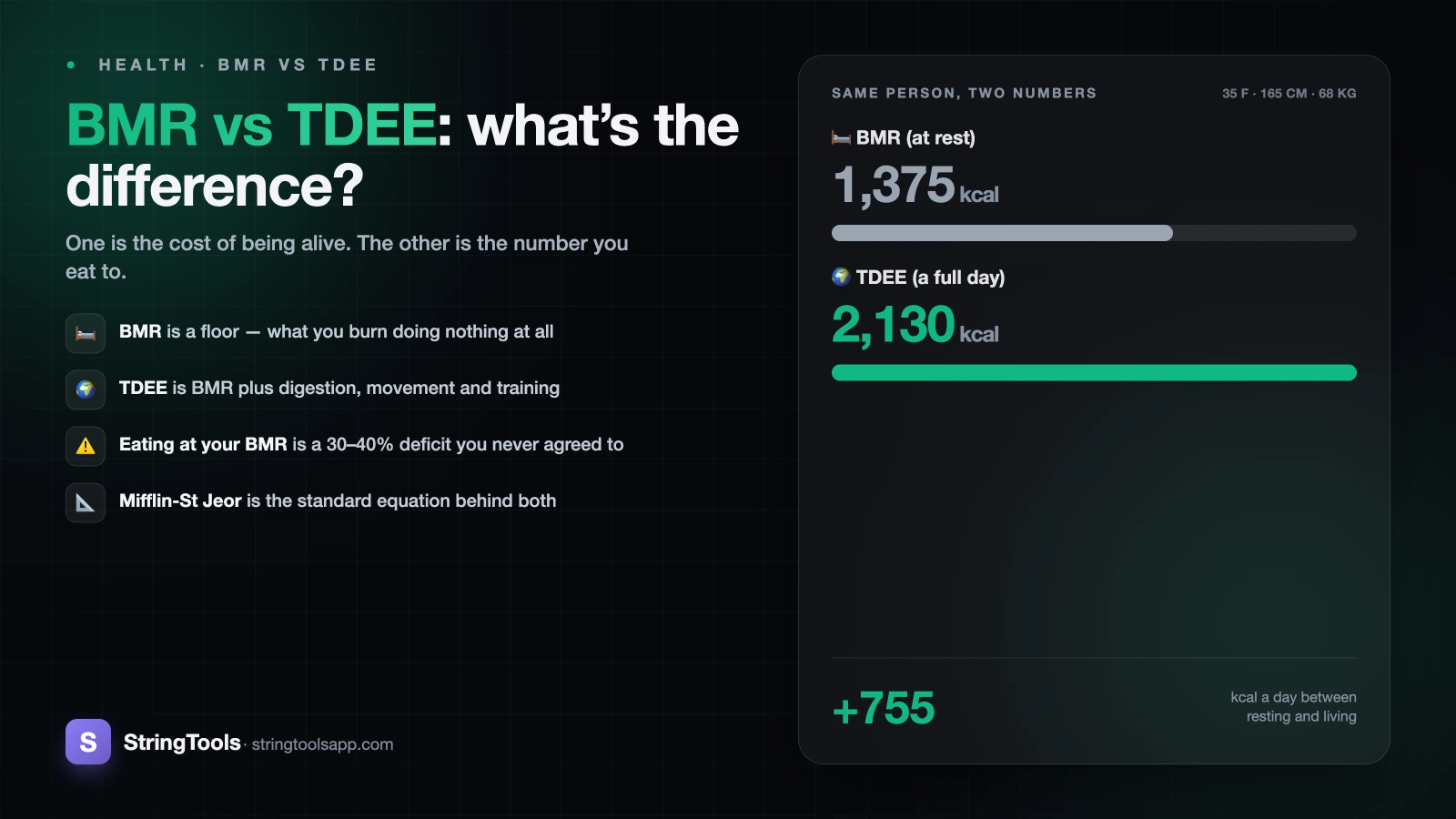
BMR vs TDEE: What's the Difference?
BMR vs TDEE explained: BMR is what you burn at complete rest, TDEE is everything. How they differ, which equation to use, and why eating at BMR backfires.
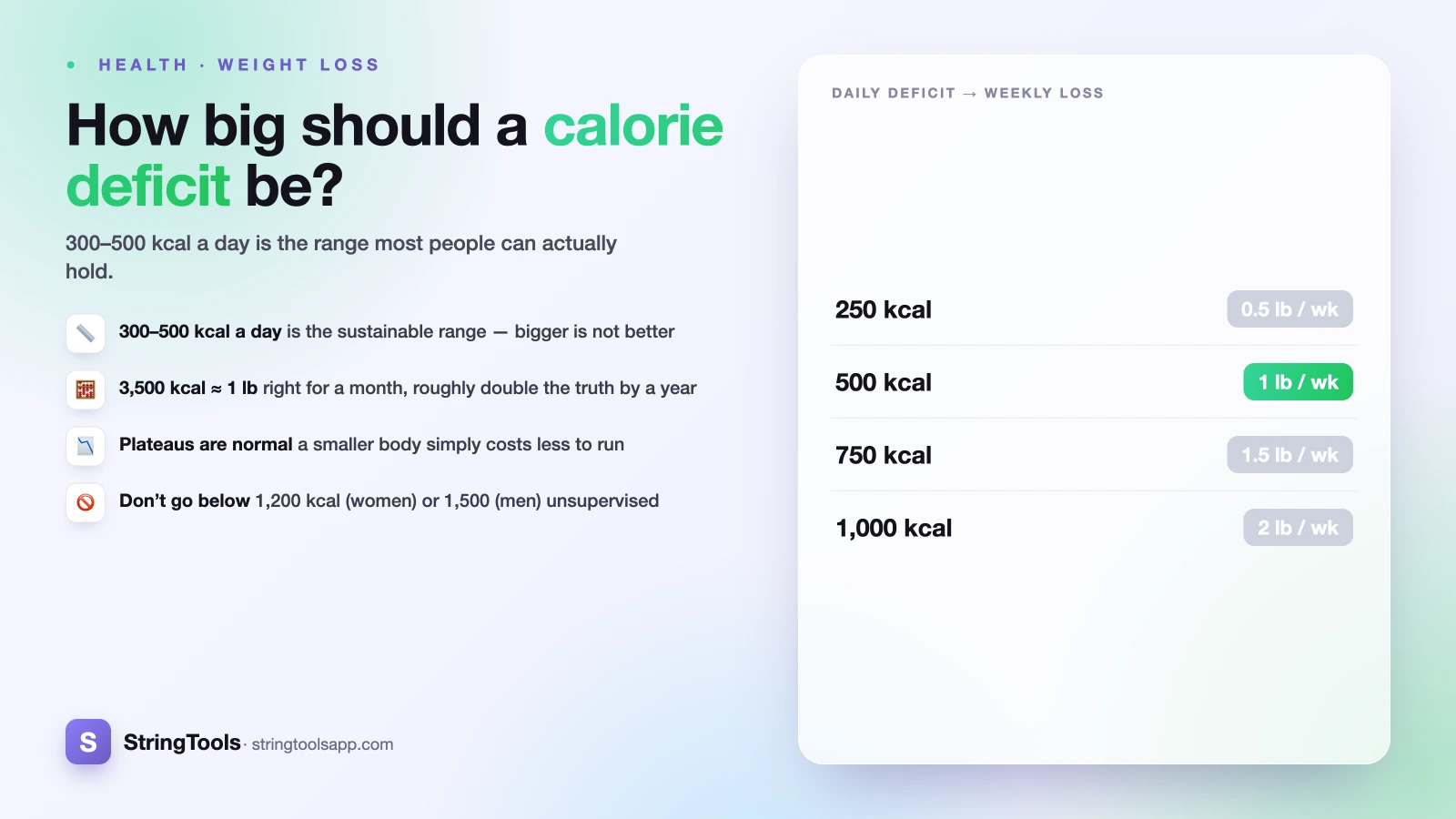
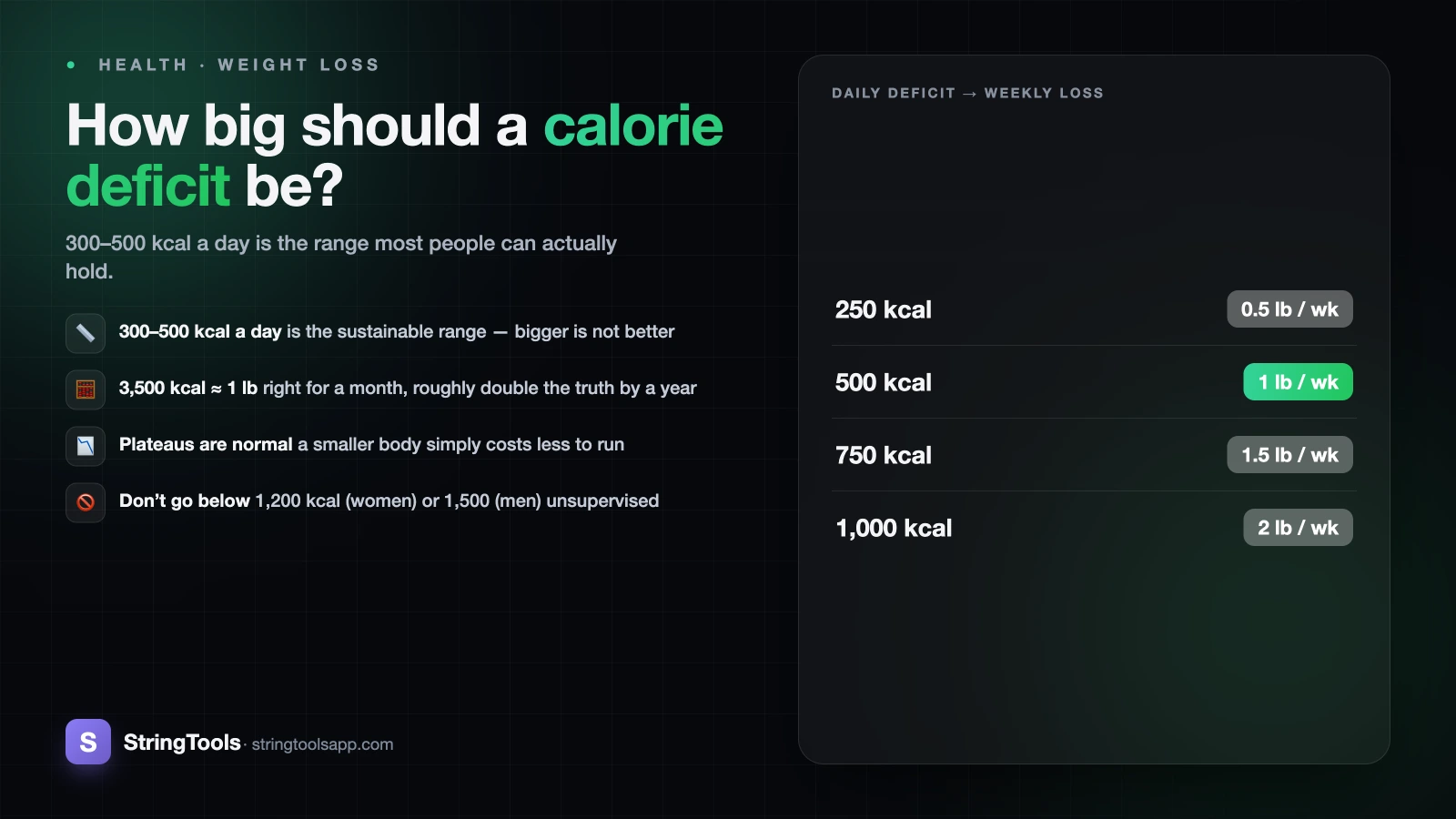
Calorie Deficit for Weight Loss: How Big Should It Be?
A calorie deficit of 300-500 kcal a day suits most people. Why the 3,500-calorie rule overestimates long-run loss, and how to set a deficit you can keep.
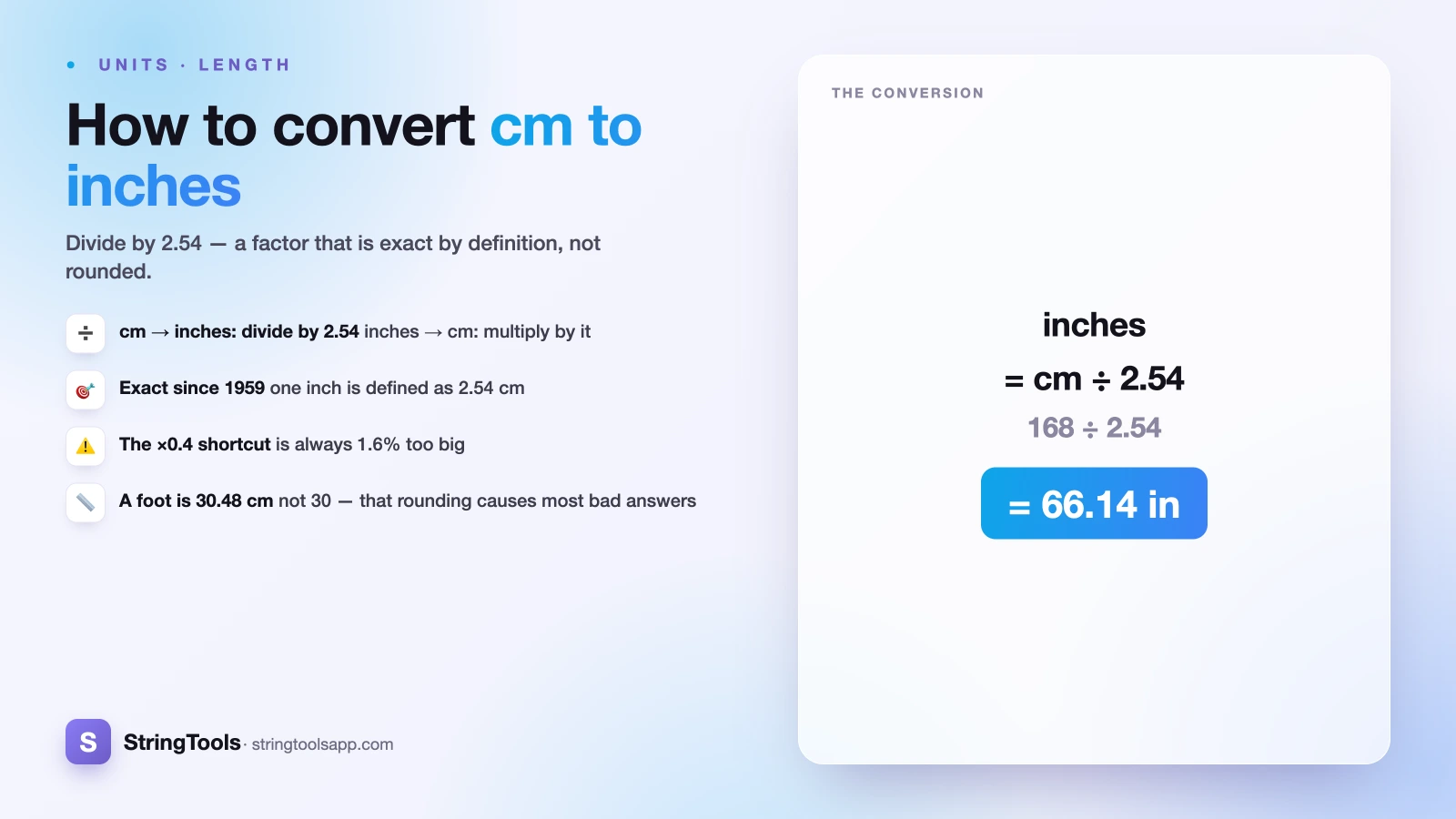
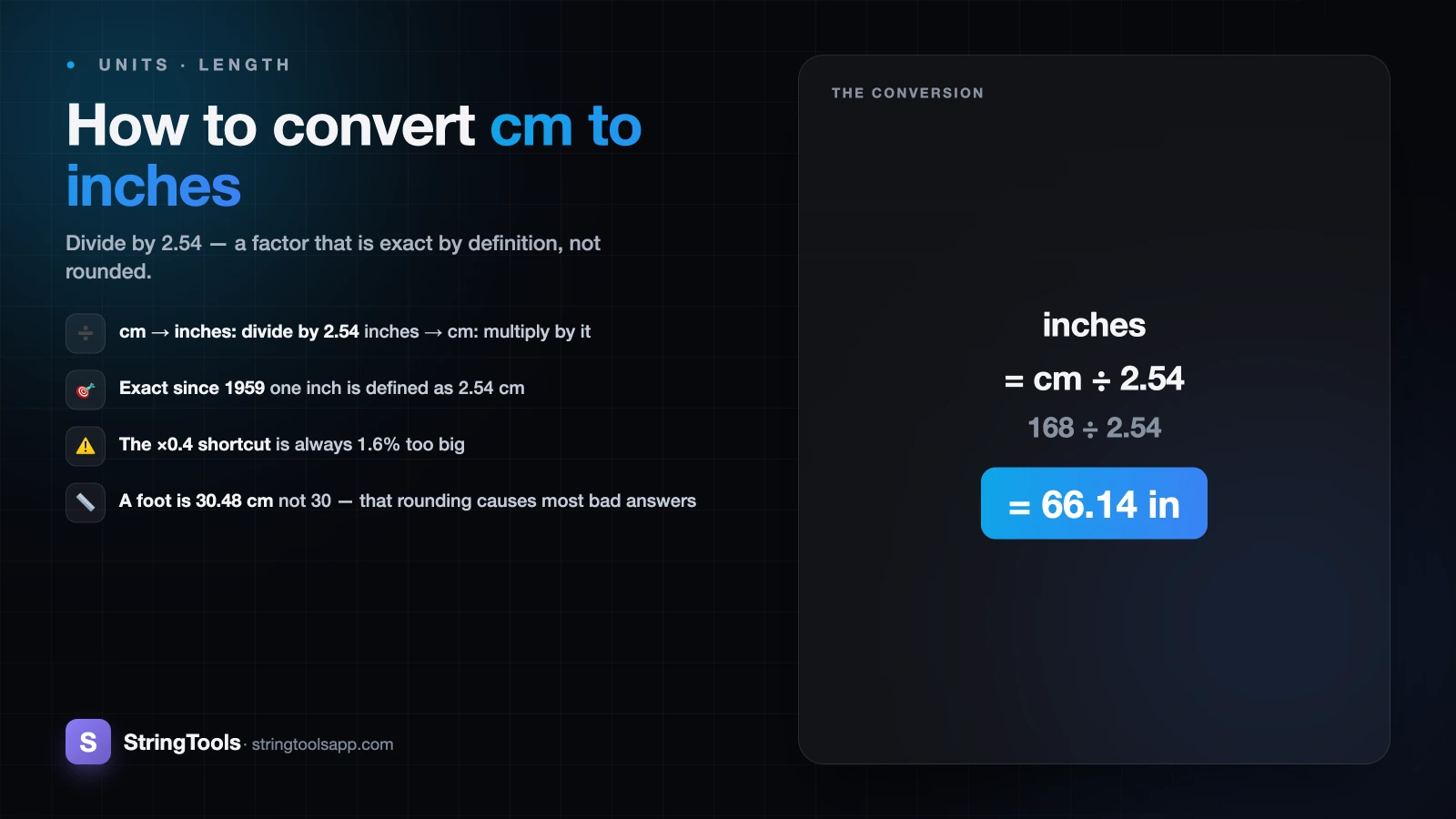
How to Convert cm to Inches (and Back)
How to convert cm to inches: divide by 2.54, exact by definition. Full conversion tables, a cm to feet-and-inches height chart and mental shortcuts.
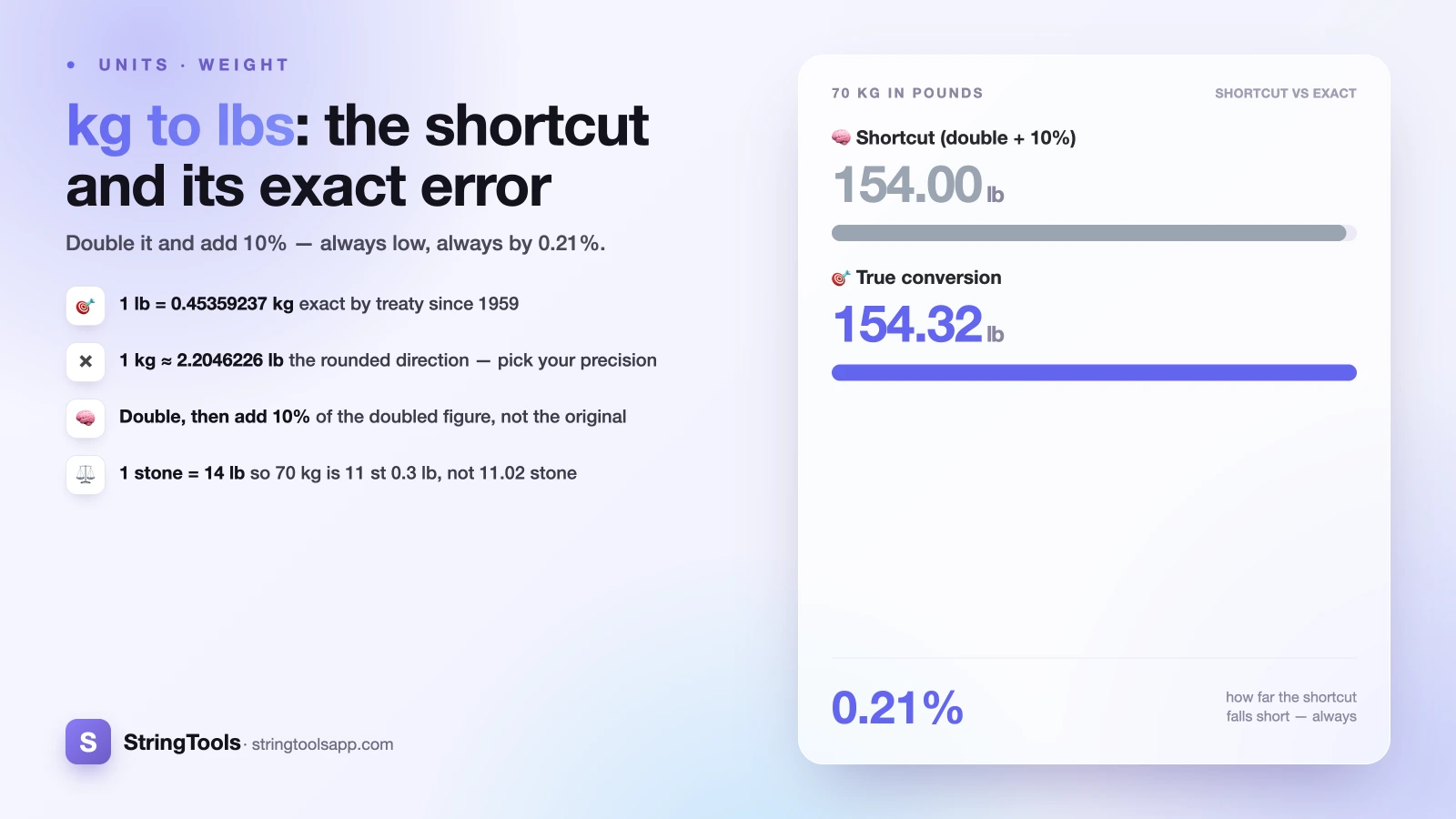
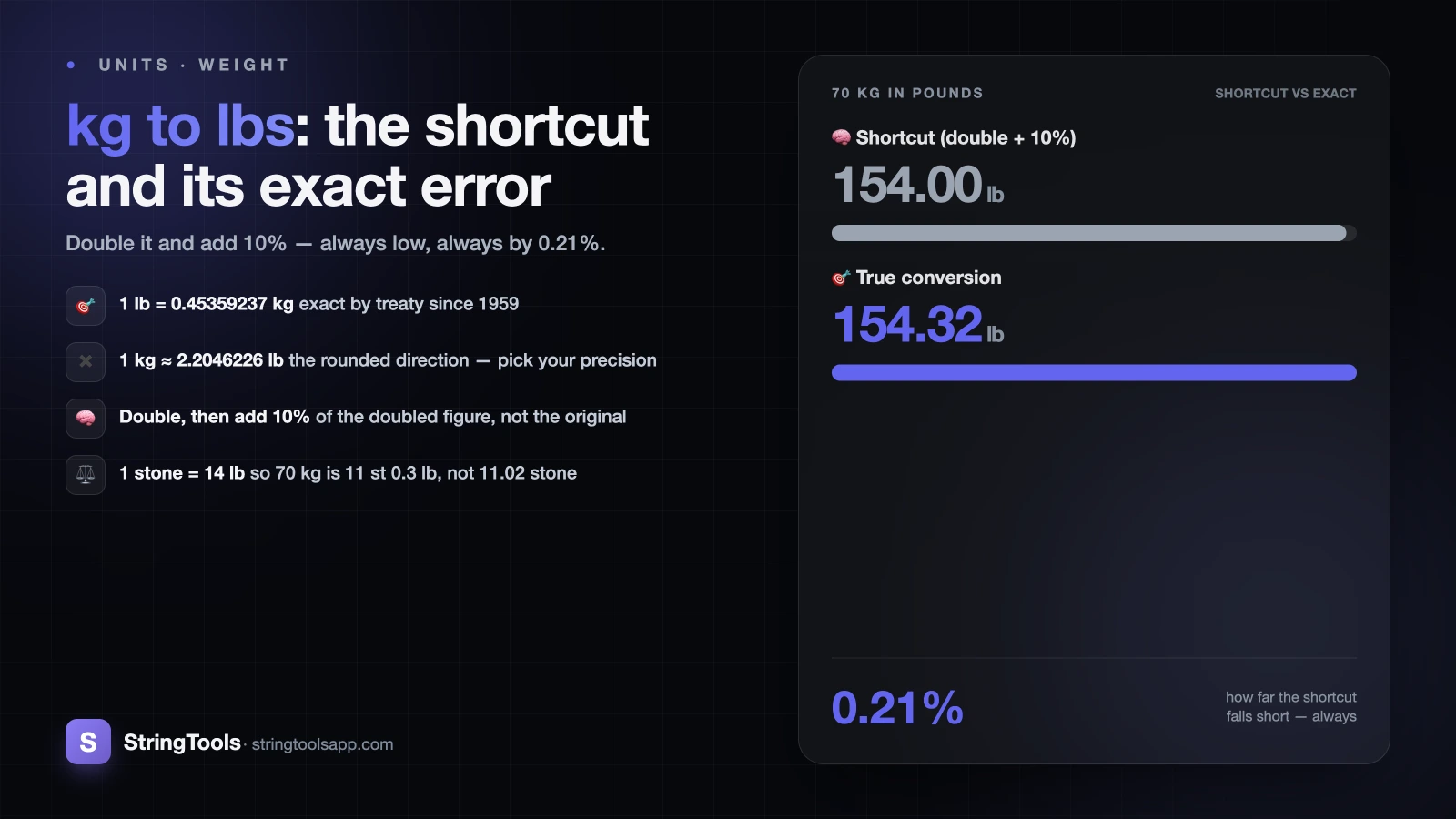
kg to lbs: The Complete Conversion Guide
kg to lbs conversion explained: the exact 0.45359237 factor, a mental shortcut with its error margin, full pound and UK stones-and-pounds tables.
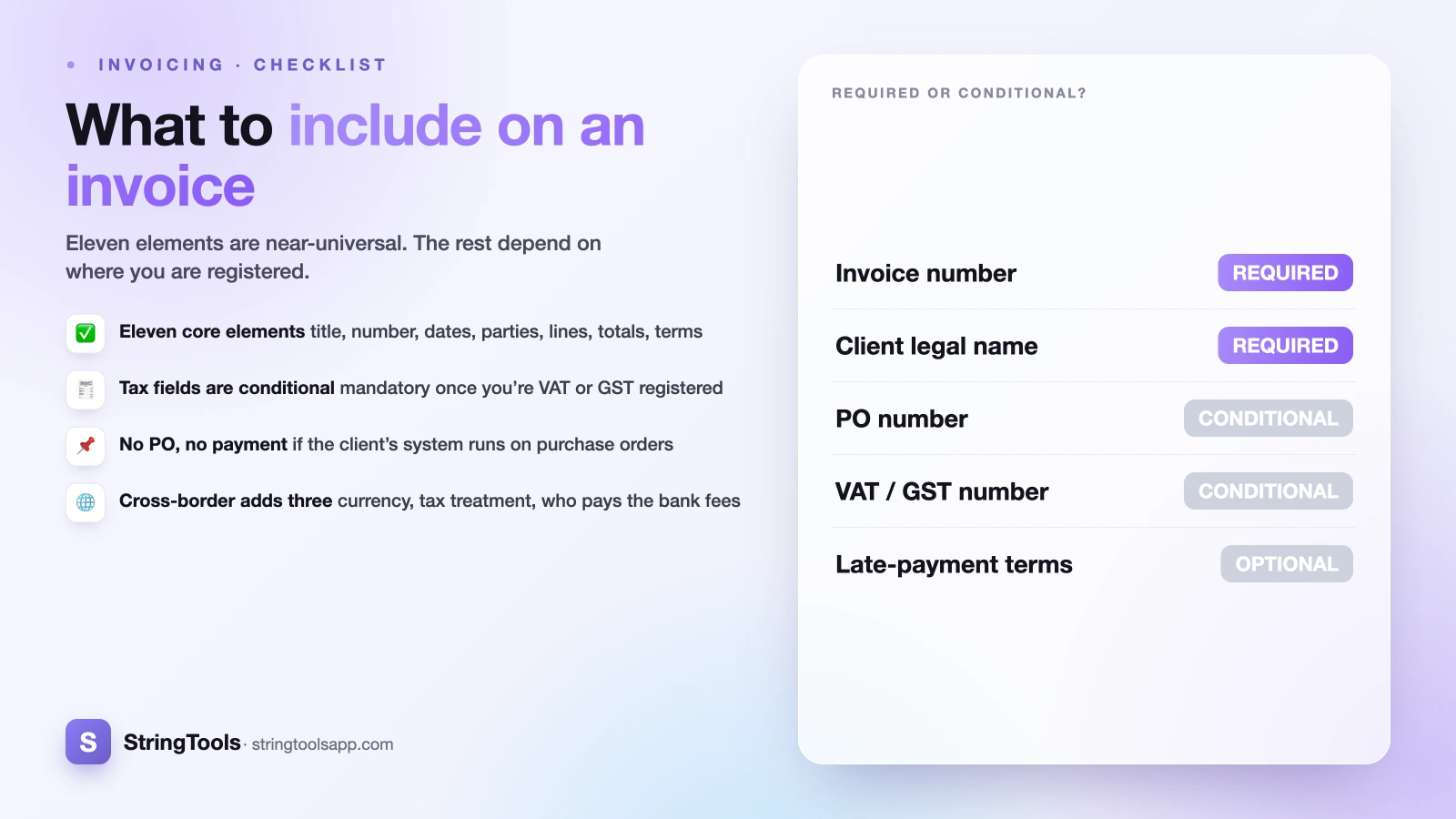
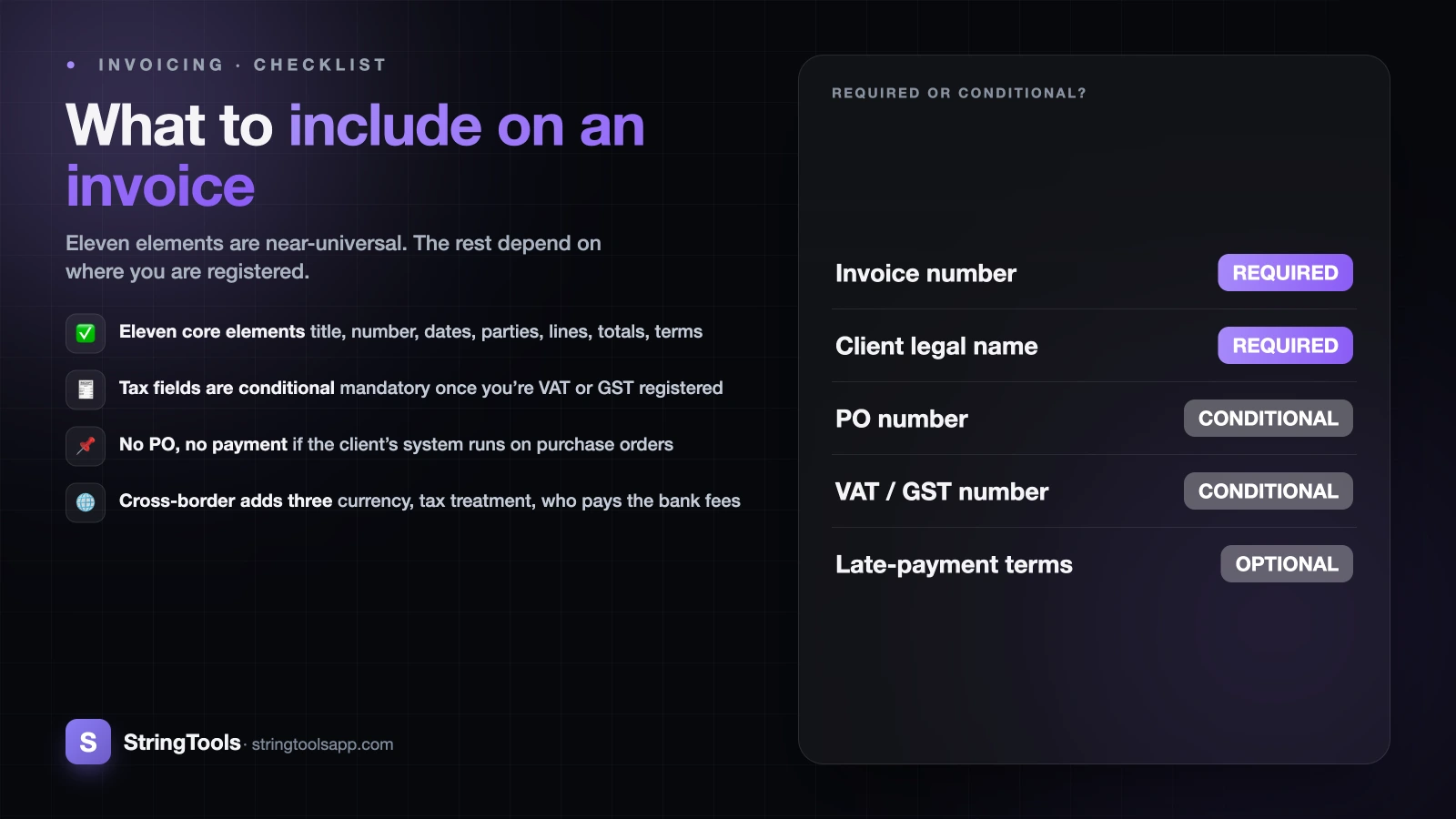
What to Include on an Invoice: The Complete Checklist
What to include on an invoice: a complete checklist of every required and optional element, plus VAT/GST, purchase order and international invoicing rules.
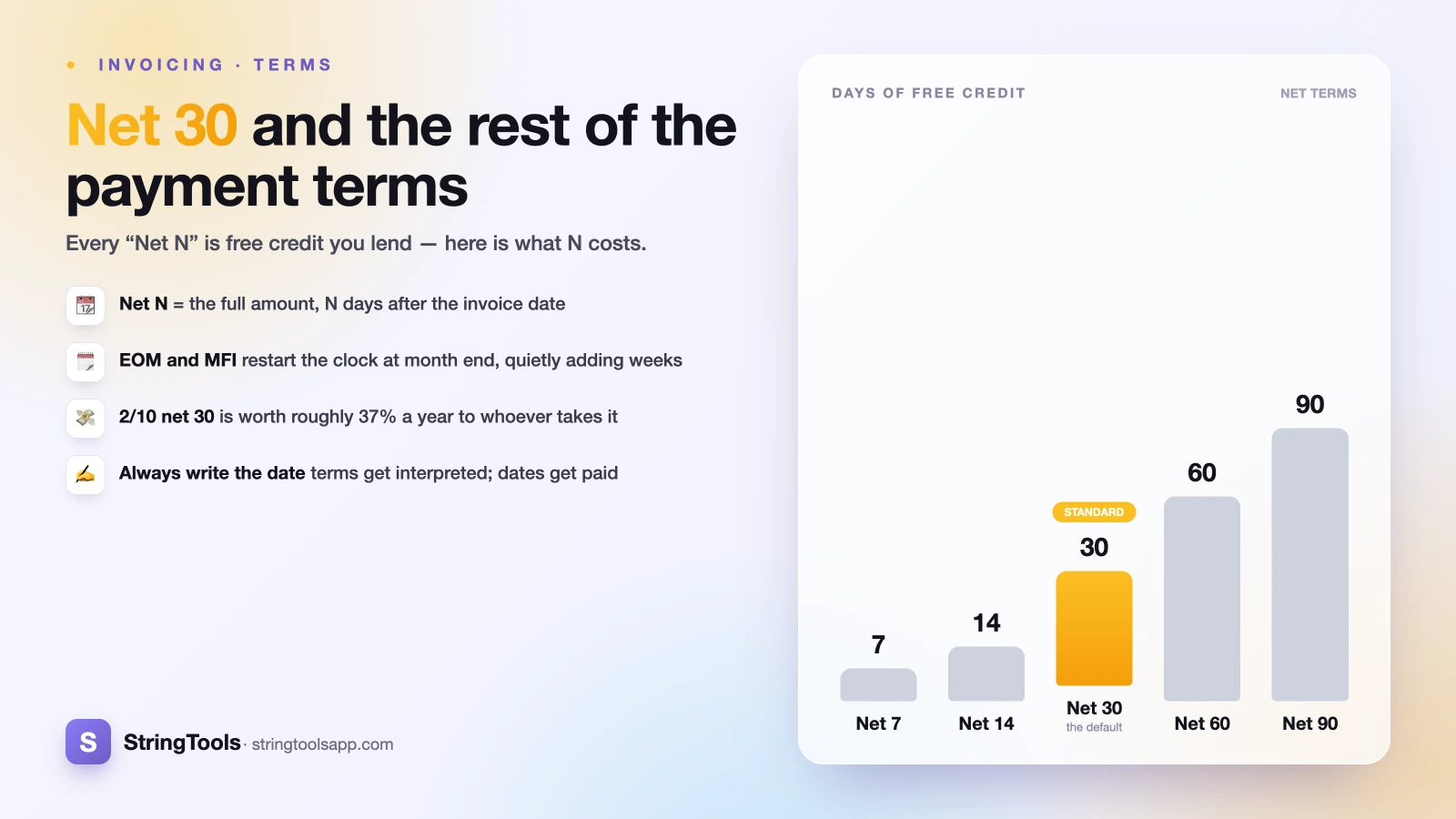
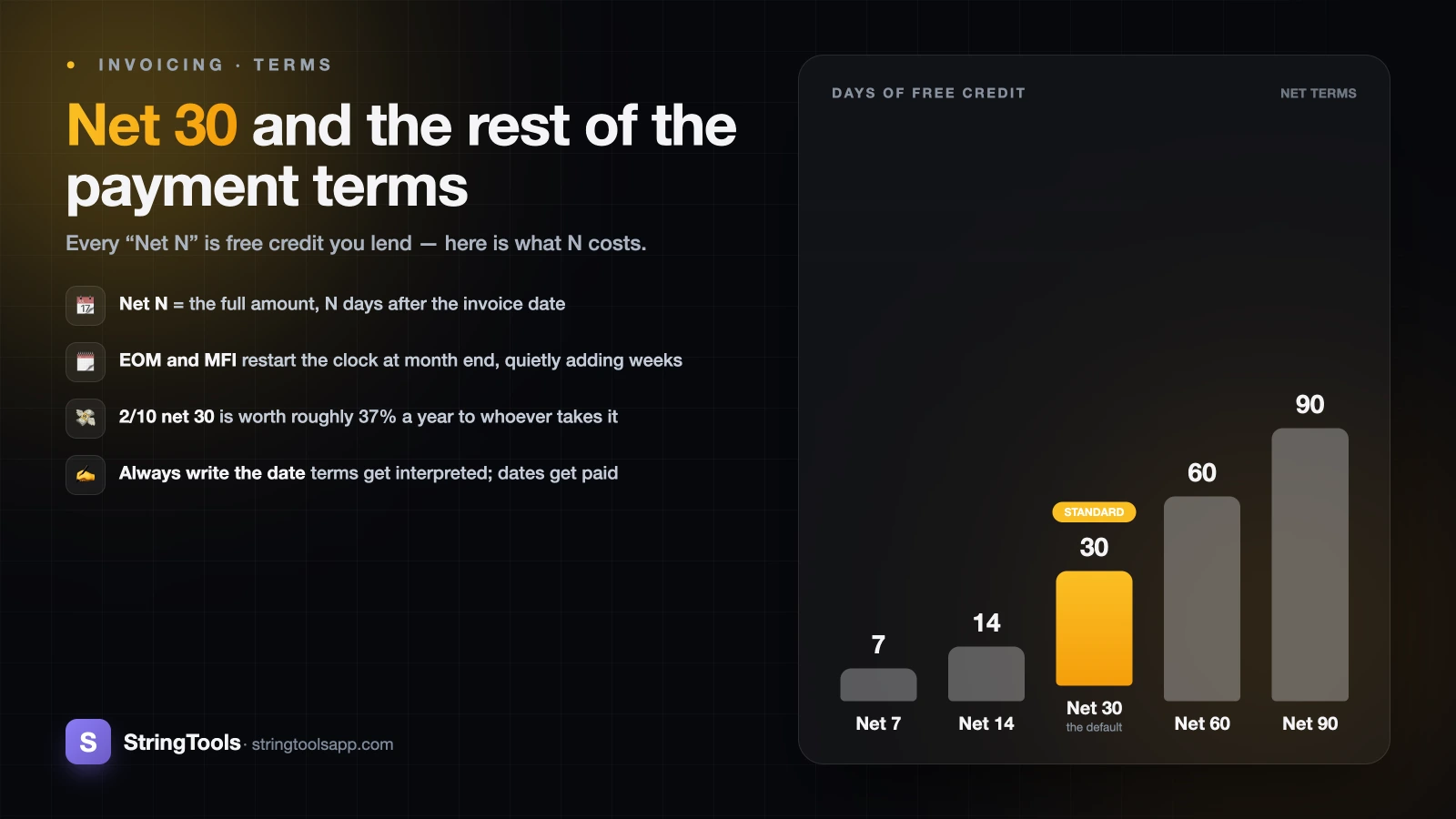
Invoice Payment Terms Explained: Net 30 and the Rest
Invoice payment terms explained: what Net 30, Net 60, due on receipt, EOM and 2/10 net 30 mean, plus the real annualised cost of early-payment discounts.
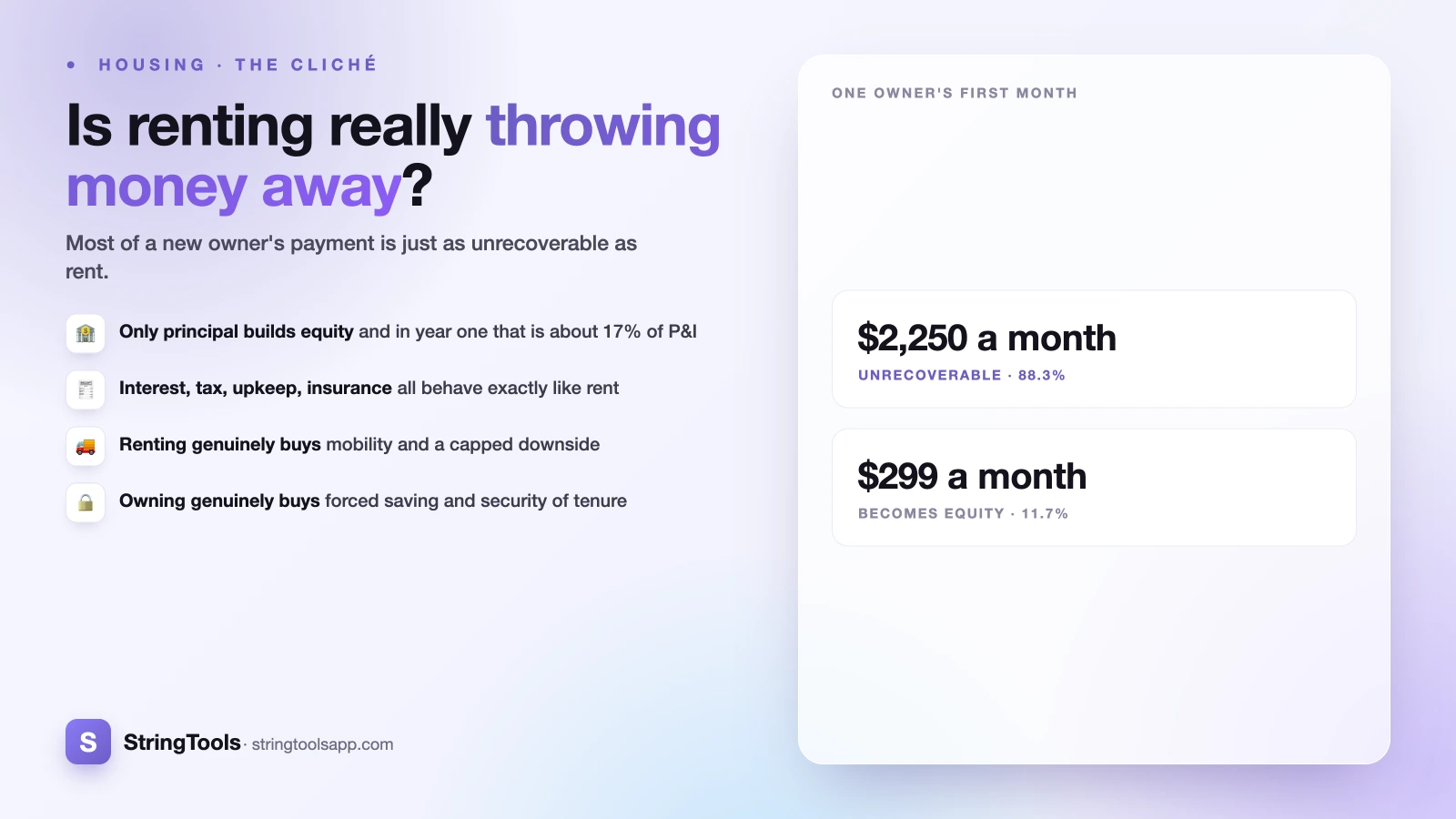
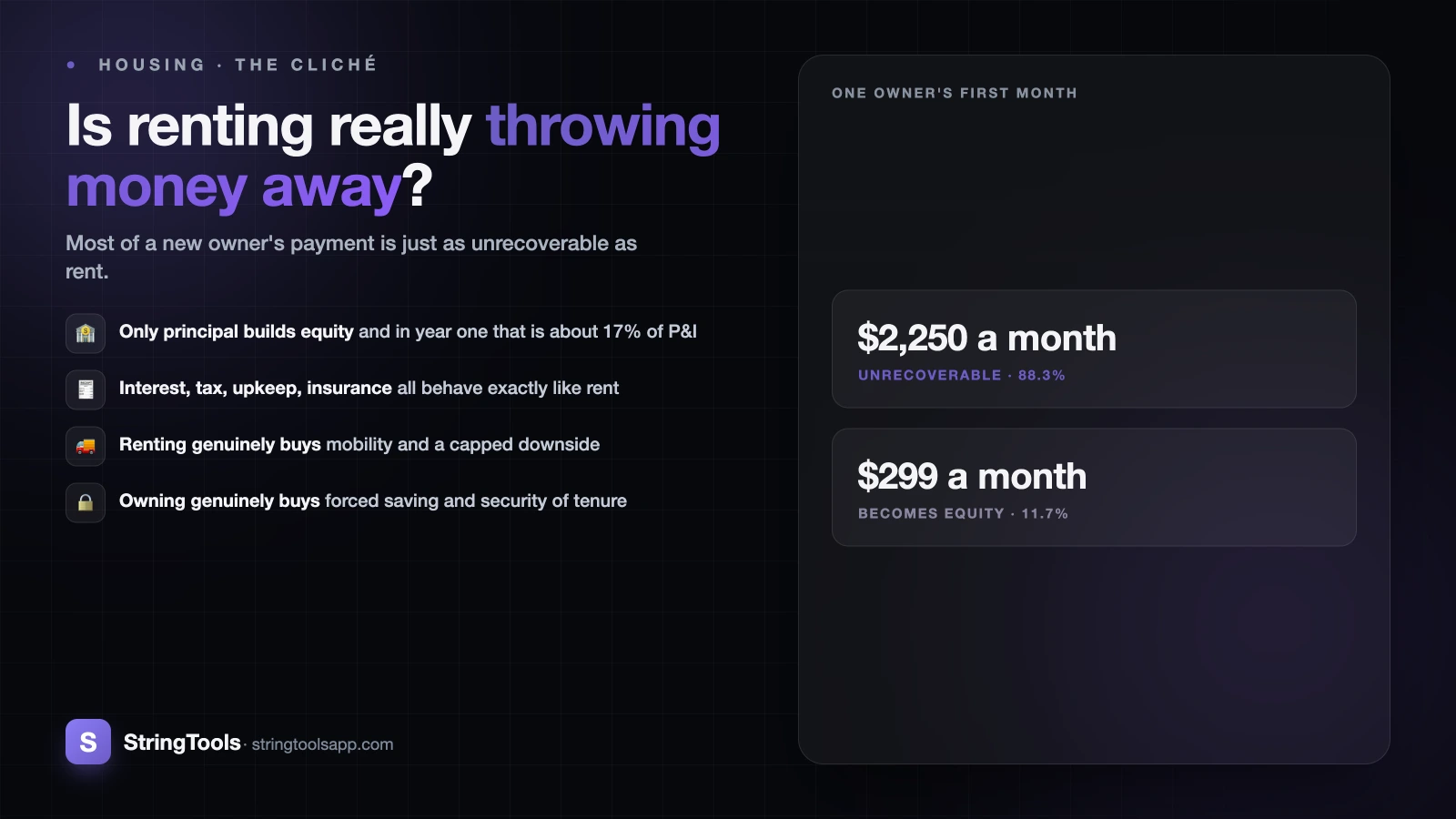
Is Renting Throwing Money Away?
Is renting throwing money away? No — see how much of an owner's payment is also unrecoverable, why early equity is tiny, and how to work out your own answer.
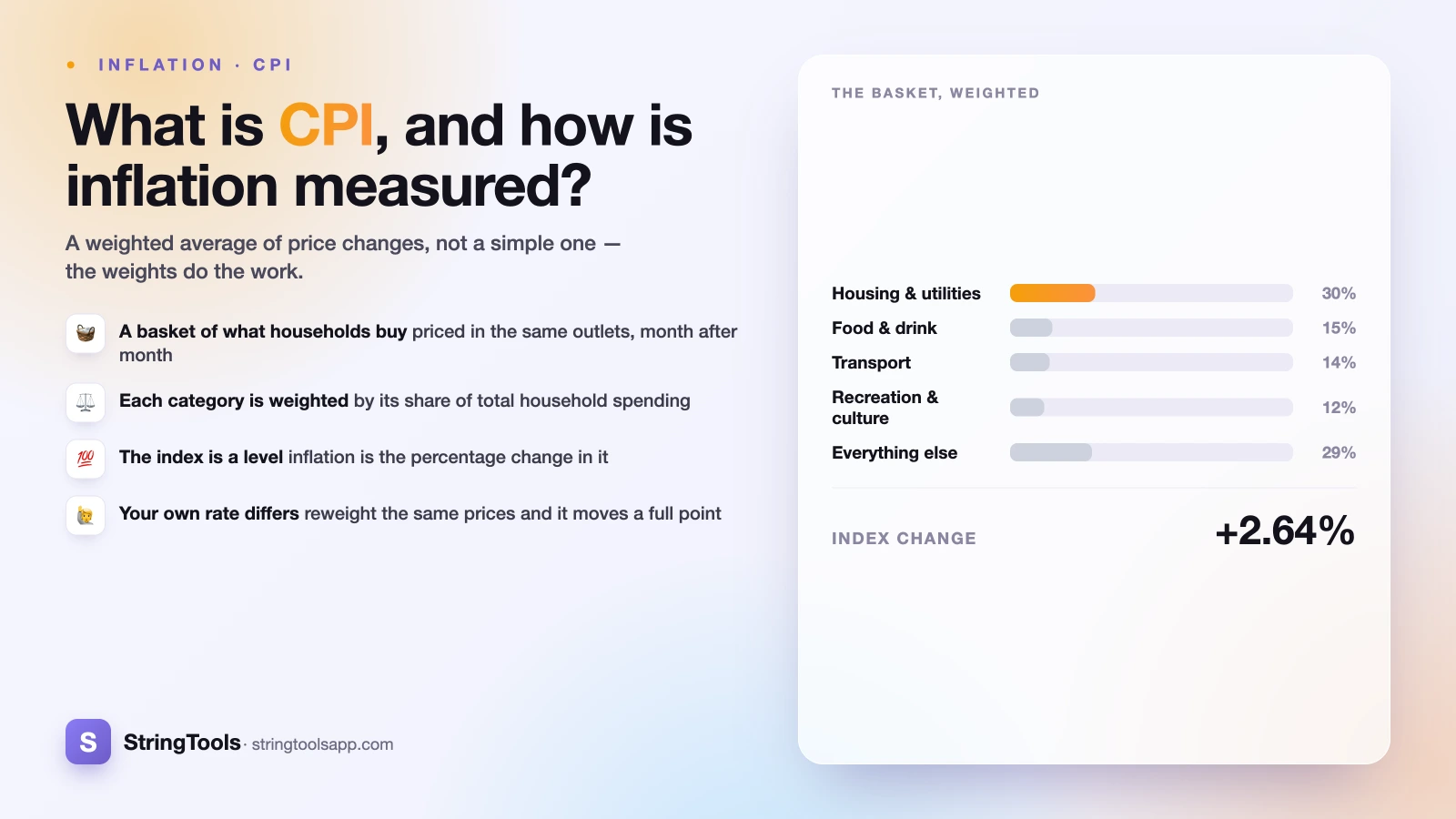
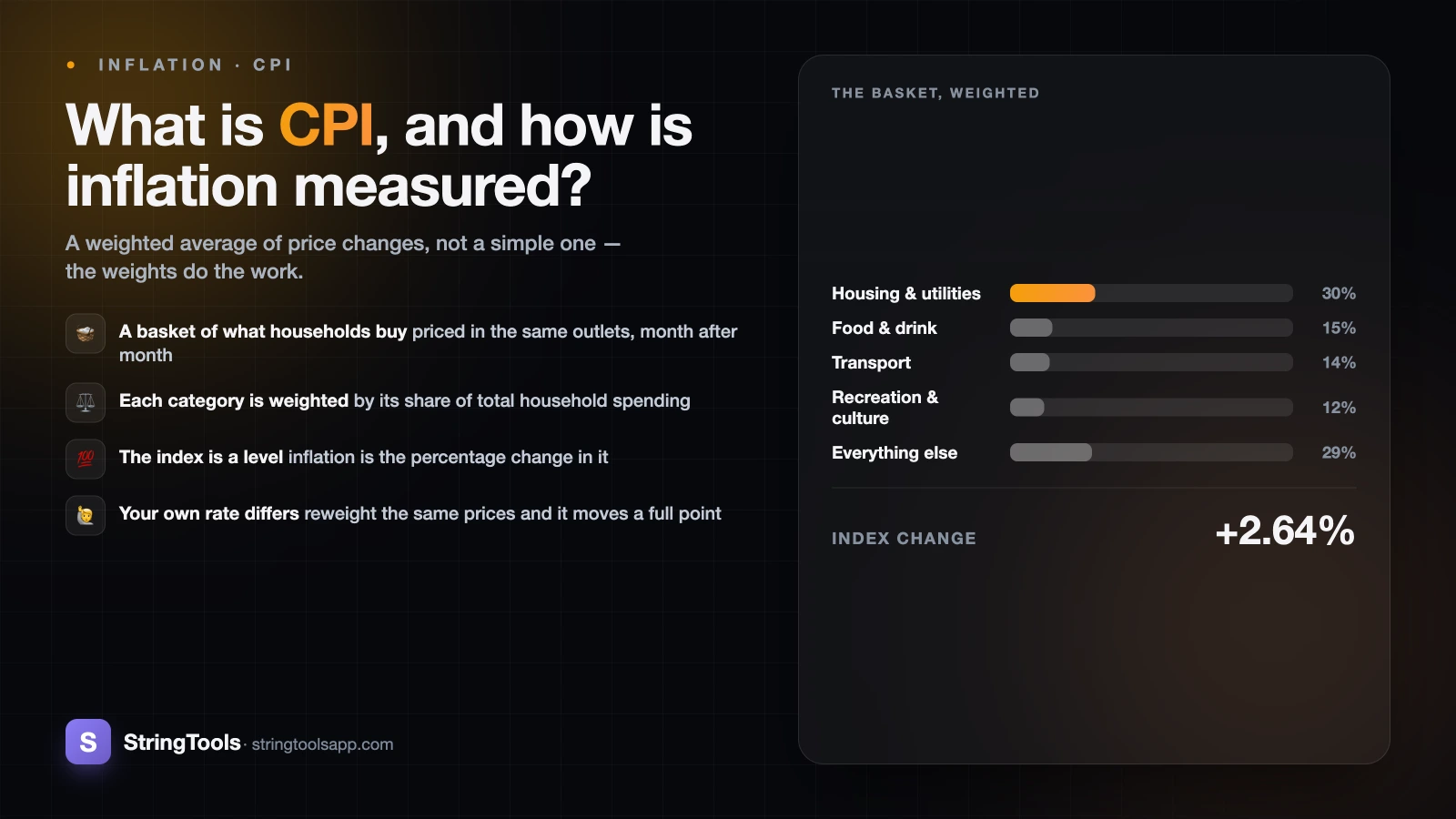
What Is CPI and How Is Inflation Measured?
CPI explained: how inflation is actually measured, from the basket of goods and expenditure weights to index base years and your own personal inflation rate.
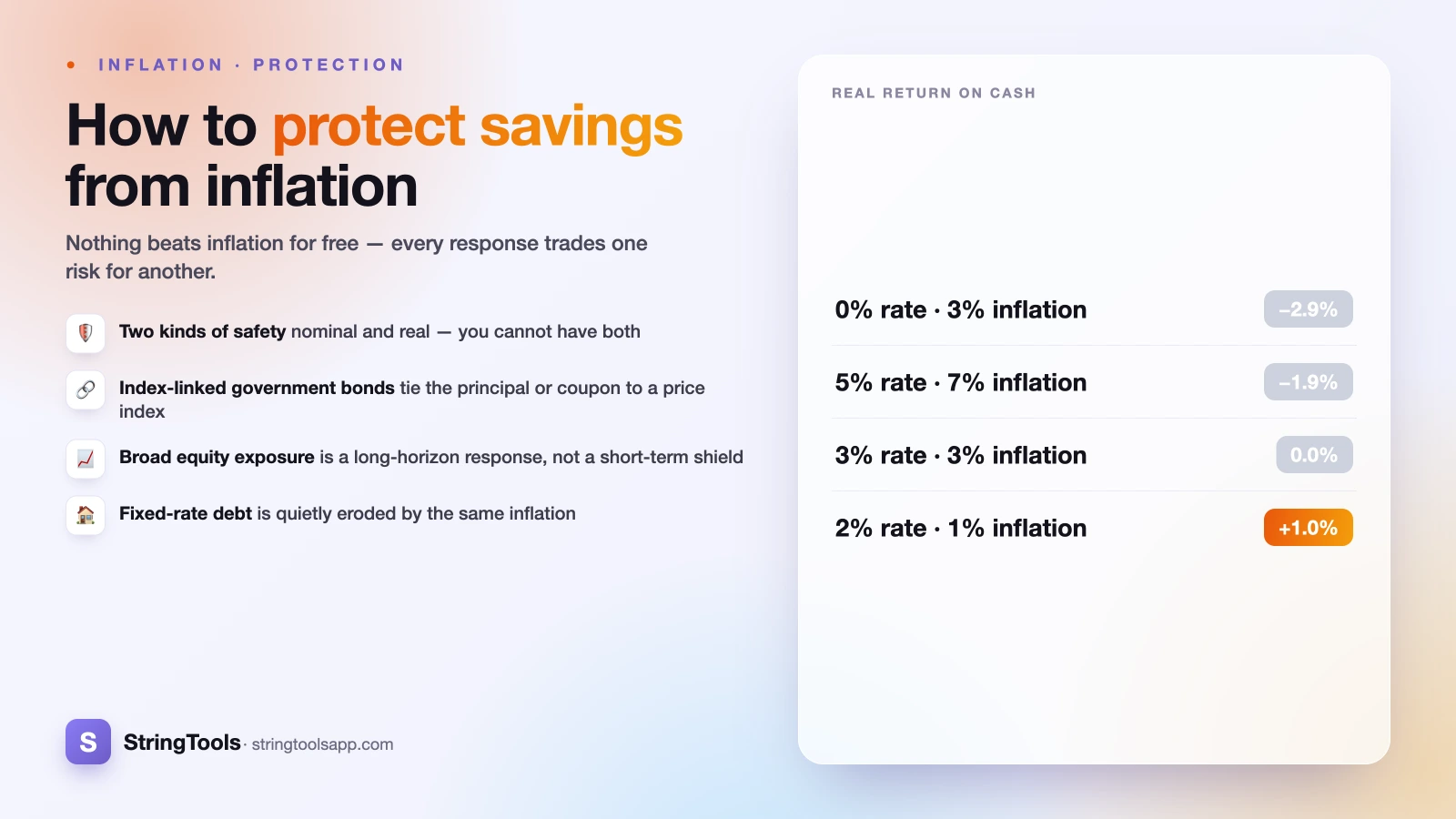
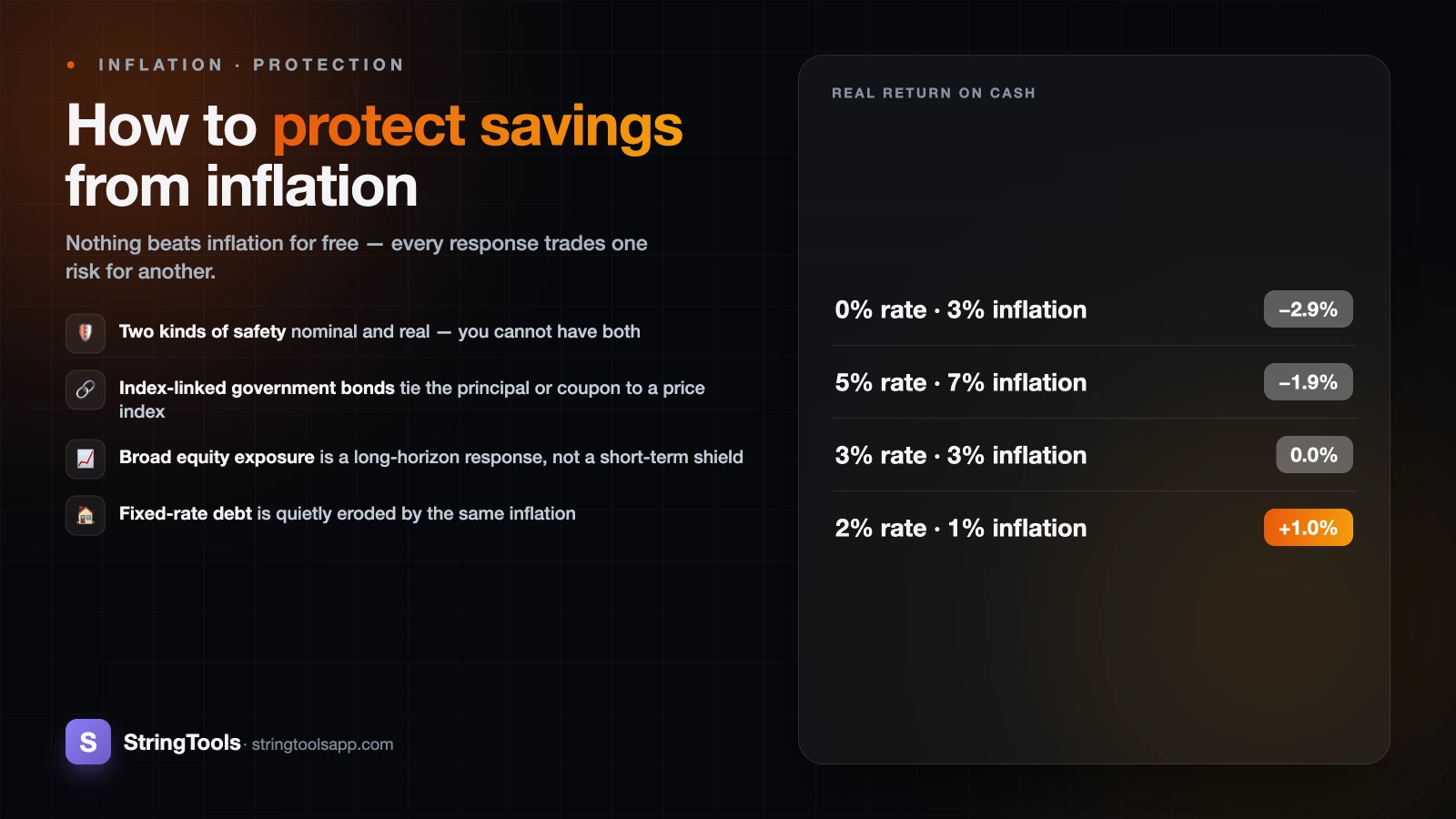
How to Protect Your Savings From Inflation
How to protect savings from inflation: the four realistic response categories, the risk each one introduces, and why an emergency fund stays in cash anyway.


UTC vs GMT vs Your Time Zone, Explained
UTC, GMT, and local time confuse senior developers. Learn the real differences, why servers store UTC, how ISO 8601 works, and why DST breaks offset math.


How to Count Macros: A Practical Beginner's Guide
Counting macros explained: what protein, carbs and fat cost in calories, how to set a split from your calorie target, and how to track without obsessing.


Celsius to Fahrenheit: The Formula and the Shortcuts
Celsius to Fahrenheit explained: the exact formula, reference tables for weather, body and oven temperatures, and mental shortcuts that actually work.
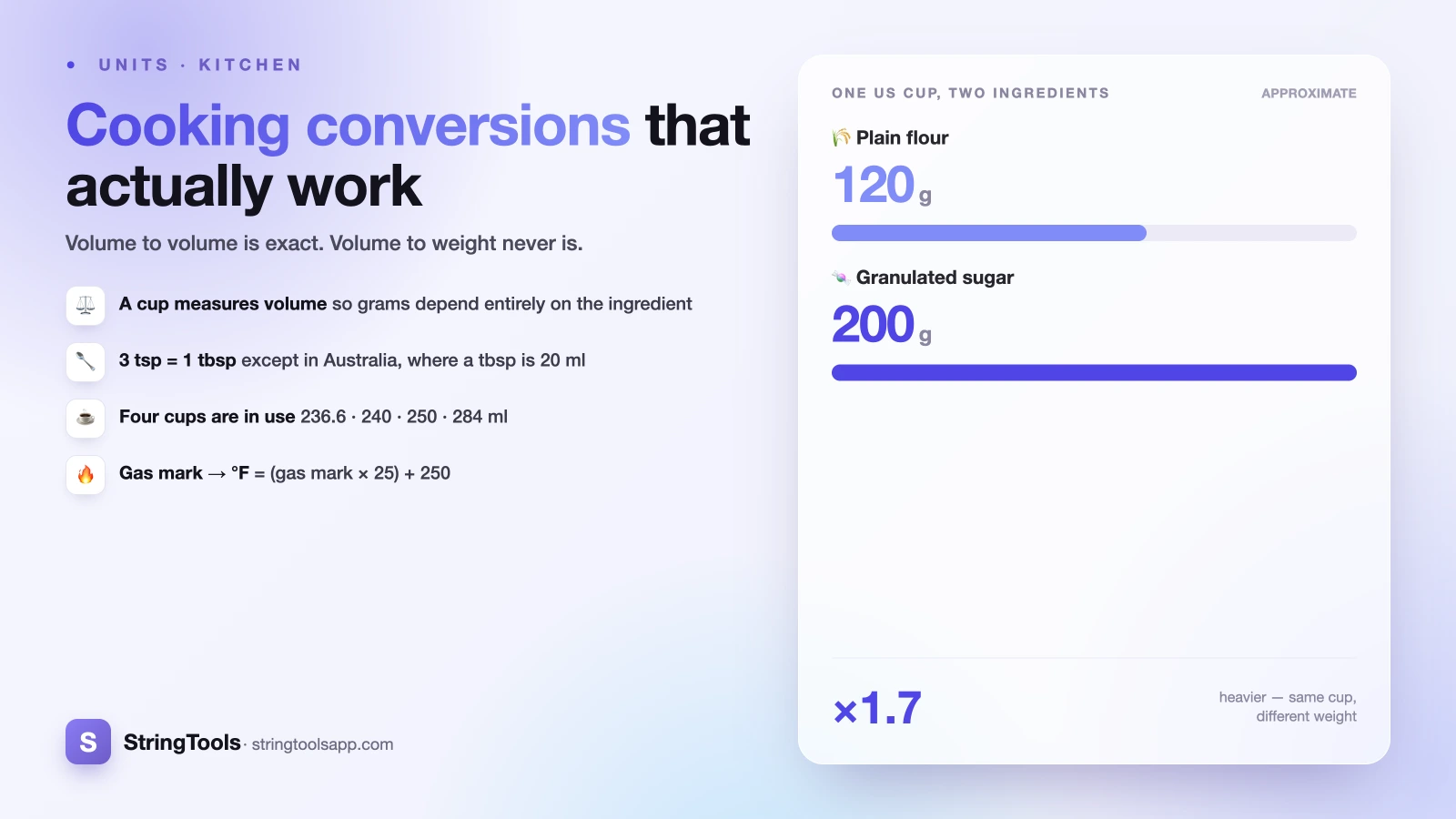
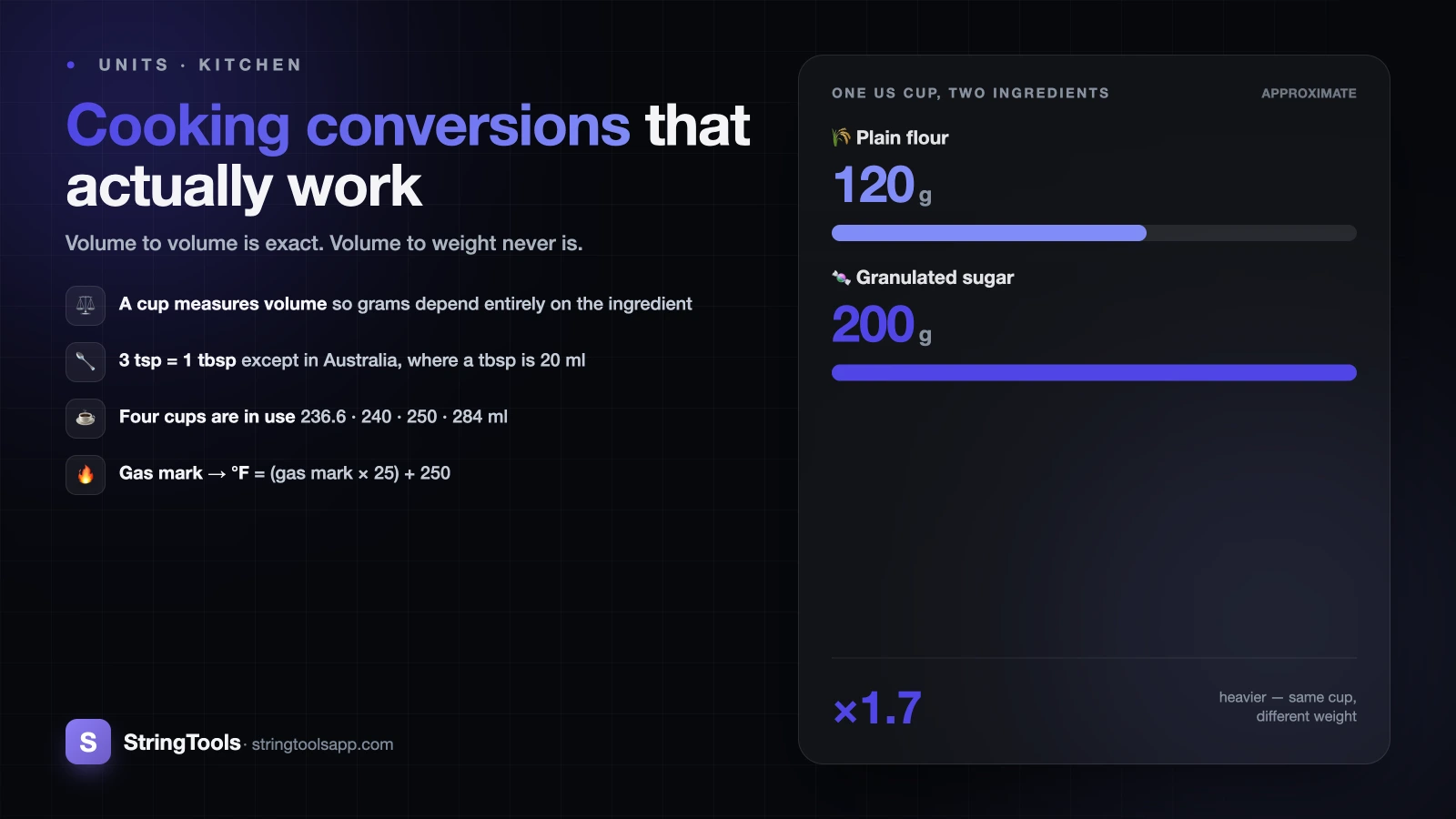
Cooking Measurement Conversions That Actually Work
Cooking measurement conversions done right: exact cup, spoon and millilitre tables, approximate cup-to-gram weights by ingredient, and oven gas marks.
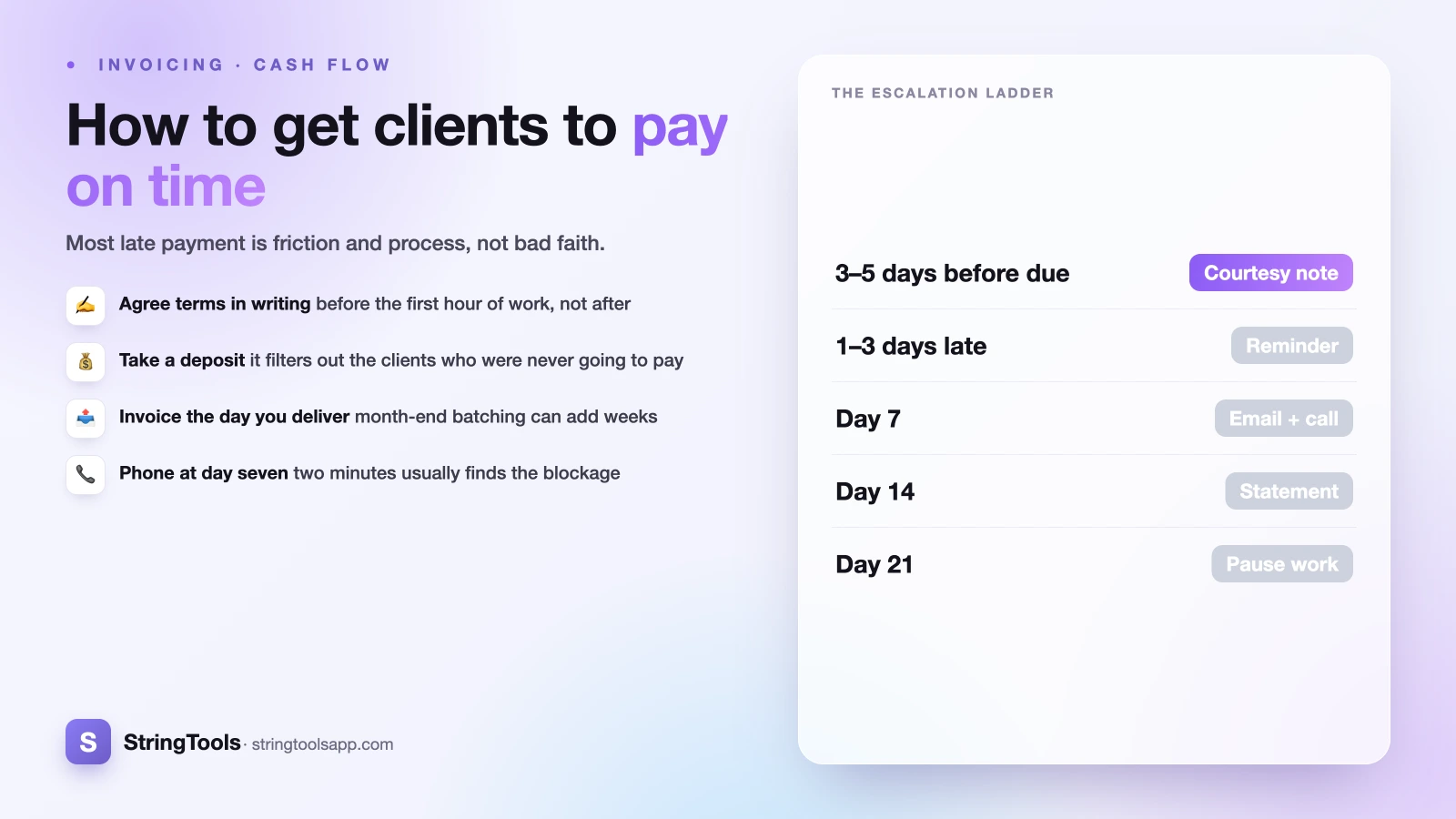
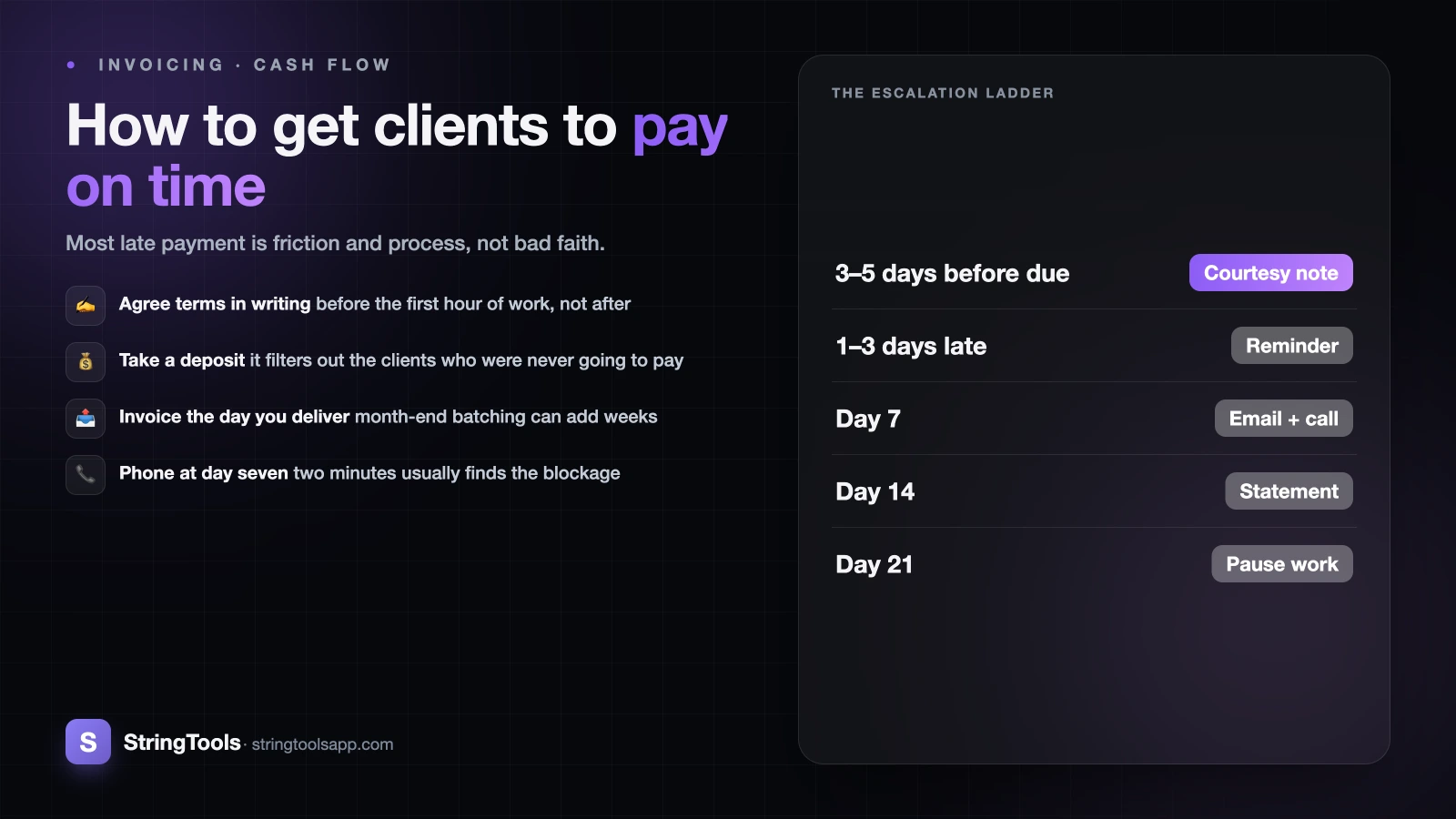
How to Get Clients to Pay on Time
How to get clients to pay on time: agree terms in writing, take a deposit, invoice the same day, and follow a calm escalation ladder that actually works.
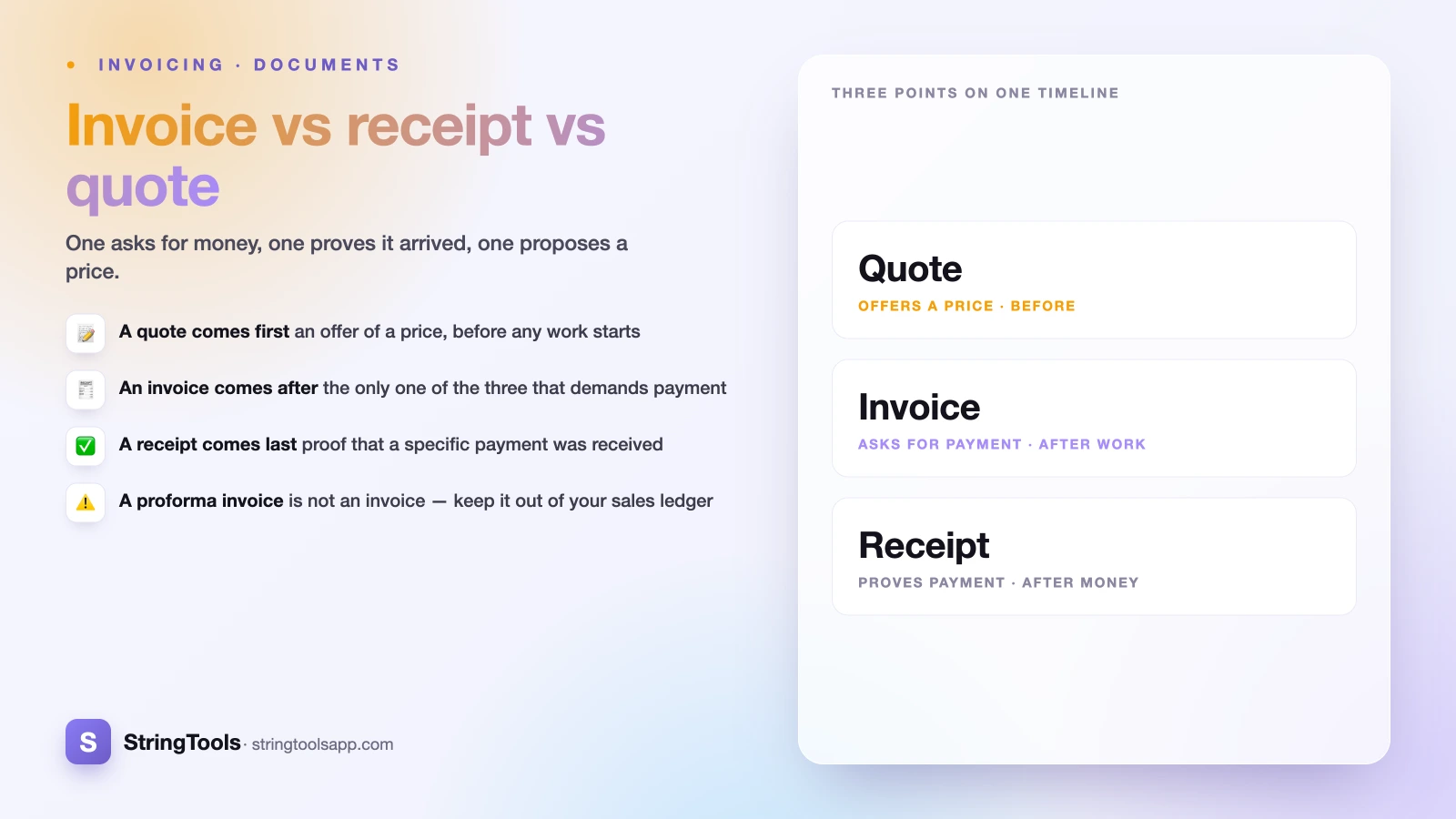
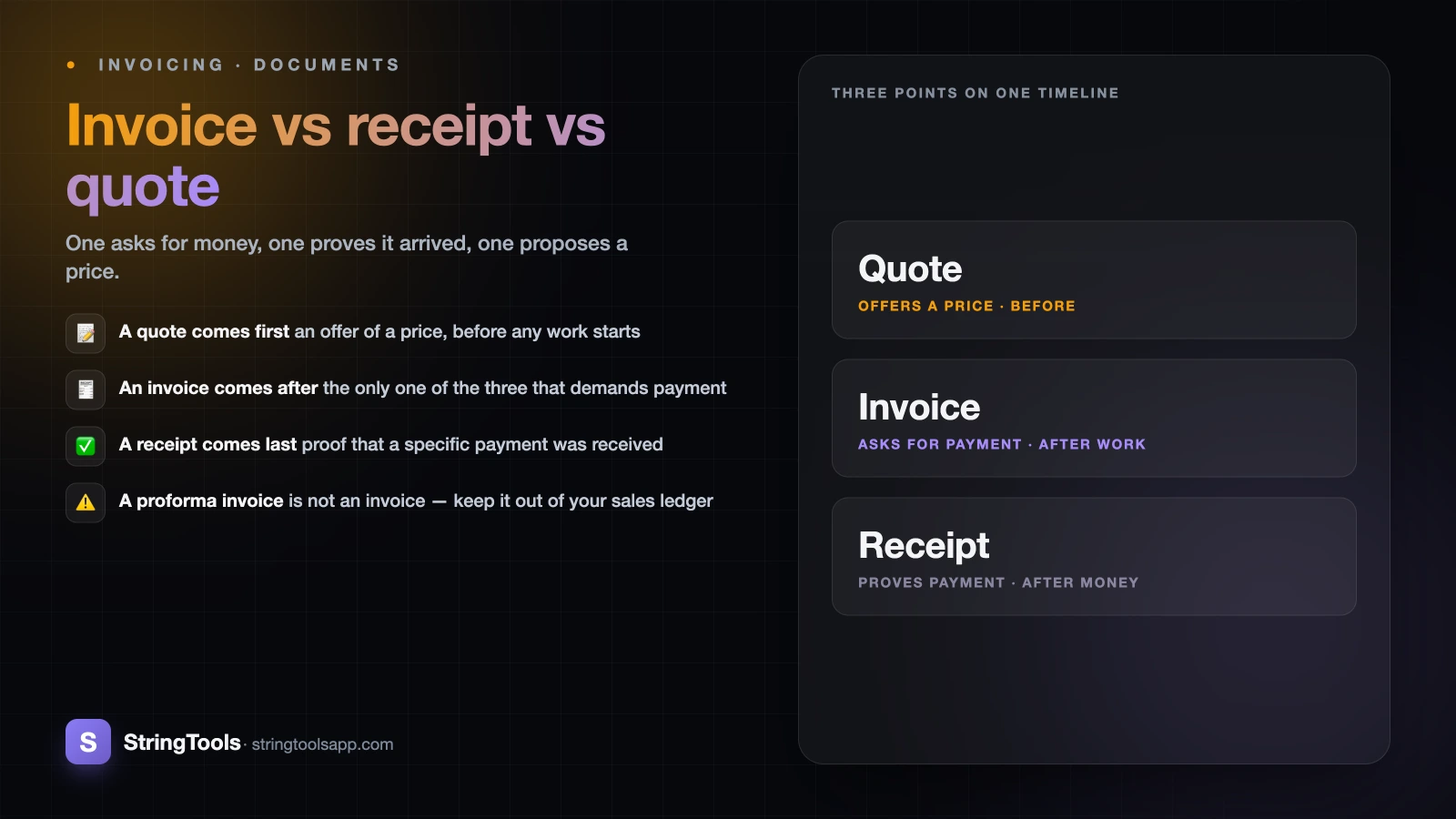
Invoice vs Receipt vs Quote: What's the Difference?
Invoice vs receipt vs quote, explained plainly: an invoice asks for payment, a receipt proves it, a quote offers a price. Plus proforma invoices and POs.
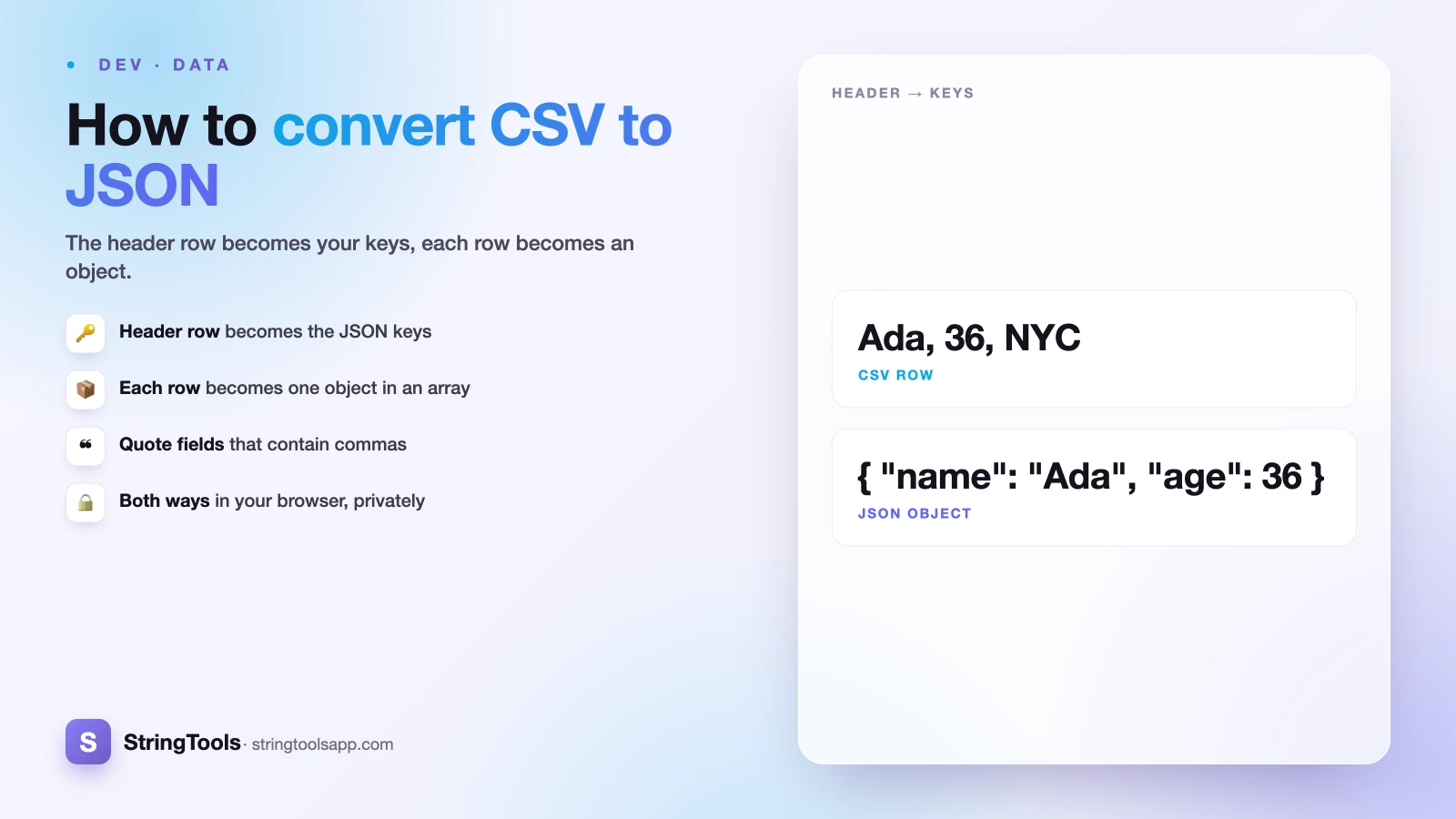
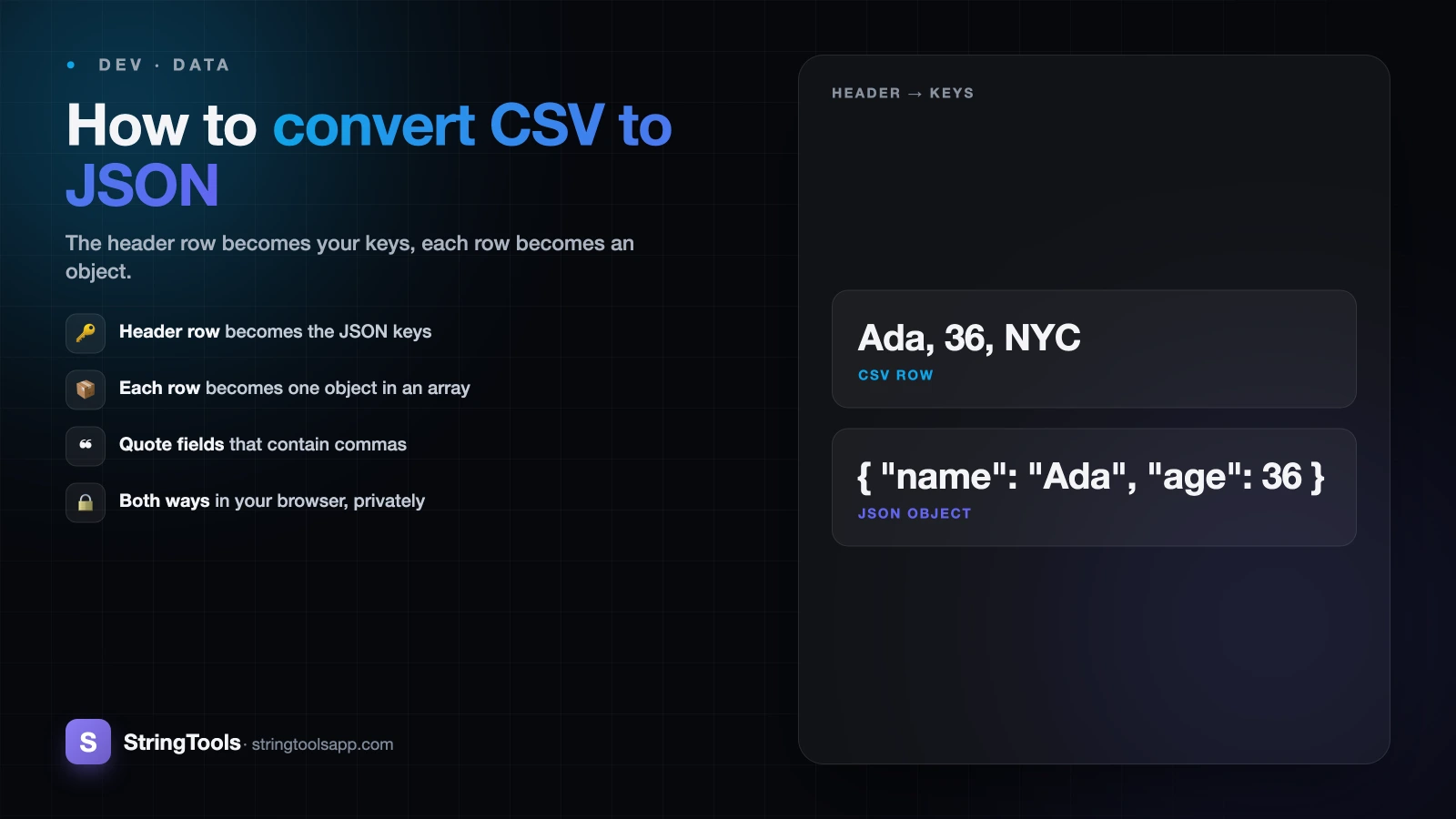
How to Convert CSV to JSON (the Right Way)
Learn to convert CSV to JSON correctly: how headers become keys, how to handle commas, quotes, delimiters, blank cells, typing, and Excel encoding pitfalls.
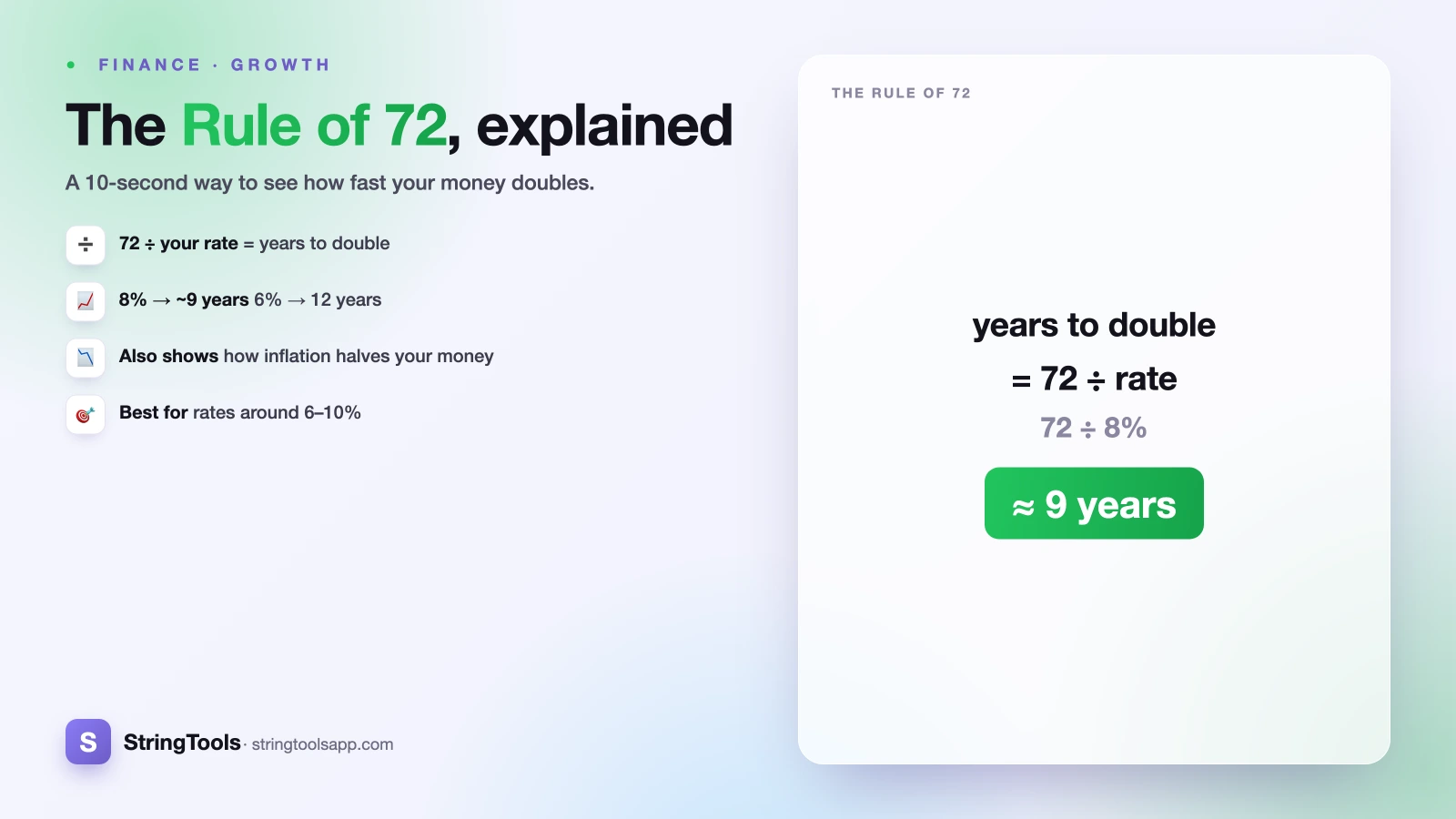
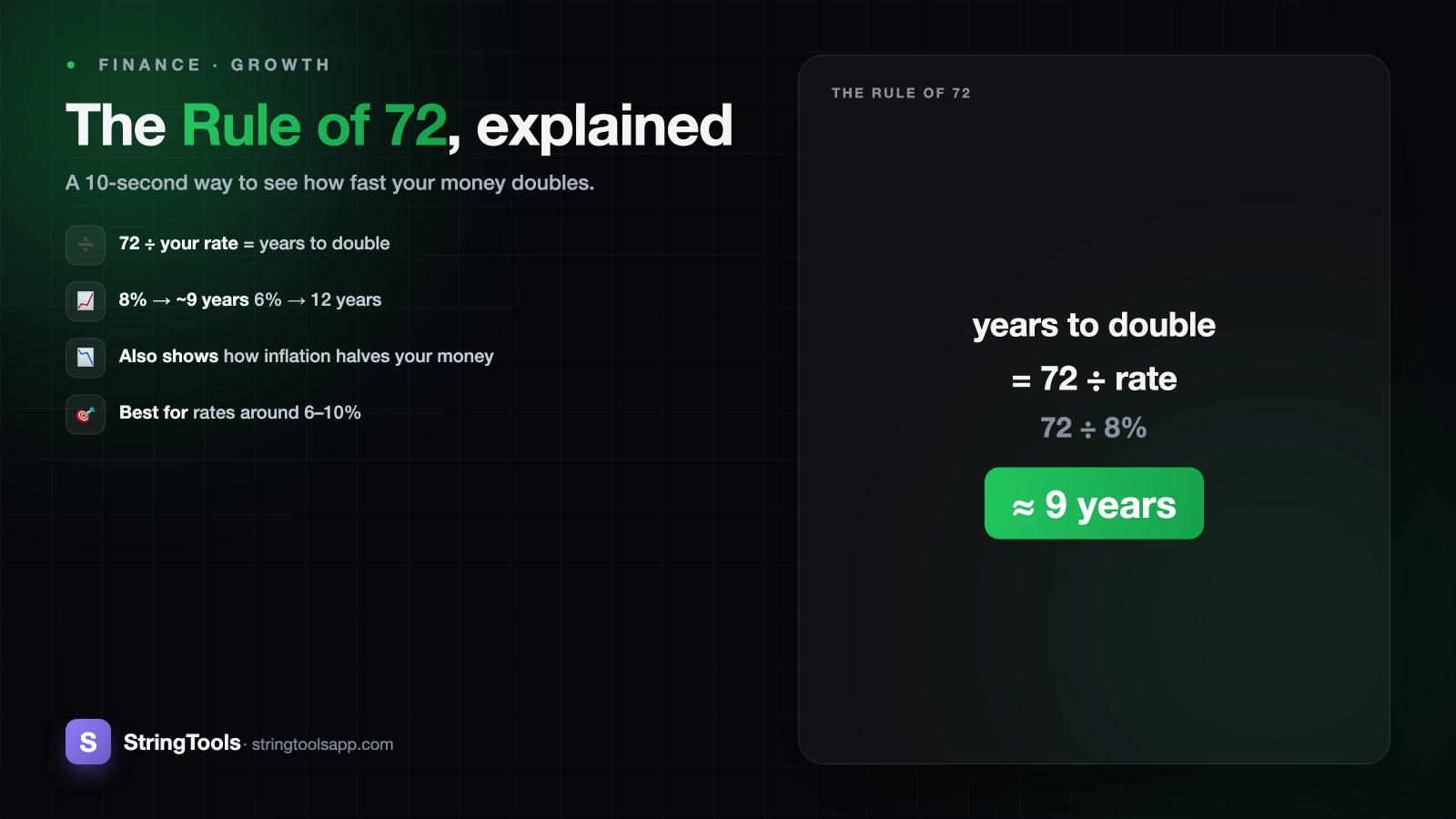
The Rule of 72, Explained (How Money Doubles)
The Rule of 72 is a 5-second mental shortcut for how fast your money doubles at any rate. Learn the math, worked examples, and its limits.
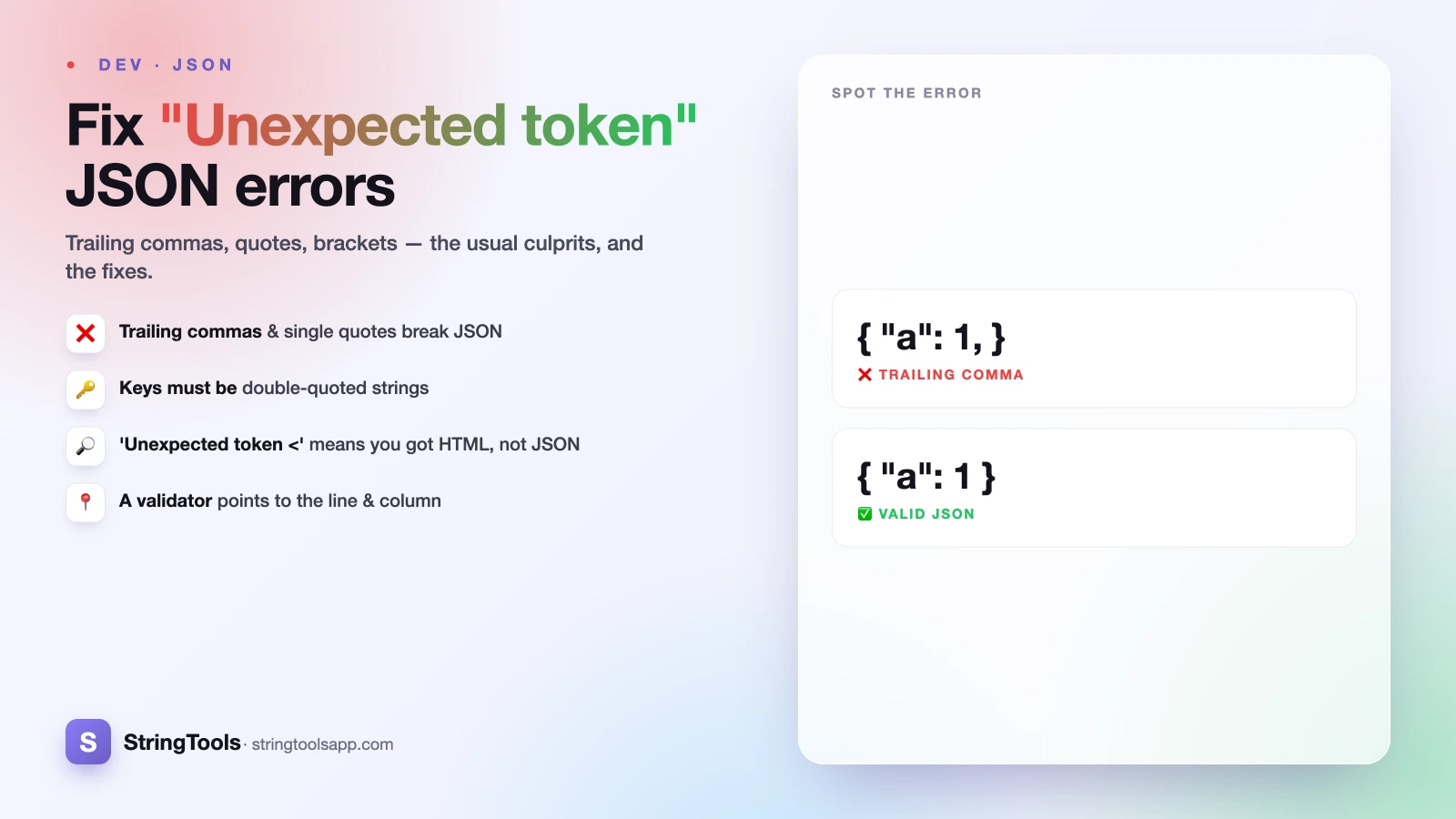
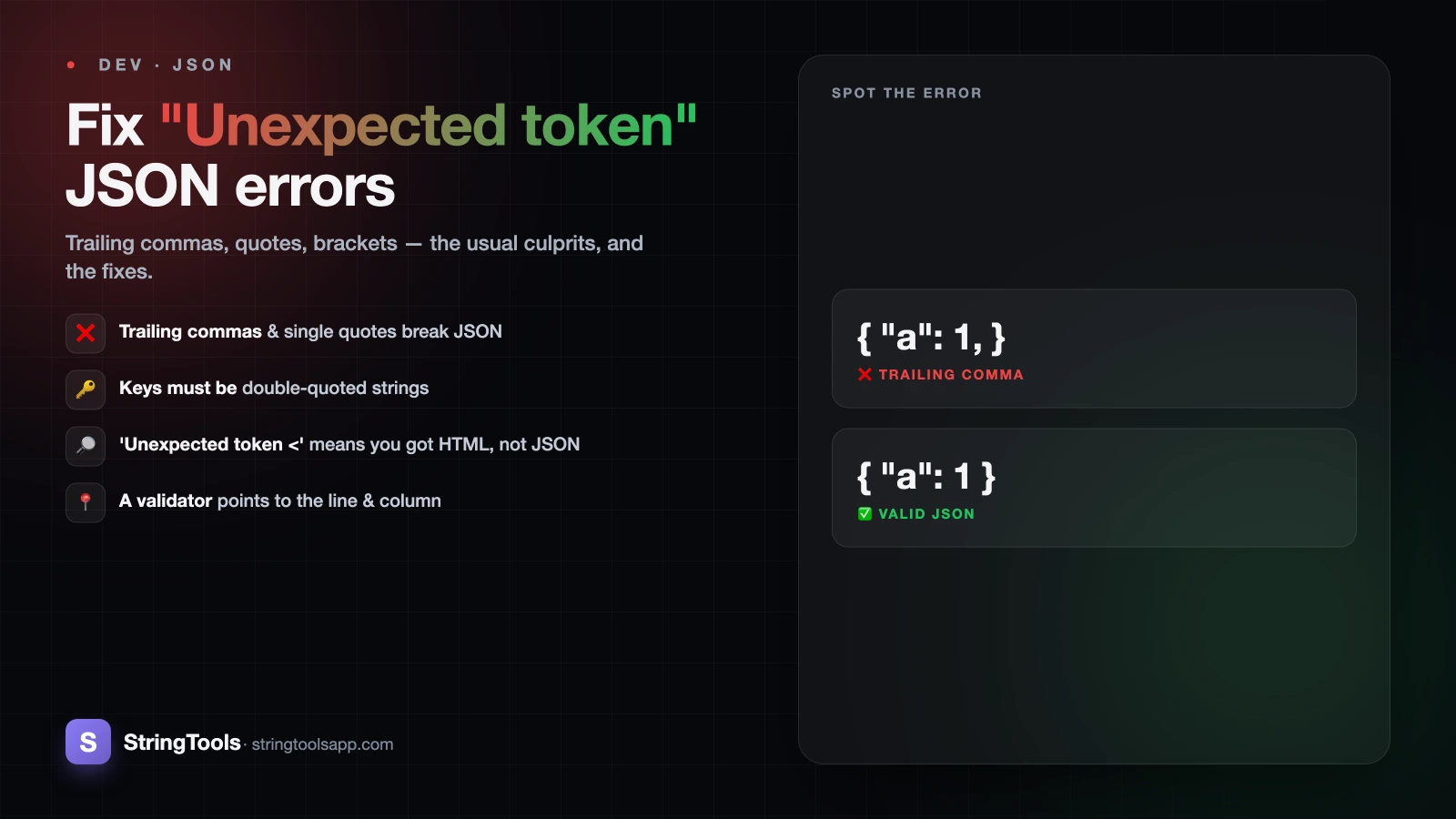
How to Fix "Unexpected Token" JSON Syntax Errors
"Unexpected token in JSON" errors have a handful of common causes. Here's how to read the line and column a validator gives you and fix each one fast.
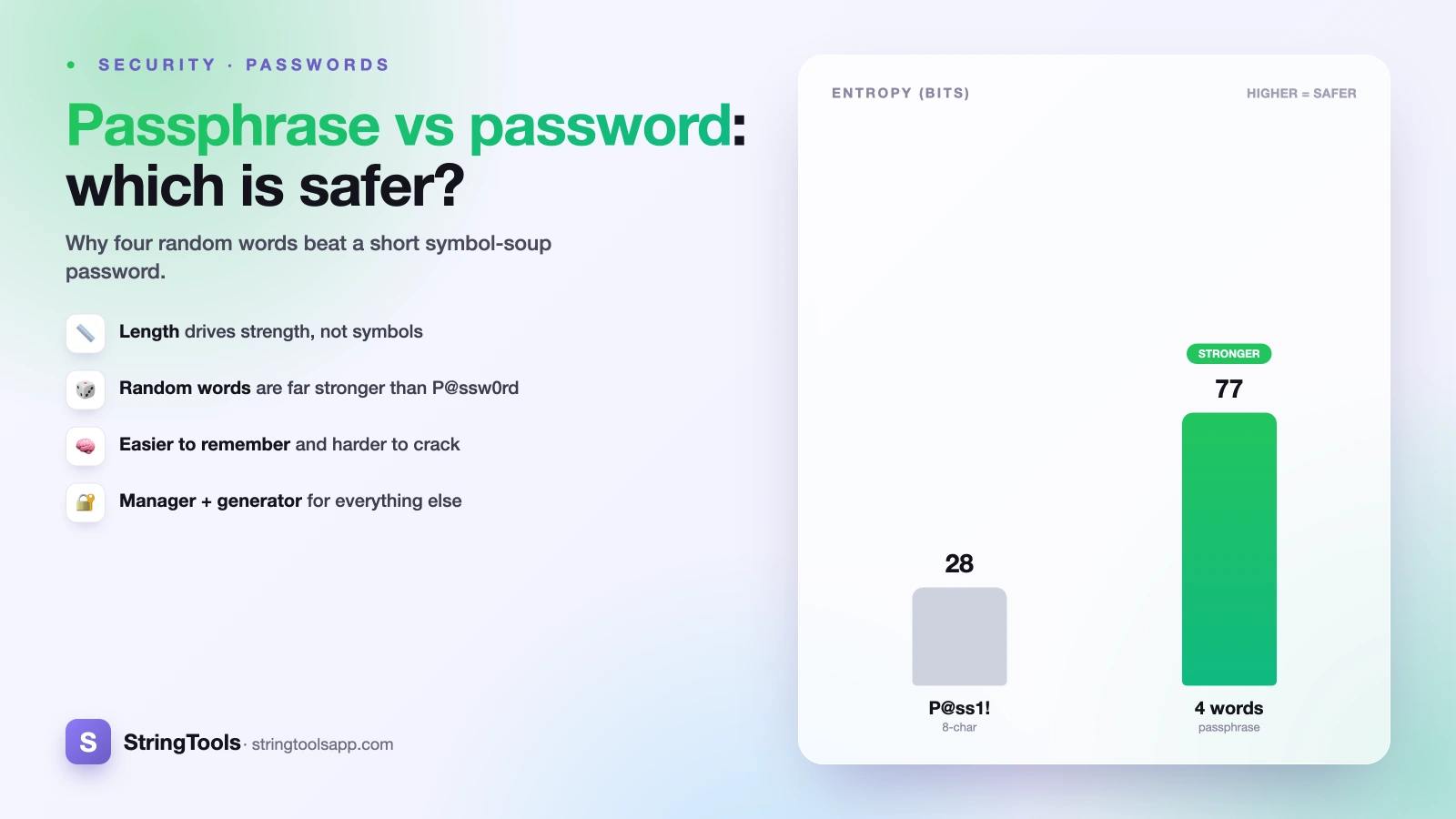
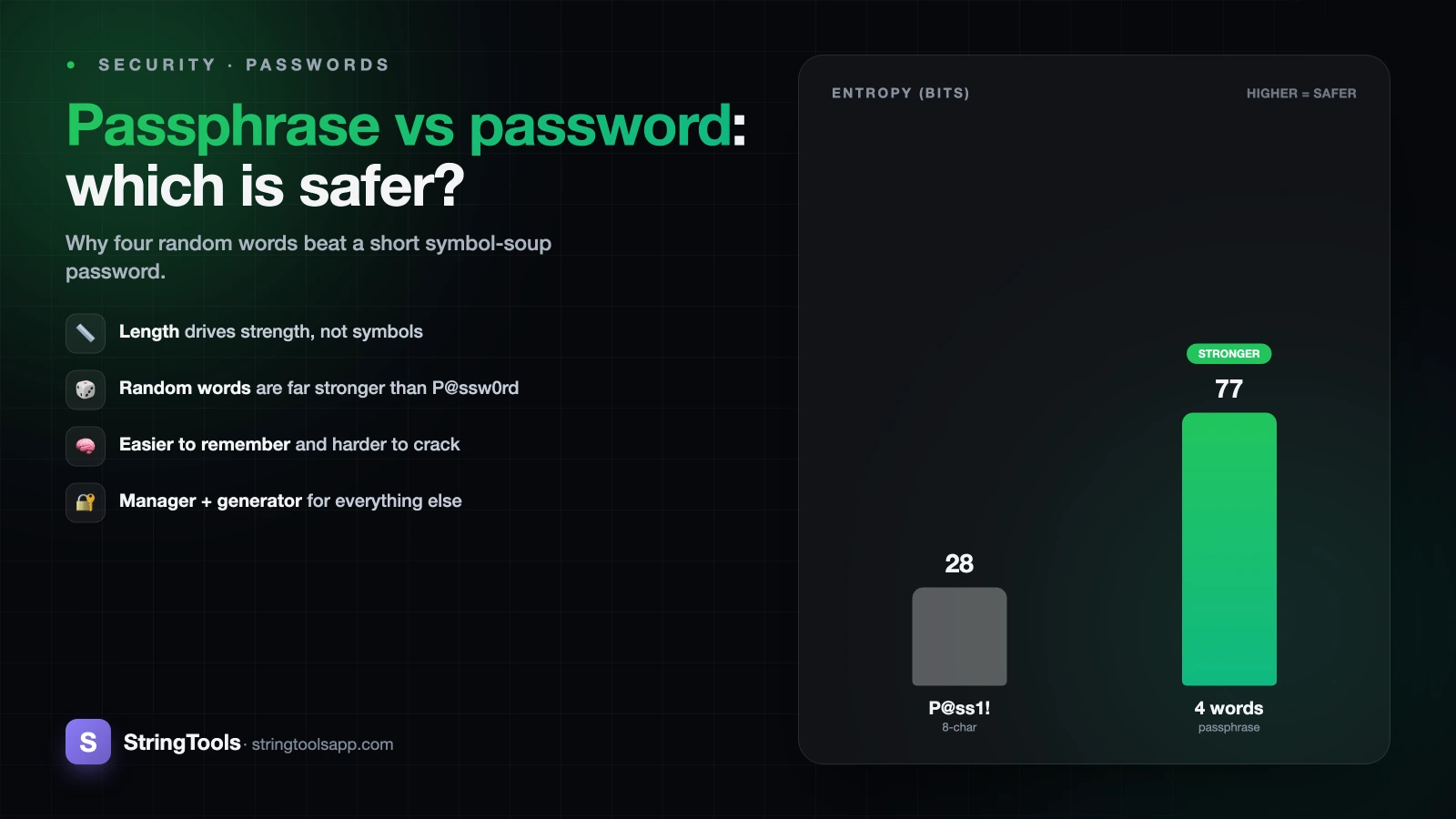
Passphrase vs Password: Which Is Safer?
A passphrase of random words can beat a short symbol-heavy password on both strength and memorability. Here is why length wins and when to use each.
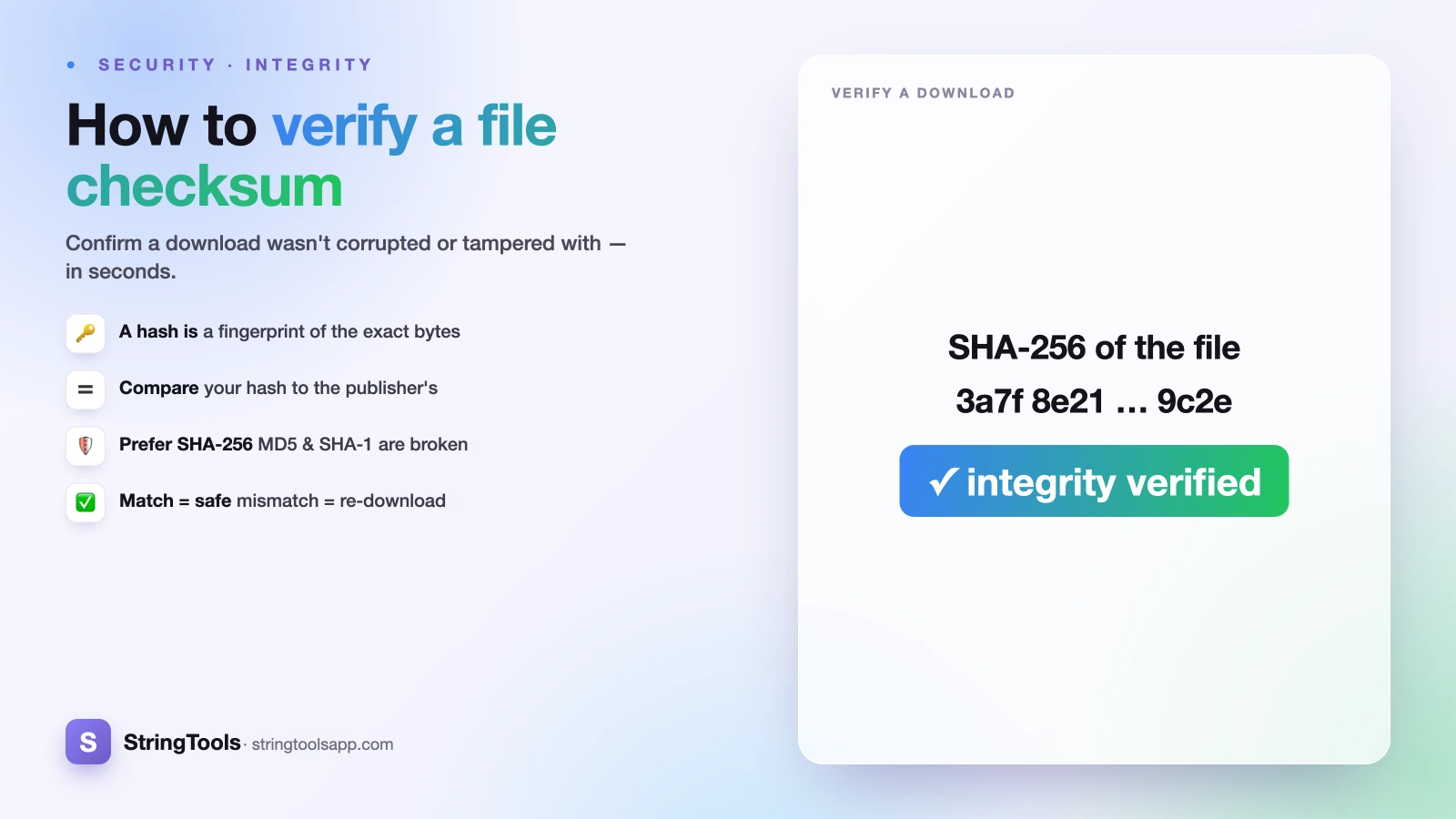
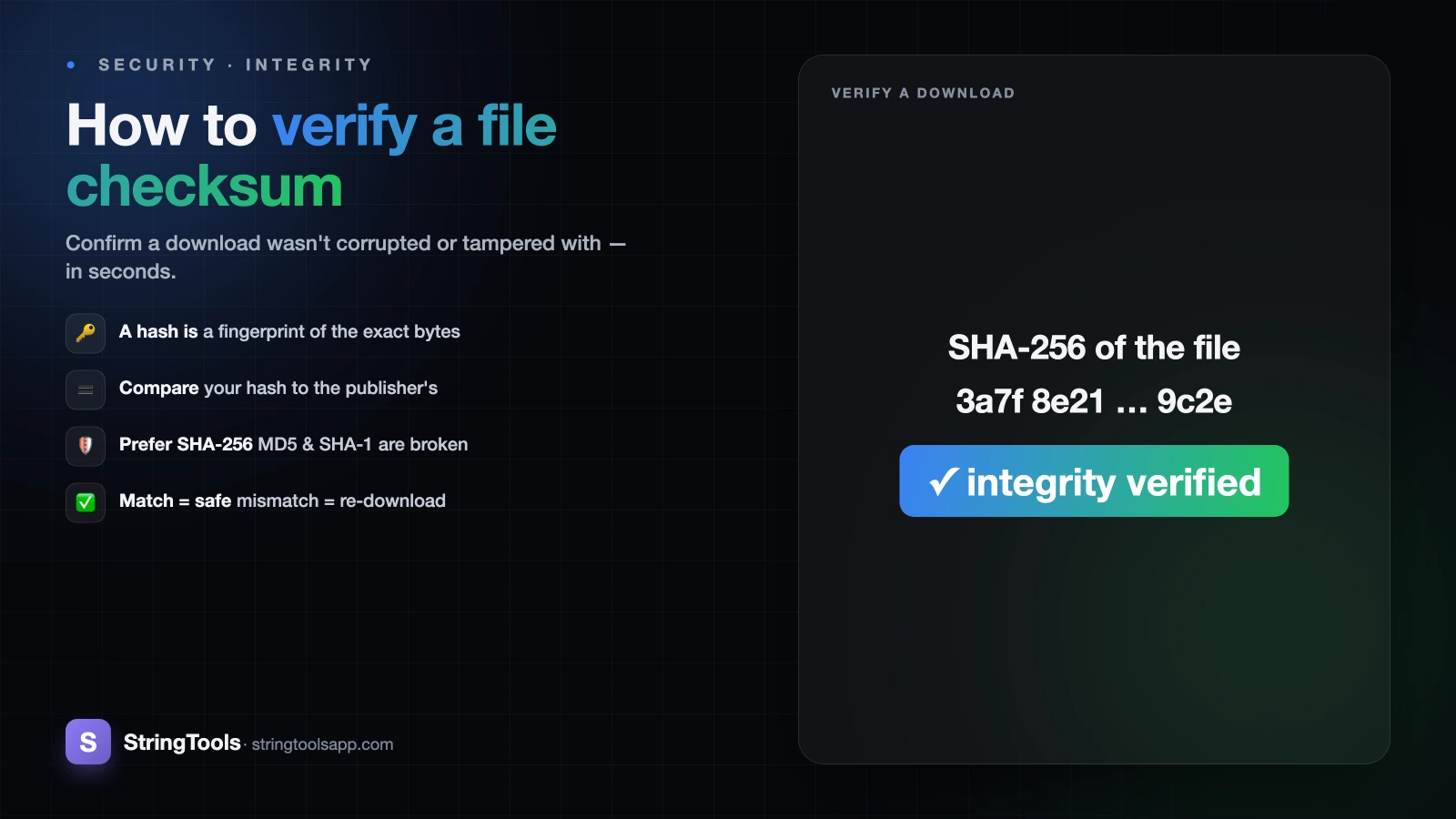
How to Verify a File Checksum (SHA-256)
Learn how to verify a file's SHA-256 checksum on macOS, Linux, and Windows so you can confirm a download wasn't corrupted or tampered with before you run it.


How to Build a Color Palette for Your Website
Learn to build a small, disciplined website color palette from one brand color using color harmonies, the 60-30-10 rule, and WCAG contrast checks.


How to Make a vCard QR Code (Share Contacts Fast)
Turn your contact details into a vCard QR code anyone can scan to save you in one tap. A free, private, step-by-step guide with print and design tips.
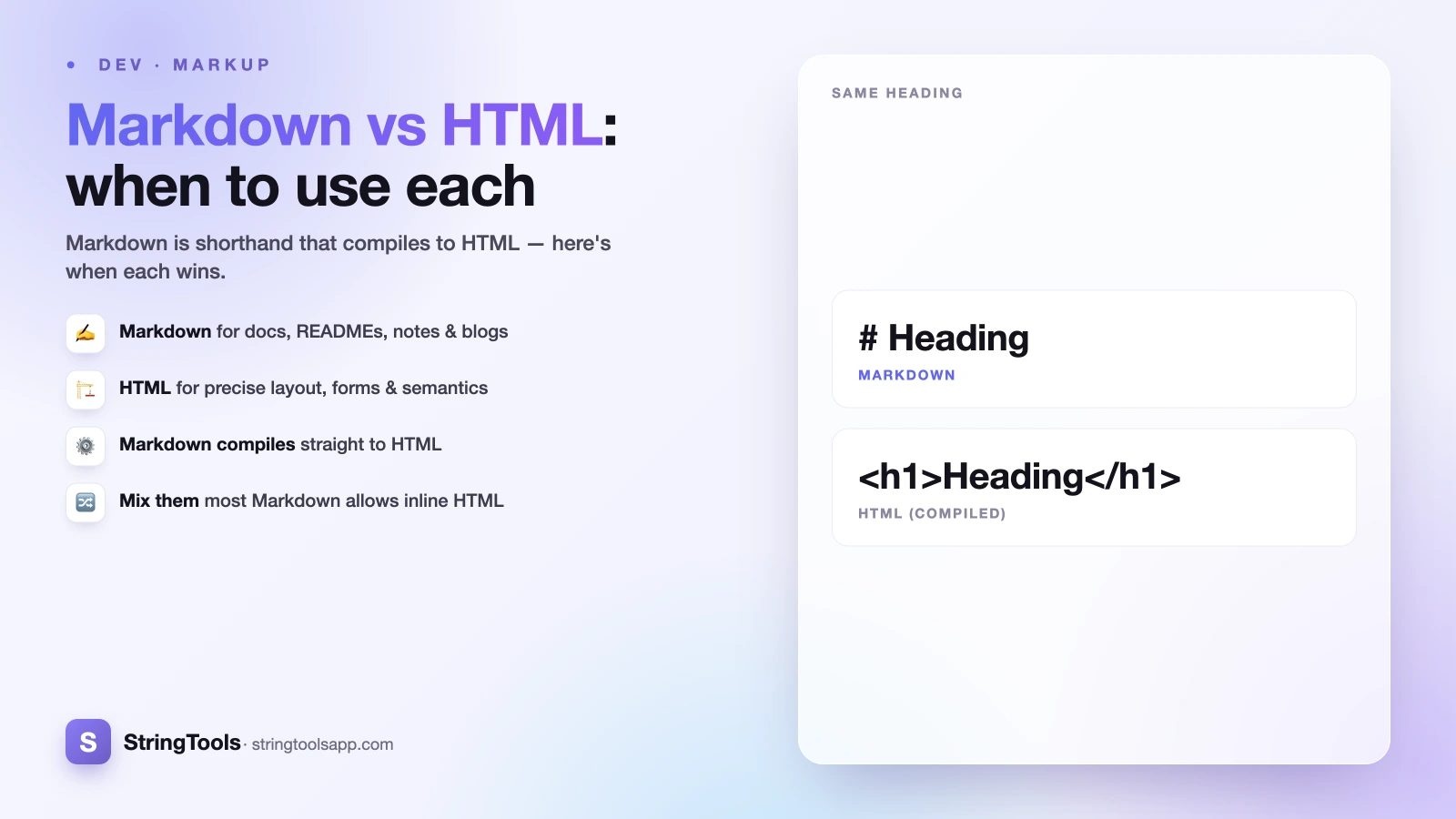
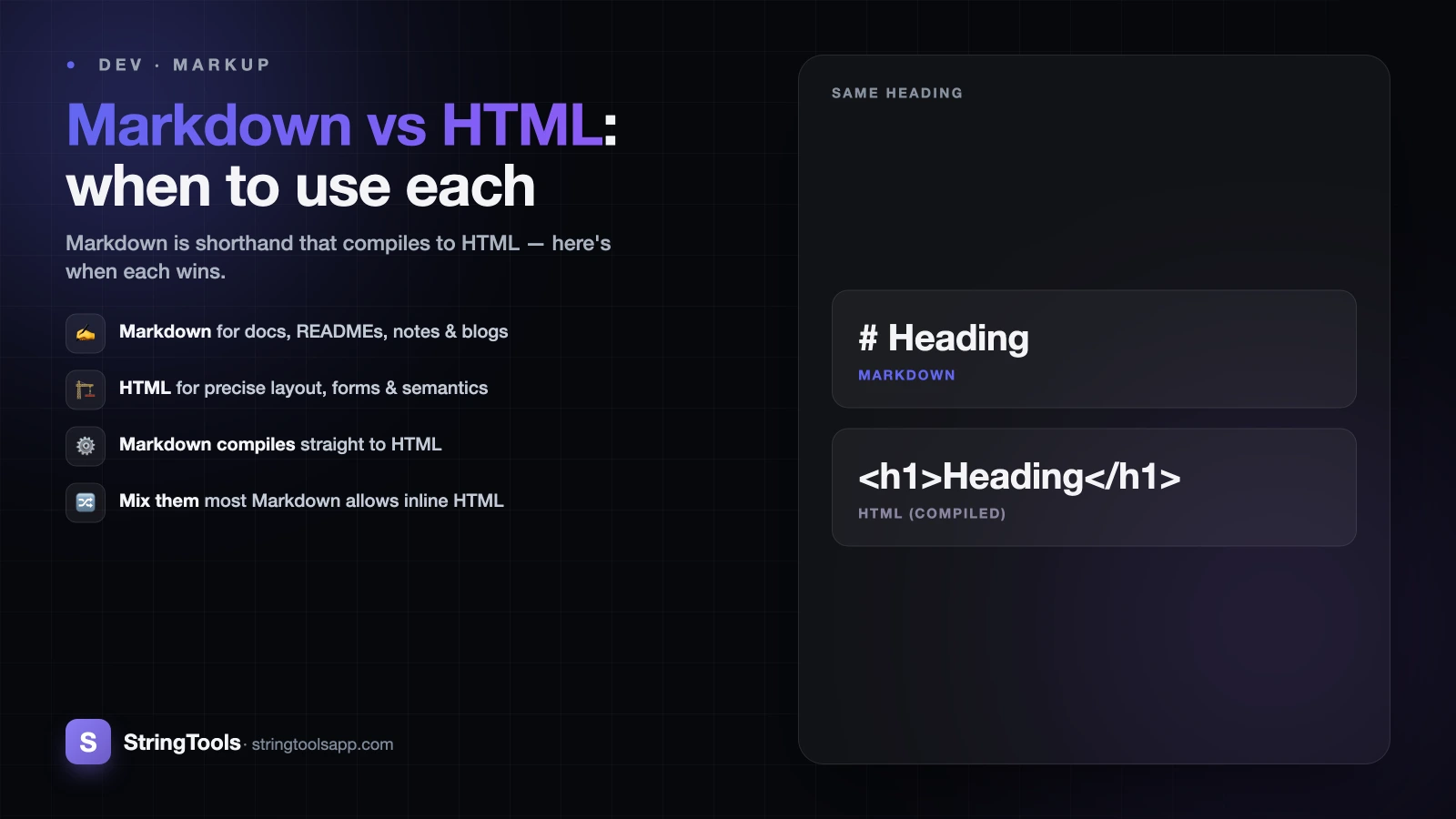
Markdown vs HTML: When to Use Each
Markdown is shorthand that compiles to HTML. Learn when to write Markdown for speed and when raw HTML wins, with side-by-side examples you can copy.
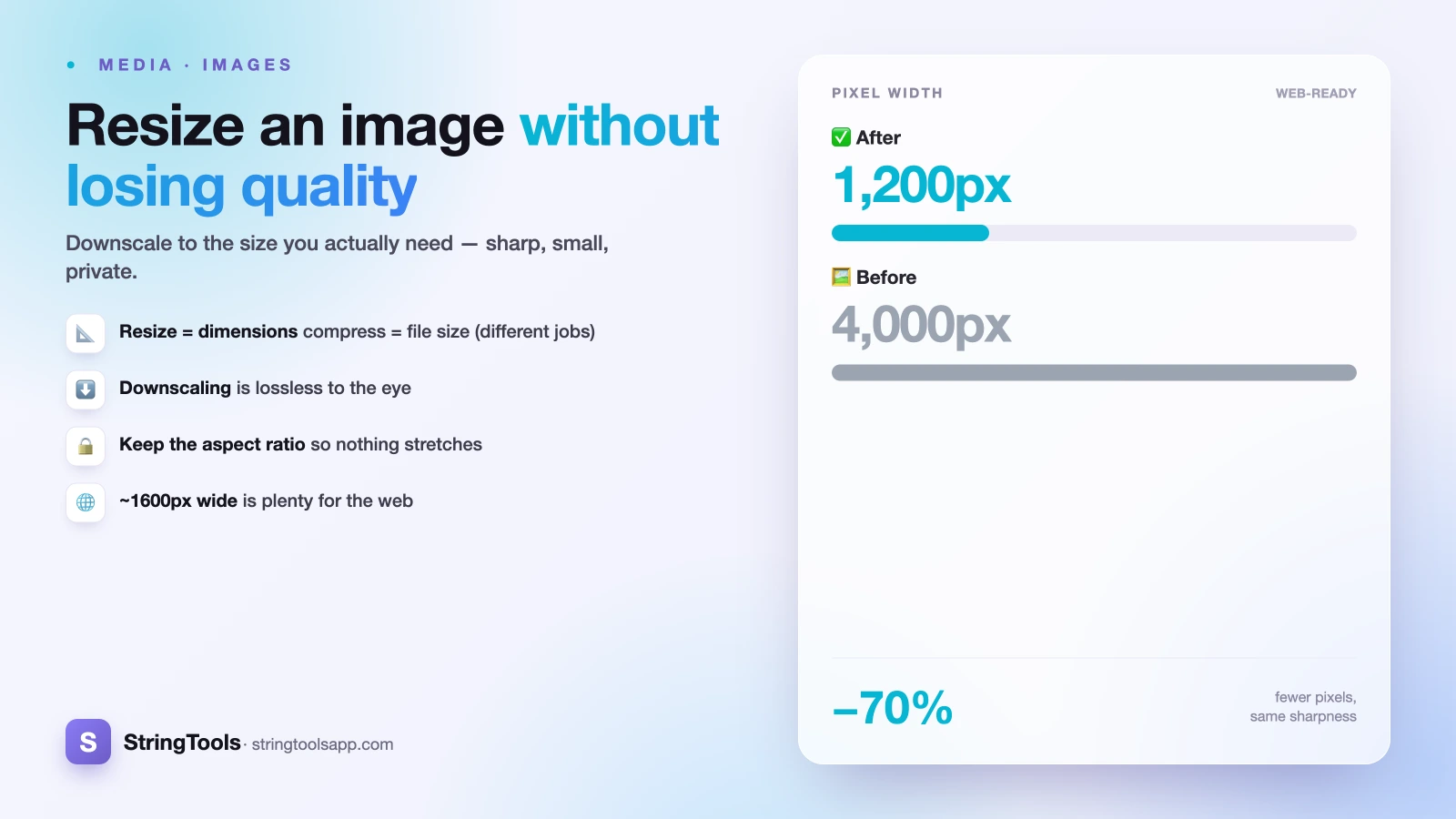
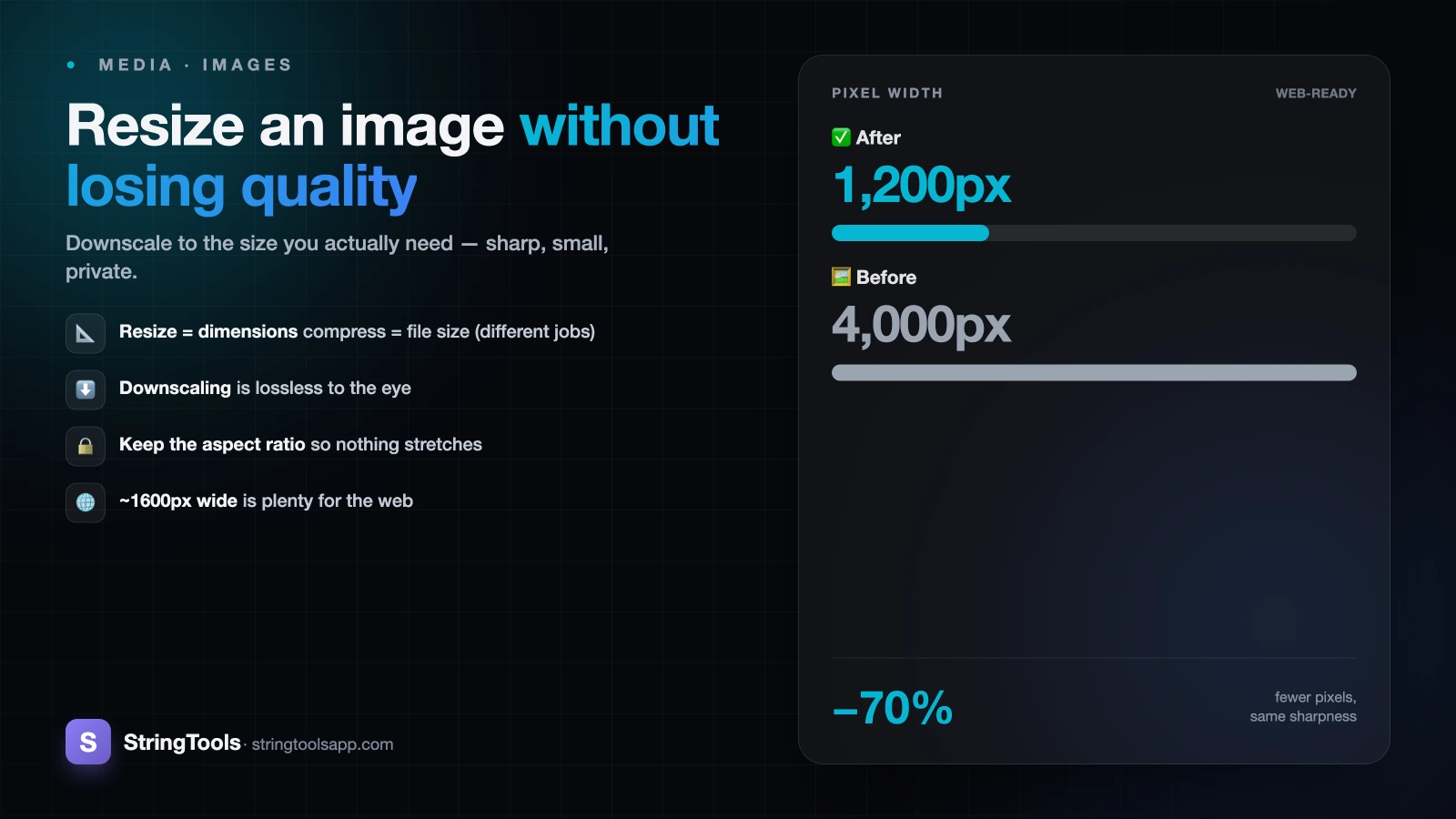
How to Resize an Image Without Losing Quality
Learn to resize images without losing quality: downscale cleanly, keep the aspect ratio, pick the right pixel dimensions, and do it privately in your browser.
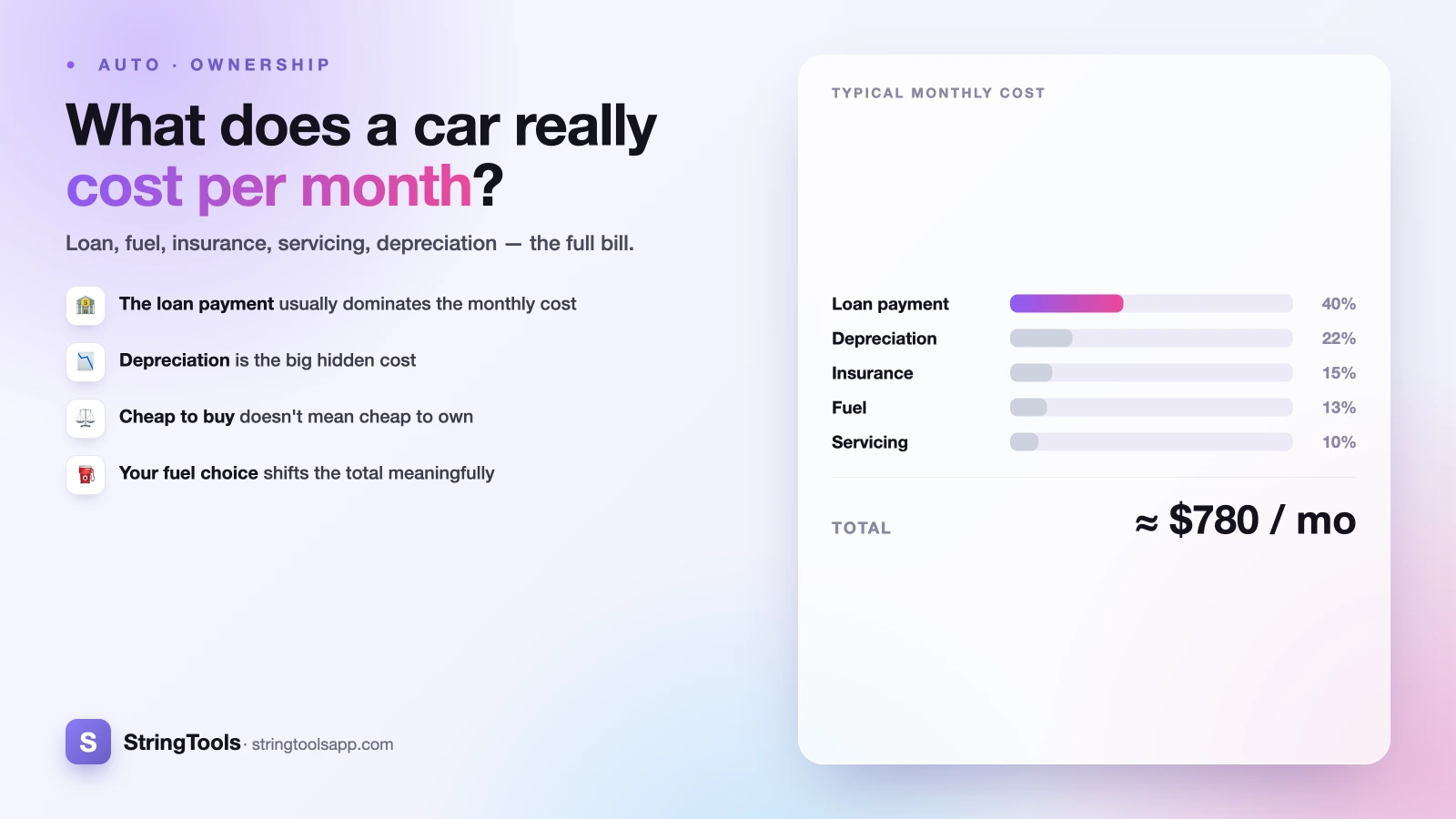
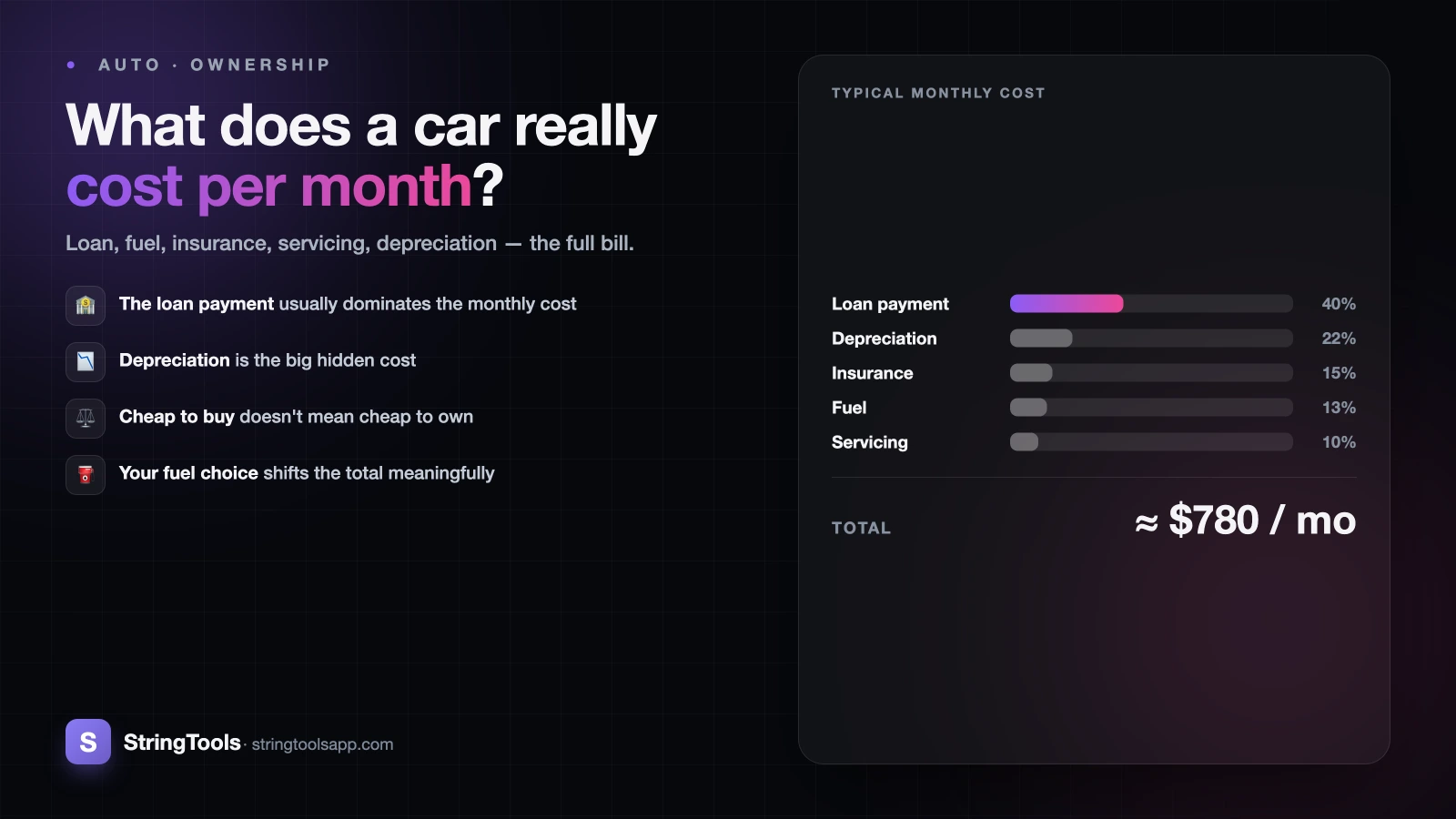
What Does a Car Really Cost Per Month?
The sticker price is just the start. See the six real buckets of car ownership cost, a worked monthly example, and how fuel choice shifts the total.
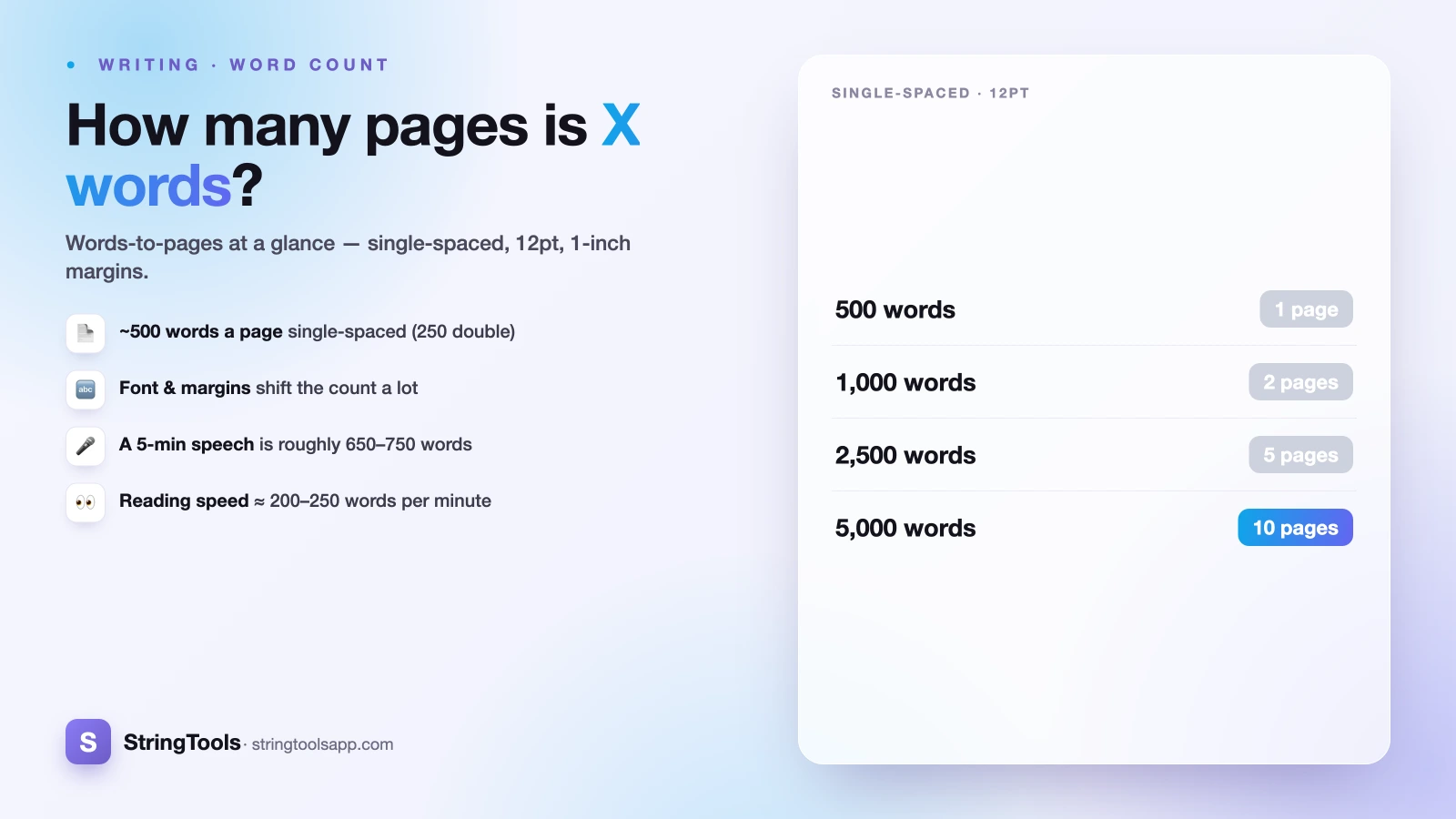
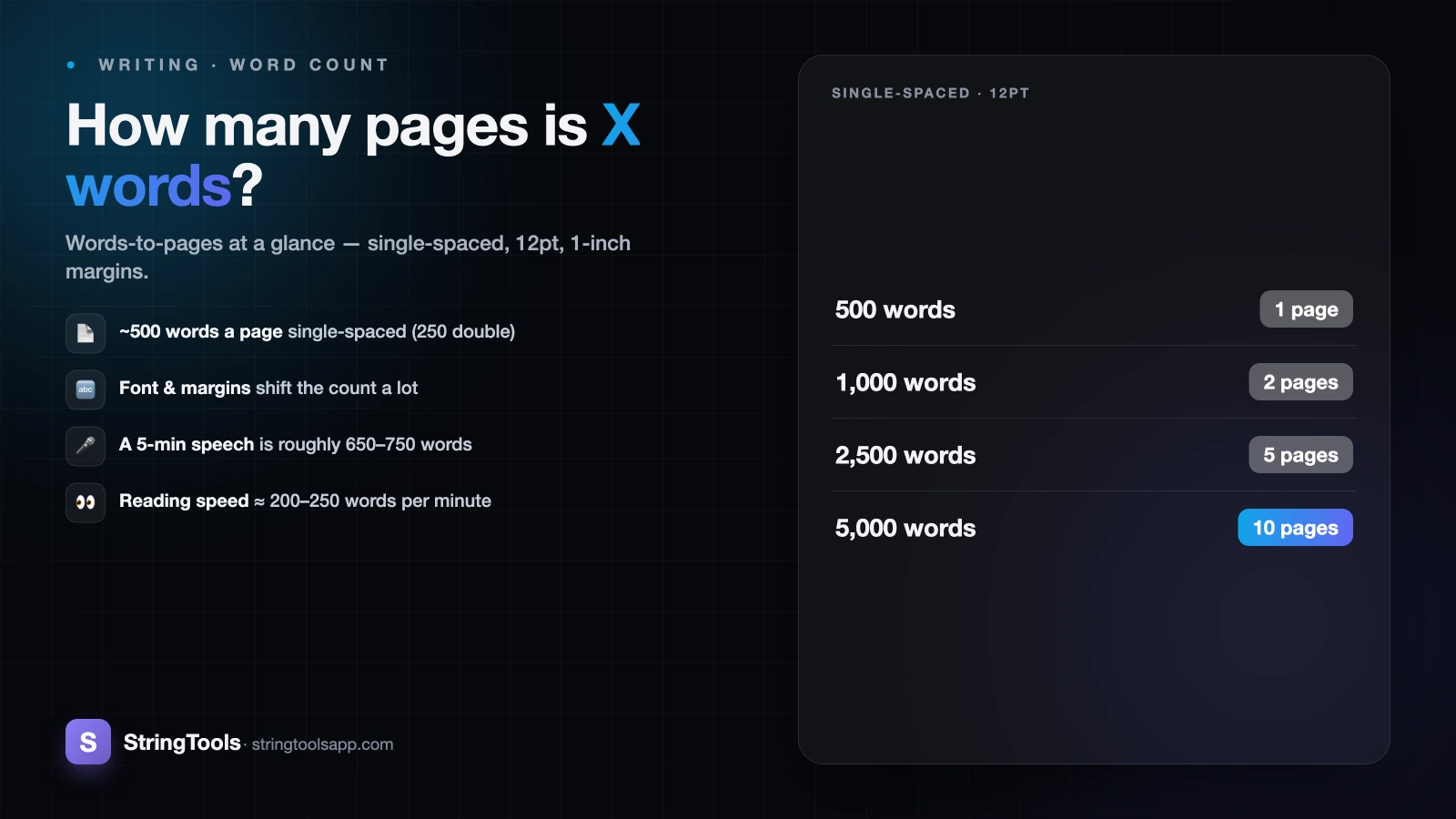
How Many Pages Is 500 to 5000 Words?
How many pages is 500, 1000, 2000, or 5000 words? A clear single- vs double-spaced reference for students, plus speech and reading-time estimates.
Title Case vs Sentence Case: Rules That Trip People Up
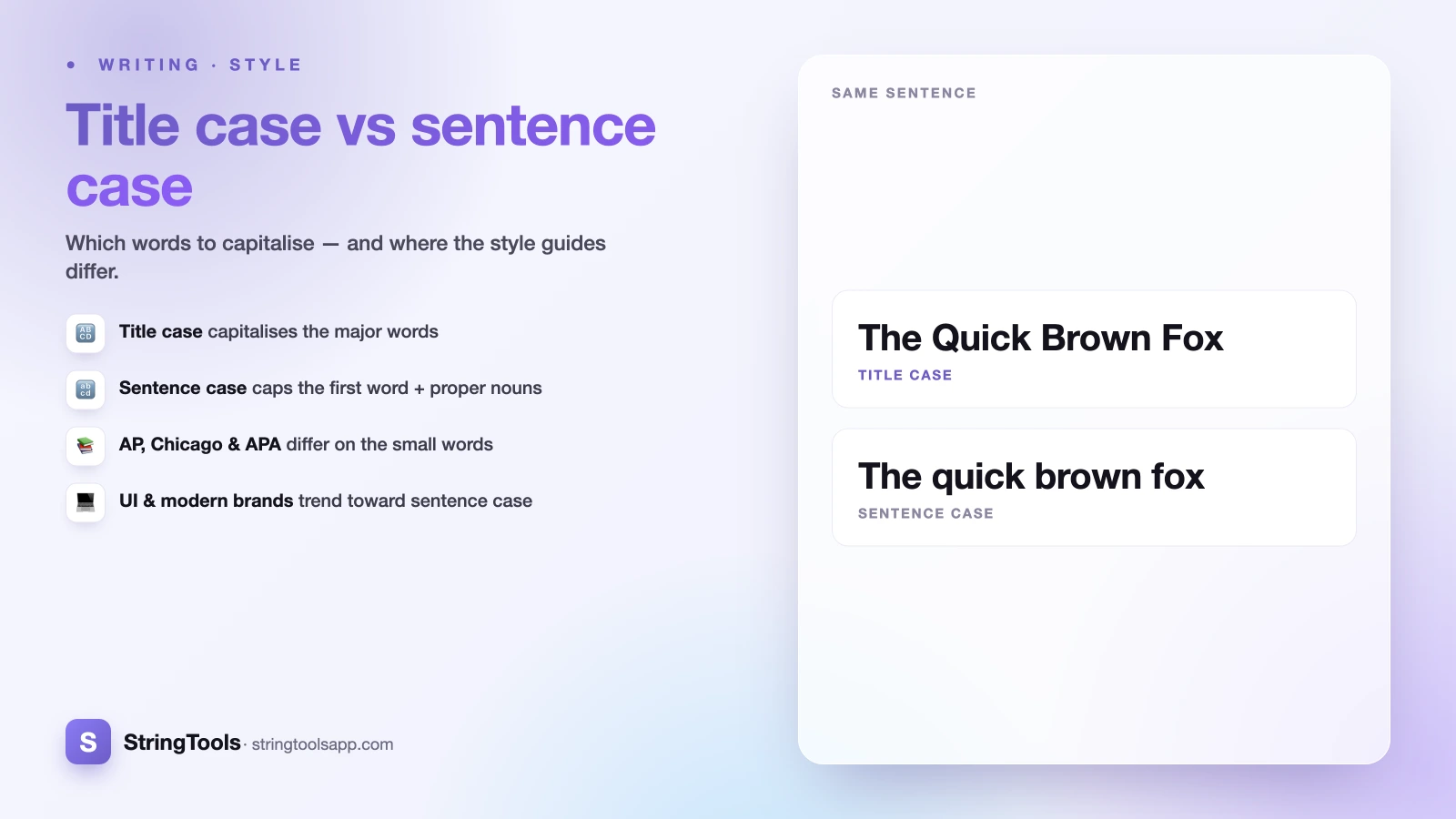
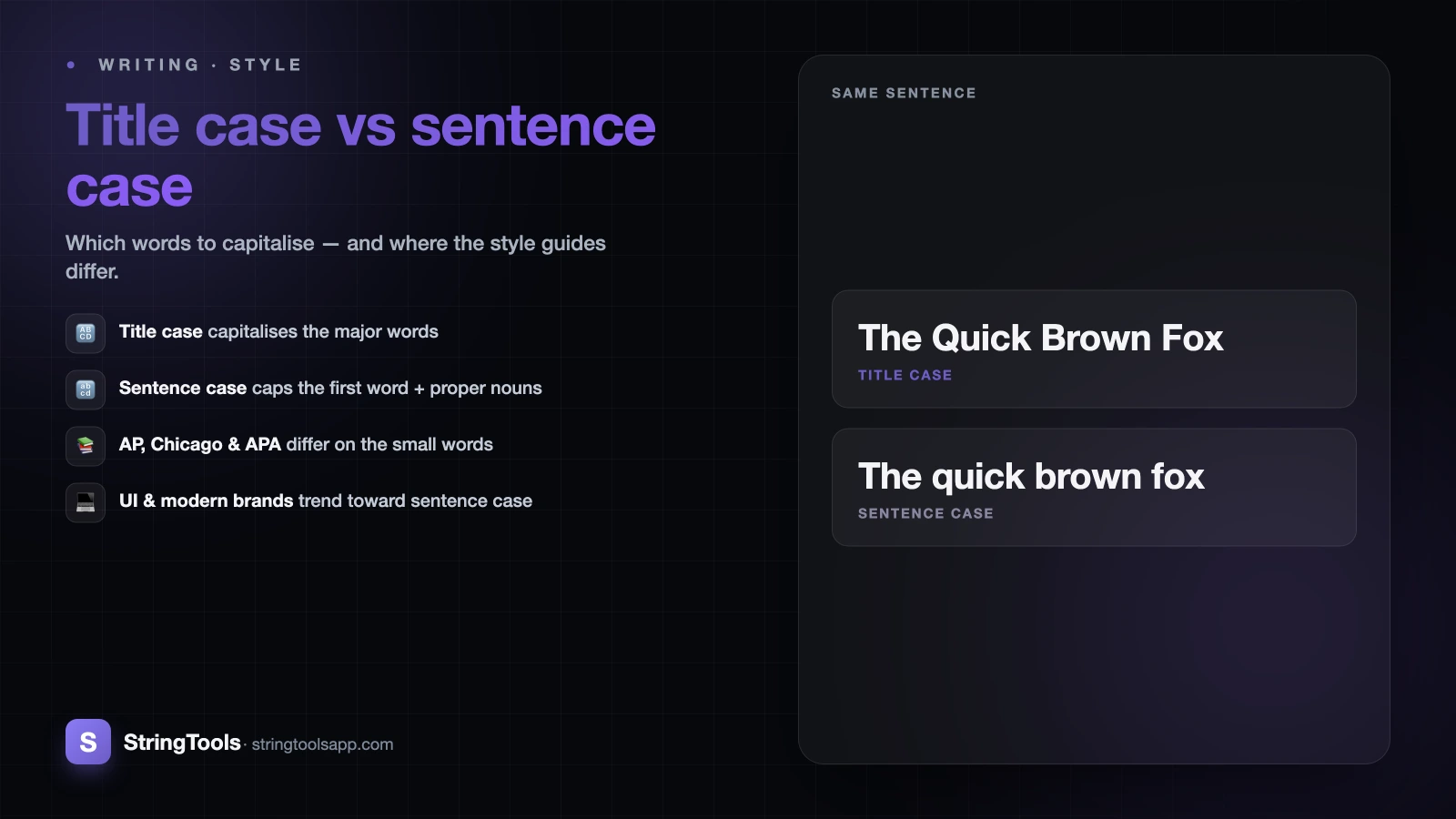
Title case vs sentence case, explained clearly: which words to capitalize, why AP, Chicago, and APA disagree, common mistakes, and when to use each style.
How Strong Is My Password? Entropy & Crack Time
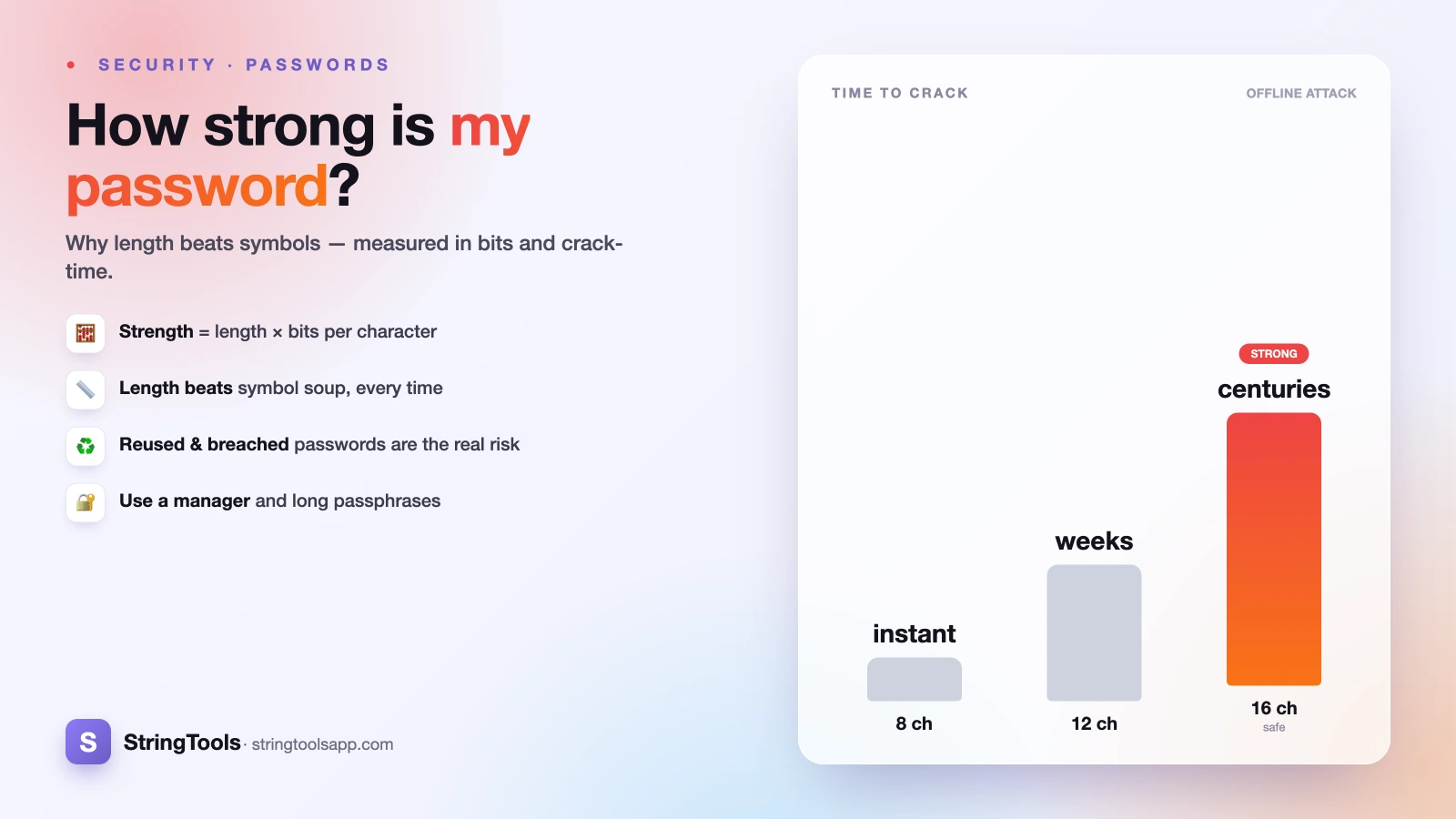
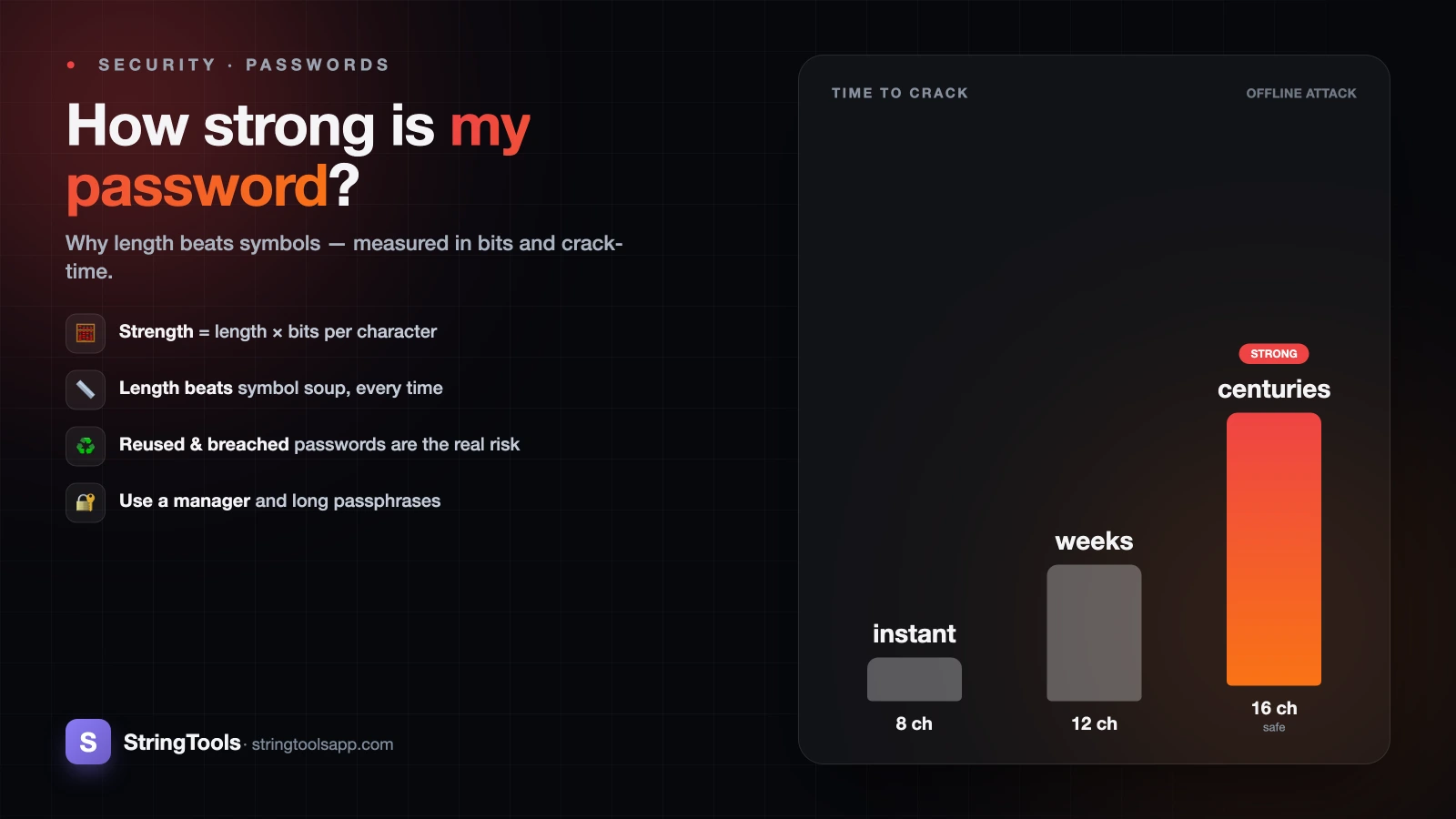
Learn how password strength is measured in bits of entropy, why length beats complexity, and how crack-time estimates really work — with worked examples.
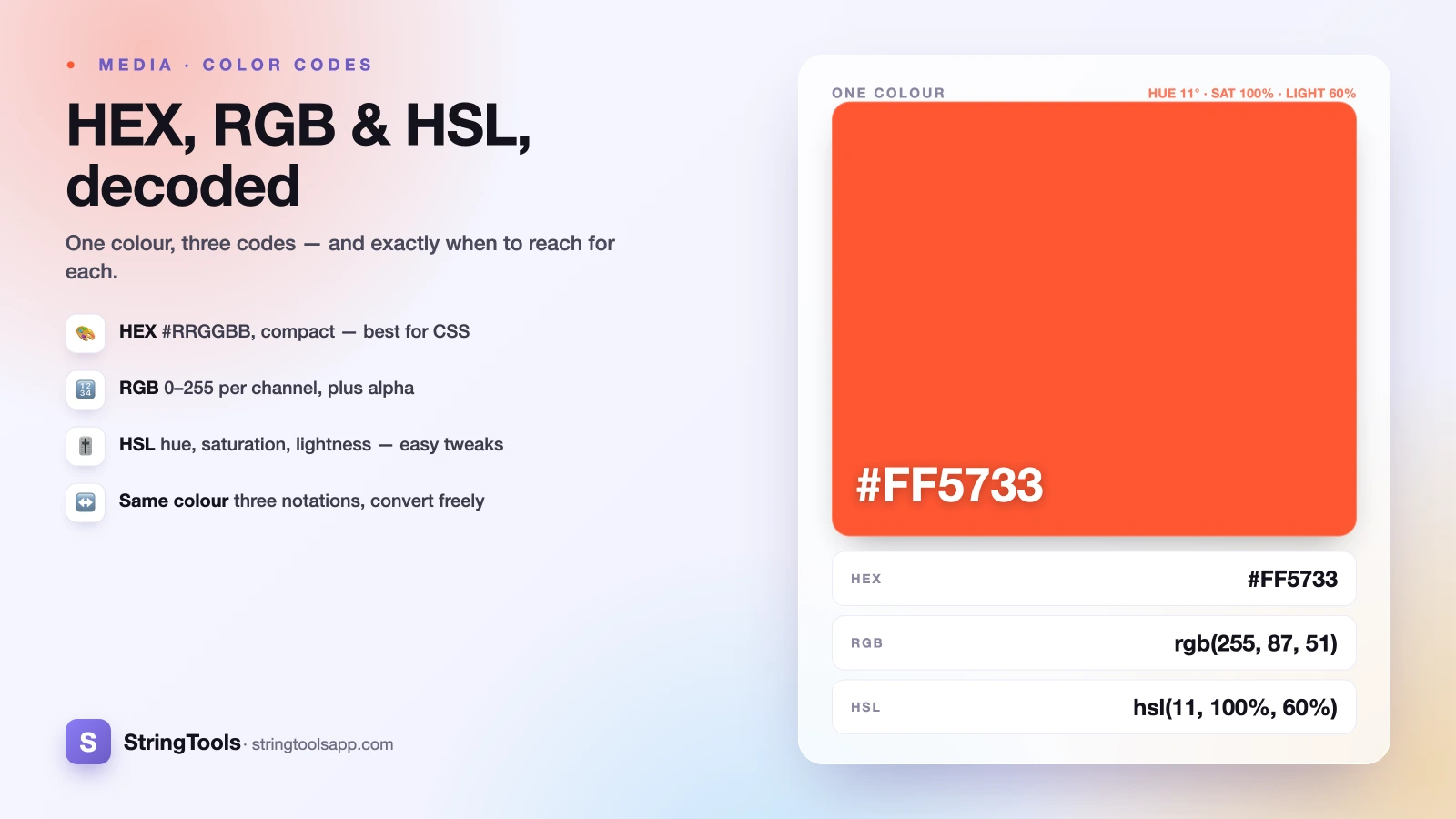
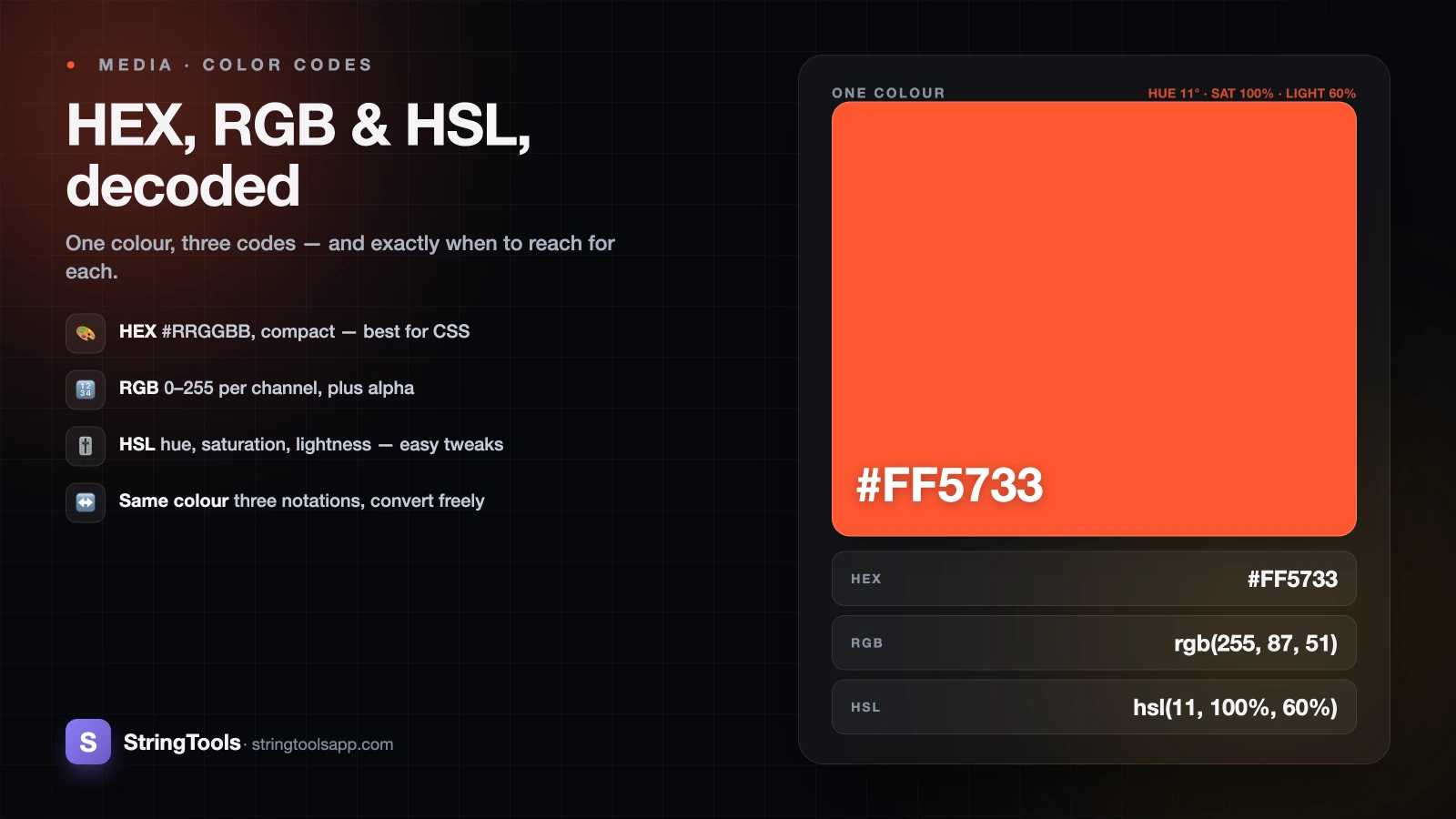
HEX vs RGB vs HSL: Color Codes Explained
Confused by #FF5733, rgb(255,87,51), and hsl(11,100%,60%)? Learn what each color code means, how to convert between them, and when to use which.
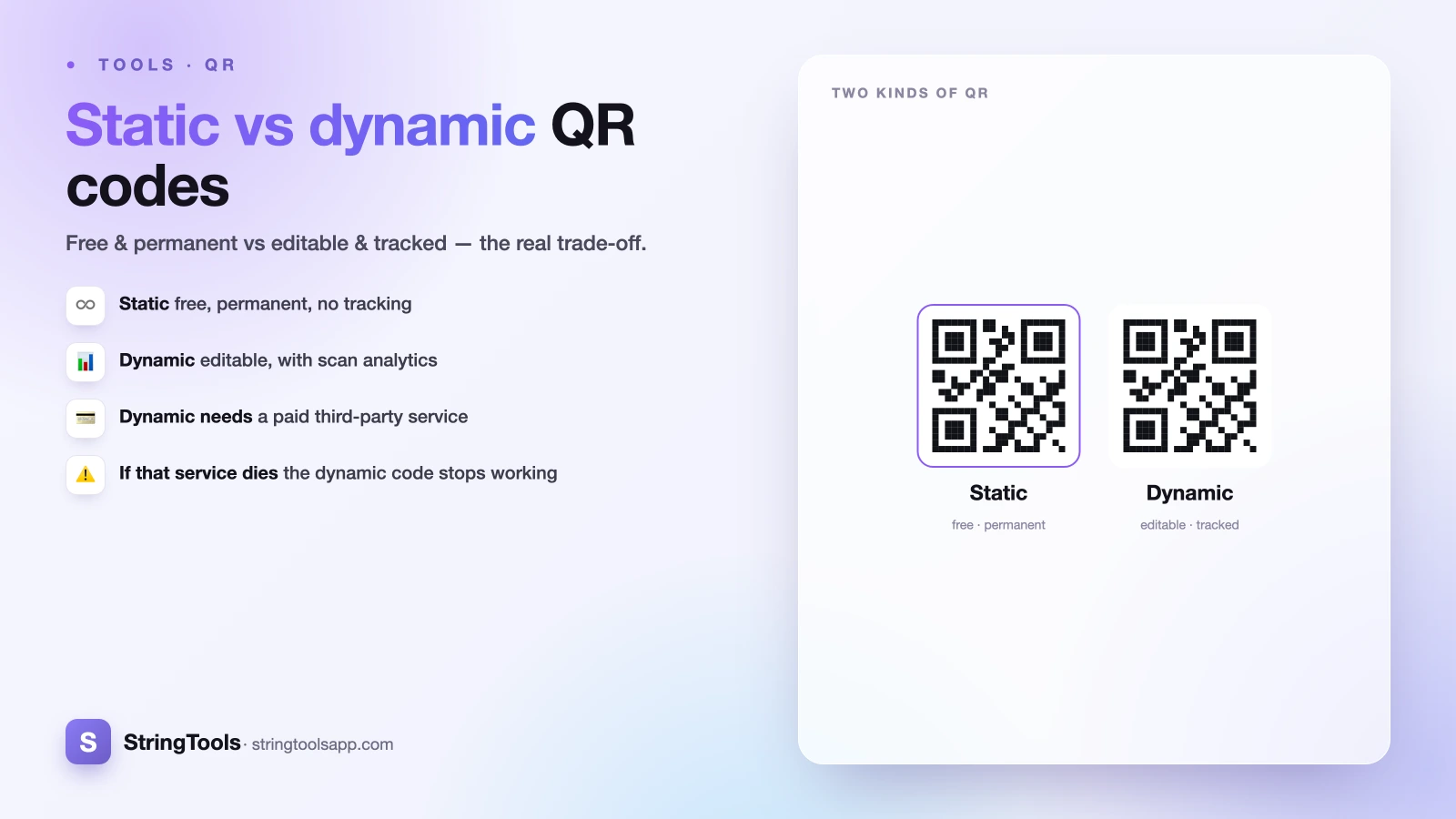
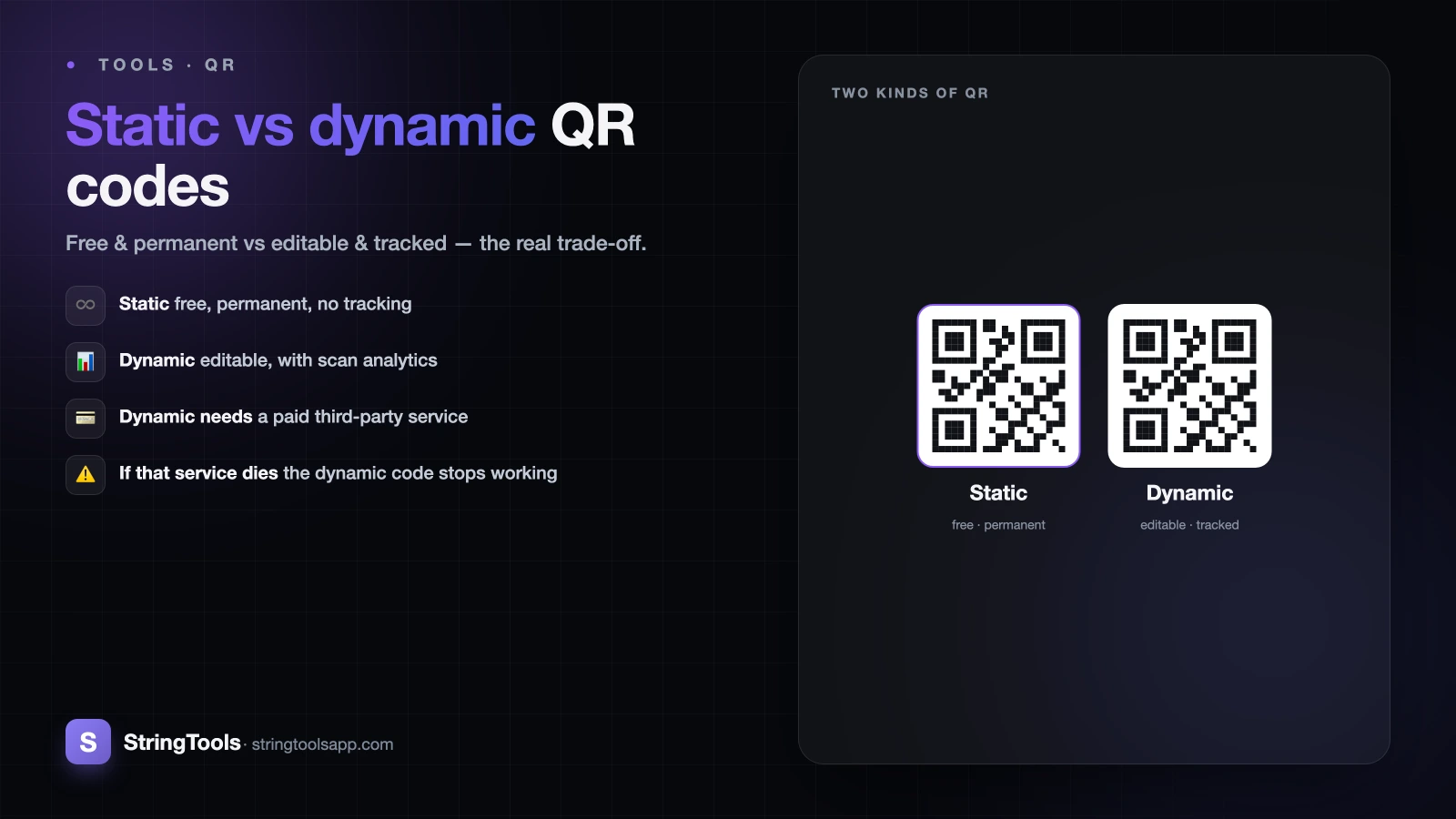
Static vs Dynamic QR Codes: Which Do You Need?
Static QR codes are free and permanent; dynamic ones are editable and trackable but paid. Here's an honest breakdown to help you choose the right type.


How to Make a WiFi QR Code (Guests Scan to Join)
Create a WiFi QR code so guests connect without typing your password. Step-by-step for homes, cafes, Airbnbs, and offices, plus security and privacy tips.
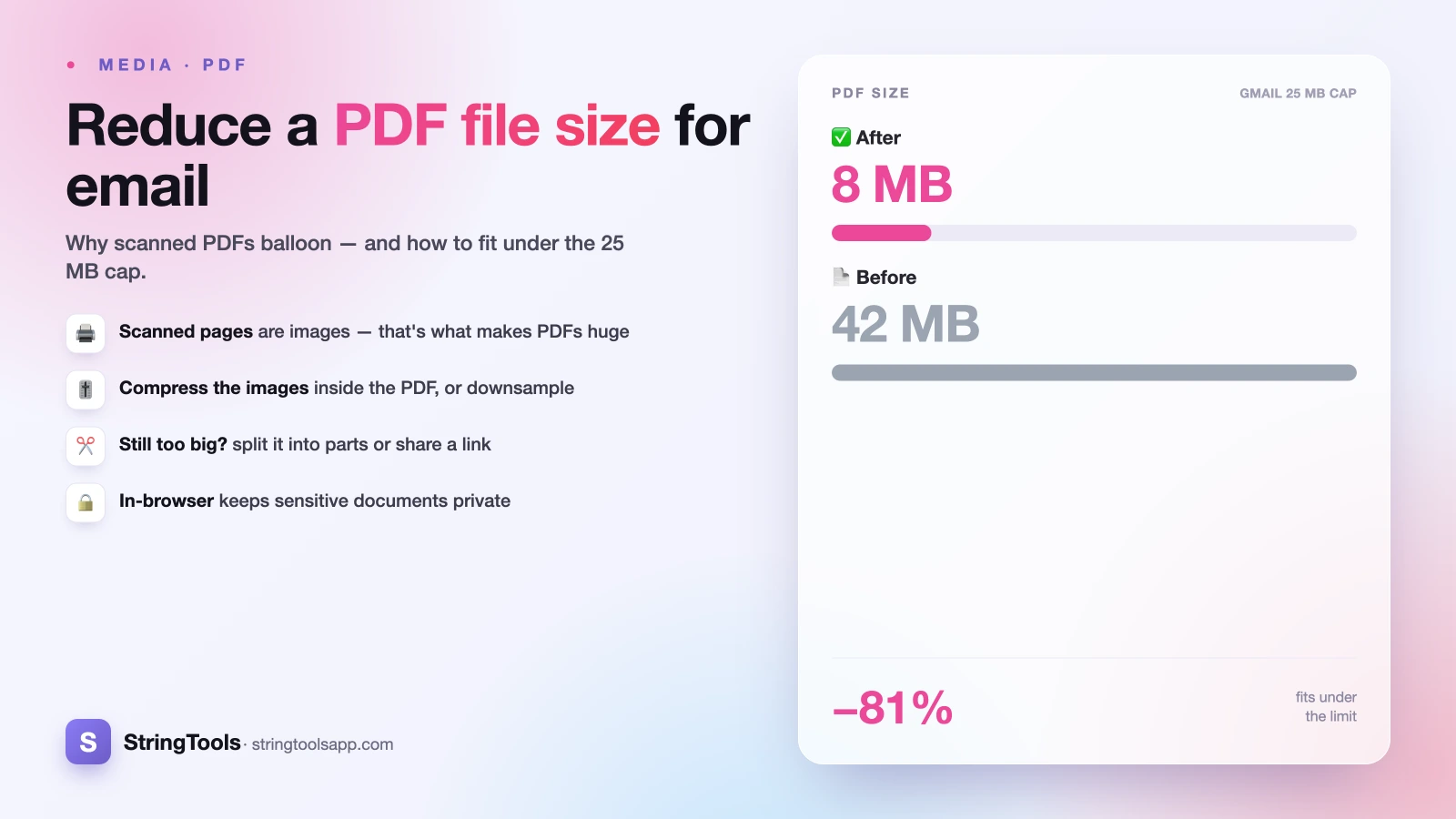
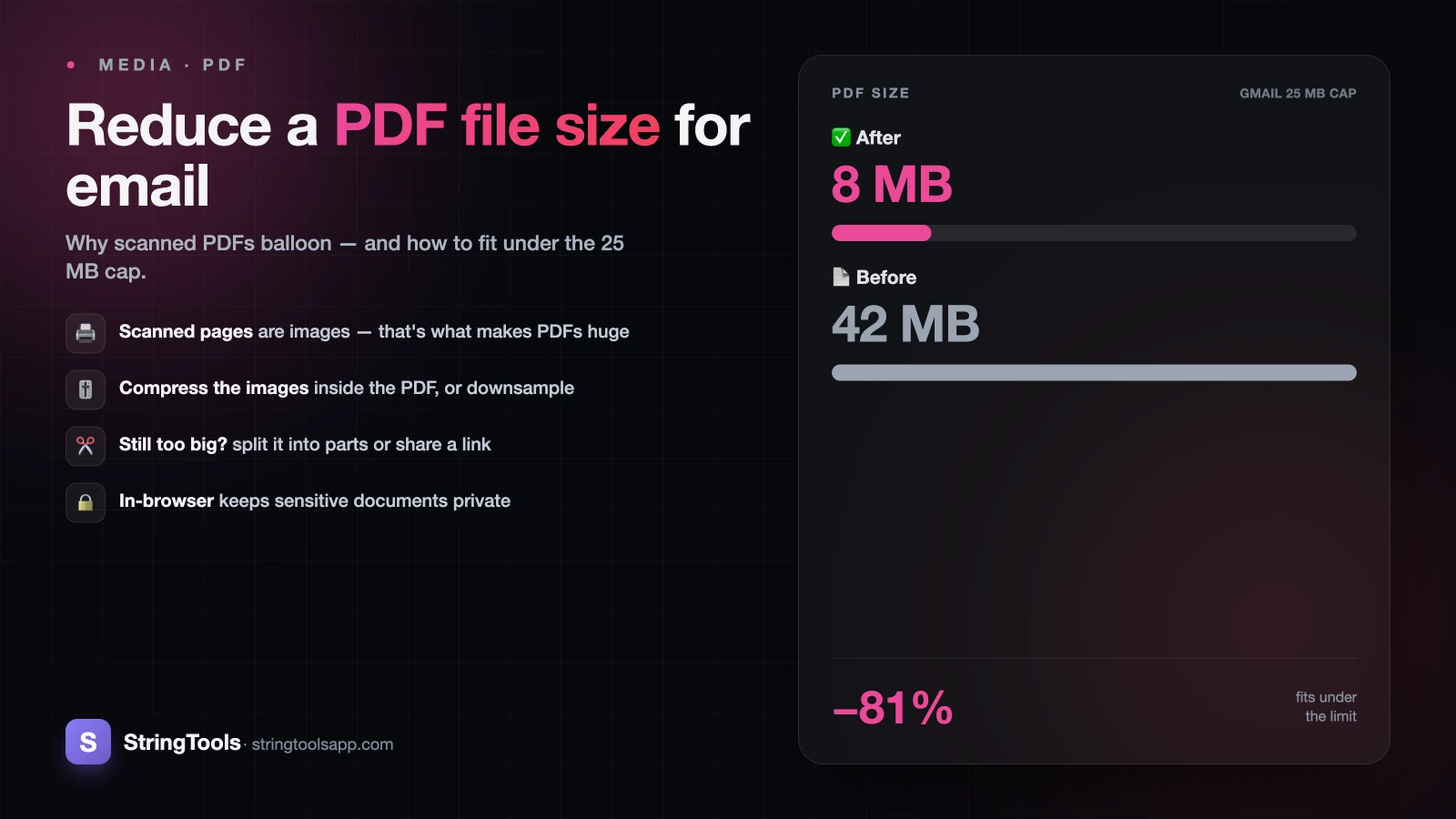
How to Reduce PDF File Size for Email (Under 25 MB)
Your PDF is too big to email? Learn exactly why PDFs balloon, how to shrink them under Gmail and Outlook limits, and when to send a link instead.
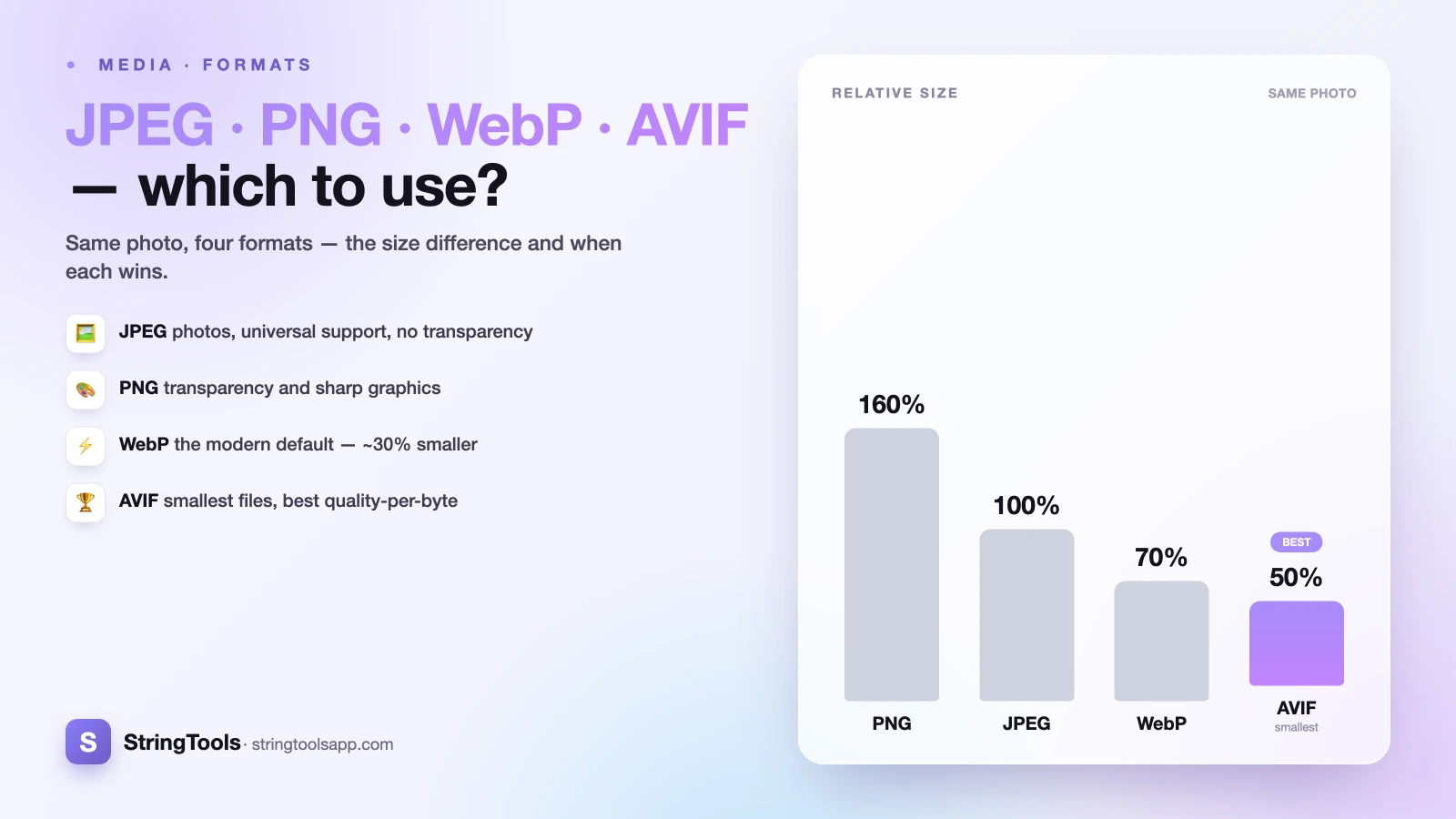
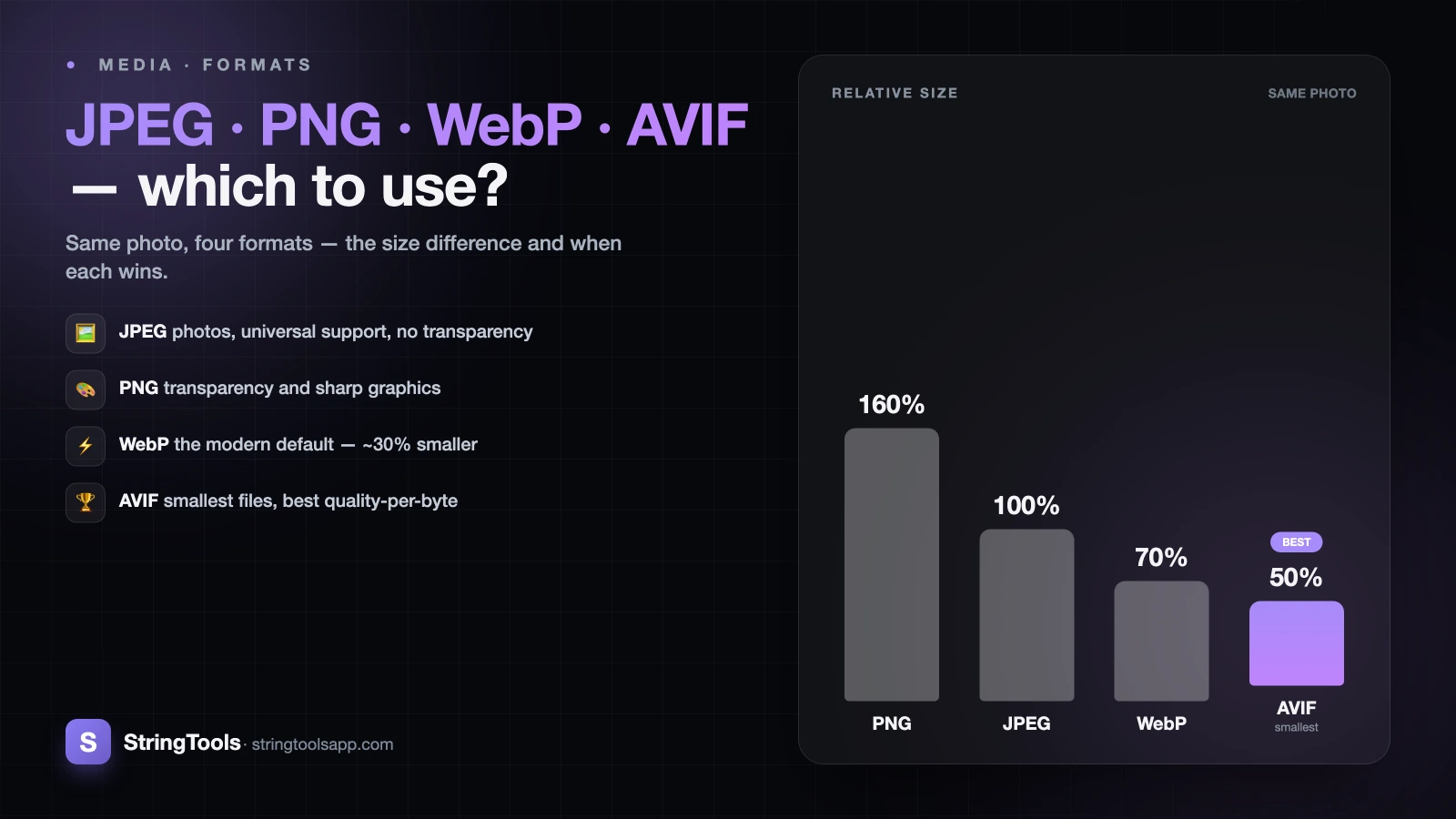
JPEG vs PNG vs WebP vs AVIF: Which to Use
A clear, honest 2026 guide to choosing between JPEG, PNG, WebP, and AVIF, with worked examples and a simple decision map for photos, logos, and web speed.
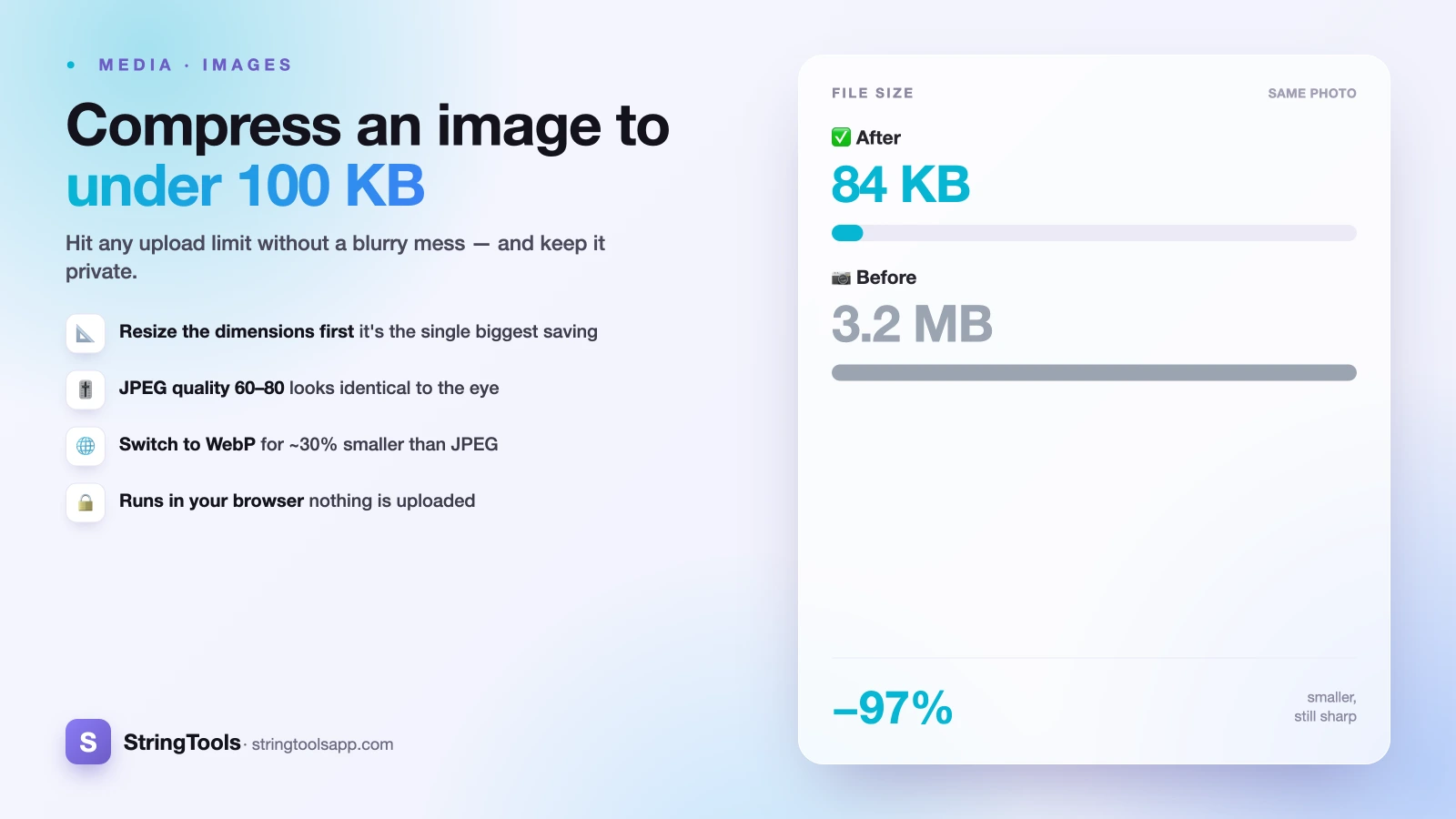
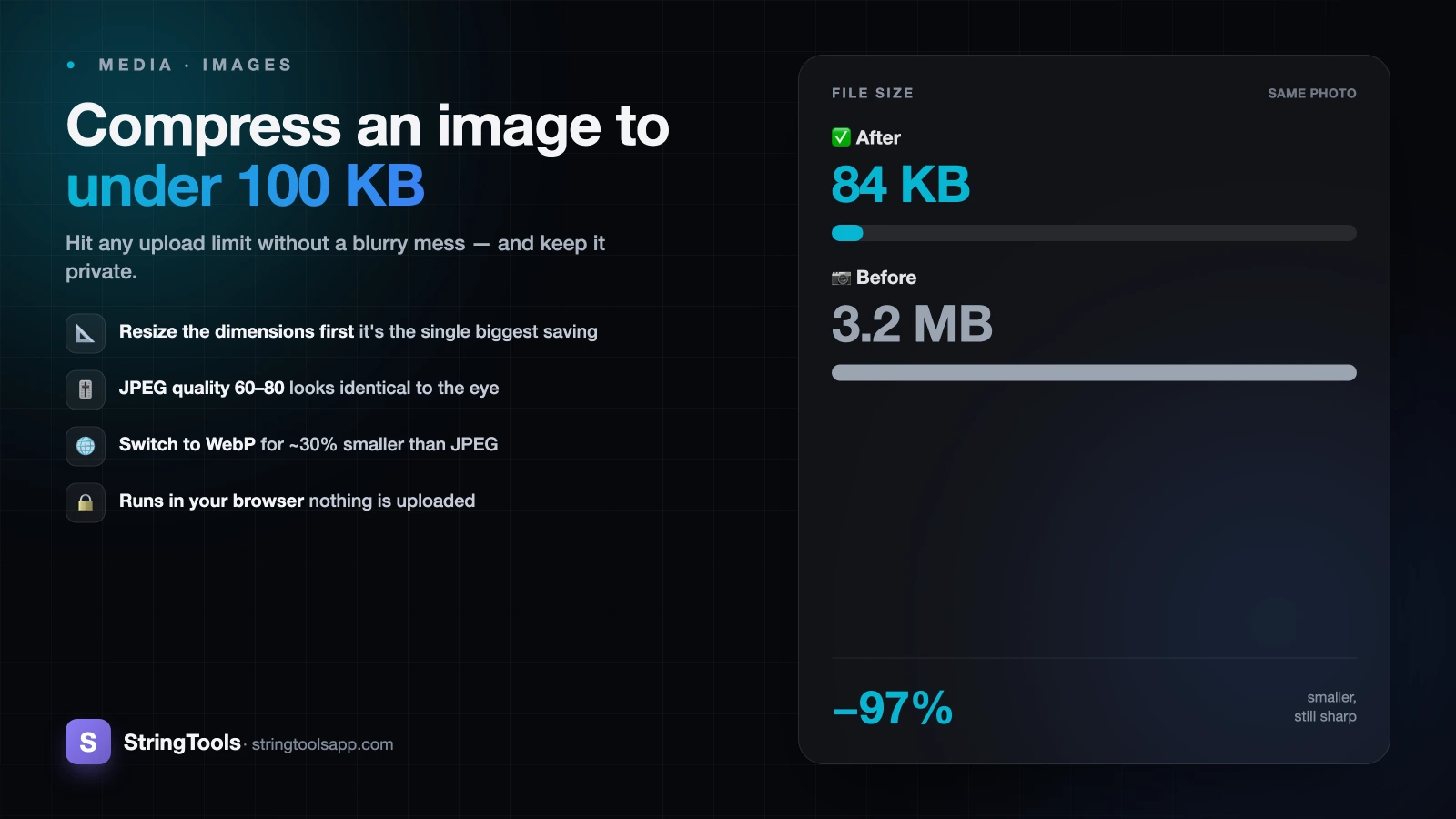
How to Compress an Image to Under 100 KB
Hit a hard 100 KB upload limit without wrecking quality. Learn the three levers — dimensions, JPEG quality, and WebP — with a worked 3 MB example.
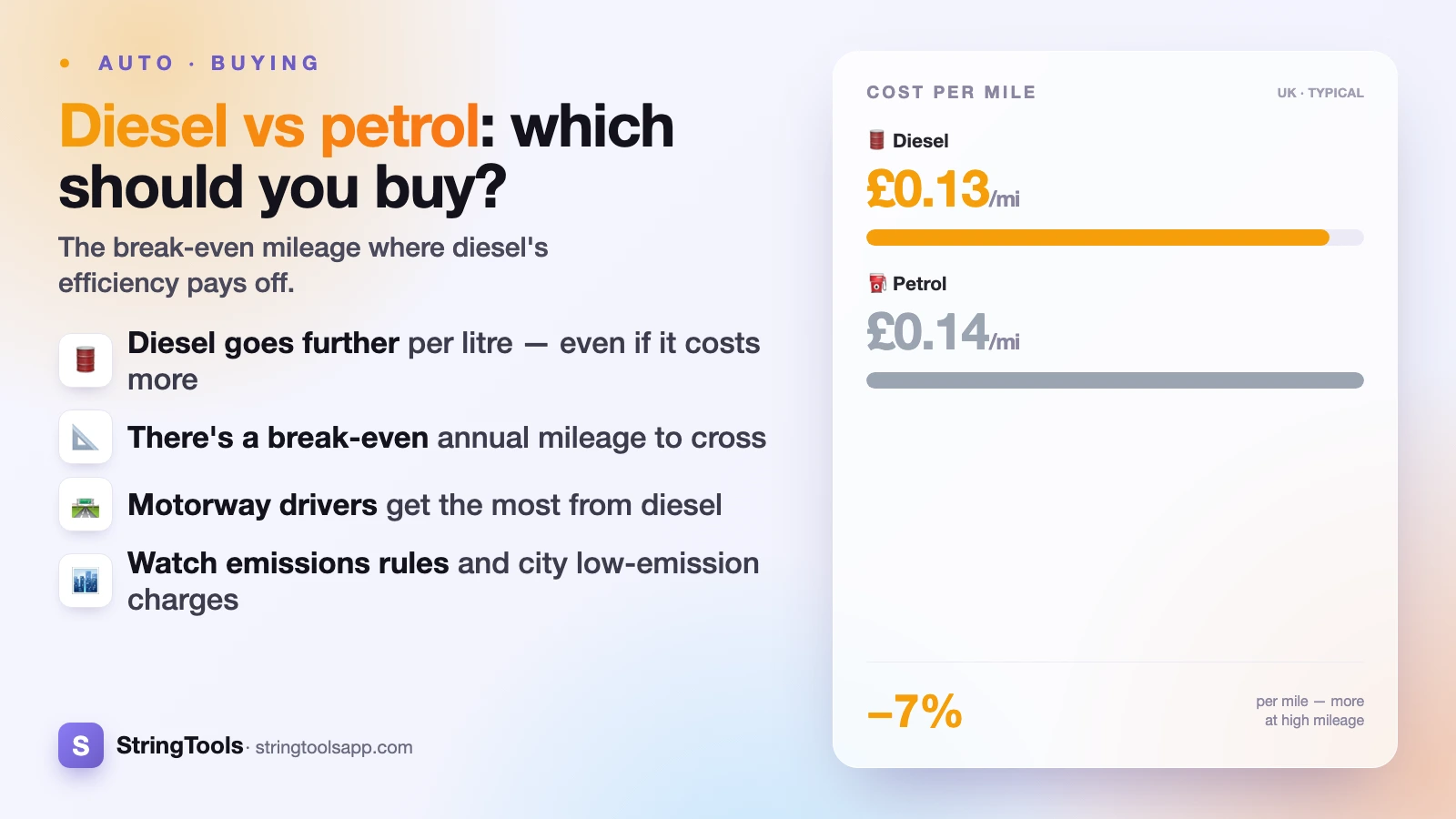
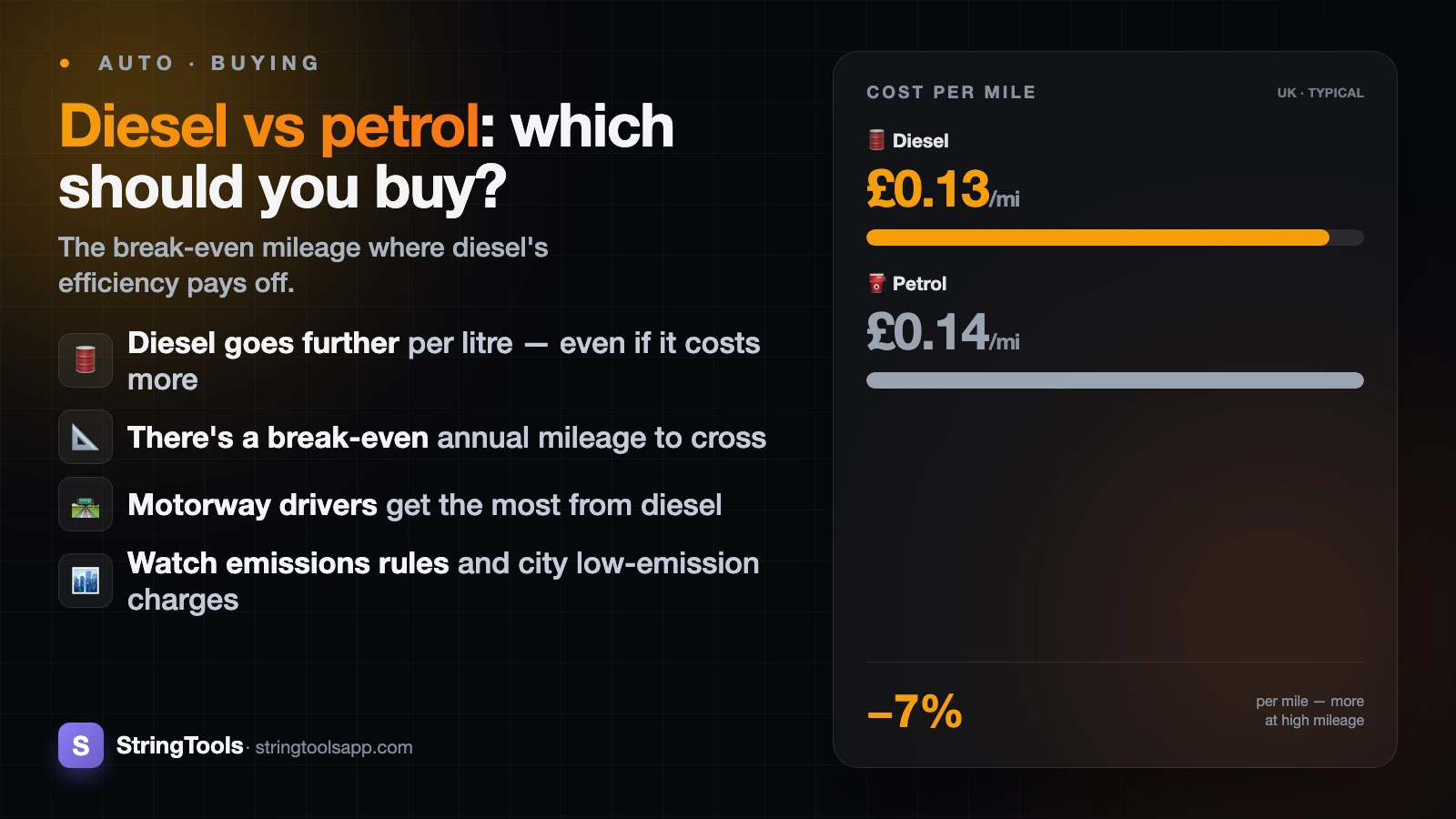
Diesel vs Petrol: Which Car Should You Buy? The Break-Even Mileage
Diesel saves fuel but costs more to buy and service. Learn the break-even mileage that decides whether diesel or petrol is actually cheaper for you.
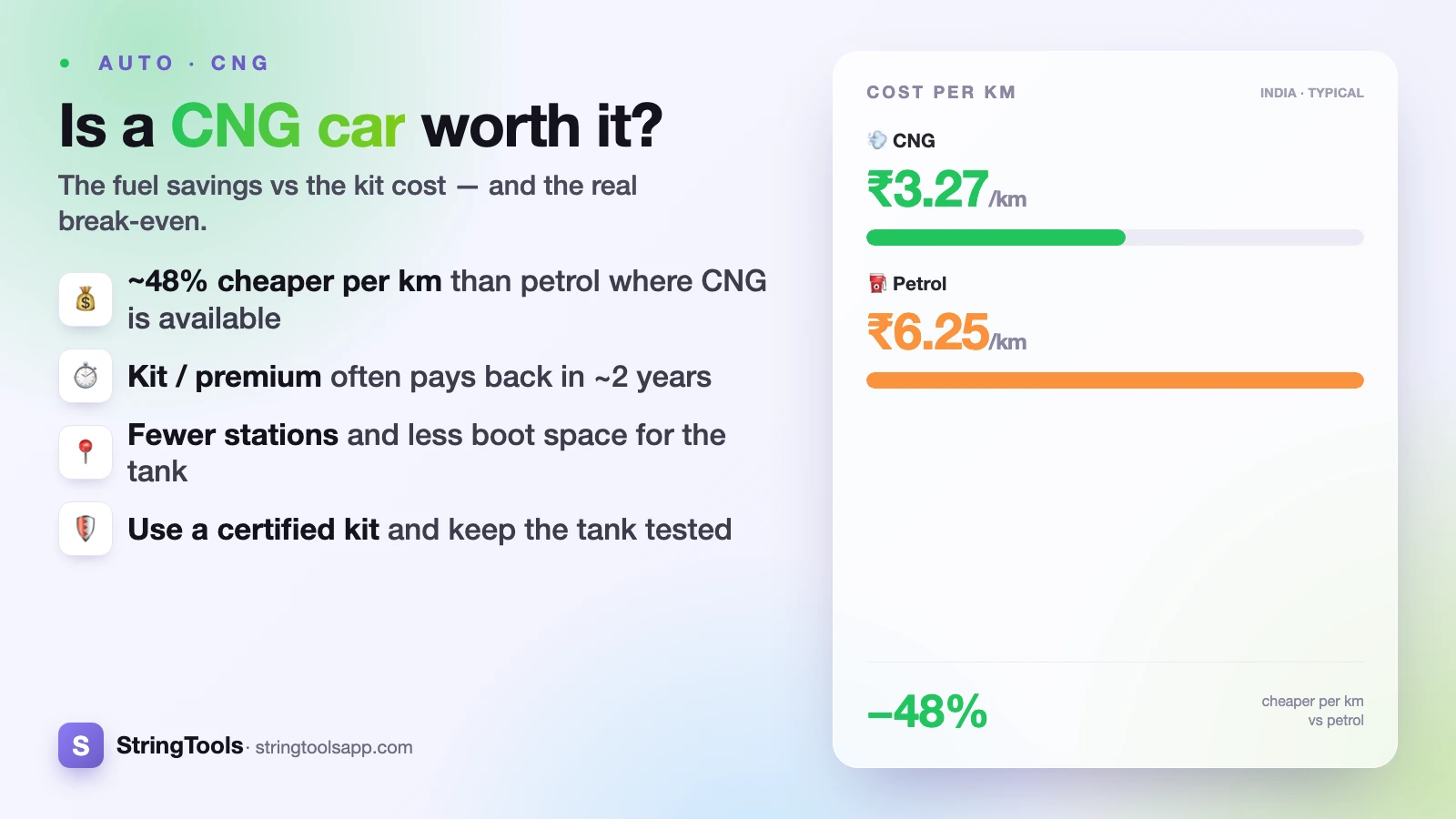
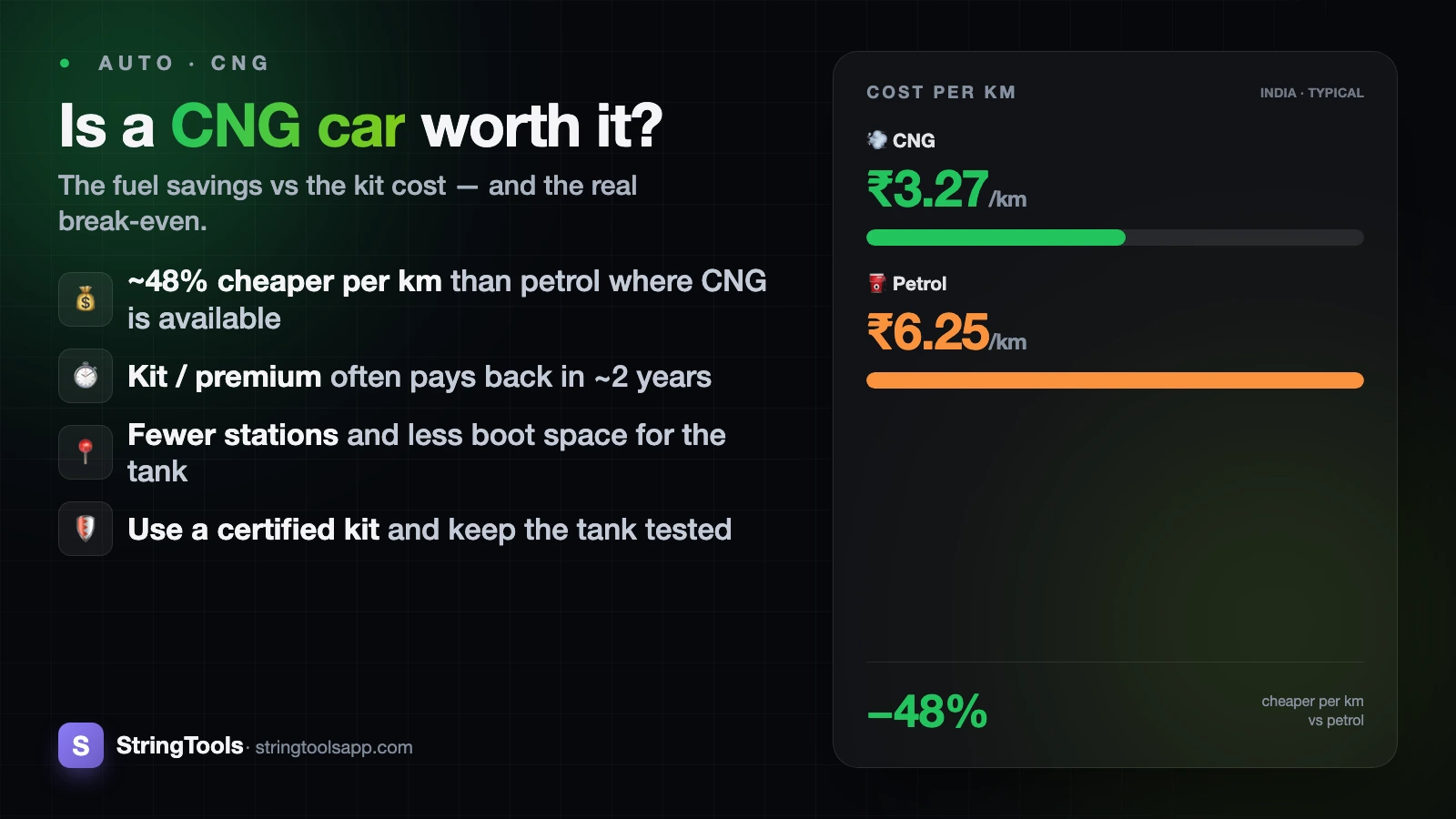
Is a CNG Car Worth It? Running Cost, Break-Even & Trade-offs
CNG can cut your fuel bill nearly in half versus petrol. Here's the honest math on per-km savings, kit break-even, and the trade-offs you should weigh first.
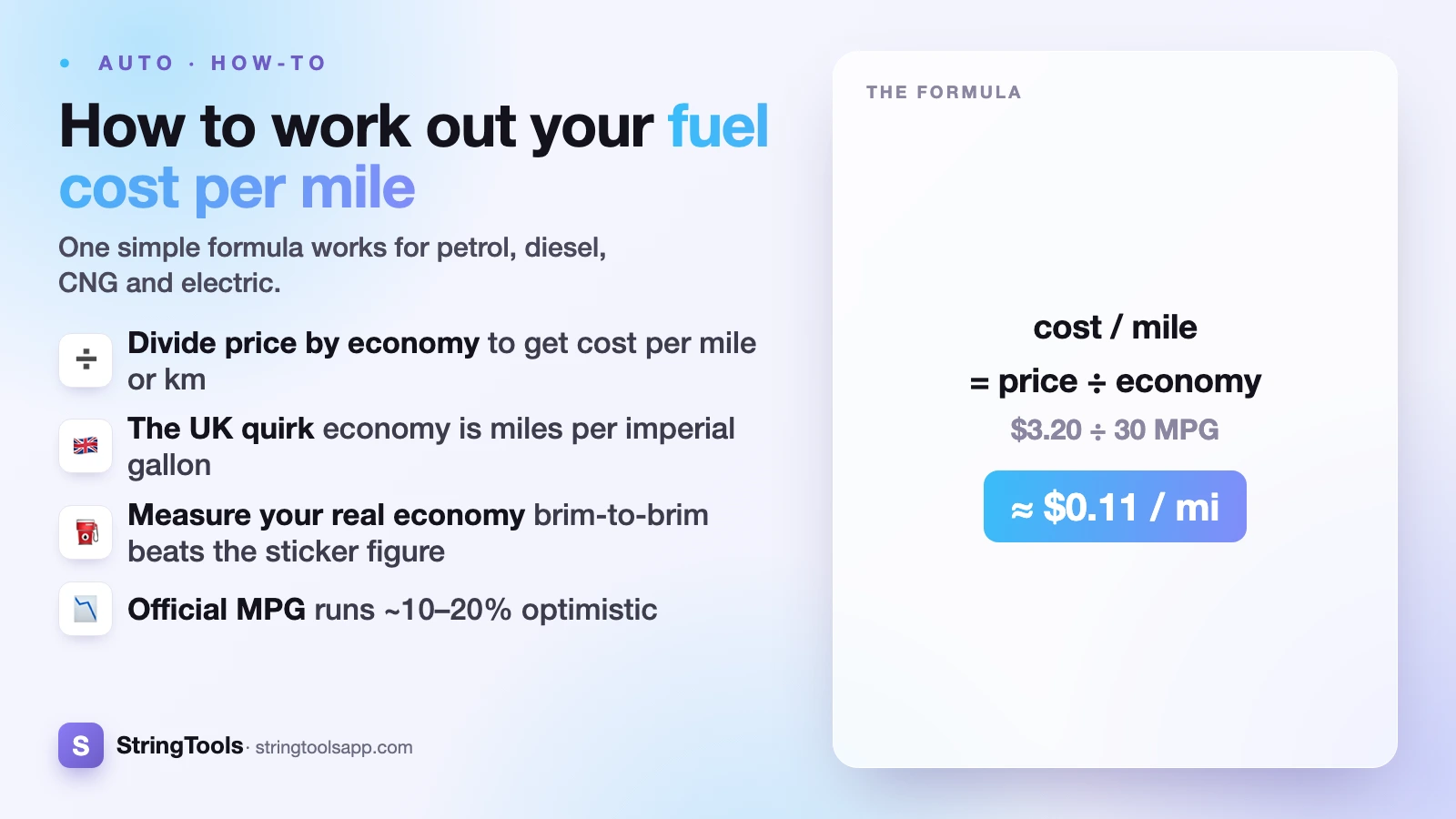
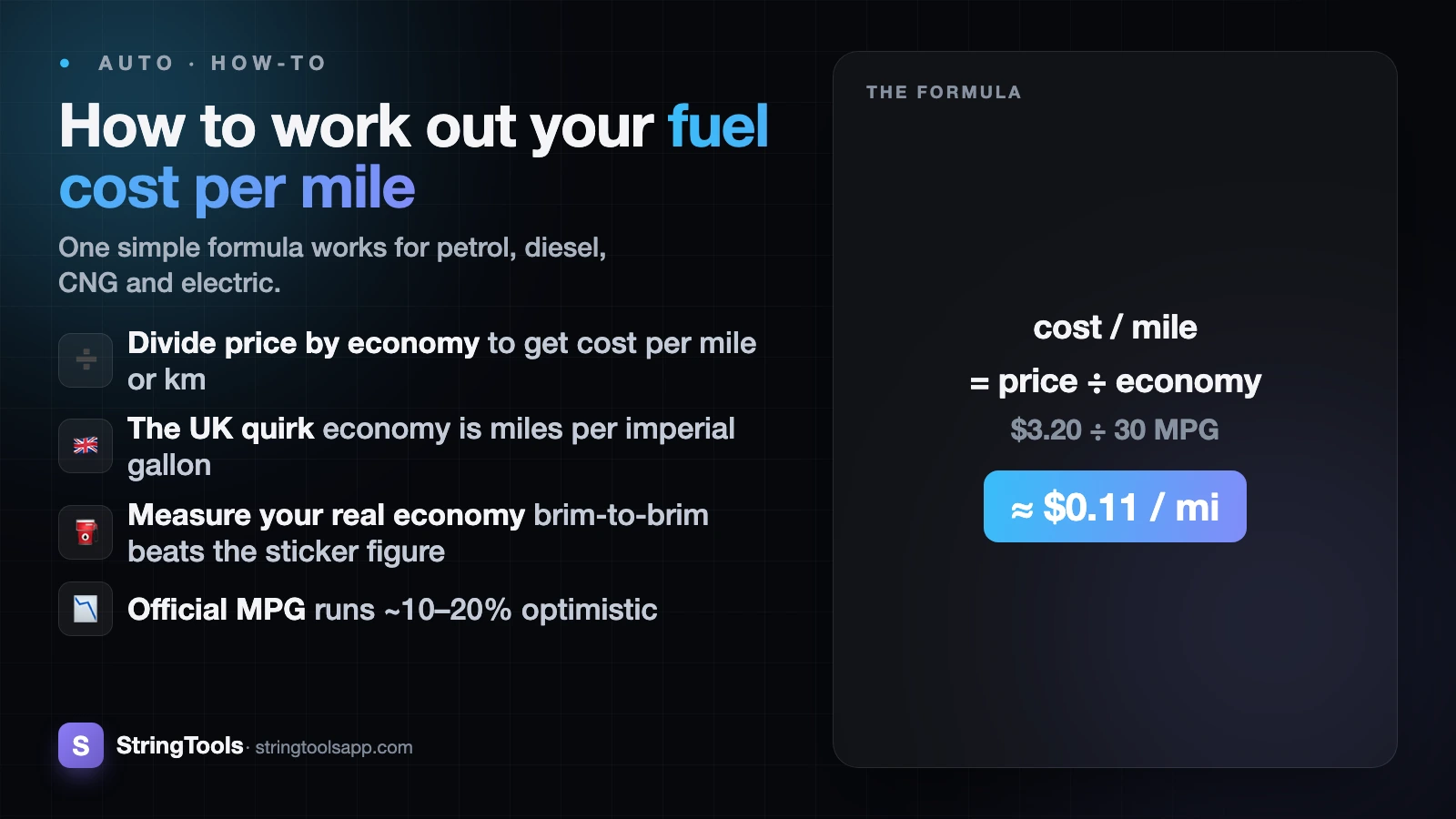
How to Calculate Your Car's Fuel Cost Per Mile (and Per Km)
Learn the simple formula for fuel cost per mile or km, convert between MPG, L/100km, km/l and EV efficiency, and turn it into yearly totals.
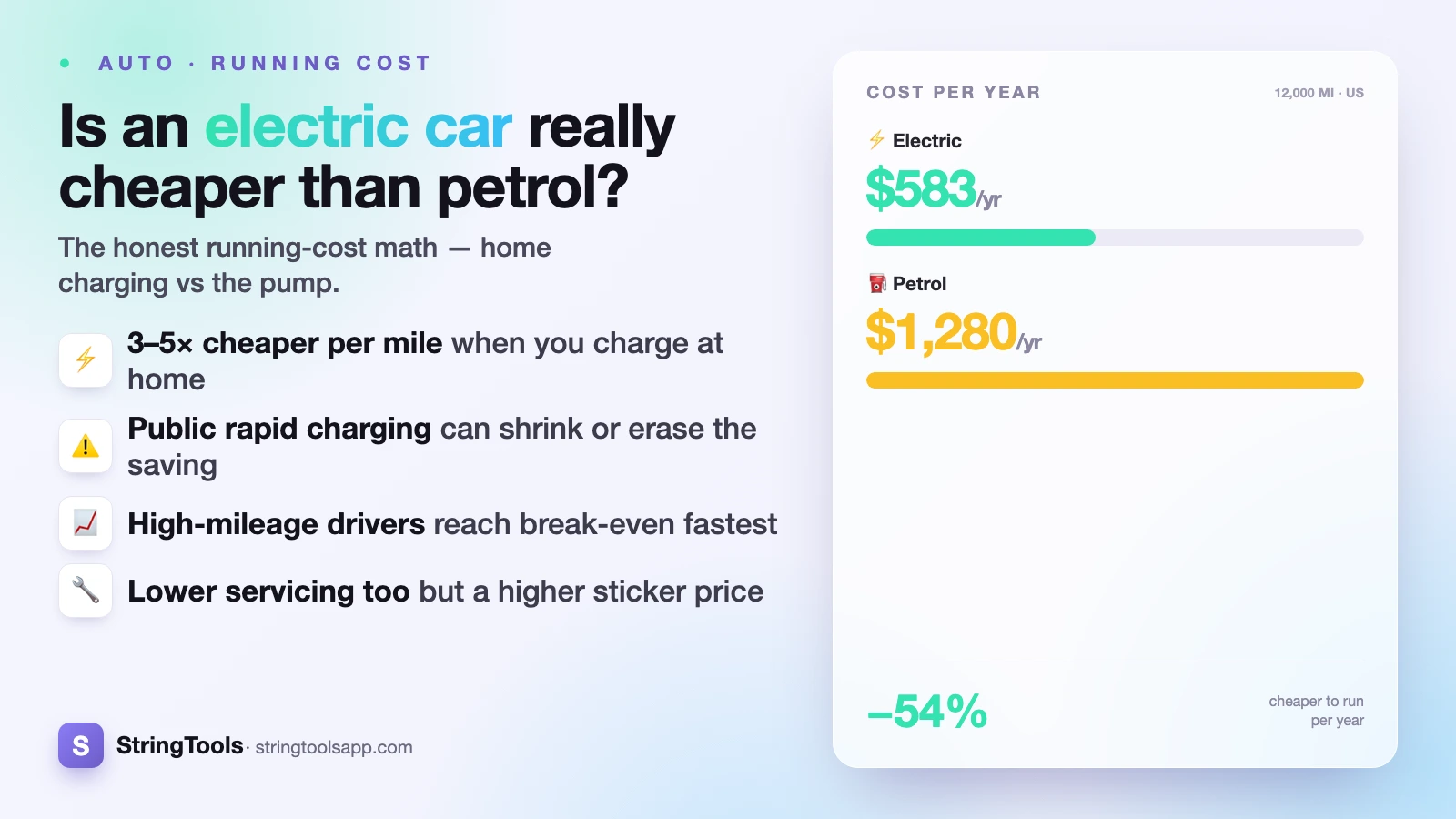
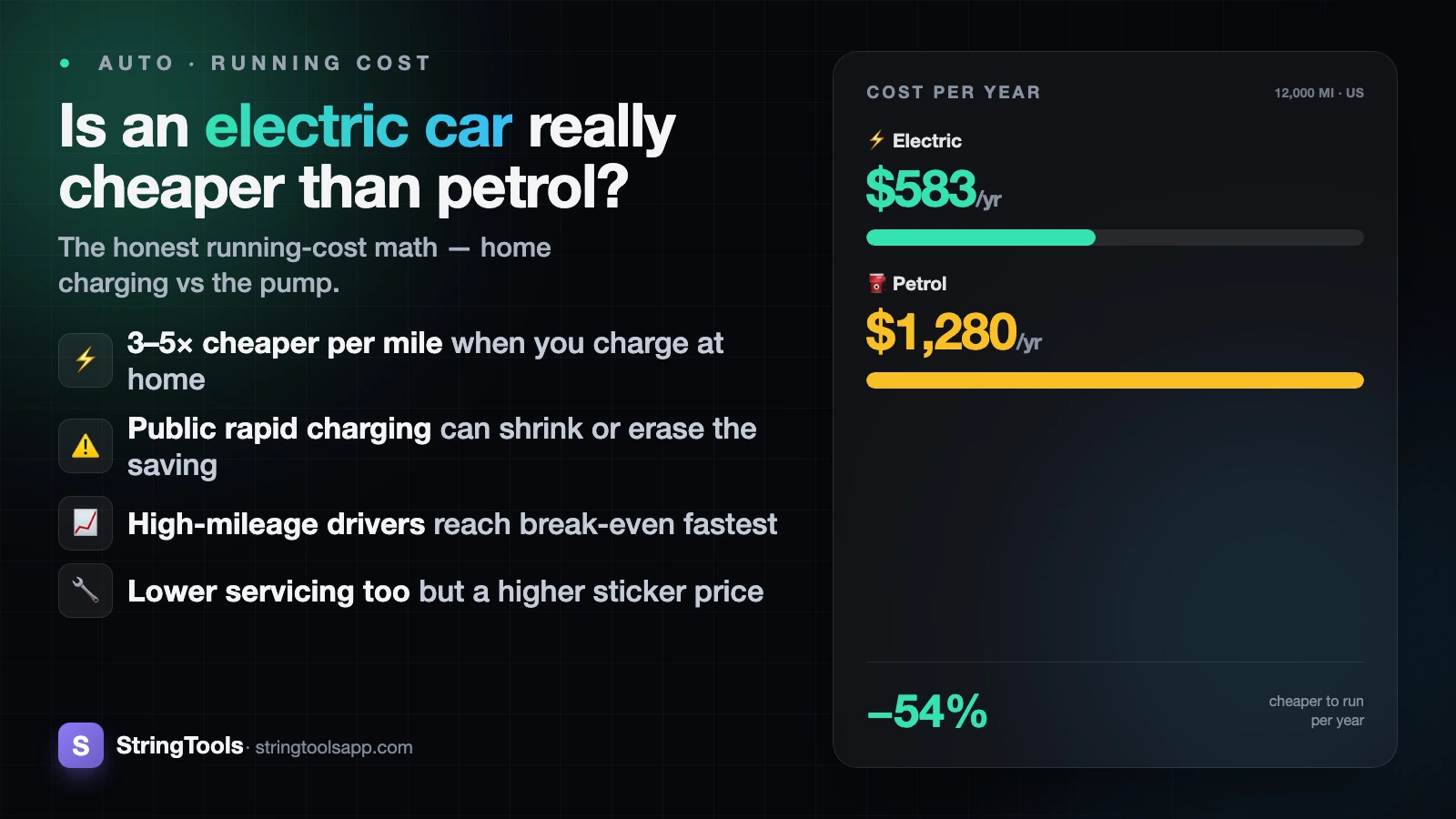
Is an Electric Car Really Cheaper Than Petrol? The Honest Math
EVs can cost half as much per mile to run — but home vs public charging and a higher sticker price change everything. Here's the honest, balanced math.
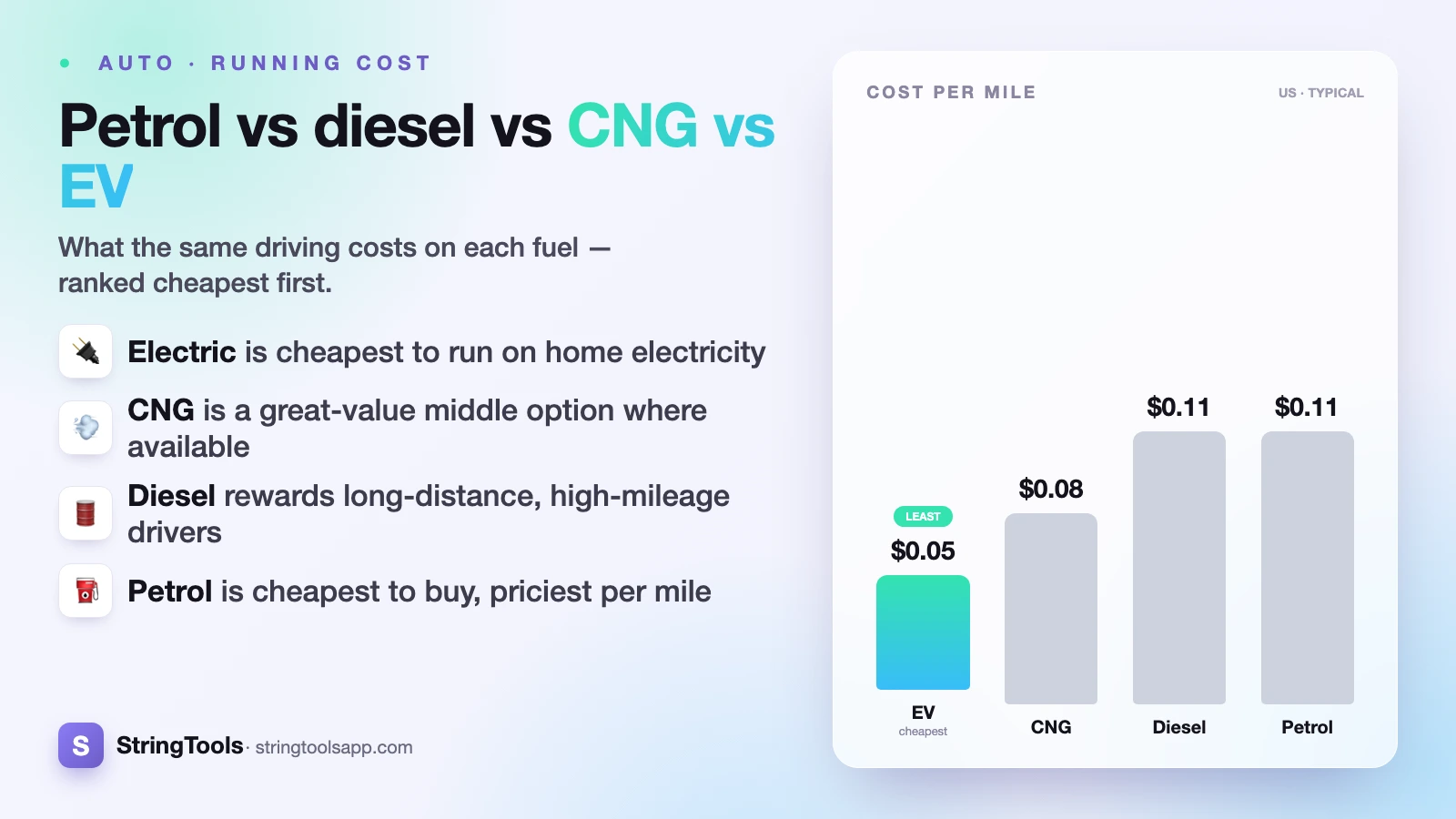
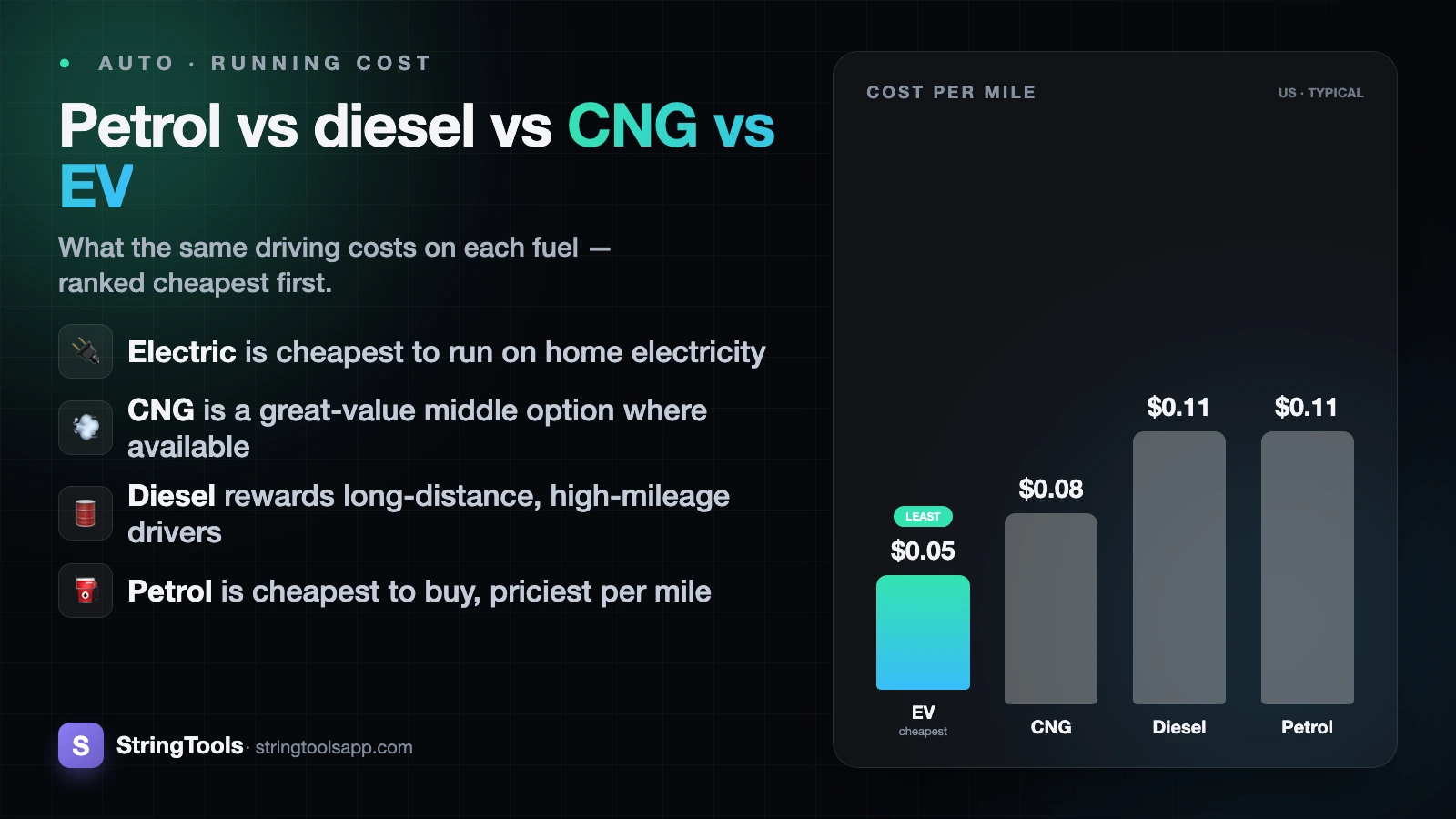
Petrol vs Diesel vs CNG vs EV: Cheapest to Run in 2026?
Petrol, diesel, CNG or electric — which costs least per mile in 2026? A country-by-country breakdown with worked examples, real numbers, and honest caveats.
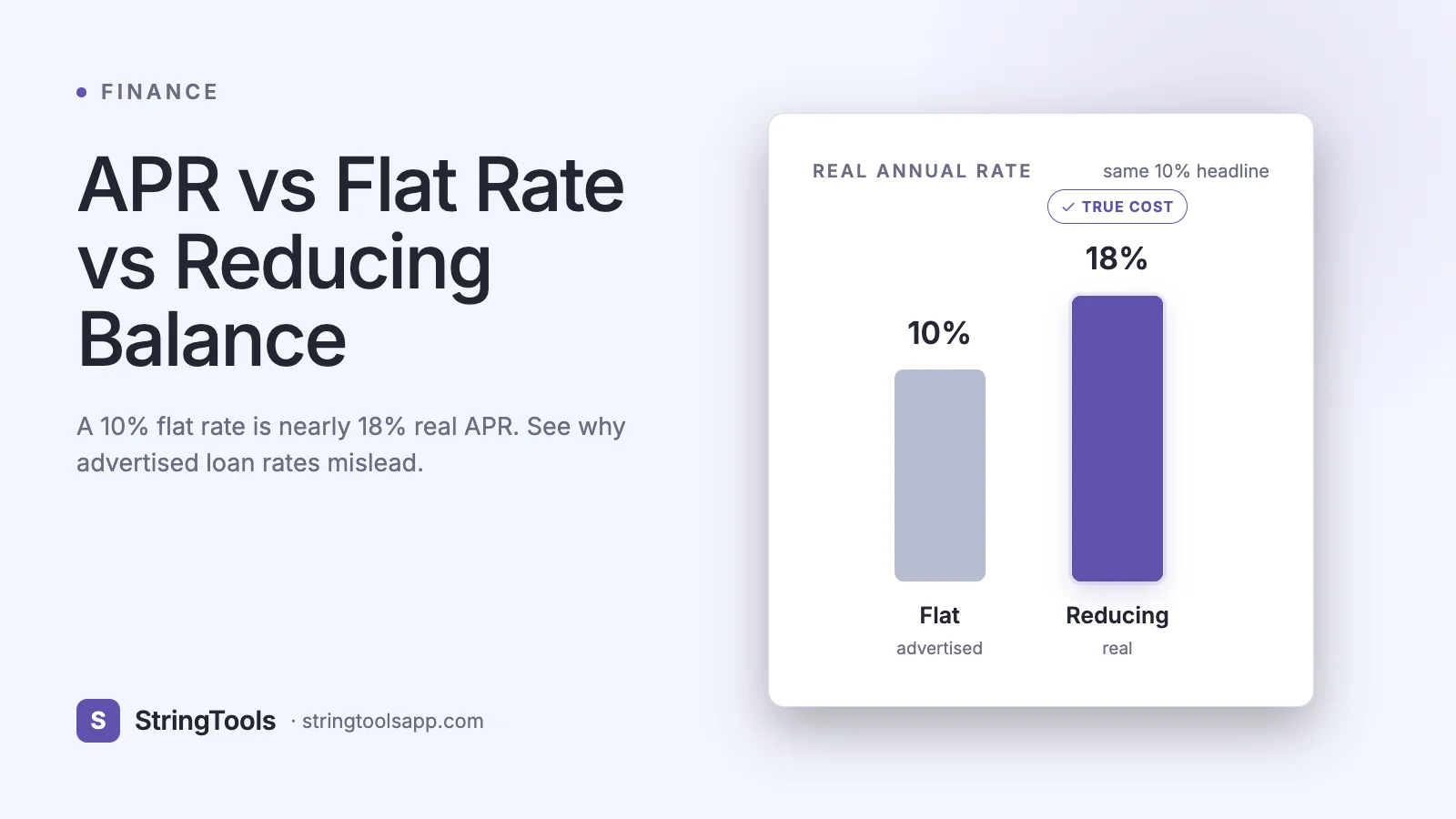
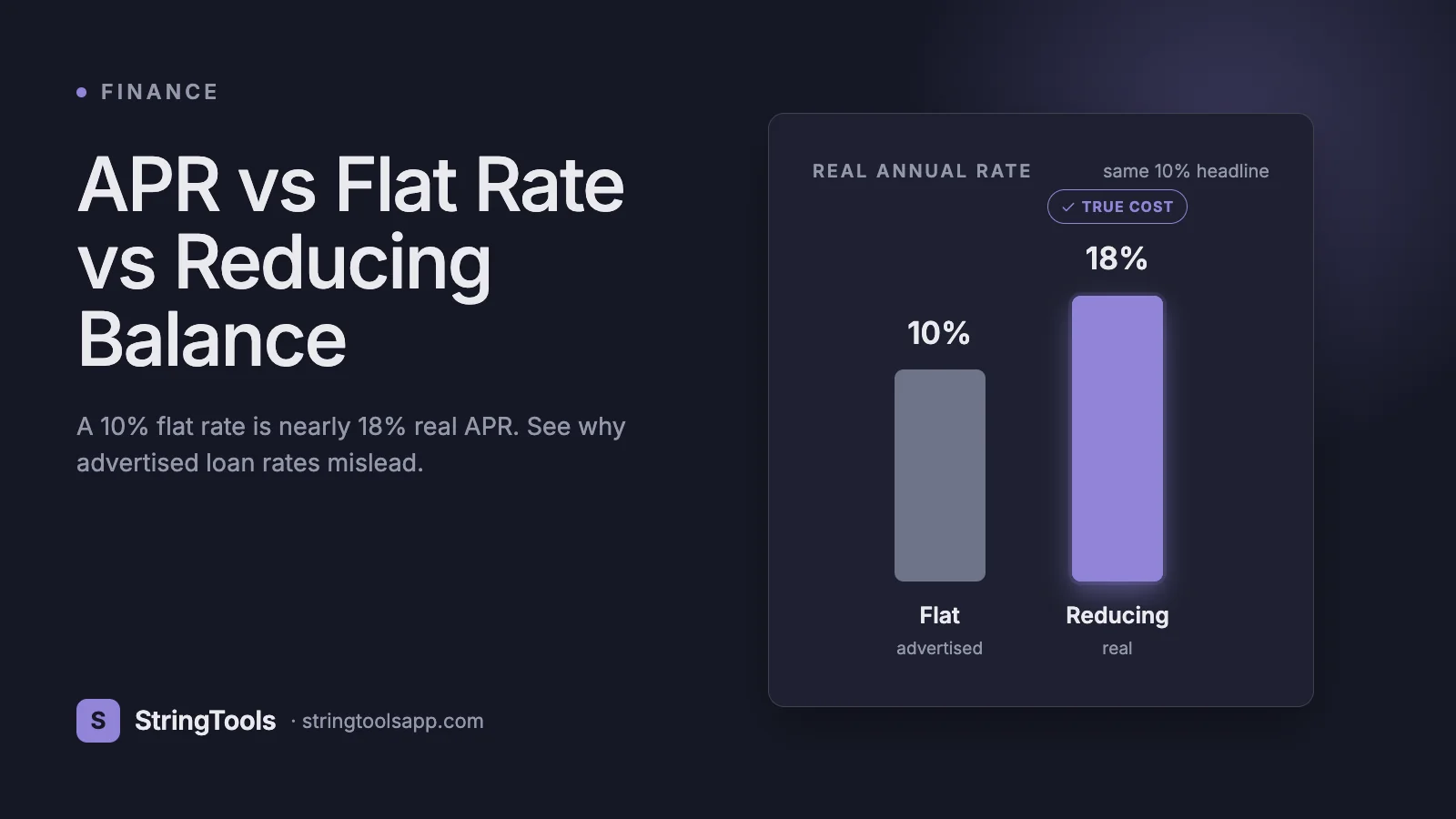
APR vs Flat Rate vs Reducing Balance: Loan Rates Decoded
Learn why advertised loan rates mislead. Compare flat rate, reducing balance, and APR with a worked example — a 10% flat rate is nearly 18% real APR.
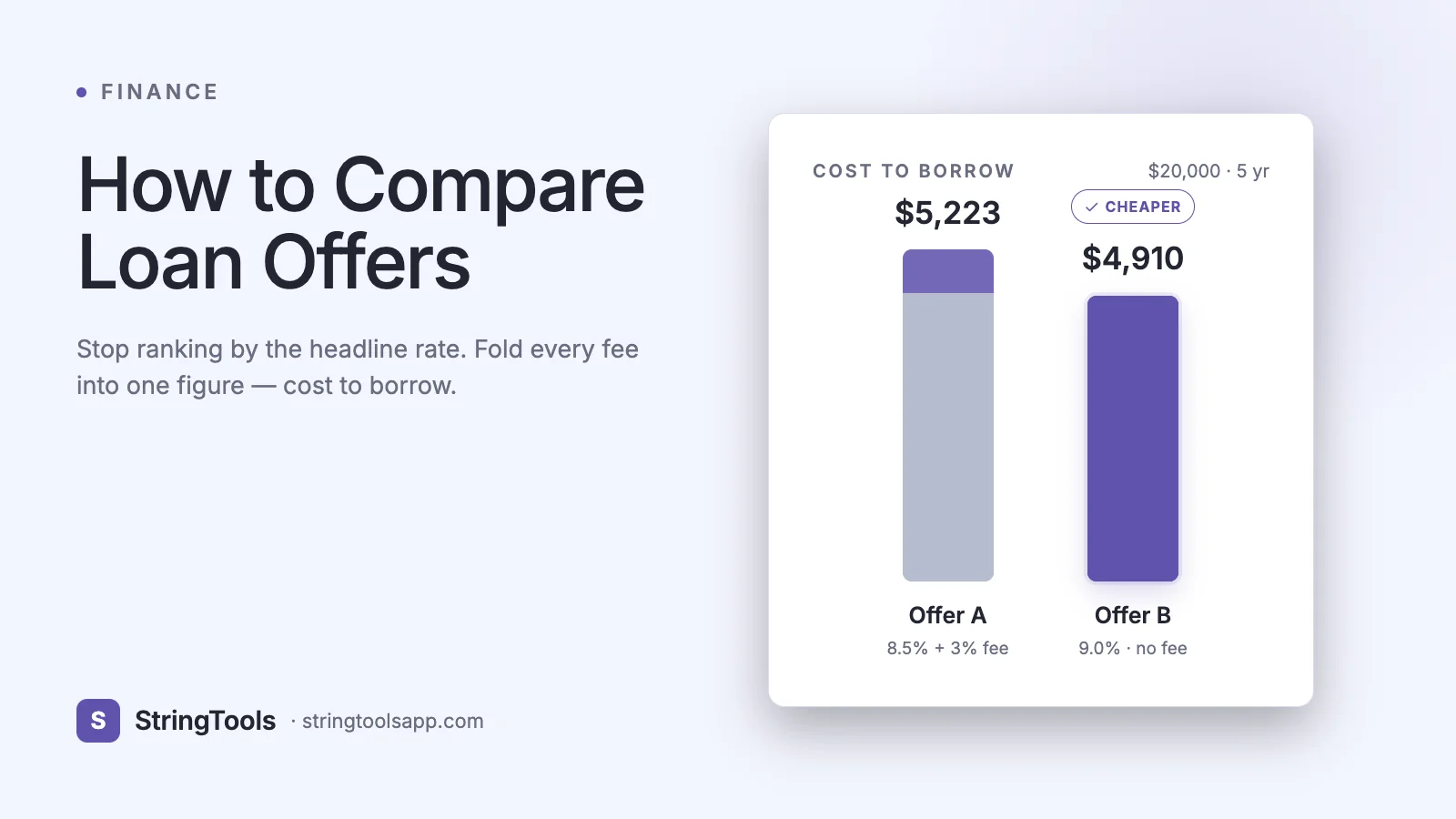

How to Compare Loan Offers: APR, Fees, and Total Cost
Learn the right way to compare loan offers: use APR not headline rates, fold fees into one total cost to borrow, and avoid the low-monthly-payment trap.


How to Negotiate a Lower Loan Rate With Competing Offers
Learn how to use rival quotes as leverage, what is negotiable beyond the rate, and the credit-safe way to shop for a loan in the US, UK, and EU.
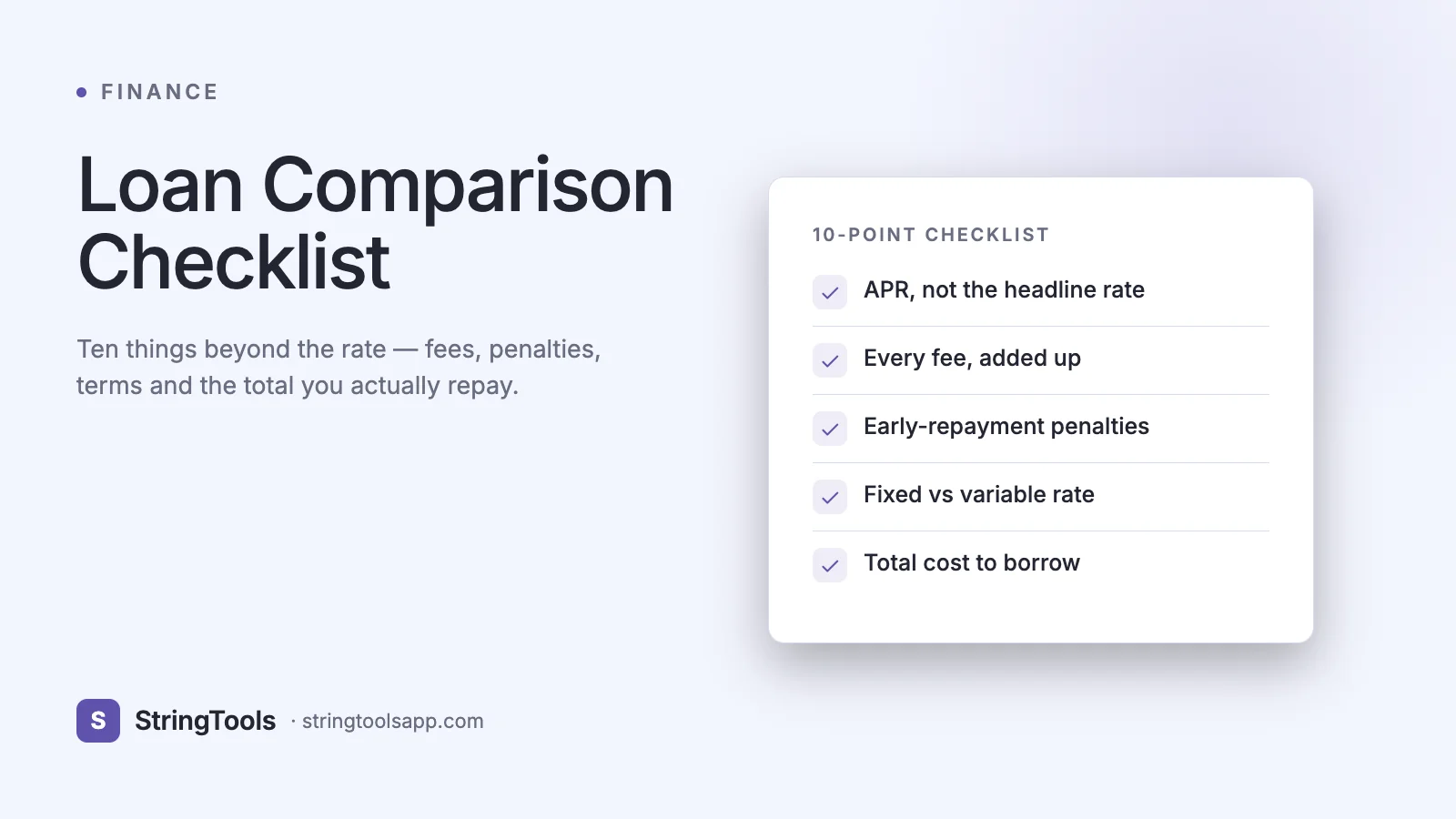
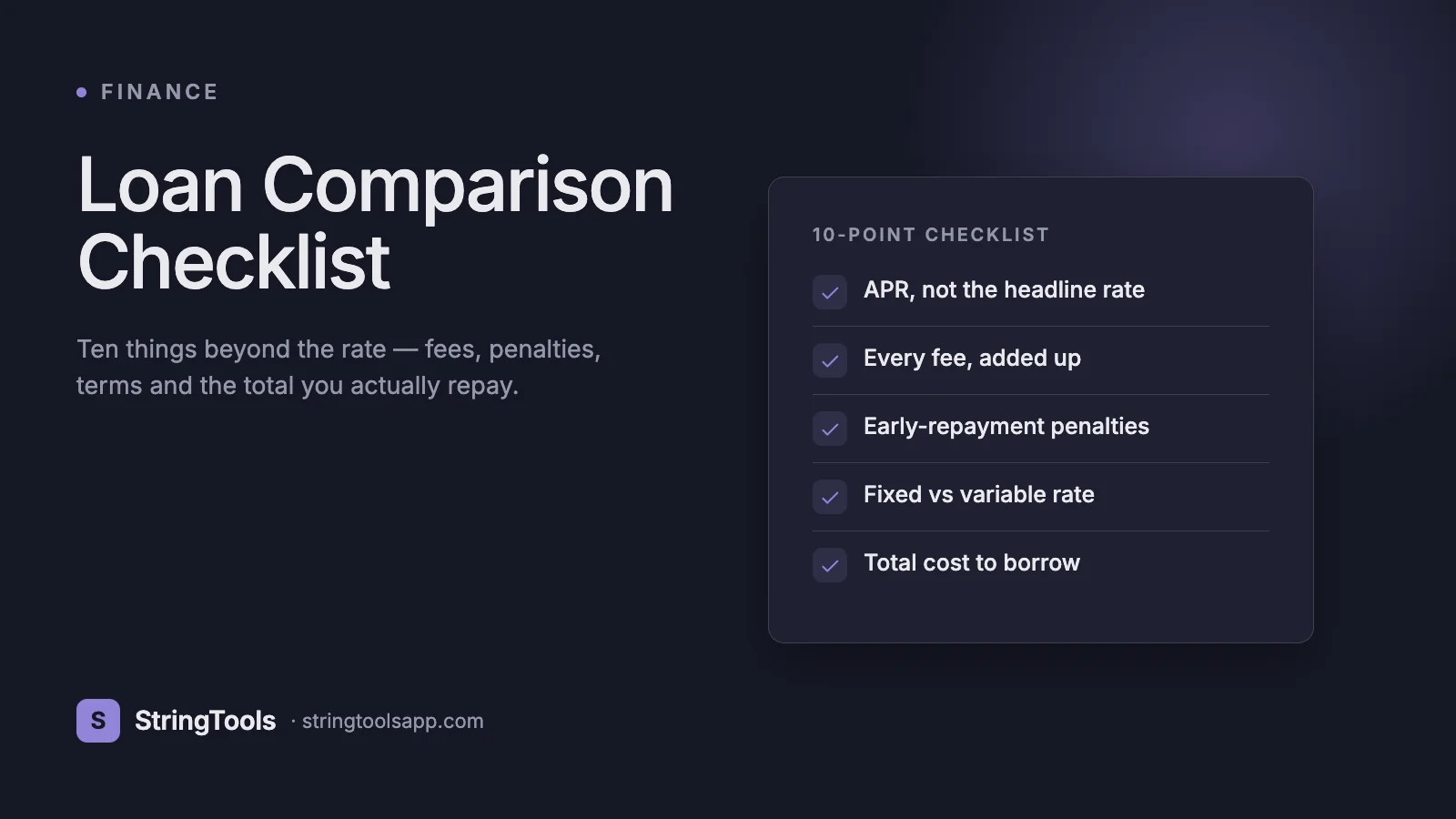
Loan Comparison Checklist: 10 Things Beyond the Rate
The headline interest rate is only part of a loan's real cost. Use this 10-point checklist to compare fees, penalties, terms and the total you repay.
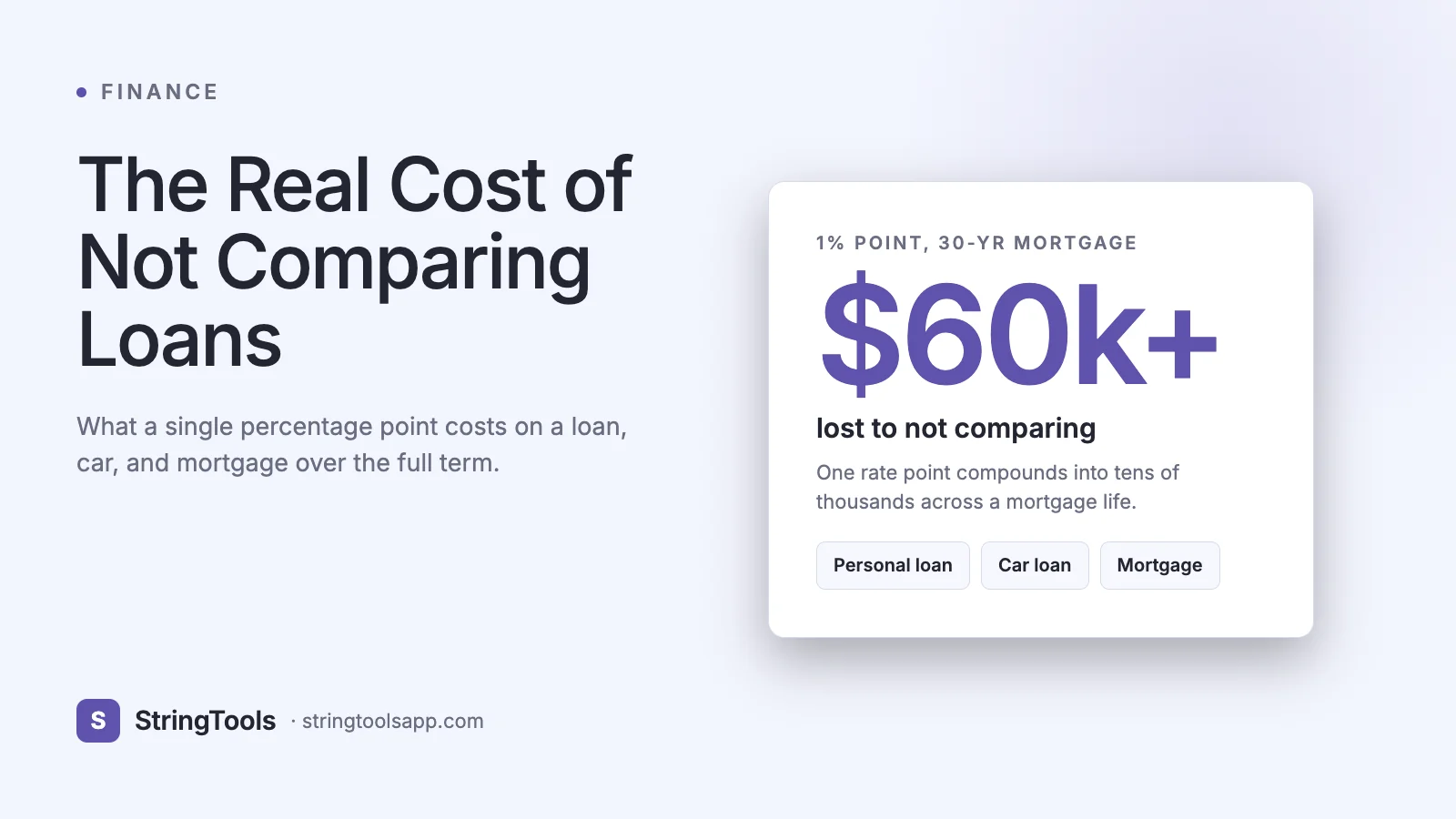

The Real Cost of Not Comparing Loans: What One Rate Point Costs
See what a single percentage point costs on a personal loan, car loan, and mortgage — with worked US and UK examples — and why comparing beats loyalty.
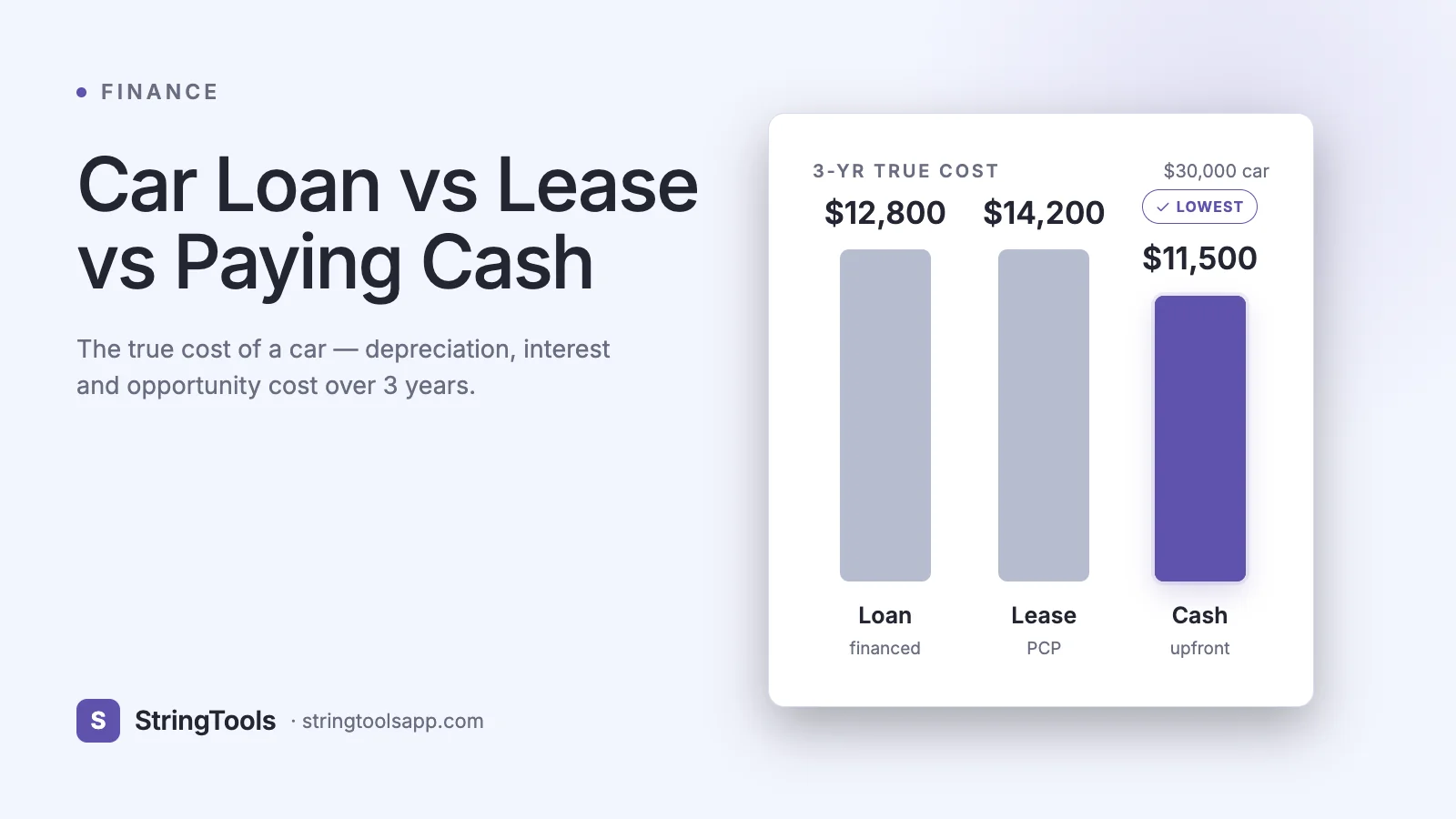
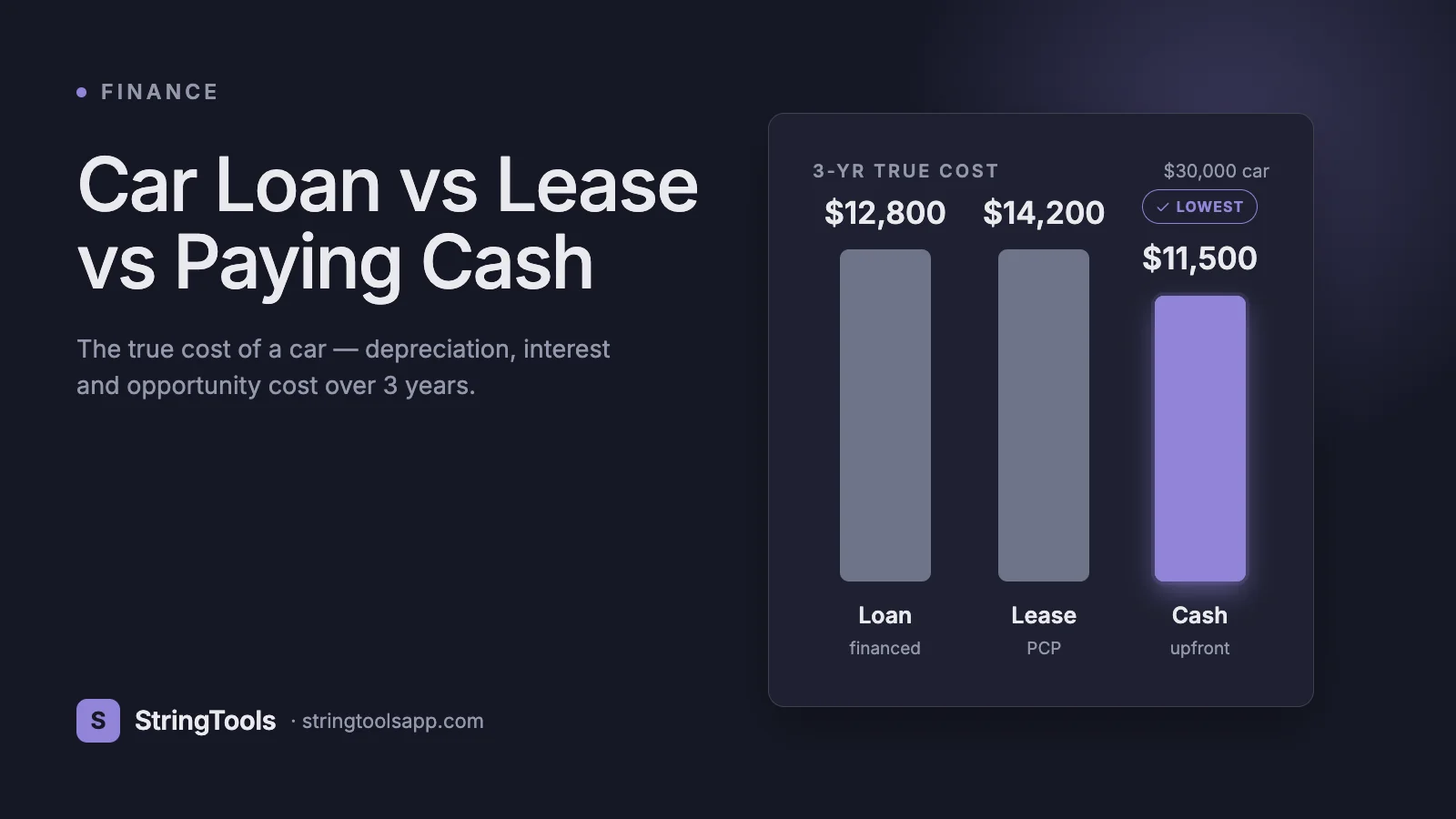
Car Loan vs Lease vs Paying Cash: The Real Cost
Loan, lease/PCP or cash? Compare the true cost of a car — depreciation, interest, opportunity cost and total ownership — with an illustrative 3-year example.
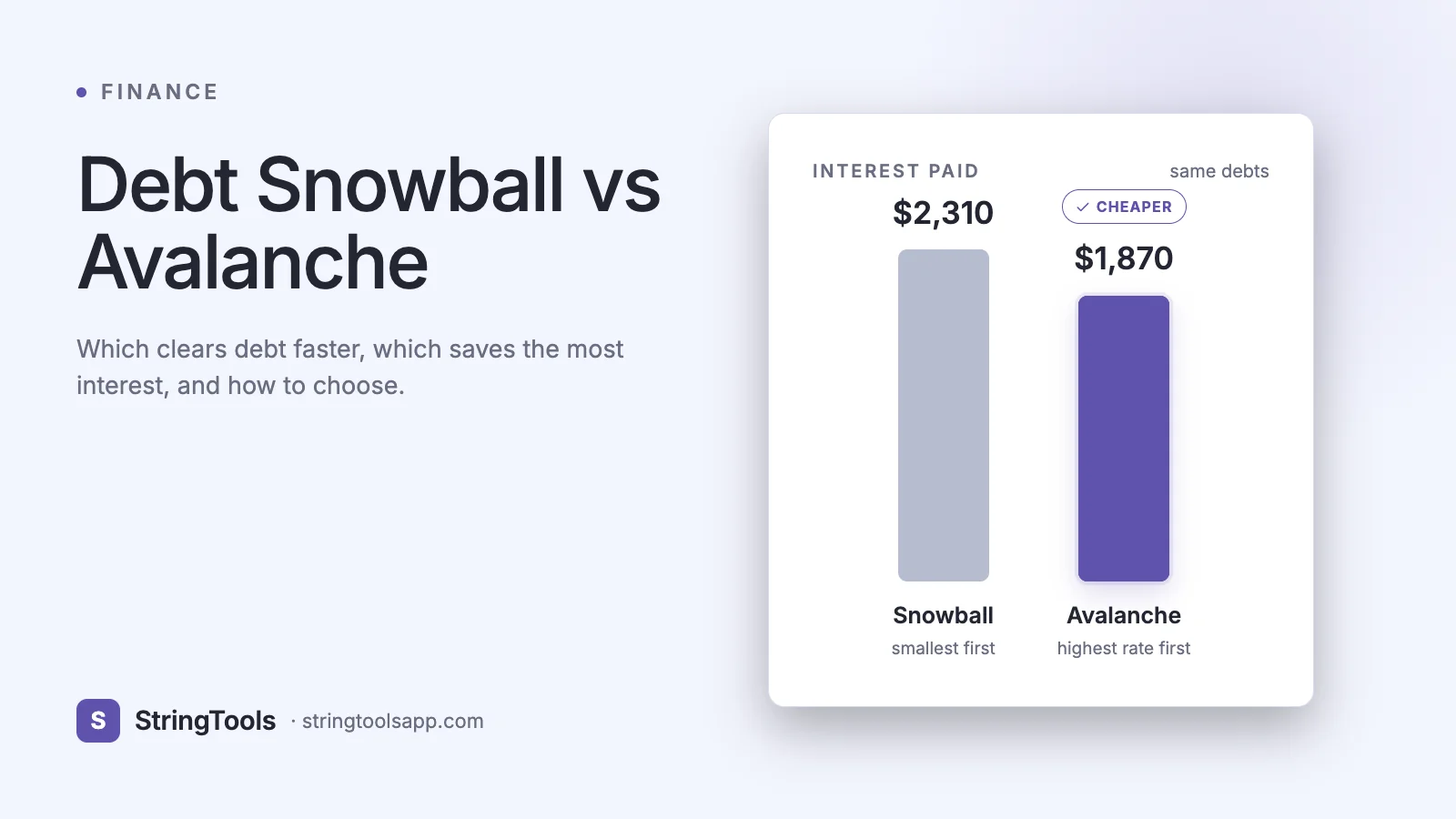
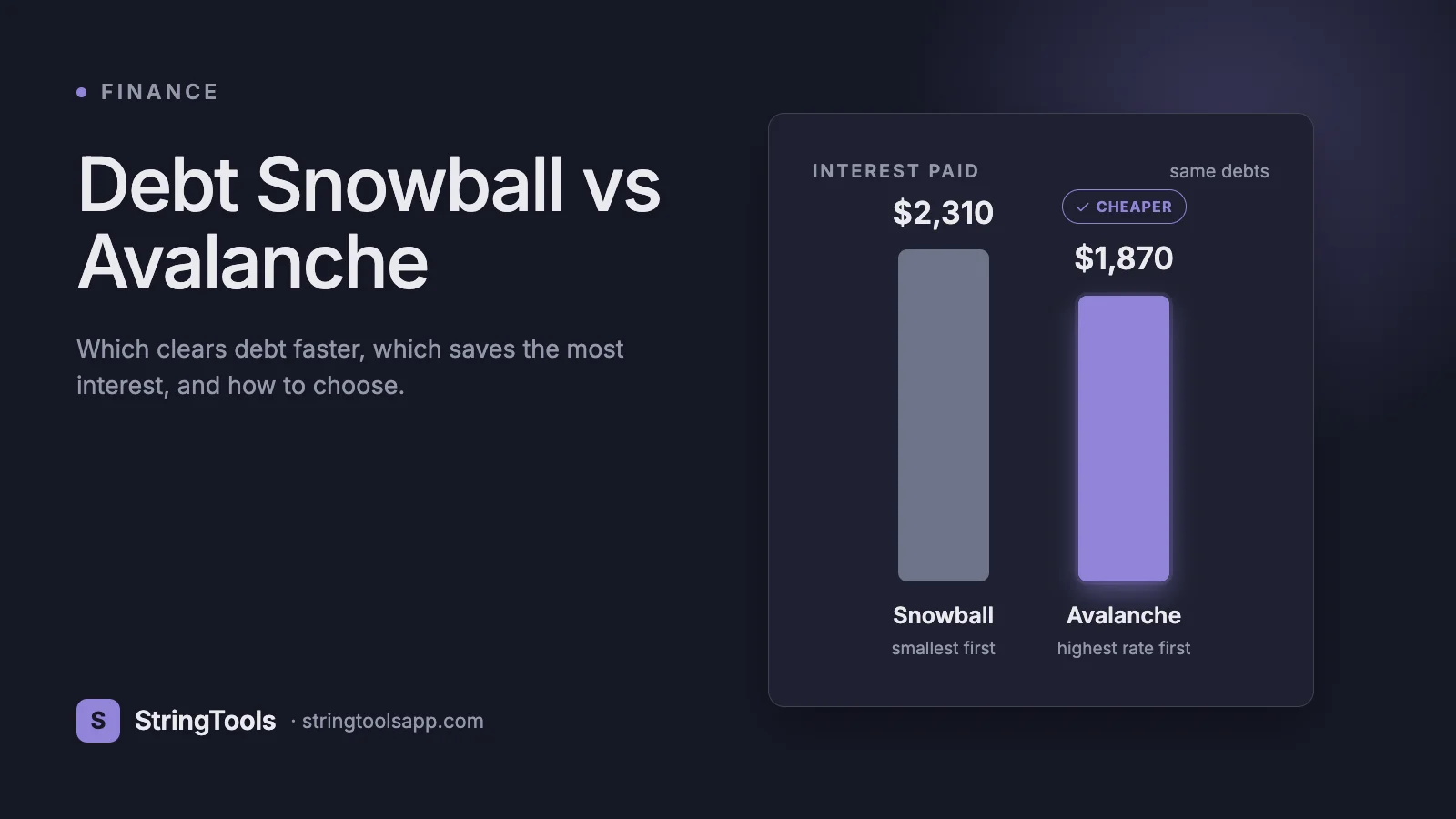
Debt Snowball vs Avalanche: The Fastest Way Out of Debt
Debt snowball vs avalanche compared with a worked example: which clears debt faster, which saves the most interest, and how to choose between them.
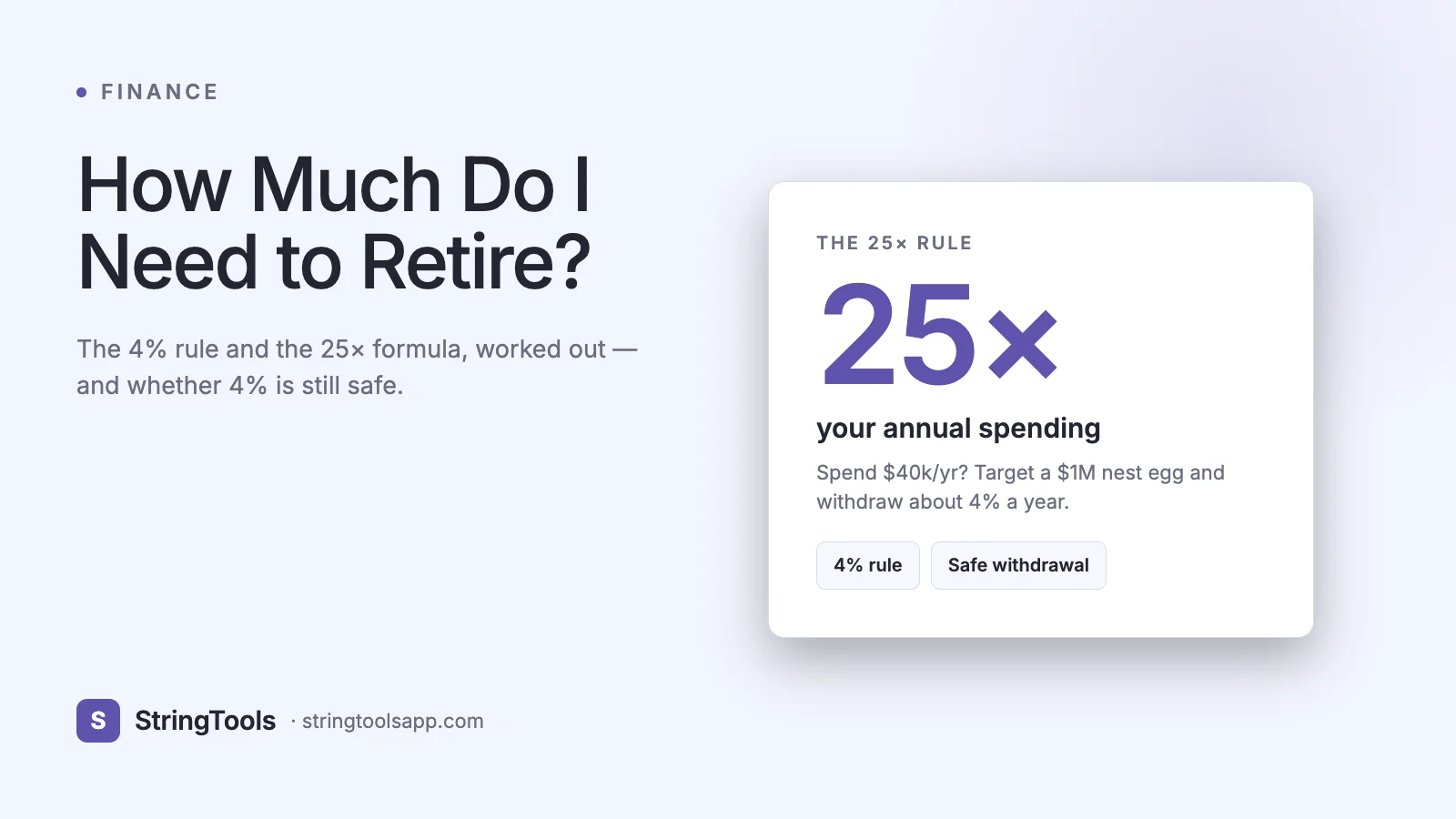

How Much Do I Need to Retire? The 4% Rule Explained
The 4% rule and the 25x formula, worked out in dollars and pounds — plus the honest debate over whether 4% is still a safe withdrawal rate.


How Much Life Insurance Do You Actually Need?
Work out how much life insurance you need using the 10× income rule and the DIME method, and see whether term or whole life fits — with a worked example.
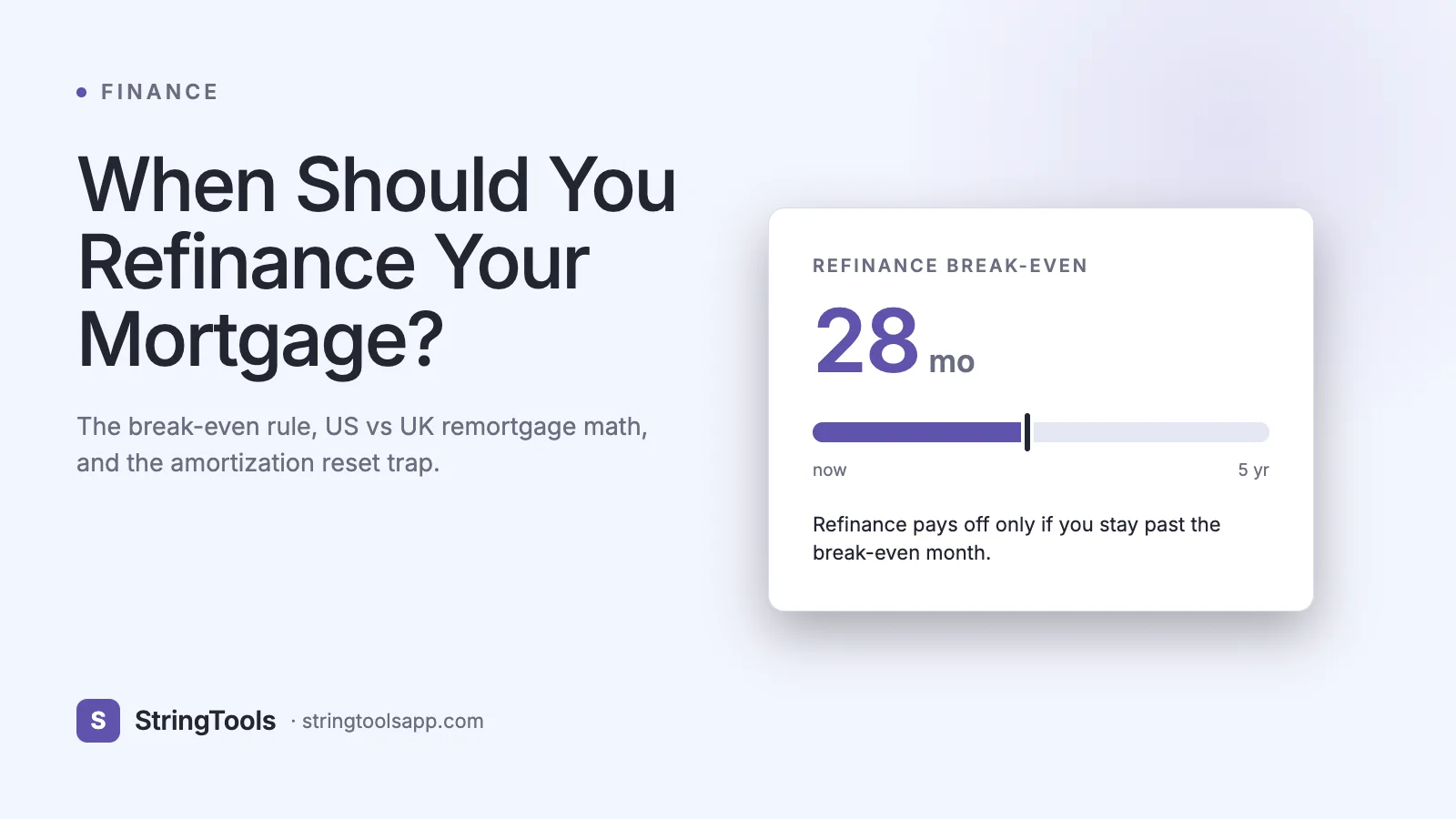
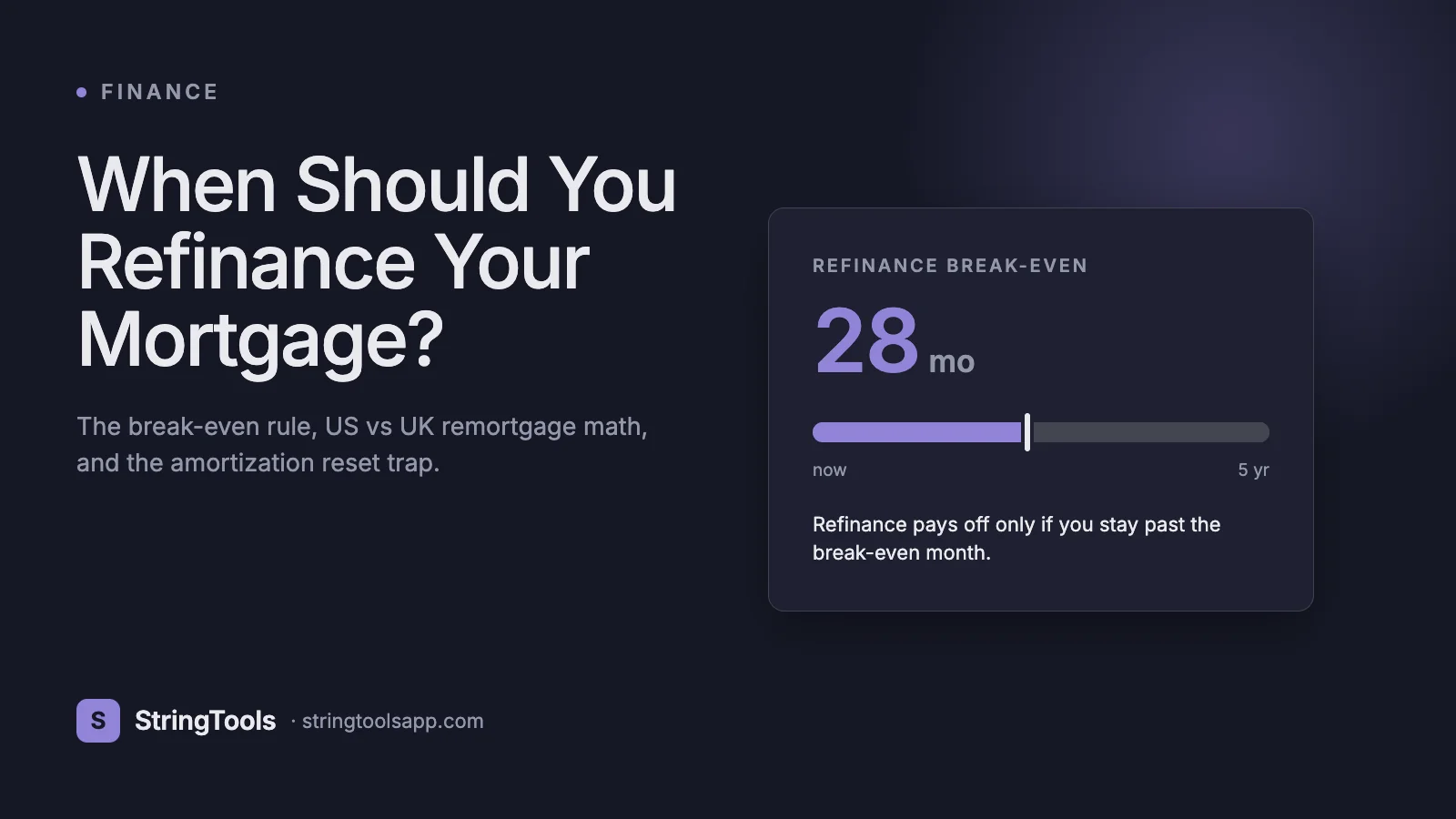
When Should You Refinance Your Mortgage? The Break-Even Rule
Learn the mortgage refinance break-even rule, US vs UK remortgage math, rate-and-term vs cash-out, and the amortization reset trap that quietly costs you.
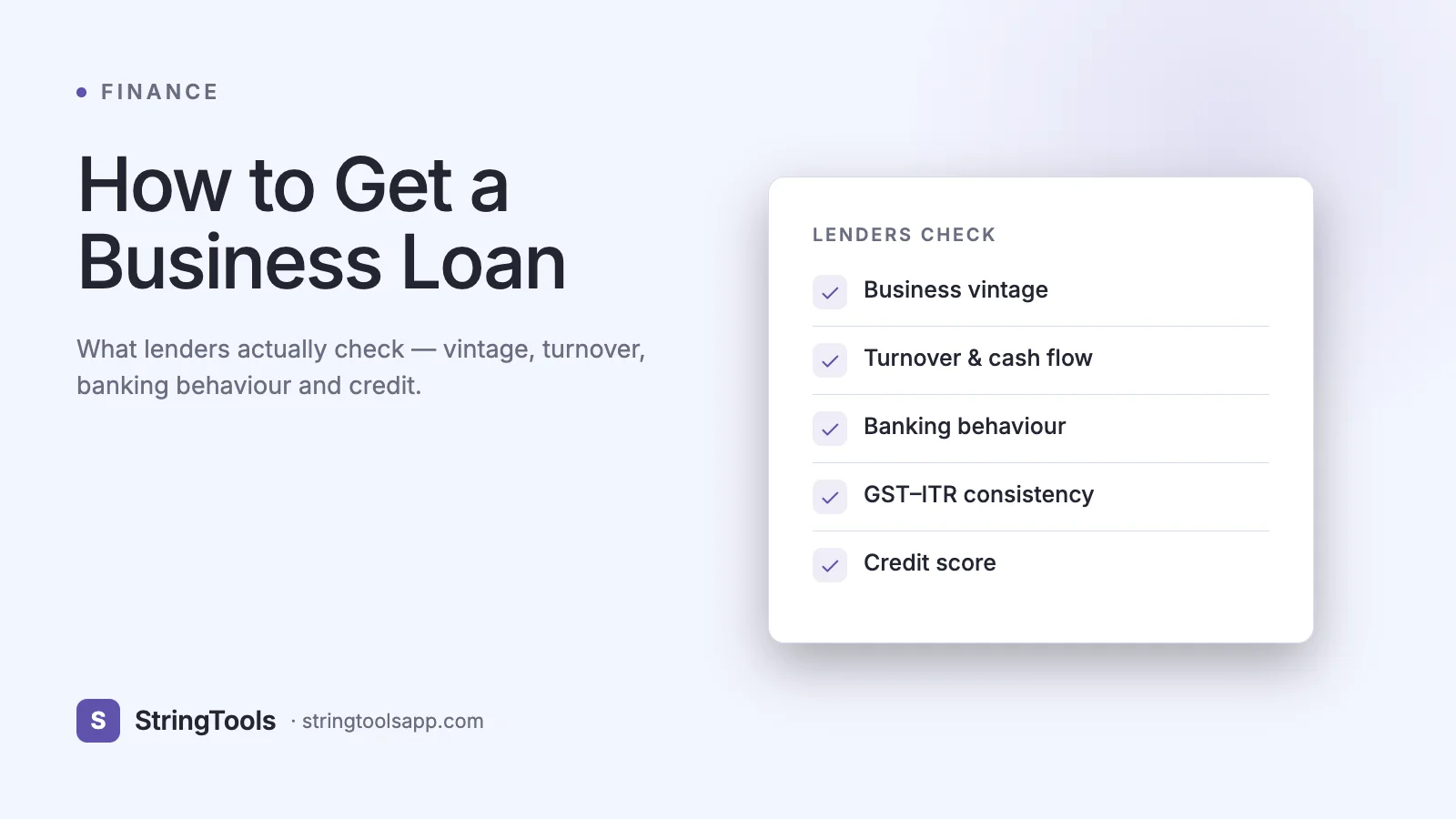

How to Get a Business Loan: What Lenders Actually Check
What lenders check before approving a business loan: vintage, turnover, banking behaviour, GST-ITR consistency, credit scores and collateral-free options.


Education Loan Guide: Eligibility, Collateral & Moratorium Explained
How education loan moratoriums, collateral thresholds, co-applicants and Section 80E work — with a worked EMI example for India and abroad studies.
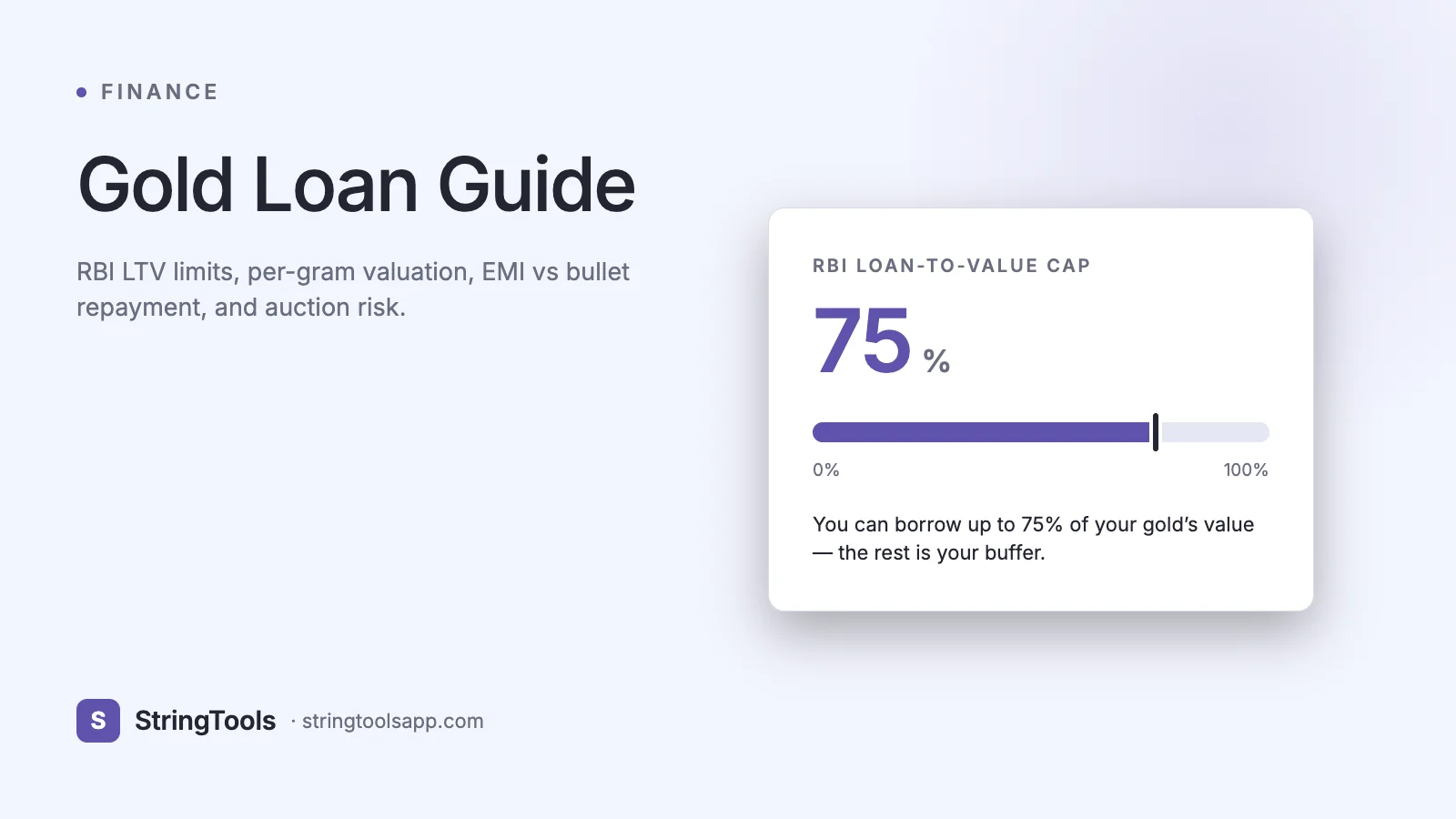
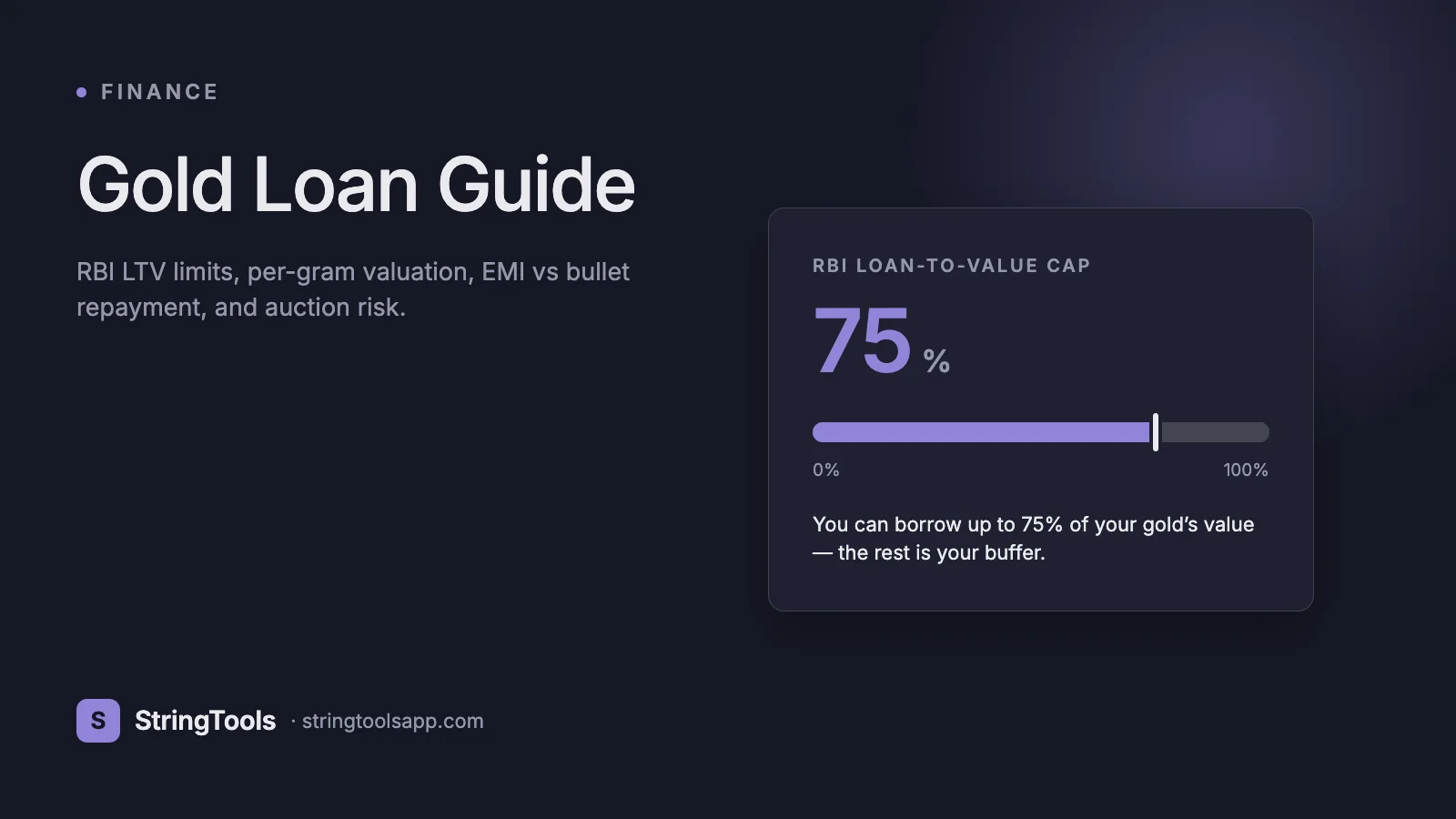
Gold Loan Guide: How It Works, LTV Limits, Rates & Risks
How gold loans work: RBI LTV limits, per-gram valuation, EMI vs bullet repayment with real math, auction risks, and how to compare offers before you pledge.
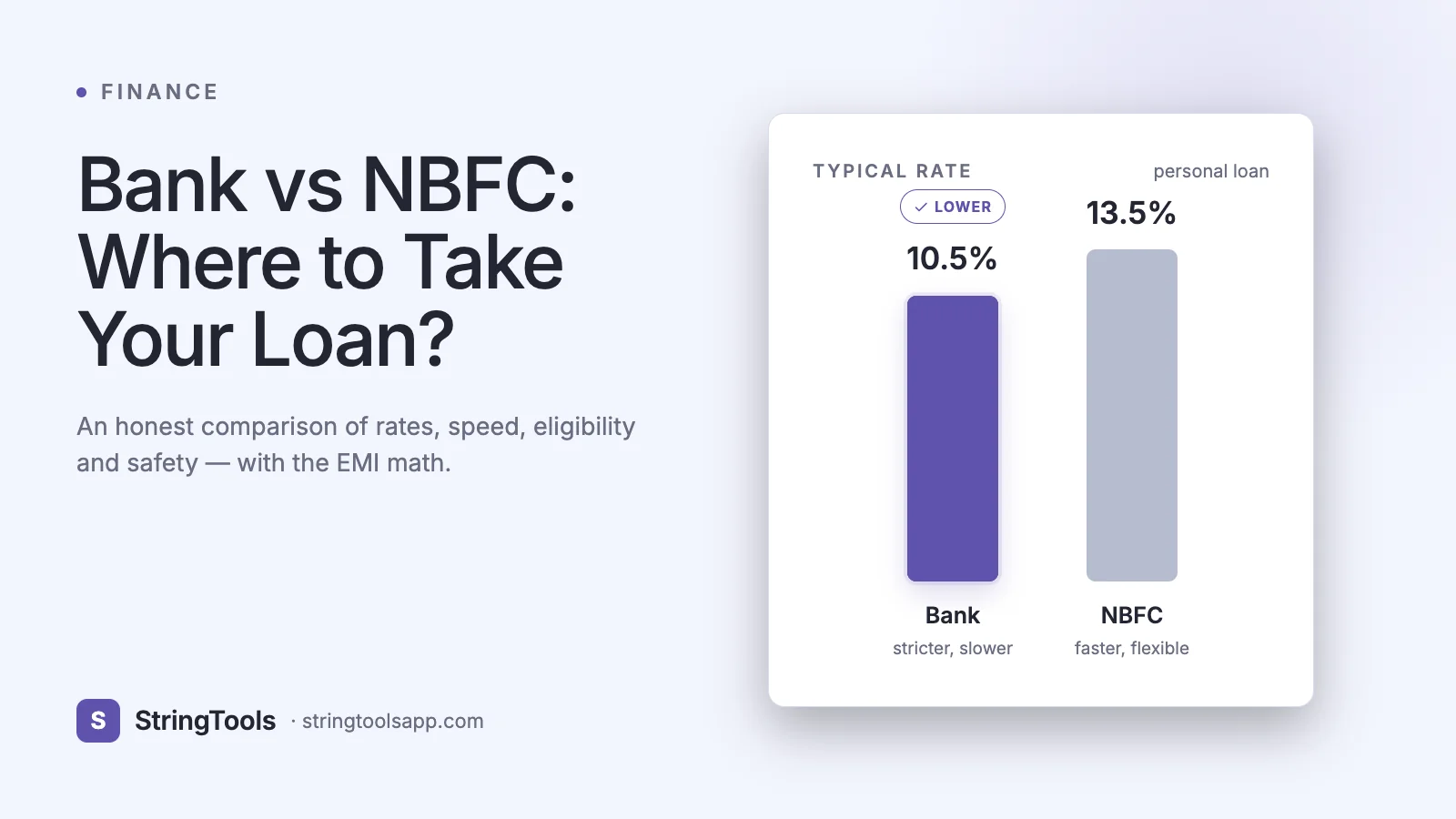
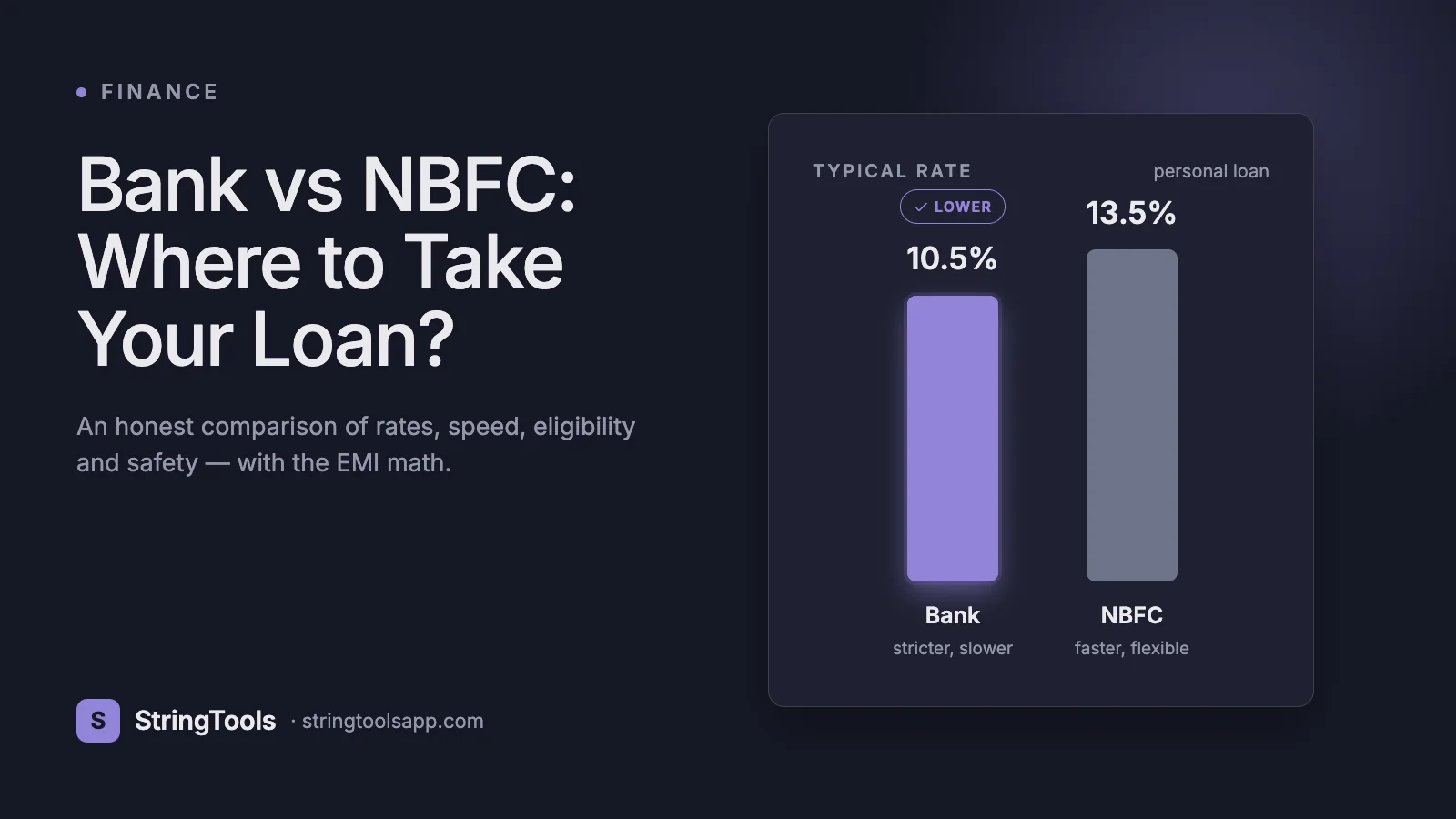
Bank vs NBFC: Where Should You Take Your Loan?
Bank or NBFC for your loan? Honest comparison of rates, speed, eligibility and safety, with a worked EMI example showing what the rate gap really costs.
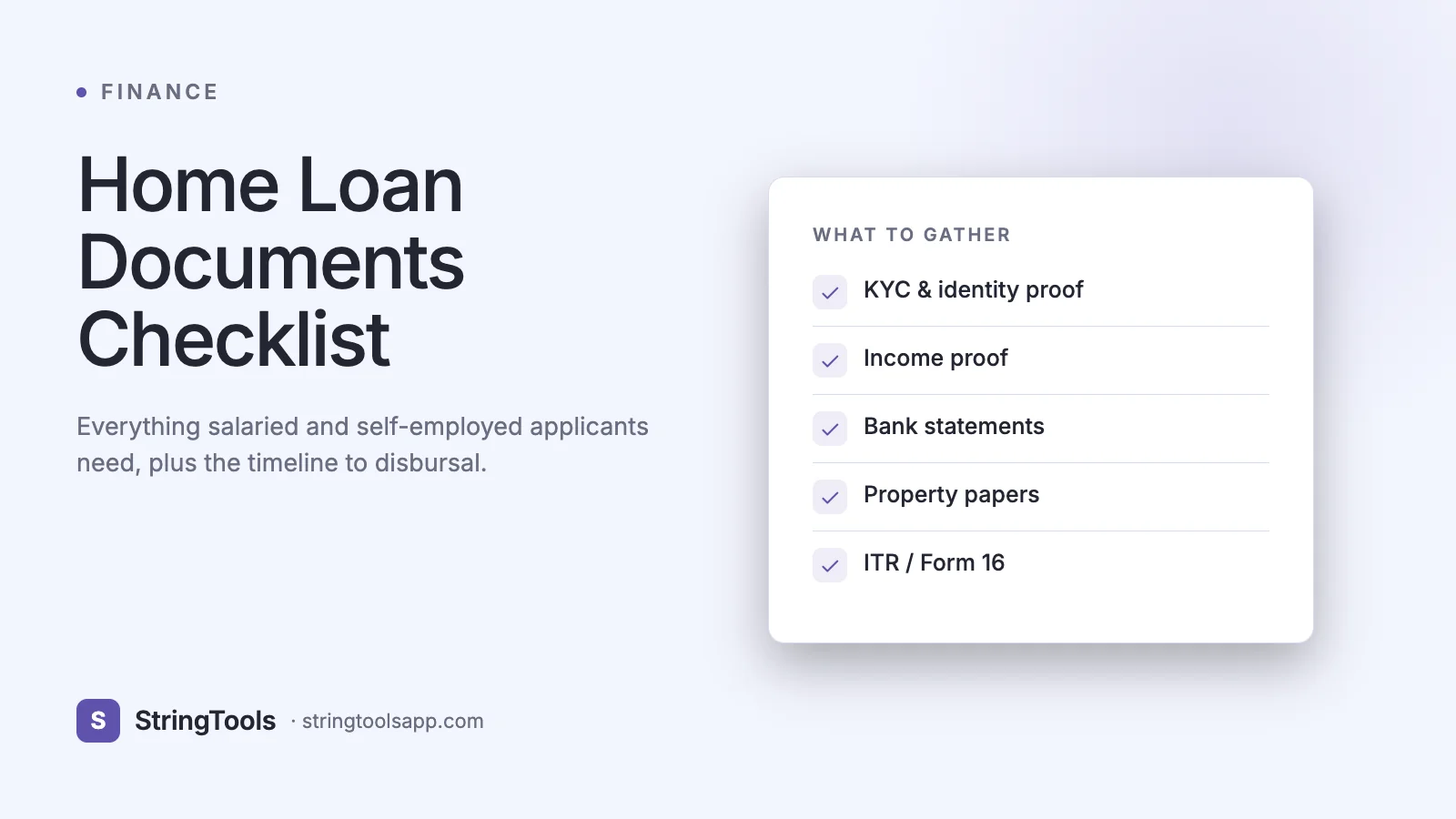

Home Loan Documents Checklist: Salaried & Self-Employed
Complete home loan documents checklist for salaried and self-employed applicants: KYC, income proof, property papers, plus the timeline to disbursal.
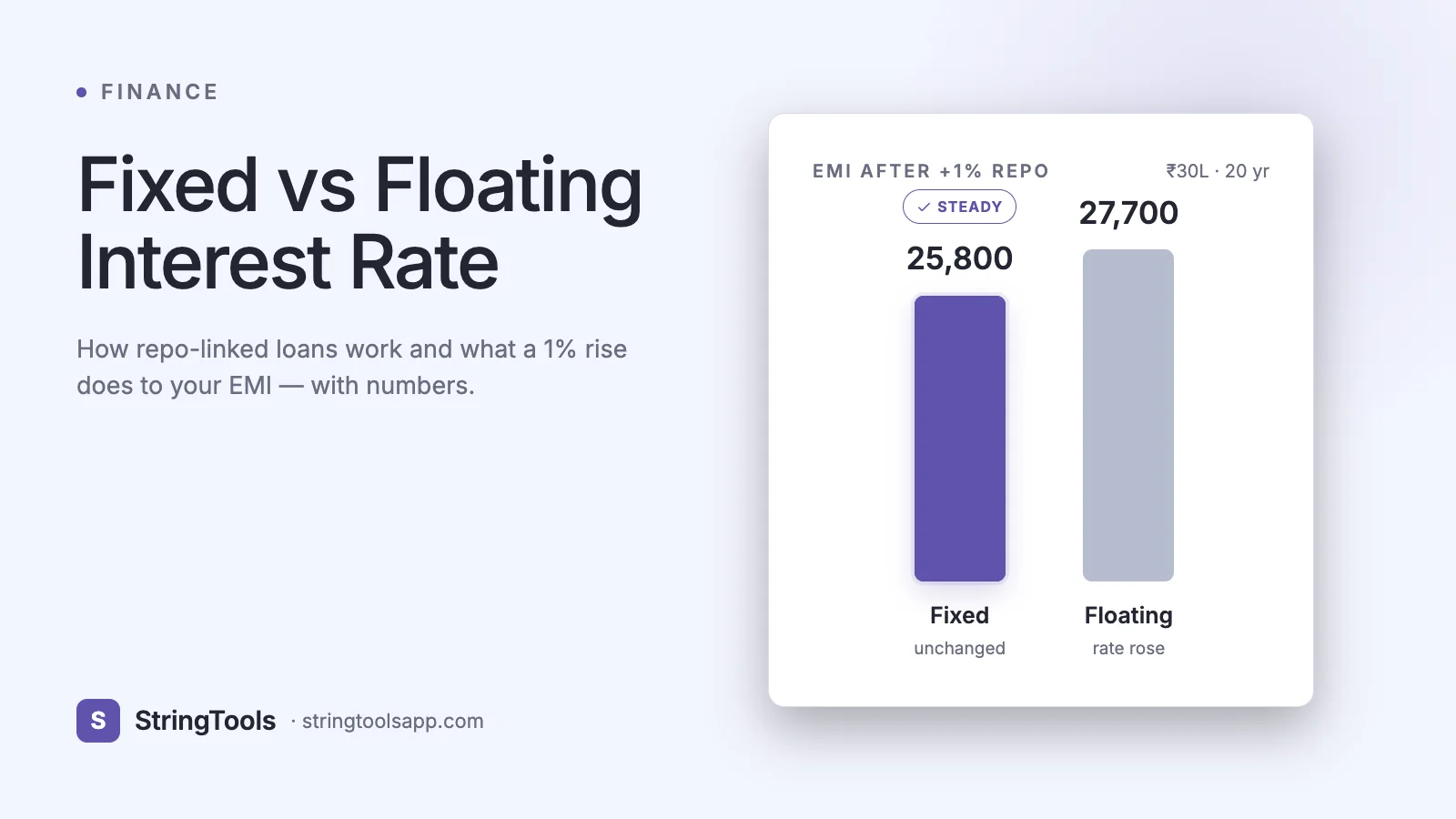
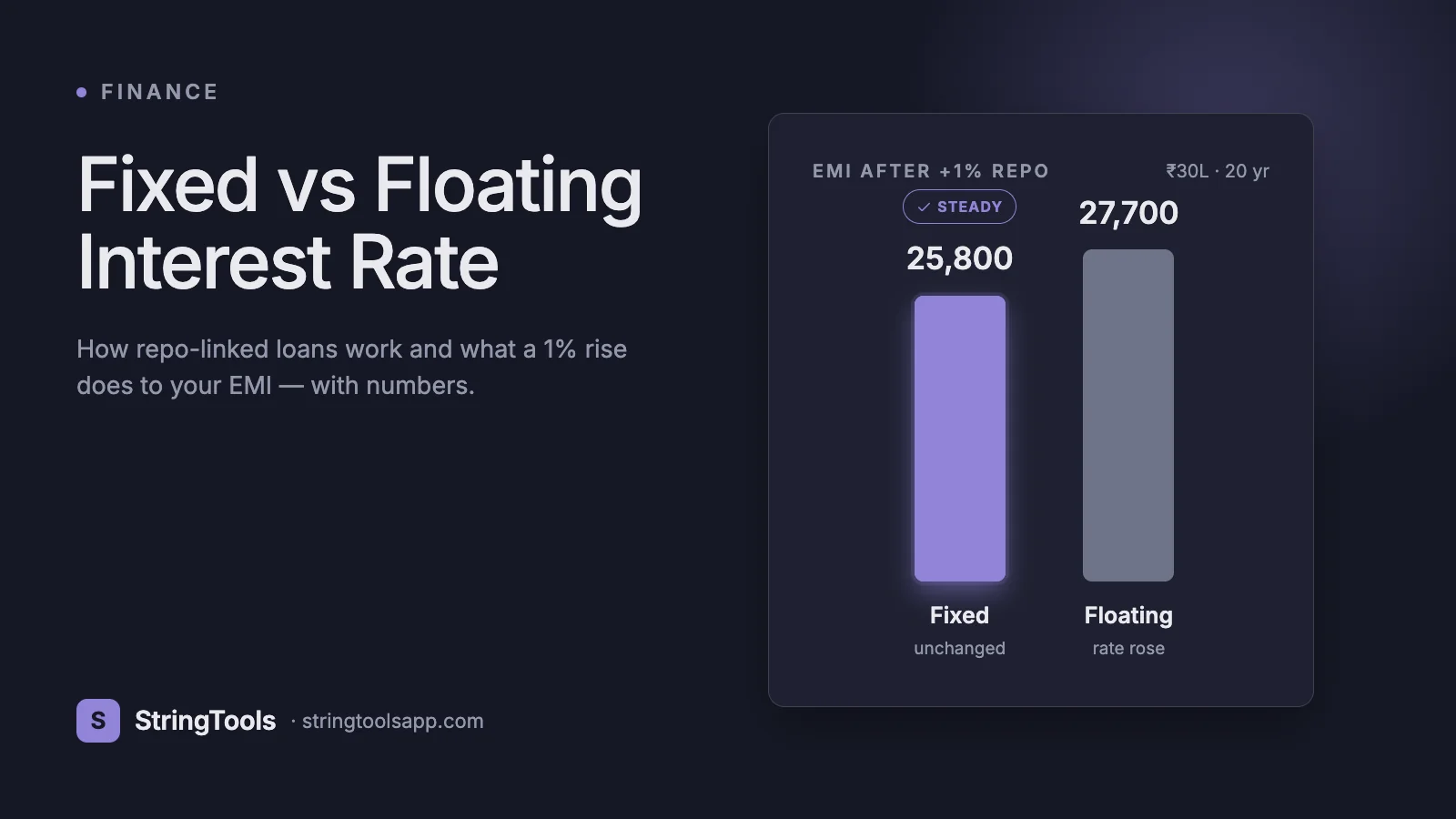
Fixed vs Floating Interest Rate: Which Should You Choose?
Fixed vs floating interest rate explained: how repo-linked loans work, what a 1% rise does to your EMI, and how to decide — with worked numbers.
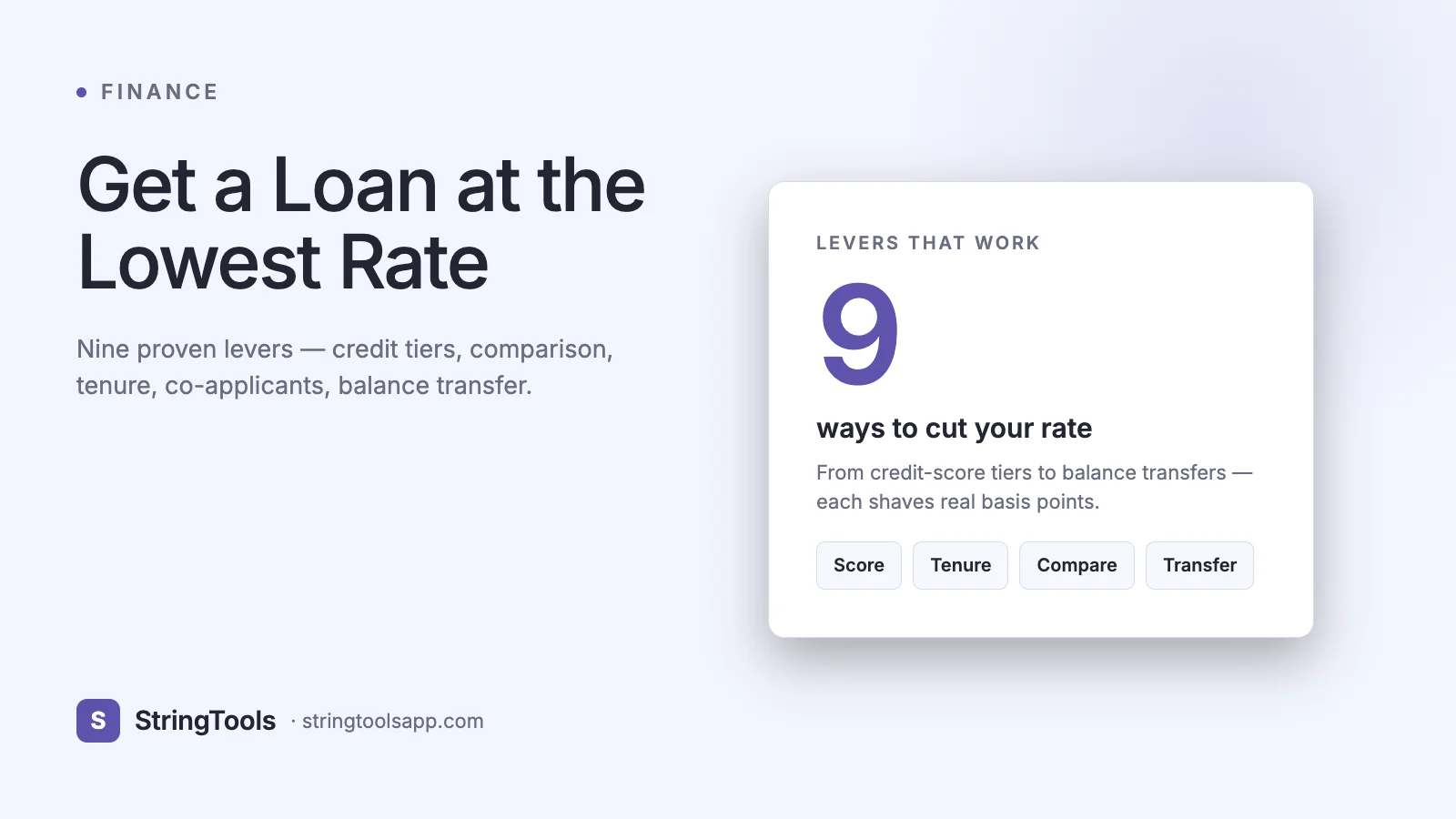
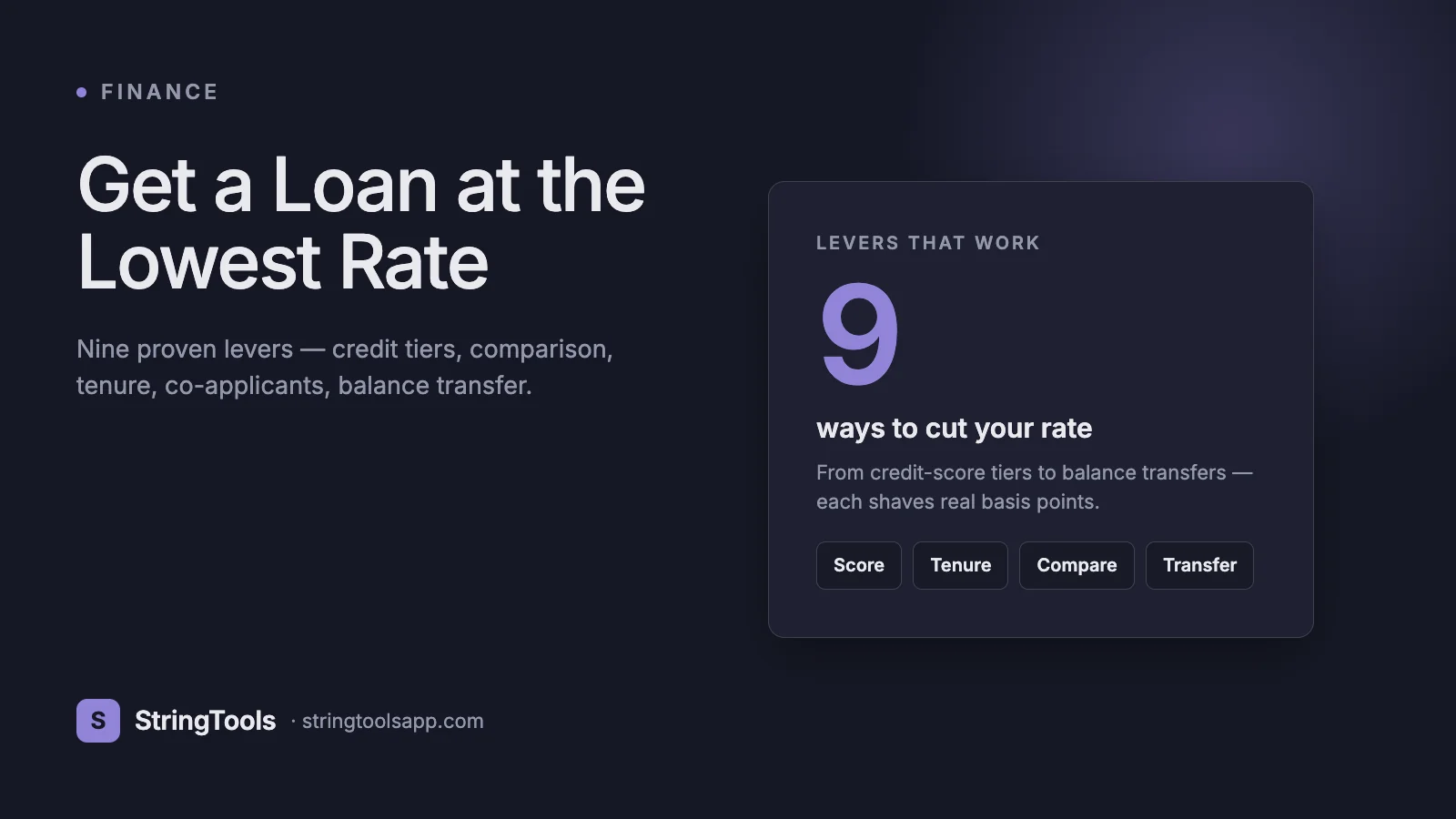
How to Get a Loan at the Lowest Interest Rate: 9 Levers
Nine proven ways to lower your loan interest rate — credit score tiers, lender comparison, tenure, co-applicants and balance transfers — with real numbers.
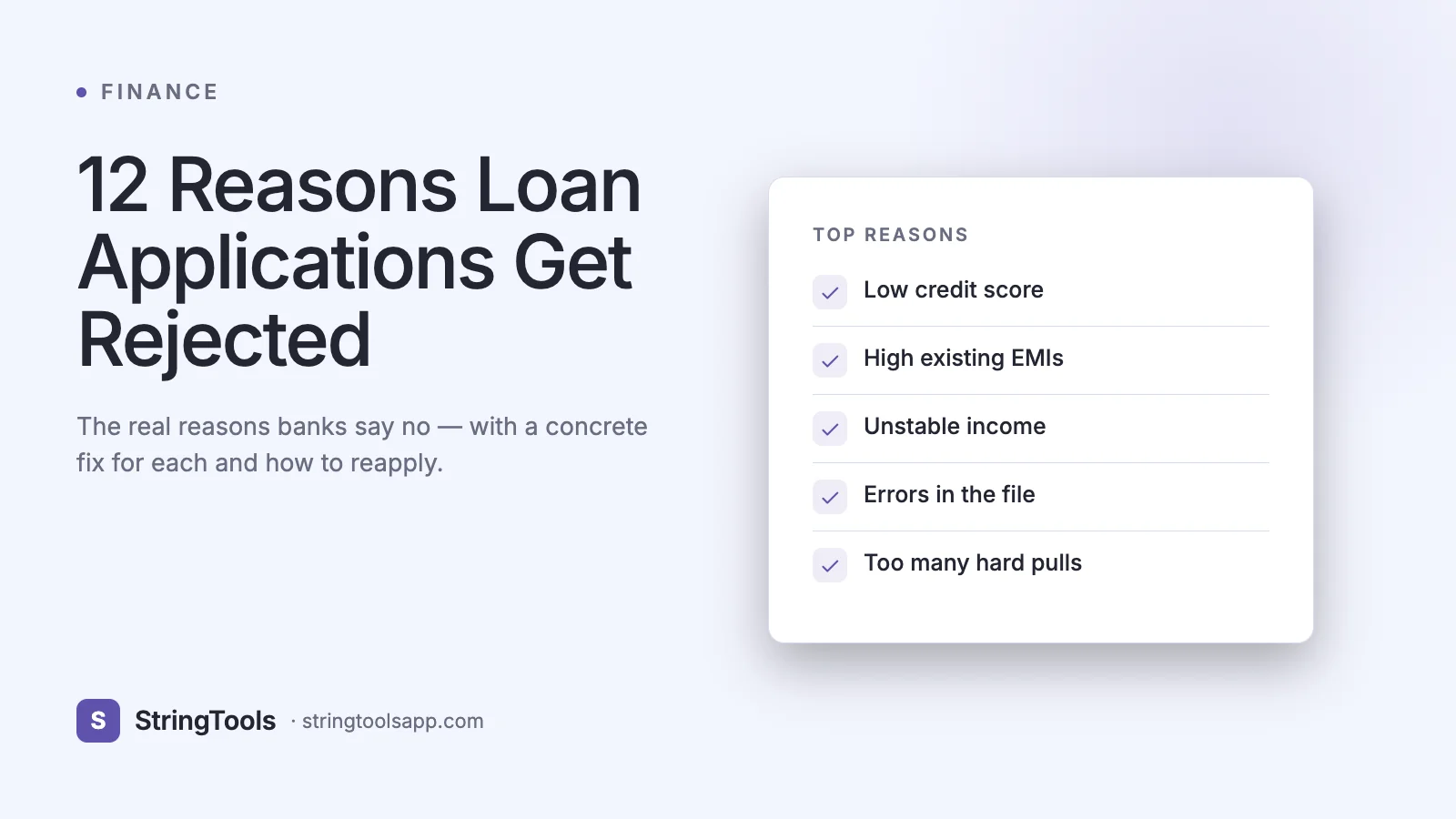
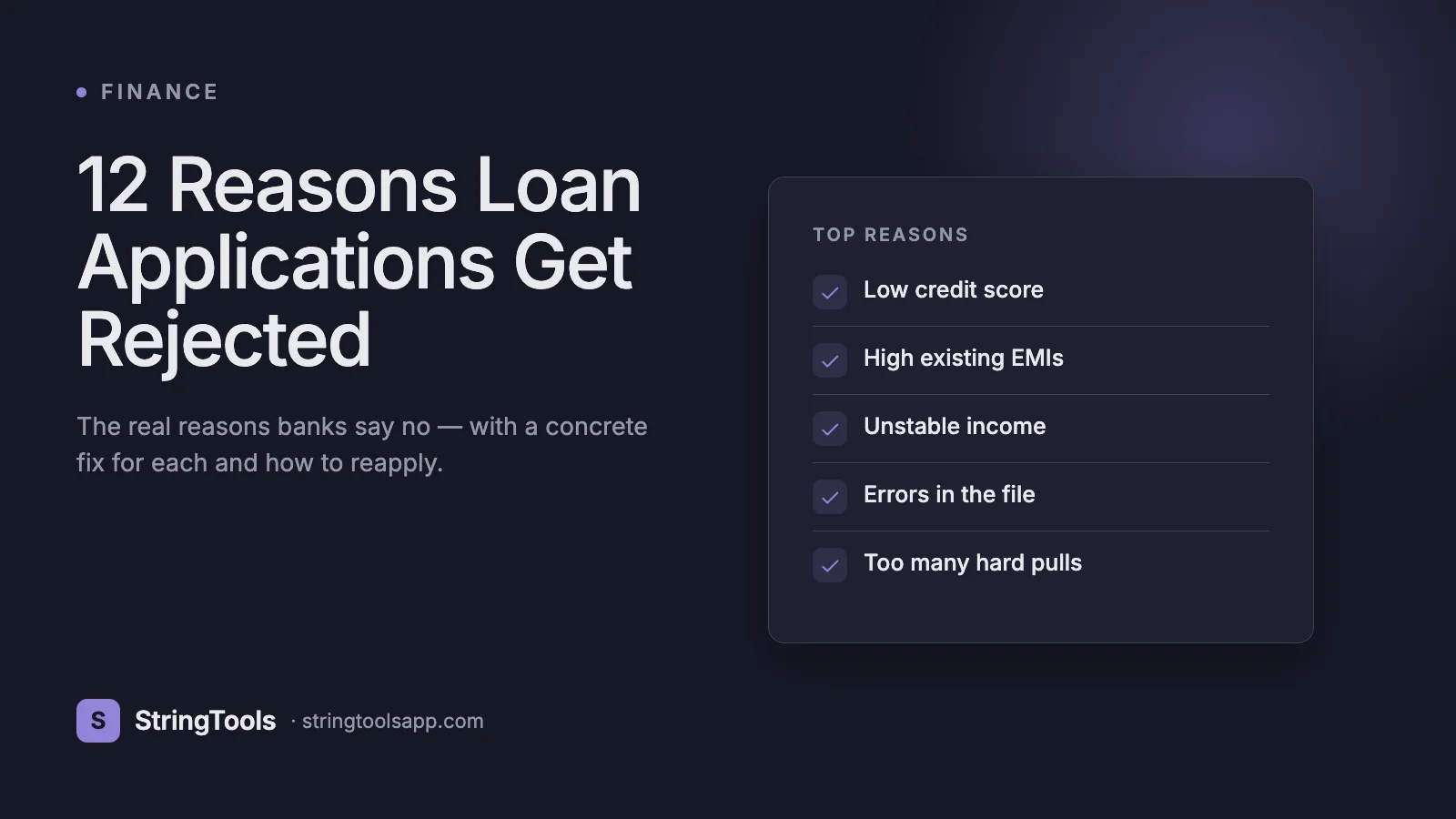
12 Reasons Loan Applications Get Rejected (and How to Fix Each)
The 12 real reasons banks and NBFCs reject loan applications — with a concrete fix for each — plus how to reapply without wrecking your credit score.
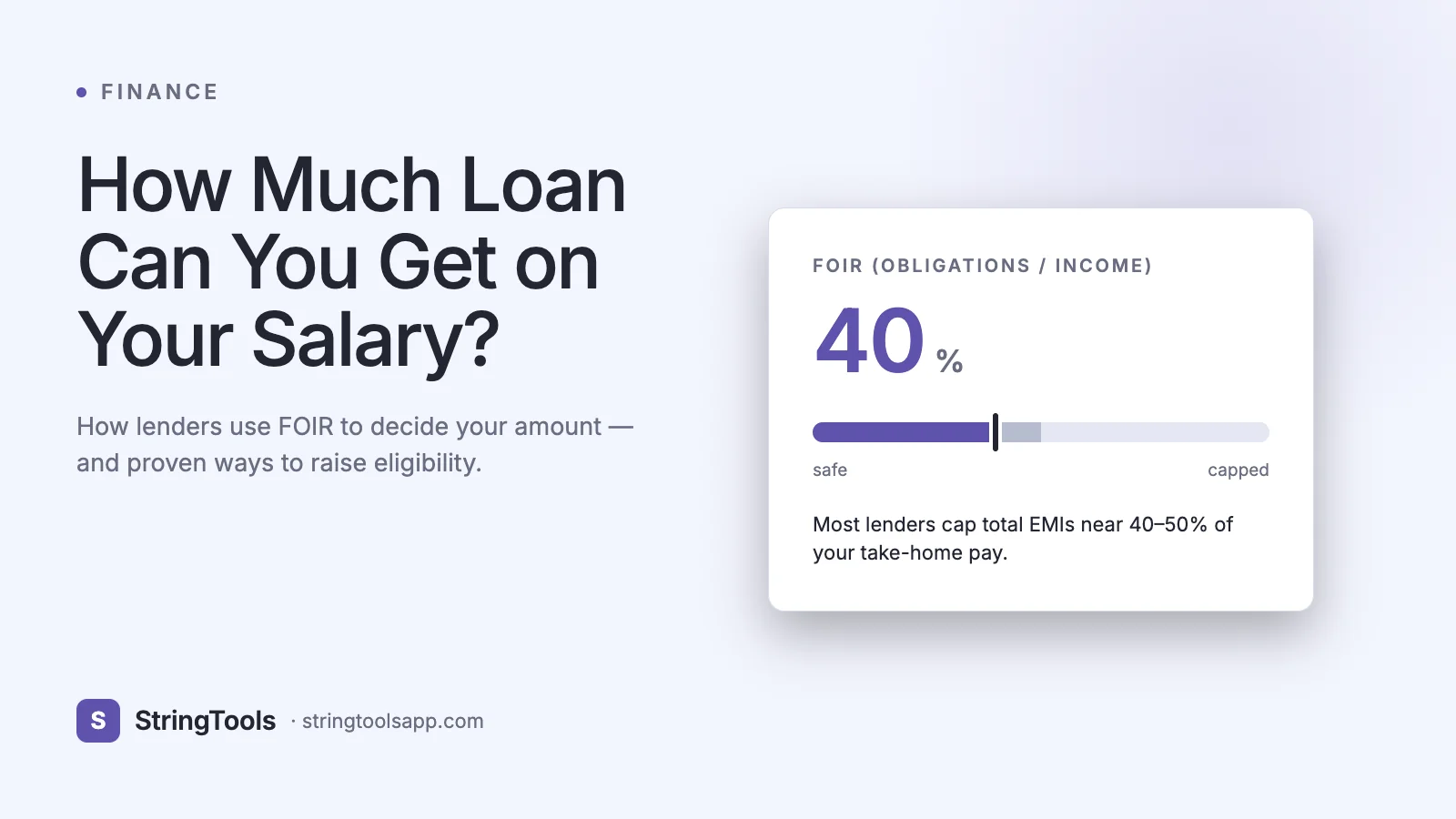
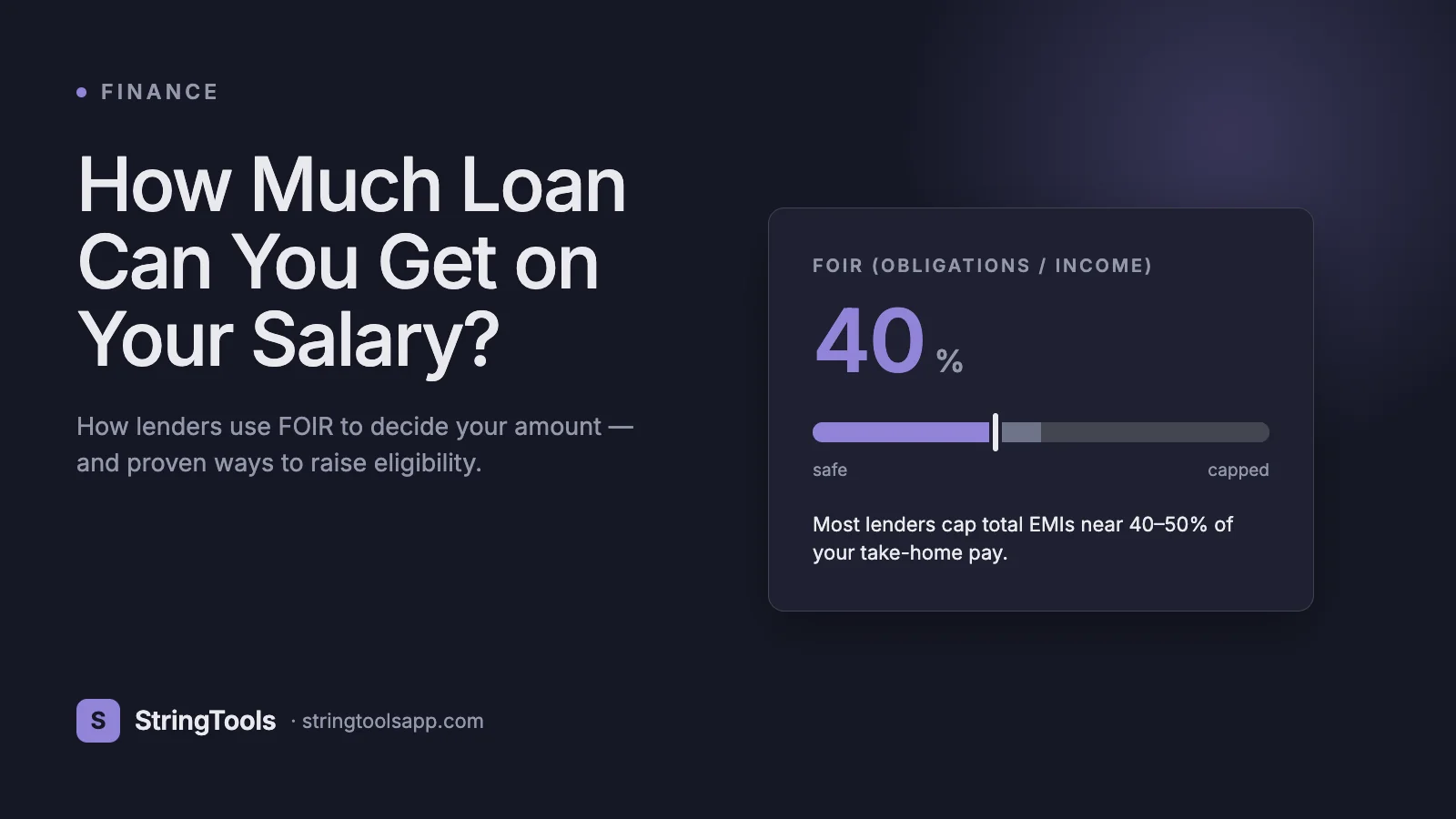
How Much Loan Can You Get on Your Salary? FOIR Explained
How lenders use FOIR (debt-to-income) to decide your loan amount, with correctly worked salary-to-loan examples and proven ways to raise eligibility.
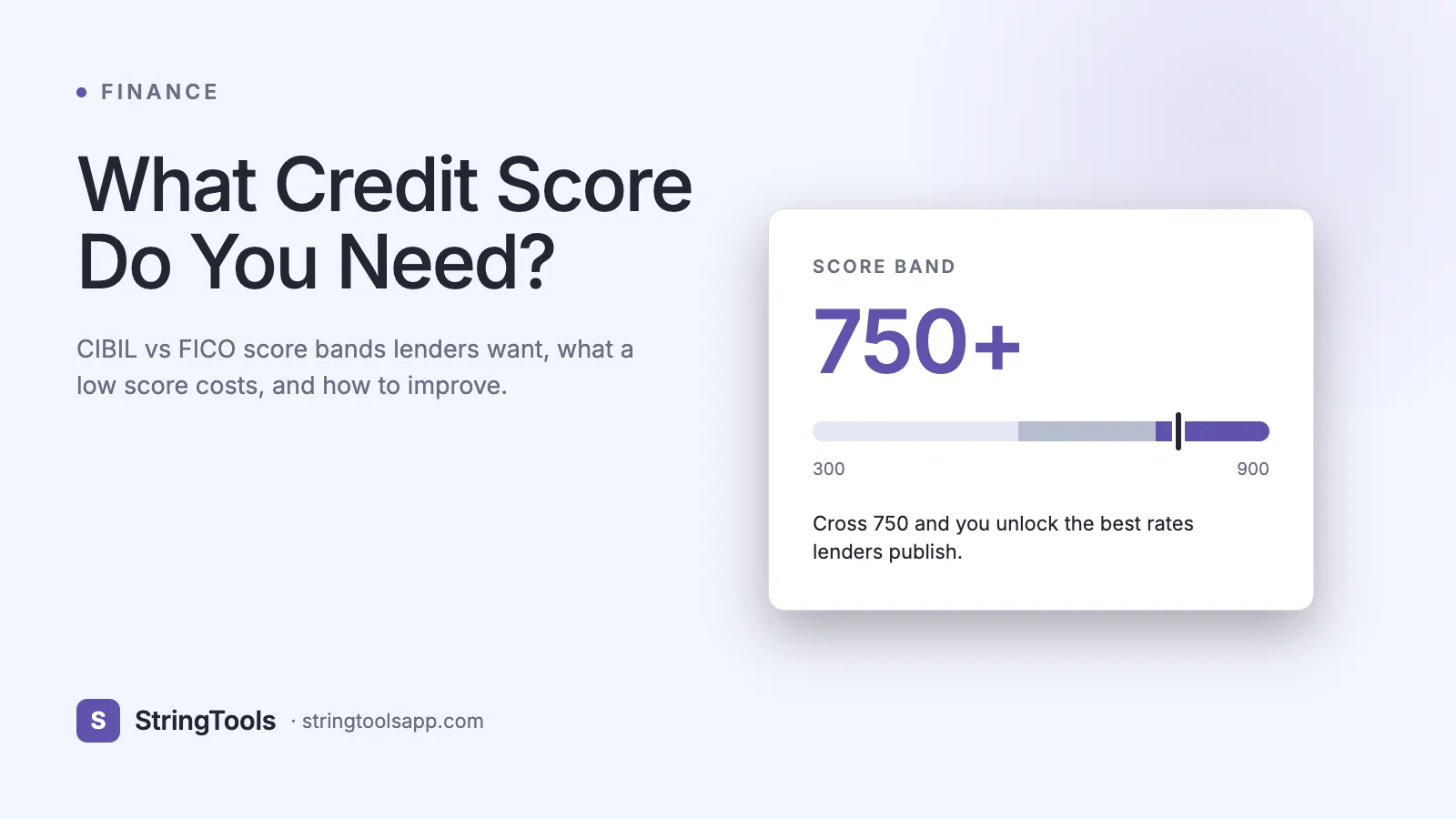

What Credit Score Do You Need for a Loan? CIBIL & FICO Explained
CIBIL vs FICO explained: the score bands lenders typically want for home and personal loans, what a low score costs in interest, and how to improve fast.
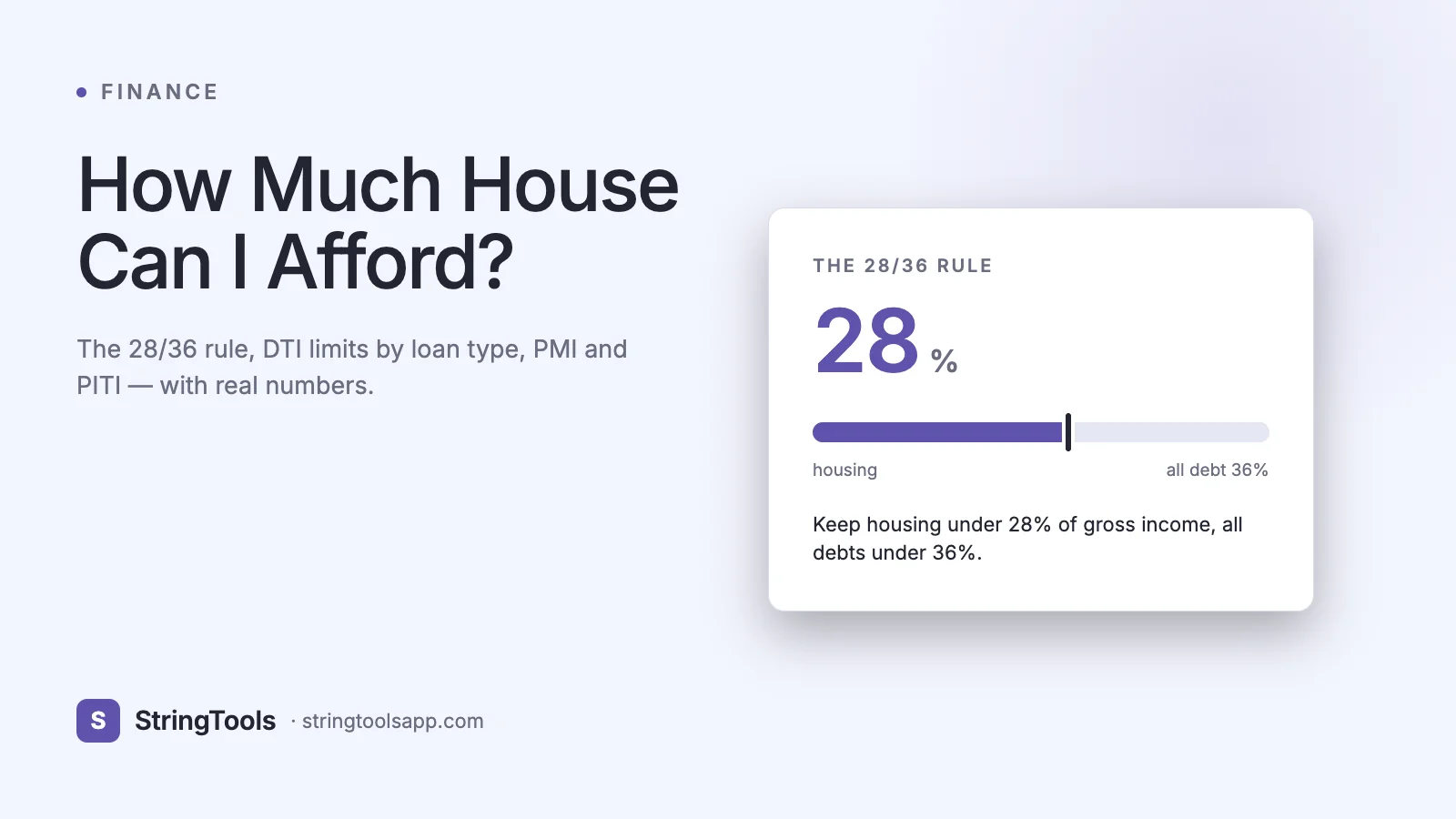
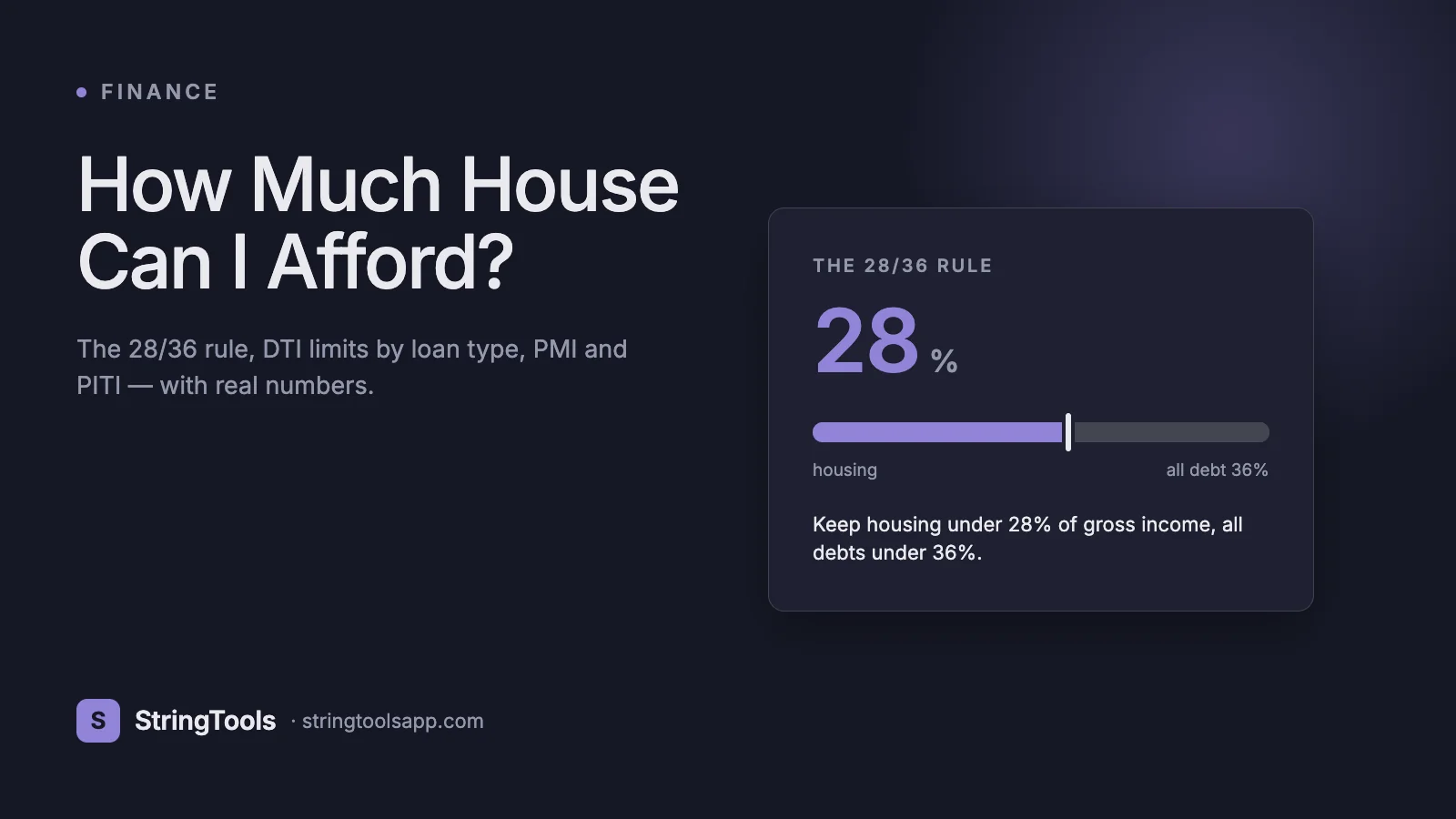
How Much House Can I Afford? The 28/36 Rule, With Numbers
How much house can you afford? The 28/36 rule with worked examples, a salary-to-price table, DTI limits by loan type, PMI, PITI, and pre-approval.
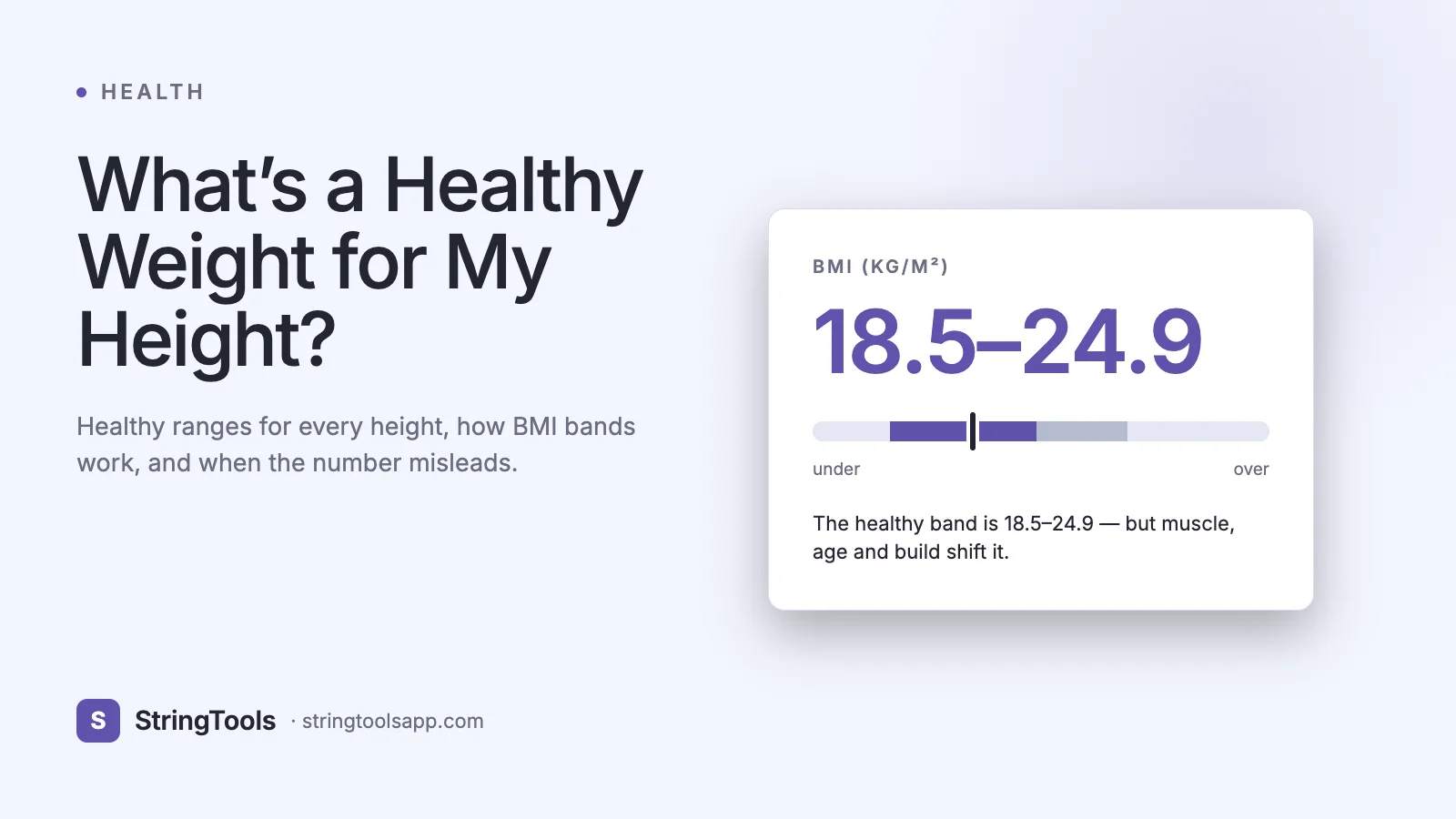

Healthy Weight for Your Height: Charts & BMI Ranges
Healthy weight ranges for every height in lb and kg, how BMI categories work, when the number misleads, and better signals to track alongside it.
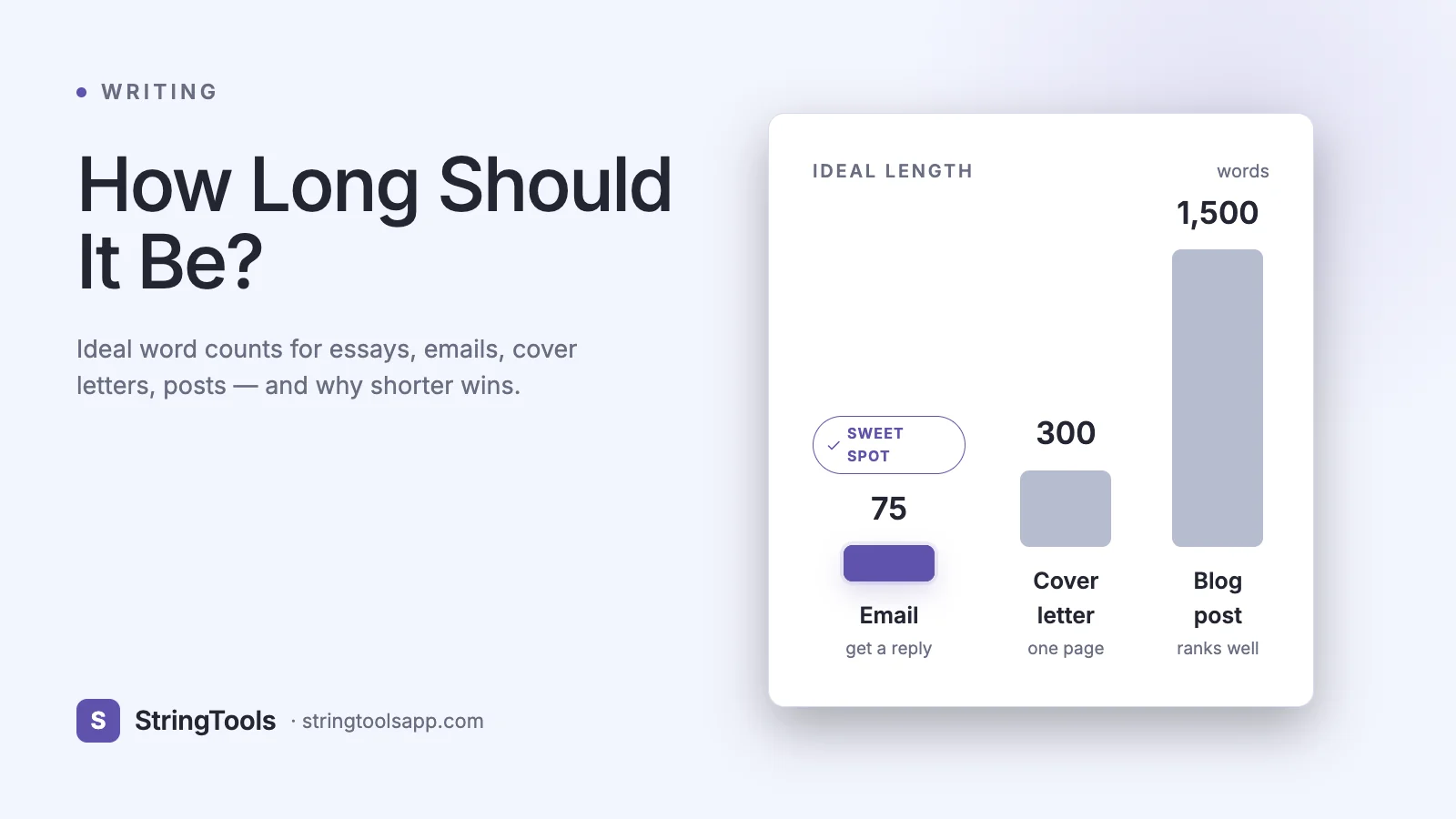
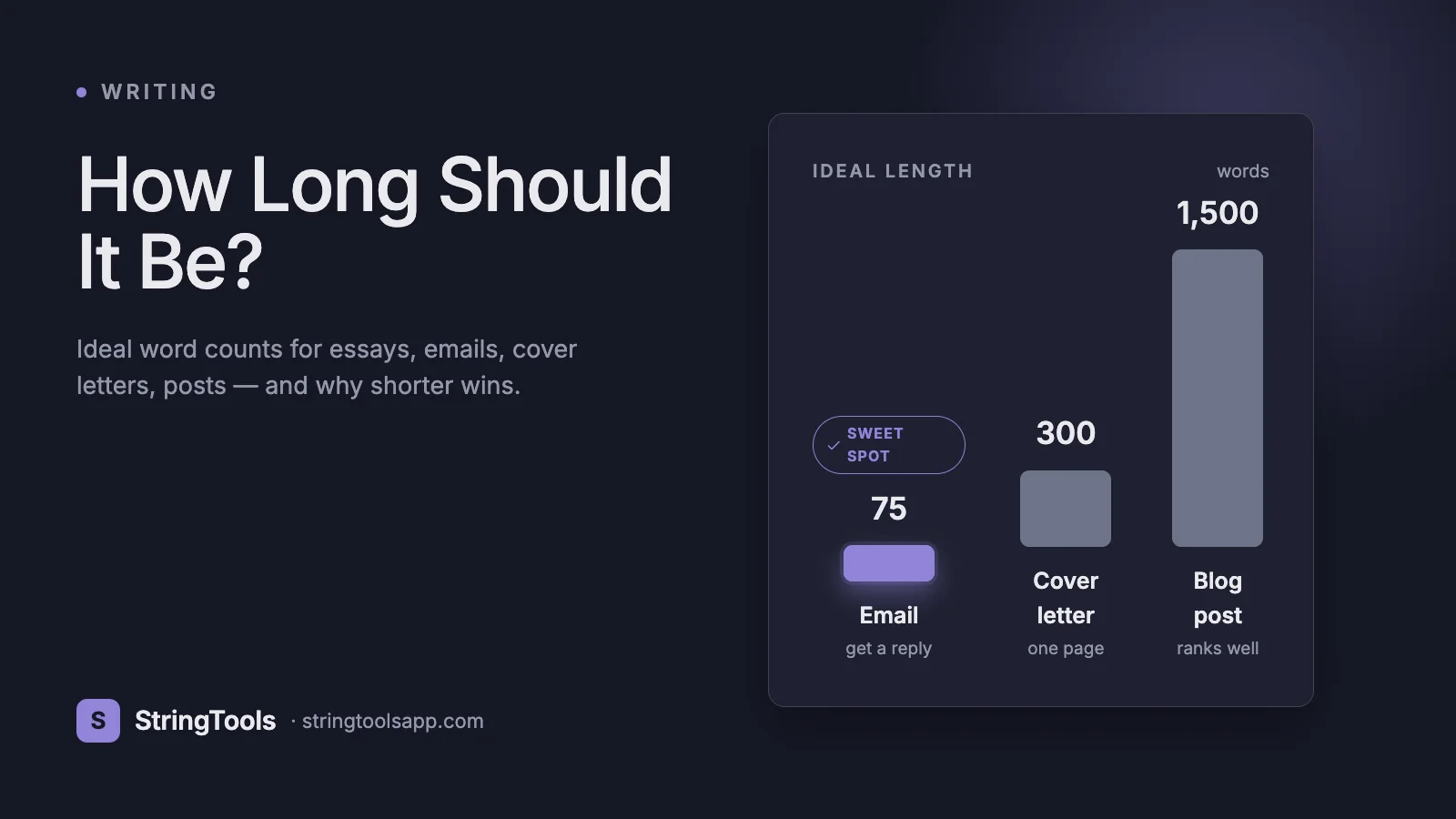
How Long Should It Be? Ideal Word Counts for Essays, Emails & Posts
Ideal word counts for essays, emails, cover letters, social posts and speeches, with words-per-page conversions, speaking-time math, and why shorter wins.
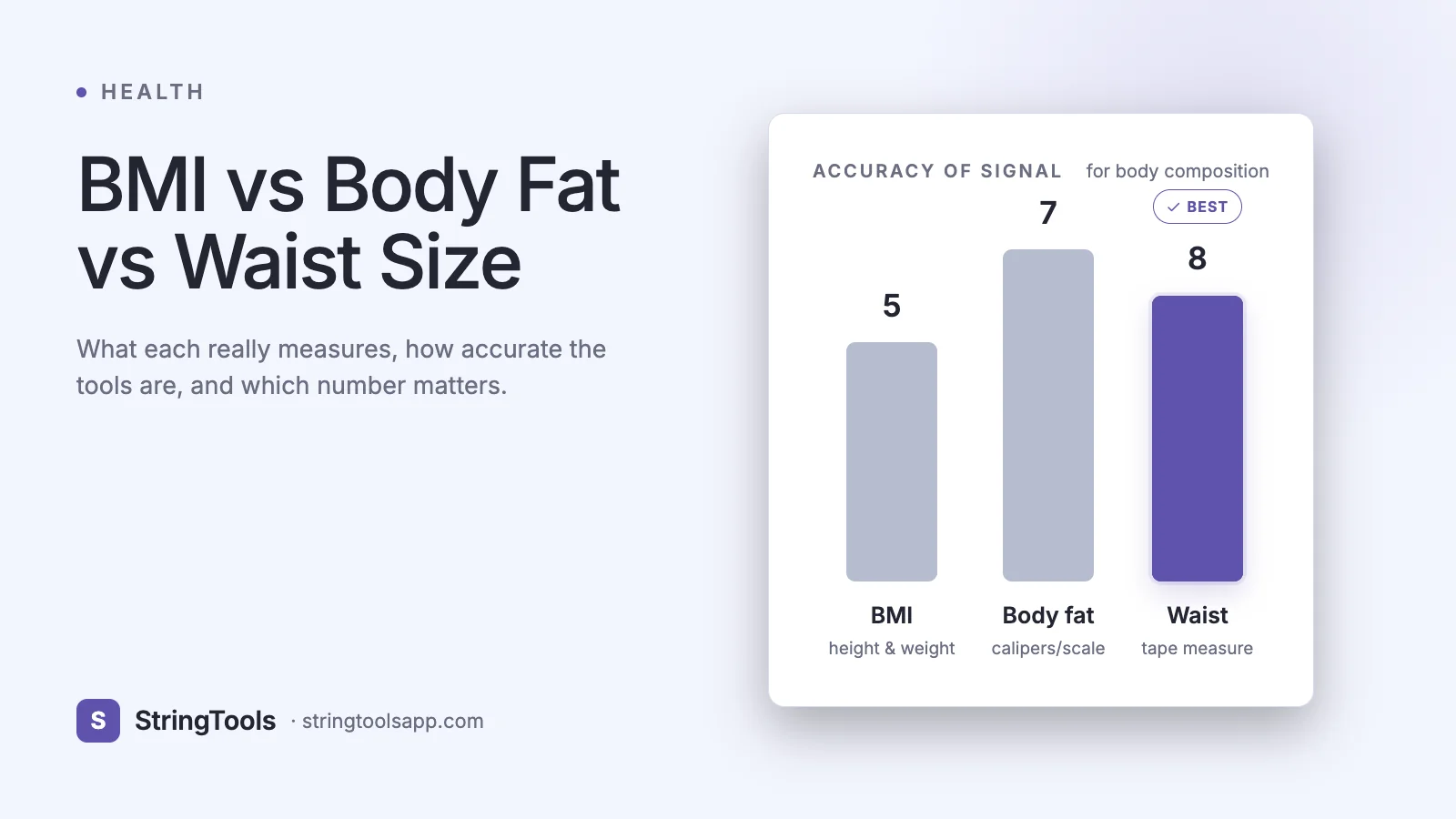

BMI vs Body Fat vs Waist Size: Which Number Actually Matters?
BMI vs body fat percentage vs waist measurement: what each really measures, how accurate scales and calipers are, and the routine that beats all three.
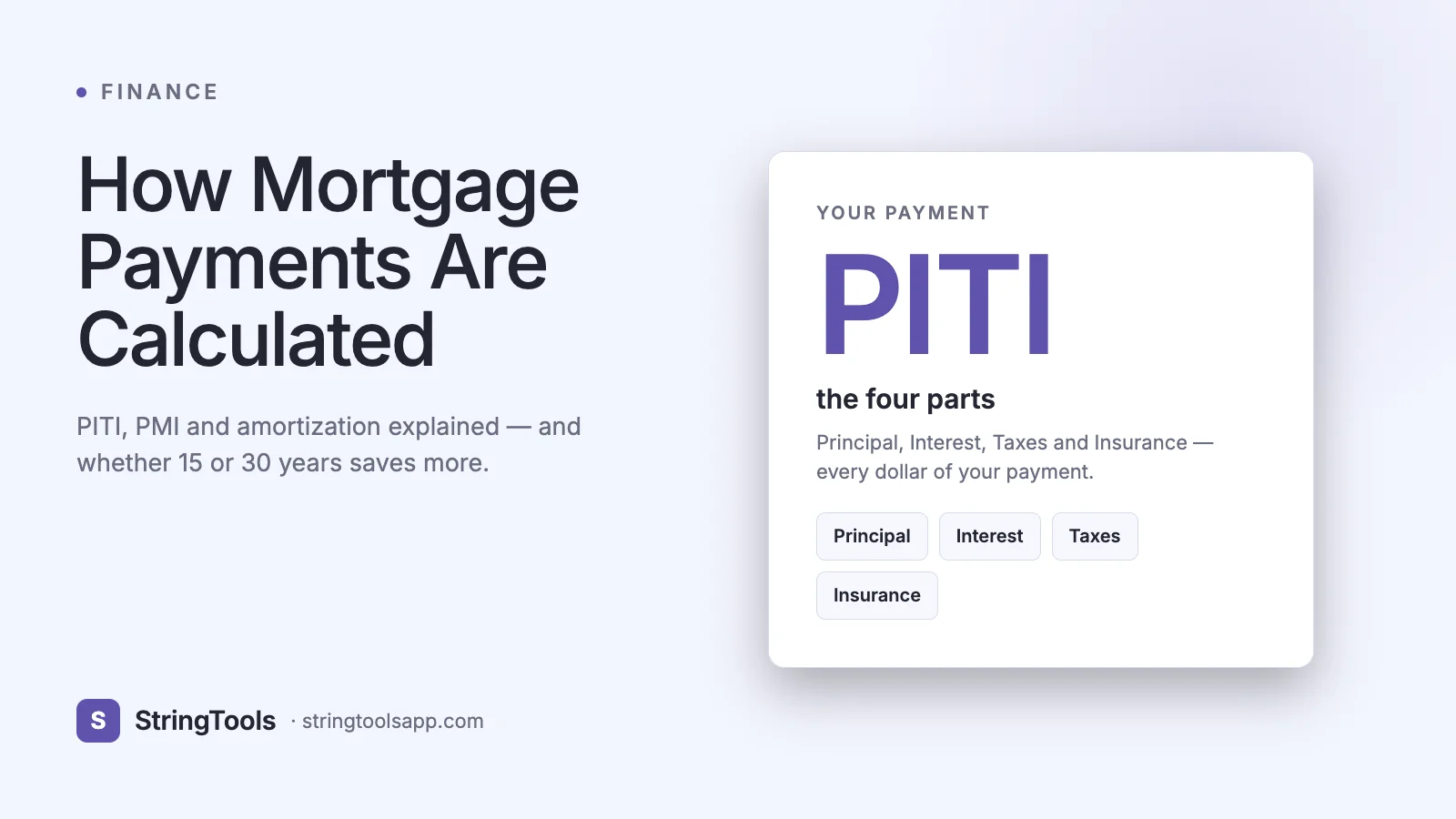

How Mortgage Payments Are Calculated (PITI, PMI & Amortization)
How a mortgage payment is calculated: what PITI and PMI mean, how amortization works, and whether 15 or 30 years saves more, with worked examples.
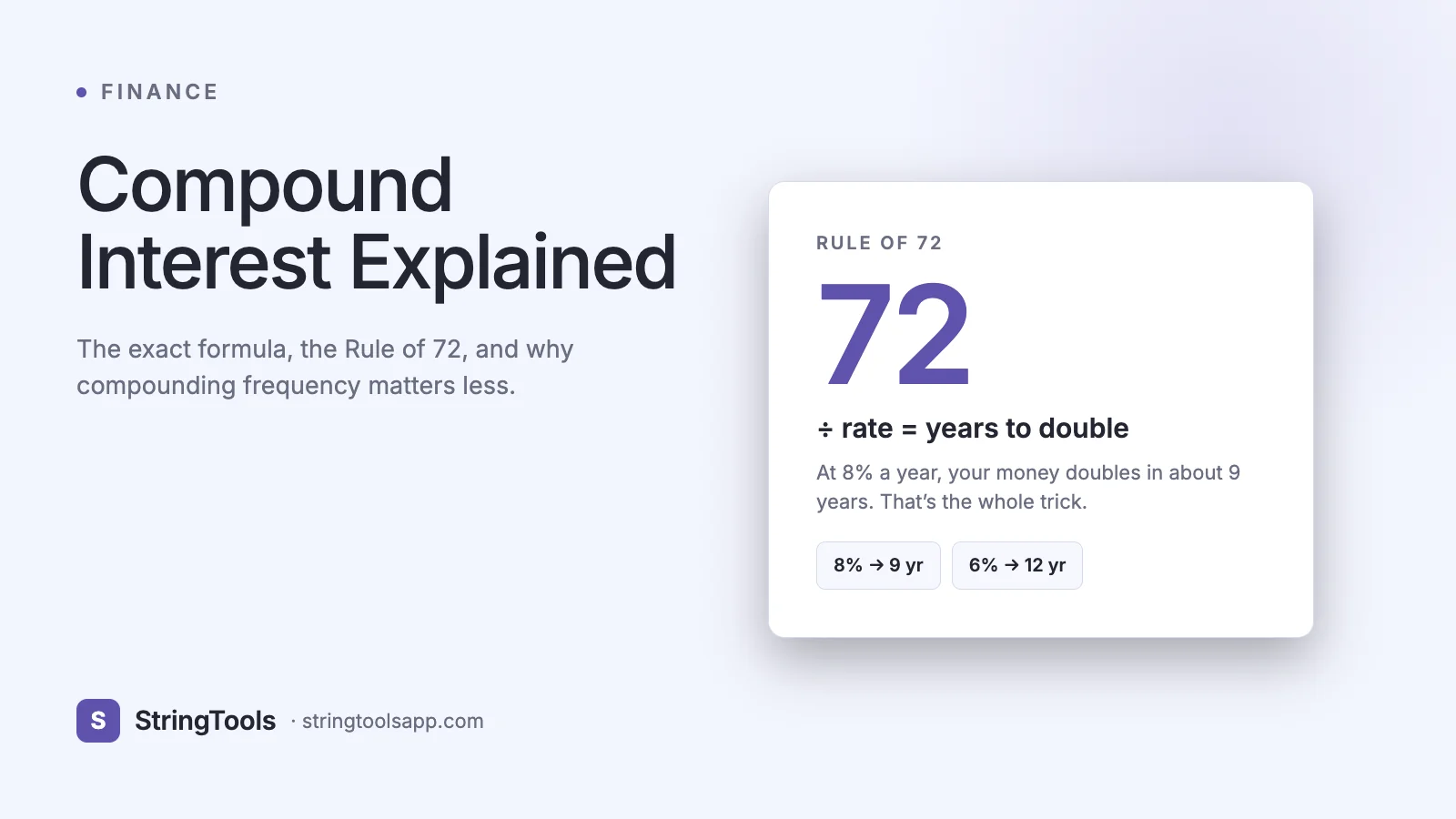
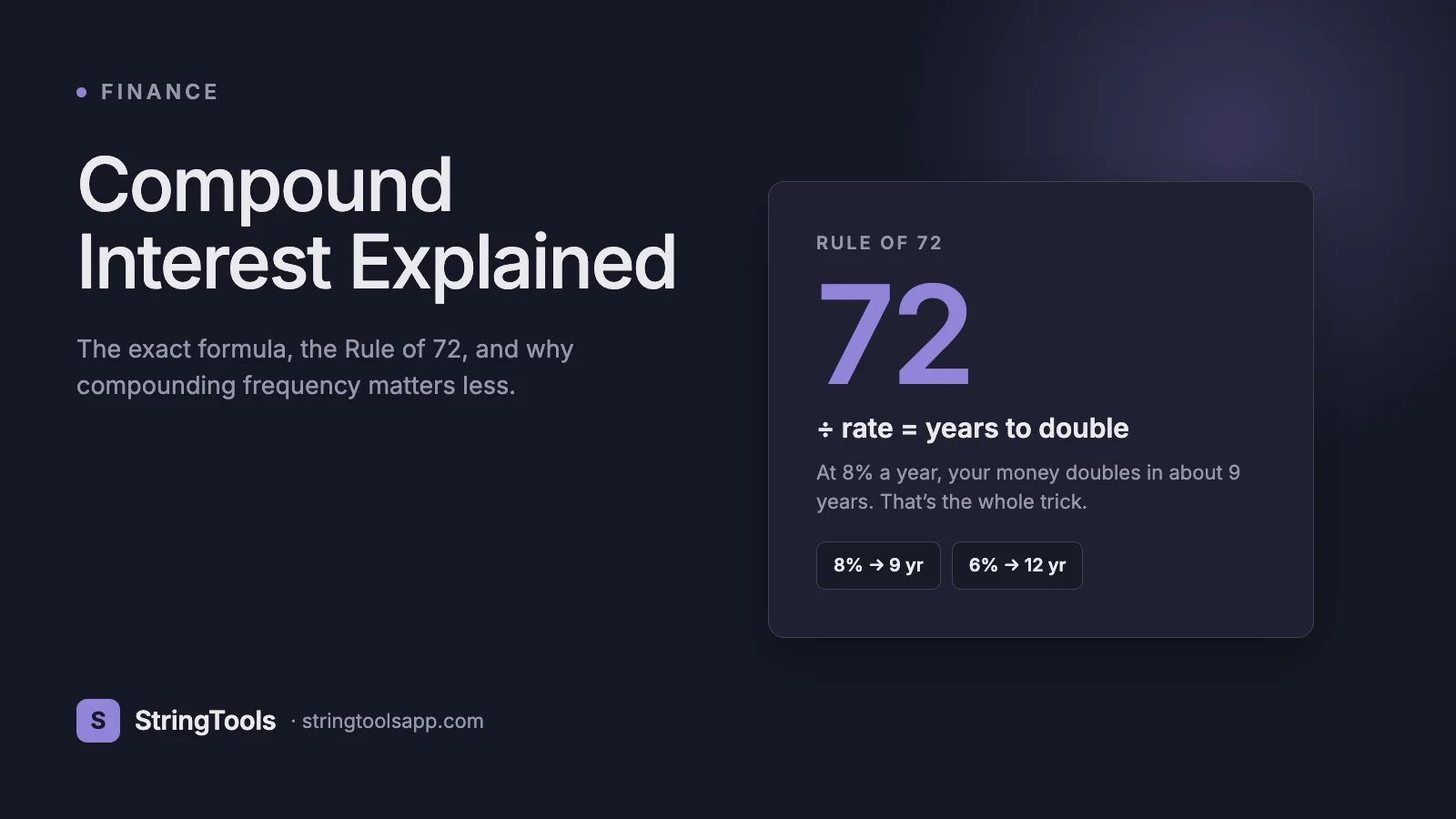
Compound Interest Explained: The Rule of 72 and the Math of Growth
Compound interest explained: the exact formula, worked examples, monthly contributions, the Rule of 72, and how much compounding frequency matters.
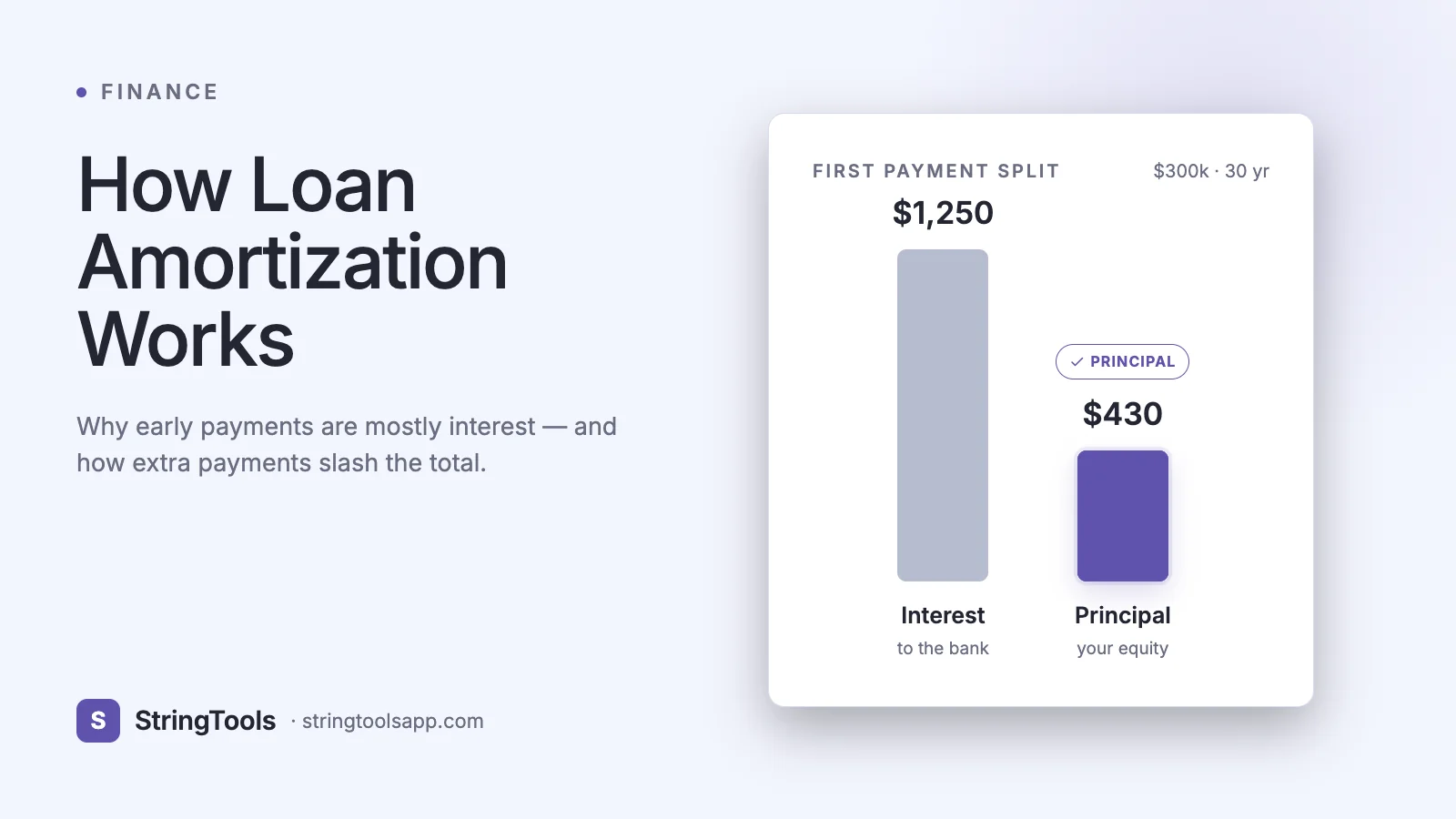
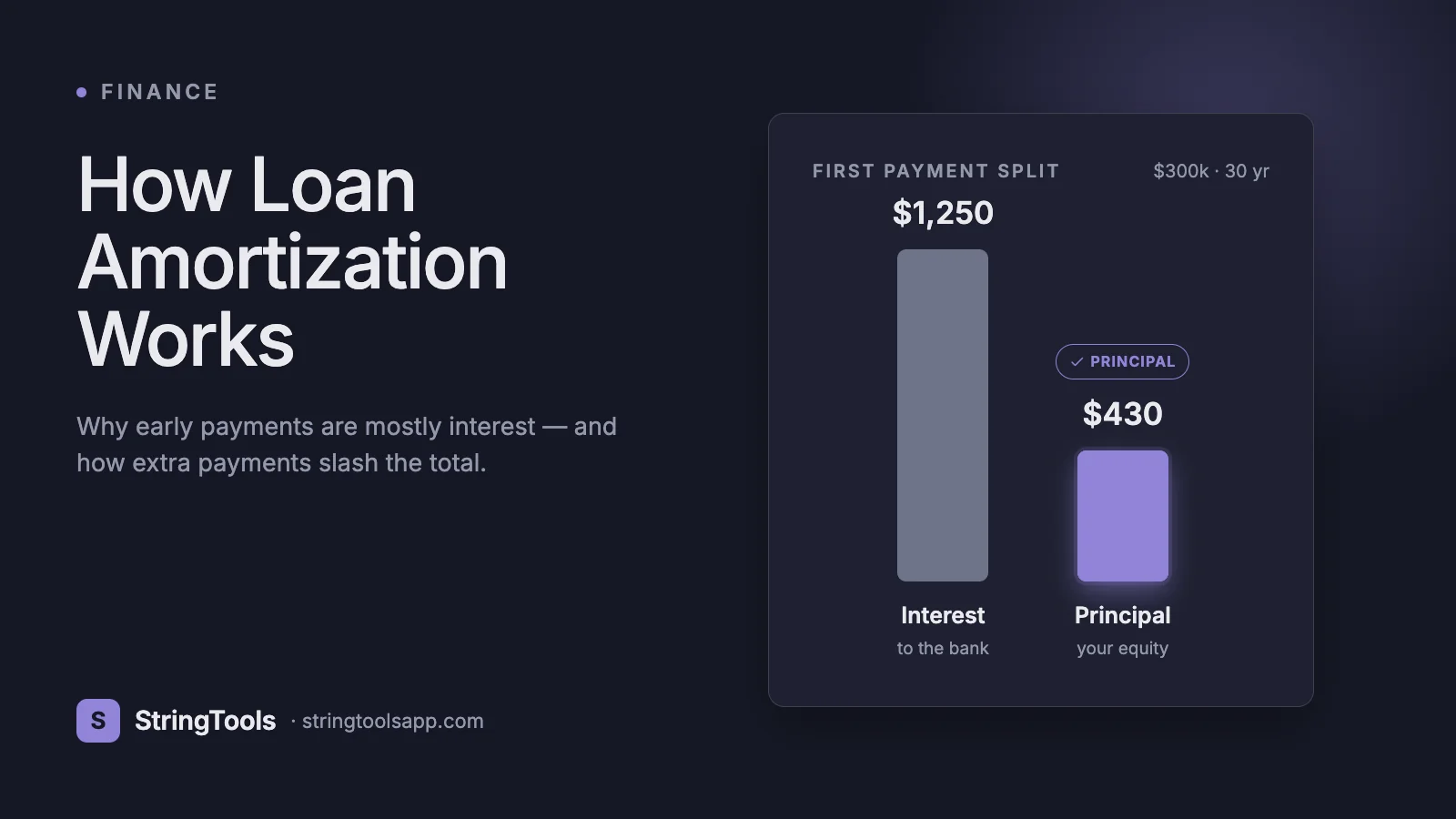
How Loan Amortization Works (and How to Pay Off a Loan Faster)
How loan amortization works: why early payments are mostly interest, APR vs interest rate, and how extra payments cut your total interest and term.
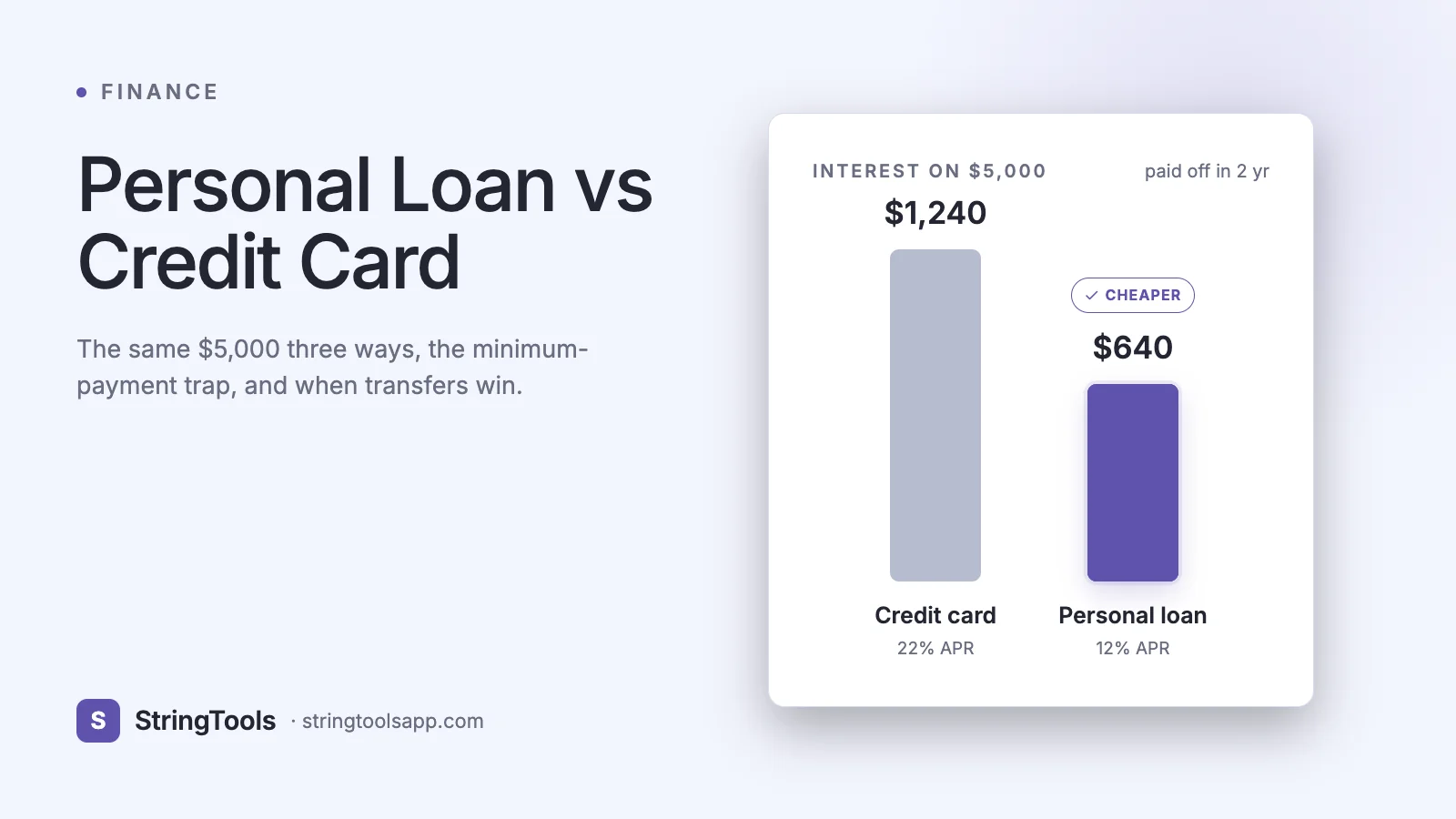

Personal Loan vs Credit Card: Which Is Cheaper for Borrowing?
Personal loan vs credit card, with real math: the same debt handled three ways, the minimum-payment trap, when balance transfers win, and how to choose.
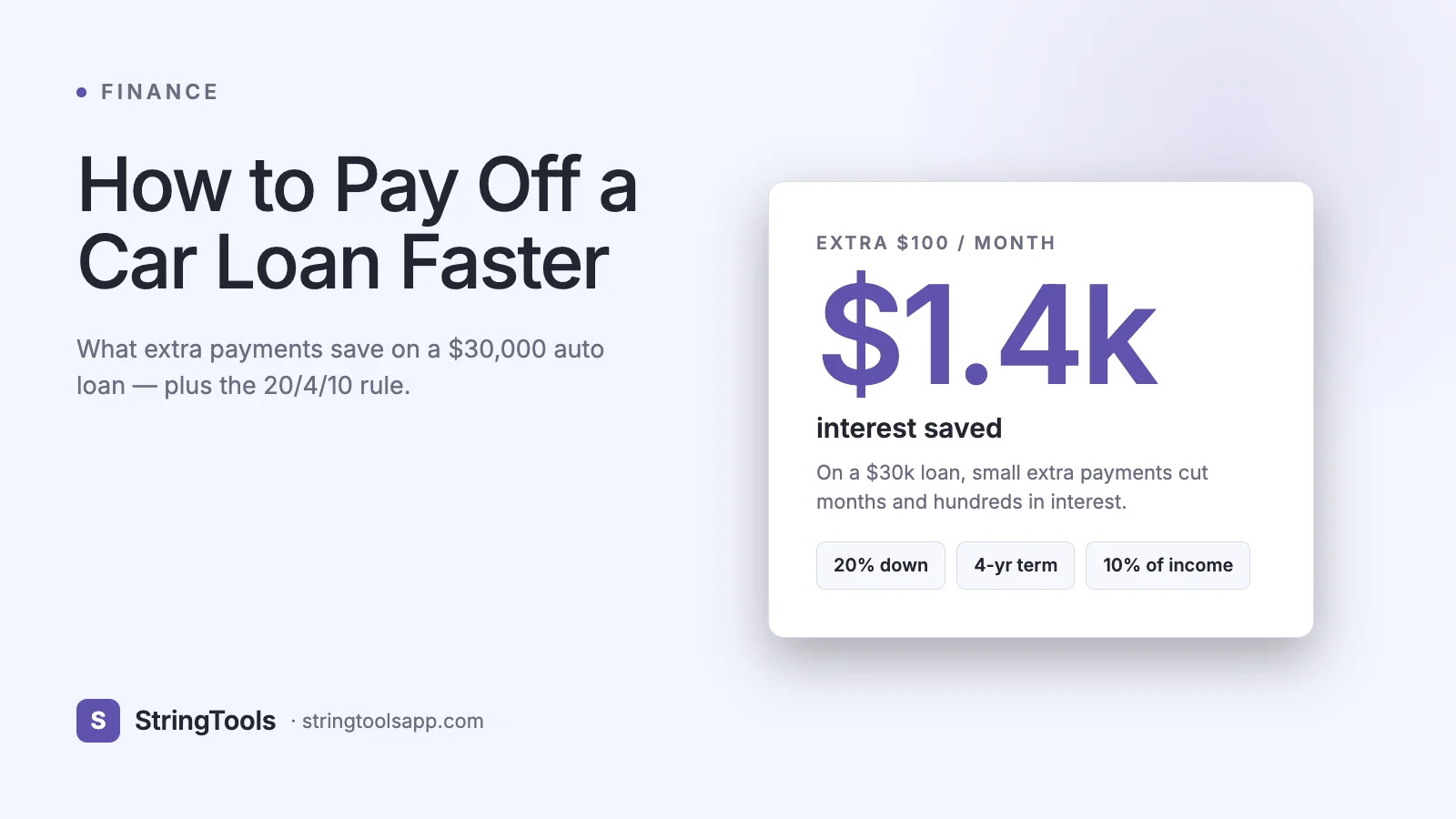

How to Pay Off a Car Loan Faster: 5 Strategies That Actually Work
Pay off your car loan faster: what extra payments really save, the loan-term trap, refinancing rules, negative equity, and the 20/4/10 rule.
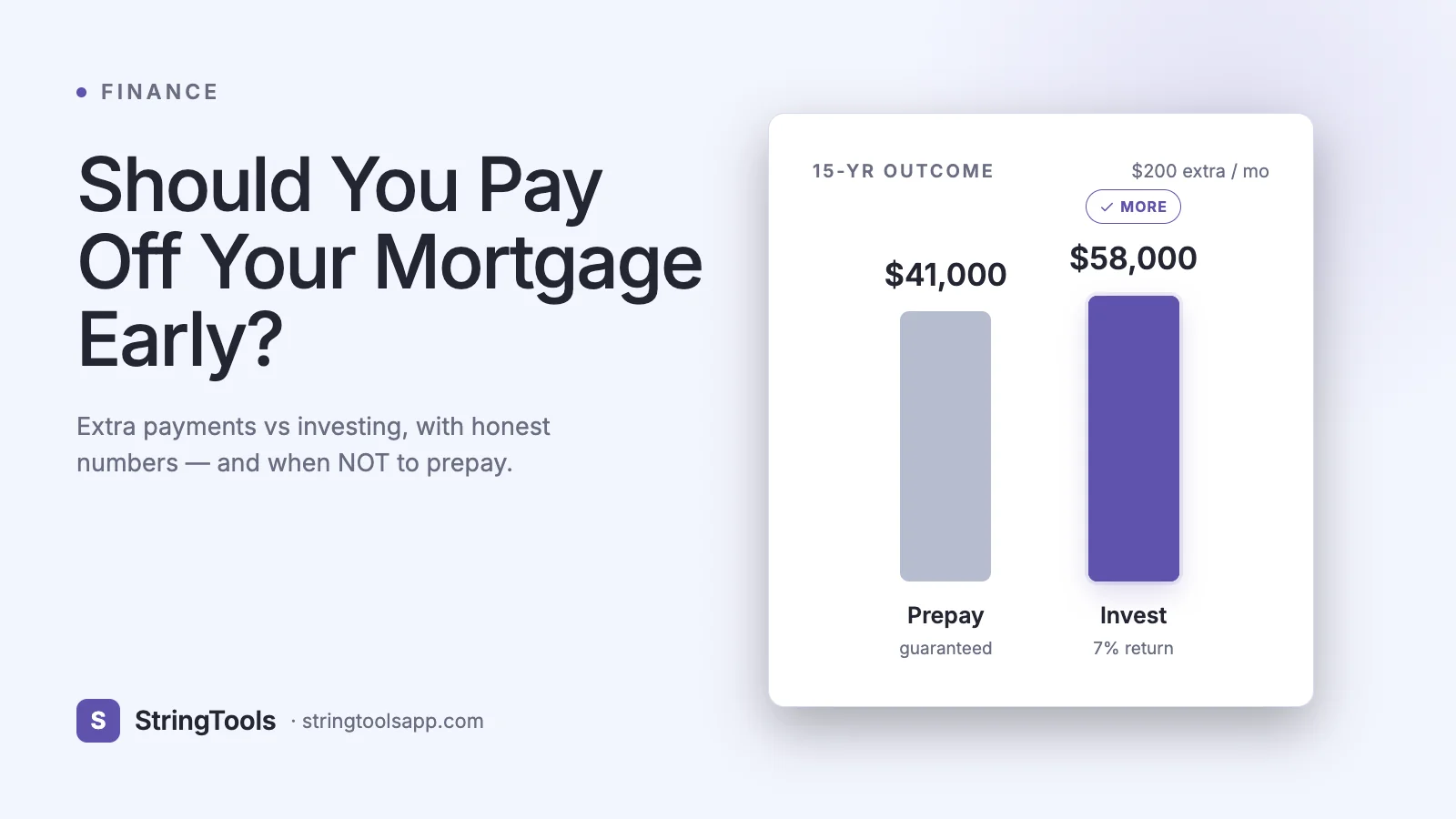

Should You Pay Off Your Mortgage Early? The Real Math
Pay off your mortgage early or invest instead? Honest numbers on extra payments, five methods compared, and when prepaying is the wrong move.
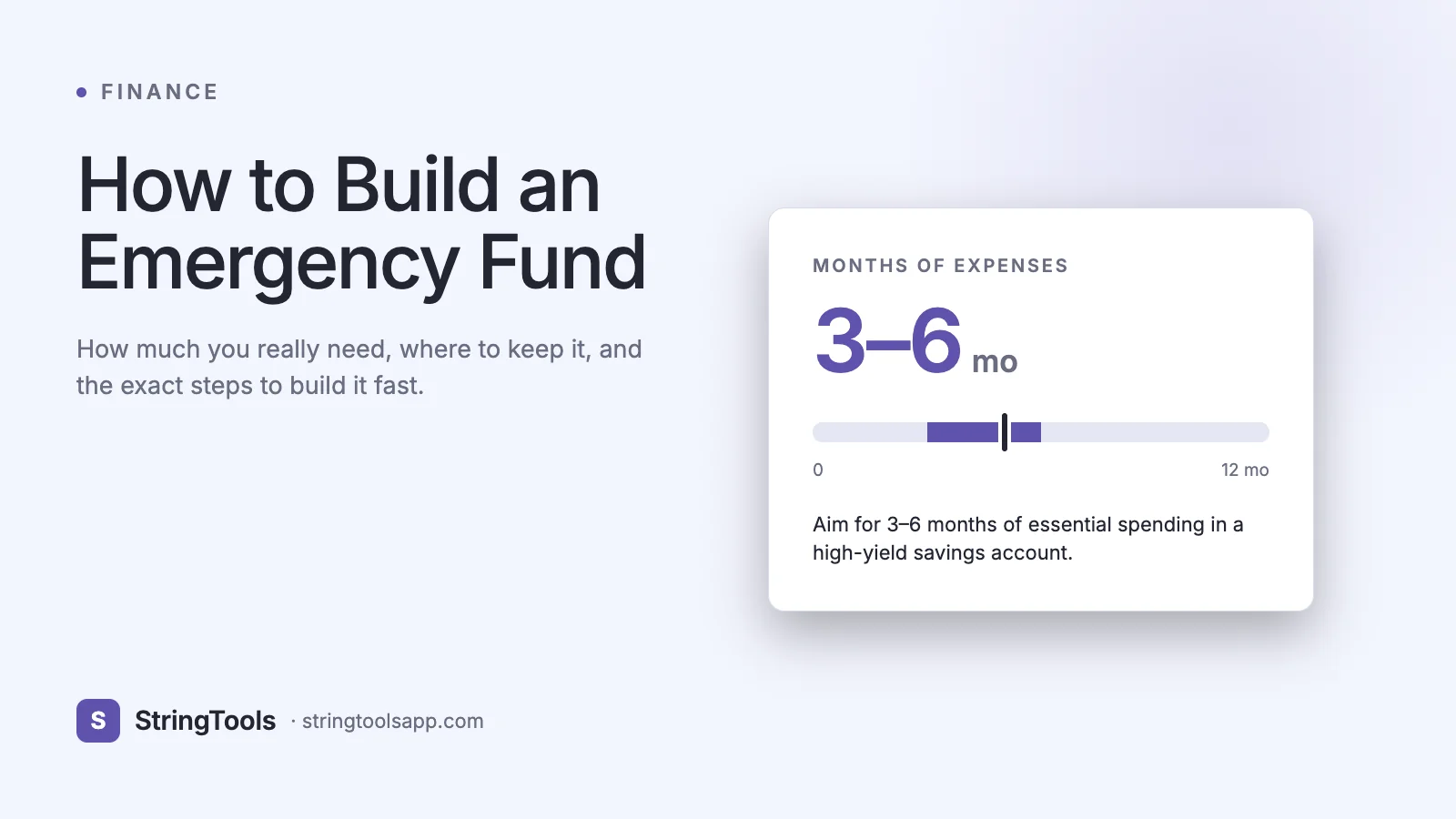

How to Build an Emergency Fund: How Much, Where to Keep It & How Fast
How to build an emergency fund: the 3–6 month rule made personal, where to keep the money, a time-to-goal table, and the steps to get there.
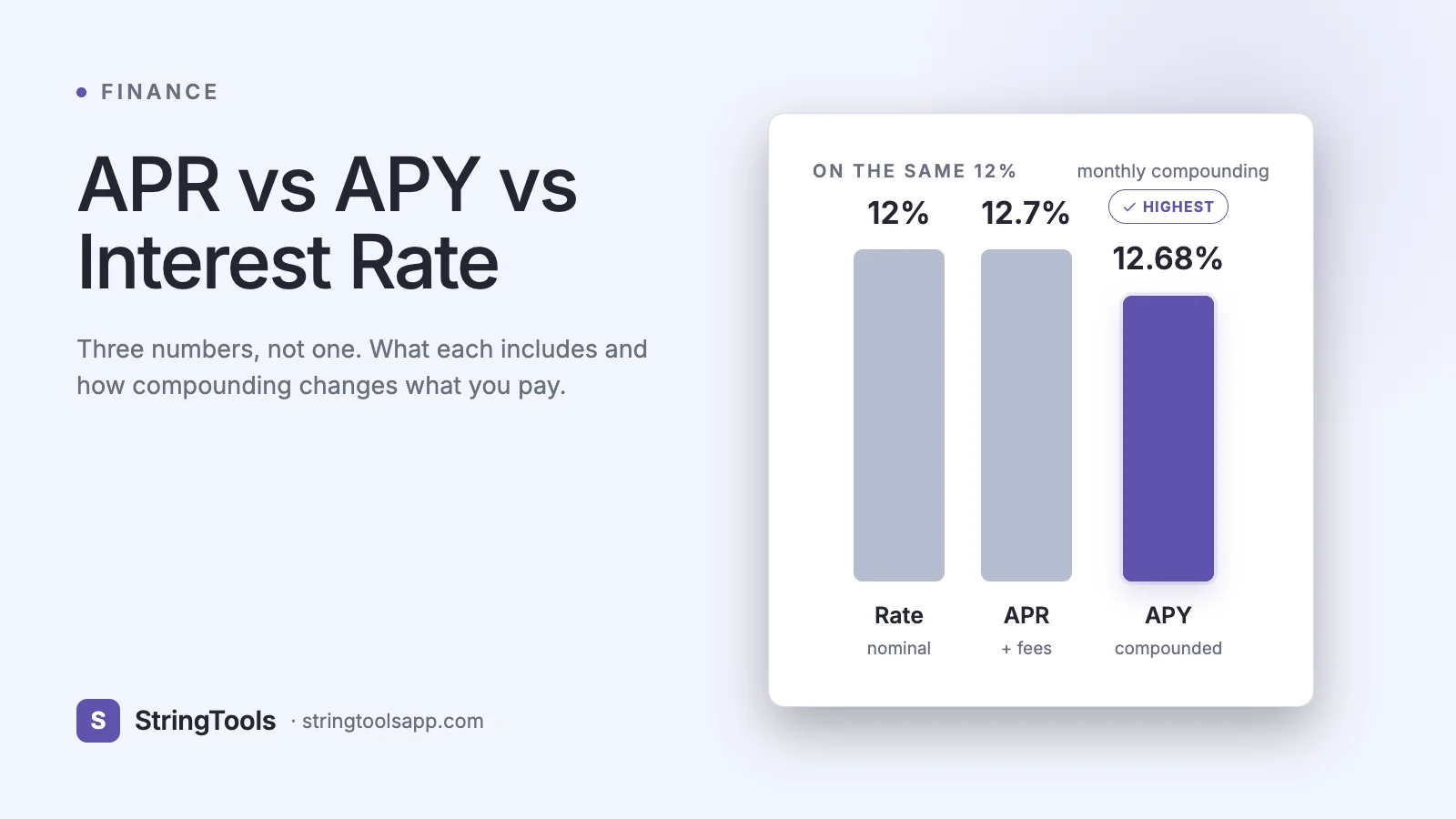
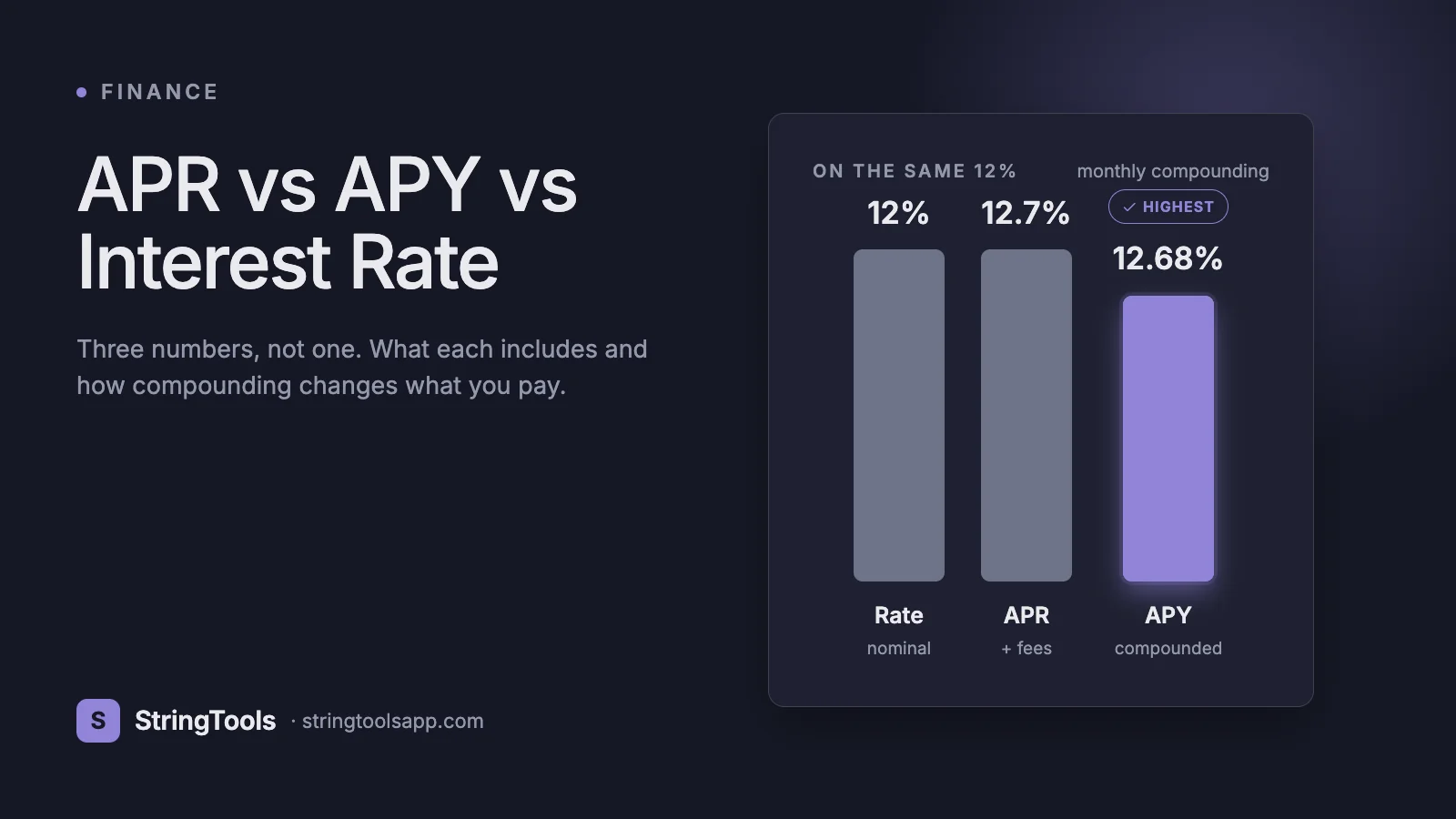
APR vs APY vs Interest Rate: The Difference That Costs You Money
APR vs APY vs interest rate: what each one includes, how compounding changes what you really pay or earn, and how to compare offers correctly.
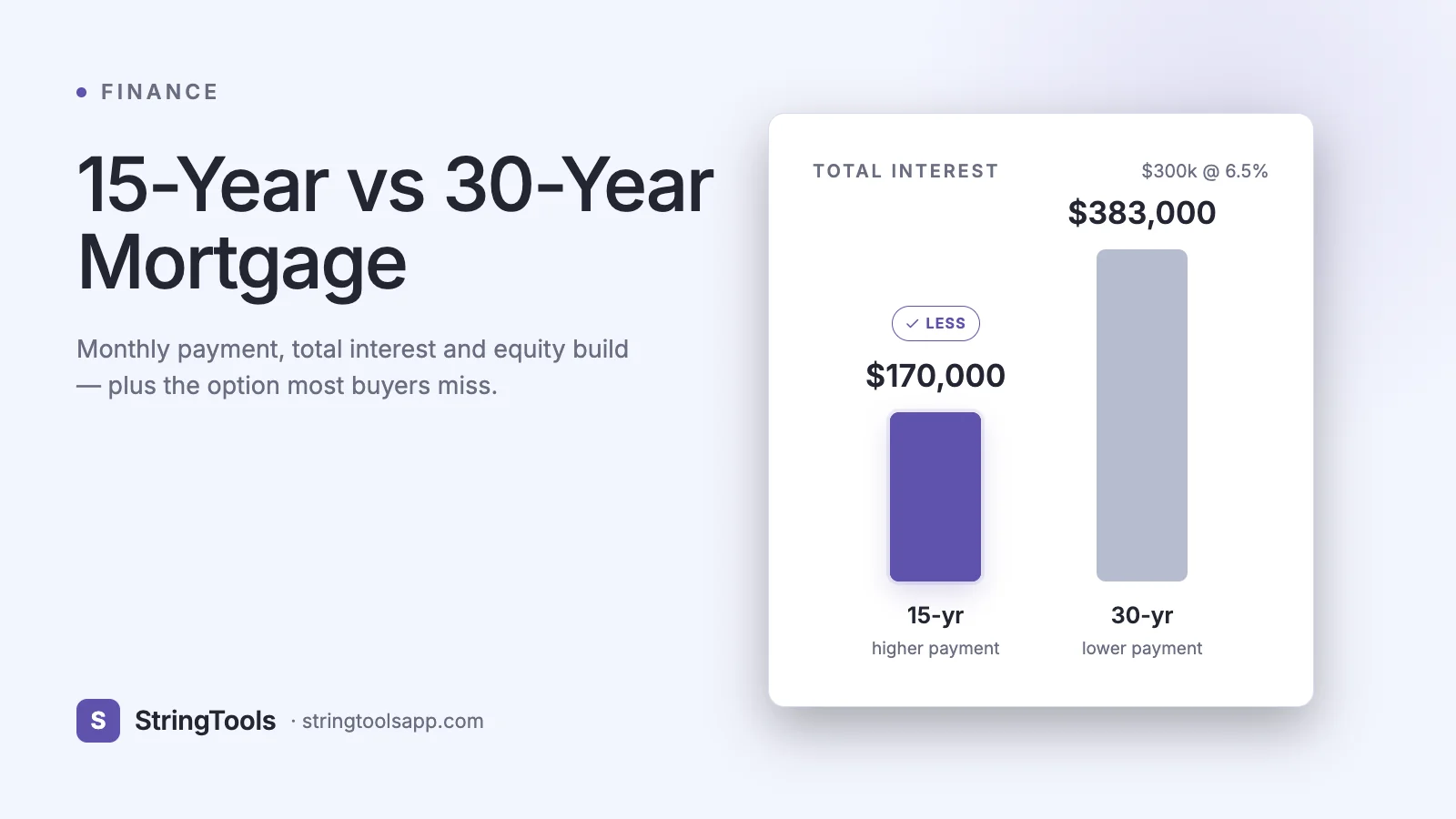

15-Year vs 30-Year Mortgage: Which Actually Saves You More?
15-year vs 30-year mortgage compared with real numbers: monthly payments, total interest, equity build, and the third option most buyers overlook.
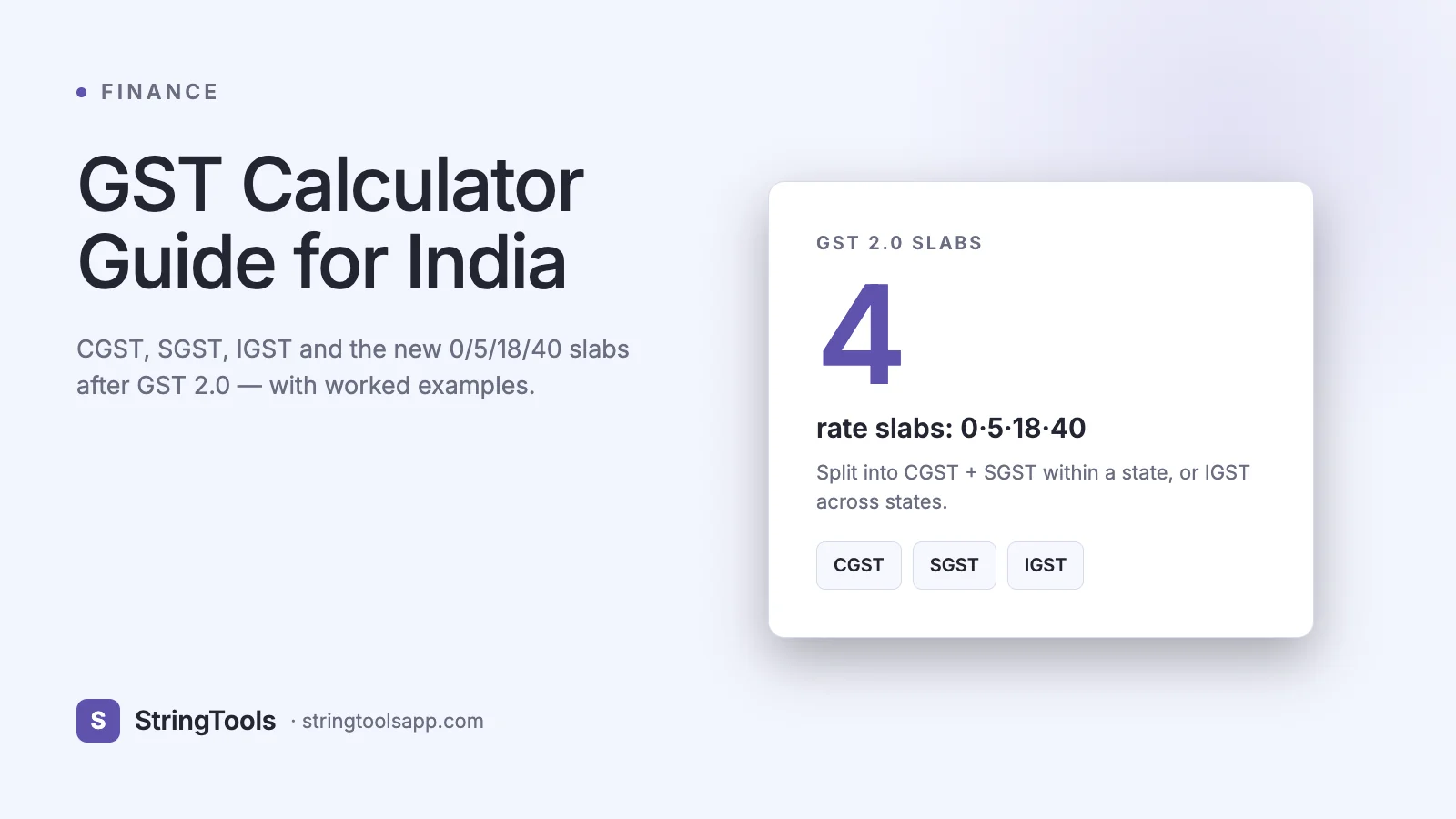
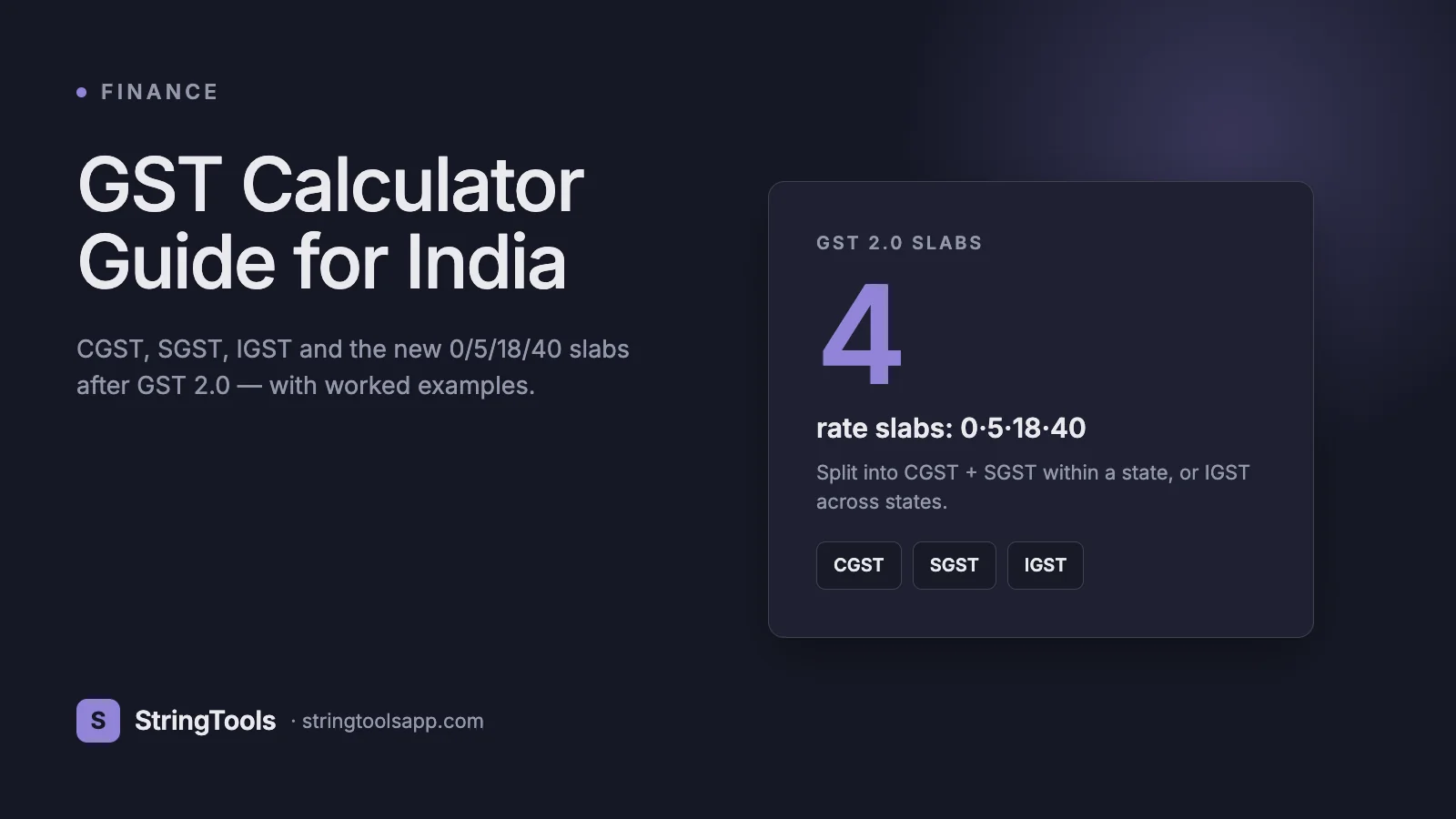
GST Calculator Guide for Indian Businesses (CGST, SGST, IGST)
Master GST calculation in India under GST 2.0 (eff. 22 Sep 2025): CGST, SGST, IGST, the new 0/5/18/40 slabs, ITC, and worked INR examples for 2025-26.
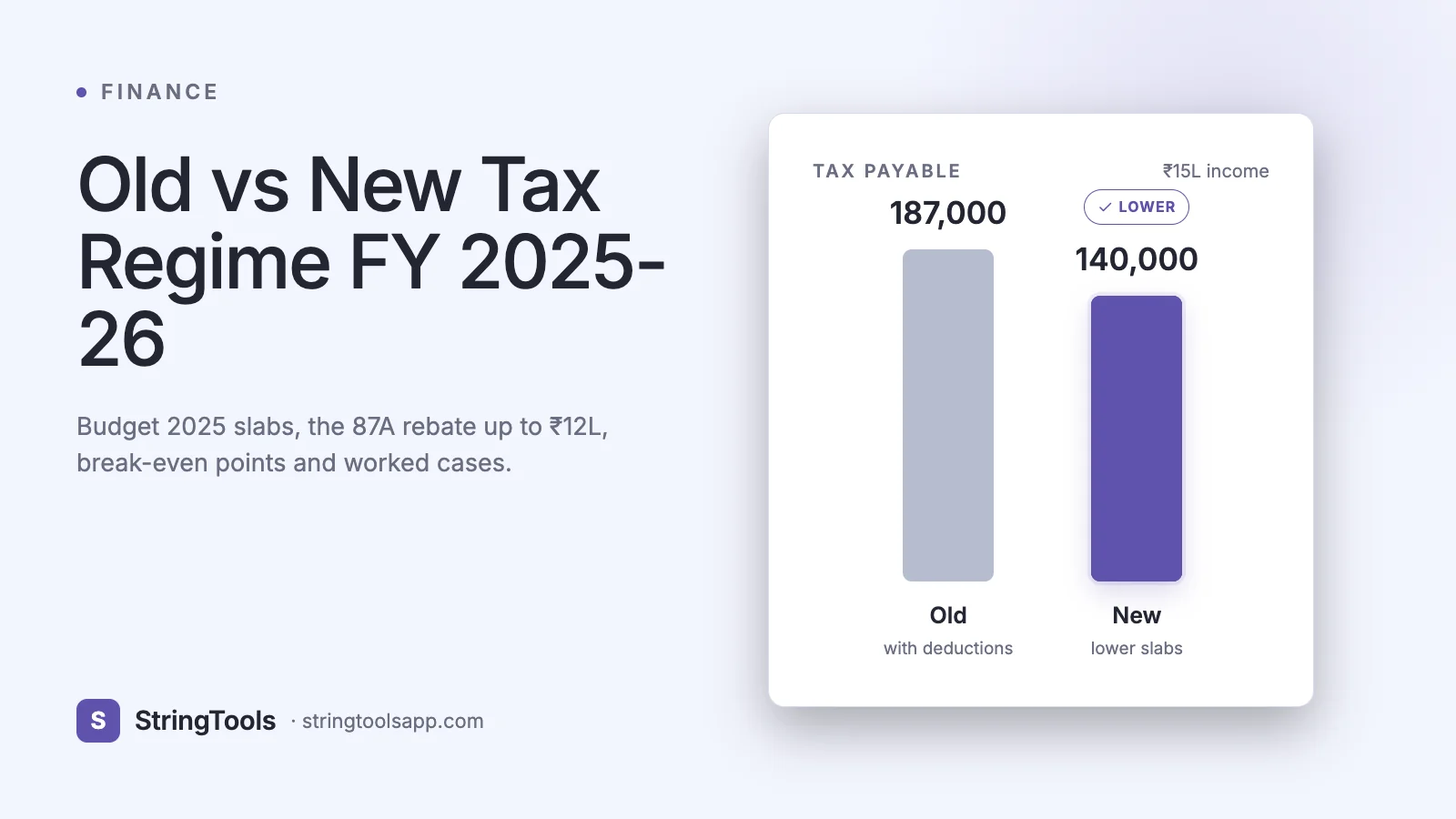
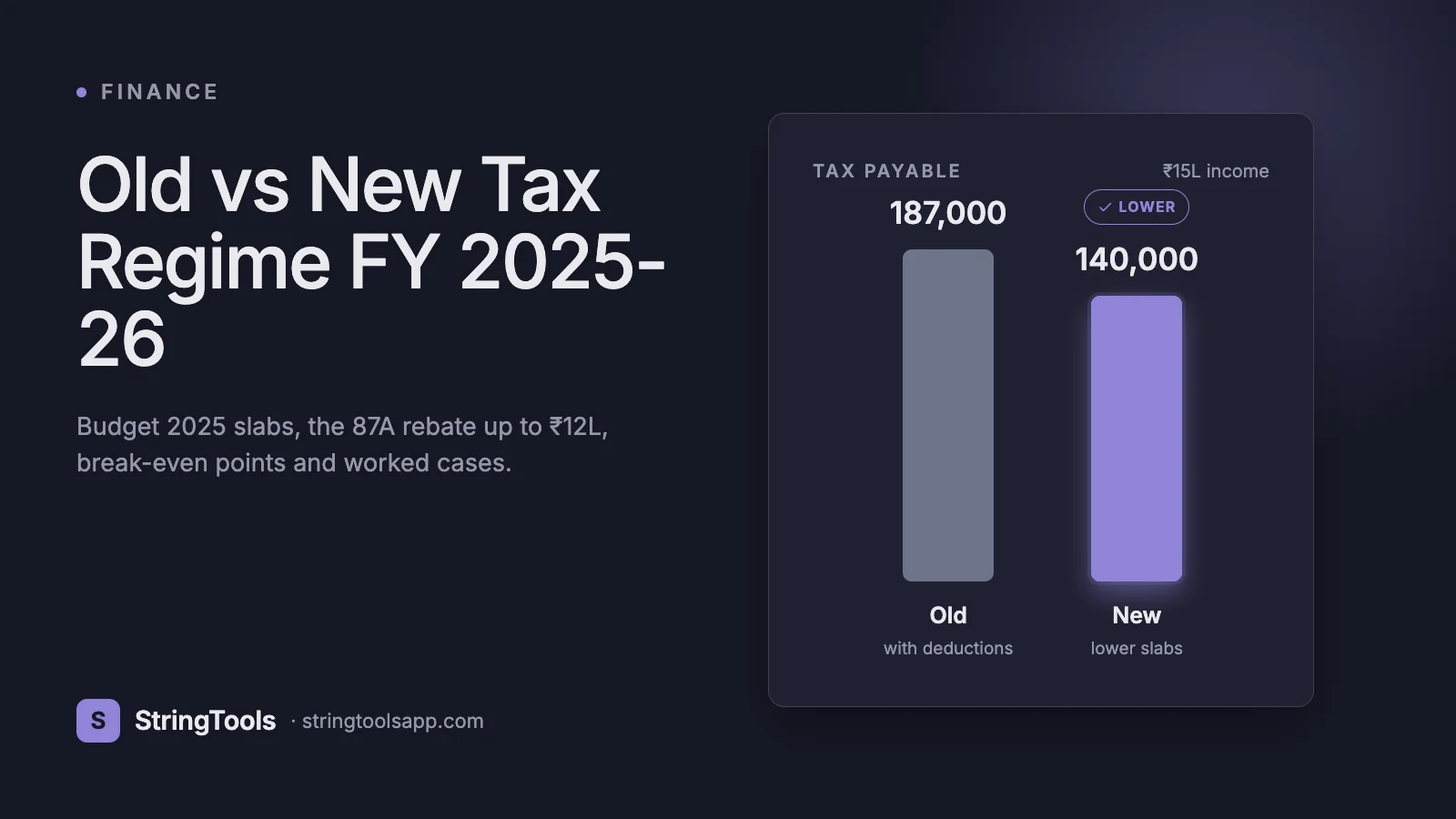
Old vs New Tax Regime FY 2025-26 — Which Saves More?
Old vs new income tax regime for FY 2025-26: Budget 2025 slabs, the Section 87A rebate making income up to Rs 12 lakh tax-free, and worked examples.
How to Calculate Age Exactly: Years, Months, Days, and Beyond
How to calculate age exactly in years, months and days: leap years, Feb 29 birthdays, Indian government rules, school cut-offs, and JS code samples.
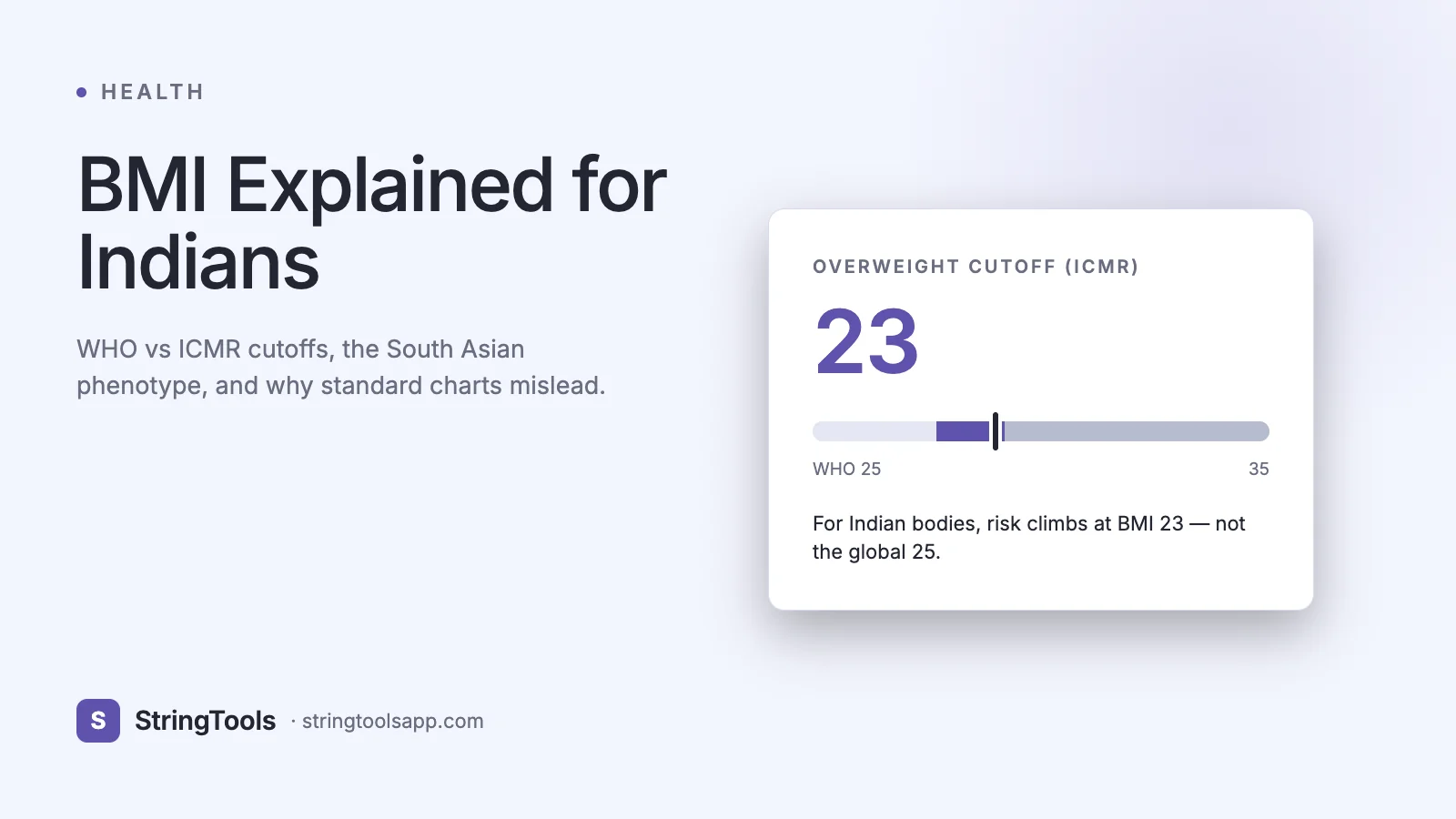
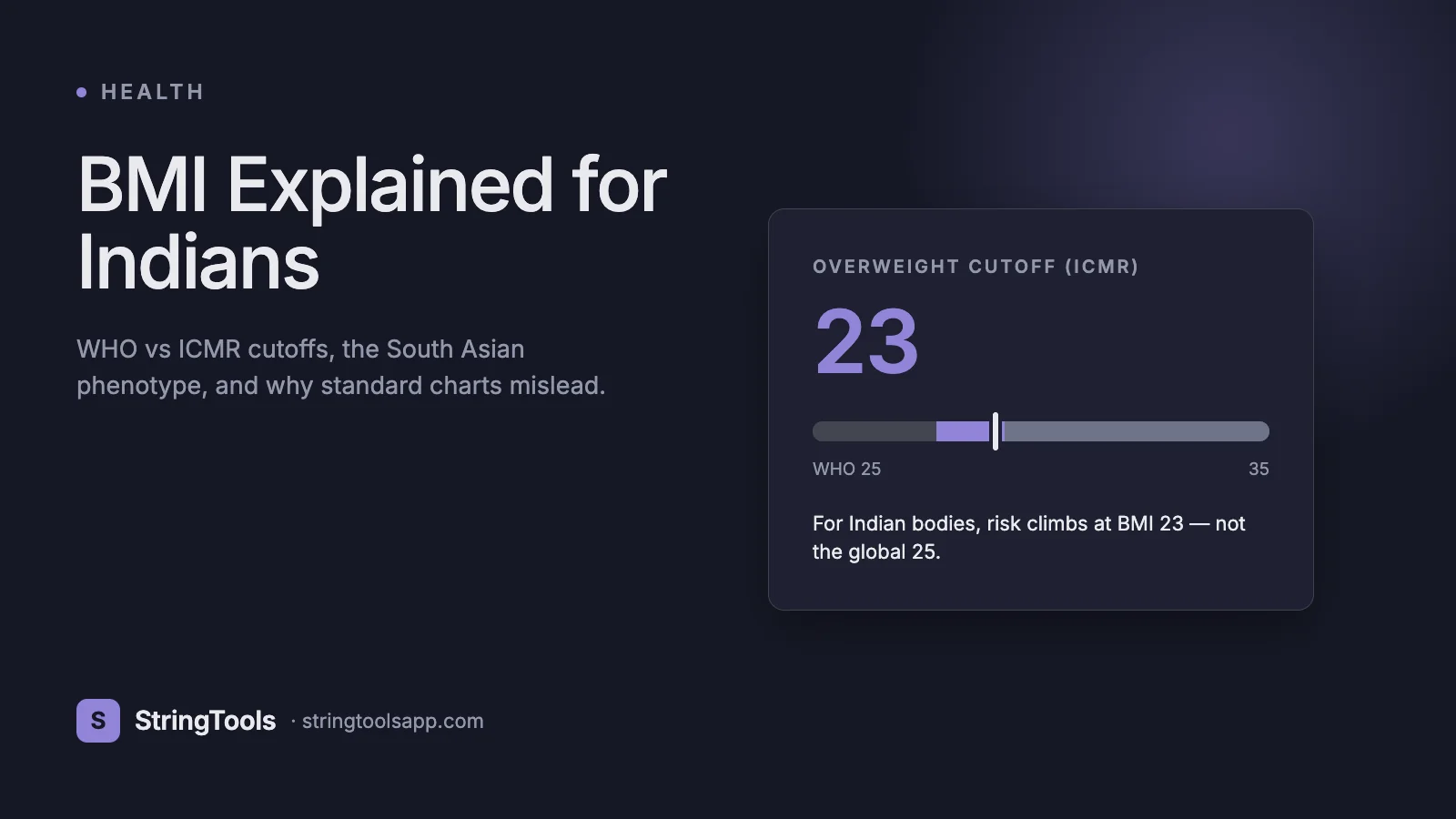
BMI Explained for Indians — Why Standard BMI Charts May Mislead You
BMI in the Indian context: WHO vs ICMR cutoffs, the South Asian phenotype, waist circumference, body fat, and why standard BMI charts can mislead.
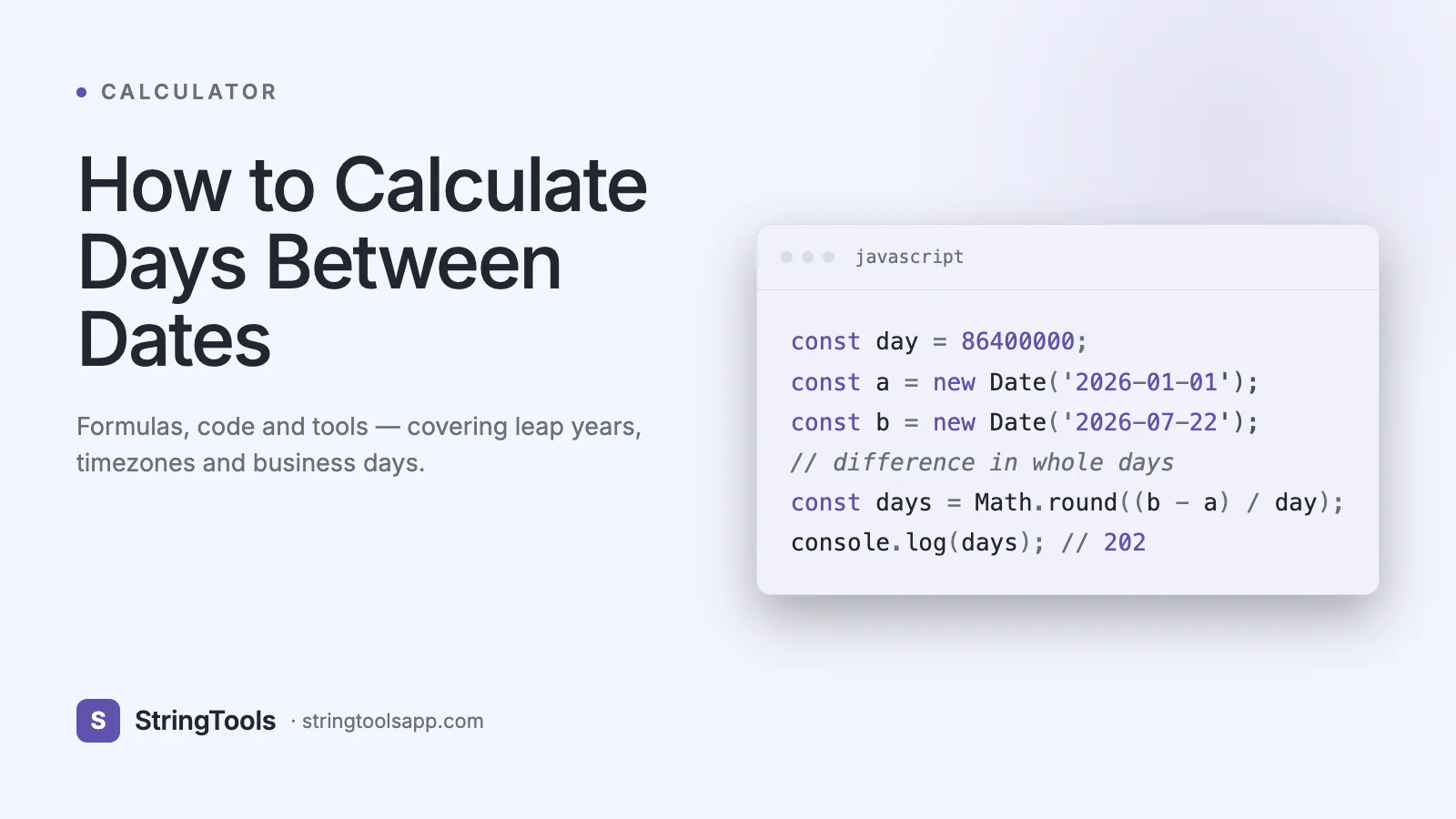
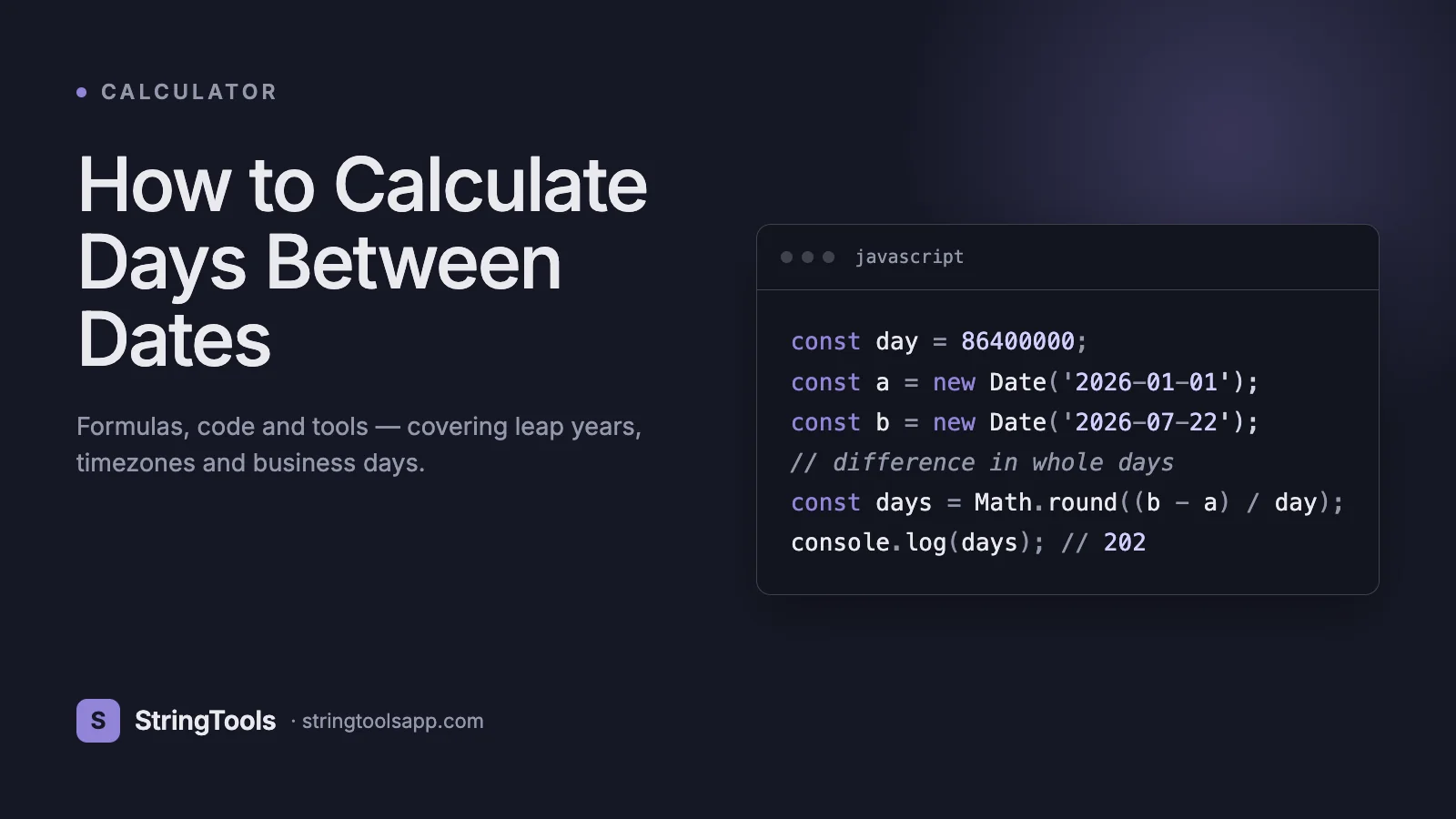
How to Calculate Days Between Dates — Complete Guide
Learn how to calculate days between dates accurately using formulas, code, and online tools. Covers leap years, timezones, business days, and pitfalls.
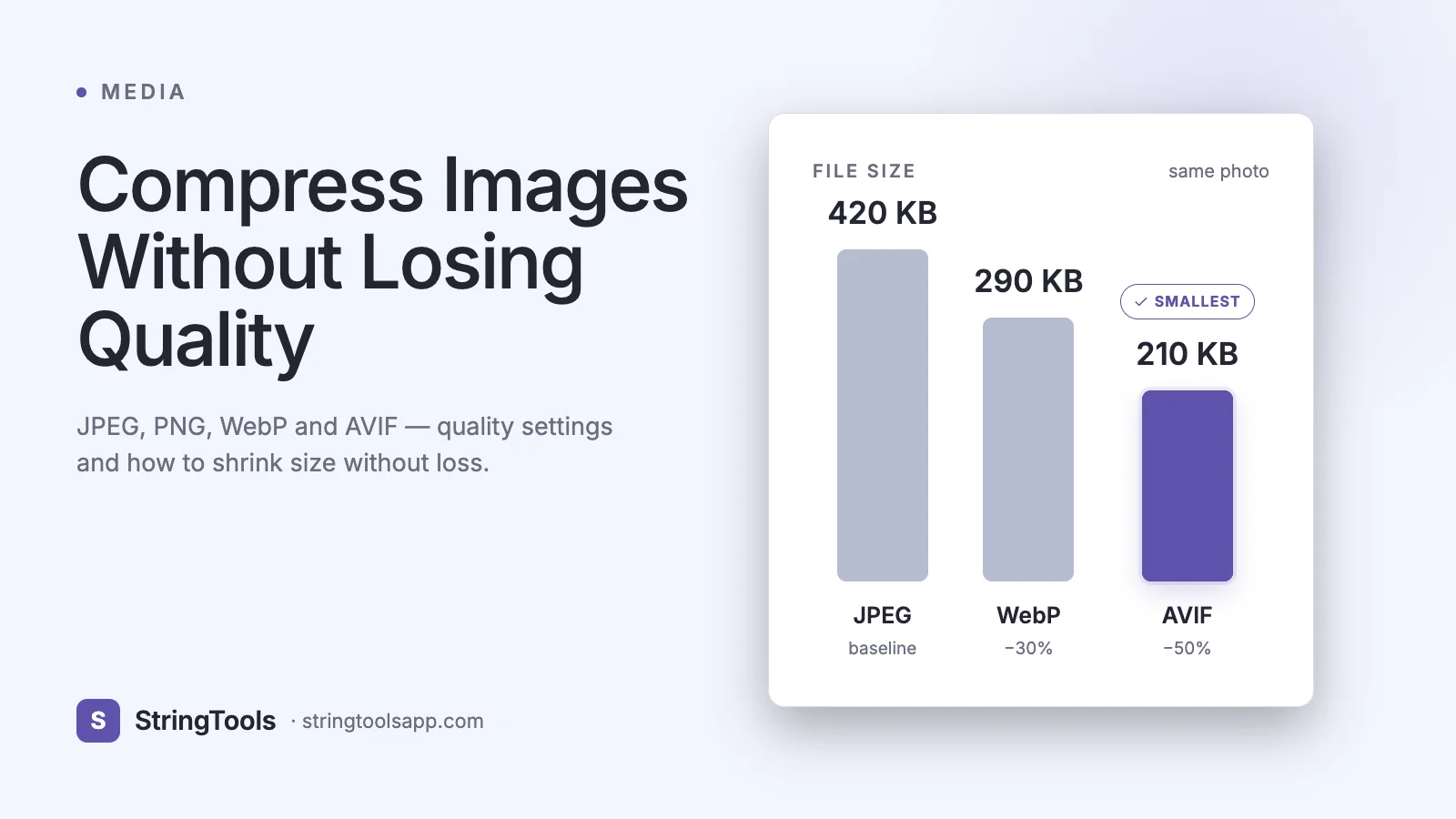
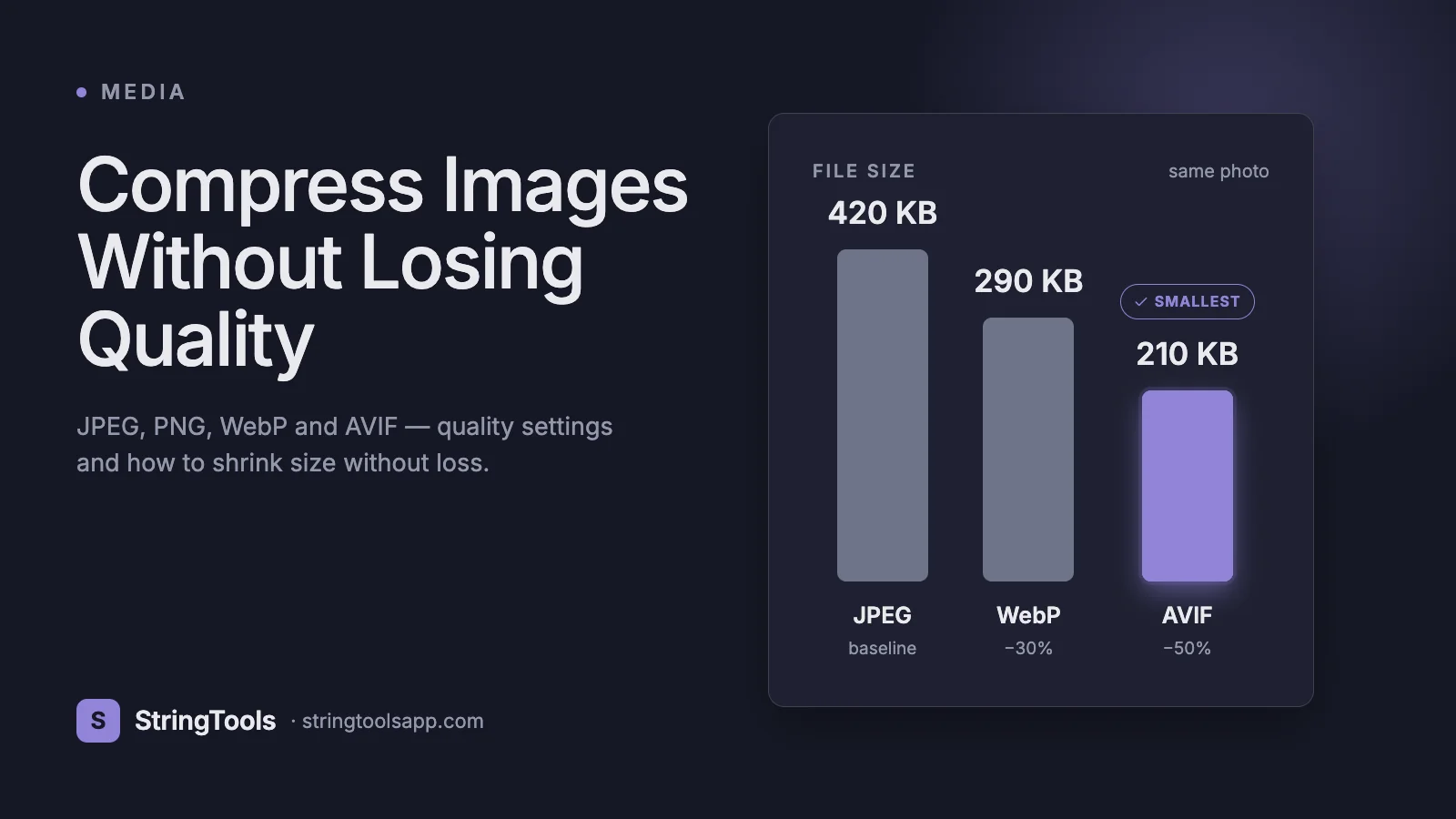
How to Compress Images Without Losing Quality (2026 Guide)
Master image compression in 2026. Learn JPEG, PNG, WebP, AVIF formats, quality settings, batch workflows, and how to shrink file size without visible loss.


How to Merge, Split, and Compress PDFs Online — Complete Guide
How to merge, split and compress PDF files online: which method suits each job, how to keep your files private, and the free tools that do it well.
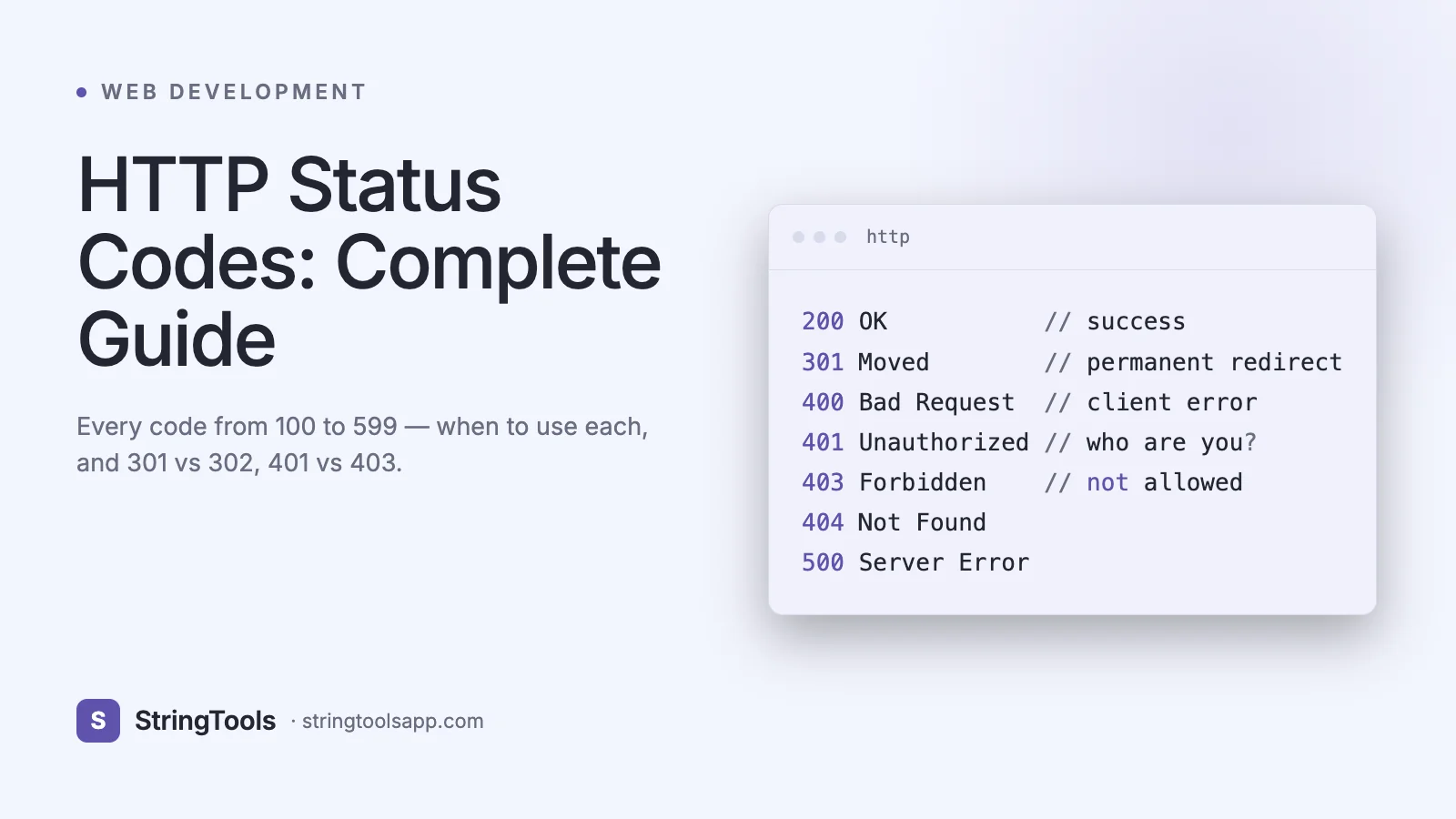
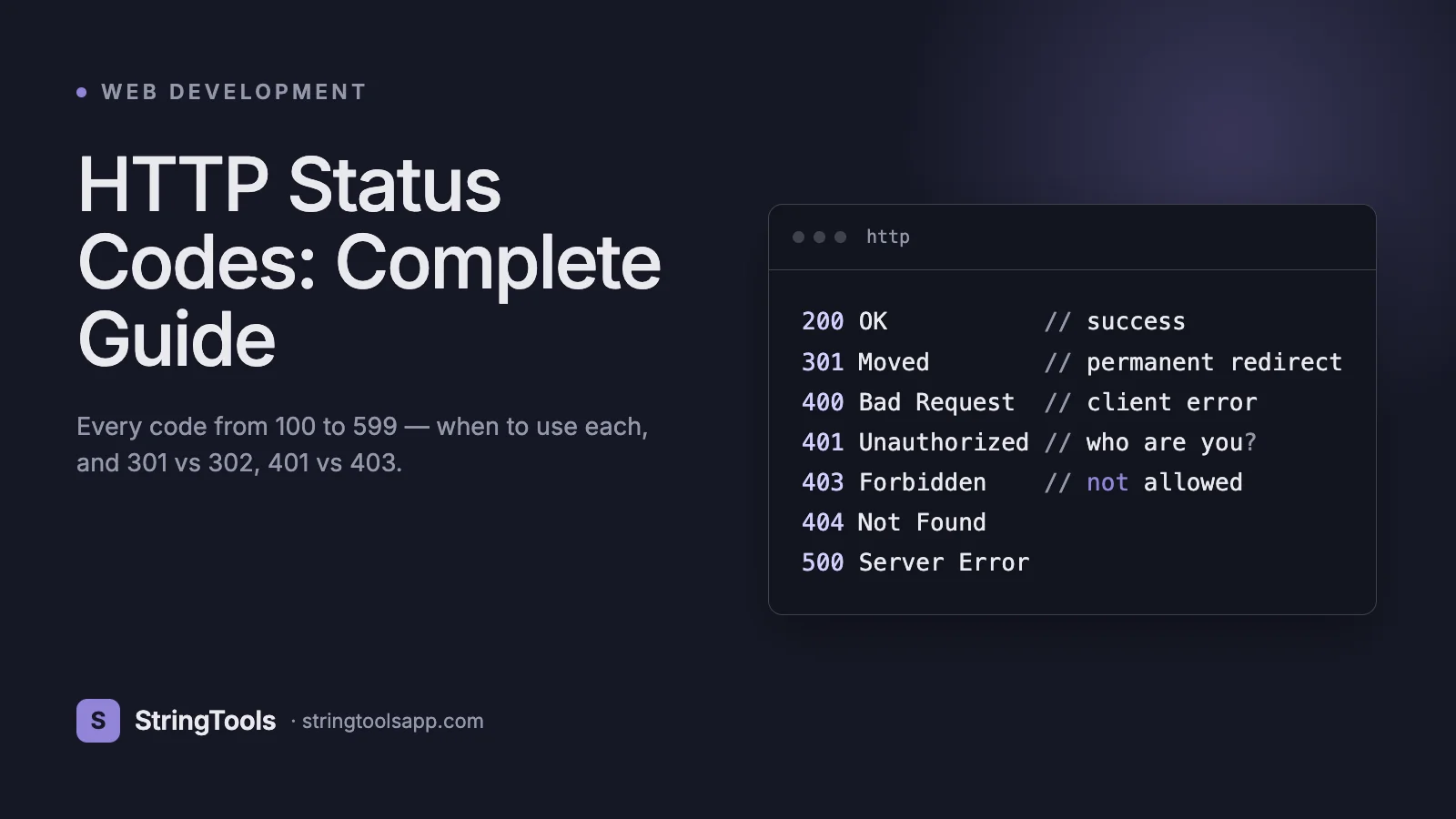
HTTP Status Codes: Complete Guide for Developers (2026)
Master every HTTP status code from 100 to 599. Learn when to use each code, real examples, common mistakes, and deep dives on 301 vs 302 and 401 vs 403.
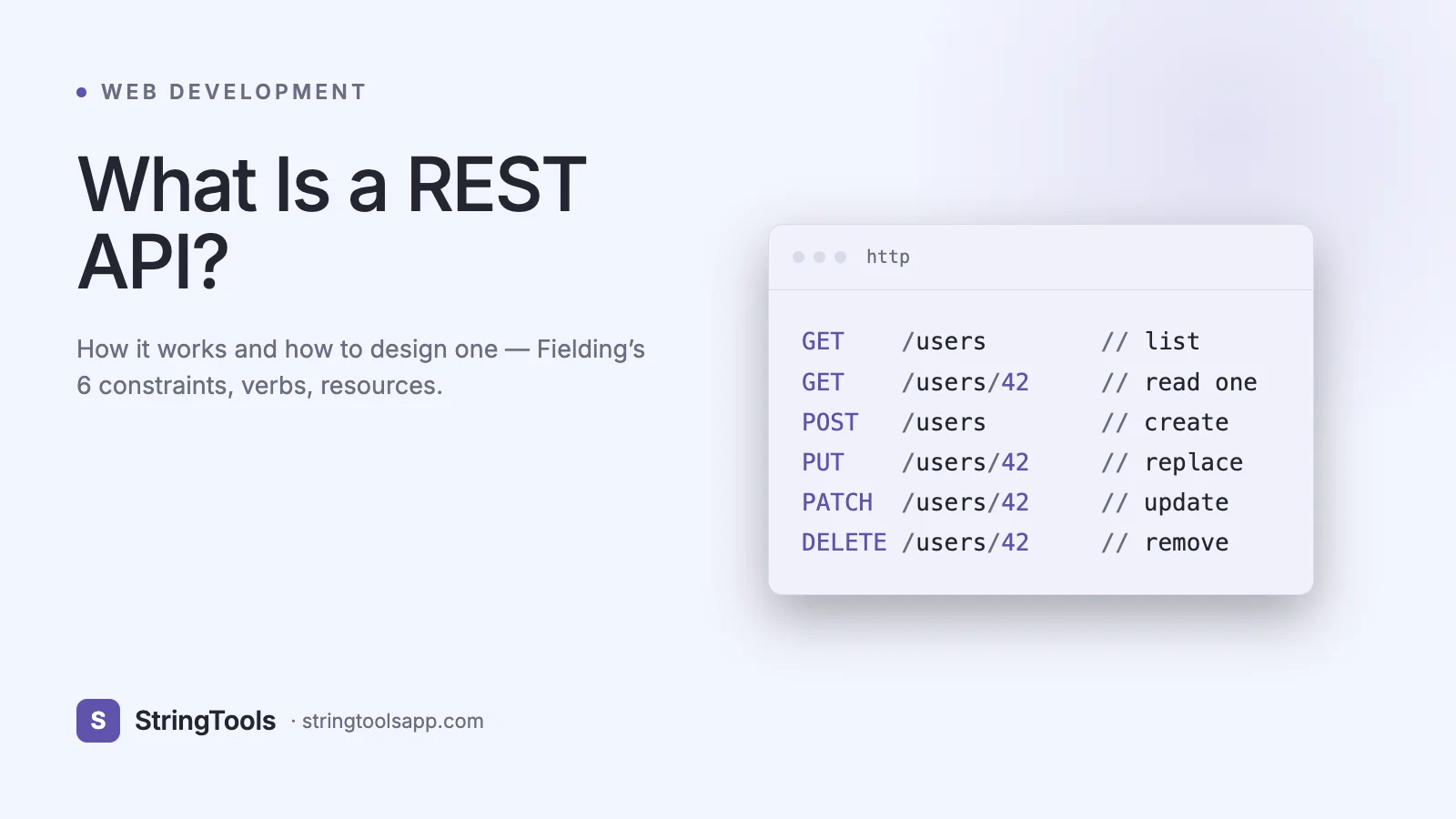
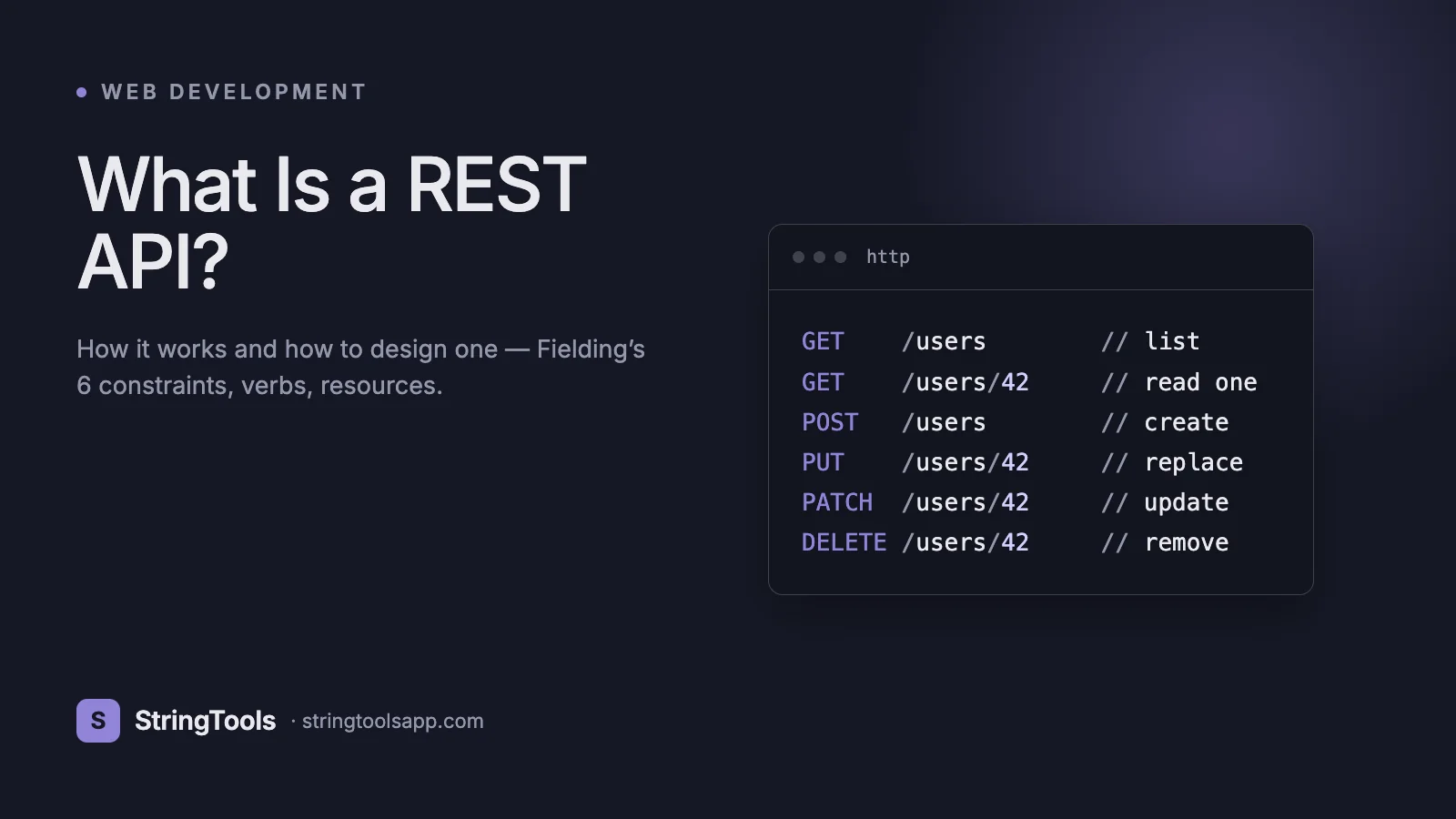
What is a REST API? Complete Beginner's Guide (2026)
What is a REST API? How it works and how to design one: Fielding's six constraints, HTTP verbs, resources, auth, versioning, and real examples.
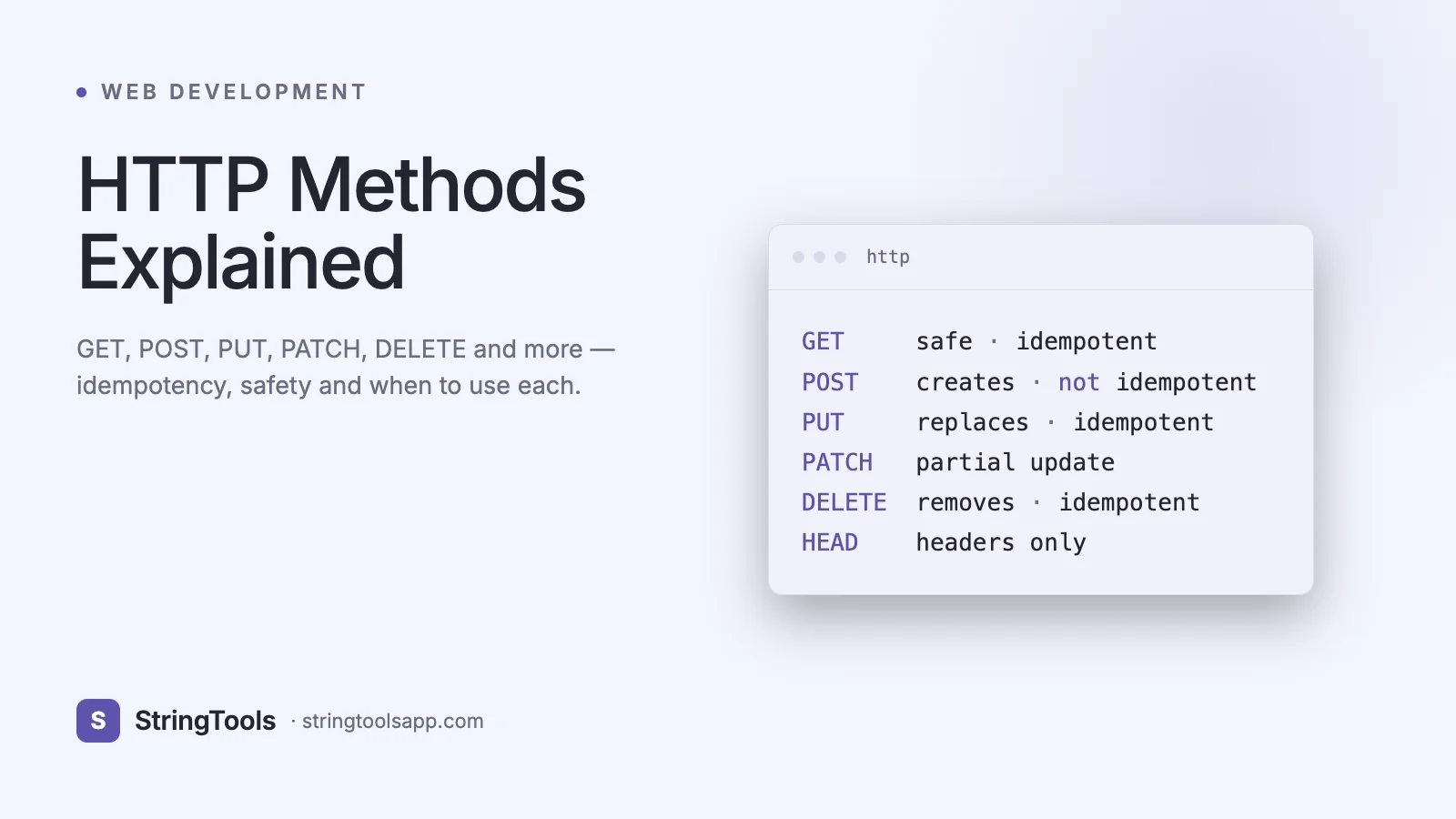
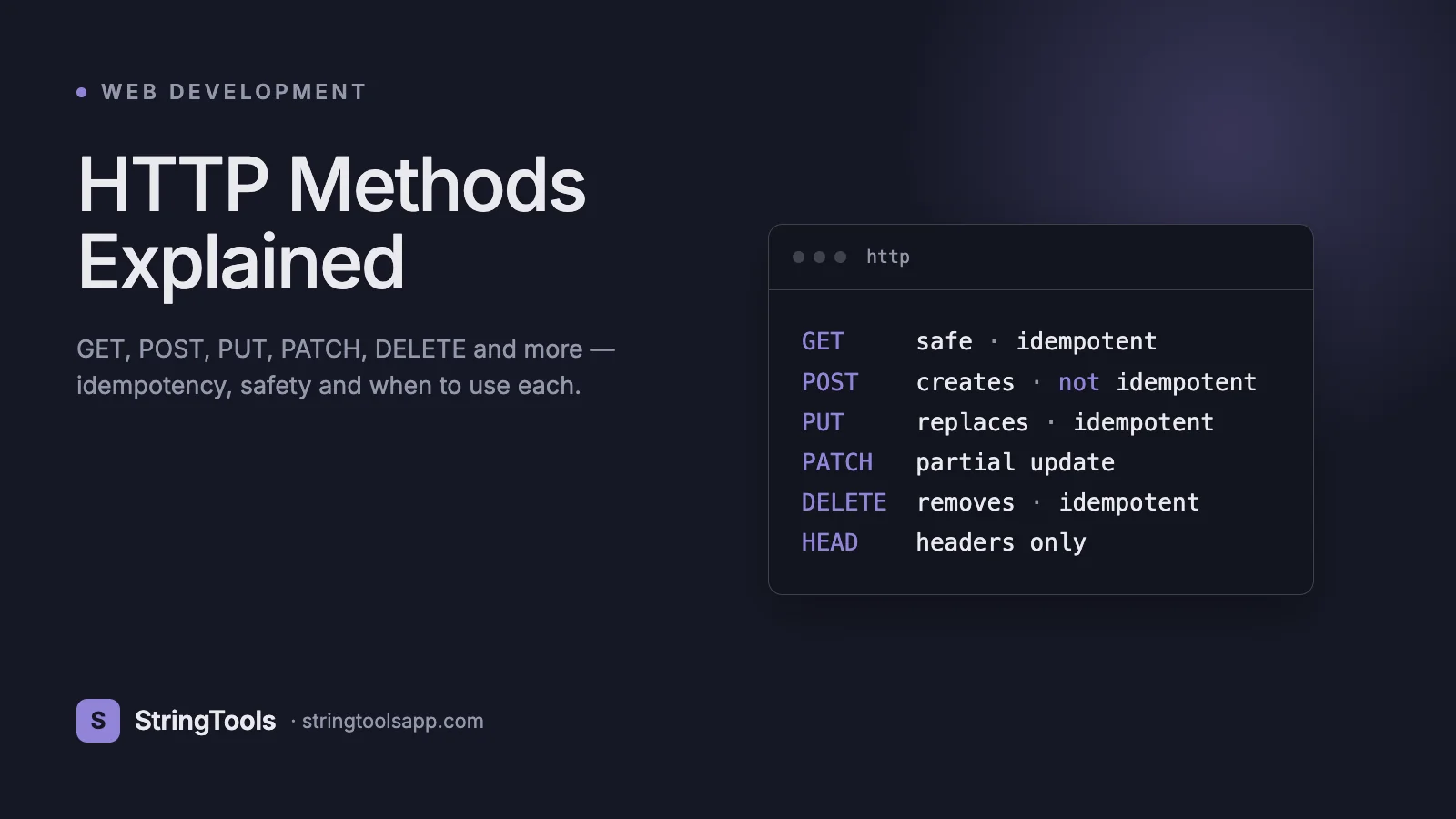
HTTP Methods Explained: GET, POST, PUT, DELETE, PATCH
HTTP methods explained: GET, POST, PUT, PATCH, DELETE, HEAD, OPTIONS, CONNECT and TRACE, with idempotency, safety, and when to use each one.
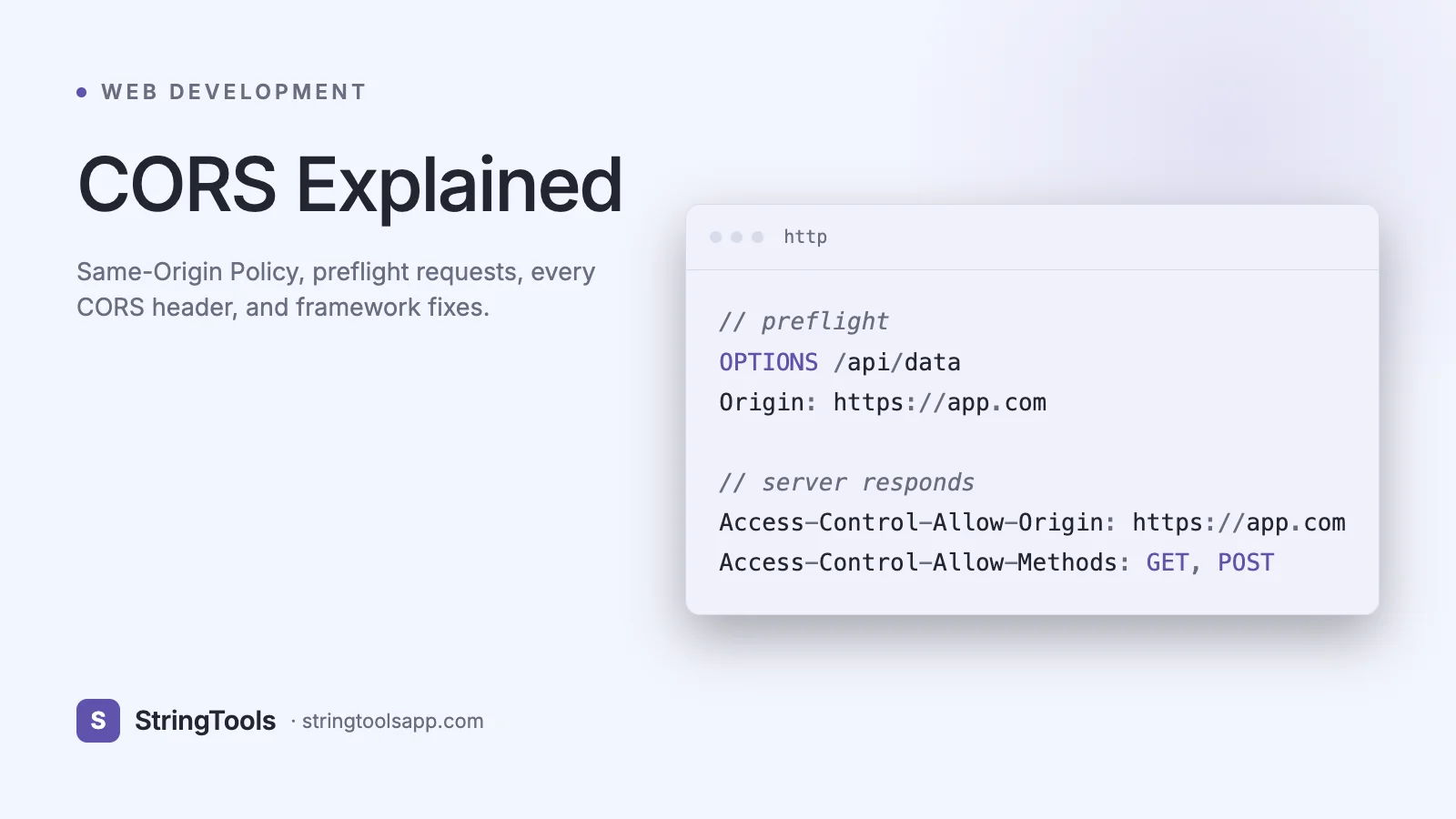
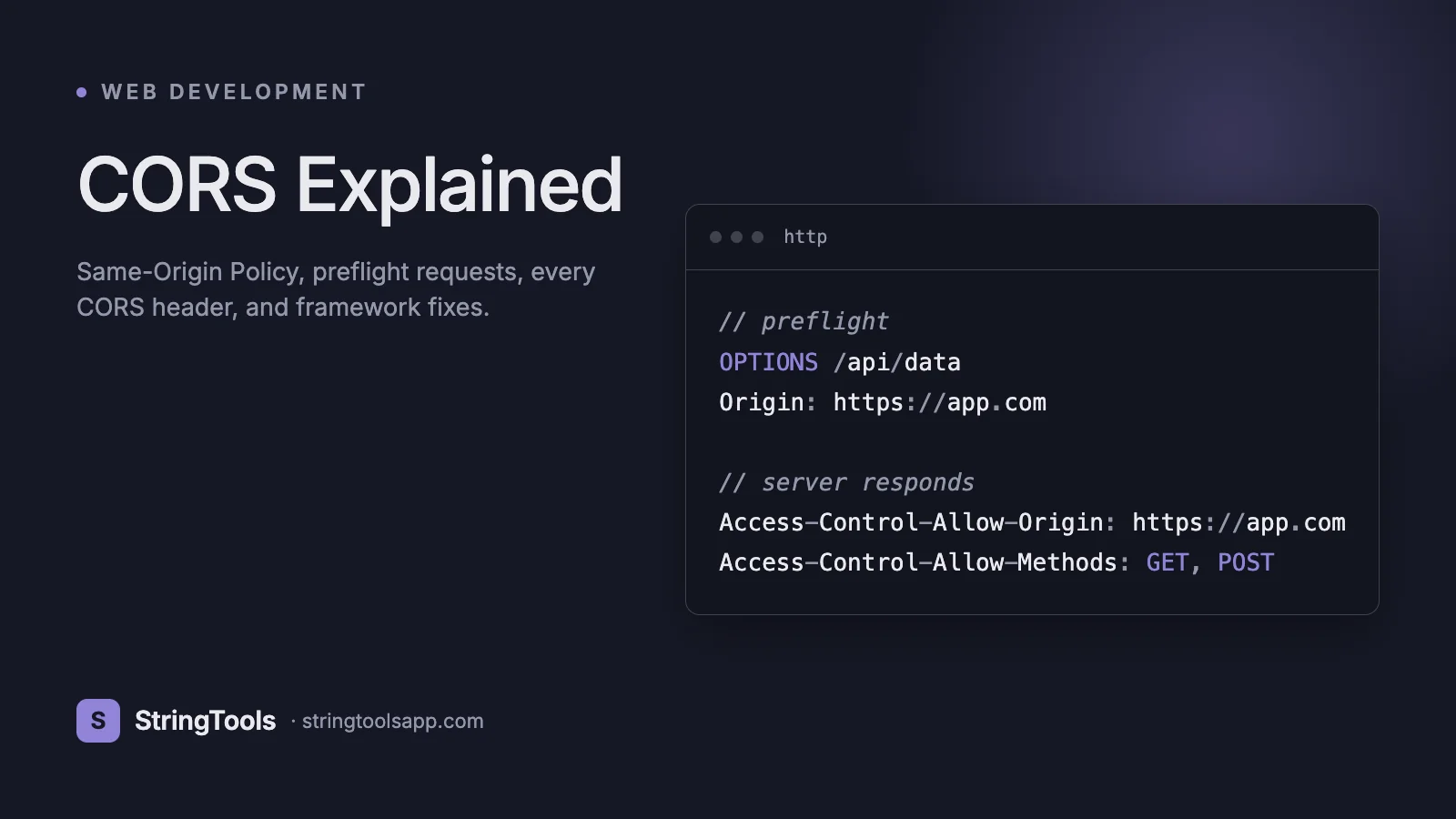
CORS Explained: Complete Guide to Cross-Origin Resource Sharing
Understand CORS from first principles: Same-Origin Policy, preflight requests, every CORS header, common errors, and framework fixes. With real code examples.

HTTPS vs HTTP: Why HTTPS Matters in 2026
HTTPS vs HTTP compared in depth. Learn TLS handshakes, certificates, HSTS, HTTP/2, HTTP/3, Let's Encrypt setup, SEO impact, and how to avoid common mistakes.
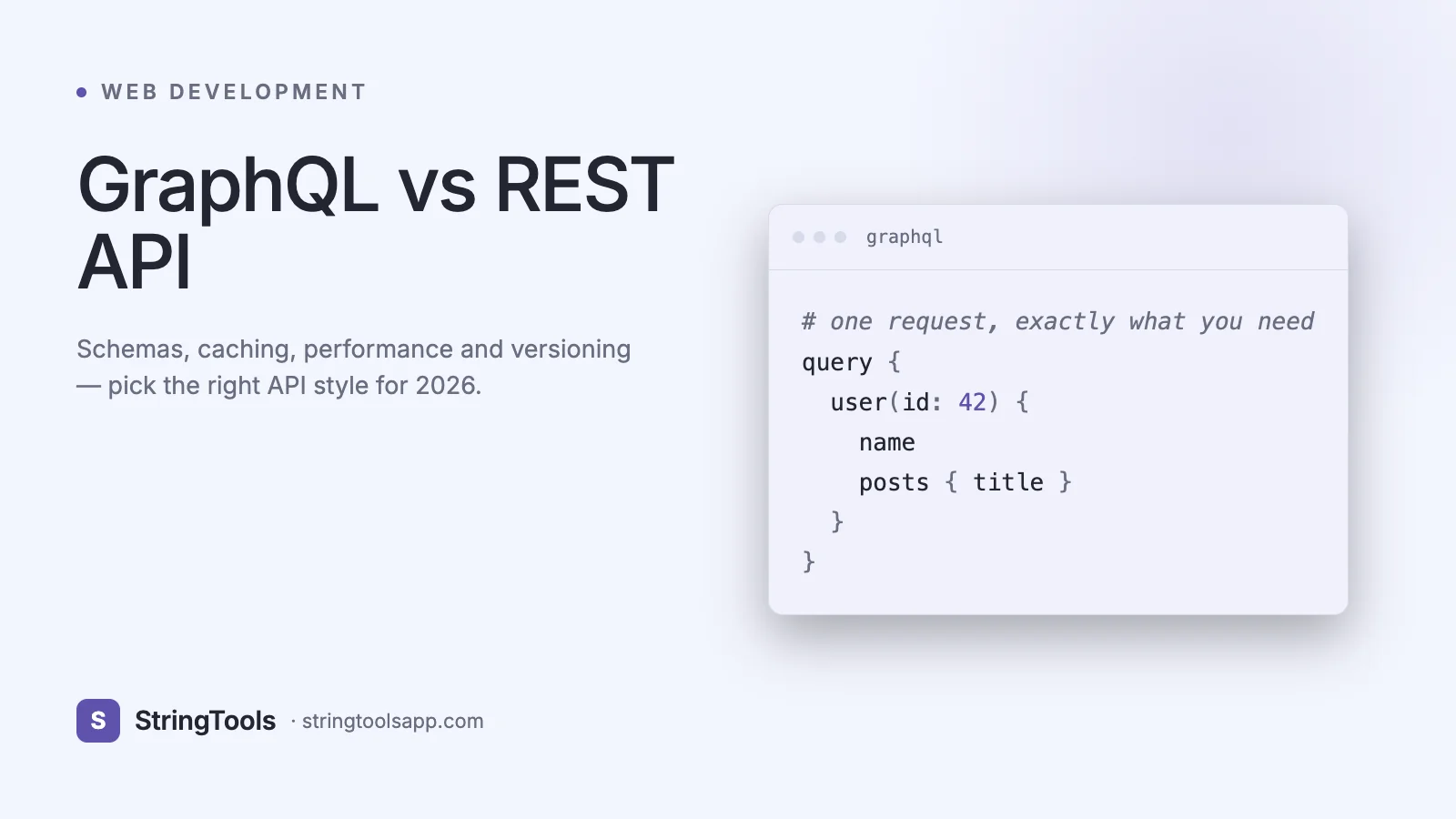
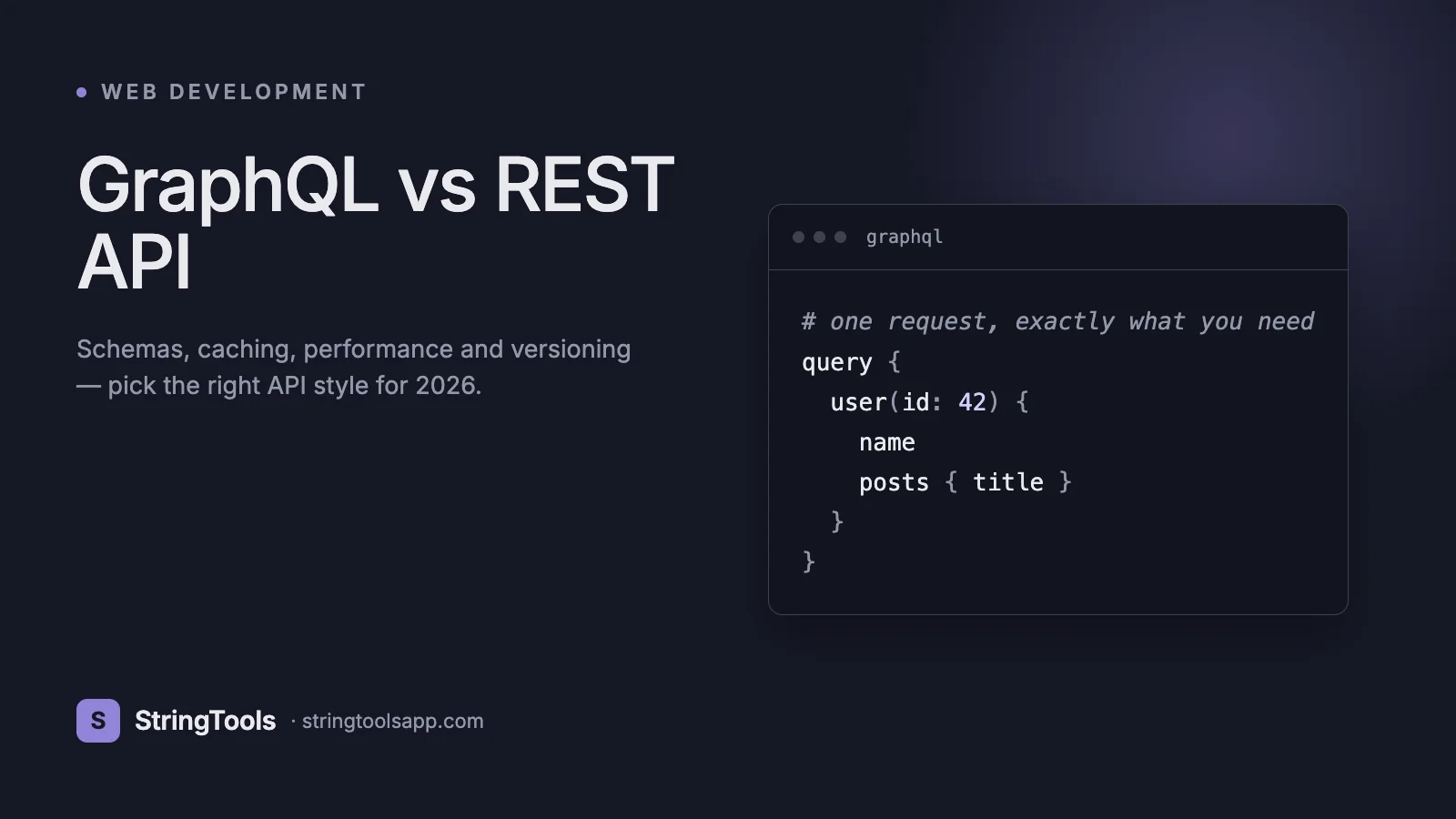
GraphQL vs REST API: Which Should You Use in 2026?
GraphQL vs REST API compared in depth: schemas, caching, performance, versioning, and real-world use cases to help you pick the right API style in 2026.
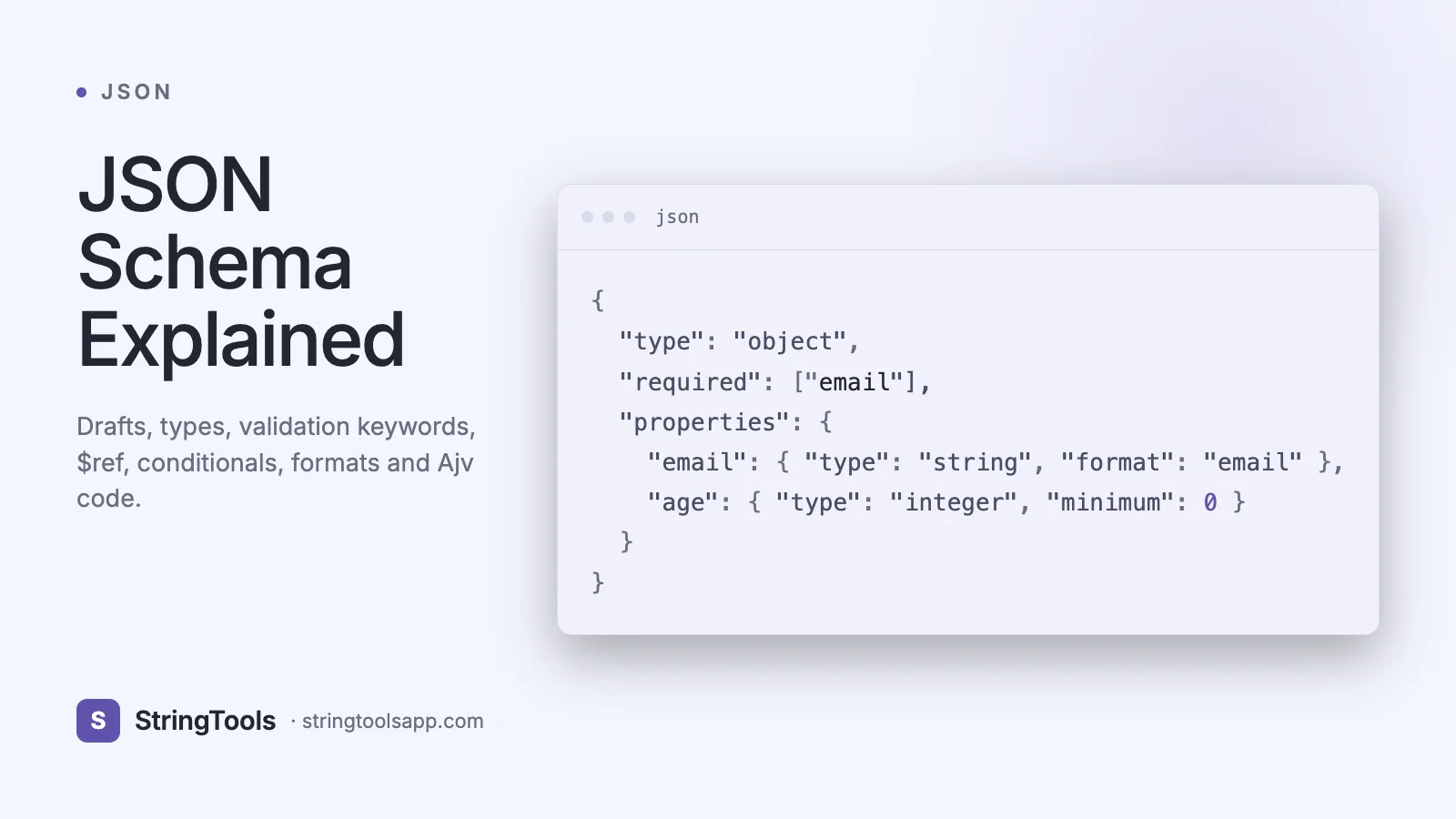
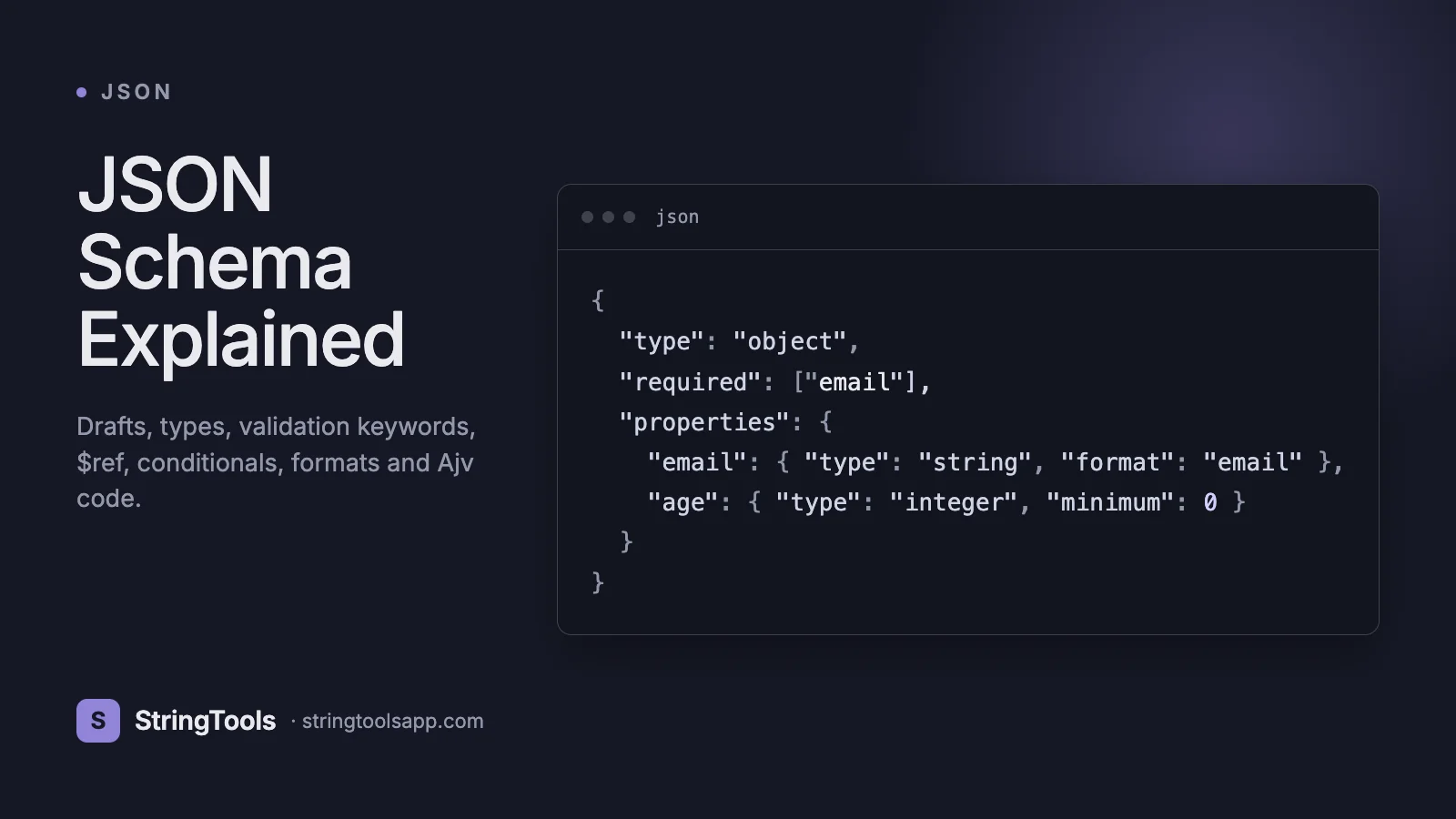
JSON Schema Explained: Complete Guide with Examples
Master JSON Schema with this complete 2026 guide: drafts, types, validation keywords, $ref, conditionals, formats, real API examples, and Ajv code.
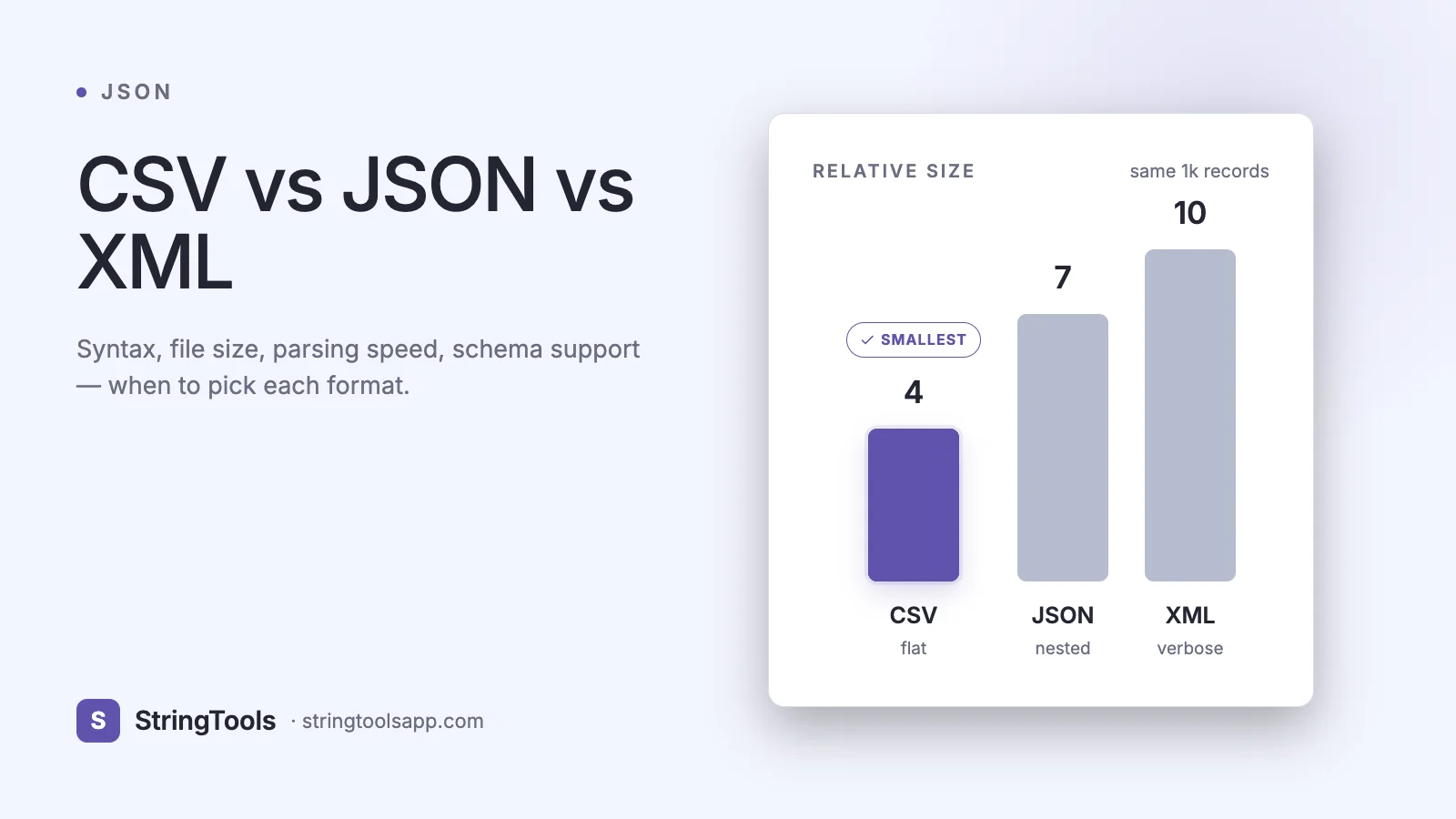
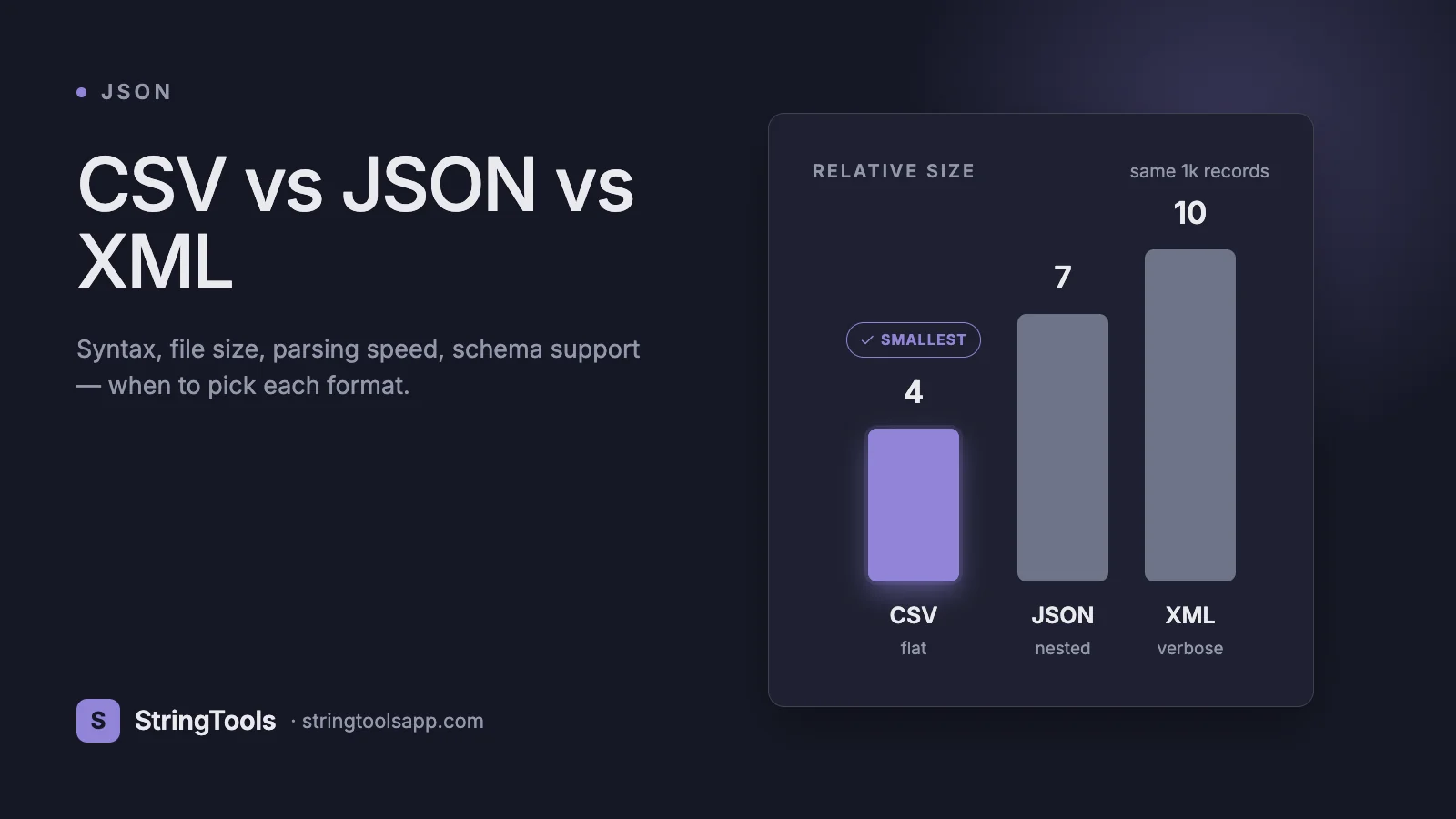
CSV vs JSON vs XML: Complete Data Format Comparison
CSV vs JSON vs XML compared in full: syntax, file size, parsing speed, schema support, tooling, and when to pick each format for your data pipeline.
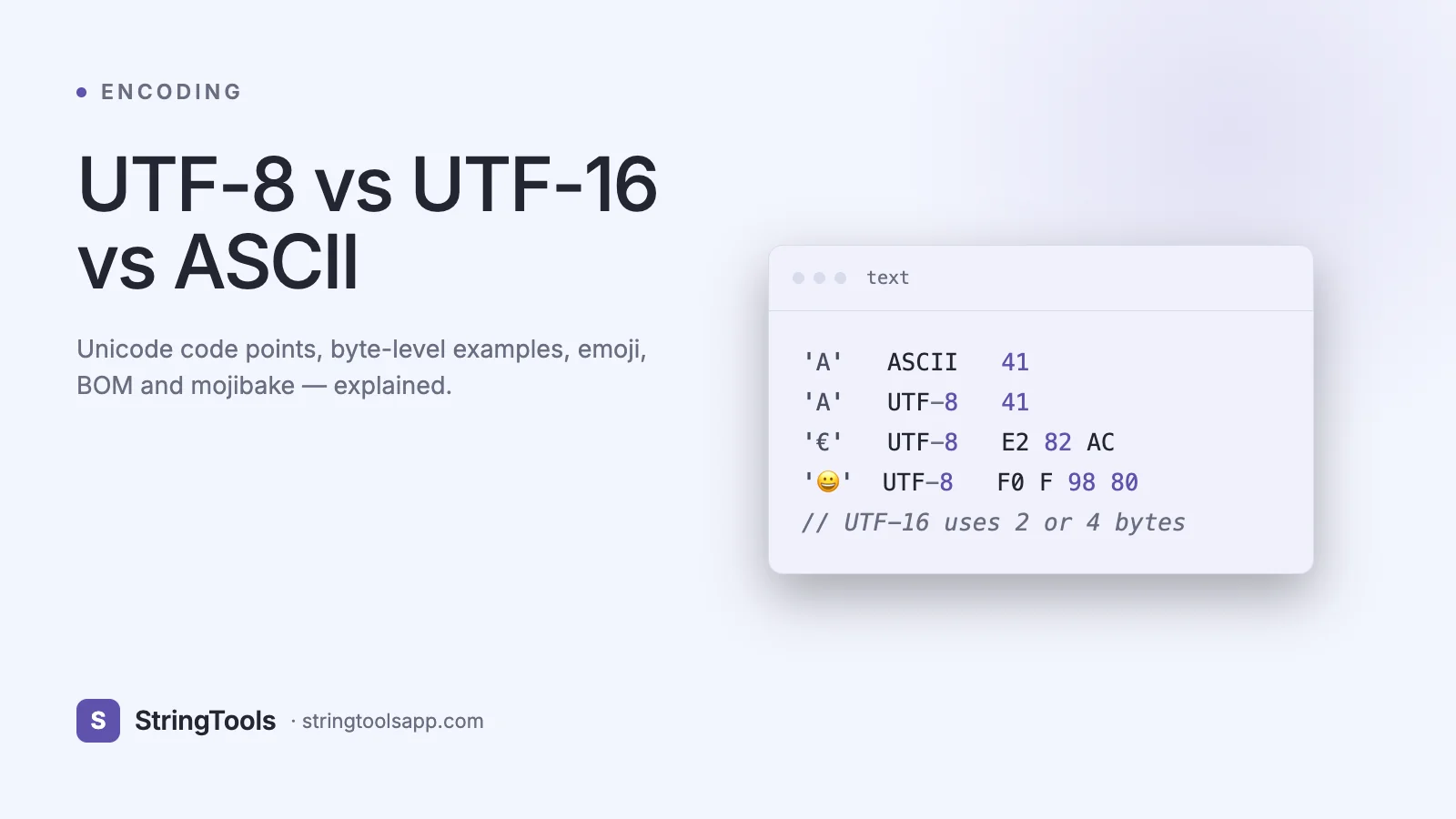
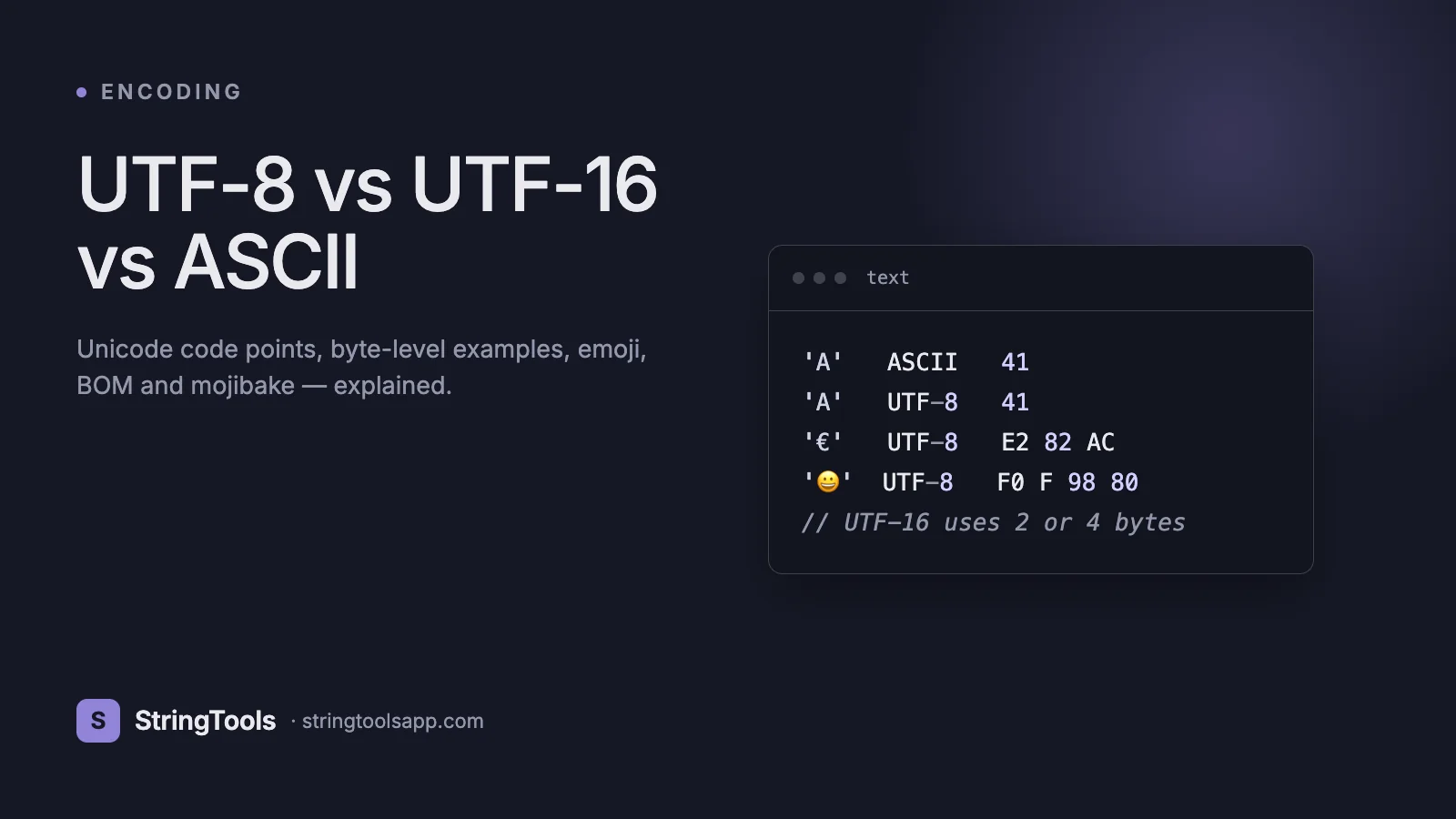
UTF-8 vs UTF-16 vs ASCII: Character Encoding Explained
UTF-8 vs UTF-16 vs ASCII explained clearly: Unicode code points, byte-level examples, emoji handling, BOM, mojibake, and code in JavaScript and Python.
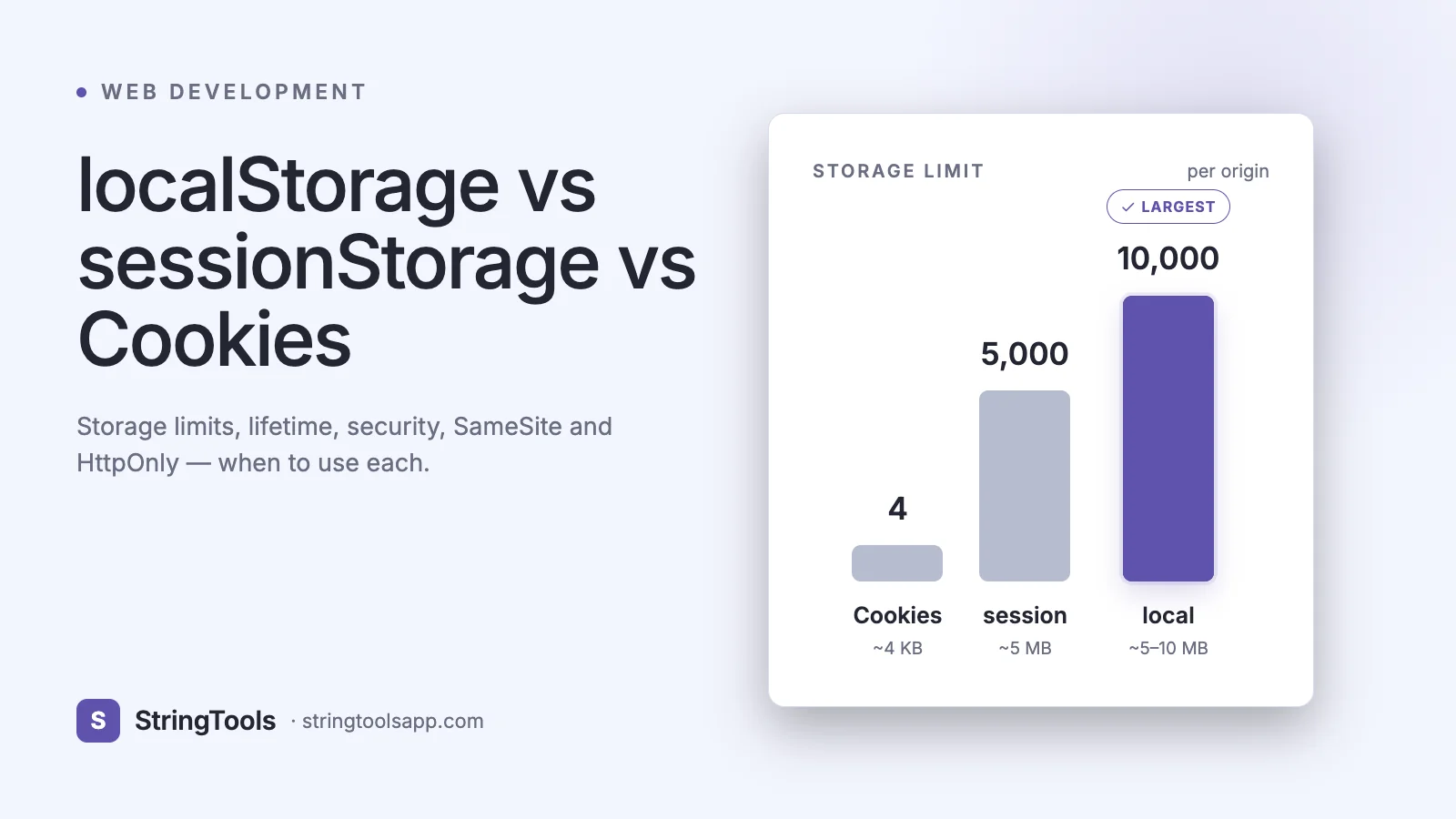

localStorage vs sessionStorage vs Cookies: Which to Use?
localStorage vs sessionStorage vs cookies compared: storage limits, lifetime, security, SameSite, HttpOnly, XSS, CSRF, and when to use each in 2026.
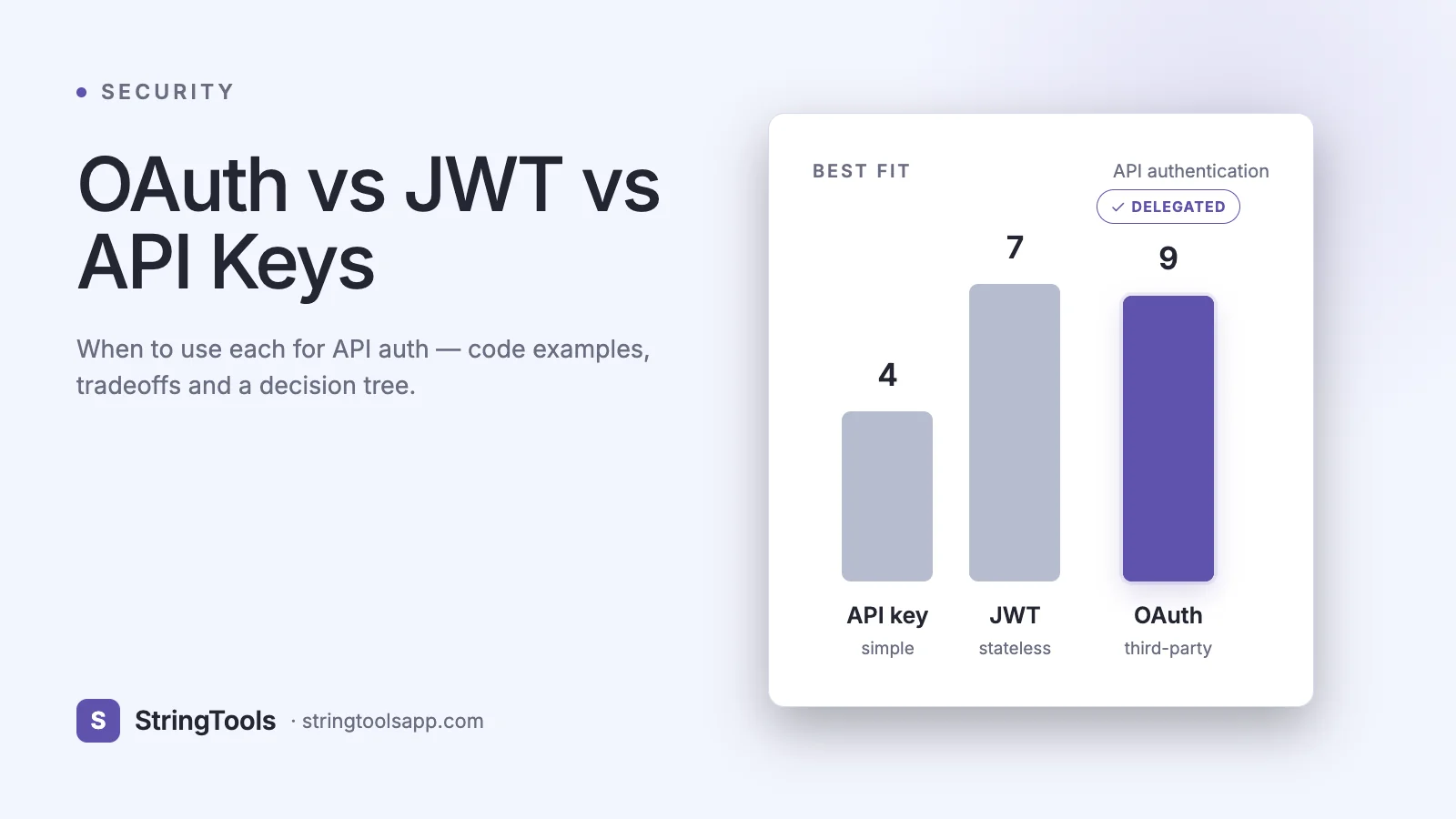
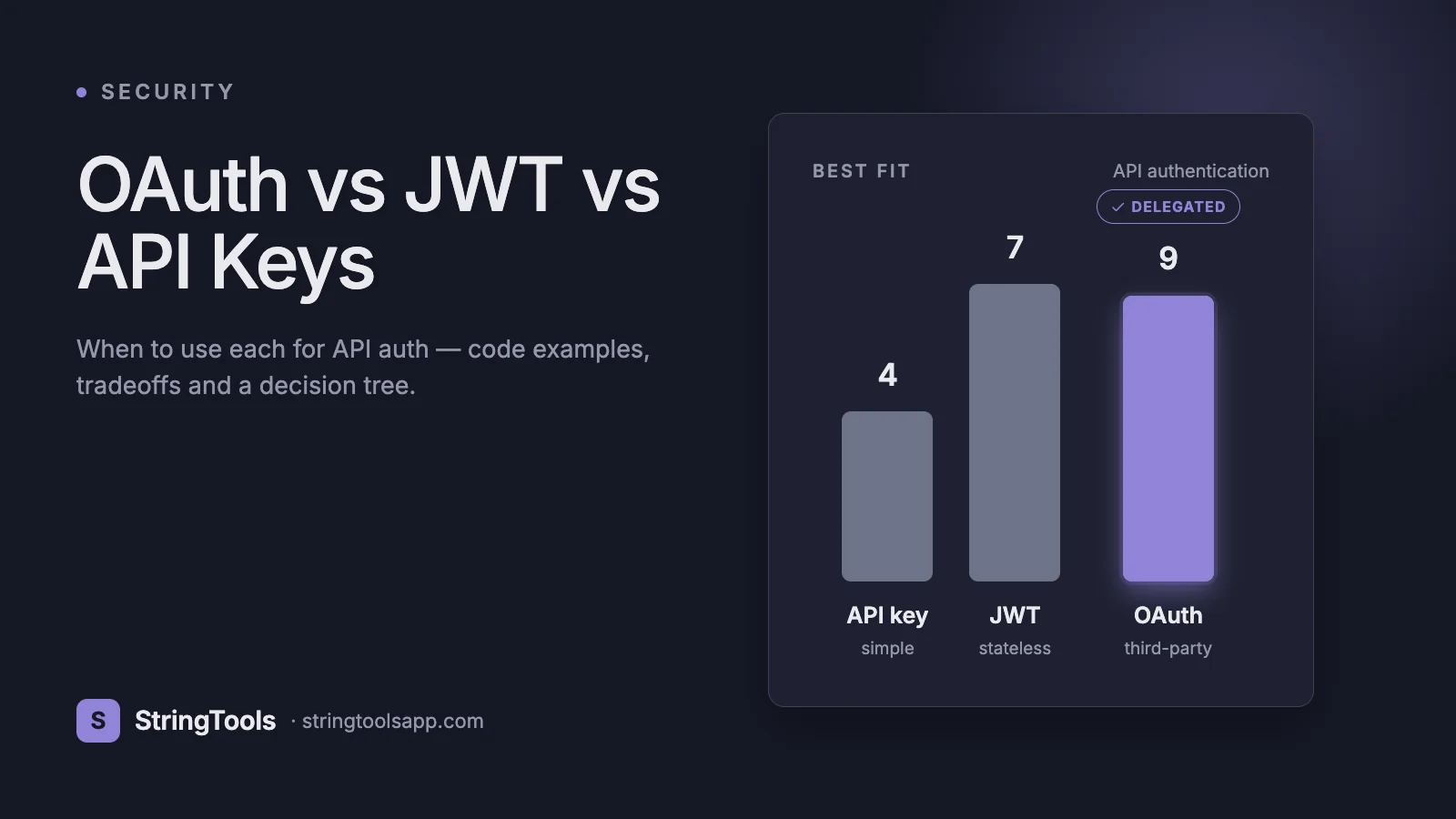
OAuth vs JWT vs API Keys: Which to Use for API Auth?
OAuth vs JWT vs API Keys compared: when to use each, code examples, security tradeoffs, and a decision tree for choosing the right API authentication.
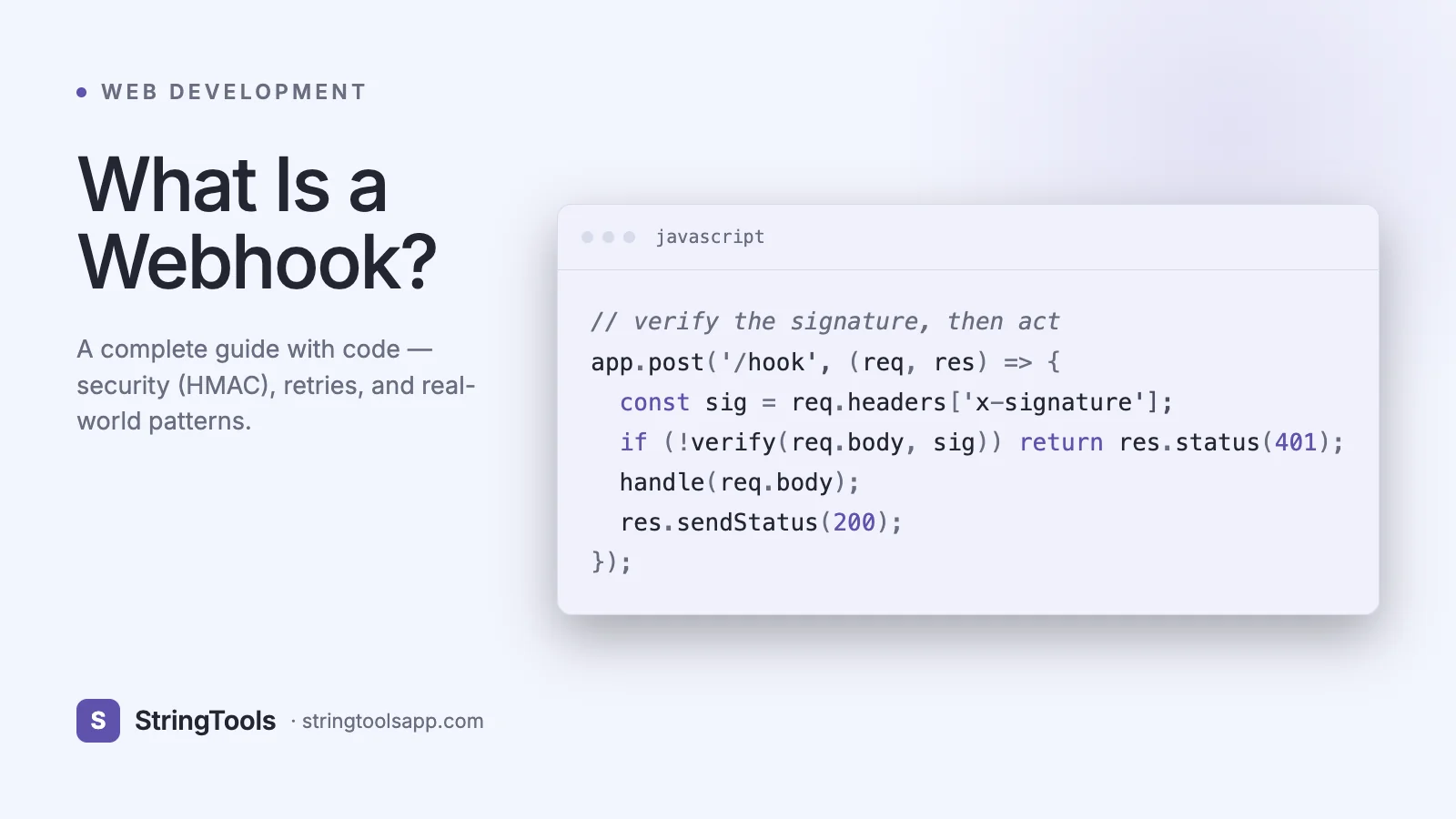
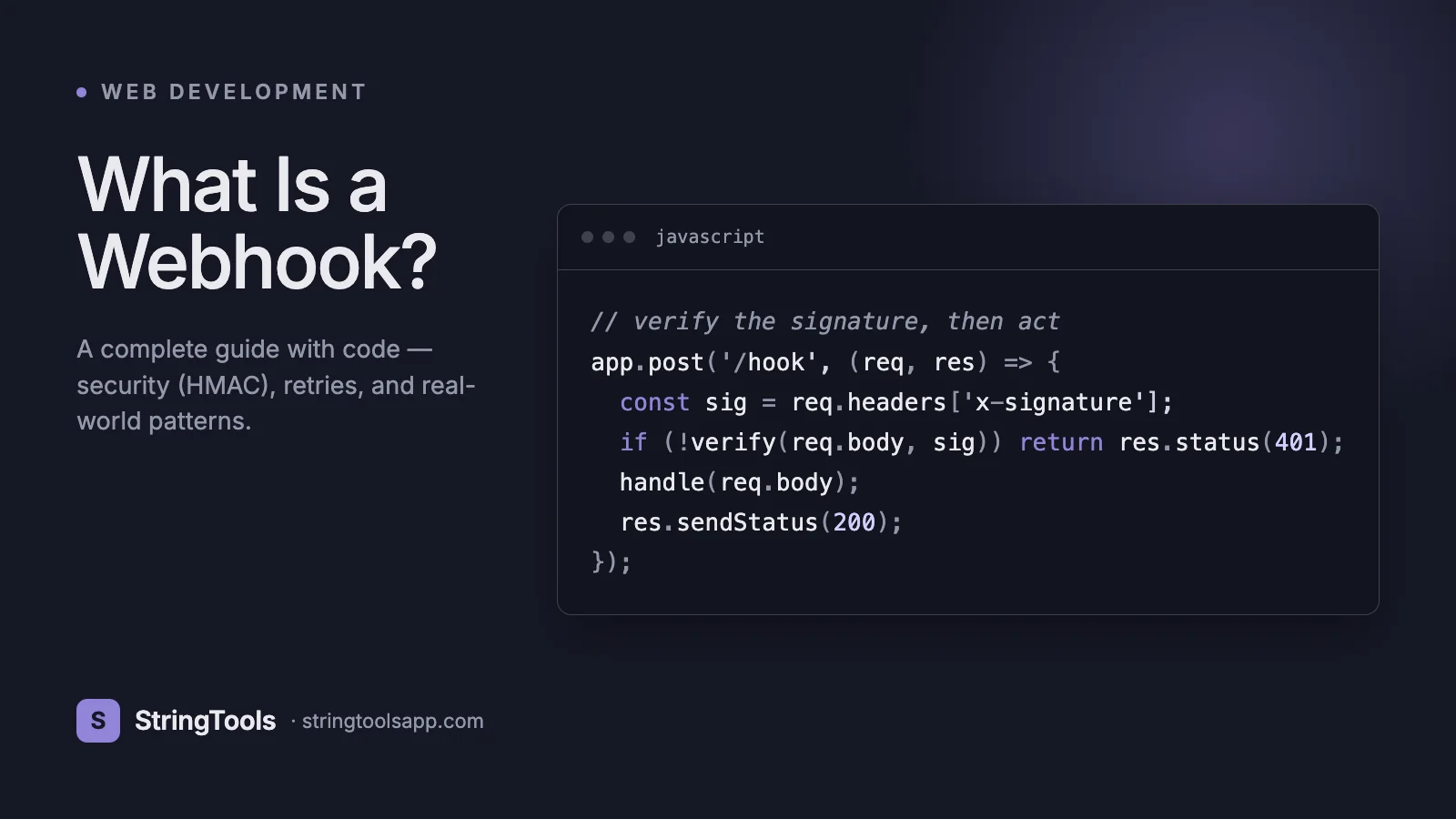
What is a Webhook? Complete Guide with Examples (2026)
What is a webhook? Complete 2026 guide with code examples, security (HMAC), retry logic, and real-world patterns from Stripe, GitHub, and Slack.
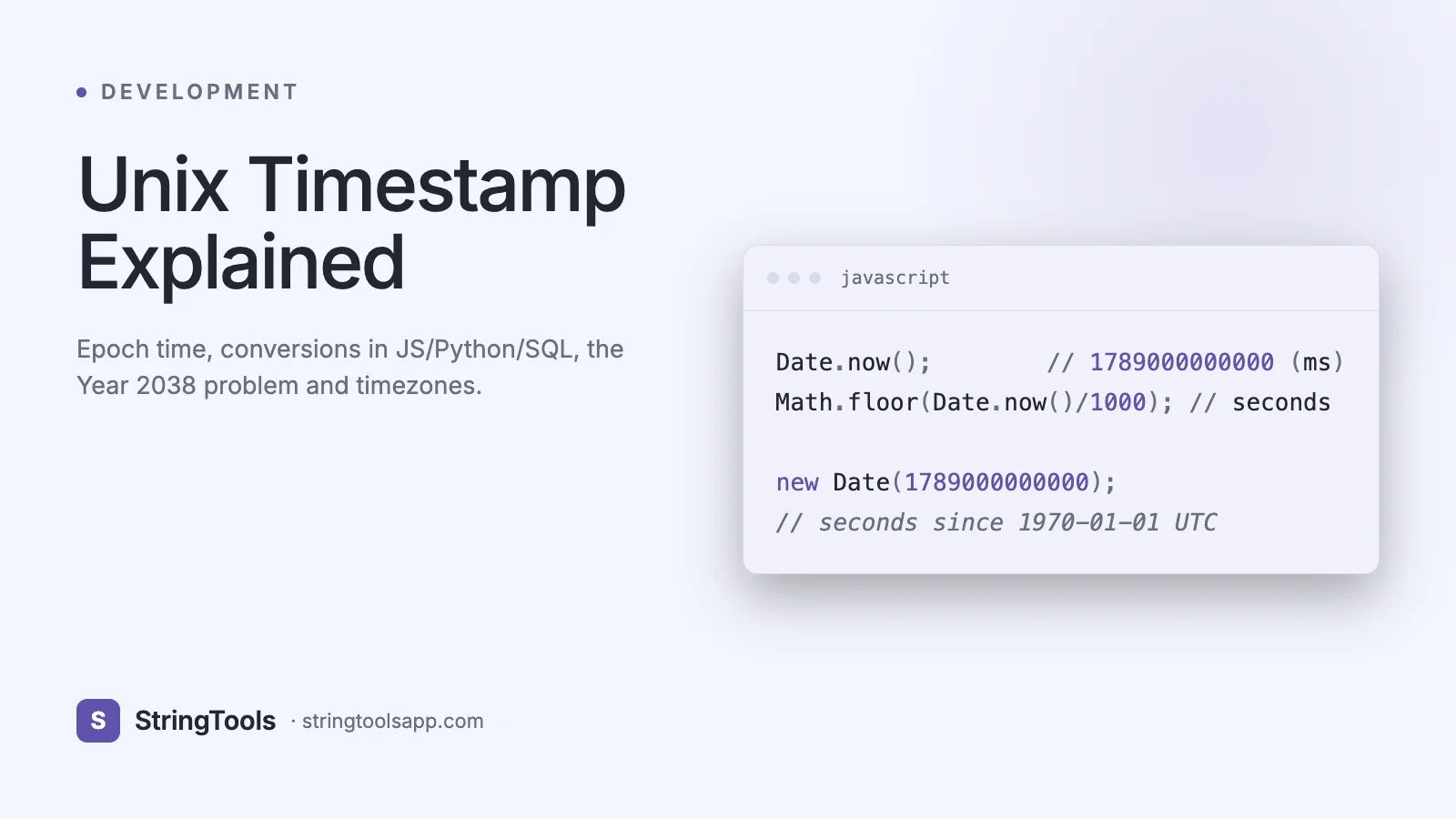
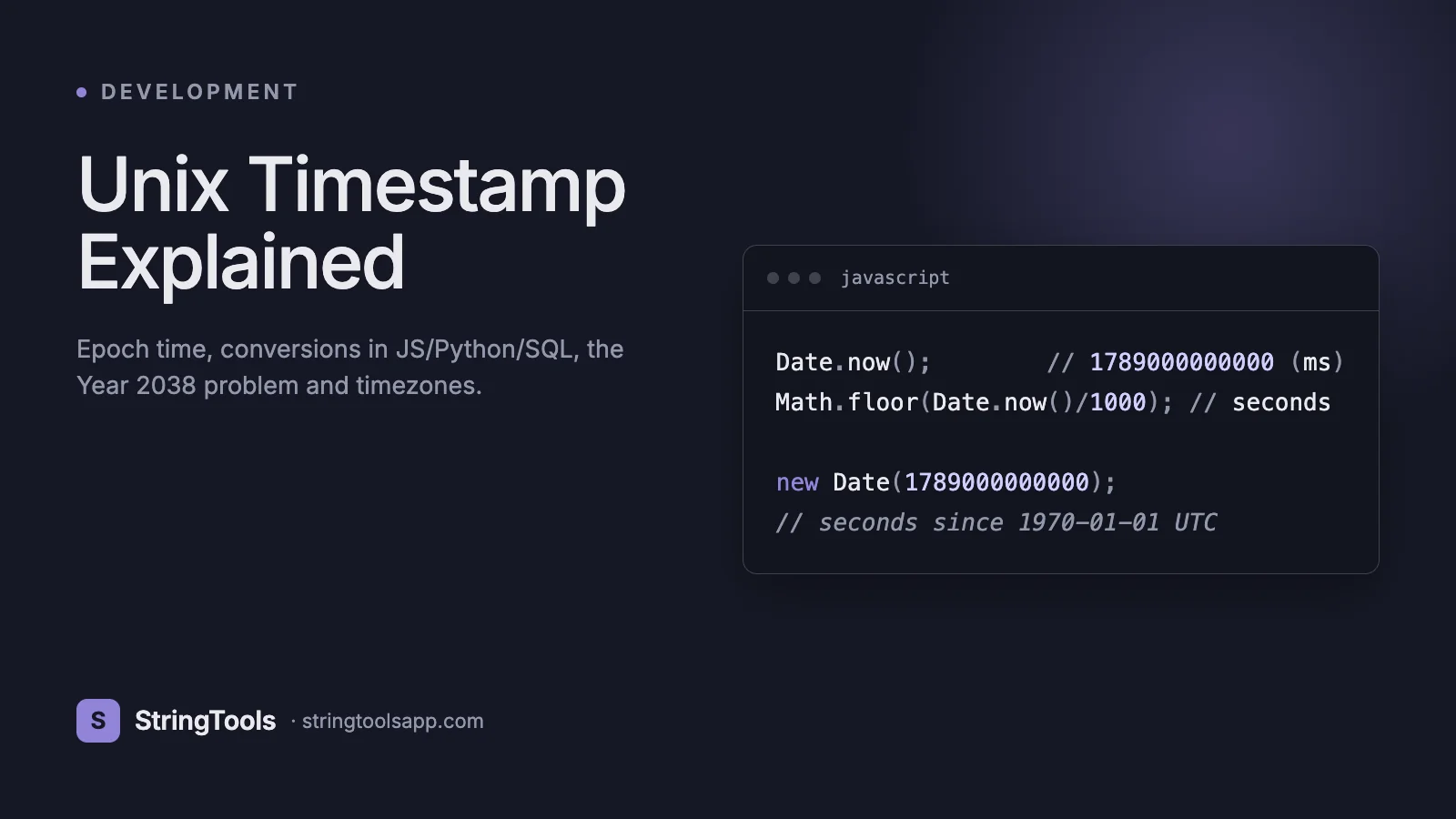
Unix Timestamp Explained: Epoch Time Guide for Developers
Unix timestamp and epoch time explained: conversions in JavaScript, Python, SQL, the Year 2038 problem, timezone pitfalls, and best practices for developers.
SQL vs NoSQL: Which Database Should You Choose in 2026?
SQL vs NoSQL: an engineer's guide to relational versus document, key-value, column and graph databases, with real examples and decision criteria.
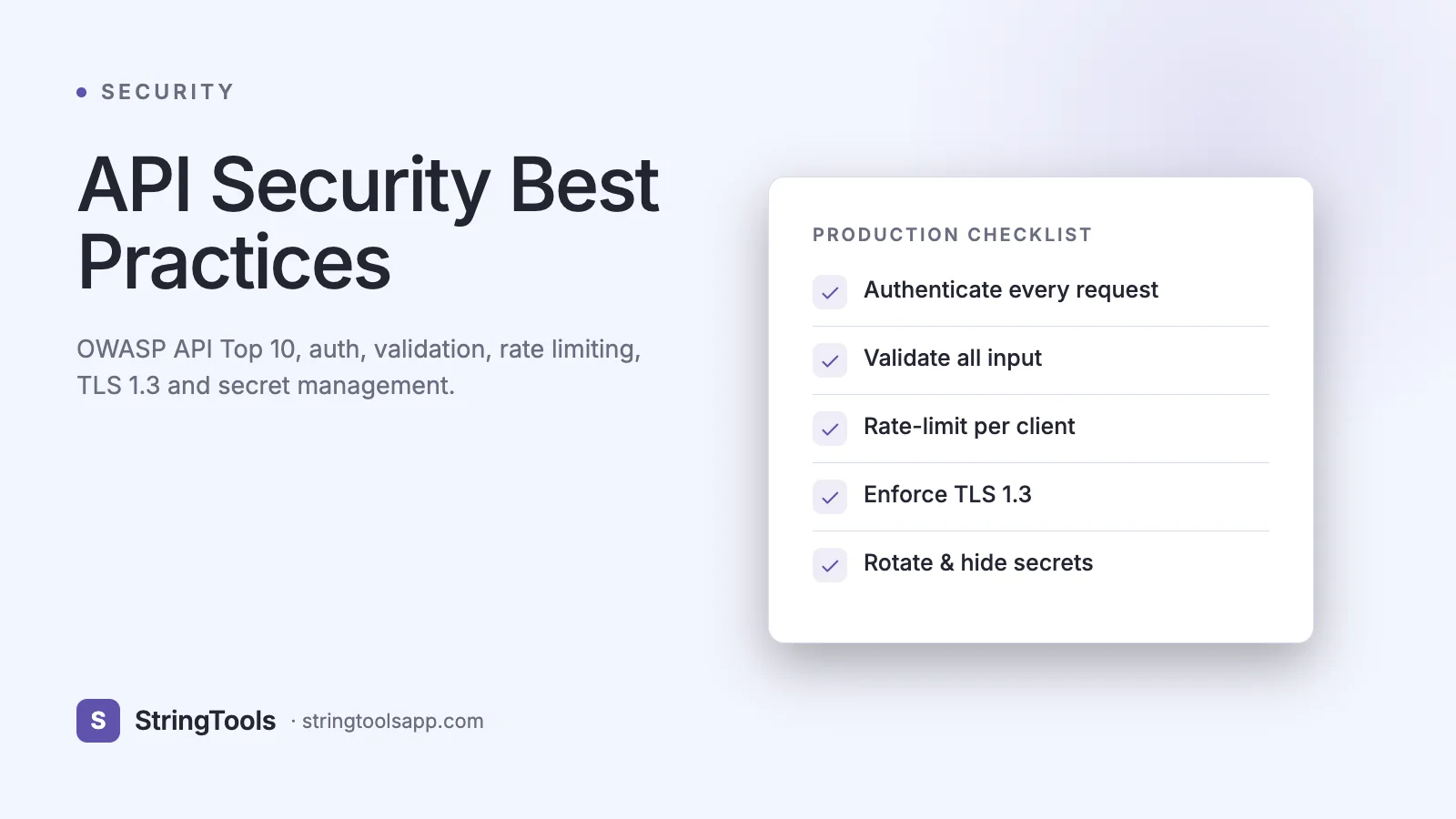

API Security Best Practices (2026): OWASP Top 10, Auth, Rate Limiting
API security best practices: the OWASP API Top 10, JWT, OAuth and mTLS, input validation, rate limiting, TLS, secret management, and monitoring.
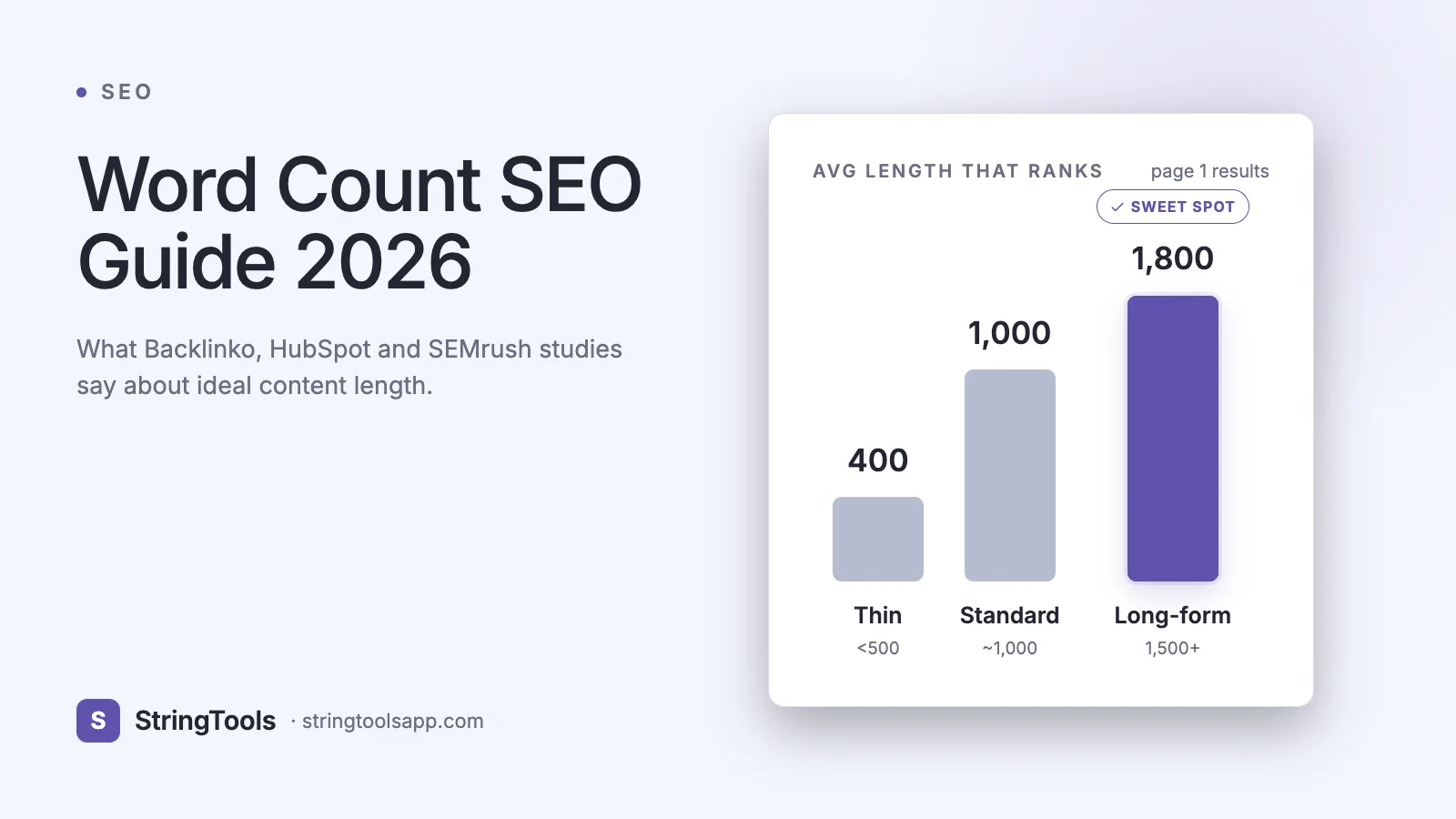

Word Count SEO Guide 2026: What Studies Say About Content Length
A data-backed word count guide for SEO: what the studies say about ideal length, E-E-A-T, search intent, snippets, and measuring performance.
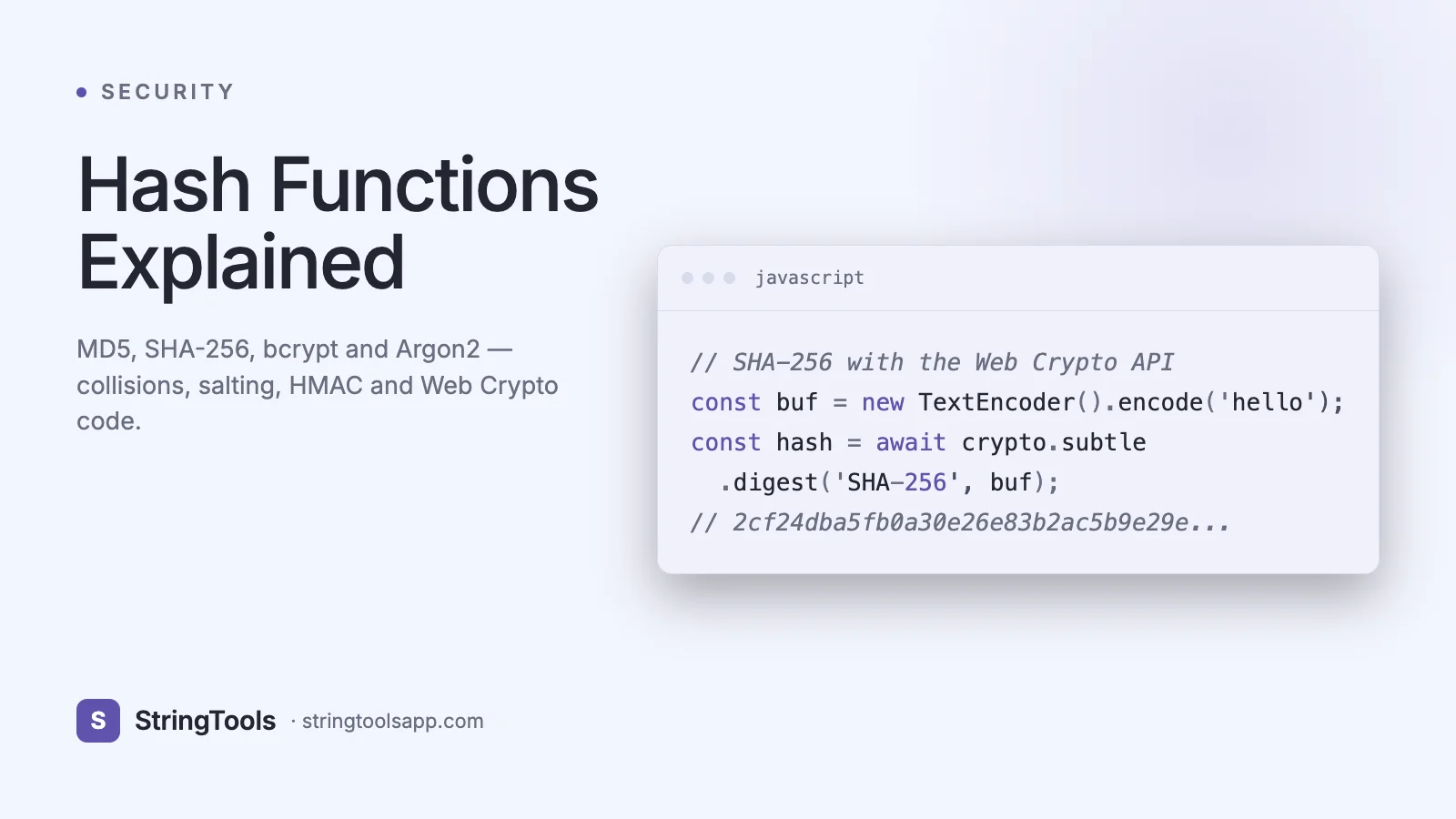
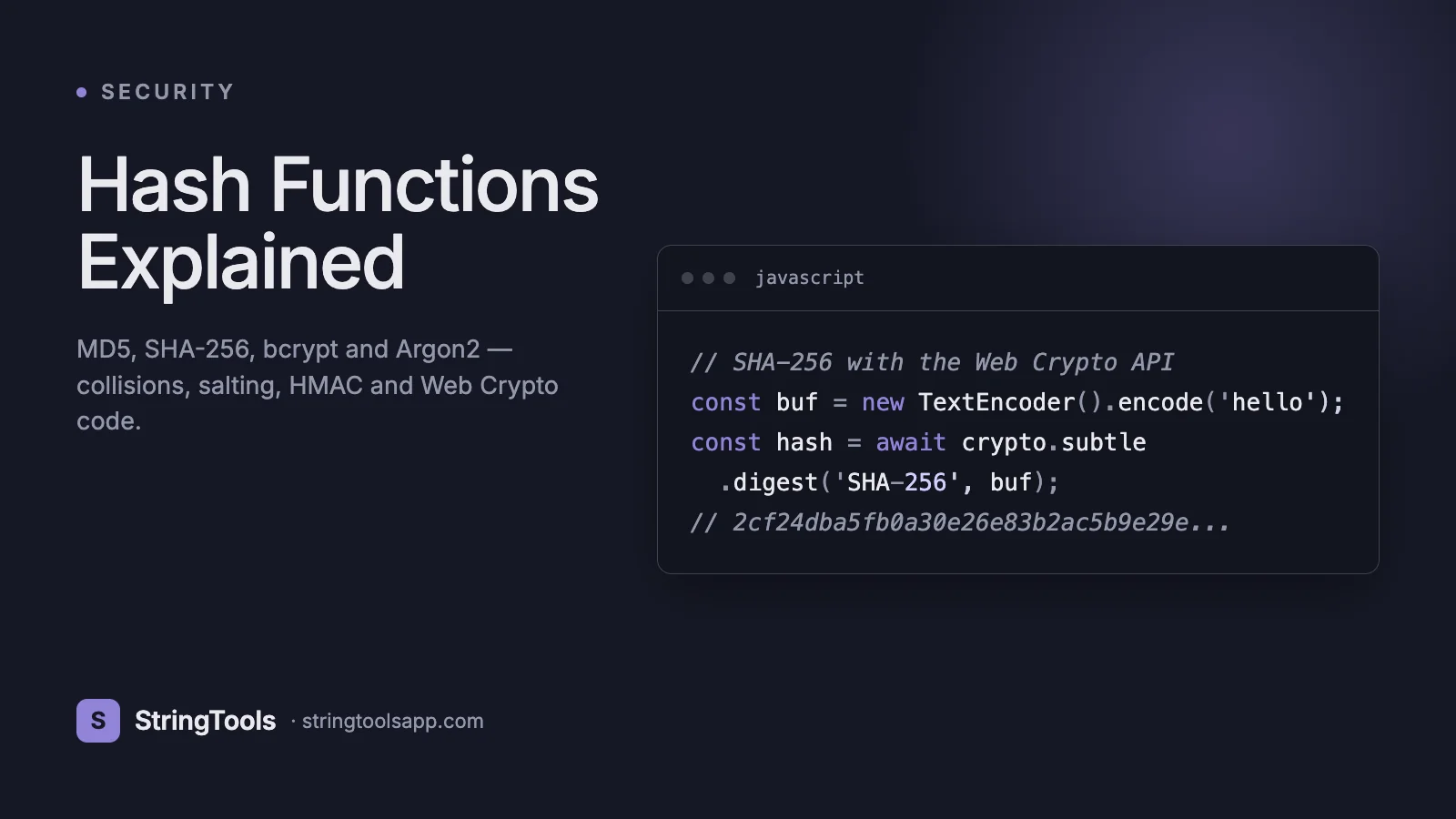
Hash Functions Explained: MD5, SHA-256, bcrypt, Argon2 (2026)
Hash functions explained for developers: core properties, MD5 and SHA-1 collisions, SHA-2, SHA-3 and BLAKE3, bcrypt vs Argon2, HMAC, and salting.
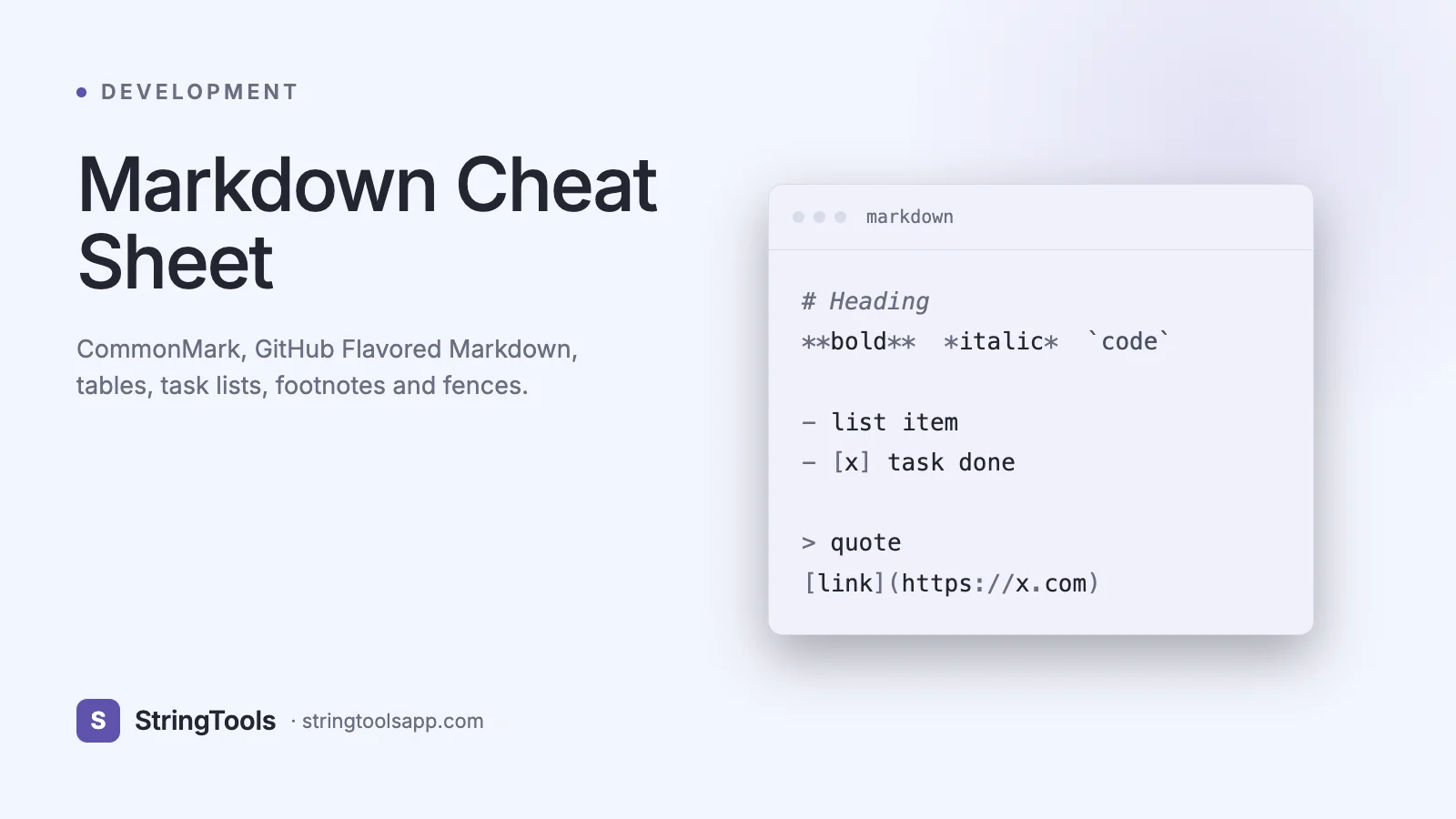
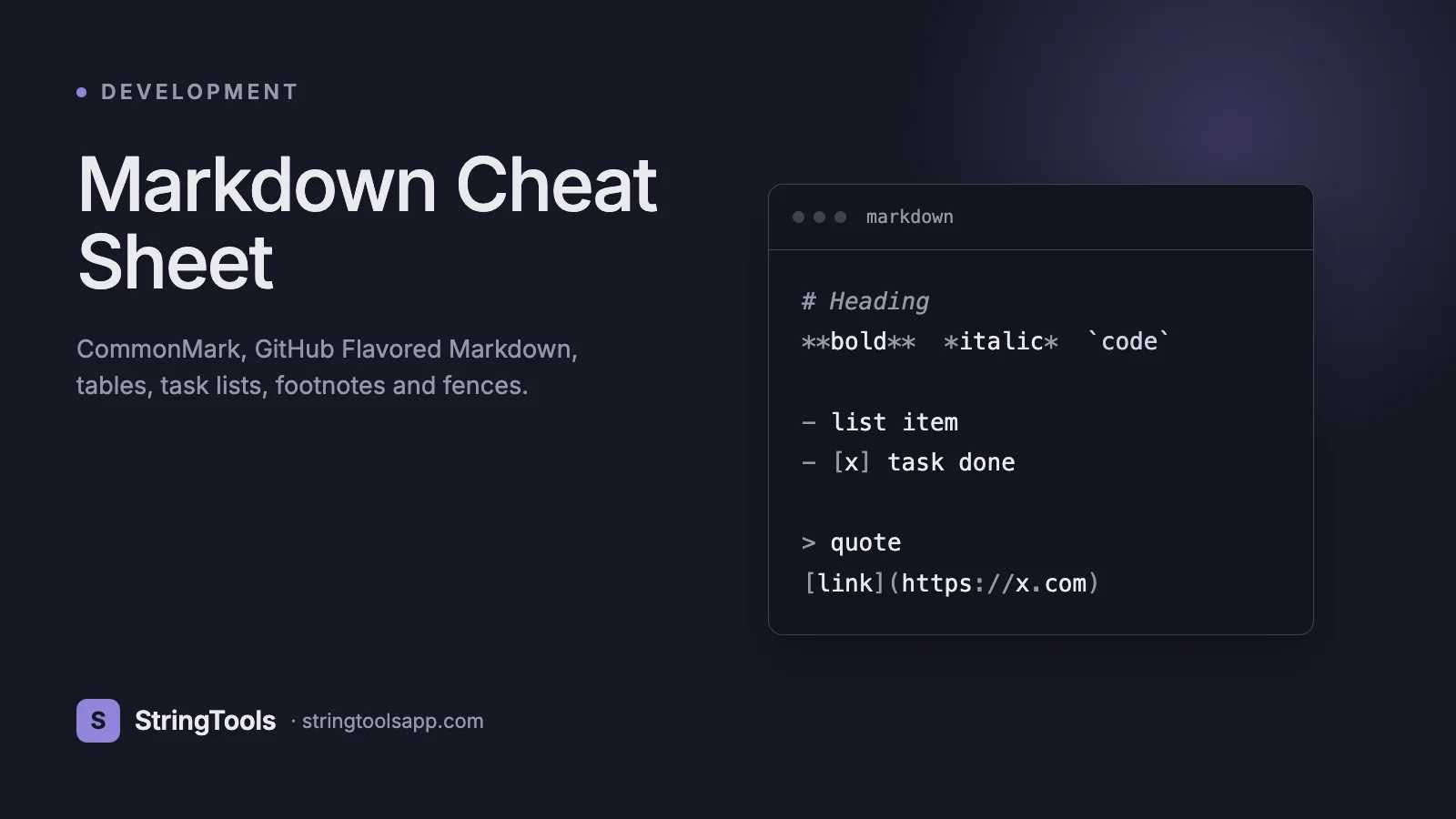
Markdown Cheat Sheet 2026: CommonMark, GFM, and Every Syntax You Need
A complete Markdown cheat sheet: CommonMark syntax, GitHub Flavored Markdown extensions, tables, task lists, footnotes, fences, and rendering quirks.


QR Codes for Business (2026): Complete Guide with Real Examples
A QR code guide for business: how they work, static vs dynamic tracking, error correction, marketing use cases, quishing risks, and design tips.
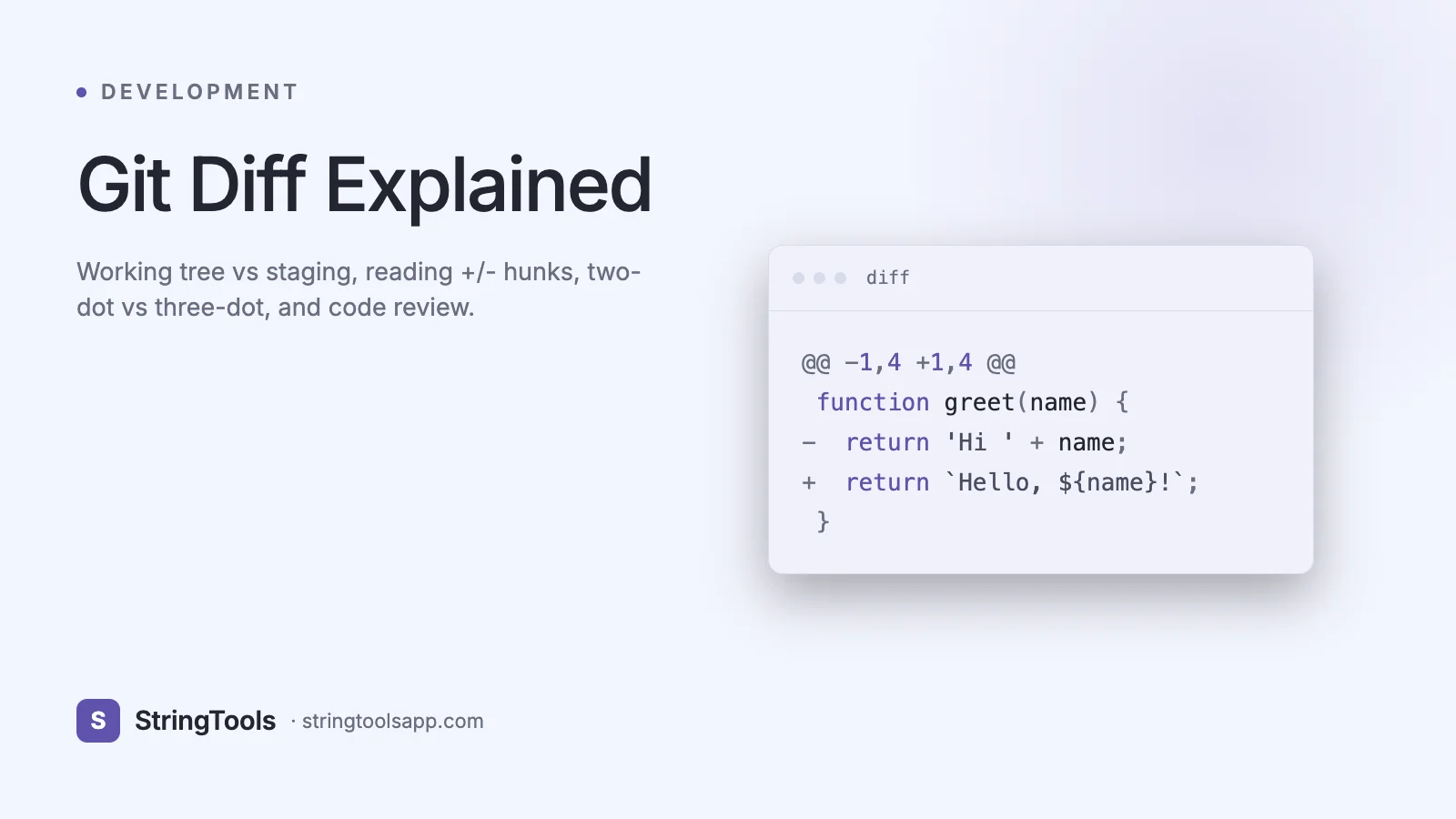
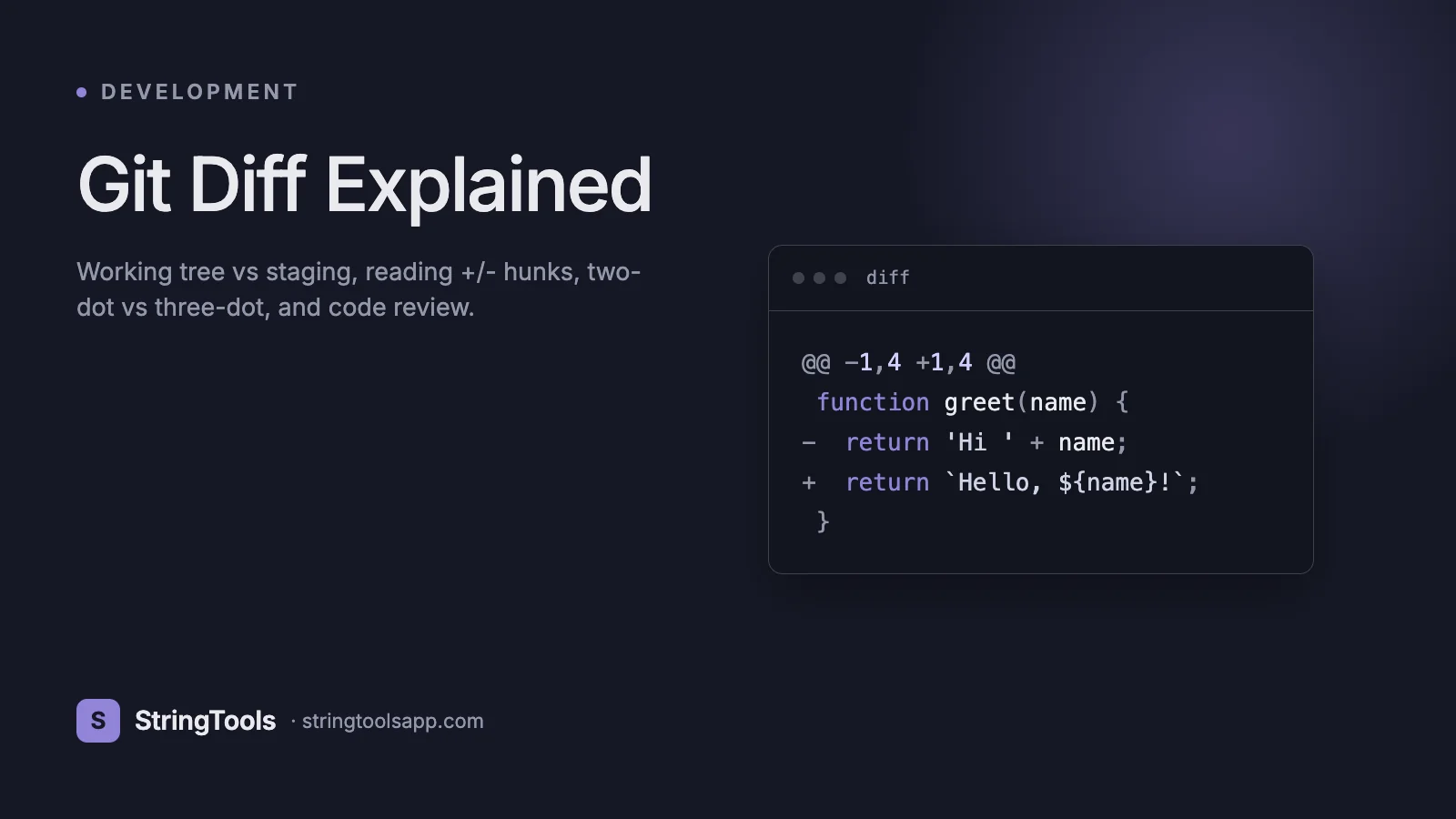
Git Diff Explained 2026: Master Code Reviews and Change Analysis
git diff explained: working tree vs staging, reading +/- hunks, two-dot vs three-dot ranges, --word-diff, difftool, and code review on GitHub.
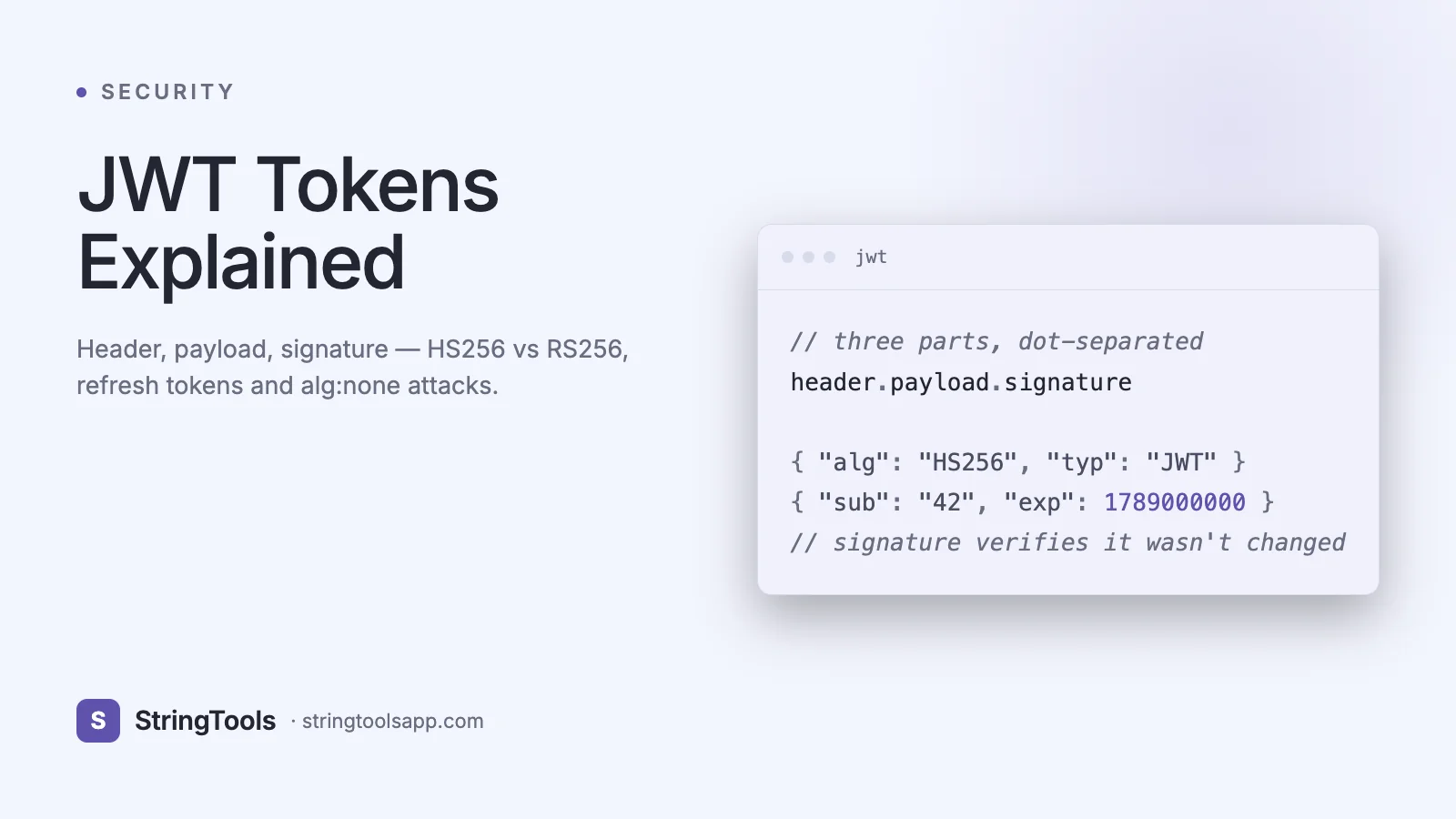
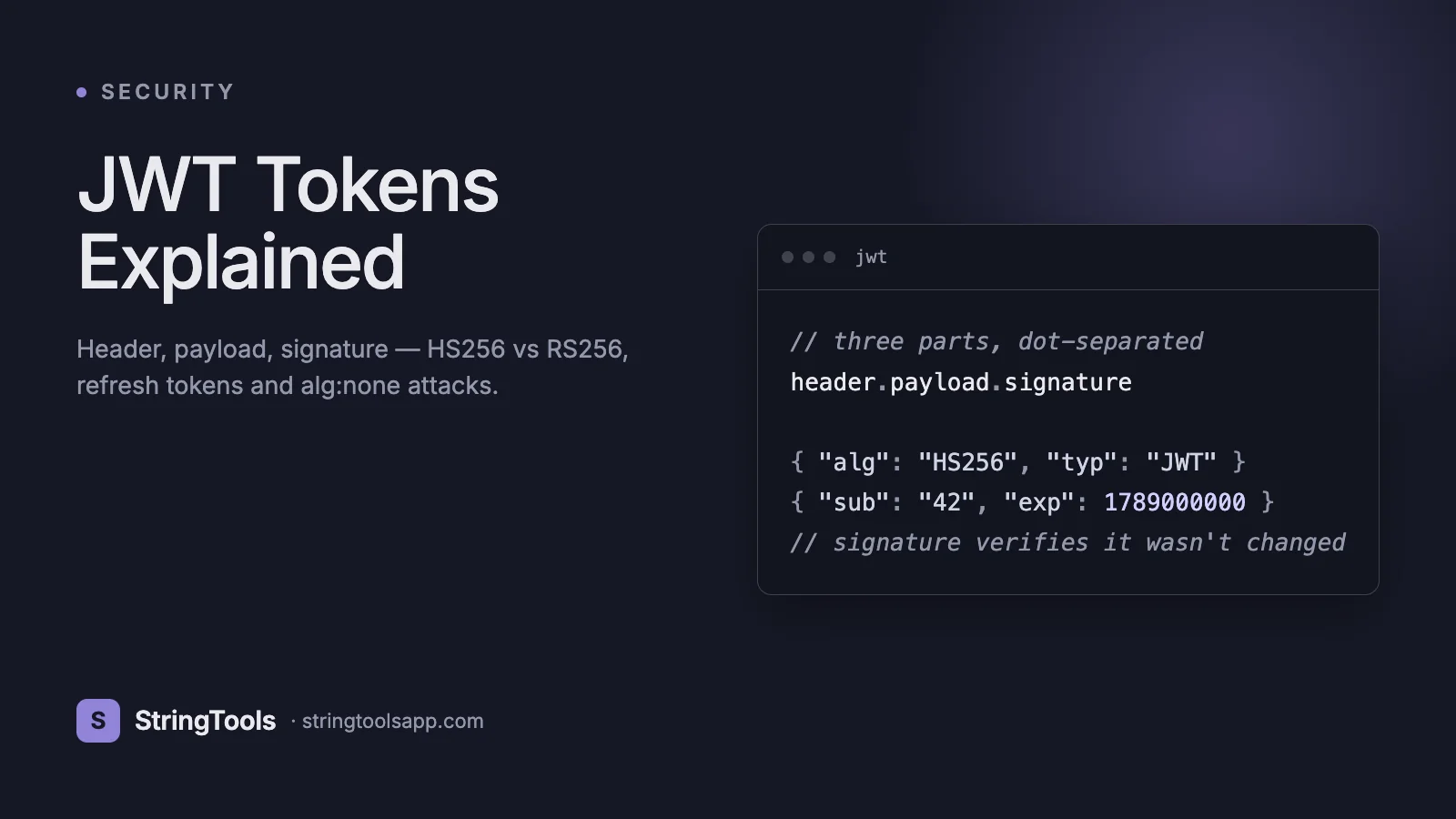
JWT Tokens Explained: Structure, Security, and Best Practices (2026)
JWT tokens explained for developers: header, payload and signature anatomy, HS256 vs RS256, refresh tokens, alg:none attacks, and safe storage.
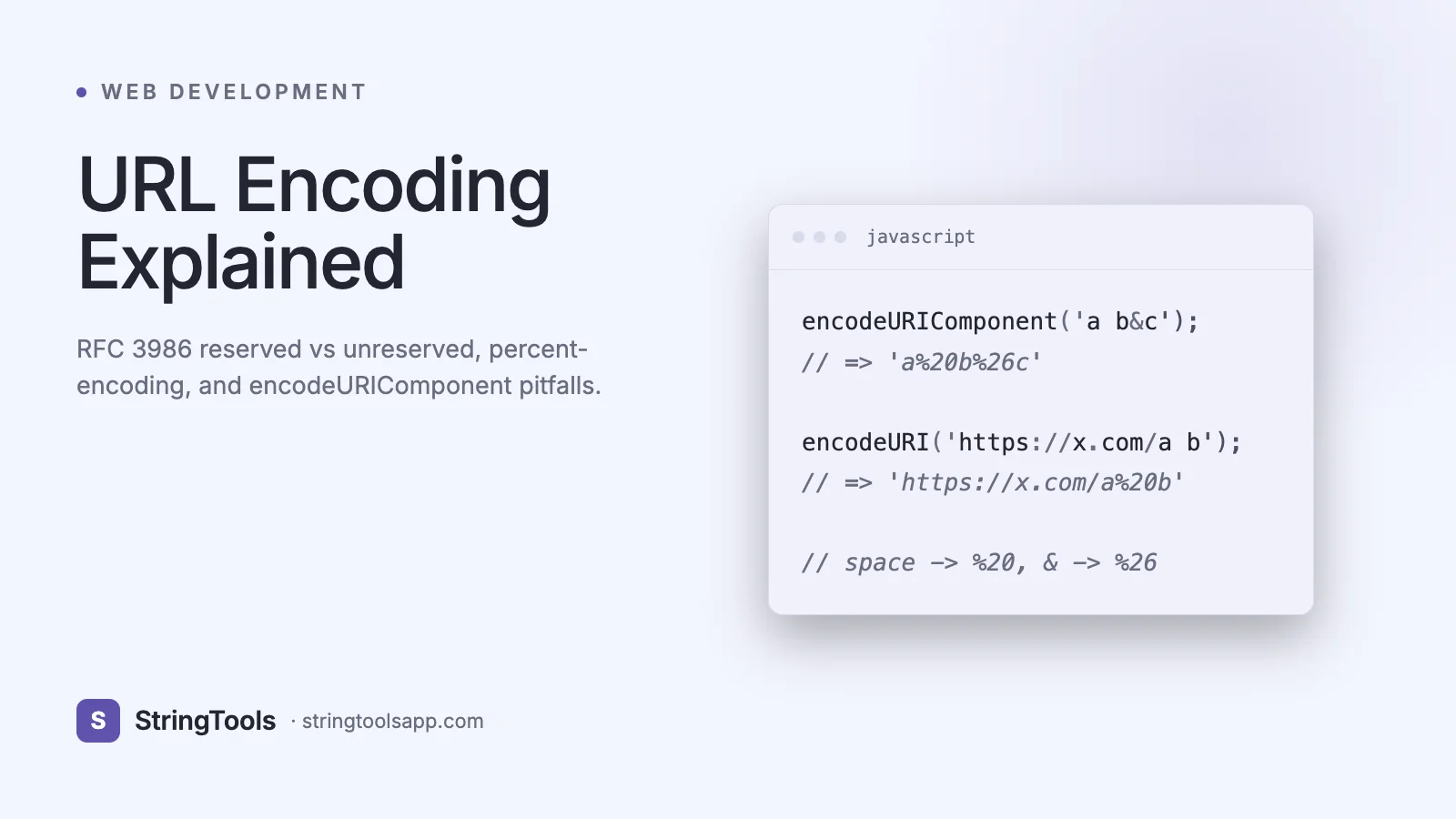
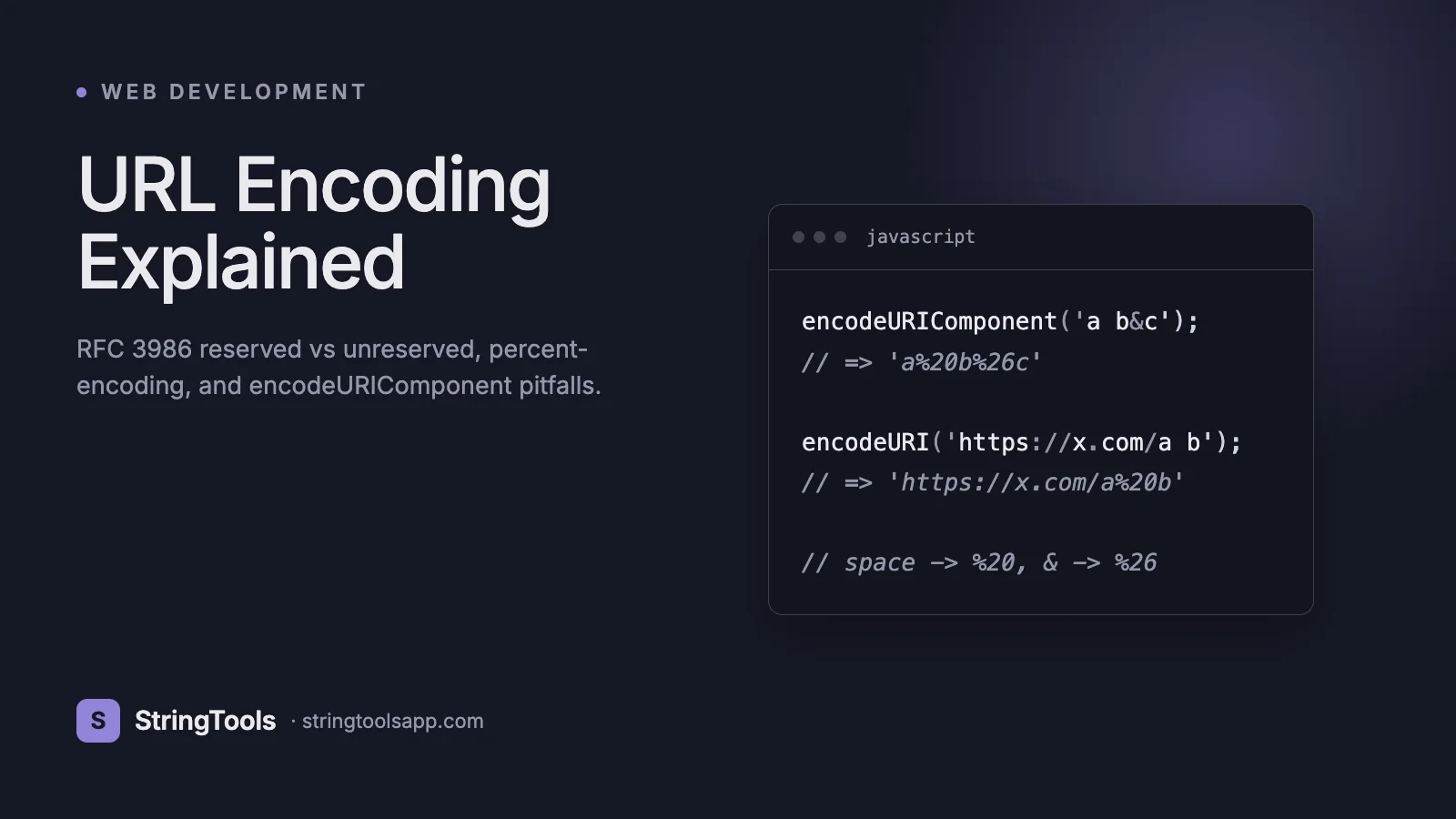
URL Encoding Explained: RFC 3986 & Percent-Encoding
URL encoding explained: RFC 3986 reserved vs unreserved characters, percent-encoding, encodeURI vs encodeURIComponent, and double-encoding pitfalls.
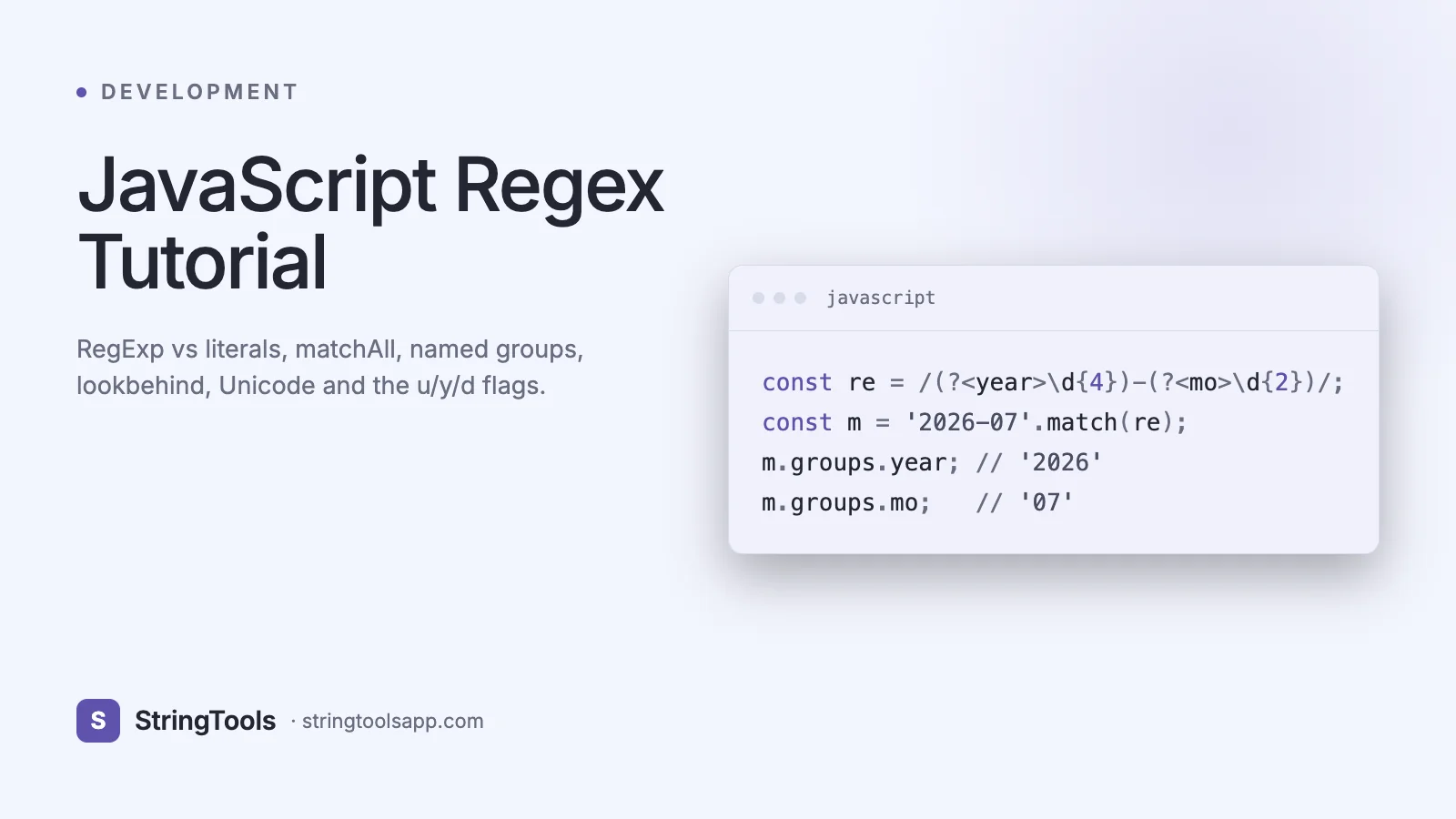
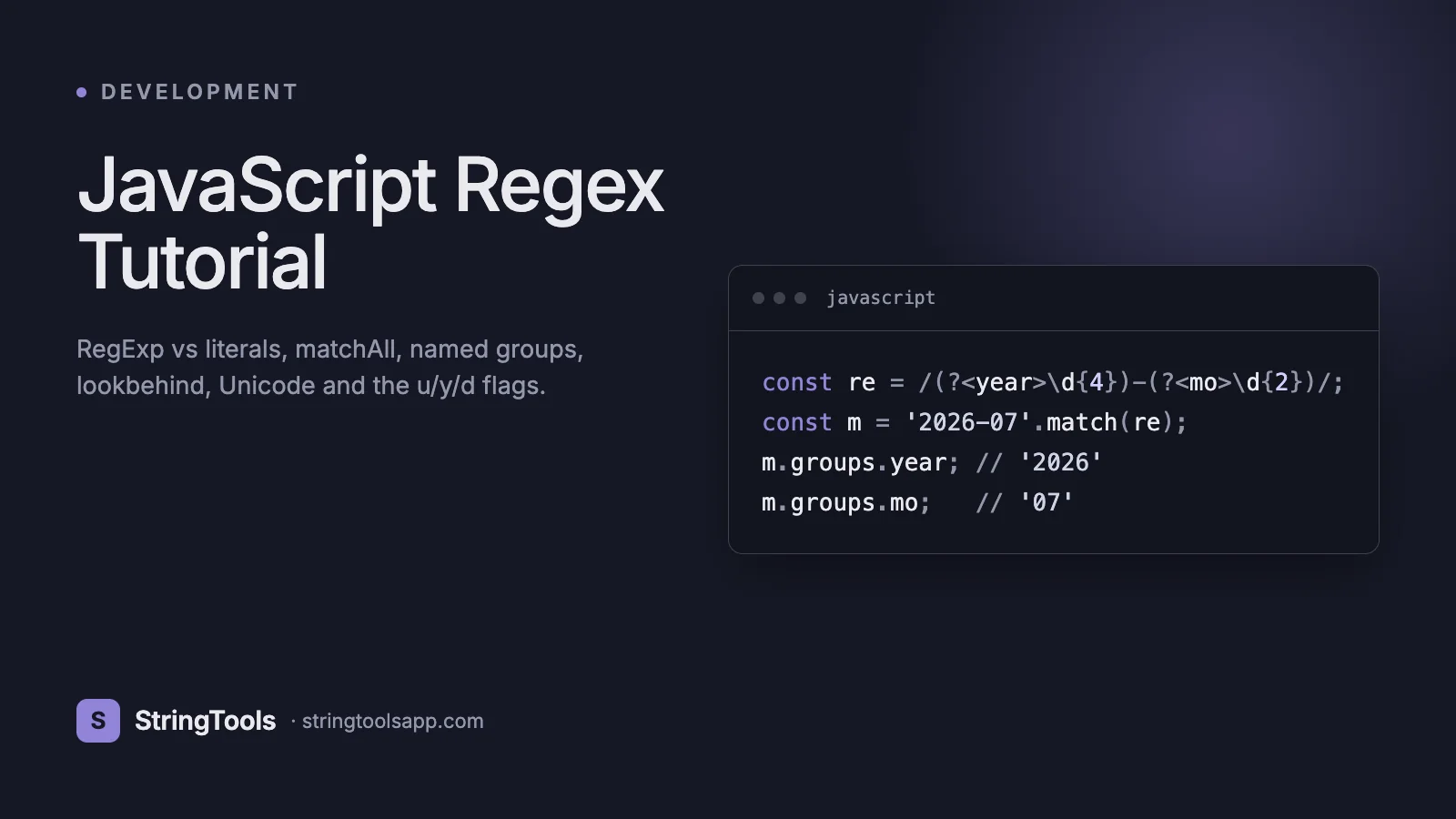
JavaScript Regex Tutorial: RegExp, matchAll & Named Groups
A complete JavaScript regex tutorial: RegExp vs literals, test, exec, matchAll, named groups, lookbehind, the u/y/d flags, and validation patterns.
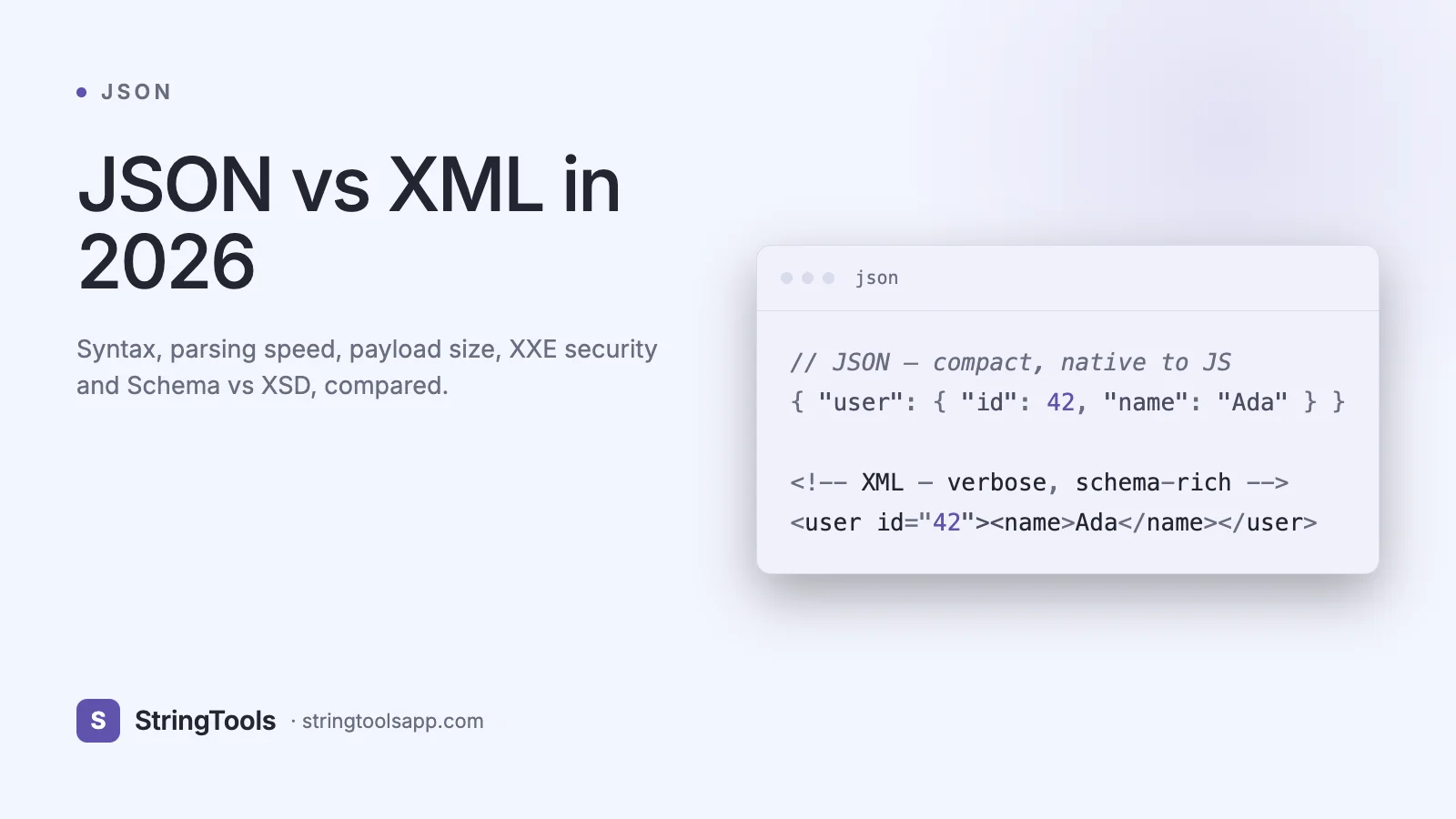
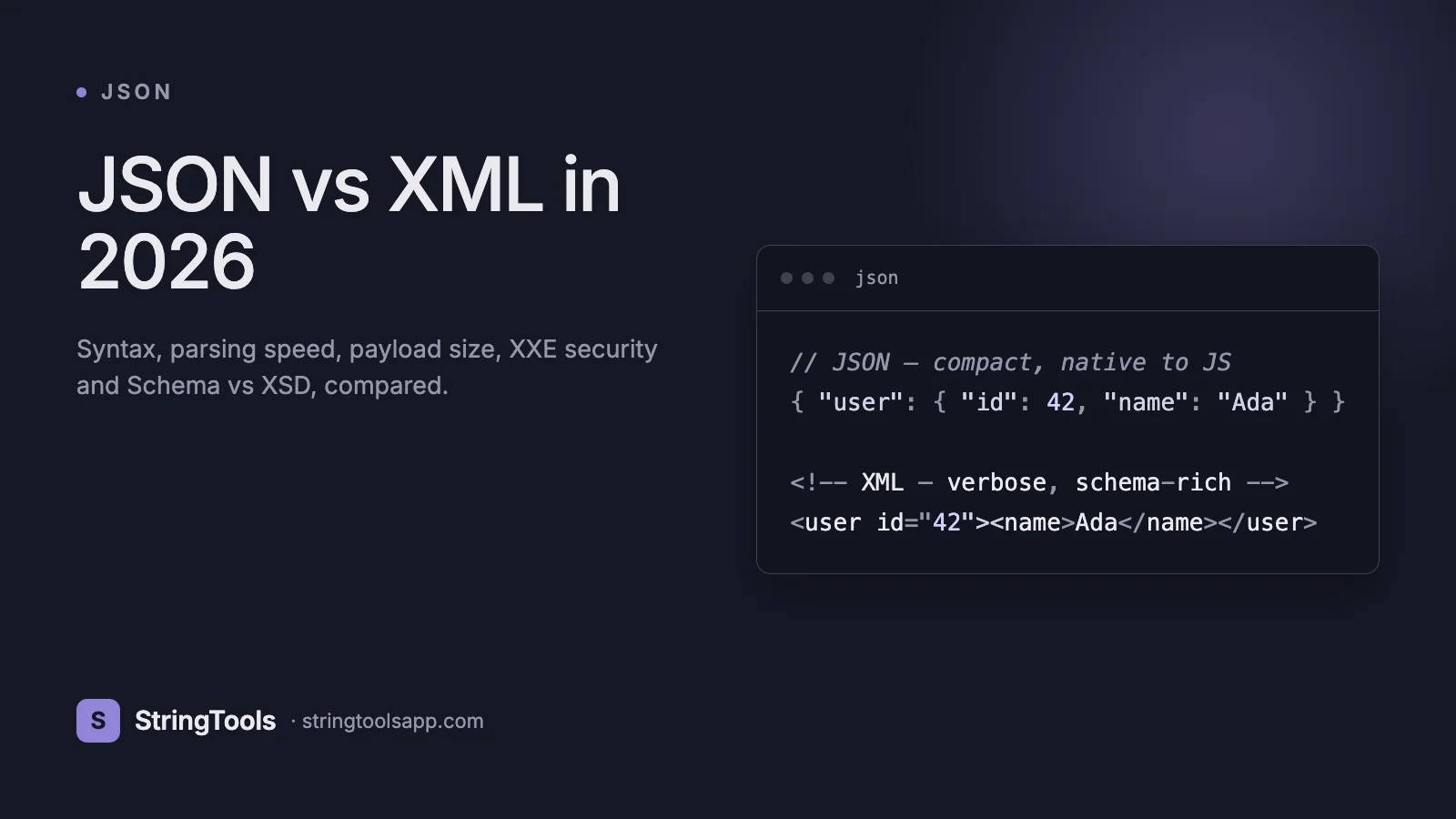
JSON vs XML in 2026: Performance, Security, and When to Use Each
JSON vs XML compared: syntax, parsing speed, payload size, XXE security, JSON Schema vs XSD, SOAP vs REST, and how to migrate a real project.
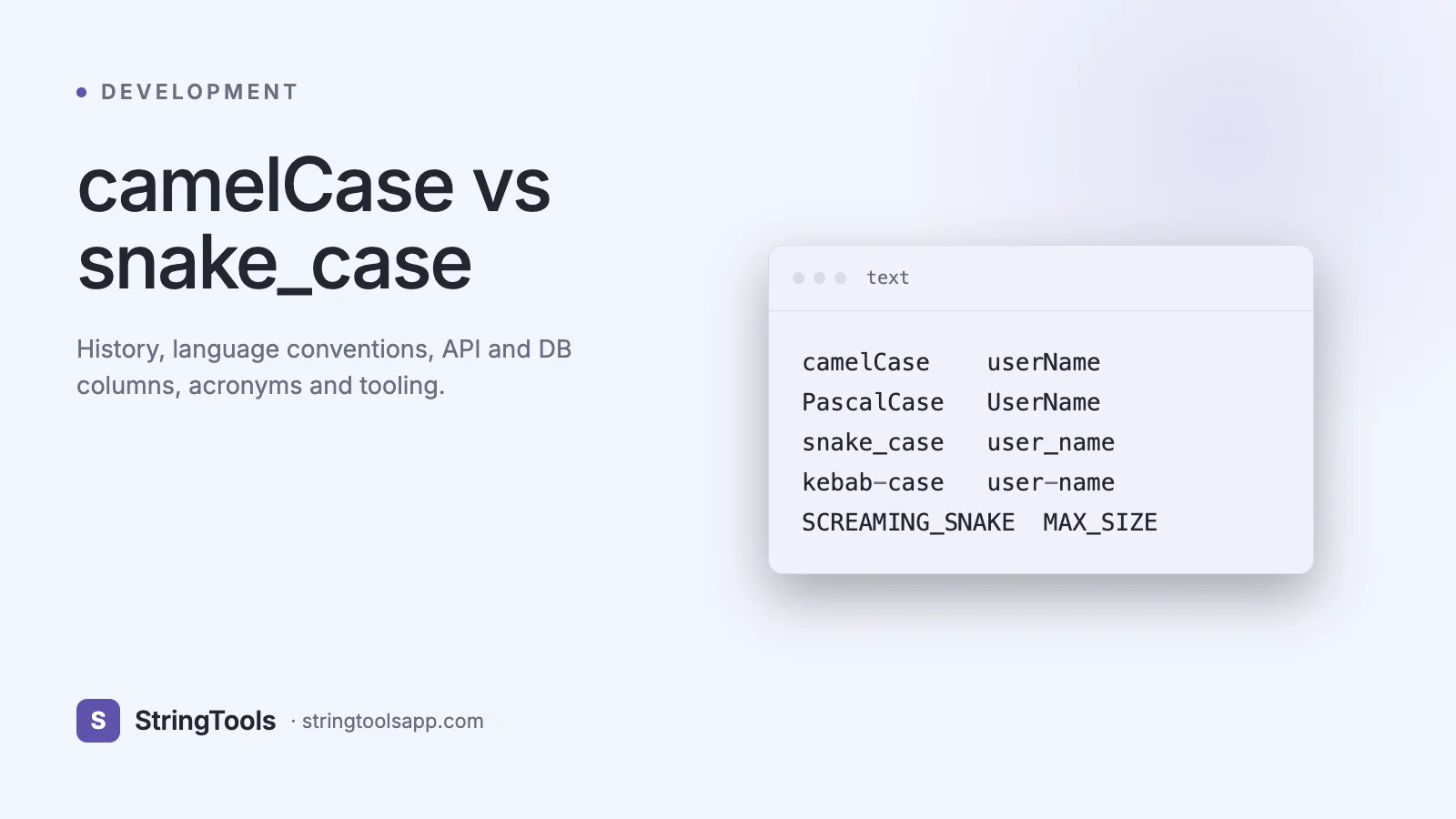
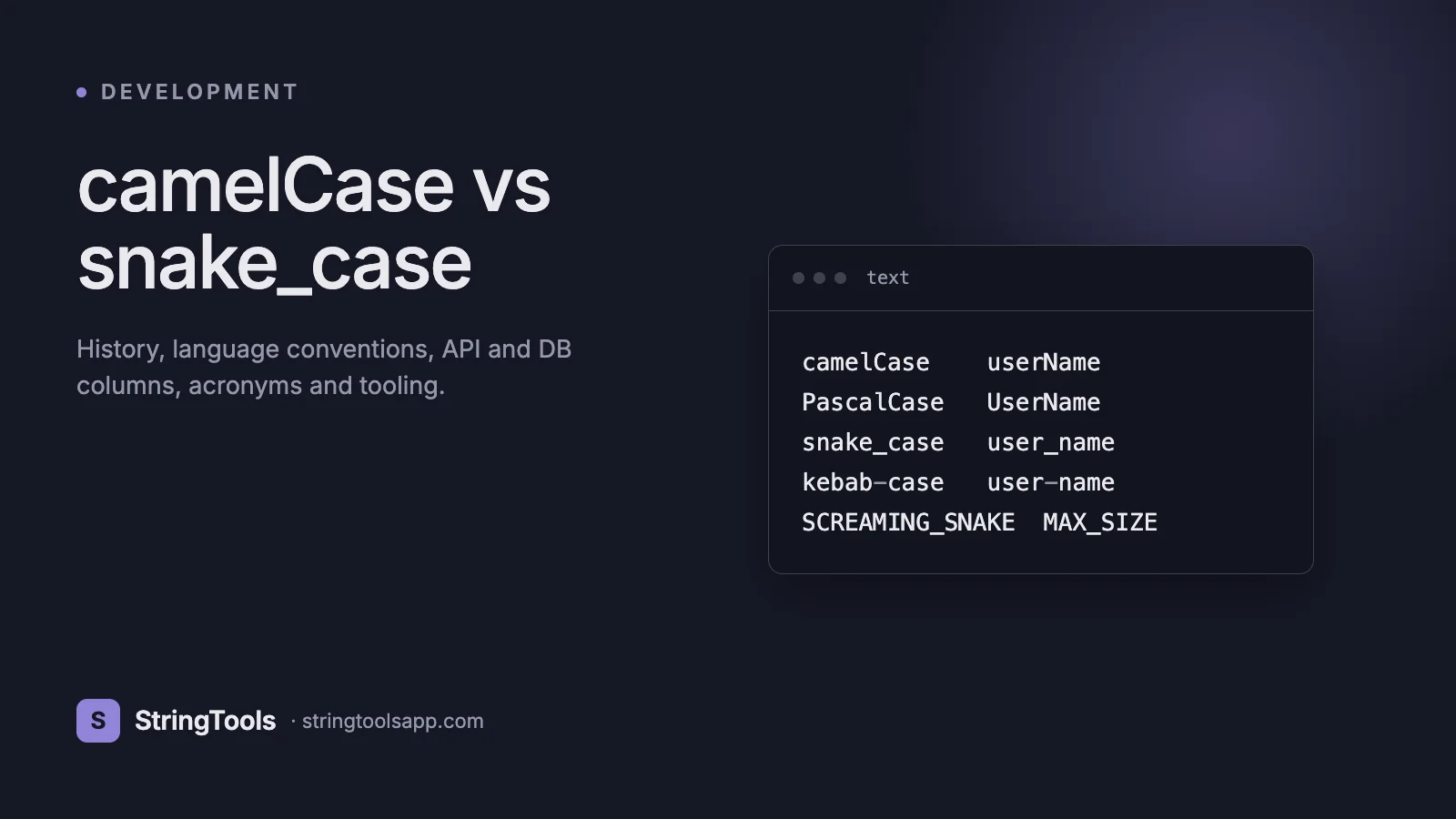
camelCase vs snake_case: The Definitive 2026 Naming Conventions Guide
camelCase vs snake_case vs PascalCase vs kebab-case: language conventions, API design, database columns, acronym handling, and tooling for naming.
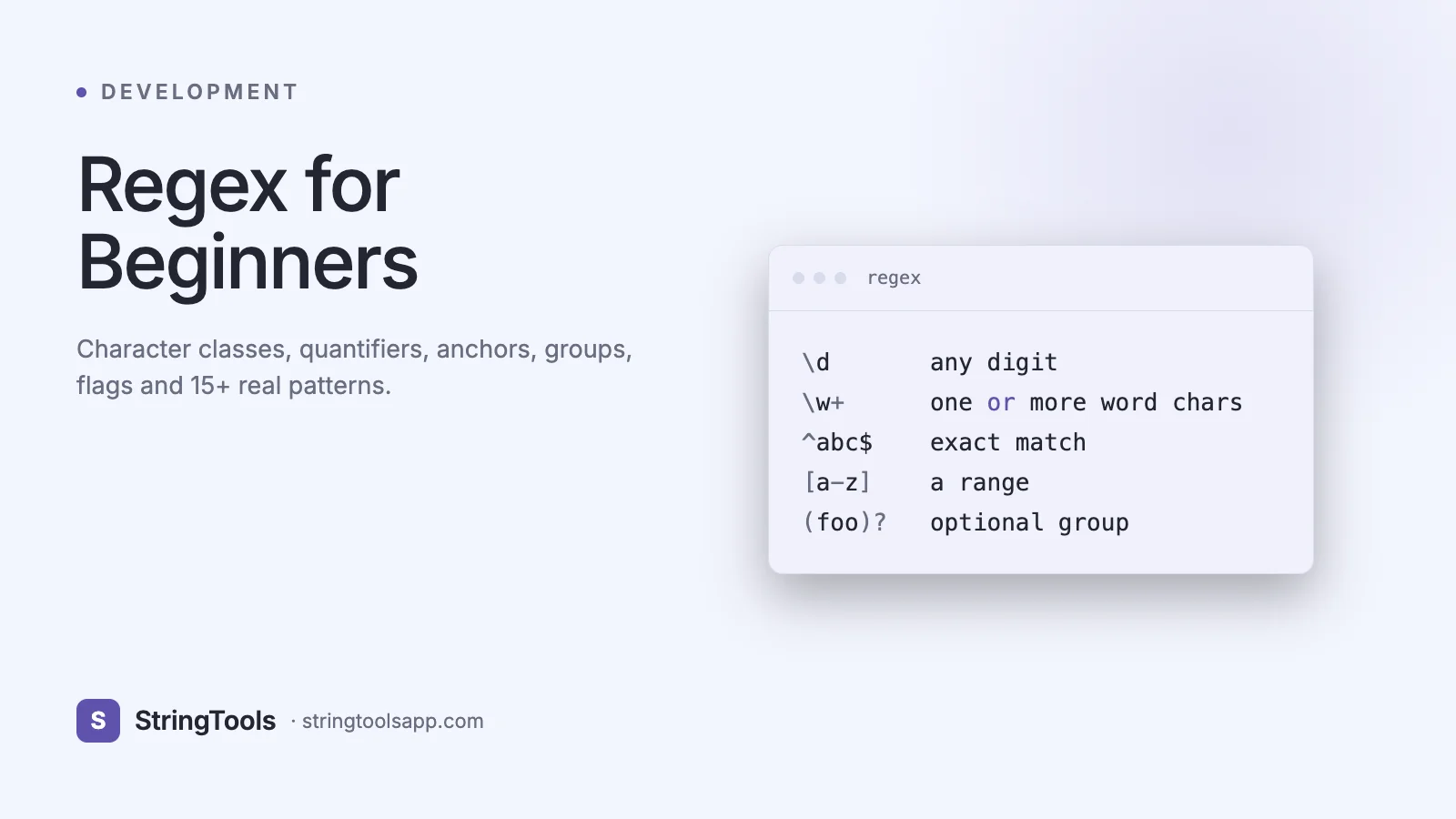
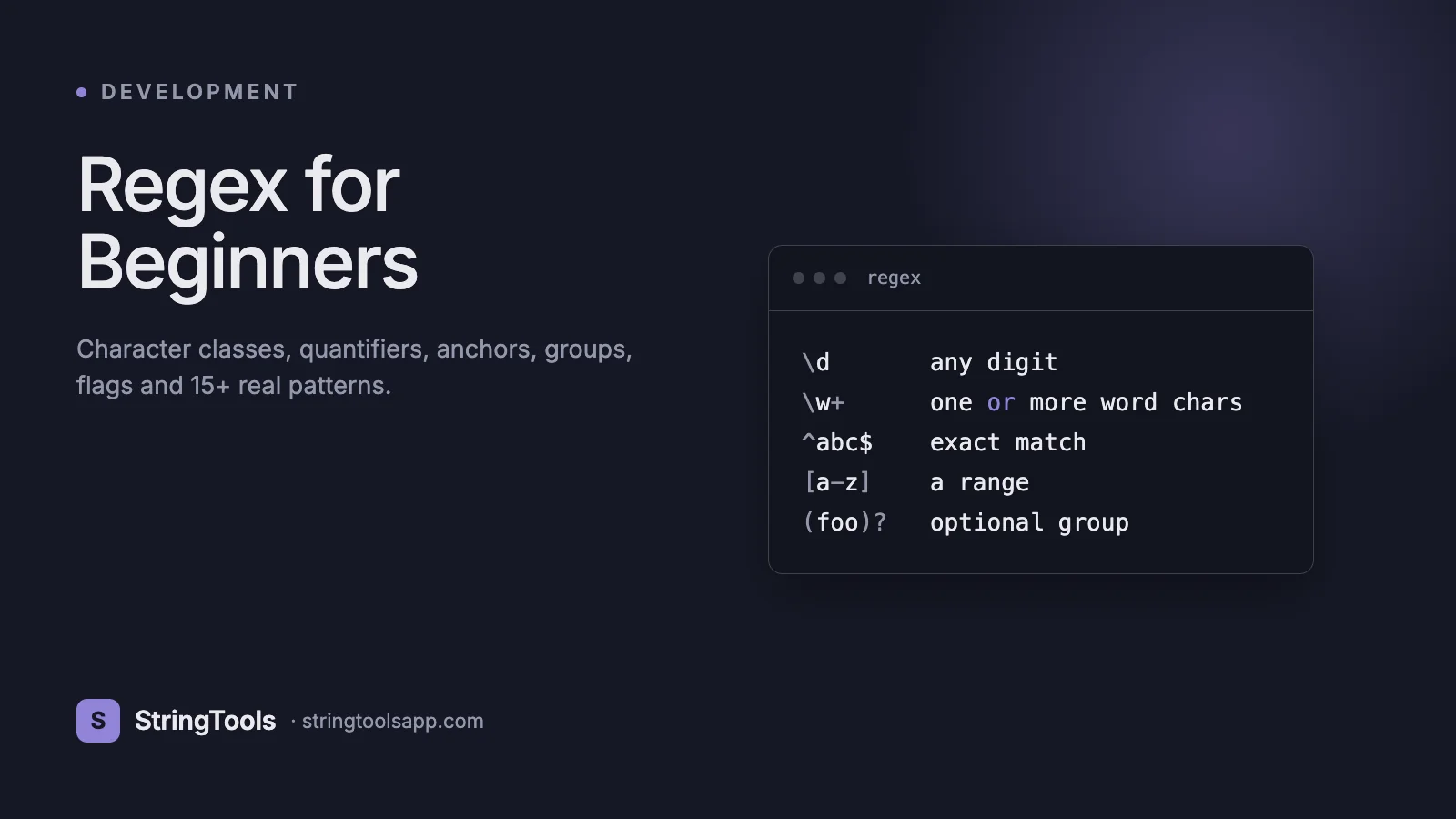
Regex for Beginners: The Complete 2026 Guide with Real Examples
Regex for beginners: character classes, quantifiers, anchors, groups, lookarounds, flags, and ready-made patterns for email, URL, and date validation.
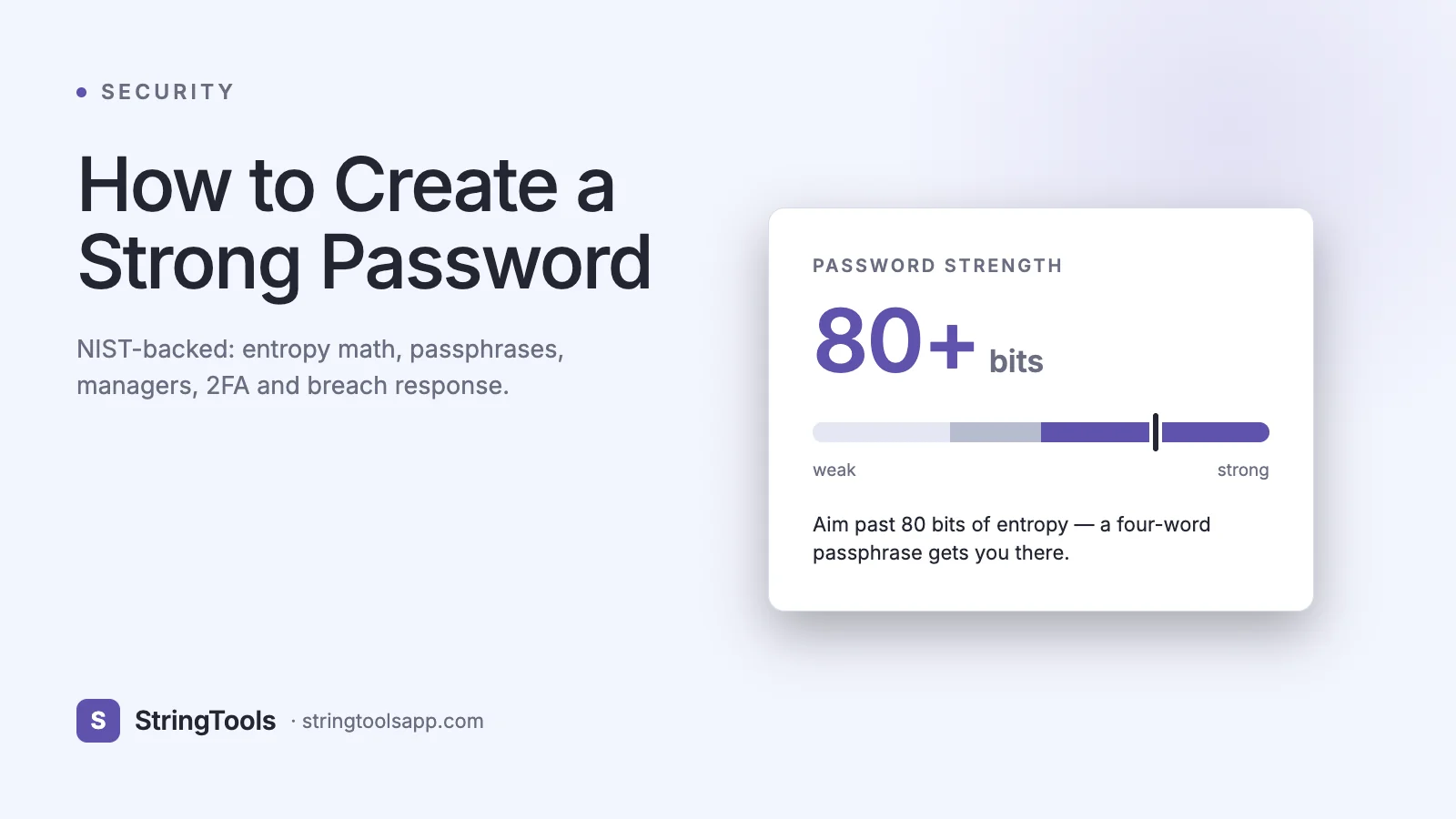
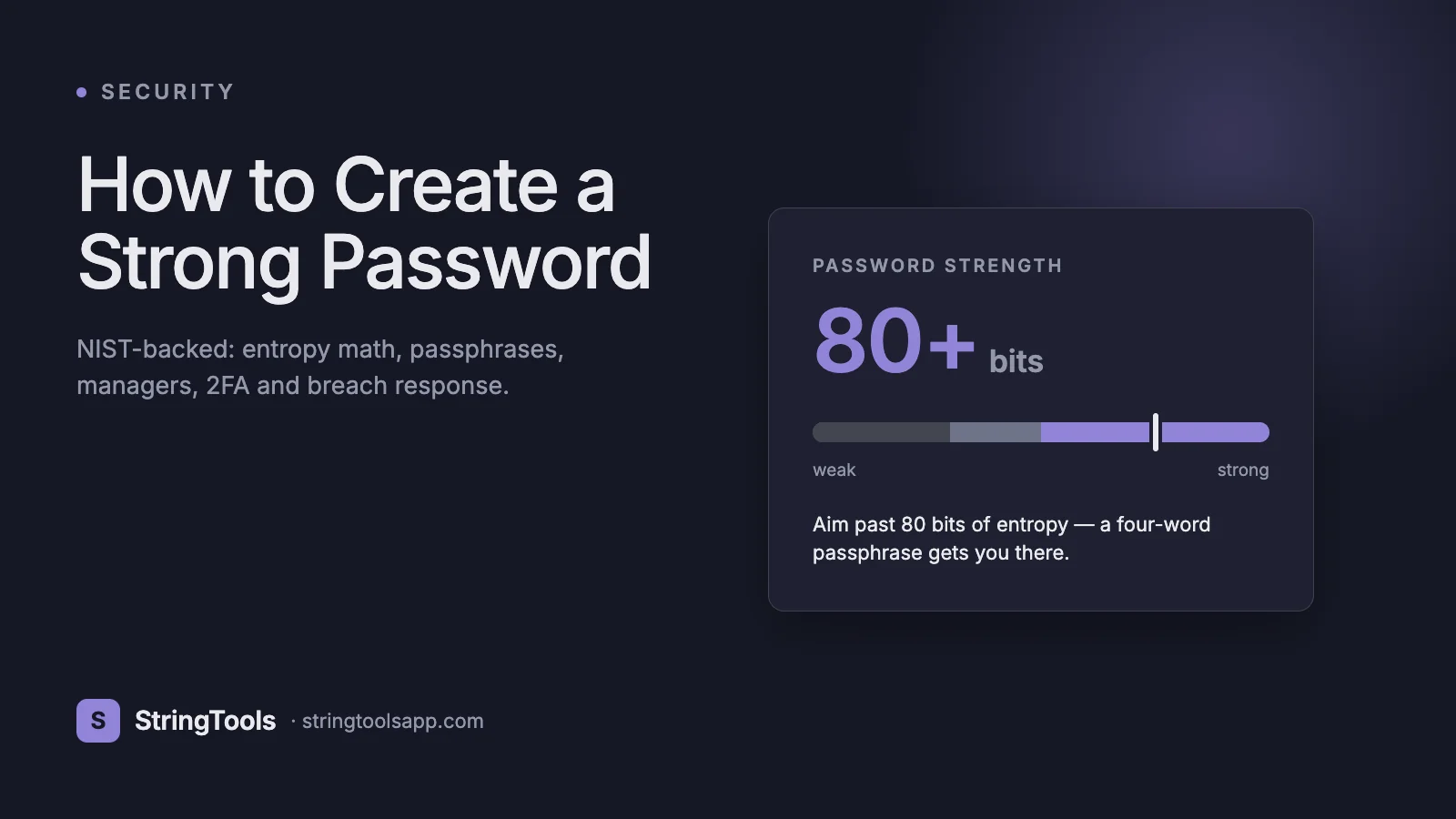
How to Create a Strong Password in 2026 (NIST-Backed Guide)
Create strong passwords backed by NIST SP 800-63B: entropy math, passphrases, password managers, 2FA, and breach response. Evidence-based security for 2026.
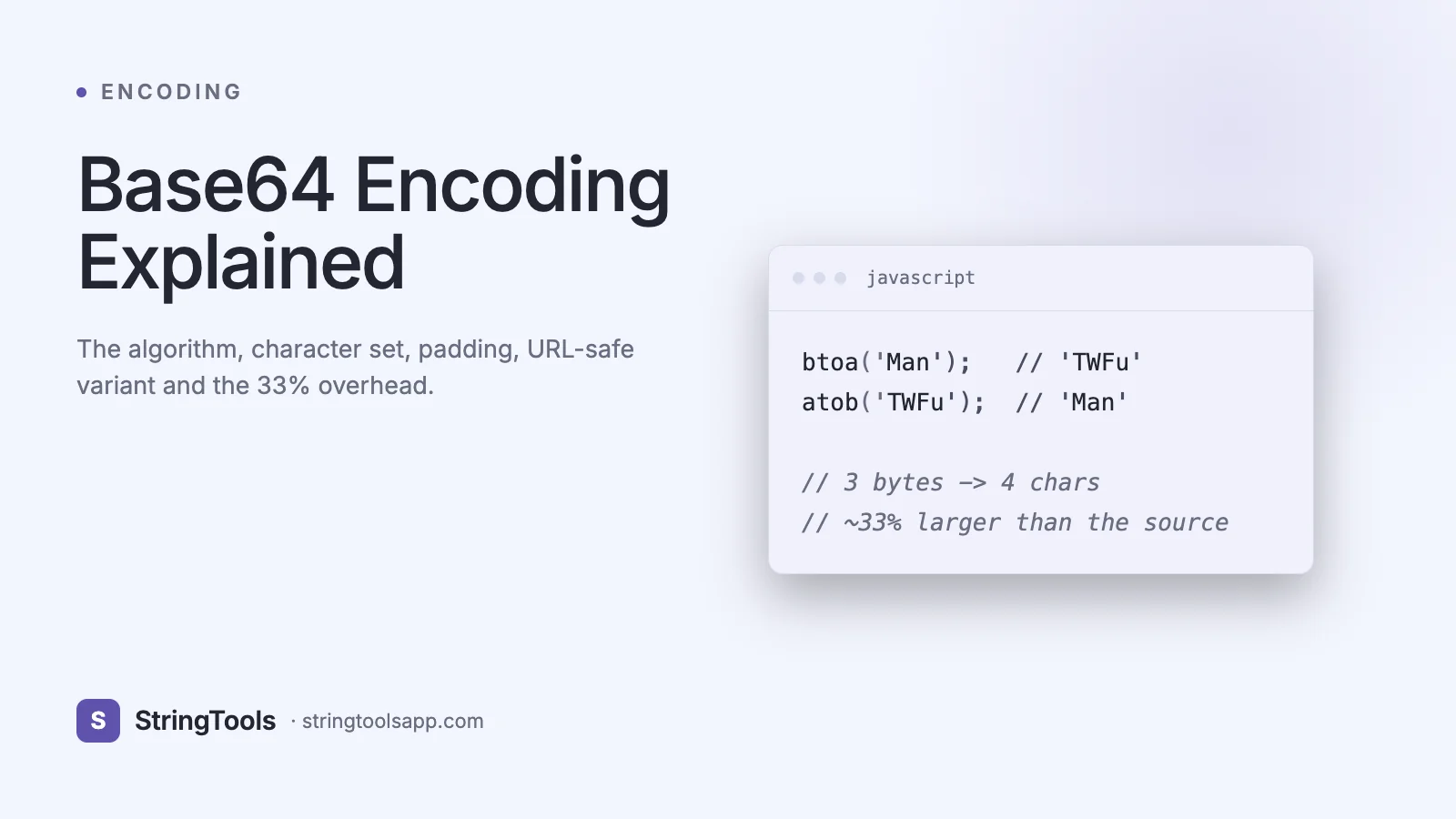
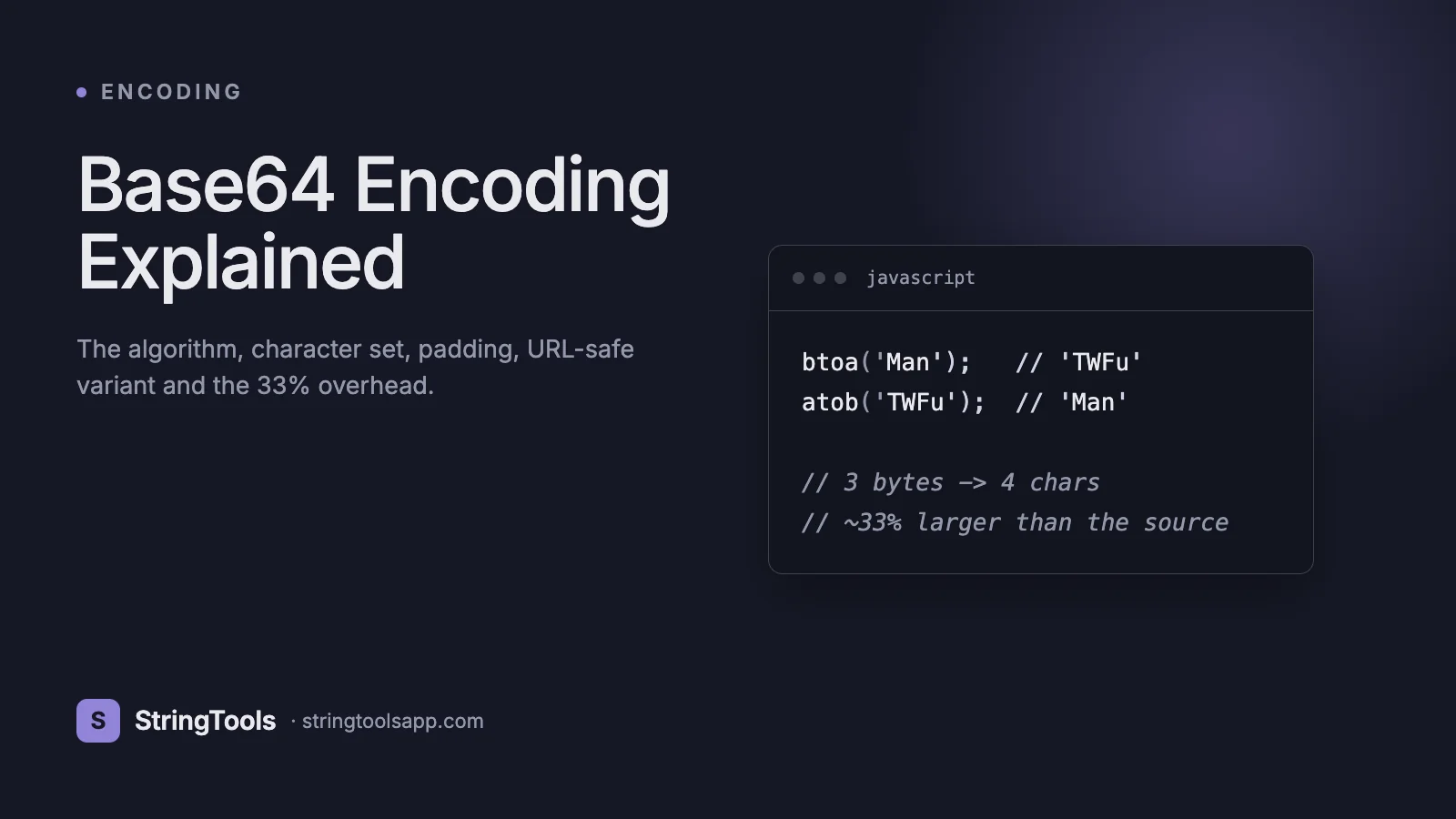
Base64 Encoding Explained: Algorithm, Use Cases, and Pitfalls
Base64 encoding explained: the algorithm, character set, padding rules, the URL-safe variant, JWT and data URI uses, and the 33% size overhead.
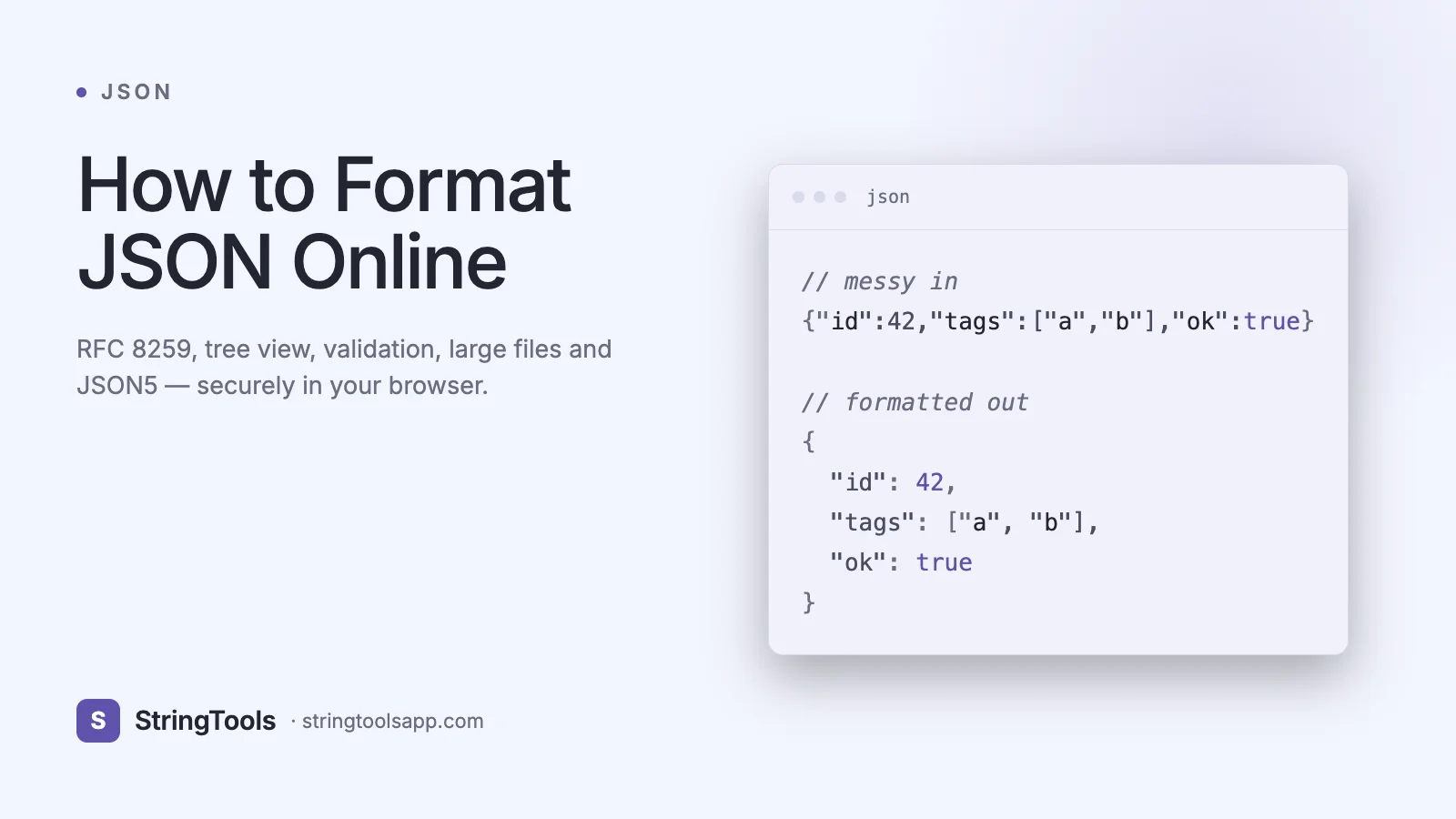
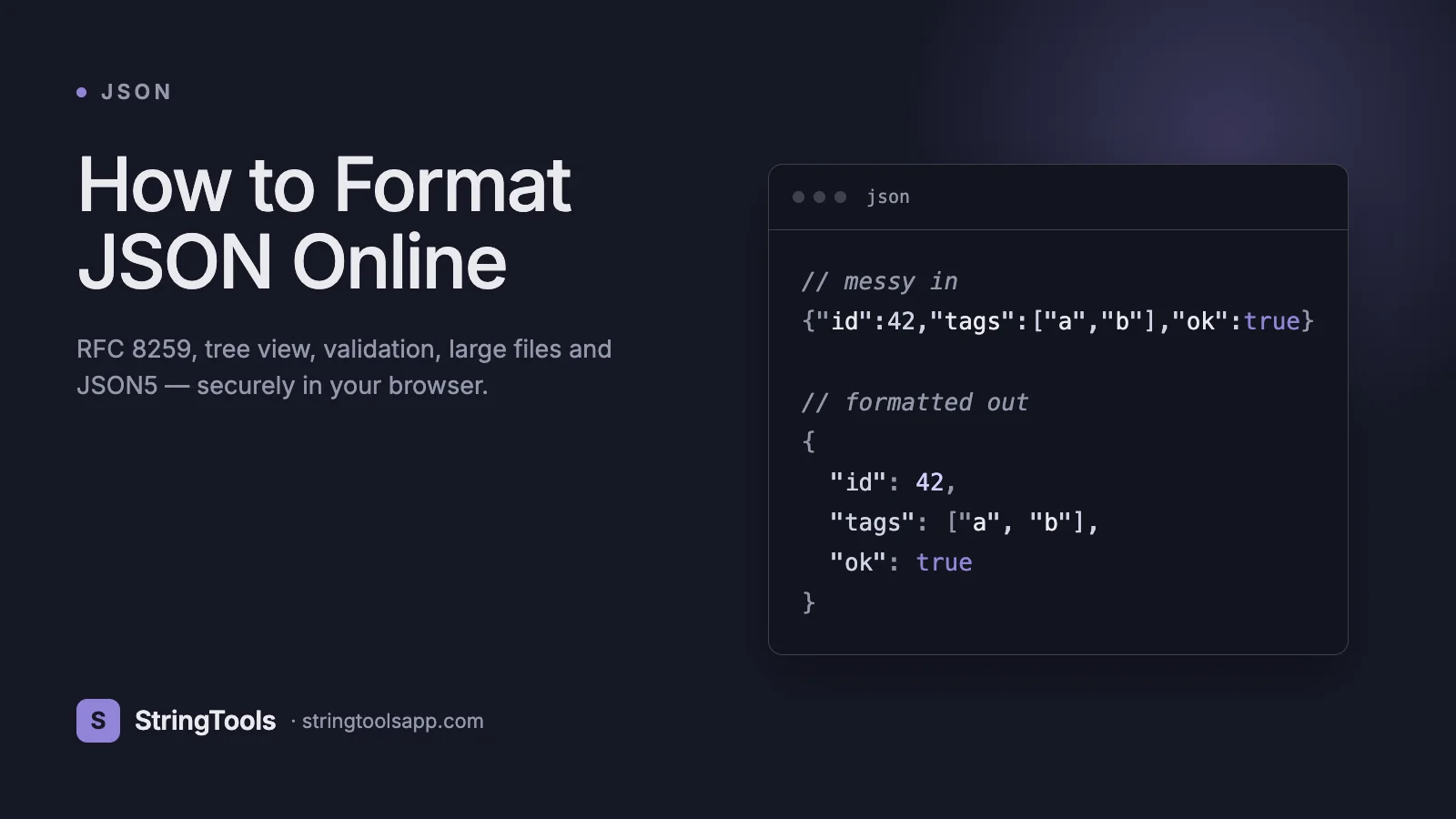
How to Format JSON Online: Complete Developer Guide for 2026
Format JSON online securely in your browser. A developer's guide to RFC 8259, tree view, validation, large files, JSON5, and the security pitfalls.